Shanti Lal Choubisa1, 2*
1Department of Advanced Science and Technology, National Institute of Medical Science and Research, NIMS University Rajasthan, Jaipur, Rajasthan 303121, India
2Former Department of Zoology, Government Meera Girls College, MLS University, Udaipur, Rajasthan 303002, India
*Corresponding Author: Shanti Lal Choubisa, Department of Advanced Science and Technology, National Institute of Medical Science and Research, NIMS University Rajasthan, Jaipur, Rajasthan 303121, India
Received: 14 August 2026; Accepted: 18 August 2026; Published: 20 August 2026
Chronic fluoride poisoning, in the form of osteo-dental fluorosis, is more common in humans living in areas where there is a high risk of fluoride exposure through water, air, and food. However, fluoride poisoning in humans is most common worldwide as a result of exposure to fluoride from drinking fluoride-contaminated groundwater. Of course, industrial fluoride pollution also causes fluoride poisoning, but this is limited to the specific source area. In chronic fluoride poisoning, primarily hard tissues such as teeth and bones are affected with varying grades, depending on the fluoride concentration and its duration of exposure. However, fluoride intoxication can also affect soft tissues or diverse organs of the body. The various pathological changes in teeth, bones, and soft organs caused by fluoride are generally referred to as dental, skeletal, and non-skeletal fluorosis. Worldwide, approximately 200 million people in more than 25 countries suffer from chronic fluoride poisoning in the form of fluorosis due to high levels of fluoride in drinking water. Around 260 million people worldwide live in areas where fluoride concentrations in various drinking water sources exceed 1.5 mg/L. Fluoride poisoning is usually diagnosed by the appearance of fluorosis in teeth and bones in humans. However, fluoride toxicity can also be detected or inferred by the presence of fluoride in biological samples such as hair, nails, teeth and bones, milk, blood plasma, urine, etc. These are natural bio-markers that provide accurate and up-to-date information about fluoride exposure and toxicity in a given environment. There is no doubt that “dental fluorosis is a widely recognized clinical bio-marker of prolonged excessive fluoride exposure (or toxicity) during childhood”. This article briefly reviews various biomarkers for chronic fluoride poisoning, or fluorosis. These can be used to confirm fluoride toxicity or endemic fluorosis in populations residing in any geographical area.
Bio-markers; Biological samples; Dental fluorosis; Environmental samples; Fluoride; Fluoride poisoning; Fluorosis; Skeletal fluorosis; Toxicity
Bio-markers articles; Biological samples articles; Dental fluorosis articles; Environmental samples articles; Fluoride articles; Fluoride poisoning articles; Fluorosis articles; Skeletal fluorosis articles; Toxicity articles
Introduction
It is well known that fluoride (F-) is found naturally and/or anthropogenically in varying amounts in almost every environment, such as soil, water, air, food, etc. However, it is most commonly found in groundwater in varying concentrations. In drinking water, the World Health Organization (WHO) recommends a maximum permissible or safe limit of 1.5 mg/L [1]. Approximately 260 million people worldwide live in areas where fluoride concentrations in various drinking water sources exceed 1.5 mg/L [2-5]. Although fluoride is beneficial for the mineralization and strengthening of developing teeth and bones, it becomes toxic and harmful to the human body when ingested in excessive amounts or exposed to it for long periods of time.
Worldwide, approximately 200 million people in more than 25 countries suffer from chronic fluoride poisoning or fluoride-related health problems due to high fluoride levels in drinking water [2-5]. Besides drinking water, industrial fluoride pollution is also a potential source of fluoride poisoning in humans, but it is limited to specific areas around the source [6-10]. Chronic fluoride poisoning in humans is usually detected by appearance of dental and skeletal fluorosis. However, fluoride toxicity can also be detected or estimated by the presence of fluoride in various biological samples such as hair, nails, teeth and bones, milk, blood plasma, urine, etc. These are natural bio-markers that provide accurate and up-to-date information about fluoride exposure and toxicity in a given environment. This article briefly reviews various bio-markers for chronic fluoride poisoning, or fluorosis. These can be used to confirm fluoride toxicity or endemic fluorosis in populations residing in any geographical area.
Fluoride poisoning in humans
When fluoride enters the body, whether through excessive intake or repeated exposure via sources such as fluoridated water, industrial fluoride emissions, or fluoride-containing foods, it is absorbed through the digestive or respiratory tracts and eventually distributed to all parts of the body via the bloodstream. While more than 50% of the absorbed fluoride is excreted from the body through feces, urine, and sweat, the remainder is retained and accumulates in various organs. However, it accumulates most significantly in calcified tissues, such as bones and teeth, compared to non-calcified organs [1,11]. Fluoride also possesses the ability to cross the placental and blood-brain barriers, thereby reaching the developing foetus and the human brain [12-14].
It is well established that the accumulation of fluoride in the body disrupts various physiological and metabolic processes. This leads to fluoride poisoning in people of all ages, resulting in the development of various physical deformities. These toxic or pathological changes induced by fluoride in the body are collectively termed 'fluorosis' [1,11]. The pathological changes affecting the teeth (staining or discoloration) and bones (periosteal exostosis, osteoporosis, and osteophytosis) are permanent and irreversible, and they can be easily identified upon visual inspection [11]. These pathological changes in the teeth and bones are referred to as 'dental fluorosis' and 'skeletal fluorosis,' respectively. However, changes in soft tissues or organs caused by fluoride are mostly reversible; they disappear over time once the source of fluoride exposure is removed and are generally referred to as non-skeletal fluorosis [11]. Fluoride also exerts neurotoxic effects during child development or adversely impacts cognitive abilities, leading to mental impairments such as reduced learning and memory capacity, lower intelligence quotient (IQ), intellectual disability, and dementia. A higher incidence of Attention-Deficit/Hyperactivity Disorder (ADHD) is also observed in children affected by chronic fluoride exposure or fluorosis [15-22]. The precise mechanism underlying these fluoride-induced neurological disturbances or disorders in children is not yet clearly understood.
Dental fluorosis is the earliest visible sign of the toxic effects of prolonged fluoride exposure; it is a sensitive, indexive, and significant indicator found worldwide [11]. Clinically, it is characterized by hypocalcification (calcium deficiency) across the tooth surface. It typically manifests as opaque lines, ranging from light to dark brown, running horizontally or in streaks across the tooth surface (Figure 1).
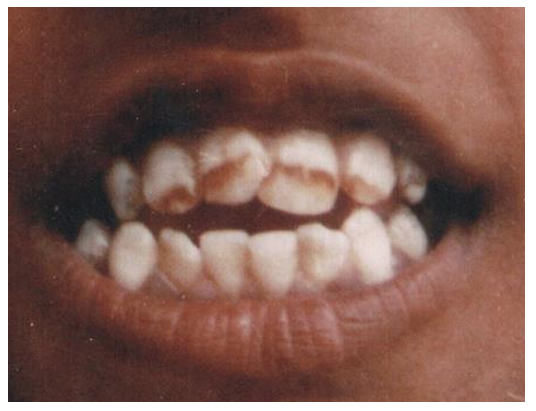
Figure 1: 'Dental fluorosis' in children, resulting from prolonged exposure to excessive fluoride or chronic fluoride poisoning, is a widely recognized clinical bio-marker of chronic fluoride toxicity.
Skeletal fluorosis is extremely painful and more severe than dental or non-skeletal fluorosis; it impairs mobility at a very early age. The most common bone changes caused by fluoride are periosteal exostosis, osteoporosis, and osteophytosis [23,24]. These skeletal changes manifest as vague pain in the body and joints. Excessive fluoride accumulation in the muscles reduces mobility, leading to the development of disabilities in both children and adults (Figure 2). Individuals severely affected by skeletal fluorosis often walk with a limp. In advanced stages, neurological syndromes such as genu- varum (bow-leggedness) and genu-valgum (knock-knees) develop; this represents the most severe phase of skeletal fluorosis, for which there is no cure, and the condition persists for a lifetime [25-29].
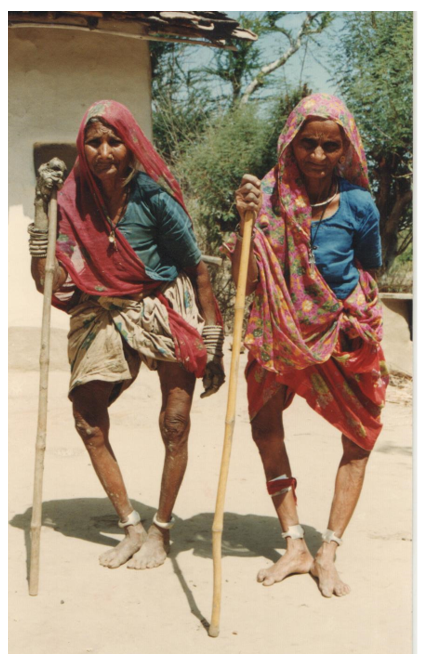
Figure 2: 'Skeletal fluorosis' in old women, resulting from prolonged exposure to excessive fluoride or chronic fluoride poisoning.
Various health issues are also observed during the early stages of chronic fluoride poisoning resulting from prolonged exposure to fluoride. These include gastrointestinal problems (such as occasional diarrhea or constipation, abdominal pain, flatulence, etc.), hives (urticaria), frequent urination (polyuria), excessive thirst (polydipsia), disturbances in endocrine and reproductive functions, adverse effects on foetal development (teratogenic effects), kidney impairment, genotoxic effects, apoptosis, excitotoxicity, asthma, genital itching, lethargy, muscle weakness, bronchitis accompanied by severe coughing, nasal irritation, irregular reproductive cycles, miscarriage, and stillbirth [30-32]. These are the early symptoms of chronic fluoride poisoning. It is not necessary for an individual affected by fluoride poisoning to exhibit all these health issues simultaneously.
Bio-markers for chronic fluoride poisoning
Bio-markers, or biological markers, are defined as naturally occurring indicators that signal events taking place within biological systems. They can be substances, molecules, structures, genes, or biological and pathological processes, the presence of which reflects the state of a living organism. These bio-markers are utilized not merely as diagnostic tests, but as indicators of specific diseases or biological changes. They are frequently measured and analysed to assess normal biological and pathological processes, serving as indicators of biological conditions, physiological processes, or diseases [33,34]. Broadly, bio-markers are classified into three categories: (a) exposure (plasma, bone, teeth, urine, saliva, dental plaque, plaque fluid, hair, nails, etc.), (b) susceptibility (genetic factors, acid-base imbalance, renal issues, bone development, and nutritional status), and (c) effect bio-markers (dental caries, dental fluorosis, and the activity and severity of skeletal fluorosis) [33,34].
According to the World Health Organization, "fluoride bio-markers are primarily useful for detecting and monitoring fluoride deficiency or excess in the body [35]. These fluoride bio-markers can be categorized as follows: contemporary markers or short-term exposure indicators (urine, plasma, and saliva), recent markers or medium-term exposure indicators (nails and hair), and historical or long-term markers (bone and teeth). These bio-markers can also serve as a tool to assess the impact of water fluoridation on bone quality and other bodily conditions [36-41]."
The presence of fluoride in environmental samples such as fodder and animal feed indicates persistent fluoride pollution in the environment [42,43]. However, beyond morbidity and mortality, fluoride levels in biological sample, such as milk, urine, blood serum, teeth, and bone, serve as superior bio-markers for chronic fluoride poisoning or toxicity in both humans and animals [44-50]. Estimating fluoride levels in blood serum and urine is the most accurate and reliable method for assessing the status of chronic fluoride poisoning in humans and animals [51]. However, among the various bio-markers for long-term fluoride exposure, urinary fluoride concentration is generally considered the best or ideal bio-indicator of fluoride exposure and endemic fluorosis. This is because urine samples can be collected easily and non-invasively, and they reflect the cumulative impact of various sources of fluoride exposure, such as industrial pollution, fluoride-rich drinking water, and dietary intake [49,50]. However, fluoride levels in urine vary among individuals and across regions. This depends on factors such as age, season, climatic conditions (e.g., arid versus humid environments), and the fluoride content in drinking water or other sources of fluoride exposure [51]. There is no doubt that “dental fluorosis is a widely recognized clinical bio-marker of prolonged excessive fluoride exposure (or toxicity) during childhood”.
Conclusion
Chronic fluoride poisoning (manifesting as fluorosis) in humans is most prevalent in regions where drinking water, air, and food are contaminated with fluoride. Globally, approximately 200 million people across more than 25 countries suffer from the effects of chronic fluoride toxicity or fluoride-related health issues due to the consumption of high-fluoride water. In many countries, industrial fluoride pollution is also a potential cause of chronic fluoride toxicity in humans. Fluoride poisoning leads to dental and skeletal deformities, collectively known as fluorosis, which are permanent and irreversible conditions; skeletal deformities, in particular, cause lifelong, mild to severe pain. The prevalence of chronic fluoride poisoning in a population can be readily assessed by measuring fluoride levels in specific biological samples or bio-markers, such as plasma, bone, teeth, urine, saliva, dental plaque, plaque fluid, hair, and nails. These bio-markers serve not only to detect the condition but also act as indicators of fluoride toxicity or fluorosis. However, measuring fluoride levels in blood serum and urine remains the most accurate and reliable method for assessing the status of chronic fluoride toxicity in both humans and animals. Among the various bio-markers for chronic fluoride exposure, urinary fluoride concentration is generally considered the best or ideal bio-indicator for fluoride exposure and endemic fluorosis. Nevertheless, dental fluorosis is a widely recognized clinical bio-marker for chronic, excessive fluoride exposure (or toxicity) during childhood.
<4>Acknowledgements
The author thanks to Professor Darshana Choubisa, Department of Prosthodontics, Geetanjali Dental and Research Institute, Udaipur, Rajasthan 313002, India for her assistance.
Conflicts of Interest
We have no conflict of interest.
References
- Adler P, Armstrong WD, Bell ME, et al. Fluorides and human health. World Health Organization Monograph Series No. 59. Geneva: World Health Organization (1970).
- Jha SK, Singh RK, Damodaran T, et al. Fluoride in groundwater: toxicological exposure and remedies. Journal of Toxicology and Environmental Health, Part B: Critical Reviews 16 (2013): 52-66.
- Choubisa SL, Choubisa D, Choubisa A. Fluoride contamination of groundwater and its threat to health of villagers and their domestic animals and agriculture crops in rural Rajasthan, India. Environmental Geochemistry and Health 45 (2023): 607-628.
- Shaji E, Sarath KV, Santosh M, et al. Fluoride contamination in groundwater: A global review of the status, processes, challenges, and remedial measures. Geoscience Frontiers 15 (2024): 101734.
- Ali S, Mishra P, Brindha K, et al. Global groundwater contamination by geogenic fluoride. Environmental Geochemistry and Health 48 (2026): 410.
- Choubisa SL, Choubisa D. Neighbourhood fluorosis in people residing in the vicinity of superphosphate fertilizer plants near Udaipur city of Rajasthan (India). Environmental Monitoring and Assessment 187 (2015): 497.
- Choubisa SL, Choubisa D. Status of industrial fluoride pollution and its diverse adverse health effects in man and domestic animals in India. Environmental Science and Pollution Research 23 (2016): 7244-7254.
- Choubisa SL. Status of chronic fluoride exposure and its adverse health consequences in the tribal people of the scheduled area of Rajasthan, India. Fluoride 55 (2022): 8-30.
- Choubisa SL. Risk of fluorosis and other health hazards in humans from coal-fired brick kilns in India: People need to be aware. Clinical Medical Reviews and Reports 7 (2025): 1-7.
- Choubisa SL. Are coal-based thermal power plants safe for human health in case of fluoride poisoning in India? People need to be careful and alert. Clinical Medical Reviews and Reports 7 (2025): 1-7.
- Choubisa SL. The diagnosis and prevention of fluorosis in humans. Journal of Biomedical Research and Environmental Sciences 3 (2022): 264-267.
- Mullenix PJ, Denbesten PK, Schunior A, et al. Neurotoxicity of sodium fluoride in rats. Neurotoxicology and Teratology 17 (1995): 169-177.
- Niu R, Sun Z, Cheng Z, et al. Decreased learning ability and low hippocampus glutamate in offspring rats exposed to fluoride and lead. Environmental Toxicology and Pharmacology 28 (2009): 254-258.
- Niu R, Xue X, Zhao Y. Effects of fluoride on microtubule ultrastructure and expression of Tubalpha1a and Tubbeta2a in mouse hippocampus. Chemosphere 139 (2015): 422-427.
- Spittle B, Ferguson D, Bouwer C. Intelligence and fluoride exposure in New Zealand children. Fluoride 31 (1998): S13.
- Gumora G, Arsenio WF. Emotionality, emotion regulation, and school performance in middle school children. Journal of School Psychology 40 (2002): 395-413.
- Trivedi MH, Verma RJ, Chinoy NJ, et al. Effect of high fluoride water on intelligence of school children in India. Fluoride 40 (2007): 178-183.
- Sharma JD, Sohu D, Jain P. Prevalence of neurological manifestations in a human population exposed to fluoride in drinking water. Fluoride 42 (2009): 127-132.
- Spittle B. Fluoride, IQ, emotion, and children’s school performance. Fluoride 51 (2018): 98-101.
- Mustafa DE, Younis UM, Safia A/Alla, et al. The relationship between the fluoride levels in drinking water and the schooling performance of children in rural areas of Khartoum State, Sudan. Fluoride 51 (2018): 102-113.
- Choubisa SL, Choubisa D, Choubisa A. Are children in India safe from fluoride exposure in terms of mental health? This needs attention. Journal of Pharmaceutics and Pharmacology Research 7 (2024): 1-6.
- Choubisa SL. A brief review of fluoride exposure and its adverse health effects among tribal children in India. Journal of Clinical Medicine and Health Care 2 (2025): 1-9.
- Choubisa SL. Radiological skeletal changes due to chronic fluoride intoxication in Udaipur district (Rajasthan). Pollution Research 15 (1996): 227-229.
- Choubisa SL. Radiological findings more important and reliable in the diagnosis of skeletal fluorosis (editorial). Austin Medical Sciences 7 (2022): 1-4.
- Choubisa SL, Choubisa DK, Joshi SC, et al. Fluorosis in some tribal villages of Dungarpur district of Rajasthan, India. Fluoride 30 (1997): 223-228.
- Choubisa SL. Endemic fluorosis in southern Rajasthan (India). Fluoride 34 (2001): 61-70.
- Choubisa SL. Fluoride in drinking water and its toxicosis in tribals, Rajasthan, India. Proceedings of National Academy of Sciences, India Section B: Biological Sciences 82 (2012): 325-330.
- Choubisa SL, Choubisa D. Genu-valgum (knock-knee) syndrome in fluorosis-endemic Rajasthan and its current status in India. Fluoride 52 (2019): 161-168.
- Choubisa SL. A brief review of fluoride-induced bone disease skeletal fluorosis in humans and its prevention. Journal of Pharmaceutics and Pharmacology Research 7 (2024): 1-6.
- Choubisa SL, Choubisa L, Choubisa DK. Endemic fluorosis in Rajasthan. Indian Journal of Environmental Health 43 (2001): 177-189.
- Choubisa SL. A brief and critical review of endemic hydrofluorosis in Rajasthan, India. Fluoride 51 (2018): 13-33.
- Choubisa SL. Status of chronic fluoride exposure and its adverse health consequences in the tribal people of the scheduled area of Rajasthan, India. Fluoride 55 (2022): 8-30.
- WHO. International programme on chemical safety biomarkers in risk assessment: validity and validation. World Health Organization, Geneva (2001).
- Choubisa SL, Choubisa A. A brief review of ideal bio-indicators, bio-markers and determinants of endemic of fluoride and fluorosis. Journal of Biomedical Research and Environmental Sciences 2 (2021): 920-925.
- WHO. Fluorides and Oral Health – Report of a WHO expert committee on oral health status and fluoride use. World Health Organization, Geneva (1994).
- Buzalaf MA, Rodrigues MH, Pessan JP, et al. Biomarkers of fluoride in children exposed to different sources of systemic fluoride. Journal of Dental Research 90 (2011): 215-219.
- Rugg-Gunn AJ, Villa AE, Buzalaf MRA. Contemporary biological markers of exposure to fluoride. Monographs in Oral Science 22 (2011): 37-51.
- Mehta A. Biomarkers of fluoride exposure in human body. Indian Journal of Dentistry 4 (2013): 207-210.
- Lavalle-Carrasco J, Molina-Frechero N, Nevárez-Rascón M, et al. Recent biomarkers for monitoring the systemic fluoride levels in exposed populations: a systematic review. International Journal of Environmental Research and Public Health 18 (2021): 317.
- Ferreira MKM, Sousa JMM, Santos VRN, et al. Biomarkers in the Biomonitoring of Fluoride Toxicity: An Overview. In: Patel VB, Preedy VR, Rajendram R. Biomarkers in Toxicology. Biomarkers in Disease: Methods, Discoveries and Applications. Springer, Cham (2022).
- Sampaio FC. Biomarkers of exposure to fluoride. Journal of Applied Oral Science 14 (2006): 41-43.
- Dwivedi SK, Dey S, Swarup D. Hydrofluorosis in water buffalo (Bubalus bubalis) in India. Science of the Total Environment 207 (1997): 105-159.
- Trangadia BJ, Kaul PL, Patel BJ, et al. Chronic fluorosis in buffaloes: clinicopathological studies. Indian Journal of Veterinary Pathology 39 (2015): 354-357.
- Samal UN, Naik BN. The fluorosis problem in tropical sheep. Fluoride 25 (1992): 183-190.
- Swarup D, Dey S, Patra RC, et al. Clinico-epidemiological observations of industrial bovine fluorosis in India. Indian Journal of Animal Science 1 (2001): 1111-1115.
- Sankhala SS, Harshwal R, Paliwal P, et al. Toe nails as a biomarker of chronic fluoride exposure secondary to high water fluoride content in areas with endemic fluorosis. Fluoride 47 (2014): 235-240.
- Death C, Coulson G, Kierdorf U, et al. Dental fluorosis and skeletal fluoride content as biomarkers of excess fluoride exposure in marsupials. Science of the Total Environment 533 (2015): 528-541.
- Patra RC, Dwivedi SK, Bhardwaj B, et al. Industrial fluorosis in cattle and buffalo around Udaipur, India. Science of the Total Environment 253 (2000): 145-150.
- Del Carmen AF, Javier FH, Aline CC. Dental fluorosis, fluoride in urine, and nutritional status in adolescent students living in the rural areas of Guanajuato, Mexico. Journal of International Society of Preventive and Community Dentistry 6 (2016): 517-522.
- Watanabe M, Kono K, Orita Y, et al. Influence of dietary fluoride intake on urinary fluoride concentration and evaluation of corrected levels in spot urine. Proceedings of the 20th Conference of the International Society for Fluoride Research, Beijing, China, September 5-9 (1994).
- Rafique T, Ahmed I, Soomro F, et al. Fluoride levels in urine, blood plasma and serum of people living in an endemic fluorosis area in the Thar Desert, Pakistan. Journal of Chemical Society of Pakistan 37 (2015): 1223-1230.