Dr. Mamata Rathod*, Dr. Ajai Kumar, Dr. Sunil R. Telkar
MBBS, MS in General Surgery
Corresponding Author: Dr. Mamata Rathod, MBBS, MS in General Surgery.
Received: 10 July 2026; Accepted: 14 July 2026; Published: 17 September 2026
Background: Secure cystic duct ligation is a critical step in laparoscopic cholecystectomy to prevent postoperative bile leakage and related complications. Metallic clips are commonly used because of their ease of application; however, clip slippage and migration remain concerns. Extracorporeal knotting using absorbable sutures has emerged as a cost-effective alternative.
Aim and Objectives of Study: To compare metallic clipping versus extracorporeal knotting for cystic duct ligation during laparoscopic cholecystectomy in terms of operative safety, intraoperative complications, operative time, and cost-effectiveness.
Materials and Methods: This prospective comparative observational study was conducted at Gadag Institute of Medical Sciences, Karnataka, from July 2022 to July 2024. Sixty patients undergoing laparoscopic cholecystectomy were included and divided into two groups of 30 patients each. In one group, cystic duct ligation was performed using extracorporeal knotting with absorbable suture material, while metallic clips were used in the other group. Operative time, intraoperative complications, postoperative pain, and procedural cost were analyzed.
Results: The mean operative time was 67.37±15.23 minutes in the extracorporeal knotting group and 61.83 ± 10.55 minutes in the metallic clip group, with no statistically significant difference (p = 0.107). No intraoperative complications were noted in the extracorporeal knotting group. In the metallic clip group, complications included clip slippage with stone spillage in 23.3% of patients, clip slippage with bile leak in 10%, and clip migration in 3.3% of patients (p = 0.0037). The mean cost of suture material in the extracorporeal knotting group was significantly lower compared to metallic clips.
Conclusion: Extracorporeal knotting is a safe and cost-effective alternative to metallic clipping for cystic duct ligation during laparoscopic cholecystectomy. Although the operative time was slightly longer, the technique demonstrated fewer intraoperative complications and lower procedural cost.
Laparoscopic cholecystectomy, cystic duct ligation, extracorporeal knotting, metallic clips, bile leak, cost-effectiveness
Laparoscopic cholecystectomy articles, cystic duct ligation articles, extracorporeal knotting articles, metallic clips articles, bile leak articles, cost-effectiveness articles
Introduction
Laparoscopic cholecystectomy is the gold standard procedure for the management of symptomatic gallstone disease because of its advantages of reduced postoperative pain, shorter hospital stay, faster recovery, and improved cosmetic outcomes compared with open cholecystectomy. Secure ligation of the cystic duct is a critical step during the procedure to prevent bile leakage and associated complications such as biliary peritonitis, intra-abdominal abscess, and biliary fistula. Metallic clips are widely used for cystic duct ligation because they are easy to apply and reduce operative duration. However, complications such as clip slippage, migration, bile leak, and difficulty in securing wide cystic ducts have been reported. In resource-limited settings, the cost of metallic clips may also become a significant concern.
Extracorporeal knotting with absorbable suture material is an alternative technique that avoids permanent foreign material and may provide secure duct closure with reduced procedural cost. Previous studies have demonstrated that extracorporeal knotting is safe and effective, although it may require greater technical expertise and slightly longer operative time. The present study was conducted to compare metallic clipping and extracorporeal knotting for cystic duct ligation in laparoscopic cholecystectomy with respect to operative safety, intraoperative complications, operative duration, postoperative pain, and cost-effectiveness.
Aim and Objectives of Study
The primary objective of this study is to compare metallic clipping and extracorporeal knotting for cystic duct ligation in laparoscopic cholecystectomy. Specifically, the study aims to:
- To compare intraoperative complications between the two techniques and assess their safety with respect to the common bile duct.
- To compare operative duration.
- To assess cost-effectiveness.
- To evaluate postoperative outcomes.
Material and Methods
This prospective comparative observational study was conducted in the Department of General Surgery, Gadag Institute of Medical Sciences, Karnataka, from July 2022 to July 2024 after obtaining approval from the Institutional Ethics Committee. Sixty consecutive patients diagnosed with symptomatic cholelithiasis or cholecystitis and scheduled for elective laparoscopic cholecystectomy were included after obtaining written informed consent. Patients fulfilling the inclusion criteria were allocated into two groups comprising 30 patients each. Group A underwent cystic duct ligation using extracorporeal knotting with absorbable suture material, while Group B underwent cystic duct ligation using standard metallic clips. All procedures were performed using the standard four-port laparoscopic technique. After achieving the critical view of safety, the cystic artery was divided and the cystic duct was ligated according to the allocated technique.
In the extracorporeal knotting group, the cystic duct was ligated using an absorbable polyglactin 910 (Vicryl® 2-0) suture. A modified Roeder knot incorporating the Meltzer modification (2:3:2 configuration) was fashioned extracorporeally and advanced into the peritoneal cavity using a knot pusher to securely ligate the cystic duct before division. The knotting technique was standardized and applied uniformly across all procedures in the extracorporeal knotting group. In the metallic clip group, titanium clips (LT300) were applied across the cystic duct according to standard surgical practice prior to division. All procedures were performed by the same consultant surgeon to minimize operator-related bias. Operative time, intraoperative complications, postoperative pain, and cost of ligation material were recorded. Patients were followed for two months to assess postoperative complications.
Sample Size and Sampling Method
Based on a study done by Sharad kumar et al in 2020, the anticipated mean ± SD of operating time by Extracorporeal knotting vs using clips was 60.50±14.93 and 47.83±14.77 respectively. The minimum sample size is 30 per group with 95% level of significance and 80% power.
Formula used is:
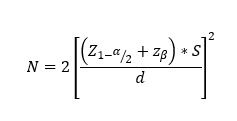
Z1−∝/2 - Level of significance = 95%
Zβ - power of the study = 80%
d – clinically significant difference between two parameters
SD - Common standard deviation
The sample size is determined based on previous studies and statistical calculations, aiming for 30 patients in each group (metallic clipping and extracorporeal knotting). This sample size is calculated to provide adequate power (80%) and significance (95%) to detect clinically meaningful differences between the two groups. Purposive sampling was used to select participants who meet the inclusion criteria.
Inclusion Criteria
- Patients diagnosed with calculous or acalculous cholecystitis.
- Patients willing to participate in the study.
Exclusion Criteria
- Patients unfit for general anaesthesia.
- Patients with commonbile duct stones.
- Patients undergoing conversion to open cholecystectomy.
Written informed consent was obtained from all participants. Detailed clinical evaluation and routine investigations were performed preoperatively.
Parameters analyzed included:
- Operative time
- Intraoperative complications
- Post operative pain
- Cost of ligation material
Patients were followed up postoperatively and reviewed after two months.
Statistical Analysis
Data were entered into Microsoft Excel and analysed using IBM SPSS Statistics (Version 31.0.2.0, IBM Corp, Armonk, NY, USA). Continuous variables were expressed as mean ± standard deviation and compared using the independent Student's t-test or Mann–Whitney U test where appropriate. Categorical variables were analysed using the Chi-square test or Fisher's exact test whenever indicated. A two-tailed p value of <0.05 was considered statistically significant.
Results
A total of 60 patients were included in the study, with 30 patients in each group over a period of 24 months, from June 2022 to July 2024.
Table 1: Comparison of Age (Years) between Study and Control groups
|
Age (Years) |
Mean |
± S.D. |
Mann Whitney U test |
P value |
Remarks |
|
Study |
40.83 |
10.161 |
U=386.000 |
P = 0.3477 |
NS |
|
Control |
39.366 |
5.89 |
|||
|
NS: No significant |
|||||
The mean age in the extracorporeal knotting group was 40.83 ± 10.16 years, while the mean age in the metallic clip group was 39.36±5.89 years. Female patients predominated in both groups.
Table 2: Distribution of subjects according to Intra operative complication
|
Intra operative complications |
Study group |
Control group |
Chi square test |
Remark |
|||||||||
|
N |
% |
N |
% |
||||||||||
|
BILE LEAK |
0 |
0 |
0 |
Χ 2=13.469 |
P = 0.0037* |
||||||||
|
CLIP MIGRATION |
0 |
0 |
1 |
3.3 |
|||||||||
|
CLIP SLIPPAGE, BILE LEAK |
0 |
0 |
3 |
10 |
|||||||||
|
CLIP SLIPPAGE, STONE SPILLAGE |
0 |
0 |
7 |
23.3 |
|||||||||
|
NIL |
30 |
100 |
19 |
63.3 |
|||||||||
|
Total |
30 |
100 |
30 |
100 |
|||||||||
|
*: Highly significant |
|||||||||||||
No intraoperative complications were observed in the extracorporeal knotting group. In the metallic clip group, clip slippage with stone spillage occurred in 23.3% of patients, clip slippage with bile leak in 10%, and clip migration in 3.3% of patients. This difference was statistically significant (p = 0.0037).
Table 3: Comparison of Operation time (Minutes) between Study and Control groups
|
Operation time (Minutes). |
Mean |
± S. D |
Difference in mean (%) |
Unpaired t test |
P value |
Remarks |
|
Study |
67.37 |
15.23 |
4.68 |
t=1.636 |
P = 0.107 |
NS |
|
Control |
61.83 |
10.55 |
-6.94% |
|||
|
NS: Not significant |
||||||
The mean operative time was slightly longer in the extracorporeal knotting group (67.37± 15.23 minutes) compared to the metallic clip group (61.83 ± 10.55 minutes), but the difference was not statistically significant (p = 0.107).
Table 4: Comparison of Cost of Suture/Clips (In Rupees) between Study and Control group
|
Cost of Suture/Clips (Rupees) |
Mean |
± S.D. |
Difference in mean (%) |
Mann Whitney U test |
P value |
Remarks |
|
Study |
302 |
0 |
198 (39.6%) |
NA |
||
|
Control |
500 |
0 |
||||
|
NA: Not applicable |
||||||
Statistical comparison was not performed because the cost was fixed within each group
The cost of ligation material was significantly lower in the extracorporeal knotting group compared with the metallic clip group. Postoperative pain scores were comparable between the two groups and did not show statistical significance
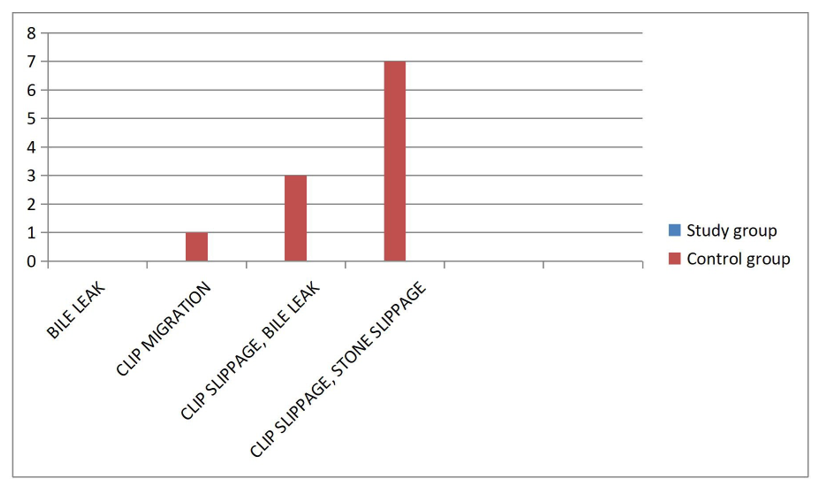
Figure 1: Distribution of Intraoperative complications in the two study groups
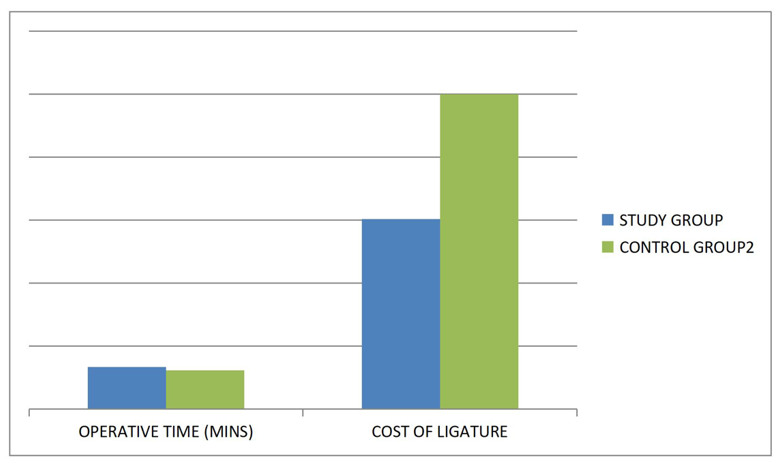
Figure 2: Comparison of Operation time, cost of suture, and post-operative pain
FOLLOWUP
All patients were followed up for a period of 2 months, and no significant complications were noted.
Discussion
Secure cystic duct ligation is essential in laparoscopic cholecystectomy to prevent postoperative bile leakage and associated morbidity. Metallic clips are widely used because of their convenience and shorter application time. However, complications such as clip slippage and migration continue to be reported.
In the present study, no intraoperative complications were observed in the extracorporeal knotting group, whereas complications occurred in the metallic clip group, including clip slippage, bile leak, and clip migration. These findings support previous studies by Kuldip Singh et al, And Sharad
Kumar et al, who reported extracorporeal knotting to be a safe and economical alternative.
Although the operative time was marginally longer in the extracorporeal knotting group, the difference was not statistically significant. The slightly increased duration maybe attributed to the learning curve associated with knot preparation and placement.
The present findings support the use of extracorporeal knotting as a safe, reliable, and cost-effective alternative to metallic clips, particularly in resource-limited healthcare settings where reducing operative expenditure is an important consideration. Although the operative time was marginally longer, the difference was not statistically significant, and no increase in postoperative morbidity was observed.
Limitations
The present study has several limitations. It was conducted at a single tertiary care centre with a relatively small sample size, which may limit the generalisability of the findings. The follow-up period was limited to two months; therefore, late complications such as delayed clip migration or biliary stricture could not be evaluated. Larger multicentre randomised controlled trials with longer follow-up are required to confirm these findings.
Conclusion
Extracorporeal knotting is a feasible, safe, and cost-effective alternative to metallic clipping for cystic duct ligation during laparoscopic cholecystectomy. Although operative time was slightly longer, extracorporeal knotting demonstrated fewer intraoperative complications and lower procedural cost. The technique may be particularly beneficial in resource-limited surgical settings.
Declarations
Ethical Approval: Institutional Ethics Committee approval was obtained prior to commencement of the study.
Conflict of Interest: The authors declare no conflict of interest.
Funding: No external funding was received for this study.
References
- Zacks SL, Sandler RS, Rutledge R, et al. A population-based cohort study comparing laparoscopic cholecystectomy and open cholecystectomy. The American Journal of Gastroenterology 97 (2002): 334-340. https://doi.org/10.1111/j.1572-0241.2002.05466.x
- Soper, N.J., & Hunter, J.G. Suturing and knot tying in laparoscopy. Surgical Clinics of North America 72 (1992): 1139-1152.https://doi.org/10.1016/S0039-6109(16)45837-8
- Perissat J. Laparoscopic cholecystectomy: The European experience. The American Journal of Surgery 158 (1989): 385- 387. https://doi.org/10.1016/0002-9610(89)90170-1
- Fried GM, Barkun JS, Sigman HH, et al. Factors determining conversion to laparotomy in patients undergoing laparoscopic cholecystectomy. The American Journal of Surgery 161 (1991): 40-44. https://doi.org/10.1016/0002-9610(91)90213-W
- Gurusamy KS, Bong JJ, Fusai G, et al. Methods of cystic duct occlusion during laparoscopic cholecystectomy. Cochrane Database of Systematic Reviews 2010 (2010). https://doi.org/10.1002/14651858.CD006807.pub2
- Gurusamy KS, Samraj K, Gluud C, et al. Meta-analysis of randomized controlled trials on the safety and effectiveness of cystic duct occlusion methods in laparoscopic cholecystectomy. British Journal of Surgery 97 (2010): 121- 131. https://doi.org/10.1002/bjs.6814
- Kuldip Singh, A. Bhatia, & Devinder Pal Singh. (2017). Extracorporeal knotting with silk versus liga clips for ligating cystic duct in laparoscopic cholecystectomy: A comparative study. International Journal of Scientific Research, 6(8).
- Riaz O, Riaz MF & Rehan A. Metal clips versus intracorporeal ligation for cystic duct occlusion in laparoscopic cholecystectomy. APMC 11 (2017): 165-166.
- ElGeidie AA. New technique of clipless laparoscopic cholecystectomy. Surgical Science 3 (2012): 310-313. https://doi.org/10.4236/ss.2012.36061
- Seenu V, Shridhar D, Bal C, et al. Laparoscopic cholecystectomy: Cystic duct occlusion with titanium clips or ligature? A prospective randomized study. Tropical Gastroenterology: Official Journal of the Digestive Diseases Foundation (2004).
- Harvesh Kumar Sharad, S, & Om Kumar Sharma. (2020). Clip occlusion versus extracorporeal suture ligation (Roeder knot) of the cystic duct in laparoscopic cholecystectomy – A comparative study. International Journal of Contemporary Medical Research, 7 (2020): C6-C10.
- Soper N J. "Laparoscopic cholecystectomy", Current Problems in Surgery (1991): 09
- Litynski GS. KurtSemm–the Magician from Kiel. In: Litynski GS, ed. Highlights in the History of Laparoscopy. Frankfurt, Germany: Barbara Bernert Verlag (1996): 131144.
- Hassan, Ashfaq, Showqat Zargar, et al. "Surgical significance of variations in anatomy in the biliary region", International Journal of Research in Medical Sciences (2013).
- Riccardo Manfredi, Roberto Pozzi Mucelli. "Magnetic Resonance Cholangiopancreatography (MRCP)", Springer.
- Blumgart, LeslieH and LucyE. Hann."Surgical and radiologic anatomy of the liver, biliary tract, and pancreas", Blumgart s Surgery of the Liver Pancreas and Biliary Tract (2012).
- Nagral S. Anatomy relevant to J Minim Access Surg 1 (2005): 53-8.
- The Management of Gallstone Disease a Practical and Evidence-Based Approach Editors: Cox, Michael R, Eslick, Guy D, Padbury, Robert (Eds.)
- https://www.ncbi.nlm.nih.gov/pmc/articles/PMC3343155/pdf/gnl-6-172.pdf
- https://www.ncbi.nlm.nih.gov/books/NBK412/HobartW.Harris."Biliary System", Surgery (2008).
- National Institutes of Health Consensus Development Conference Statement September (1992): 14-16, World Journal of Gastroenterology 2006 May 28; 12(20): 3162-3167.
- Choledocholithiasis: Evolving standards for diagnosis and Management Marilee L Freitas, Robert L Bell, Andrew J Duffy Cox,G.R."Acute cholecystitis in the emergency department",Journal of Emergency Medicine, 198909/10. https://emedicine.medscape.com/article/366246-overview World J Gastroenterology 2006 May 14; 12(18): 2839-2845.
- Evaluation of the biliary tract in patients with functional biliary symptoms Peter Funch Jensen, Asbjørn Mohr Drewes, László Madácsy. Mirizzi PL.Operative cholangiography. Rev Esp Enferm Apar Dig Nutr 9 (1950): 306–308.
- Takeyama H. "Expectant Management Is Safe for Cholelithiasis After Heart Transplant", Journal of Heart and Lung Transplantation (2006): 05.
- https://www.springer.com/in/book/9788847007628.
- https://sites.google.com/site/drsumeryadavcom/biliary-surgery/cholelithiasis-and-choledocholithiasis.
- "The gallbladder and bileducts", Bailey & Love’s Short Practice of Surgery 25th Edition, 2008.
- Conference NC.Gallstones and laparoscopic cholecystectomy. JAMA. 269 (1992): 1018–24
- https://www.ncbi.nlm.nih.gov/books/NBK448145/
- Arshad Raza, Sujoy Mukherjee, et al. "SPECTRUM OF CLINICO – PATHOLOGICAL PRESENTATIONS OF GALLSTONEDISEASESINATERTIARYCAREINSTITUTEIN ROHILKHAND REGION", Journal of Evolution of Medical and Dental Sciences (2015).
- Alexander Nagle, Nathaniel J. Soper. "Laparoscopic cholecystectomy and choledocholithotomy", Elsevier BV (2012).
- Palanivelu C. Jani, Kalpesh Malladi, Vi. "Laparoscopic management of benign nonparasitic hepatic cysts: a prospective nonrandomized study" Southern Medical Journal (2006). https://www.ncbi.nlm.nih.gov/pmc/articles/PMC4664217/
- https://basicmedicalkey.com/creating-the-pneumoperitoneum/ "Laparoscopic Surgery of the Abdomen", Springer Nature America, Inc (2004)
- Stefan Wildi.” Laparoscopic Treatment for Diseases of the Gallbladder and Biliary Tree” Stefan Wildi Sarah K. Thompson John G. Hunter Markus Weber 41. Principles of Laparoscopic Surgery (1995).
- Nidoni R, Vudachan T, Sasnur P & et al. Predicting difficult laparoscopic cholecystectomy based on clinic radiological assessment. Journal of Clinical and Diagnostic Research 9 (2015): PC09 PC12.
- Rajra A, Gupta M & Agnihotri L. Comparing outcome of patients in laparoscopic cholecystectomy by using clips vs ligation for cystic duct occlusion. Sch J App Med Sci 4 (2016): 1418-1423.
- Bali S & Singal R. Laparoscopic suturing versus clip application in cholecystectomy: Tips and strategies for improving efficiency and safety. Acta Gastroenterol Latinoam 48 (2018): 35-40.
- Aslam H M, Saleem S, Edhi MM, et al. Assessment of gallstone predictor: Comparative analysis of ultrasonographic and biochemical parameters. International Archives of Medicine 6 (2013): 17.
- Singh K, Bhatia A & Singh DP. Extracorporeal knotting with silkversusligaclips for ligatingcysticductin laparoscopic cholecystectomy: A comparative study. International Journal of Scientific Research 6 (2017).
- Riaz MF, Riaz O & Rehan A. Metal clips versus intracorporeal ligation for cystic duct occlusion in laparoscopic cholecystectomy. APMC 11 (2017): 165-166.
- Bali S & Singal R. Laparoscopic suturing versus clip application in cholecystectomy: Tips and strategies for improving efficiency and safety. Acta Gastroenterol Latinoam 48 (2018): 35-40.