Prasanna Lakshmi1*, M. Amrutha1, Dr. S. Rajesh Raja3
1Department of Pharmacy Practice, St. Johns College of Pharmaceutical Sciences.
2Department of Pharmacy Practice, St. Johns College of Pharmaceutical Sciences.
*Corresponding Author: A. Prasanna Lakshmi, Pharm.D Students, Department of Pharmacy Practice, St. Johns College of Pharmaceutical Sciences.
Received: 21 July 2026; Accepted: 23 July 2026; Published: 28 July 2026
DOI: 10.26502/jppd.2572-519X0279
ShareMajor depressive disorder (MDD) is a leading cause of disability, and variable treatment response remains a major clinical challenge. Standard antidepressant care often relies on trial and error, delaying improvement and increasing adverse effects. Precision psychiatry aims to improve this process by using pharmacogenomics and artificial intelligence (AI) to guide individualized treatment. Pharmacogenomics testing can identify genetic variants that affect antidepressant metabolism and response, helping inform drug choice and dosing. AI methods, including machine learning, may further support early diagnosis, predict outcomes and relapse, and assist clinical decision-making. Combining these approaches may improve effectiveness and reduce unnecessary exposure to ineffective treatments. However, cost, privacy, bias, limited validation, and implementation barriers still restrict routine use. This review summarizes current evidence on pharmacogenomics and AI-guided depression care, highlights clinical applications and limitations, and outlines future directions for precision psychiatry. It also notes the growing role of clinical pharmacists in optimizing antidepressant therapy.
Precision psychiatry, Major depressive disorder, Pharmacogenomics, Artificial intelligence, Machine learning, Personalized medicine, Antidepressants, Clinical pharmacist.
Precision psychiatry articles; Major depressive disorder articles; Pharmacogenomics articles, Artificial intelligence articles; Machine learning articles; Personalized medicine articles; Antidepressants articles; Clinical pharmacist articles
1. Introduction
Major depressive disorder (MDD) is one of the most common psychiatric disorders worldwide and a leading cause of disability, affecting more than 280 million people. It is associated with persistent low mood, loss of interest, impaired cognitive function, and reduced quality of life. Although several antidepressants and psychotherapies are available, treatment outcomes remain variable. Many patients do not respond adequately to the first prescribed antidepressant, and the conventional trial-and-error approach often results in delayed symptom improvement, adverse drug reactions, and poor treatment adherence.
Precision psychiatry has emerged as a promising approach to overcome these challenges by tailoring treatment according to an individual's genetic, biological, and clinical characteristics. Pharmacogenomics helps identify genetic variations that influence antidepressant metabolism and treatment response, enabling more personalized drug selection and dose optimization. In parallel, artificial intelligence (AI) is increasingly being used to support early diagnosis, predict treatment response, assess relapse risk, and assist clinical decision-making through advanced data analysis.
This review discusses the current evidence on pharmacogenomics and AI-guided treatment of depression, highlights their clinical applications, addresses existing challenges, and explores future perspectives for implementing precision psychiatry in routine mental healthcare.
2. Burden of Depression and Current Treatment Challenges
Major depressive disorder (MDD) is a significant public health concern that affects people of all ages and is a leading cause of disability worldwide. It has a profound impact on emotional well-being, physical health, daily functioning, and overall quality of life. Depression also places a substantial economic burden on healthcare systems due to increased medical costs, reduced productivity, and loss of work capacity.
Although several antidepressants and psychological therapies are available, treatment outcomes remain inconsistent. Many patients require multiple medication trials before achieving symptom improvement, while others experience inadequate response, intolerable adverse effects, or poor adherence. Treatment-resistant depression further complicates management, highlighting the limitations of the traditional trial-and-error approach. These challenges emphasize the need for more personalized treatment strategies that can improve therapeutic outcomes and reduce unnecessary delays in effective care.
3. Concept of Precision Psychiatry
Precision psychiatry is an emerging approach that seeks to deliver individualized treatment by integrating a patient’s genetic, biological, clinical, and environmental factors. In contrast to the conventional trial-and-error model, it emphasizes selecting the most appropriate intervention for each patient. Pharmacogenomics can identify genetic variations that affect antidepressant response, while artificial intelligence (AI) can analyze complex clinical data to support diagnosis, predict treatment outcomes, and inform clinical decision-making. Together, these technologies have the potential to improve treatment efficacy, reduce adverse effects, and advance patient-centered care.
4. Pharmacogenomics in Depression
Pharmacogenomics is the study of how genetic variation influences an individual’s response to medications. In depression, it can help identify genes that affect the metabolism, efficacy, and safety of antidepressants, enabling clinicians to select more appropriate therapies and optimize dosing. Variants in genes such as CYP2D6 and CYP2C19 are particularly important because they influence the metabolism of many commonly prescribed antidepressants. By integrating pharmacogenomic testing into clinical practice, healthcare providers can reduce trial-and-error prescribing, minimize adverse drug reactions, and improve treatment outcomes.
Table 1: Key Pharmacogenes Associated with Antidepressant Response
|
Gene |
Function |
Clinical Significance |
|
CYP2D6 |
Drug metabolism |
Influences metabolism of SSRIs, SNRIs, TCAs |
|
CYP2C19 |
Drug metabolism |
Affects escitalopram, citalopram, sertraline metabolism |
|
SLC6A4 |
Serotonin transporter |
May influence antidepressant response |
|
HTR2A |
Serotonin receptor |
Associated with treatment efficacy and adverse effects |
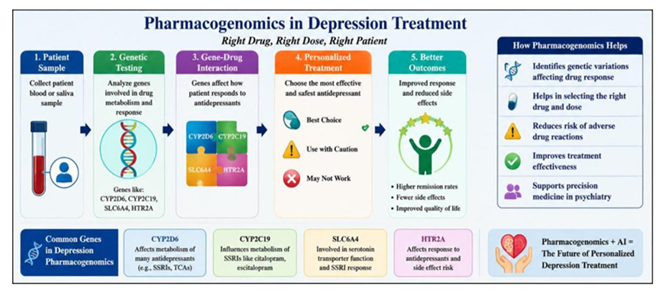
Figure 1: Pharmacogenomics in Depression
5. Artificial Intelligence in Depression Management
Artificial intelligence (AI) is increasingly being applied to enhance the diagnosis and management of depression. By analyzing large volumes of clinical, genetic, and behavioral data, AI can help predict treatment response, identify patients at risk of relapse, and support clinical decision-making. These technologies havence (AI) is increasingly being applied to enhance the diagnosis and management of depression. By analyzing large volumes of clinical, genetic, and behavioral data, AI can help predict treatment response, identify patients at risk of relapse, and support clinical decision-making. These technologies have the potential to improve personalized care, optimize treatment outcomes, and assist healthcare professionals in delivering more effective and timely interventions.
Table 2: Applications of Artificial Intelligence in Depression
|
AI Application |
Clinical Use |
|
Machine Learning |
Predict treatment response |
|
Deep Learning |
Analyze neuroimaging data |
|
Natural Language Processing |
Detect depressive symptoms from speech or text |
|
Clinical Decision Support |
Assist antidepressant selection |
|
Predictive Analytics |
Identify relapse and suicide risk |
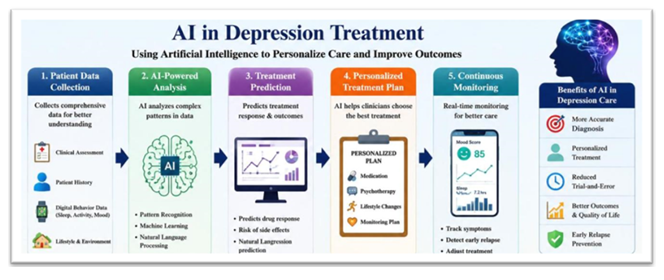
Figure 2: Artificial Intelligence in Depression treatment
6. Integration of Pharmacogenomics and Artificial Intelligence
The integration of pharmacogenomics and artificial intelligence (AI) represents a major advancement in precision psychiatry. Pharmacogenomic data offer insight into an individual’s genetic profile, while AI can rapidly analyze these data alongside clinical information to support personalized treatment decisions. Together, these approaches may improve antidepressant selection, optimize dosing, reduce the risk of adverse drug reactions, and enhance overall treatment outcomes. Despite their promise, further clinical validation is required before widespread adoption in routine practice.
7. Recent Clinical Evidence (2023-2026)
Recent studies have demonstrated the growing potential of pharmacogenomics and artificial intelligence (AI) in the management of depression. Pharmacogenomic-guided treatment has been associated with improved antidepressant selection, better treatment response, and a lower risk of adverse drug reactions in selected patient populations. At the same time, AI-based models have shown promising results in predicting treatment response, identifying patients at risk of relapse, and supporting clinical decision-making through the analysis of clinical and genetic data. Emerging evidence also suggests that integrating pharmacogenomic information with AI-driven predictive models may further enhance personalized treatment strategies. Although these findings are encouraging, additional large-scale, multicenter clinical studies are required to validate their effectiveness, cost-effectiveness, and applicability across diverse populations before routine implementation in clinical practice.
Table 3: Summary of Recent Clinical Evidence (2023-2026)
|
Author |
Year |
Study Type |
Main Finding |
|
Bousman CA.et.al |
2023 |
Systematic Review |
Pharmacogenomic-guided therapy improved treatment response. |
|
Brown LC.et.al |
2024 |
Cohort Study |
AI accurately predicted antidepressant response. |
|
Bradley P.et.al |
2024 |
Randomized Trial |
Personalized prescribing reduced adverse drug reactions. |
|
Topol EJ.et.al |
2025 |
Review |
AI and pharmacogenomics showed complementary benefits. |
|
Amare AT.et.al |
2026 |
Clinical Study |
Integrated precision psychiatry improved clinical outcomes. |
8. Challenges and Future Directions
Although pharmacogenomics and AI hold considerable promise, several barriers must be addressed before they can be fully integrated into routine psychiatric care. These include the limited representation of diverse populations in genomic datasets, variability in test interpretation, concerns regarding data privacy and algorithmic bias, and the need for prospective trials demonstrating clinical utility and cost-effectiveness. Future progress will depend on larger multiethnic studies, standardized reporting frameworks, transparent AI models, and closer collaboration among clinicians, geneticists, data scientists, and policymakers. As the evidence base expands, these tools may play an increasingly important role in guiding individualized antidepressant therapy and improving patient outcomes.
Conclusion
Precision psychiatry represents a significant advancement beyond the traditional trial-and-error approach to the treatment of depression, offering the potential for more individualized and effective care. The integration of pharmacogenomics and artificial intelligence may enhance antidepressant selection, improve therapeutic outcomes, and reduce the risk of adverse drug reactions. Although important challenges remain, including clinical validation, cost, accessibility, and ethical considerations, ongoing research continues to reinforce the value of these technologies. With continued progress and multidisciplinary collaboration, precision psychiatry may become an integral component of routine mental healthcare, supporting more effective and patient-centered management of depression.
References
- World Health Organization. Depression [Internet]. Geneva: World Health Organization (2025).
- American Psychiatric Association. Practice Guideline for the Treatment of Patients with Major Depressive Disorder. 4th ed. Washington (DC): American Psychiatric Association (2023).
- Bousman CA, Bengesser SA, Aitchison KJ, Amare AT, Aschauer H, Baune BT, et al. Review and consensus on pharmacogenomic testing in psychiatry. Pharmacopsychiatry 56 (2023): 5-17.
- Clinical Pharmacogenetics Implementation Consortium (CPIC). CPIC guideline for CYP2D6 and CYP2C19 genotypes and antidepressant dosing. Clin Pharmacol Ther 114 (2023): 829-838.
- National Institute for Health and Care Excellence (NICE). Depression in adults: treatment and management (NG222). London: NICE (2022).
- Olesen J, Gustavsson A, Svensson M, Wittchen HU, Jönsson B. The economic cost of brain disorders in Europe. Eur J Neurol 19 (2012): 155-162.
- Topol EJ. High-performance medicine: the convergence of human and artificial intelligence. Nat Med 25 (2019): 44-56.
- Rajpurkar P, Chen E, Banerjee O, et al. AI in health and medicine. Nat Med 28 (2022): 31-38.
- Machine Learning for Mental Health in the Clinical Setting: Systematic Review. J Med Internet Res 26 (2024).
- Bousman CA, Hopwood M. Commercial pharmacogenetic-based decision-support tools in depression: current evidence and future directions. BJPsych Open 10 (2024).
- National Alliance on Mental Illness. Mental Health by the Numbers [Internet]. Arlington (VA): NAMI (2025).
- International Society of Psychiatric Genetics. Genetic testing statement for psychiatric disorders. Psychiatr Genet 34 (2024): 45-54.
- CPIC® Guideline for Serotonin Reuptake Inhibitor Antidepressants and CYP2D6/CYP2C19 Genotypes. Clin Pharmacol Ther (2023).
- National Institute of Mental Health. Major Depression [Internet]. Bethesda (MD): NIMH (2025).
- Topol EJ. Artificial intelligence in medicine: opportunities and challenges. Lancet Digit Health 6 (2024): 123-132.