Arif A Faruqui*
Department of Pharmacology, Clinical Pharmacologist, Maharashtra, India
*Corresponding Author: Arif A Faruqui, Department of Pharmacology, Clinical Pharmacologist, A 504, Rizvi Mahal Opp. K.B. Bhabha Hospital, Waterfield road Bandra West 400050, Maharashtra, India
Received: 05 August 2019; Accepted: 06 September 2019; Published: 23 September 2019
Aim: The aim of the study was to determine the prevalence of abnormal uterine bleeding and its various patterns from the gynecologists across the country and the preferred therapy in the management of AUB.
Material and Methods: The survey was conducted amongst 141 gynecologists across the country. Information was collected by filling up a questionnaire that contained information regarding menstrual cycle irregularities, preferred therapy and alternatives which can be preferred over hormonal prescriptions in case of therapy failure. Statistical data analysis was performed with Microsoft excel 2010 and expressed in percentages.
Results: Prevalence of AUB as per this survey is in line with the global data which states that overall prevalence fluctuates in between 10-30%. In this survey, doctors reported 32.72% of females visit their clinic due to AUB. Females of reproductive age group accounted for a major percentage of menstrual irregularities and the most common condition quoted was menorrhagia in 16.06%. Doctors also shared their experience in terms of preferred therapy in the management of AUB and also the percentage of discontinuation/refusal by females for hormonal therapy.
Conclusion: The result of the study concluded that significant number of female have issue of abnormal uterine bleeding and limitations of existing therapy leading to discontinuation/refusal opens the door for exploring still safer options in managing AUB.
Abnormal uterine bleeding, Hormonal therapy, Non-hormonal therapy, Survey
1. Introduction
Abnormal uterine bleeding (AUB) is the most common symptom of gynecological conditions, which is defined as any type of bleeding in which the duration, frequency, or amount is excessive for an individual patient [1]. This questionnaire based study was carried out amongst 141 doctors from various states in India. The main objective behind conducting this survey was to gather doctor centric data because even after extensive literature search, none of the published evidence could be procured which can throw some light on discontinuation rate, refusal for hormonal therapy and alternative drugs adopted for AUB management in Indian context. The desired information was collected with a self-designed questionnaire that contained information regarding overall prevalence of AUB, prevalence based on age groups; prevalence of AUB based on cycle length and duration, preferred therapy for AUB, recurrence rate after treating with preferred therapy and also contained the information regarding preferred use of alternative therapy if any. Statistical data analysis was performed with Microsoft Office Excel 2010 and expressed in the form of numbers and percentages. The survey conducted was doctor centric wherein their view was taken into account for bringing out few facts and figures related to AUB and its current management trend in Indian females.
2. Materials and Methods
This study was carried out amongst 141 doctors (MD/ MS/ DGO) across the country from various states (Karnataka, Maharashtra, Orissa, West Bengal, Andhra Pradesh, Chennai, Telangana, MP, Delhi, Bihar, Uttarakhand, Jharkhand, Kerala, UP, Gujarat) in India.
The questionnaire used for this study consisted of 10 items as listed below:
|
1 |
What is the overall prevalence of AUB in Indian women? |
|
2 |
Prevalence of AUB is commonest in which of the following subset of women? (a) Menarche (b) Reproductive Age Group (c) Post-menopause |
|
3 |
What % of patients visiting your clinic have the following issues? Frequent menses (a) 5% (b) 10% (c) 15% (d) 20% Less frequent menses (a) 5% (b) 10% (c) 15% (d) 20% Amenorrhea (a) 5% (b) 10% (c) 15% (d) 20% Heavy menses (a) 5% (b) 10% (c) 15% (d) 20% Heavy and frequent menses (a) 5% (b) 10% (c) 15% (d) 20% |
|
4 |
What % of patients on hormonal therapy show recurrence after cessation of therapy? |
|
5 |
What is the preferred duration of hormonal therapy for management of AUB? (a) <3 months (b) 3-6 months (c) 6-9 months (d) 9-12 months |
|
6 |
In what % of patients do you use alternative/ herbal/food supplement for management of AUB? |
|
7 |
What % of patients with AUB require: (a) Hormonal Therapy (b) Non-Hormonal Therapy (c) Surgery |
|
8 |
What % of patients discontinues therapy due to adverse effects? (a) Hormonal Therapy (b) Non-Hormonal Therapy |
|
9 |
What % of patients refuses for hormonal therapy? |
|
10 |
If a non-hormonal therapy (of a single plant extract) backed by international scientific evidence and WHO recommendation is available, would you consider using it in your practice? |
Data obtained was analysed with Microsoft Office Excel 2010 and expressed in the form of number and percentage.
3. Results
The result of this question based study on various parameters is as follows. In this study, data from 141 doctors was analyzed. As per the designed questionnaire the doctors were asked to mention
- Percentage of women visiting their clinic with symptoms of AUB. As per the data collected from this study, doctor’s from various part of the country confirmed that around 32.72% of females visit their clinic with symptoms of AUB.
- Percentage prevalence among different age group of females with AUB categorized as: menarche, reproductive age, postmenopausal. 82.9% of females in reproductive age attended the doctor’s clinic due to AUB which is tabulated below along with graphical representation (Table 1 and Figure 1).
- To further categorize doctors were asked to specify the percentage of females attending their clinic due to AUB with concerns based on cycle length and/or blood flow and results are tabulated in Table 2. Based on the doctor’s response received during the survey, it was observed that 16.06% of females that visit their clinic suffer from menorrhagia followed by menometrorrhagia, polymenorrhea, oligomenorrhoea and amenorrhea (Figure 2).
- Percentage of doctors prescribing hormonal/non-hormonal/alternative
Medicine/surgical therapy for those suffering from AUB is tabulated in Table 3 wherein, it was seen that although 43.85% of the doctors prescribe hormonal therapy still there are 17.36% of them who prefer prescribing alternative medicine which gives a hope of treatment for those female patients who face either treatment failure due to tolerability issues or have recurred/relapsed after treatment cessation (Figure 3).
- Doctors were asked to specify the preferred duration of prescribing hormonal therapy for management of AUB. 78.01% doctors prefer to prescribe for 3-6 months for getting better results (Table 4 and Figure 4).
- Recurrence after cessation of hormonal therapy is one of the main issue to be addressed while management of various menstrual irregularities in women suffering from AUB. Doctors reported that around 28.94% of females show recurrence and hence it becomes important to be equipped with therapy which can be helpful in such females from getting complete cure rate with minimal side effects and efficacy at par with hormonal therapy.
- The questionnaire is first of its kind to cover the percentage prevalence of females discontinuing the prescribed therapy (both hormonal and non-hormonal) due to adverse effects (Table 5). The data collected from doctors’ show that almost 26.41% and 15.8% of females on hormonal and non-hormonal therapy respectively discontinue the treatment (Figure 5).
- AUB in females is very common, but due to underreporting and lack of awareness among the population it’s not highlighted much. However, females who are aware of the adverse effects like breakthrough bleeding, acne, recurrence after therapy cessation etc. of existing prescribed therapy refuse for therapy. During this survey it was observed that around 22.28% of females refuse for taking hormonal therapy and hence it becomes important from clinical point of view to treat such patients with therapy that has excellent safety and tolerability profile to improve patient’s adherence for the therapy.
- Doctors were asked to give their opinion w.r.t phytopharmceutical as the choice of therapy in those females who discontinue or refuse hormonal therapy (Table 6). Looking at the percentage of discontinuation, relapse and refusal 92.19% of doctors were of opinion to prescribe a phytopharmaceutical (plant extract) product provided it is supported with safety and efficacy studies (Figure 6).
|
Reproductive Age (%) |
Menarche (%) |
Post-menopause (%) |
|
|
117 (82.9) |
18 (12.7) |
13 (9.21) |
|
Table 1: Percentage Prevalence of AUB in various subsets.
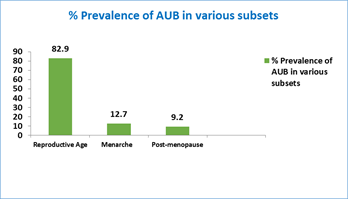
Figure 1: Prevalence of AUB in different subsets.
|
Frequent menses (polymenorrhea) % |
Less frequent (oligomenorrhoea) % |
Absence of menses % |
Heavy menses (menorrhagia) % |
Heavy and irregular ( Menometrorrhagia) % |
|
12.7 |
10.14 |
9.01 |
16.06 |
15.46 |
Table 2: Various types of AUB based on cycle length and blood flow.
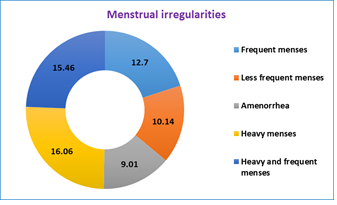
Figure 2: AUB based on cycle length and blood flow.
|
Preferred |
Hormonal Therapy |
Non-hormonal |
Alternative Medicine |
Surgical Therapy |
|
43.85 |
24.84 |
17.36 |
21.69 |
Table 3: Preferred therapy for management of AUB.
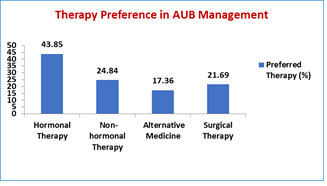
Figure 3: Preferred therapy for management of AUB.
|
Duration of |
<3 months (%) |
3-6 months (%) |
6-9 months (%) |
9-12 months (%) |
||
|
4.25 |
78.01 |
15.6 |
2.12 |
|||
Table 4: Duration of therapy preferred in management of AUB.
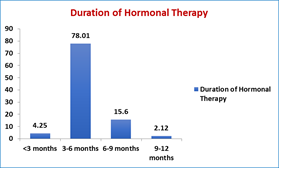
Figure 4: Preferred duration of therapy in management of AUB.
|
% Prevalence |
Patient discontinuing |
Patient discontinuing non-hormonal therapy |
|
26.41 |
15.8 |
Table 5: Percentage of Patients Discontinuing Therapy used in management of AUB.
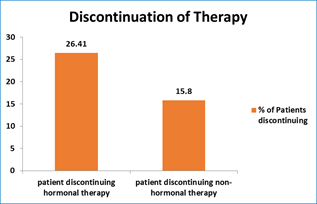
Figure 5: Percentage of patients discontinuing therapy.
|
(%) Prescribers ready t |
Yes |
May be |
No |
|
92.19 |
2.83 |
4.96 |
Table 6: % Preference for Phytopharmceutical in Management of AUB.
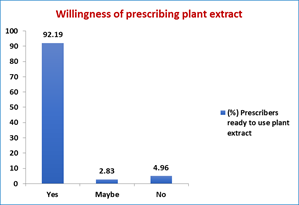
Figure 6: % of Prescribers willing to give phytopharmaceutical as an alternative to hormonal therapy.
4. Discussion
Menstruation is a natural, normal biological process experienced by all adolescent girls and women in reproductive age [2]. Excessive or inappropriately timed bleeding from the vagina is one of the most common complaints for which women seek advice from medical healthcare providers [2]. In a study conducted among the women of rural India, 60.6% were having menstrual disorders as one of the common gynaecological diseases [3]. One of the major issue encountered during surveys have been underreporting. Bang et al. found that only 7-8% of the women had ever had a gynaecological examination in the past, even though 55% were aware of having gynaecological disorders [3].
Amita et al. had conducted a patient centric survey in Central India (Madhya Pradesh) to understand the patterns of menstruation and identify the prevalence of common menstrual disorders among women of rural areas. As per the data collected from patients attending PHC OPD, it was seen that 24.56% of subjects reported irregularity in their menstrual cycle [4].
In this doctor centric survey, the percentage prevalence of AUB was accounted as 32.72%. The patient centric study conducted by Amita et al. noted that 7.01% reported for scanty blood flow whereas in the doctor centric survey the percentage accounted for amenorrhea was about 9.01%. 21.05% of females enrolled in the survey conducted at PHC in Madhya Pradesh cited for polymenorrhoea while the doctors in our survey reported that around 12.7% females turn up with complain of frequent menses (cycle length <21days). Amita et al in its study reported that 7.01% of females suffer from oligomenorrhea while the gynecologists in our survey reported that approximately 10.14% of females turn up to their clinics with a complain of less frequent menses (cycle length >35 days). The points to be concluded from the current survey is that though there are many published evidences and topics covered on AUB and its scenario in Indian context, still none of them have discussed about the therapy failure due to discontinuation, relapse or refusal and also about the alternative options for treating such subsets of females. One of the basic reasons behind not having such data till date is that majority of studies have been patient centric and hence this survey becomes first of its kind to discuss the doctors’ point of view.
5. Conclusion
This study is first in itself to present the facts on prevalence of AUB and its various patterns from doctor’s point of view. It can be concluded that although the recurrence rate, discontinuation rate or refusal to hormonal therapy is alarmingly high but still the hormonal therapy is the preferred therapy as it is supported by extensive literature and excellent efficacy and tolerability in majority of the patients. Major concern is that what can be done for patients do not tolerate hormonal therapy or refuse to take it or land up with recurrence after discontinuation of therapy. Survey showed that majority of doctors are willing to explore an alternative option provided these phytopharmaceuticals have extensive safety and efficacy data to support its use.
Conflict of Interest
The authors declare no conflicts of interest.
Acknowledgement
The author would like to express his thanks to all practicing gynecologists across India for their active participation in answering all the questions with respect to AUB and help us to enlighten everyone about the pros and cons of the therapy used in daily practice in management of AUB. The author is also thankful to Ms. Kanchan Choudhary for helping to inscribe the manuscript and in performing statistical analysis.
References
- Sun Y, Wang Y, Mao L, Wen J, Bai W. Prevalence of abnormal uterine bleeding according to new International Federation of Gynecology and Obstetrics classification in Chinese women of reproductive age: A cross-sectional study. Medicine (Baltimore) 97 (2018): e11457.
- Howkins, Bourne Shaw’s. Disorders of Menstruation. Textbook of gynecology, 13th edition (2004): 277-290.
- Bang RA, Bang AT, Baitule M, Choudhary Y, Sarmukaddam S, Tale O. High prevalence of gynaecological diseases in rural Indian women. Lancet 1 (1989): 85-88.
- Amita Singh, Arpita Singh, Vandana Dubey. Menstrual Pattern and Prevalence of Menstrual Disorders among women and Adolescent Girls Residing in the Rural Area of Central India, Rewa, Madhya Pradesh. The Indian Practitioner 71 (2018): 18-22.