Imen FRIKHA1*, Sondes Hdijji1, Imen Krichen2, Faten Kallel1, Moez Medhaffer1, Choumous Kallel2, Moez Elloumi1
1Department of Hematology, Faculty of medicine of Sfax, University of Sfax, Tunisia
2Laboratory of Hematology, Habib Bourguiba Hospital, Sfax, Tunisia
*Corresponding Author: Imen FRIKHA, Faculty of medicine of Sfax, University of Sfax, Tunisia
Received: 19 June 2019; Accepted: 10 July 2019; Published: 20 September 2019
Acquired hemophilia A (AHA) is a rare and severe bleeding disorder characterized by the development of autoantibodies against factor VIII. There is no previous study published in our country for AHA. The aim of this study that to describe the clinical symptoms, diagnostic criteria and treatment strategies in patients with AHA in the south of Tunisia. We retrospectively collected all patients diagnosed with AHA in the Department of Hematology of Hedi Chaker Hospital (Tunisia) from 2000 to 2017. The diagnosis was established in the presence of clinical hemorrhagic features associated with the isolated prolongation of the activated partial thromboplastin time (APTT), not corrected after two hours by incubating patient plasma with equal volumes of normal plasma, and with factor VIII less than 50%. We collected five patients with AHA in the South of Tunisia. There were 4 females and 1 male with the median age of 32 years old. The median FVIII C was 7% and the median value of FVIII inhibitor was 11 UB. The most common clinical symptoms were post-partum hematoma in 3 patients (60%), extensive cutaneous hematoma in one patient and hemorrhagic tooth extraction in one patient. All patients were treated in first-line therapy with bypassing agent FVIIa with successful response in 80% of cases. The first-line treatment of bleeding in AHA requires a bypassing agent and the optimal therapeutic strategy to eradicate the inhibitor include immunosuppression with corticosteroids alone or corticosteroids in combination with cyclophosphamide.
Acquired hemophilia A, Bleeding disorders, By-passing agent, Immunosuppressive therapy
1.Introduction
Acquired hemophilia A (AHA) is a rare and severe bleeding disorder characterized by the development of autoantibodies against factor VIII [1, 2]. This bleeding disorder should be suspected in subjects with unexplained hemorrhage and no personal or family history of bleeding. It remains idiopathic in almost half the cases, as in other cases, various etiologies are responsible, including some autoimmune diseases, peripartum, malignant disorders and others [2, 3]. Acute bleeding episodes can be very serious and rapid hemostatic control is necessary to reduce morbidity and mortality. Therapeutic intervention has a dual purpose, fight against bleeding manifestations and eradicate antibodies. In this paper, we describe the clinical symptoms, diagnostic criteria and treatment strategies in five patients with AHA treated in the hematology department of Hedi Chaker Hospital of Sfax, Tunisia.
2. Methods
We collected data from all patients diagnosed with AHA in the Department of Hematology of Hedi Chaker Hospital (Tunisia) over 18 years, from 2000 to 2017. Their clinical and laboratory data were reviewed. AHA cases were diagnosed based on the clinical details (bleeding manifestation with sudden onset, no history of inherited bleeding disorder, and no history of treatment by anticoagulant) and on data for screening coagulation tests. These tests showed the following results:
- Prolonged activated thromboplastine time (APTT), not correctable with normal plasma after 2 hours incubation at 37° with normality of other tests.
- Reduction of functional factor VIII, with normality in the remaining factor.
- The absence of lupus anticoagulant.
We should indicate that we have used Bethesda-Nijmgen method to quantify the inhibitor, and it has shown the presence of anti FVIII inhibitor ≥ 0.6 BETHESDA/ml unit.
3. Results
Five patients were diagnosed with acquired hemophilia A between 2000 and 2017. There were 4 females and 1 male with the median age of 32 years old (range 19-91). In laboratory testing, all patients had prolonged APTT, normal PT and decreased FVIII activity (FVIII C). The median FVIII C was 7% (1%-10%) and the median value of FVIII inhibitor was 11 UB (range 2- 118 UB). The most common clinical symptoms were post-partum hematoma in 3 patients (60%), extensive cutaneous hematoma in one patient (Figure 1) and hemorrhagic tooth extraction in one patient. Etiologic inquiry showed in only one patient cholestasis and hepatic cytolysis with presence of anti-mitochondrial antibodies, which is in favour of primary biliary cirrhosis (Table 1). All patients were treated with bypassing agent FVIIa at one dose of 90 µg/kg. Four of our patients (80%) received at the same time a corticosteroid (dose=1 mg/kg/day) alone for immunosuppressive therapy and one patient received cyclophosphamide (dose=1 mg/kg/day) in combination with a steroid. These treatments stopped the hemorrhage for 4 patients and one patient died of fatal bleeding. Among the 4 survival patients, the response at one month of the bleeding episode was favorable for 3 of them with normalization of hemostasis abnormalities (APTT, FVIIIC).
|
Patient N° |
Age/sex |
Clinical presentation |
APTT (Second) |
FVIIIC |
F VIII inhibitor assay (BU) |
Etiology |
|
1 |
48/M |
Hemorragic tooth extraction |
62/30 |
3,8% |
11 |
Primary biliary cirrhosis |
|
2 |
19/F |
Vaginal hematoma J2 Post partum |
87/30 |
7% |
64 |
Postpartum |
|
3 |
26/F |
surgical wound hematoma J15 post partum |
59/30 |
9,6% |
6 |
Postpartum |
|
4 |
91/F |
Extensive sub-cutaneous hematoma |
41/28 |
1% |
118 |
Idiopathic |
|
5 |
32/F |
Psoas hematoma J10 post partum |
54/30 |
10% |
2 |
Postpartum |
Table 1: Characteristics of acquired hemophilia A patients.
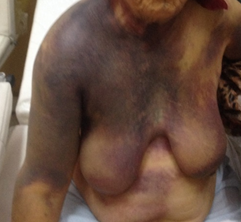
Figure 1: Extensive purpura of a 91 year-old woman with acquired hemophilia A.
4. Discussion
Acquired hemophilia A is a rare condition (5 patients for 18 years in our study) caused by occurrence of inhibitor antibodies to factor VIII [2]. Hemophilia A is the most common subtype with estimated annual incidence around 1-1.5 per million populations [2]. These diseases occur most frequently in elderly patients with a median age over 60 years, at diagnosis [4, 5]. A second frequency peak has been described between the ages of 20 and 30 years in postpartum women [6-8]. The etiology of autoantibody development remains unknown. Some pathological conditions such as postpartum period [1, 5, 8-10], autoimmune disorders (systemic lupus erythematous, rheumatoid arthritis, Sjogren syndrome or thyroid disorders) [1, 5, 6, 10, 11], solid tumors and infections (hepatitis B and C viruses) [5, 8, 9], seem to induce the AHA. However, in over 50% of cases, factor VIII autoantibodies are of idiopathic origin [1, 5, 12]. In our study the most frequent etiology was the postpartum period detected in 60% of AHA cases. Clinical manifestations of the acquired forms are bleeding into skin or muscles, hematuria, hematemesis or melaena, prolonged post-partum or post-operative bleeding, extensive cutaneous purpura and internal hemorrhage [1, 9, 13].
The treatment goals for AHA include immediate control of bleeding, inhibitor eradication with immunosuppressive agents and treatment of any underlying disease. The first-line treatment of bleeding in AHA requires a bypassing agent [5-7, 10-13]. The two available treatments are recombinant activated factor VII (rFVIIa, Novoseven®) and the activated prothrombin complex concentrate (aPCC, Factor Eight Inhibitor Bypassing Activity-FEIBA®) [7, 11, 12]. In our study all patients were received in first line treatment a bypassing agent with r FVIIa underlying a good efficacy in 80%. In the literature, the overall efficacy rate of both bypassing agents (r FVIIa and FEIBA) was about 90% [12, 13]. The optimal therapeutic strategy to eradicate the inhibitor is unknown, but the current recommendations include immunosuppression with corticosteroids alone or corticosteroids in combination with cyclophosphamide [6, 12, 13]. The treatment of acquired hemophilia is complex and associated with a mortality rate of around 10-20 % [5, 6, 10, 14, 15] due to occurrence of fatal hemorrhages such as one of our patients.
5. Conclusion
Acquired hemophilia A (AHA) is a rare and severe bleeding disorder characterized by the development of autoantibodies against factor VIII. The diagnosis was established in the presence of clinical hemorrhagic features associated with the isolated prolongation of the activated partial thromboplastin time (APTT), not corrected after two hours by incubating patient plasma with equal volumes of normal plasma, and with factor VIII less than 50%. The first-line treatment of bleeding in AHA requires a bypassing agent and the optimal therapeutic strategy to eradicate the inhibitor include immunosuppression with corticosteroids alone or corticosteroids in combination with cyclophosphamide.
This topic is:
- Rare disease
- Diagnostic and therapeutic emergency
- Improved prognosis by-passing agents.
This study adds:
- First study in Tunisia
- Good response of by-passing agent
- Optimal treatment similar than the literature.
Competing Interests
The authors declare no competing interest.
Authors’ Contributions
All the co-authors in this manuscript have participated in the research work.
References
- Collins PW, Percy CL. Advances in the understanding of acquired haemophilia A: implications for clinical practice. Br J Haematol 148 (2010): 183-194.
- Collins P, Budde U, Rand JH, et al. Epidemiology and general guidelines of the management of acquired haemophilia and von Willebrand syndrome. Haemophilia 14 (2008): 49-55.
- W Collins P, Chalmers E, Hart D, et al. A United Kingdom Haemophilia Centre Doctors’ Organization (UKHCDO) guideline approved by the British Committee for Standards in Haematology. Diagnosis and management of acquired coagulation inhibitors: a guideline from UKHCDO. Br J Haematol 162 (2013): 758-773.
- Collins P, Baudo F, Knoebl P, et al. Immunosuppression for acquired hemophilia A: results from the European Acquired Haemophilia Registry (EACH2). Blood 120 (2012): 47-55.
- Collins PW, Hirsch S, Baglin TP, et al. Acquired hemophilia A in the United Kingdom: a 2-year national surveillance study by the United Kingdom Haemophilia Centre Doctors’ Organisation. Blood 109 (2007): 1870-1877.
- Knoebl P, Marco P, Baudo F, et al. Demographic and clinical data in acquired hemophilia A: results from the European Acquired Haemophilia Registry (EACH2): Demographics of acquired hemophilia A. J Thromb Haemost 10 (2012): 622-631.
- Santoro RC, Prejanò S. Postpartum-acquired haemophilia A: a description of three cases and literature review: Blood Coagul Fibrinolysis 20 (2009): 461-465.
- Tengborn L, Baudo F, Huth-Kuhne A, et al. Pregnancy-associated acquired haemophilia A: results from the European Acquired Haemophilia (EACH2) registry: Pregnancy-associated acquired haemophilia A. BJOG Int J Obstet Gynaecol 119 (2012): 1529-1537.
- Borg JY, Guillet B, Le Cam-Duchez V, et al. Outcome of acquired haemophilia in France: the prospective SACHA (Surveillance des Auto antiCorps au cours de l’Hémophilie Acquise) registry. Haemophilia 19 (2013): 564-570.
- Sallah S. Treatment of acquired haemophilia with factor eight inhibitor bypassing activity. Haemoph Off J World Fed Hemoph 10 (2004): 169-173.
- Sumner MJ, Geldziler BD, Pedersen M, et al. Treatment of acquired haemophilia with recombinant activated FVII: a critical appraisal. Haemophilia 13 (2007): 451-461.
- Collins P, Baudo F, Huth-Kuhne A, et al. Consensus recommendations for the diagnosis and treatment of acquired hemophilia A. BMC Res Notes 3 (2010): 161.
- Akahoshi M, Aizawa K, Nagano S, et al. Acquired hemophilia in a patient with systemic lupus erythematosus: a case report and literature review. Mod Rheumatol 18 (2008): 511-515.
- KruseJarres R, Kempton CL, Baudo F, et al. Acquired hemophilia A: Updated review of evidence and treatment guidance. Am J Hematol 92 (2017): 695-705.
- Franchini M, Vaglio S, Marano G, et al. Acquired hemophilia A: a review of recent data and new therapeutic options. Hematology 22 (2017): 514-520.