Mboungou-Bouesse Blondy*,1, Boumba Luce Sarrah1, Ngolo Elva1, Mavouba Béril Fabrice1, Gallo Mongo Dieu-Merci Bevelh1, Ngouomo Stellah1, Banafoundoussoua-Nsendo Simon2, Gouollaly Tsiba1, Elion Itou Romaric De Garde1
1National Institute of Health Science & Research, Department of Pharmacopeia and Traditional Medicine, Laboratory of Chemistry, Organic Biomolecules and Pharmacodynamics. Science city (Ex-ORSTOM), Brazzaville, Congo.
2Association of Traditional Healers of Brazzaville, Republic of the Congo
*Corresponding Author: Mboungou-Bouesse Blondy. National Institute of Health Science & Research, Department of Pharmacopeia and Traditional Medicine, Laboratory of Chemistry, Organic Biomolecules and Pharmacodynamics. Science city (Ex-ORSTOM), Brazzaville, Congo.
Received: 03 August 2026; Accepted: 25 August 2026; Published: 09 October 2026
Anemia remains one of the most widespread public health problems worldwide. The objective of this study was to evaluate the acute toxicity and antianemic activity of an improved traditional medicine (ITM) developed in the Republic of the Congo. Standard methods were used to characterize the major chemical groups contained in the ITM. Two goups of five female mice each were formed. The first group (control) received distilled water, and the second was treated with a single oral dose of 5,000 mg/kg body weight (BW) of the ITM. Five additional groups of 5 male Wistar rats were formed, and hemolytic anemia was induced in the other four groups (II through V). 20 mg/kg body weight (BW) of 2,4-dinitrophenylhydrazine was administered for 7 days. Subsequently, all these rats were fed for the 14 days following the induction of anemia: group I: normal diet (normal control), group II: normal diet (negative control), group III: normal diet + 50 mg/kg BW of Ferrex Forte® (positive control), group IV: normal diet + 1.5 mg/kg of ITM, and group V: normal diet + 3 mg/kg of ITM. These results showed that at doses of 2,000 and 5,000 mg/kg administered orally, ITM does not alter biological parameters (hematological parameters) and does not cause any deaths. Nevertheless, it partially promoted body weight gain. However, ITM was not toxic at the oral doses studied and exhibited significant anti-anemic activity. Treatment with ITM, as well as with Ferrex Forte®, partially or completely restored the various hematological parameters measured at the end of the study. Furthermore, this study also shows that ITM contains polyphenols, flavonoids, tannins, saponosides, and alkaloids, the various bioactive constituents likely responsible for its pharmacological effect.
Anemia, ITM, Toxicity, Hematological Parameters, Phytochemistry
Anemia articles, ITM articles, Toxicity articles, Hematological Parameters articles, Phytochemistry articles
Introduction
Anemia remains one of the major public health concerns, particularly since it is not considered a disease but rather a true a clinical manifestation affecting populations worldwide, especially in developing countries. It is defined as a reduction in circulating hemoglobin levels relative to the expected values for individuals of the same age and sex (Braillard et al, 2012). According to the World Health Organization (WHO), approximately one-quarter (1.62 billion) of the world’s population suffers from anemia (WHO, 2008; Stevens et al, 2013). It can occur at any stage of life, though it is more common among pregnant women and young children (WHO, 2015). Prevalence rates in Africa remain high, affecting 62.3% of children aged 1 to 5, 38.6% of women of childbearing age, and 46.3% of pregnant women (WHO, 2015). The prevalence of anemia ranges from 68% to 95% among patients with HIV/AIDS (Oumar et al, 2009; Diallo and al, 2013).
In the Republic of the Congo, the national prevalence of HIV/AIDS is 3.2% (SEP/CNLS Congo Report, 2014). However, other causes such as severe bleeding, genetic abnormalities, infectious diseases, prolonged use of nonsteroidal medications, and exposure to toxic substances such as phenylhydrazine may be associated with the disease (Assobayire et al, 2001; Tripathi, 2003). Several therapeutic approaches are currently available for the management of anemia. These include oral supplementation with iron, vitamin B9, or vitamin B12; erythropoietin injections; blood transfusions; and bone marrow transplants (Movaffaghi and Hasanpoor, 2006). However, the WHO has adopted a comprehensive action plan on nutrition for mothers, infants, and young children, specifying a series of six global nutrition targets to be achieved by 2025. One of the main objectives, this plan aims to reduce anemia by 40% among children under 5 and by 50% among women of reproductive age (WHO, 2014). Improved traditional medicines (ITMs) may represent a promising complementary approach to the management of anemia. They could help effectively combat the disease and serve as an alternative to conventional hospital care. To this end, harnessing plant-based resources rich in secondary metabolites and micronutrients, which are accessible at low cost, would be a strategy for effectively combating anemia (Anwar et al, 2007). According to the WHO, the Congolese population is increasingly turning to traditional medicine, either through recommendations from traditional healers or through self-medication.
These remedies include improved traditional medicines derived from medicinal plants, of which only 5 to 15 percent have been studied for bioactive molecules, constituting a vast source of potential new medicinal compounds (Fabricant, 2001; Cutler and Curtler, 2000). By bridging the gap between traditional knowledge and scientific research, medicinal plants and improved traditional medicines can be used safely (Iserin et al, 2001). The National Institute for Health Sciences Research (IRSSA), through its expertise, assists product developers and traditional health practitioners in studying any product or substance made available to it in order to evaluate its potential. It is in this context that an ITM was submitted for evaluation for evaluation of its effect against anemia. The ITM is packaged in a plastic container containing three 30-gram sachets. The information on the packaging states that it is a formula derived from three medicinal plants (Ficus auriculata, Hibiscus sabdariffa, and Syzygium aromaticum). However, few in vitro studies have been reported on the anti-anemic effects of improved traditional medicines commonly consumed in the Republic of the Congo. Against this background, the present study was conducted to evaluate the acute toxicity and anti-anemic activity of an improved traditional medicine.
Materials and Methods
Plant Material
The improved traditional medicine (ITM) consists of leaves from Ficus auriculata, Hibiscus sabdariffa, and Syzygium aromaticum, which were first dried, ground using an electric grinder (Retsch SK 100, Germany), and then packaged by the sponsor.
Animal Materials
The animal materials consisted of Wistar rats (males and females) and Swiss albino mice (females) weighing 240–300 g and 20–23 g, respectively. The rats were 16–20 weeks old, and the mice were one month old. These animals were housed in the animal facility of the National Institute for Health Sciences Research (IRSSA) at an ambient temperature of 27 ± 1 °C with free access to a standard diet and tap water, under a 12-hour light/12-hour dark cycle.
Preparation of the improved traditional medicine
A decoction was prepared by adding thirty (30) grams of powder to 1 liter of distilled water, which was then boiled at 100°C for 30 minutes (Kaneria and al, 2012). After cooling, the resulting decoction was double-filtered using cotton wool and Whatman N°1 filter paper. The filtrate was stored in the refrigerator at 4°C for further analysis.
Acute Toxicity Study
The acute toxicity of the improved traditional medicine was evaluated in accordance with OECD Guideline N°423 (2001). This method determines the toxicity class based on the LD50.
Thus, nine mice, fasted for 18 hours prior to the experiment, were divided into three groups of three mice each and treated as follows:
- group 1 (control) received distilled water orally at a dose of 1 mL/30 g of body weight (maximum body weight of the mice);
- groups 2 and 3 were administered single oral doses of 2,000 and 5,000 mg/kg body weight, respectively, of the improved traditional medicine.
After treatment, the animals were observed for 24 hours, with particular attention paid during the first four hours, and then daily until the 14th day. Observations focused on the following symptoms: convulsions, sleep, coma, tremors, salivation, diarrhea, and lethargy. However, the animals were weighed every 2 days throughout the observation period (OECD, 2001).
Induction of Anemia
After determining the hematological profile of 5 groups of 5 rats each, 4 groups were rendered anemic by oral administration of 20 mg/kg of 2,4-dinitrophenylhydrazine (2,4-DNPH) for 7 consecutive days. After performing a complete blood count, only rats with a decrease in hemoglobin levels of more than 30% on the 8th day were considered anemic and selected for the remainder of the experiment (Sani et al, 2015). The group of rats not treated with 2,4-DNPH was designated as group I, and the groups rendered anemic were numbered II through V.
Treatment of Rats with Antianemic Substances
After inducing anemia for 7 days, the groups of 5 rats were treated daily starting on the 8th day for 14 consecutive days as follows:
- group I: normal diet (normal control);
- group II: normal diet (negative control);
- group III: normal diet + standard anti-anemic agent (Ferrex Forte® at 50 mg/kg body weight) administered orally, positive control;
- group IV: normal diet + ITM (1.5 g/kg body weight);
- group V: normal diet + ITM (3 g/kg body weight).
group I consists of non-anemic rats, and groups II through V consist of anemic rats.
Determination of Hematological Parameters
At the end of treatment, blood samples were collected from the rats and placed in EDTA tubes to measure the following hematological parameters using an automated analyzer (ABX Micros 60): Red blood cells (RBCs), hemoglobin (Hb), hematocrit (HCT), mean corpuscular volume (MCV), mean corpuscular hemoglobin (MCH), and mean corpuscular hemoglobin concentration (MCHC) (Ekweogu et al, 2019).
Phytochemical Screening
A qualitative study based on the identification of certain phytochemical groups was conducted. It focused on terpenes, flavonoids, tannins, saponosides, anthocyanin flavonoids (anthocyanins), and alkaloids. Standard methods were used (Tidiane et al, 2021). It was prepared using an aqueous extract of ITM powder.
Data Analysis
Statistical analysis and graphical representation of the data were performed using GraphPad Prism 10.4.2 software. All values are presented as the mean ± Standard Error of the Mean (SEM). Statistical differences between the results were assessed using analysis of variance (ANOVA), followed by Tukey-Kramer’s multiple comparison test, with a significance level of 5%. A p-value of <0.05 indicates a statistically significant difference; a p-value of <0.01 indicates a very significant difference; a p-value of <0.001 indicates a highly significant difference; and a p-value of <0.0001 indicates a very highly significant difference.
Results
Oral administration of single doses of 2,000 and 5,000 mg/kg of PC from ITM to mice did not produce any observable changes in the general condition or behavior of the mice (aggression, mobility, spontaneous sleep, salivation, tremor, pinch response, convulsions, and eye condition), similar to the control mice (Table I). In contrast, administration of ITM induced a significant increase in weight gain in mice treated with a dose of 5,000 mg/kg PC compared to the control group (***p < 0.0001) throughout the observation period (Figure 1).
Table I: Assessment of general behavior in mice following oral administration of the improved traditional medicine (ITM).
|
Parameters |
Treatments |
||
|
ED (1 mL/100 g) |
ITM (2,000 mg/kg) |
ITM (5,000 mg/kg) |
|
|
Number of animals |
3 |
3 |
3 |
|
Mobility |
N |
N |
N |
|
Aggression |
A |
A |
A |
|
Diarrhea |
A |
A |
A |
|
Tremor |
A |
P |
P |
|
Sleep |
A |
A |
A |
|
Pain sensitivity |
A |
P |
P |
|
Respiration |
N |
N |
N |
|
Raised hair |
A |
A |
A |
|
Ptosis |
A |
A |
P |
|
Number of deaths |
0 |
0 |
0 |
DW: Distilled water; A: absent; N: normal; P: present.
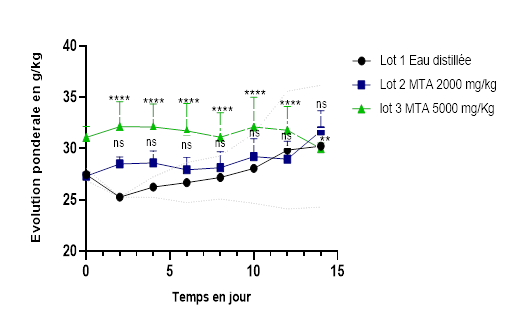
Figure 1: Effects of ITM on weight gain in mice. Each data point represents a mean ± SEM, n = 5; **p < 0.01, ****p < 0.0001: significant difference compared to controls (distilled water); ns: no significant difference compared to controls (distilled water).
Antianemic Effects of ITM in Male Rats
Effects on Red Blood Cell Count
Figure 2 illustrates the antianemic effect of ITM in rats treated with 2,4-DNPH. Daily oral administration of 2,4-DNPH induced a highly significant decrease in red blood cell (RBC) counts in animals in group 2 (p < 0.01) on the 7th day. However, ITM supplementation led to a significant recovery in red blood cell counts comparable to the effect of Ferrex Forte® (positive control), even though the counts remained statistically lower (p<0.05). As for the negative control, its red blood cell count remained very significantly lower than that of the normal control (p<0.01) (Figure 2).
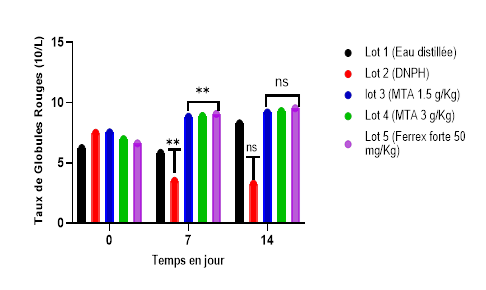
Figure 2: Effect of ITM and Ferrex Forte on changes in red blood cell counts induced by 2,4-DNPH. Each data point represents a mean ± SEM, n = 5; **p < 0.01, significant difference compared to Day 0 ns: no significant difference compared to Day 7.
Effects on Hemoglobin Levels
2,4-DNPH induced a significant decrease in hemoglobin levels in treated rats (p < 0.01) on day 7. Administration of Ferrex Forte® (50 mg/kg) and supplementation with ITM (1.5 and 3 g/kg) significantly significantly restored hemoglobin levels in hemoglobin (Hb) (p<0.001) induced by 2,4-DNPH compared to the normal control group (p>0.05).
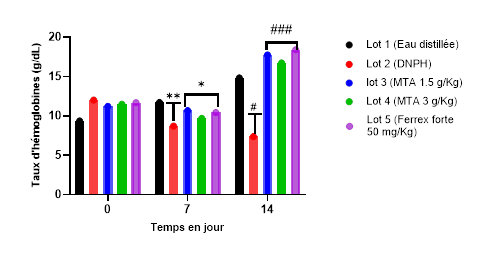
Figure 3: Effect of ITM and Ferrex Forte on 2,4-DNPH-induced hemoglobin reduction. Each data point represents a mean ± SEM, n = 5; *p < 0.05, **p < 0.01, significant difference compared to Day 0; #p < 0.05, ###p < 0.001, significant difference compared to Day 7.
Effects on Hematocrit Levels
Administration of Ferrex Forte® (50 mg/kg) completely reversed the highly significant decrease in red blood cell volume relative to total blood volume caused by 2,4-DNPH (Figure 4). ITM supplementation (1.5 and 3 g/kg) resulted in an increase in hematocrit (HCT) levels on day 14 (p < 0.001), compared to the normal control (p < 0.05). The hematocrit in the normal control (group 1) remained very significantly lower than that of the negative control.
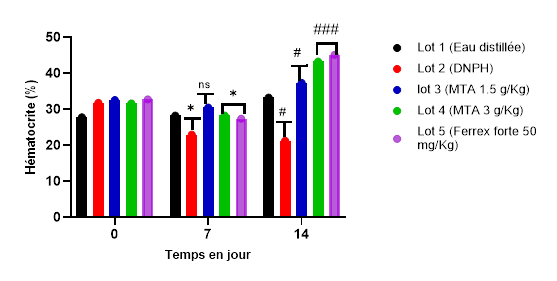
Figure 4: Effect of ITM and Ferrex Forte on 2,4-DNPH-induced hematocrit reduction. Each data point represents a mean ± SEM, n = 5; *p < 0.05, significant difference compared to Day 0; ns: no significant difference compared to Day 0; #p < 0.05, ###p < 0.001: significant difference compared to Day 7.
Effects on mean corpuscular hemoglobin
Administration of 2,4-dinitrophenylhydrazine (2,4-DNPH) resulted in a decrease in mean corpuscular hemoglobin (MCH) compared with the negative control group (Figure 5). Treatment with Ferrex Forte® (50 mg/kg) and ITM at the tested doses (1.5 and 3 g/kg) significantly increased mean corpuscular hemoglobin (MCH) on Day 14 (p < 0.001).
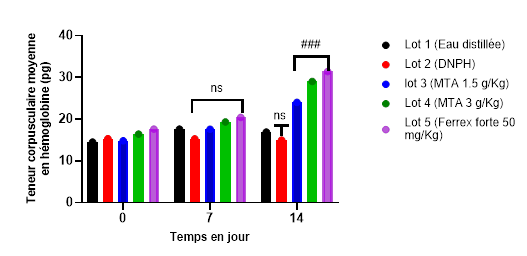
Figure 5: Effect of ITM and Ferrex Forte® on the change in mean corpuscular hemoglobin concentration induced by 2,4-DNPH. Each data point represents a mean ± SEM, n = 5; ns: no significant difference compared to Day 0; ###p < 0.001: significant difference compared to Day 7.
Effects on the mean corpuscular hemoglobin concentration
Treatment with 2,4-DNPH induced a significant decrease in the mean corpuscular hemoglobin concentration (MCHC) (p < 0.05). However, this effect was completely suppressed by ITM (1.5 and 3 g/kg) as well as by Ferrex Forte® (50 mg/kg) in the treated groups, compared to the normal control (p > 0.05). The MCHC in group II (negative control) remained lower than that of the normal control (p < 0.05) (Figure 6).
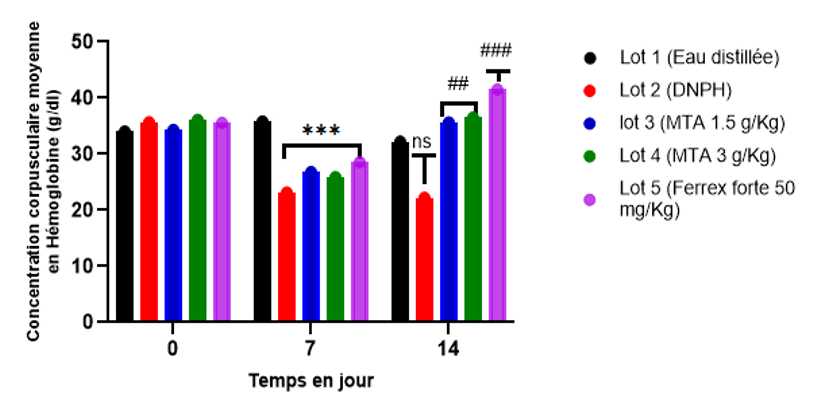
Figure 6: Effect of ITM and Ferrex Forte on the decrease in mean corpuscular hemoglobin concentration induced by 2,4-DNPH. Each data point represents a mean ± SEM, n = 5; ***p < 0.001, significant difference compared to Day 0; ns: non-significant difference compared to Day 7; ##p < 0.01, ###p < 0.001: significant difference compared to Day 7.
Phytochemical Study
Table II summarizes the phytochemical composition of the improved traditional medicine
Table II: Test Tube Reactions
|
Compounds Sought |
Reagents/Test |
Results |
|
Phenolic compounds |
Liebermann reaction |
+ |
|
Flavonoids |
Hydrochloric acid plus isoamyl alcohol and a few magnesium shavings |
+ |
|
Tannins |
Iron chloride |
+ |
|
Free flavonoids |
Cyanidin reaction |
+ |
|
Alkaloids |
Dragendorff |
+ |
|
Saponins |
Presence of persistent foam under specified conditions |
- |
(+): presence; (-): Absence. Table II shows that all tested compounds are present in the ITM, with the exception of saponins.
Discussion
The acute toxicity study of ITM showed that administration of single doses of 2,000 and 5,000 mg/kg of PC by oral gavage did not cause any signs of toxicity or death in mice at the doses studied, which means that the LD50 of this ITM remains greater than 5,000 mg/kg of BW. These results allow this ITM to be classified in GHS (Globally Harmonized System of Classification and Labeling of Chemicals) Hazard Class 5 with an LD50 > 5,000 mg/kg, corresponding to substances with relatively low acute toxicity (OECD, 2001). These results suggest that the ITM is relatively well tolerated in mice. ITM appears to promote body weight gain. It is possible that increased food intake could explain the increase in body weight in the mice. The study of ITM’s anti-anemic effects showed that, prior to 2,4-DNPH administration, the values of hematological parameters in the Wistar strain rats used in the experiment did not differ significantly. These results are consistent with the reference values for hematological parameters in rats (Okou et al, 2020). This would suggest that these animals did not develop abnormalities related to these parameters prior to our experiment. These results also show that blood cell counts can vary within the same population or from one environment to another (Gui et al, 2019).
Oral administration of 2,4-DNPH resulted in a significant average decrease in red blood cell count, hemoglobin level, hematocrit, mean corpuscular hemoglobin concentration (MCHC), total corpuscular hemoglobin (TCH), and mean corpuscular volume (MCV) compared to control rats. The reductions in red blood cell count, hemoglobin levels, and mean corpuscular hemoglobin concentration were more than 50% and 35%, respectively. This suggests that administration of 2,4-DNPH to rats at a dose of 20 mg/kg body weight caused anemia. Indeed, according to Saini et al. (2015), a reduction of more than 30% in these parameters indicates anemia. These results are consistent with those of Muhammad et al, (2020) and Umerah et al. (2020), who observed a decrease in red blood cell count, hemoglobin levels, and hematocrit, respectively, after administering a 20 mg/kg body weight oral dose of 2,4-DNPH to rats for one week. Phenylhydrazine, like its derivative 2,4-DNPH, is an antipyretic drug that can cause hemolytic anemia in both humans and rats (Ashour et al, 2014). Indeed, it induces destruction of the protein skeleton of red blood cells, peroxidation and alteration of membrane phospholipids, oxidative destruction of hemoglobin, depletion of glutathione and ATP, and a reduction in membrane deformability (Shukla et al, 2012). In the same study, supplements of 1.5 g/kg body weight and 3 g/kg body weight, as well as Ferrex Forte® at 50 mg/kg body weight, led to an increase in red blood cell count, hemoglobin, hematocrit, CCMH, VGM, and TCMH, while completely or partially counteracting the effect of 2,4-DNPH. These results are similar to those obtained by Coulibaly et al. (2020), who studied diets based on Moringa oleifera leaves (50% and 100%), and to those of Omoregie and Osagie (2007) on Jatropha tanjorensis leaf supplements in anemic rats.
Furthermore, the results obtained may suggest that ITM increases the red blood cell resistance. However, ITM may exert antioxidant effects by chelating copper and iron ions, while scavenging hydroxyl and superoxide free radicals (Félix-Silva et al, 2014). This action would result in the protection of the erythrocyte cell membrane against the effects of 2,4-DNPH.Furthermore, Ferrex Forte® 50 mg/kg is an iron-based antianemic agent; iron is an essential component of hemoglobin, and folic acid plays an important role in DNA synthesis and, consequently, in cell proliferation. Furthermore, it has been shown that phenylhydrazine is a chemical capable of binding to erythropoietin receptors, a hormone that regulates hematopoiesis, and to inhibit the cascade of reactions leading to the expression of the gene responsible for erythrocyte production (Pandey and al, 2014). This hormone increases the number of sensitive erythroblasts in the bone marrow, which are converted into reticulocytes and later into mature red blood cells (Sanchez-Elsner et al, 2004). The effect of ITM on anemia could be explained by substances contained in the ITM powder that are generally capable of acting like erythropoietin by binding to its receptors and competing with 2,4-DNPH or by employing another mechanism to increase erythrocyte levels. Phytochemical screening of ITM revealed the presence of polyphenols, flavonoids, tannins, saponosides, and alkaloids. Polyphenols and flavonoids are potent agents with anti-anemic, anti-inflammatory, anti-carcinogenic, antimicrobial, cardioprotective, and anti-diabetic properties (Mitsunari et al, 2021; Mustafa et al, 2022; Yoshioka et al, 2022). Finally, the partial or complete recovery of GR, Hb, MCV, MCH, and MCHC suggests that ITM restored the size and hemoglobin content of erythrocytes, which is indicative of cell proliferation and normal hemoglobin synthesis. The same finding was reported by Coulibaly et al, (2020) and by Muhammad et al. (2020) using an extract from the leaves of Phyllanthus niruri.
Conclusion
The improved traditional medicine studied is used in traditional medicine, either alone or in combination with other plants, to treat several conditions, including iron-deficiency anemia. Oral administration of ITM at the doses studied (2,000 and 5,000 mg/kg) resulted in neither mortality nor any notable partial or general changes in certain biological parameters (hematological parameters). This product slightly promotes weight gain and appears to be non-toxic when administered orally. ITM has also shown promising anti-anemic activity, as it restores hematological parameters by counteracting the anemic effect induced by 2,4-DNPH. However, a study is needed on its effects regarding biochemical parameters in order to better assess the impacts on certain vital organs. Phytochemical screening of ITM also reveals that this product is rich in polyphenols, free flavonoids, tannins, alkaloids, and saponosides, which are believed to be responsible for the pharmacological effect observed in this study. Furthermore, fractionation of the phytochemical constituents of ITM to identify the compounds responsible for its anti-anemic effects would be of interest.
Conflict of Interest: The authors declare that they have no conflict of interest.
References
- Anwar F, Latif S, Achraf M, et al. Moringa oleifera: une plante alimentaire aux multiples usages médicinaux. Phytotherapy Research 21 (2007) : 17-25.
- Ashour T. Hematinic and anti-anemic effect of thymoquinone against phenylhydrazine-induced hemolytic anemia in rats. Research Journal of Medical Sciences 8 (2014): 67–72.
- Assobayire F, Adou P, Davidson L, et al. Prevalence of iron deficiency with and without concurrent anemia in population groups with high prevalences of malaria and other infections: a study in Côte d'Ivoire Nutrition, 74 (2001): 776-782. 11722959.
- Braillard A, Casini K, Samii P, et al. Treatement of anemia due to iron deficiency, hypovitaminose B12 8 (2012): 10-1805.
- Coulibaly A, Gnangoran B, Oussou N, et al. Evaluation of Moringa Oleifera Lam leaves (Moringaceae) diets against induced anaemia in Wistar rats. EAS Journal of Nutrition and Food Sciences 2 (2020): 101-106.
- Cutler S, Cutler H. biologically active natural products: Pharmaceuticals. CRC Press (2000): 277.
- Diallo D, Baby M, Dembélé M, et al. Fréquence, facteurs de risque et valeur pronostique de l’anémie associée au VIH/sida chez l’adulte au Mali. Bull. Soc Patho Exot 96 (2003): 123- 127.
- Ekweogu C, Ude V, Nwankpa P, et al. Ameliorative effect of aqueous leaf extract of Solanum aethiopicum on phenylhydrazine-induced anaemia and toxicity in rats. Toxicology Research 36 (2019): 227-238.
- Fabricant D. Farnsworth NR, the value of plants used in traditional medicine for drug discovery, Environ Health Perspective (2001): 69-75.
- Félix-Silva J, Souza T, Camara R, et al. In vitro anticoagulant and antioxidant activities of Jatropha gossypiifolia (Euphorbiaceae) leaves aiming therapeutical applications. BMC Complementary and Alternative Medicine 14 (2014): 405.
- Gui P, Bahi C, Kamou K, et al. Study of antianemic properties of Parquetina nigrescens (Apocynaceae) in wistar rats. The Journal of Phytopharmacology 8 (2019): 216-219.
- Iserin P, Masson M, Restellini J, et al. Encyclopédie des plantes médicinales, 2eme édition, Londres: Larousse/VUEF (2001): 335.
- Kaneria M, Kanani B, Chanda S. Assesment of effect of hydroalcoholic and decoction methods on extraction of antioxydants from selected Indian medicinal plants. AsianPacific Journal of Tropical Biomedicine 2 (2012): 195-202.
- Mitsunari K, Miyata Y, MatsuoT, et al. Pharmacological Effects and Potential Clinical Usefulness of Polyphenols in Benign Prostatic Hyperplasia. Molecules 26 (2021):
- Movaffaghi Z, Hasanpoor M. Effet du toucher thérapeutique sur le taux d'hémoglobine et d'hématocrite sanguins. Journal of Holistic Nursing 24 (2006): 41-8.
- Muhammad A, Ibrahim B, Aminu C, et al. Antianaemic Activity of Aqueous Extract of Phyllanthus niruri Linn in 2,4-Dinitrophenylhydrazine Induced Anaemic Rats. Journal of Pharmacy and Pharmacology Research 4 (2020): 79-95.
- Mustafa A, Abouelenein D, Acquaticci L, et al. Polyphenols, Saponins and phytosterols in Lentils and their health benefits:An Overview. Pharmaceuticals 15 (2022):
- Toxicité orale aigue – Méthode de la dose predetermine. In lignes di rectrice de l’OCDE pour les éssais de produits chimiques 1 (2001): 1-15.
- Okou O, Bleu G, Koffi A, et al. Study of variation of haematological parameters at Rattus norgevicus. European Journal of Biomedical and Pharmaceutical Sciences 8 (2020): 15-22.
- OmoregieE, Osagie A. Phytochemical screening and anti-anemic effect of Jatropha tanjorensis leaf in protein malnourished rats. Plant Archives 7 (2007): 509-516.
- Worldwide prevalence of anaemia 1993–2005: WHO global database on anaemia / Edited by Bruno de Benoist, Erin McLean, Ines Egli and Mary Cogswell (2008): 51.
- Global nutrition target 2025: policy brief series. Organisation Mondiale de la Santé, WHO,Geneva, Switzerland (2014): 2.
- The global prevalence of anaemia in 2011, World Health Organization. Geneva, Switzerland (2015): 48.
- Oumar A, Dao S, Goita D. Particularités de l’hémogramme de l’adulte atteint de VIH/SIDA en Afrique : à propos de 200 cas en milieu hospitalier de Bamako, Mali. Douvain Médical 128 (2009): 73-78.
- Pandey K, Meena K, Jain A, et al. Molecular mechanism of phenylhydrazine induced toxicity: a review. American journal of phytomedicine and clinical therapeutics 2 (2014): 390-394.
- Saini V, Mishra R, Mandloi S, et al. Analysis of the Phytochemical Content of Jatropha gossypifolia L. Chemical and Process Engineering Research 35 (2015): 66-104.
- Sanchez-Elsner J, Ramirez F, Rodriguez-Sanz V, et al. A cross talk between hypoxia and TGF-bet orchestrates erythropoietin gene regulation through SPI and Smads. Journal of Molecular Biology 336 (2004): 9-24.
- Sani L, Malami I, Hassan W, et al. Effect of standardized stem bark extract of Mangifera indica in Wistar rats with 2,4-dinitrophenylhydrazine- induced haemolytique anaemia. Pharmacognosy Journal 7 (2015): 89-96.
- SEP/CNLS Congo. Rapport (2009).
- Shukla P, Yadav K, Singh P, et al. Phenylhydrazine induced toxicity: a review on its haematotoxicity. International journal of basic and applied medical sciences 2 (2012): 86-91.
- Stevens G, Finucane M, De-Regil L, et al. Global, regional and national trends in haemoglobin concentration and prevalence of total and severe anaemia in children and pregnant and non-pregnant women for 1995-2011: A systematic analysis of population-representative data. Lancet Global Health 1 (2013): 16-25.
- Tidiane K, Ouattara G, Monon K, et al. Etude phytochimique et activité antioxydante des extraits d’écorces de tiges de Vitellaria paradoxa C F Gaertn, une plante médicinale utilisée au Nord de la Côte d’Ivoire. European Scientific journal 17 (2021) : 241-251.
- Tripathi K. Essentiel de la pharmacologie médicale. Éditeurs médicaux des frères Jaypee (P) Ltd ; 5e édition (2003): 167-184.
- Umerah N, Okoye J, Asouzu A. Hematology of 2,4(Dinitrophenyl Hydrazine) Induced Anaemic Rat Administered with Ficus capensis Fruits and Leave Extract. Current Journal of Applied Science and Technology 39 (2020): 41-49.
- Yoshioka Y, Ohishi T, Nakamura Y, et al. Anti-Cancer Effects of Dietary Polyphenols via ROS- Mediated Pathway with Their Modulation of MicroRNAs. Molecules 27 (2022) : 3816.