Sandra K. Szlapinski*, Kiran Reehal, Andrew Charrette, Najla Guthrie, Corey J. Hilmas
KGK Science Inc, Division of Client Services, Department of Regulatory Affairs, London, ON, Canada
*Corresponding author: Sandra K. Szlapinski, KGK Science Inc, Division of Client Services, Department of Regulatory Affairs, London, ON, Canada
Received: 03 September 2026; Accepted: 11 September 2026; Published: 30 September 2026
Nicotinamide adenine dinucleotide (NAD+) is a critical coenzyme present in every living cell, serving as the molecular backbone of energy metabolism, DNA repair, and longevity signaling pathways. Over the past two decades, research has established that NAD+ levels decline substantially with age, a decline now understood to be driven, at least in part, by the enzyme cyclic ADP-ribose hydrolase 1 or ADP-ribosyl cyclase 1, which is referred to herein as Cluster of Differentiation 38 (CD38). CD38 is a multifunctional cell-surface ectoenzyme that acts as a major NAD+ nucleosidase (NADase). CD38 activity on the cell surface increases dramatically after encountering signals in the local environment that arise from chronic, low-grade inflammation, a hallmark of cellular aging often referred to as "inflammaging." The resulting NAD+ depletion upon CD38 activation impairs mitochondrial function, blunts sirtuin activity, disrupts circadian rhythms, and accelerates cellular senescence. This paper reviews the biochemistry of NAD+ and CD38, the physiological consequences of NAD+ insufficiency, and the emerging scientific rationale for nutritional strategies that target the CD38 pathway. Particular attention is paid to naturally occurring polyphenols and flavonoids, including apigenin, quercetin, luteolin, kuromanin, and cyanidin, which have been identified as endogenous inhibitors of CD38. DailyColors® is a dietary supplement formulated around this mechanistic target, combining a broad spectrum of phytonutrients, derived from deeply pigmented plant sources characteristic of the Mediterranean Diet. The evidence presented supports the hypothesis that a CD38-targeted, polyphenol-rich supplement can meaningfully support NAD+ homeostasis, mitochondrial resilience, and healthy longevity.
NAD+; CD38; Longevity; Phytoconstituents, DailyColors®; Mediterranean diet; Aging
NAD+ articles; CD38 articles; Longevity articles; Phytoconstituents articles, DailyColors® articles; Mediterranean diet articles; Aging articles
Introduction: The Longevity Molecule
There is a growing global interest in the search for interventions that delay cellular senescence and therefore prolong one’s healthspan, the period of life marked by vitality, productivity and relative freedom from chronic disease. Interventions have increasingly converged on cellular metabolism as a master regulatory gate for disrupting the programmed biological aging process in humans. At the center of this convergence is NAD+, a dinucleotide coenzyme that participates in more than 500 enzymatic reactions and serves as the substrate for an entire class of longevity-associated proteins [1]. NAD+ was first identified in 1908 as a coenzyme in fermentation; however, it was later recognized as the electron carrier essential for glycolysis, the citric acid cycle, and oxidative phosphorylation [2]. In more recent studies, NAD+ is increasingly recognized as a signaling molecule, a second messenger whose intracellular concentration governs the activity of sirtuins (SIRT1–7), poly (ADP-ribose) polymerases (PARPs), and CD38 [3]. The availability of NAD⁺ directly governs the activity of these enzyme families, linking NAD⁺ levels to cellular signaling, DNA repair, and longevity pathways [4]. The discovery that NAD+ declines by 40–60% between young adulthood and midlife, and continues to fall thereafter, has cascaded research into understanding NAD+ depletion while promoting pathways for NAD+ restoration [5,6]. Precursor supplementation, notably with nicotinamide riboside (NR) and nicotinamide mononucleotide (NMN) [7], has attracted considerable attention. Yet an equally important and underappreciated target and strategy is reducing the rate at which NAD+ is consumed and degraded. CD38, whose expression rises sharply with age-associated inflammation, is now understood to be the primary NAD+-consuming enzyme in mammalian tissues [5,8]. Targeting CD38 therefore represents a complementary and mechanistically distinct strategy for preserving NAD+ pools. This paper discusses how a phytonutrient-based supplement designed to inhibit CD38, such as DailyColors®, offers a scientifically grounded, physiologically relevant approach to supporting NAD+ homeostasis, in addition to presenting the downstream benefits it confers. This approach overcomes the limitations of single-substrate or so-called “magic bullet” supplementation strategies by delivering an entourage effect through a multi-component Mediterranean diet (MD) in capsule form.
2. NAD+: Biochemistry, Biosynthesis, and Biological Roles
NAD+ plays a critical role in cellular metabolism and is a co-substrate for enzymes that play a significant role in pathways intricately tied to aging. Interventions that increase NAD+ may slow aspects of aging. NAD+ impacts aging because it is required by sirtuins (SIRTs) and polymerases (PARPs), enzymes that help repair cellular damage and support healthy aging [9]. Emerging evidence indicates that NAD+ depletion occurs in numerous tissues during aging, and interventions aimed at restoring cellular NAD+ levels may mitigate aging-related processes and protect against age-related diseases [10].
NAD+ plays a key role in several aspects of mitochondrial function, including regulation of reactive oxygen species (ROS) generation, which produces cellular damage, and mitochondrial turnover or mitophagy. NAD+ also initiates the mitochondrial unfolded protein response, [11] a cell-signaling program designed to direct nuclear genes to repair misfolded proteins and restore health to damaged mitochondria. Disruptions in NAD+ homeostasis can compromise energy production and heighten oxidative stress, which can contribute to the onset and progression of cardiometabolic diseases [12].
NAD+ is synthesized from a wide variety of dietary sources, including NAD+ itself. In mammals, NAD+ is synthesized via three major pathways: the de novo pathway (from tryptophan), the Preiss-Handler pathway (from nicotinic acid), and the salvage pathway (from nicotinamide and related precursors) [10].
2.1 Structure and Chemistry
NAD+ is a coenzyme composed of two nucleotides joined by their phosphate groups. One nucleotide contains an adenine base, while the other contains nicotinamide [13]. NAD exists in two primary redox forms, the oxidized form, NAD+, and the reduced form, NADH. NAD+ plays a crucial role in cellular energy metabolism by accepting electrons during oxidation-reduction reactions. When NAD+ accepts electrons, it is converted to NADH, which carries these high-energy electrons to cellular processes such as oxidative phosphorylation, where they contribute to the production of adenosine triphosphate (ATP) [14]. Through its role in electron transfer, NAD is essential for energy production and several metabolic pathways.
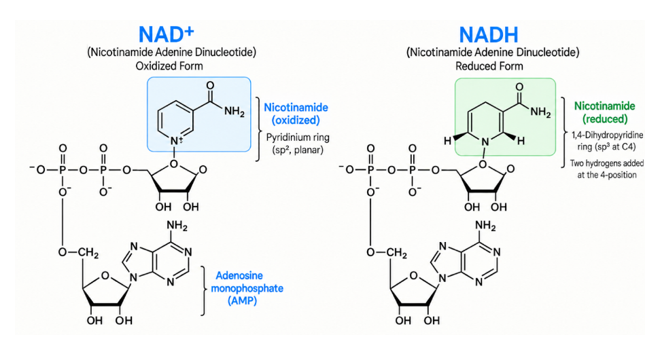
Figure 1: The structures of NAD+ and NADH. Illustration generated using ChatGPT Images 2.0.
2.2 Biosynthetic Pathways
NAD+ levels are maintained by three independent pathways: the de novo pathway, the Preiss-Handler pathway, and the Salvage pathway. During basal conditions, the Salvage pathway is the dominant source of NAD+ biosynthesis. The de novo and Preiss-Handler pathways depend on dietary-derived amino acids and vitamin B3 precursors for NAD synthesis, whereas the salvage pathway recycles endogenous NAD precursors already present within cells [15].
The de novo pathway uses dietary tryptophan which undergoes a series of reactions to form quinolinic acid. Quinolinic acid is then converted to nicotinic acid mononucleotide (NAMN) and enters the Preiss-Handler pathway to produce NAD+ [16].
The Preiss-Handler pathway starts with dietary nicotinic acid and is converted to nicotinic acid mononucleotide (NAMN) by the enzyme nicotinic acid phosphoribosyltransferase (NAPRT) [9]. Then, NAMN is converted into nicotinic acid adenine dinucleotide (NAAD) by NMN adenylyl transferases (NMNATs). Lastly, NAAD is converted to NAD+ by NAD+ synthase [9].
The Salvage pathway recycles nicotinamide (NAM) to NAD+. NAM is converted into nicotinamide mononucleotide (NMN) via the rate-limited enzyme nicotinamide phosphoribosyltransferase (NAMPT), which is then converted directly into NAD+ via the NMNAT enzymes [9]. Nicotinamide riboside (NR) can also use the Salvage pathway to make NAD+. However, NR needs to be phosphorylated by NR kinase to produce NMN, which is then converted into NAD+ [9]. Through these reactions, the salvage pathway serves as a key mechanism for maintaining intracellular NAD+ homeostasis and restoring NAD+ levels following consumption by enzymes such as sirtuins, PARPs, and CD38.
2.3 The NAD+ Consumer Network
The NAD+ consumer network refers to the cellular pathways and enzymes that break down NAD+ to drive DNA repair, metabolism, and gene expression. Sirtuins, Poly (ADP-ribose) polymerases (PARPs), and cyclic ADP-ribose (cADPR) are the predominant NAD+ consuming enzymes in cells [17].
The sirtuin family of enzymes represents a major consumer of NAD+ and plays a vital role in DNA damage repair and age-related epigenetic regulation. Sirtuins protect cells from DNA damage by reducing oxidative stress and enhancing DNA repair mechanisms [18]. They also regulate epigenetic processes through histone deacetylation and the promotion of histone methylation [18]. The mammalian sirtuin family consists of seven members (SIRT1-SIRT7), each with distinct cellular localizations and functions [19].
The Poly (ADP-ribose) polymerase (PARP) protein family represents another essential consumer of NAD+. NAD+ consumption by PARP1 is the primary driver of the metabolic shift that supports ATP replenishment and promotes cell survival following DNA damage [20]. PARP1/ARTD1 in the nucleus is the primary NAD+ consuming activity and plays a key role in maintaining genomic integrity [21].
The cyclic ADP-ribose synthases comprise another group of NAD+ consumers. CD38 and CD157 are the most prominent members, these enzymes exhibit both NAD+ glycohydrolase and ADP-ribosyl cyclase activities [17]. Ultimately, they break down NAD+ into nicotinamide, adenosine ADP-ribose, and cyclic ADP-ribose (cADPR) [17].
3. CD38: The Primary Driver of Age-Associated NAD⁺ Decline
3.1 Molecular Identity and Structure
The protein CD38 (cluster of differentiation 38) is a multifunctional ectoenzyme that metabolizes NAD+. It is a ubiquitous protein that is expressed in numerous tissues such as smooth muscle cells, the brain, kidney, and gut [22]. CD38 is most expressed in hematopoietic tissues such as the bone marrow and lymph nodes [22]. CD38 is a protein consisting of 300 amino acids encoded by homologous genes located on chromosome 4 in humans [22]. The vast majority of CD38 has a type II membrane orientation with an intracellular N-terminal tail and extracellular catalytic domain. However, a small portion of CD38 is also expressed as a type III plasma membrane protein, with the catalytic site facing the intracellular components such the endoplasmic reticulum, nuclear membrane, and mitochondria [8]. Structurally, CD38 is a single chain glycoprotein with a single transmembrane segment [23].
3.2 Age-Related Upregulation of CD38
Few areas of longevity research have progressed as rapidly as the science surrounding NAD+. Originally recognized for its essential role in oxidative metabolism, NAD+ is now understood to participate in hundreds of enzymatic reactions governing cellular function. NAD+ serves as a critical substrate for sirtuins, PARPs, CD38, and numerous enzymes involved in genomic maintenance, inflammation, mitochondrial performance, and stress adaptation. Declining intracellular NAD+ has become a hallmark of biological aging. Reduced NAD+ availability has been associated with diminished mitochondrial function, impaired DNA repair, altered metabolic regulation, chronic inflammation, and reduced resilience to physiological stress [5].
These discoveries have driven extraordinary interest from both academia and industry. The initial commercial response focused on supplying additional precursor molecules, particularly NR and NMN, to replenish intracellular NAD+. This strategy was scientifically logical and remains an important component of NAD+ biology. However, emerging research has demonstrated that aging affects not only NAD+ synthesis but also the rate at which NAD+ is consumed. Among the enzymes responsible for this accelerated depletion, CD38 has emerged as one of the most important. Studies have shown that CD38 expression increases substantially with age, creating a strong inverse relationship between CD38 activity and tissue NAD+ concentrations [5]. As CD38 activity rises, NAD+ levels decline, contributing to impaired cellular metabolism and age-related dysfunction. This insight fundamentally changes the therapeutic question. Rather than asking how to produce more NAD+, the more relevant question becomes how to maintain NAD+ homeostasis across an aging biological system.
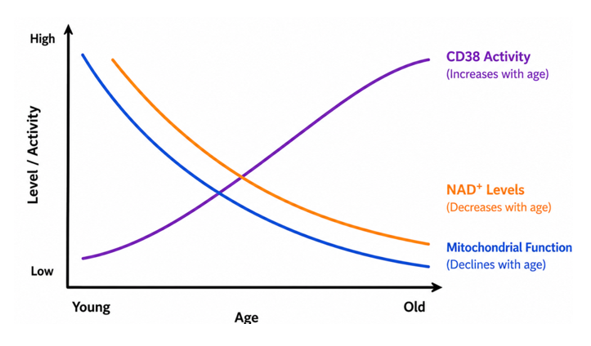
Figure 2: A graph illustrating the inverse relationship between age-related CD38 expression and tissue NAD+ levels, adapted from the seminal work of EduardoChiniand colleagues [5]. Increasing CD38 activity parallels declining NAD+ concentrations with aging, highlighting why preserving NAD+ is as important as increasingits synthesis. Illustration generated using ChatGPT Images 2.0.
Camacho-Pereira et al. (2016) [5] investigated whether CD38 is a causal driver of age-related NAD+ decline and whether this leads to mitochondrial dysfunction through reduced SIRT3 activity. The researchers found that CD38 mRNA levels increased approximately 2.5-fold in metabolic tissues, including liver, adipose tissue, and skeletal muscle, and up to sixfold in the spleen of aged mice compared to young controls. Furthermore, this upregulation was associated with a significant decline in tissue NAD+ levels, whereas CD38-deficient mice maintained higher NAD+ content and preserved mitochondrial function during aging.
3.3. CD38 and the "Inflammaging" Connection
On a molecular level, CD38 is the critical enzymatic conduit between normal cellular aging processes and progression to inflammaging. The enzyme is catalytically inefficient, consuming on the order of 100 molecules of NAD+ for each molecule of cADPR produced, and operates at near saturation under physiological conditions [24]. The enzyme sits on the extracellular face to rapidly degrade extracellular NMN and NR, the precursors to intracellular NAD+ production, depleting the pool required to regenerate NAD+ through the salvage pathway prior to uptake. CD38-laden macrophages accumulate in vital metabolically active tissues like liver and visceral white adipose, and results in impaired sirtuin and PARP-dependent processes leading to a metabolic energy crisis.
Senescent cells progressively accumulate during aging because of repeated cellular stress, telomere shortening, DNA damage, and oncogenic signaling that contribute to chronic inflammatory states known as inflammaging [25]. A self-reinforcing circuit in which senescence drives NAD+ consumption and NAD+ depletion drives further senescence and inflammation. This process, coined by Claudio Franceschi in 2000 as a major contributor to age-related disease, refers to the chronic, low-grade, sterile (non-infectious) inflammation that accompanies biological aging [26].
Inflammaging arises from the cumulative dysfunction of the seven interconnected pillars of aging: inflammation, stem cell regeneration, macromolecular damage, adaptation to stress, proteostasis, metabolism, and epigenetics (see Figure 3) [27]. CD38 sits upstream of several of these pillars simultaneously, inducing inflammation and constraining metabolism through NAD+ depletion, and constraining sirtuin-dependent stress adaptation [5]. Age-related processes such as DNA damage, mitochondrial dysfunction, loss of proteostasis, epigenetic dysregulation, and stem cell exhaustion promote the accumulation of senescent cells and subsequent activation of pro-inflammatory pathways [28]. In turn, persistent inflammation further impairs these aging pillars, creating a perpetual, self-reinforcing cycle that further accelerates biological aging. Because CD38 sits in this convergent position, its dysregulation results not only in generalized decline, but as recognizable clinical pathology. The section that follows examines the specific disease states in which CD38-driven NAD+ decline has been mechanistically implicated.
Importantly, emerging evidence indicates that inflammaging is not an inevitable or universal consequence of chronological aging. Franck et al. (2025) [29] examined inflammatory profiles across four human populations, including industrialized populations in Italy and Singapore and Indigenous populations in Bolivia and Malaysia. They found that inflammatory markers increased with age in the industrialized populations but did not show the same age-related pattern in the Indigenous populations. Furthermore, inflammatory profiles were associated with age-related disease, including chronic kidney disease, in the industrialized populations. These findings suggest that environmental, lifestyle, metabolic, and infectious factors may substantially influence the development of inflammaging and its contribution to age-related disease.
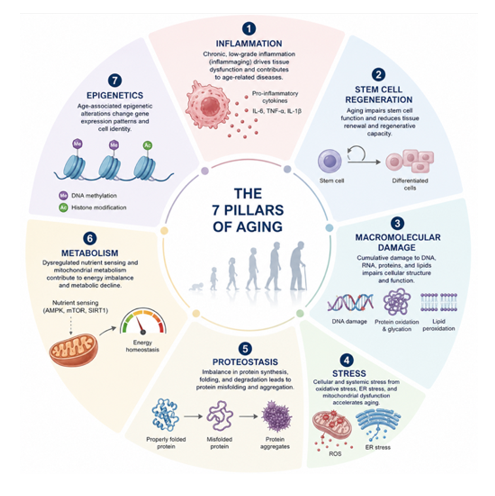
Figure 3: The seven pillars of aging. Illustration modified from Kennedy et al. (2014) [27] and generated using Chat-GPT Images 2.0.
3.4. CD38 in Human Disease
Beyond aging, a buildup of senescent cells, exhibiting the senescence-associated secretory phenotype (SASP), has been observed and implicated in the development of multiple age-related diseases, including osteoarthritis, atherosclerosis, metabolic disorders (e.g., type 2 diabetes), cardiovascular disease, neurodegenerative disorders, and cancer (e.g., multiple myeloma). The culprit behind this programmed inflammatory aging is the ecto-enzyme CD38, expressed on immune cells. Pathologically elevated CD38 has been a common denominator in all of these disease pathologies.
In the pathology of multiple myeloma, malignant cells express high levels of CD38. CD38 serves to metabolize NAD+ to generate adenosine, an immunosuppressive molecule that cleverly allows myeloma cells to evade the patient’s immune system [30]. It also serves as an adhesion molecule and accessory receptor to promote selective targeting and migration to bone marrow and malignant cell survival [31]. Taking advantage of CD38’s unique position in multiple myeloma, anti-CD38 monoclonal antibodies have been developed to destroy myeloma cells through antibody-dependent cellular cytotoxicity (ADCC), direct apoptosis, complement-dependent cytotoxicity, immunomodulation, and antibody-dependent cellular phagocytosis (ADCP). The anti-CD38 monoclonal antibody therapeutic Daratumumab has been approved as a single agent with other antibodies at various stages of clinical testing [32].
CD38 impacts several organs in the body by rendering internal protective mechanisms ineffective. In the setting of diabetic nephropathy, CD38 and SIRT3 remain locked in a molecular tug-of-war over NAD+. A study conducted by Wang et al. (2024) [33] demonstrated that CD38 is upregulated in diabetic nephropathy and promotes renal injury by enhancing lipid accumulation, fibrosis, and oxidative stress. CD38 deficiency confers renoprotection, whereas CD38 overexpression exacerbates cellular damage. While CD38 is rapidly degrading NAD+, SIRT3 relies on NAD+ to remove acetyl groups from mitochondrial proteins, a critical process for ensuring health maintenance. The remaining pools of NAD+ determine whether renal cells become susceptible or survive metabolic stress. Chronic high blood sugar and high-fat environments in diabetes move CD38 expression into overdrive in the kidney, starving SIRT3 of its access to NAD+ to maintain mitochondrial health in kidneys and causing failure with internal renal protective mechanisms. Elevated CD38 activity contributes to various forms of cardiovascular disease, including myocardial ischemia-reperfusion injury, coronary atherosclerosis, cardiac remodeling, and heart failure [34]. In each case, depletion of NAD+ levels from CD38 activity is the culprit. Excessive CD38 activity reduces NAD+ availability, leading to increased oxidative stress, calcium dysregulation, inflammation, and cellular injury within the heart [34].
Age is the greatest risk factor for neurodegenerative disorders [35]. The mechanism behind declining NAD levels with age was not understood until 2016, when increased expression of CD38 was identified as the driving contributor of age-related NAD depletion [36]. CD38 is expressed in nearly all human brain areas [35] and reduced NAD levels are observed among neurodegenerative diseases including Alzheimer’s disease, Parkinson’s disease, amyotrophic lateral sclerosis, and multiple sclerosis [37]. In Alzheimer’s disease, CD38 immunoreactivity was observed in intracellular tangles and neuropil threads [38]. While increased CD38 expression is a major driving force behind reduction of NAD pools in the body and initiation of the aging process, it’s not the only age-related factor contributing to NAD+ depletion.
4. Consequences of NAD⁺ Decline: A Cascade of Aging Hallmarks
4.1. Mitochondrial Dysfunction
NAD+ is an essential cofactor for multiple dehydrogenases within the tricarboxylic acid (TCA) cycle, including isocitrate dehydrogenase, α-ketoglutarate dehydrogenase, and malate dehydrogenase, as well as for electron transfer through Complex I of the electron transport chain (ETC) via NADH oxidation [11]. As cellular NAD+ levels decline, the NAD+/NADH ratio decreases, impairing TCA cycle flux, reducing electron transport efficiency, and ultimately diminishing ATP production [11]. Mitochondrial function also depends on SIRT3, the primary mitochondrial NAD+-dependent deacetylase, which regulates the activity of ETC components, metabolic enzymes, and antioxidant defenses such as superoxide dismutase 2 (SOD2) [39]. Consequently, NAD+ depletion contributes to mitochondrial dysfunction through both metabolic substrate limitation and impaired NAD+-dependent signaling and protein regulation [40].
4.2. Impaired DNA Repair
DNA damage signaling plays a fundamental role in preserving genomic integrity and regulating cell fate decisions [20]. PARP1 functions as a key DNA damage sensor that is rapidly activated in response to DNA lesions, with activation levels influenced by the extent and complexity of the damage [20]. PARP1 contributes to the early organization of chromatin and helps determine the selection of DNA repair pathways at sites of damage [41]. Despite its well-established role in the DNA damage response, the broader cellular consequences of PARP1 activation following DNA damage remain incompletely understood [42].
PARP1 activity depends on NAD+ as a donor of ADP-ribose, linking its functions closely to nuclear NAD+ metabolism and overall cellular metabolic state [43]. PARP enzymes also contribute to the regulation of carbohydrate and lipid metabolism through coordinated cellular and organismal processes [43]. Increased PARP1 activation during DNA damage and repair can lead to substantial NAD+ depletion, resulting in altered cellular metabolism and function that may contribute to degenerative disease development [21].
4.3. Sirtuin Insufficiency
Among the best-characterized consequences of NAD+ decline is the loss of sirtuin activity. The seven mammalian sirtuins (SIRT1-SIRT7) are NAD+-dependent enzymes that act as key regulators of cellular health, metabolism, and longevity [44]. Located throughout the nucleus, cytoplasm, mitochondria, and nucleolus, they coordinate diverse processes including gene expression, DNA repair, mitochondrial function, energy metabolism, inflammation control, oxidative stress resistance, autophagy, and cell cycle regulation [44]. SIRT1 and SIRT6 primarily maintain genomic stability and regulate inflammatory and metabolic pathways [45], while SIRT3, SIRT4, and SIRT5 control mitochondrial metabolism and cellular energy production [46]. SIRT2 contributes to cell cycle progression and nervous system development [47], whereas SIRT7 regulates ribosomal RNA synthesis and cellular growth [48]. Because all sirtuins require NAD+ for their activity, age-related declines in NAD+ levels can impair their function, contributing to mitochondrial dysfunction, genomic instability, chronic inflammation, and other hallmarks of aging [44].
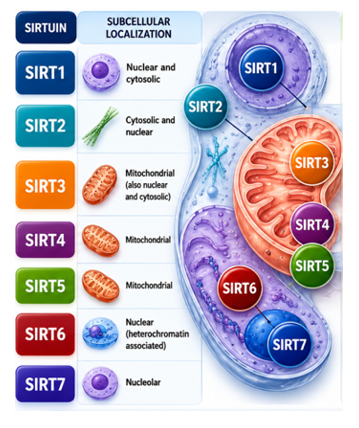
Figure 4: The seven mammalian sirtuins (SIRT1-SIRT7) and their subcellular localizations [44]. Illustration generated using ChatGPT Images 2.0.
4.4. Circadian Rhythm Disruption
SIRT1 plays a key role in coordinating circadian rhythm regulation by interacting with core clock genes within the molecular machinery of the endogenous clock [49]. In doing so, it acts as a regulatory link connecting metabolic and physiological processes with circadian timing systems [49]. Additionally, SIRT6, and SIRT7, which are localized in the nucleus and cytoplasm, have also been implicated in circadian clock regulation through their effects on clock gene expression and the acetylation status of clock components [50]. In contrast, the roles of the mitochondrial sirtuins SIRT3, SIRT4, and SIRT5 in circadian regulation remain largely unexplored, and their potential mechanisms of action warrant further investigation [50].
By driving the rhythmic expression of clock genes and clock-controlled genes, the circadian clock coordinates diverse metabolic processes, including lipid metabolism, cholesterol synthesis, glucose utilization and transport, and oxidative phosphorylation [50]. NAD+, whose availability is regulated by the circadian clock, functions as a key sirtuin cofactor and acts as an important molecular link between circadian rhythms and sirtuin-dependent metabolic regulation [50].
4.5. Cellular Senescence
Cellular senescence is a state of irreversible cell-cycle arrest that prevents cells from dividing, proliferating, and contributing to tissue growth [51]. Multiple stress-related stimuli, including DNA damage, telomere shortening, and oxidative stress, have been identified as key drivers of cellular senescence [52]. The primary mechanism underlying cellular senescence in mammalian cells involves activation of p53 and CDK inhibitors, such as p21, which inhibit CDK-cyclin complexes and induce permanent cell-cycle arrest [52]. Although many of the physiological and pathological effects of senescent cells remain unclear, the senescence-associated secretory phenotype (SASP) is thought to be a major contributor to these effects [52].
The relationship between NAD+ metabolism and cellular senescence is multifaceted and not yet fully understood [53]. Reduced NAD+ levels can promote senescence by contributing to DNA damage accumulation and mitochondrial dysfunction [53]. Conversely, the age-associated decline in NAD+ may limit the development of the SASP, as both SASP production and the maintenance of senescence are highly energy-intensive processes [53]. Consequently, the overall impact of NAD+ metabolism on cellular senescence has yet to be fully elucidated.
5. Phytonutrient-Based Inhibition of CD38: The Emerging Science
5.1. Rationale for Natural CD38 Inhibitors
Pharmaceutical CD38 inhibitors (e.g., monoclonal antibodies such as daratumumab used in multiple myeloma, as well as small‑molecule inhibitors such as 78c) have demonstrated proof of concept in preclinical models, genetic ablation or pharmacological inhibition of CD38 restores NAD⁺ levels and reverses age‑associated metabolic decline in mice [5,54,55]. Treatment with the potent CD38 inhibitor 78c increases tissue NAD⁺, improves metabolic function, and counteracts multiple hallmarks of aging, recapitulating key benefits observed with NAD⁺ precursor supplementation [54,55]. However, CD38 is highly expressed in immune cells and plays an important role in calcium signaling and lymphocyte function; consequently, systemic inhibition particularly with pharmaceutical agents such as daratumumab, carries immunomodulatory risks, limiting its suitability for long‑term wellness applications [56-58].
The discovery that several naturally occurring polyphenols function as partial inhibitors of CD38 has opened a nutritionally accessible alternative. Importantly, these compounds do not fully ablate CD38, preserving its roles in calcium signaling and immune function, but attenuate its excessive, inflammation-driven activity in metabolic tissues. These observations support the concept that partial, tissue‑modulated (“Goldilocks”) inhibition of CD38 may provide a safer, more physiologically compatible strategy for long‑term support of NAD⁺ homeostasis. Specific examples are discussed in more detail below.
5.2. Key Phytonutrient CD38 Inhibitors
While there are several compounds that may have the potential to inhibit CD38 or modulate NAD+, a selected list of CD38 inhibitors or NAD+ modulators identified in peer-reviewed studies with respect to Mediterranean diet-derived components is described below.
5.2.1 Apigenin (4',5,7-trihydroxyflavone)
Apigenin, a flavone found in parsley, chamomile, celery, and many other plants, was among the first natural compounds identified as a CD38 inhibitor. Escande and colleagues [59] demonstrated that apigenin inhibits CD38 cyclase activity in vitro and, when administered to obese mice, elevates hepatic and muscle NAD+ levels, activates SIRT1, and improves insulin sensitivity. Apigenin’s bioavailability is enhanced by its aglycone form and by co‑ingestion with lipids, as its lipophilic structure facilitates membrane permeability and absorption, and lipid-based delivery systems or fat-containing matrices improve its intestinal uptake [60,61].
5.2.2 Quercetin
Quercetin, one of the most abundant dietary flavonoids (found in onions, apples, capers, and dark berries), inhibits CD38 at low‑micromolar potency and has been shown to elevate intracellular NAD⁺, reduce NF‑κB–mediated inflammation, and activate SIRT1 [62-64]. In addition to its effects on NAD⁺ metabolism, quercetin exhibits senolytic activity; both preclinical and early clinical studies demonstrate that quercetin, particularly in combination with other agents such as dasatinib, can selectively target and eliminate senescent cells, thereby addressing upstream drivers of inflammation and CD38 upregulation [65-67].
5.2.3 Luteolin
Luteolin, a flavone structurally related to apigenin and found in perilla, artichoke, dandelion, and peppers, has been reported to inhibit NAD‑consuming pathways, including CD38‑related NAD metabolism [68]. In cellular models, luteolin preserves NAD⁺ homeostasis under conditions of oxidative and inflammatory stress and protects mitochondrial function by stabilizing mitochondrial integrity and reducing oxidative damage [68-71]. In neuronal and immune cell contexts, luteolin also suppresses NF‑κB–mediated inflammation and modulates microglial and macrophage activation, contributing to its anti‑neuroinflammatory effects, which are highly relevant to age‑associated cognitive decline and neurodegenerative disease [69-72].
5.2.4 Kuromanin (Cyanidin-3-glucoside) and Related Anthocyanins
Anthocyanins, the pigments responsible for the deep red, blue, and purple hues of berries, purple corn, elderberry, and açaí, represent a structurally distinct class of CD38 modulators. Kuromanin (cyanidin‑3‑O‑glucoside), the predominant anthocyanin in blackcurrant, has demonstrated CD38 inhibitory activity in enzyme assays, with micromolar potency reported for inhibition of CD38 NADase activity [73]. Kuromanin has also been described more broadly as a natural CD38 inhibitor capable of suppressing enzymatic function and modulating downstream biological effects [74]. By targeting CD38, a major NAD⁺‑consuming enzyme, such compounds are positioned to preserve intracellular NAD⁺ pools and support cellular metabolic homeostasis [75].
In vascular endothelial models, anthocyanins (including cyanidin derivatives) have been shown to reduce reactive oxygen species, attenuate cellular senescence, and restore nitric oxide signaling, demonstrating protective effects against oxidative stress and endothelial dysfunction [76]. Anthocyanins are also potent activators of the AMPK and SIRT1 signaling pathways [77]. Experimental studies show that anthocyanin compounds upregulate SIRT1 expression and increase phosphorylated AMPK in endothelial cells under oxidative stress conditions [77], while cyanidin‑3‑O‑glucoside has been shown to activate the AMPK/SIRT1 axis in vivo, thereby reducing oxidative stress and inflammation [78].
These pathways are closely linked to NAD⁺ metabolism, as AMPK activation can elevate NAD⁺ availability and enhance SIRT1 activity through a coordinated feedback mechanism [79]. Thus, anthocyanins provide complementary NAD⁺‑supportive effects through both CD38‑dependent (enzyme inhibition) and CD38‑independent (AMPK/SIRT1 activation) mechanisms.
5.2.5 Cyanidin
Cyanidins are organic pigments belonging to the flavonoid family (e.g., an anthocyanidin). These organic compounds are responsible for the bright red, purple, and blue colors found in many fruits, vegetables, and flowers. Experimental studies have shown that cyanidins exhibits direct CD38 inhibitory activity [73]. Interestingly, the aglycone form of cyanidin, generated after enzymatic hydrolysis of anthocyanin glycosides in the gastrointestinal tract, exhibits distinct physicochemical properties that influence absorption and activity. Anthocyanins undergo extensive metabolism by gut microbiota and intestinal enzymes, yielding aglycone and phenolic metabolites prior to systemic absorption [80,81]. The aglycone cyanidin can diffuse more readily across biological membranes, facilitating cellular uptake and enhancing intracellular effects relative to cyanidin‑3‑glucoside, suggesting greater cellular accessibility and functional potency when the sugar moiety is absent [82].
Evidence from preclinical models supports a role for cyanidin-type anthocyanins in promoting mitochondrial biogenesis and metabolic adaptation. In skeletal muscle of exercised mice, cyanidin‑3‑glucoside supplementation significantly upregulated PGC‑1α, a master regulator of mitochondrial biogenesis and oxidative metabolism [83]. Consistent with this, studies of anthocyanins and cyanidin derivatives demonstrate activation of mitochondrial regulatory networks, including PGC‑1α signaling and downstream pathways involved in mitochondrial function and energy metabolism, in conditions of metabolic stress [84]. Additional experimental work also shows that cyanidin‑derived compounds can restore or enhance mitochondrial biogenesis-related genes such as PGC‑1α and TFAM under stress conditions [85].
5.2.6 Resveratrol and Related Stilbenes
While resveratrol’s pharmacology is complex and its oral bioavailability is limited due to rapid metabolism, it remains the prototypical stilbene investigated for metabolic and anti-inflammatory effects [86]. Mechanistically, stilbenes such as resveratrol function as SIRT1-activating compounds (STACs), directly binding to an allosteric site on SIRT1 and enhancing its enzymatic activity toward specific substrates [87,88]. Structural and biochemical studies confirm that resveratrol promotes SIRT1 activation through allosteric, substrate-dependent mechanisms, stabilizing enzyme–substrate interactions and increasing catalytic efficiency [88,89].
In immune cells, resveratrol exerts potent anti-inflammatory effects, particularly in macrophage models, where it suppresses pro-inflammatory signaling pathways (e.g., NF‑κB) and reduces cytokine production [90,91]. Because CD38 expression is tightly linked to inflammatory activation in macrophages and other immune cells, this anti-inflammatory activity provides a mechanistic basis for reduced CD38 expression under resveratrol treatment in inflammatory contexts [22].
Pterostilbene, a dimethylated analog of resveratrol, has been shown to be associated with improved pharmacokinetic properties, including increased lipophilicity, enhanced membrane permeability, and higher oral bioavailability due to reduced metabolic clearance [92,93]. These properties allow pterostilbene to achieve higher and more sustained systemic concentrations, potentially leading to more consistent biological effects in vivo compared with resveratrol.
5.3. Synergistic and Complementary Mechanisms
It is important to note that the polyphenols described above do not operate exclusively through CD38 inhibition. They engage multiple parallel pathways that collectively support NAD+ homeostasis and cellular resilience, including AMPK activation, NRF2 induction, NF-κB suppression, and direct SIRT1 activation.
For example, many flavonoids and anthocyanins activate AMPK [94], which upregulates NAMPT, the rate-limiting enzyme in the NAD⁺ salvage pathway [95] thereby stimulating NAD+ biosynthesis. Polyphenols are also broadly capable of activating the NRF2 antioxidant response element, reducing oxidative NAD+ consumption and preserving the redox balance [96]. With respect to NF-κB suppression, by inhibiting NF-κB signaling, polyphenols reduce inflammatory transcription and suppress pro-inflammatory cytokines such as IL‑6 and TNF‑α, key drivers of CD38 expression, thereby acting upstream of NAD⁺ depletion [97,98]. Several flavonoids, including resveratrol and related flavonoids, have been shown to directly or allosterically activate SIRT1 and related sirtuins, amplifying downstream metabolic and stress-response pathways even when NAD⁺ levels are limiting [99].
The net effect of a multi-target polyphenol strategy is therefore potentially greater than CD38 inhibition alone, as these compounds simultaneously modulate NAD⁺ synthesis, consumption, and utilization pathways, supporting the rationale for broad-spectrum, food-based approaches over single-compound interventions [100]. Alternatively, formulations such as an MD-inspired dietary supplement delivering a wide range of phytochemicals and polyphenols (DailyColors®) can provide a comparable advantage by focusing on a broad-spectrum, multi-molecule approach, in a conveniently delivered capsule format.
6. Targeting CD38 through Phytonutrient Supplementation
6.1. Supplementation Strategy
NAD+ should no longer be viewed simply as a molecule whose concentration can be increased through precursor supplementation, but rather as the output of a dynamic regulatory network involving synthesis, degradation, inflammation, immune function, mitochondrial activity, oxidative stress, and cellular repair. The distinction is more than semantic; it changes how interventions should be designed. Traditional precursor-only products address a single input into this complex system, whereas a systems biology strategy seeks to optimize the interconnected network.
NAD+ has emerged as one of the defining biological molecules in modern longevity science. Once regarded primarily as a metabolic cofactor, NAD+ is now recognized as a central regulator of cellular energy production, mitochondrial function, genomic stability, DNA repair, immune signaling, and healthy aging. As NAD+ levels decline with age, interest in restoring NAD+ has fueled one of the fastest-growing segments of the longevity industry. To date, commercial innovation has focused predominantly on precursor supplementation, primarily nicotinamide riboside (NR) and nicotinamide mononucleotide (NMN), which seeks to increase intracellular NAD+ production by supplying additional substrate for the salvage pathway. While this first generation of NAD+ products has significantly advanced scientific understanding and consumer awareness, emerging research demonstrates that NAD+ decline is driven not only by reduced synthesis but also by accelerated consumption through enzymes such as CD38. Chronic inflammation, immune activation, mitochondrial dysfunction, oxidative stress, and cellular senescence further contribute to disruption of NAD+ homeostasis. These discoveries suggest that simply increasing NAD+ production may be insufficient to optimize long-term cellular function if excessive NAD+ consumption continues unabated.
DailyColors® is a dietary supplement brand built around longstanding health and wellness advice from dieticians and nutritionists to eat the colors of the rainbow due to the nutritional diversity contained in natural plant pigments, including anthocyanins, flavones, flavonols, carotenoids, and related polyphenols ingested as part of the MD. Collectively, the biochemical constituents in DailyColors® supports NAD+ homeostasis through CD38 modulation and complementary mechanisms to combat aging. The formulation draws on deeply pigmented plant sources, reflecting the insight that intense plant colors are biochemical proxies for high polyphenol density and antioxidant capacity [101]. This work encompasses the discovery and mapping of MD-derived phytochemicals, LC–MS characterization of their color-associated compounds, and the development of a patented multi-compound formulation based on principles of phytochemical synergy. Together, this strategy enables simultaneous targeting of multiple biological pathways, overcoming the limitations of single-substrate approaches. DailyColors® is designed to work upstream of the precursor-to-NAD+ conversion step, reducing the enzymatic consumption that limits the effectiveness of precursor approaches in aged, inflamed tissues.
DailyColors® believes this scientific evolution represents an important watershed moment in longevity nutrition and research. Rather than viewing NAD+ as a single molecule for targeting with dietary replacement in another magic bullet approach to health maintenance, NAD+ is viewed as an integrated biological system requiring coordinated regulation. Together, these complementary mechanisms create a strategy that supports both the production and preservation of NAD+. This systems biology approach represents an evolution beyond precursor-only supplementation and positions DailyColors® to redefine the future of NAD+ nutrition.
6.1.1. Bioavailability Considerations
Polyphenol bioavailability is a recognized challenge in nutritional science. DailyColors® addresses this through several formulation principles:
- Whole-food matrix preservation: Processing methods that retain the natural composition of synergistic co-occurring compounds (e.g., organic acids, lipids, fiber) can enhance polyphenol bioavailability and activity through matrix driven synergistic interactions during digestion [102,103].
- Combinatorial ingredient selection: Evidence suggests that the co‑presence of multiple polyphenol classes can improve bioavailability by modulating efflux transporters (e.g., P‑glycoprotein), thereby enhancing intracellular retention through competitive and synergistic interaction [102].
- Diversity as a buffer: Because polyphenol bioavailability and response vary widely between individuals—due to differences in gut microbiota, genetic factors, and metabolic capacity—a broad-spectrum formulation increases the likelihood that each individual derives benefit from at least a subset of compounds [104].
- The gut microbiome plays a central role in polyphenol metabolism, converting many compounds into bioactive metabolites such as urolithins, equol, and phenolic acids that often exhibit enhanced bioavailability and activity compared to their parent molecules; in turn, diverse polyphenol intake helps promote and sustain a metabolically capable microbiome [105,106].
6.1.2. Key Ingredient Categories and Their Scientific Basis
The formulation (Table 1) incorporates ingredients across the following categories, each with documented relevance to the CD38/NAD+ axis:
- Anthocyanin-rich extracts (e.g., elderberry, blackcurrant, bilberry, purple corn, açaí) are primary sources of cyanidin, delphinidin, and malvidin glycosides, and have been shown to activate AMPK, improve endothelial function, and, via anthocyanidin derivatives, modulate CD38 activity [68,81,107,108].
- Flavone and flavonol sources (e.g., chamomile, parsley, capers, and onion extract) provide bioactive compounds such as apigenin, quercetin, and luteolin, which have been shown to inhibit CD38 activity and support senescence-modulating pathways involved in cellular aging [59,109].
- Carotenoid-rich ingredients (e.g., turmeric, saffron, paprika, tomato) provide lycopene, beta-carotene, and lutein which support mitochondrial membrane integrity and function while activating antioxidant defense pathways including Nrf2 signaling [110-113].
- Additional polyphenols, including ellagitannins (pomegranate), hydroxycinnamic acids (from beets), and proanthocyanidins (grape seed), have demonstrated antioxidant and anti-inflammatory effects, including modulation and inhibition of NF‑κB signaling pathways and attenuation of oxidative stress.
Table 1: Components of the MD in a capsule (DailyColors® dietary supplement). Reproduced from Szlapinski et al. 2026.
|
Active Blend Ingredients |
Predominant Polyphenol(s) Present |
Dose (mg/day) |
|
Grape extract (Vitis vinifera fruit and leaves) |
|
118.13 |
|
Ginger extract (Zingiber officinale, rhizomes) |
Gingerol, Quercetin |
75 |
|
European elder (Sambucus nigra, fruit) |
|
18.23 |
|
Rosemary extract (Salvia rosmarinus, leaves) |
Rosmarinic Acid |
56.25 |
|
Blueberry extract (Vaccinium caesariense, fruit) |
Anthocyanins |
18.75 |
|
Black currant (Ribes nigrum, fruit) |
|
18.23 |
|
Pomegranate extract (Punica granatum, fruit) |
Punicalagin |
75 |
|
Apple extract (Malus pumila, fruit) |
|
75 |
|
Green coffee bean extract (Coffea arabica, seed) |
Chlorogenic acids |
56.25 |
|
Beet (Beta vulgaris, root) |
|
18.38 |
|
Kale (Brassica oleracea var. acephala, leaf) |
|
18.75 |
|
Grapefruit (Citrus paradisi extract, fruit) |
Naringin |
18.75 |
|
Olive extract (Olea europaea, fruit) |
Hydroxytyrosol |
47.85 |
|
Onion extract (Allium cepa, bulb) |
Quercetin |
75 |
|
Carrot (Daucus carota sativus, root) |
|
18.38 |
|
Tomato (Lycopersicon esculentum, fruit) |
|
13.88 |
6.2. Preclinical Research with DailyColors® on CD38 and Longevity Pathways
Previous research on DailyColors® has shown that the MD-inspired dietary supplement has broad enzymatic and kinase modulating activity across multiple in vitro assays relevant to aging, inflammation, and neurodegeneration [101]. Additional findings are discussed in more detail below, providing potential mechanistic insights into how the supplement exerts its effects on the NAD+/CD38 axis and related pathways.
6.2.1. Cellular and Organismal Mechanisms: Preclinical Data
Enzyme Inhibition Assays
In an enzyme inhibition assay, DailyColors® was shown to significantly inhibit CD38 with effects comparable to known reference inhibitors [101], and similar effects were observed for CD39 and CD73 in in vitro enzyme inhibition assays (Figure 5). Importantly, similar to CD38, CD39 and CD73 are enzymes involved in NAD+metabolism and chronic inflammatory signaling [101].
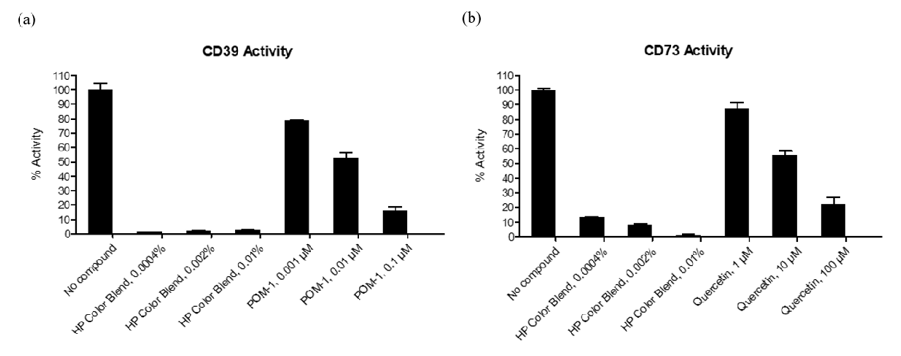
Figure 5: Cluster of Differentiation (CD) 39 hydrolase and CD73 percent (%) activity following incubation with DailyColors®. (a) DailyColors® exhibits strong dose-dependent inhibition of CD39. DailyColors® demonstrates stronger inhibition relative to the results obtained for the reference compound, Sodium polyoxotungstate (POM-1). (b) Results for DailyColors® demonstrate a comparable concentration-dependent inhibition of CD73, that was also stronger than the quercetin reference compound, across all tested concentrations.
In another subset of enzyme inhibition studies,DailyColors® was tested on the interaction of Keap1 and Nrf2 using a fluorescence polarization assay. In this study, DailyColors® showed dose-dependency trends (Figure 6, e.g., a higher percent inhibition with a higher concentration of DailyColors®). The values were similar to the reference compound (ML334), indicating potential antioxidant activity, since the Keap1-Nrf2 pathway is a principal protective response pathway to oxidative and electrophilic stresses [114]. Thus, DailyColors® may modulate the Keap1–Nrf2 axis, wherein NAD metabolism and CD38 intersect through redox control, metabolic reprogramming, and inflammation/aging signaling.
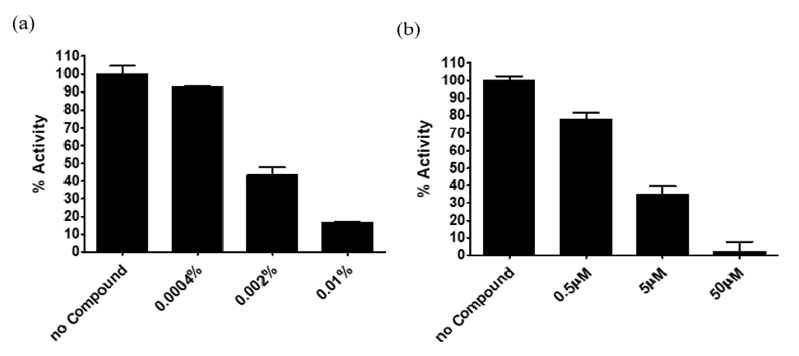
Figure 6: Keap1-Nrf2 binding activity in vitro assay. (a) DailyColors® (tested at 0.0004, 0.0022 and 0.01%) exhibits trends of dose-dependent inhibition of Keap1-Nrf2. (b) A comparable pattern is observed in studies with the reference compound (ML334, tested at 0.5, 5 and 50 µm).
In another study, the potential effect of DailyColors® supplementation was assessed on the enzymatic activities of recombinant human kinases using an in vitro enzymatic assay (Kinase-Glo Plus luminescence kinase assay). In this in vitro study, there were trends of concentration-dependent inhibition, wherein activities of Jak1, 2, and 3 were reduced with higher concentrations of DailyColors® (Figure 7A-C). The trends were comparable to the tested reference compound, staurosporine. JAK–STAT signaling is important as it directly regulates CD38 expression, and through CD38, signaling through this pathway indirectly controls intracellular NAD⁺ levels. Thus, inhibition of the JAK-STAT signaling pathway by DailyColors® supplementation can result in reduced CD38, alleviating the consumption of NAD+ levels associated with aging.
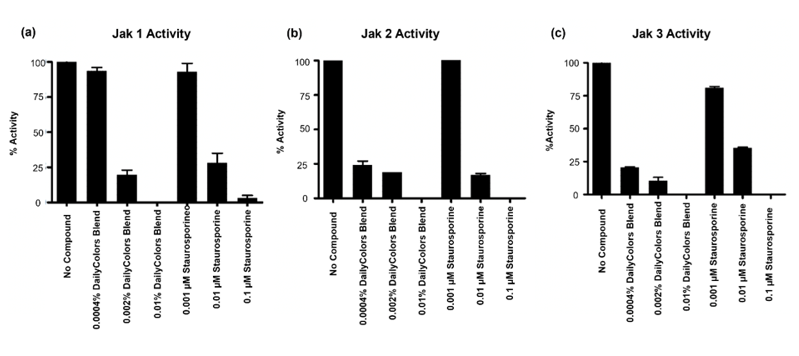
Figure 7: The effect of DailyColors® on Jak1, 2 and 3 activities. DailyColors® tested at 0.0004, 0.0022 and 0.01% exhibits trends of dose-dependent inhibition of (a) Jak1, (b) Jak2, and (c) Jak3 (b) A comparable pattern was observed in the reference compound (staurosporine).
Collectively, the studies showed that DailyColors® has broad enzyme inhibitory activity, including significant inhibition of CD38, CD39, and CD73, suggesting potential effects on NAD⁺ metabolism and inflammatory signaling. CD38 is the principal NADase responsible for the hydrolysis of NAD+ into ADP-ribose, cyclic ADP-ribose, and nicotinamide, thereby directly regulating intracellular NAD+ availability and influencing the activity of NAD+-dependent enzymes, including the sirtuins and PARPs [115]. CD38 may also be important to mitochondrial health. Increased CD38 activity can accelerate the breakdown of NAD+, reducing the availability of this essential metabolic molecule for NAD+-dependent pathways involved in mitochondrial function and biogenesis [5,75]. In particular, NAD+ supports sirtuin activity and the SIRT1–PGC-1α signaling network, an important regulator of the formation and maintenance of healthy mitochondria [116,117]. Activation of SIRT1 promotes PGC-1α activity, while PGC-1α is widely recognized as a master regulator of mitochondrial biogenesis and oxidative metabolism [116,117]. This connection is particularly relevant to DailyColors®, as the body of research has demonstrated effects on CD38 as well as mitochondrial biogenesis, providing evidence across two interconnected biological pathways involved in cellular energy, resilience and healthy aging.
In contrast, CD39 (ENTPD1) hydrolyzes extracellular ATP and ADP to AMP, while CD73 (NT5E) subsequently converts AMP to adenosine. Together, CD39 and CD73 regulate extracellular purine metabolism by controlling the transition from pro-inflammatory ATP signaling to anti-inflammatory adenosine signaling, thereby influencing immune activation, inflammation, tissue repair, and cellular metabolism [118]. Although each enzyme has distinct catalytic functions, CD38, CD39, and CD73 function as components of a highly integrated regulatory network linking extracellular nucleotide metabolism with intracellular energy homeostasis [119]. Consequently, simultaneous modulation of CD38, CD39, and CD73 have the potential to reshape both NAD+ and ATP metabolism across intracellular and extracellular compartments. At a systems level, inhibition of these three enzymes may preserve intracellular NAD+ by reducing enzymatic degradation while simultaneously maintaining higher extracellular ATP concentrations through reduced ATP hydrolysis [120]. Together, these complementary mechanisms may promote improved cellular bioenergetics and immune-metabolic homeostasis, although the physiological consequences of simultaneous inhibition of all three enzymes remain to be fully established.
The studies also showed dose-dependent modulation of the Keap1–Nrf2 pathway, comparable to a reference compound, indicating potential antioxidant and redox-regulating activity. Additionally, DailyColors® inhibited Jak kinases (Jak1/2/3) in a concentration-dependent manner, which may reduce CD38 expression via JAK–STAT signaling, ultimately helping preserve intracellular NAD⁺ levels associated with aging and inflammation.
6.2.2. Cellular Health Assays
Cellular health is central to healthy aging and longevity. Since healthy aging is governed by multiple interconnected biological pathways, it is valuable to evaluate a range of cellular models to better understand the systems-level effects. Therefore, several studies were conducted on DailyColors® to evaluate a broad set of key cellular health pathways, including the effects on inflammation and oxidative stress, and senescence/aging.
6.2.3. Inflammation and oxidative stress
A different study showed that DailyColors® may indirectly maintain NAD⁺ levels by influencing mechanisms upstream of CD38. In this study, C2C12 cells were used to assess the effects of DailyColors® on TNF-alpha (α) and IL-6. C2C12 cells are an immortalized mouse myoblast cell line that were developed for in vitro studies of myoblasts isolated from the complex interactions of in vivo conditions. In this study, DailyColors® dose-dependently decreased IL-6 and TNF-α mRNA levels starting with the low concentration of 10 μg/ml (Figure 8A/B). Thus, DailyColors® can potently decrease basal IL-6 and TNF-α levels (anti-inflammatory effects in muscle cells) which is beneficial in respect to muscle function especially after intensive sport, where local inflammation occurs. Furthermore, while TNF-α and IL-6 do not directly consume NAD+, they drive CD38, a major NAD+ degrader, which creates a feedback loop that amplifies inflammation. Therefore, DailyColors® supplementation may indirectly conserve NAD+ levels by interacting upstream of CD38 by reducing levels of TNF-α and IL-6.
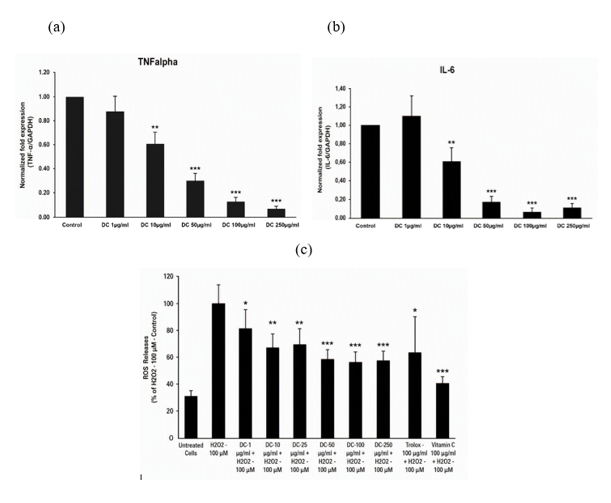
Figure 8: Effects of DailyColors® on the expression of (a) TNF-alpha and (b) IL-6 in mouse C2C12 muscle cells. (c) Effects of DailyColors® on H202-induced ROS levels in mouse macrophages. * *p<0.05, **p<0.01, *p<0.001.
To assess the potential antioxidant effects of DailyColors®, reactive oxygen species (ROS) levels were determined in RAW 264.1 mouse macrophages with H202-induced ROS. In this study, H202-induced activation of ROS levels was potently reduced by DailyColors® supplementation starting with a low concentration of 1 μg/ml (Figure 8C). Maximal ROS inhibition was achieved using 50 μg/ml of DailyColors®, which revealed a comparable potency to one of the most potent and commonly used antioxidants, Trolox C. Therefore, DailyColors® demonstrated potent antioxidative potential. ROS depletes NAD⁺ and induces CD38, which further consumes NAD+ [121]. CD38 activity can also increase ROS, completing a feedback loop [122]. Since ROS are closely linked to both NAD⁺ metabolism and CD38, the reduction of ROS levels with DailyColors® supplementation modulates an important regulatory and feedback network in inflammation and cellular stress.
DailyColors® demonstrated multi‑pathway effects relevant to cellular health, particularly across pathways related to inflammation, and oxidative stress. In muscle cells, DailyColors® significantly reduced TNF‑α and IL‑6 expression, indicating anti‑inflammatory activity that may indirectly support NAD⁺ homeostasis by limiting CD38 upregulation. Additionally, DailyColors® exhibited strong antioxidant capacity, markedly reducing ROS levels comparable to Trolox C. Collectively, these findings suggest that DailyColors® modulates interconnected inflammatory and oxidative pathways and may help maintain cellular metabolic balance through effects on the CD38–NAD⁺–ROS network.
6.2.4. Senescence and aging-related pathways
Cellular senescence is an irreversible growth arrest triggered by stresses such as DNA damage, oxidative stress, and telomere shortening, characterized by halted proliferation, resistance to apoptosis, and secretion of inflammatory factors that contribute to tissue deterioration. While senescent cells play beneficial roles in processes like wound healing, their accumulation with age, particularly in skin, drives aging features such as wrinkles, thinning, and loss of collagen due to increased inflammation and reduced cell renewal. Key markers of senescence include elevated SA-β-gal activity, expression of p16 and p21, inflammatory factors (e.g., IL-6, IL-8), and changes in chromatin and gene regulation, highlighting their role in aging and motivating interest in interventions like DailyColors® to mitigate these effects. The aim of this experiment was to investigate anti-aging effects using senescent Normal Dermal Fibroblasts (NHDF). Both c-FOS and HGF mRNA expression were reduced by DailyColors® at all tested concentrations for c-FOS and in 2 concentrations of HGF (inhibition of 20-60 % for c-FOS and 40-50 % for HGF) as compared to the control (Figure 9A/B). There was decreased mRNA expression of p16INK (approx. 40-60 % inhibition) in all tested concentrations of DailyColors® (1 µg/ml - 100µg/ml) while p21 expression was decreased in the 2 higher concentrations at approximately 35-55 % relative to the untreated control (Figure 9 C/D). Therefore, DailyColors® demonstrated inhibition of genes involved in the senescence process and potential anti-aging and anti-senescence effects.
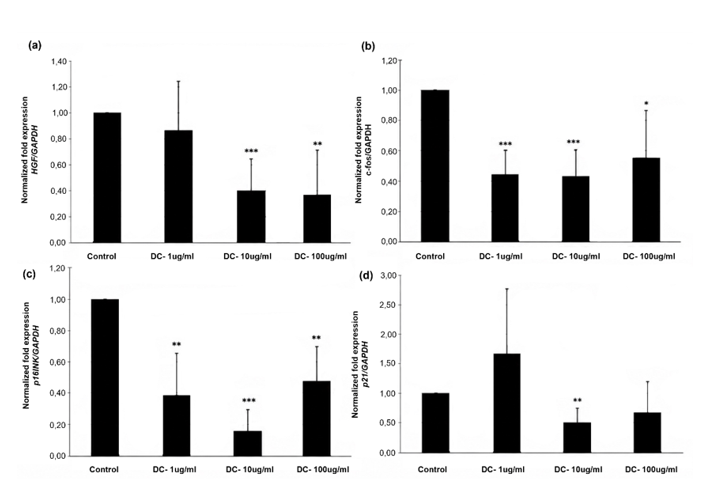
Figure 9: Effects of DailyColors® on the expression of the senescence genes (a) HFG, (b) c-fos, (c) p16INK, and (d) p21 in aged NHDF cells. Results are expressed as means ± SEM from N=4. *p<0.05, **p<0.01, *p<0.001.
In a similar experiment using NHDF cells, DailyColors® was assessed for its potential to modulate Advanced glycation end products (AGEs, Figure 10). Aging is the gradual accumulation of damage over time that disrupts cellular and tissue function, with skin being particularly vulnerable to both internal and external stressors, leading to structural and functional decline. AGE’s contribute significantly to aging by promoting oxidative stress and inflammation through interactions with receptors such as RAGE, while protective mechanisms like AGER1 help counteract these effects. Overall, imbalances in AGE signaling and related pathways are linked to age-associated diseases and skin deterioration. In this experiment, there was a decrease in mRNA expression of RAGE and AGER2 using the highest concentration of DailyColors® (100 μg/ml) relative to the untreated control. However, lower concentrations increased both mRNAs. AGE-R1 mRNA and RANC1 expression were also significantly increased by DailyColors® at both lower concentrations (1 μg/ml and 10 μg/ml) compared to the controls, while the concentration of 100 μg/ml had no effects. Therefore, DailyColors® was able to inhibit genes involved in aging such as RAGE, which supports that DailyColors® has anti-aging effects. While the AGE–RAGE axis is not directly linked to NAD+/CD38 via a single pathway, the axis is connected through a shared inflammatory–oxidative network, where RAGE-driven inflammation promotes CD38 expression, leading to NAD⁺ depletion. Thus, since DailyColors® decreased mRNA expression of RAGE and AGER2, it is plausible that supplementation could indirectly preserve NAD+ depletion by reducing CD38.
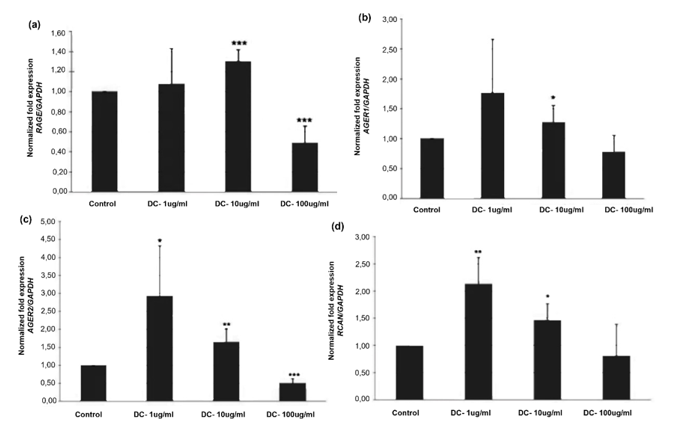
Figure 10: Effect of DailyColors® on gene expression of advanced glycation end products and their receptors (a) RAGE, (b) AGE-R1, (c) AGE-R2 and (d) RCAN in senescence NHDF cells. *p<0.05, **p<0.01, *p<0.001
Together, these findings provide potential mechanistic insights into how DailyColors® exerts its effects on pathways related to the NAD+/CD38 axis.
6.3. Clinical Translation on CD38 and Longevity Pathways with DailyColors® supplementation
The scientific program supporting DailyColors® began with a simple but ambitious hypothesis: Could the extraordinary health benefits associated with the MD be explained by the collective biological activity of its diverse phytochemicals rather than by any single nutrient? This hypothesis led to years of systems biology research, enzyme screening, cellular studies, living organism models, human clinical trials, and intellectual property development. Among the program's most significant discoveries was the observation that DailyColors® significantly inhibited CD38 in a randomized, placebo-controlled human clinical study conducted at King's College London. To our knowledge, this represents one of the first demonstrations that a complex phytochemical formulation can influence one of the principal biological regulators of NAD+ metabolism in humans. This finding established the scientific foundation and provided the rationale for investigating the effects of DailyColors™ supplementation on CD38 and other biological pathways associated with healthy aging.
The effects of the MD-inspired dietary supplement on CD38 observed in preclinical studies also translate to humans. For example, Chong et al [123], conducted a randomized, double‑blind, placebo‑controlled crossover study to evaluate the effects of the DailyColors® blend on blood-based biomarkers linked to key processes involved in aging and age-related conditions, such as mitochondrial function, inflammation, and oxidative stress, along with salivary DNA methylation patterns. Thirty adults with a body mass index greater than 25 participated in the trial, which consisted of a one-week intervention phase followed by a one-week washout period. Participants were assigned to receive either a placebo or DailyColors® at a dose of 150 mg/day. After completing the crossover phase, participants were offered enrollment in a one-month open-label extension aimed at assessing longer-term daily intake. Those who consented began taking DailyColors® once daily for an additional month, starting 3 to 8 weeks after the crossover phase concluded.
During the placebo phase, blood CD38 levels increased significantly from baseline to 24 hours (p = 0.019), an effect not observed during the active treatment phase [123]. In addition, a downward trend in plasma 4-hydroxynonenal (4-HNE) concentrations was noted after just one week of DailyColors® supplementation. Elevated CD38 has been associated with mitochondrial dysfunction and inflammatory processes [22], whereas 4-HNE serves as a marker of oxidative stress [124]. Beyond its role in NAD⁺ metabolism, CD38 also regulates immune signaling, calcium flux, and inflammatory pathways, which tend to become chronically dysregulated with aging. Inhibiting CD38 may therefore help restore immune balance, reduce chronic low-grade inflammation, and stabilize cellular communication systems that contribute to tissue deterioration and age-related diseases. Accordingly, the polyphenols and phytochemicals in the MD formulation may influence immune signaling, oxidative stress, and inflammatory enzymes, indirectly reducing CD38 activity and promoting more stable cellular function supportive of healthy aging.
Overall, these findings indicate that DailyColors® supplementation may provide intermittent anti-inflammatory benefits, support mitochondrial health, and lower oxidative stress. Furthermore, in a one-month open-label follow-up involving 26 participants, hypermethylation of the CpG site cg13108341 (q-value = 0.021) contrasted with the typical age-related trend at this site [123]. DNA hypermethylation can act as a protective mechanism by silencing harmful gene expression and stabilizing vulnerable genomic regions [125]. These results suggest that DailyColors® may contribute to improved health outcomes by influencing gene regions associated with aging-related changes.
Taken together, these findings suggest that DailyColors® may help counteract age-related biological changes by modulating CD38 activity, reducing oxidative stress, and influencing epigenetic markers, although larger and longer-term studies are needed to confirm sustained effects.
6.4. Proposed Clinical Benefits
Based on the mechanistic rationale and available evidence, regular use of a CD38-targeted, polyphenol-rich supplement like DailyColors® is proposed to support many outcomes in the context of a healthy lifestyle (as summarized in Figure 11). For example, reduced CD38-mediated NAD⁺ degradation helps preserve intracellular NAD⁺ levels in metabolic tissues, thereby sustaining the activity of NAD⁺-dependent enzymes such as sirtuins and PARPs that regulate energy metabolism, DNA repair, and cellular homeostasis [126,127]. This enhanced NAD⁺ availability supports mitochondrial function, as NAD⁺-dependent SIRT3 regulates key components of oxidative phosphorylation, improves ATP production, reduces ROS generation, and promotes mitochondrial quality control processes including mitophagy [128].
In parallel, dietary polyphenols exert anti-inflammatory effects through suppression of NF-κB signaling and activation of NRF2-mediated antioxidant pathways, thereby lowering oxidative stress and inflammatory tone that can otherwise drive CD38 upregulation [129,130]. These mechanisms align with metabolic benefits observed across preclinical and clinical studies, where polyphenol-rich dietary patterns improve insulin sensitivity, lipid profiles, and glycemic control, consistent with activation of signaling pathways such as SIRT1 and AMPK [131].
Within the central nervous system, maintenance of NAD⁺-dependent neuronal energy metabolism, coupled with reduced neuroinflammation and improved cerebral blood flow mediated by anthocyanin-induced endothelial effects, supports cognitive domains such as memory and executive function [132]. Similarly, cardiovascular benefits are supported by evidence showing that anthocyanins and related flavonoids enhance endothelial nitric oxide bioavailability, reduce LDL oxidation, and improve vascular reactivity and arterial compliance [133].
Collectively, these effects are consistent with broader findings that MD–associated bioactives reduce systemic inflammation, improve antioxidant status, and favorably modulate cardiometabolic risk factors, thereby targeting multiple hallmarks of aging, including NAD⁺ decline, mitochondrial dysfunction, oxidative stress, and chronic low-grade inflammation, at an upstream biological level rather than focusing on isolated disease endpoints [134,135].
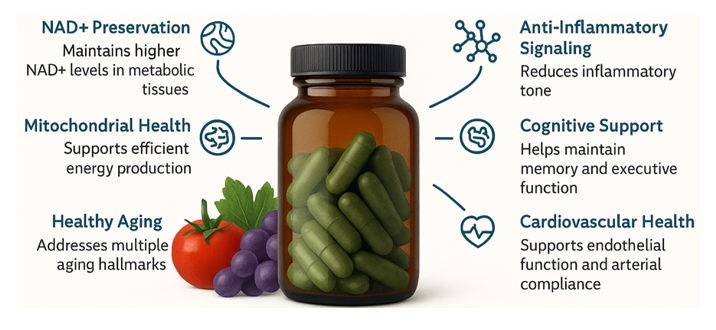
Figure 11: The beneficial effects of regular use of a CD38-targeted, polyphenol-rich supplement like DailyColors®.
6.5. Positioning within the NAD+ Restoration Landscape
The NAD⁺ restoration space currently features three principal strategies: (1) NAD⁺ precursor supplementation (e.g., nicotinamide riboside, nicotinamide mononucleotide, and niacin), which increases intracellular NAD⁺ through salvage and related biosynthetic pathways; (2) CD38 inhibition, which reduces NAD⁺ degradation by one of the major NAD⁺‑consuming enzymes; and (3) PARP inhibition, which limits NAD⁺ consumption associated with DNA repair and cellular stress responses [136-138]. Because NAD⁺ functions as a shared substrate across multiple competing enzymatic systems, including CD38, PARPs, and sirtuins, these approaches are mechanistically distinct yet interconnected, and the current evidence suggests they may be complementary rather than competitive strategies for restoring NAD⁺ homeostasis [138,139].
Precursor supplementation floods the salvage pathway with substrate, increasing NAD⁺ biosynthesis. This approach has clear clinical support, with multiple human trials demonstrating increased blood and tissue NAD⁺ following NR or NMN administration [138,140]. However, in highly inflamed tissues where CD38 expression is elevated, the additional NAD⁺ may be rapidly consumed, limiting net benefit, as CD38 is a major NAD⁺‑degrading enzyme whose expression increases with inflammation and aging and drives tissue NAD⁺ decline [75,137,141].
CD38 inhibition, by contrast, reduces the drain on the existing NAD⁺ pool. In tissues with elevated CD38 activity, particularly those affected by aging and chronic inflammation, this approach may be more efficient, as CD38 expression and activity increase with age and are major drivers of NAD⁺ decline [5,75,137]. Pharmacological inhibition of CD38 has been shown to restore tissue NAD⁺ levels and improve metabolic function in preclinical models, supporting its role as a demand‑side control strategy [55]. The combination of a precursor (supply‑side support) and a CD38 inhibitor (demand‑side control) is therefore an intellectually coherent and potentially synergistic approach and is increasingly highlighted in the literature as a framework for enhancing NAD⁺ restoration by simultaneously increasing synthesis and limiting degradation [63].
DailyColors® positions itself as a safe, food-sourced demand-side intervention. It does not replace a healthy diet or clinically indicated therapies, but as part of a comprehensive longevity protocol, it addresses a biological lever that dietary patterns and conventional supplementation often miss.
7. Conclusions
NAD+ is not merely an energy currency, it is the molecular substrate of biological aging, linking cellular energy metabolism to genome stability, inflammation, and longevity signaling. Its age-related decline is now understood to be substantially driven by CD38, an enzyme whose expression is amplified by the chronic low-grade inflammation that defines biological aging [5,141]. Beyond its inverse relationship with NAD+, CD38 participates in immune regulation, cellular senescence, calcium signaling, and metabolic adaptation, making it both a driver of age-associated NAD+ depletion and a broader indicator of age-related physiological decline.
The identification of natural polyphenols, including apigenin, quercetin, luteolin, kuromanin, and cyanidin, as physiologically relevant CD38 inhibitors has opened a food-based, mechanistically grounded approach to preserving NAD+ homeostasis. DailyColors®, formulated around this mechanistic target and drawing from a broad spectrum of deeply pigmented, polyphenol-dense plant sources, represents a coherent dietary supplement strategy for supporting the NAD+/CD38 axis: reducing demand-side NAD+ degradation, attenuating inflammaging, and simultaneously engaging multiple complementary longevity pathways (AMPK, NRF2, SIRT1, mitochondrial biogenesis). The supporting research reflects this connected biological picture. Human research at King’s College London demonstrated modulation of circulating CD38 [123]. Independently, proteomic analysis from the University of Exeter study showed that DailyColors® influenced multiple pathways involved in innate and adaptive immunity, inflammatory signaling and acute-phase responses [142]. Since emerging aging research identifies inflammatory immune cells, including CD38-positive macrophages, as an important link between chronic age-related inflammation, increased CD38 activity and declining NAD+ availability, these findings suggest DailyColors® can influence the broader network rather than an isolated enzyme.
Several important questions remain to be answered. For instance, which tissues are most responsive to polyphenol-mediated CD38 inhibition, and what are the optimal plasma concentrations needed for meaningful effect? Do NAD+ precursors and CD38 inhibitor synergies observed in animal models translate to humans? The vast majority of polyphenol and CD38-inhibition data comes from in vitro and animal studies, or short-term human trials. Therefore, multi-year randomized trials with defined endpoints, alongside validated biomarkers of NAD+ status and CD38 activity, remain the necessary next step. However, the mechanistic foundation is compelling: by targeting a molecule increasingly recognized as both a regulator of NAD+ metabolism and a broader contributor to the biology of aging, DailyColors® represents a scientifically informed strategy for those seeking to support cellular vitality and resilience.
Funding sources
This research did not receive any specific grant from funding agencies in the public, commercial, or not-for-profit sectors.
Acknowledgements
The authors would like to acknowledgeVivaCellBiotechnologyfor their contributions tothe preclinical studies conducted on DailyColors®.
Author contributions:CRediT
SS— Conceptualizing, investigation, project administration, supervision, visualization, writing of original draft;KR— Conceptualizing, investigation, visualization, writing of original draft;AC—conceptualization,investigation, supervision;NG—investigation, supervision, funding acquisition, resources;CH—conceptualization, investigation, supervision.All authorsparticipatedin revision of the manuscript and approved thefinal versionof the manuscript.
Declaration of competing interest
All authors (SS, KR, AC, NG, and CH) are employed by KGK Science, Inc.All authors declare no other competing interests.There arenopersonal or professional relationships todisclosethat could have appeared to influence the work reported in this paper.KGK Science was not involved in conductingtheclinical trial forDailyColors®. KGK Sciencebecame aware of unpublishedpreclinicalstudies fromDailyColors® after having providedregulatoryassistanceto themin the past.
References
- Hong W, Mo F, Zhang Z, et al. Nicotinamide mononucleotide: A promising molecule for therapy of diverse diseases by targeting NAD+ metabolism. Frontiers in Cell and Developmental Biology 8 (2020): 246.
- Harden A, Young WJ. The alcoholic ferment of yeast-juice. Part II. The coferment of yeast-juice. Proceedings of the Royal Society B 78 (1906): 369-375.
- Verdin E. NAD+ in aging, metabolism, and neurodegeneration. Science 350 (2015): 1208-1213.
- Nobile M, et al. Targeting NAD homeostasis: Compartmentalization, quantification, and modulation. Metabolites 16 (2026).
- Camacho-Pereira J, et al. CD38 dictates age-related NAD decline and mitochondrial dysfunction through a SIRT3-dependent mechanism. Cell Metabolism 23 (2016): 1127-1139.
- Massudi H, et al. Age-associated changes in oxidative stress and NAD+ metabolism in human tissue. PLOS One 7 (2012): e42357.
- Yaku K, et al. Nicotinamide riboside and nicotinamide mononucleotide facilitate NAD+ synthesis via enterohepatic circulation. Science Advances 11 (2025): eadr1538.
- Chini EN, Chini CCS, Netto JME, et al. The pharmacology of CD38/NADase: An emerging target for cancer and aging diseases. Trends in Pharmacological Sciences 39 (2018): 424-436.
- Conlon NJ. The role of NAD+ in regenerative medicine. Plastic and Reconstructive Surgery 150 (2022): 41S-48S.
- Fang EF, et al. NAD+ in aging: Molecular mechanisms and translational implications. Trends in Molecular Medicine 23 (2017): 899-916.
- Yusri K, Jose S, Vermeulen KS, et al. The role of NAD+ metabolism and its modulation of mitochondria in aging and disease. npj Metabolic Health and Disease 3 (2025): 26.
- Nasuhidehnavi A, Zarzycka W, Górecki I, et al. Emerging interactions between mitochondria and NAD+ metabolism in cardiometabolic diseases. Trends in Endocrinology and Metabolism 36 (2025): 176-190.
- Poljšak B, Kovač V, Špalj S, et al. The central role of the NAD+ molecule in the development of aging and the prevention of chronic age-related diseases: Strategies for NAD+ modulation. International Journal of Molecular Sciences 24 (2023): 2959.
- Xiao W, Wang RS, Handy DE, et al. NAD(H) and NADP(H) redox couples and cellular energy metabolism. Antioxidants and Redox Signaling 28 (2018): 251-272.
- Conlon N, Ford D. A systems-approach to NAD+ restoration. Biochemical Pharmacology 198 (2022): 114946.
- Houtkooper RH, Cantó C, Wanders RJ, et al. The secret life of NAD+: An old metabolite controlling new metabolic signaling pathways. Endocrine Reviews 31 (2010): 194-223.
- Liang J, et al. Impact of NAD+ metabolism on ovarian aging. Immunity and Ageing 20 (2023): 70.
- Houtkooper RH, Pirinen E, Auwerx J. Sirtuins as regulators of metabolism and healthspan. Nature Reviews Molecular Cell Biology 13 (2012): 225-238.
- Michan S, Sinclair D. Sirtuins in mammals: Insights into their biological function. Biochemical Journal 404 (2007): 1-13.
- Murata MM, et al. NAD+ consumption by PARP1 in response to DNA damage triggers metabolic shift critical for damaged cell survival. Molecular Biology of the Cell 30 (2019): 2584-2597.
- Hurtado-Bagès S, Knobloch G, Ladurner AG, et al. The taming of PARP1 and its impact on NAD+ metabolism. Molecular Metabolism 38 (2020): 100950.
- Piedra-Quintero ZL, Wilson Z, Nava P, et al. CD38: An immunomodulatory molecule in inflammation and autoimmunity. Frontiers in Immunology 11 (2020): 597959.
- Li W, Liang L, Liao Q, et al. CD38: An important regulator of T cell function. Biomedicine and Pharmacotherapy 153 (2022): 113395.
- Hogan KA, Chini CCS, Chini EN. The multi-faceted ecto-enzyme CD38: Roles in immunomodulation, cancer, aging, and metabolic diseases. Frontiers in Immunology 10 (2019): 1187.
- Karpuzoglu E, Holladay SD, Gogal RMD. Inflammaging: Triggers, molecular mechanisms, immunological consequences, sex differences, and cutaneous manifestations. Frontiers in Immunology 16 (2025).
- Franceschi C, Garagnani P, Parini P, et al. Inflammaging: A new immune-metabolic viewpoint for age-related diseases. Nature Reviews Endocrinology 14 (2018): 576-590.
- Kennedy BK, et al. Aging: A common driver of chronic diseases and a target for novel interventions. Cell 159 (2014): 709-713.
- McHugh D, Gil J. Senescence and aging: Causes, consequences, and therapeutic avenues. Journal of Cell Biology 217 (2018): 65-77.
- Franck M, et al. Nonuniversality of inflammaging across human populations. Nature Aging 5 (2025): 1471-1480.
- Morandi F, et al. CD38: A target for immunotherapeutic approaches in multiple myeloma. Frontiers in Immunology 9 (2018): 2722.
- Costa F, Dalla Palma B, Giuliani N. CD38 expression by myeloma cells and its role in the context of bone marrow microenvironment: Modulation by therapeutic agents. Cells 8 (2019): 1632.
- van de Donk NWCJ, Usmani SZ. CD38 antibodies in multiple myeloma: Mechanisms of action and modes of resistance. Frontiers in Immunology 9 (2018): 2134.
- Wang LF, et al. CD38 deficiency prevents diabetic nephropathy by inhibiting lipid accumulation and oxidative stress through activation of the SIRT3 pathway. Biochemistry and Cell Biology 103 (2025): 1-12.
- Tao Y, et al. CD38 connects the heart and brain. Translational Psychiatry 15 (2025): 342.
- Quintana DS, et al. Oxytocin pathway gene networks in the human brain. Nature Communications 10 (2019): 668.
- Chini EN. CD38 as a regulator of cellular NAD: A novel potential pharmacological target for metabolic conditions. Current Pharmaceutical Design 15 (2009): 57-63.
- Hou Y, et al. Ageing as a risk factor for neurodegenerative disease. Nature Reviews Neurology 15 (2019): 565-581.
- Gordon ML, et al. An open-label, pilot study of daratumumab SC in mild to moderate Alzheimer’s disease. Journal of Alzheimer's Disease Reports 8: 1111-1114.
- Osborne B, Bentley NL, Montgomery MK, et al. The role of mitochondrial sirtuins in health and disease. Free Radical Biology and Medicine 100 (2016): 164-174.
- Srivastava S. Emerging therapeutic roles for NAD+ metabolism in mitochondrial and age-related disorders. Clinical and Translational Medicine 5 (2016): 25.
- Karlberg T, Langelier MF, Pascal JM, et al. Structural biology of the writers, readers, and erasers in mono- and poly(ADP-ribose) mediated signaling. Molecular Aspects of Medicine 34 (2013): 1088-1108.
- Ahel D, et al. Poly(ADP-ribose)-dependent regulation of DNA repair by the chromatin remodeling enzyme ALC1. Science 325 (2009): 1240-1243.
- Li J, et al. PARP inhibitors target cellular energy metabolism: Mechanisms of action and clinical implications. Translational Oncology 68 (2026): 102757.
- Villalba JM, Alcaín FJ. Sirtuin activators and inhibitors. BioFactors 38 (2012): 349-359.
- You Y, Liang W. SIRT1 and SIRT6: The role in aging-related diseases. Biochimica et Biophysica Acta - Molecular Basis of Disease 1869 (2023): 166815.
- Lee H, Yoon H. Mitochondrial sirtuins: Energy dynamics and cancer metabolism. Molecules and Cells 47 (2024): 100029.
- Chen X, Lu W, Wu D. Sirtuin 2 (SIRT2): Confusing roles in the pathophysiology of neurological disorders. Frontiers in Neuroscience 15 (2021): 614107.
- Kumari P, Tarighi S, Braun T, et al. SIRT7 acts as a guardian of cellular integrity by controlling nucleolar and extra-nucleolar functions. Genes 12 (2021): 1361.
- Soni SK, et al. Sirtuins and the circadian clock interplay in cardioprotection: Focus on sirtuin 1. Cellular and Molecular Life Sciences 78 (2021): 2503-2515.
- Zhuang Y, Zhang Y, Liu C, et al. Interplay between the circadian clock and sirtuins. International Journal of Molecular Sciences 25 (2024): 11469.
- Ohtani N, Hara E. Roles and mechanisms of cellular senescence in regulation of tissue homeostasis. Cancer Science 104 (2013): 525-530.
- Ajoolabady A, et al. Hallmarks of cellular senescence: Biology, mechanisms, regulations. Experimental and Molecular Medicine 57 (2025): 1482-1491.
- Chini CCS, Cordeiro HS, Tran NLK, et al. NAD metabolism: Role in senescence regulation and aging. Aging Cell 23 (2023): e13920.
- Peclat TR, et al. CD38 inhibitor 78c increases mice lifespan and healthspan in a model of chronological aging. Aging Cell 21 (2022): e13589.
- Tarragó MG, et al. A potent and specific CD38 inhibitor ameliorates age-related metabolic dysfunction by reversing tissue NAD+ decline. Cell Metabolism 27 (2018): 1081-1095.e10.
- Verhoeven D, et al. B-cell targeting with anti-CD38 daratumumab: Implications for differentiation and memory responses. Life Science Alliance 6 (2023): e202302214.
- Morandi F, et al. CD38, a receptor with multifunctional activities: From modulatory functions on regulatory cell subsets and extracellular vesicles, to a target for therapeutic strategies. Cells 8 (2019): 1527.
- Takasawa S. CD38-cyclic ADP-ribose signal system in physiology, biochemistry, and pathophysiology. International Journal of Molecular Sciences 23 (2022): 4306.
- Escande C, et al. Flavonoid apigenin is an inhibitor of the NAD+ase CD38: Implications for cellular NAD+ metabolism, protein acetylation, and treatment of metabolic syndrome. Diabetes 62 (2013): 1084-1093.
- Berga M, Logviss K, Lauberte L, et al. Flavonoids in the spotlight: Bridging the gap between physicochemical properties and formulation strategies. Pharmaceuticals 16 (2023).
- Chen P, Chen F, Guo Z, et al. Recent advancement in bioeffect, metabolism, stability, and delivery systems of apigenin, a natural flavonoid compound: Challenges and perspectives. Frontiers in Nutrition 10 (2023): 1221227.
- Cui Z, et al. Therapeutic application of quercetin in aging-related diseases: SIRT1 as a potential mechanism. Frontiers in Immunology 13 (2022): 943321.
- Sharma A, Chabloz S, Lapides RA, et al. Potential synergistic supplementation of NAD+ promoting compounds as a strategy for increasing healthspan. Nutrients 15 (2023): 445.
- Kang S, et al. Novel approach to skin anti-aging: Boosting pharmacological effects of exogenous nicotinamide adenine dinucleotide (NAD+) by synergistic inhibition of CD38 expression. Cells 13 (2024).
- Nambiar A, et al. Senolytics dasatinib and quercetin in idiopathic pulmonary fibrosis: Results of a phase I, single-blind, single-center, randomized, placebo-controlled pilot trial on feasibility and tolerability. EBioMedicine 90 (2023).
- Hickson LJ, et al. Senolytics decrease senescent cells in humans: Preliminary report from a clinical trial of Dasatinib plus Quercetin in individuals with diabetic kidney disease. EBioMedicine 47 (2019): 446-456.
- Yakubo S, et al. Dasatinib and quercetin as senolytic drugs improve fat deposition and exhibit antifibrotic effects in the Medaka metabolic dysfunction-associated steatotic liver disease model. Diseases 12 (2024): 317.
- Boslett J, Hemann C, Zhao YJ, et al. Luteolinidin protects the postischemic heart through CD38 inhibition with preservation of NAD(P)(H). Journal of Pharmacology and Experimental Therapeutics 361 (2017): 99-108.
- Huang J, et al. Luteolin and neuroinflammation: A multi-target therapeutic strategy for central nervous system disorders. Frontiers in Pharmacology 17 (2026).
- Vongthip W, et al. Neuroprotective mechanisms of luteolin in glutamate-induced oxidative stress and autophagy-mediated neuronal cell death. Scientific Reports 14 (2024): 7707.
- Mahto K, Kuwar OK, Maloo A, et al. Therapeutic potential of luteolin in neurodegenerative disorders: Targeting Nrf2, NFκB, MAPK, and JAK-STAT pathways to combat neuroinflammation and apoptosis. Inflammopharmacology 33 (2025): 5011-5021.
- Wang X, Zhao J, Li Y, et al. Luteolin as a multifaceted immunomodulator: Insights into its effects on diverse immune cell populations and therapeutic implications. Frontiers in Immunology 16 (2025): 1621367.
- Kellenberger E, Kuhn I, Schuber F, et al. Flavonoids as inhibitors of human CD38. Bioorganic and Medicinal Chemistry Letters 21 (2011): 3939-3942.
- Chen H, Fang K, Zong J, et al. Cyanidin-3-O-glucoside-mediated reduction of regulatory T cells: A therapeutic strategy for multiple myeloma. BMC Immunology 26 (2025): 77.
- Chini CCS, et al. CD38 ecto-enzyme in immune cells is induced during aging and regulates NAD+ and NMN levels. Nature Metabolism 2 (2020): 1284-1304.
- Lee GH, et al. Anthocyanins attenuate endothelial dysfunction through regulation of uncoupling of nitric oxide synthase in aged rats. Aging Cell 19 (2020): e13279.
- Zheng F, et al. Identification of stabilization of malvid anthocyanins and antioxidant stress activation via the AMPK/SIRT1 signaling pathway. Evidence-Based Complementary and Alternative Medicine 2021 (2021): 9934646.
- Liu X, et al. Cyanidin-3-O-glucoside alleviates hepatic steatosis and inflammation in high-fat diet-induced non-alcoholic fatty liver disease mice via the AMPK/SIRT1/NF-κB pathway. International Journal of Molecular Sciences 27 (2026).
- Chen J, et al. AMPK/SIRT1/PGC-1α signaling pathway: Molecular mechanisms and targeted strategies from energy homeostasis regulation to disease therapy. CNS Neuroscience and Therapeutics 31 (2025): e70657.
- Fang J. Bioavailability of anthocyanins. Drug Metabolism Reviews 46 (2014): 508-520.
- Mattioli R, Francioso A, Mosca L, et al. Anthocyanins: A comprehensive review of their chemical properties and health effects on cardiovascular and neurodegenerative diseases. Molecules 25 (2020): 3809.
- Takeuchi M, et al. Differential effects of cyanidin and cyanidin-3-glucoside on human cell lines. Food Science and Technology Research 17 (2011): 515-521.
- Matsukawa T, et al. Upregulation of skeletal muscle PGC-1α through the elevation of cyclic AMP levels by cyanidin-3-glucoside enhances exercise performance. Scientific Reports 7 (2017): 44799.
- Cremonini E. Anthocyanins and the browning of white adipose tissue: Role of mitochondria and mechanisms of action. Redox Experimental Medicine 2025 (2025).
- Yang L, et al. Protective effects of cyanidin-3-O-glucoside against neurotoxin acrylamide through alleviating mitochondrial dysfunction. Foods 14 (2025): 3826.
- Wątroba M, Szukiewicz D. Anti-inflammatory properties of resveratrol. International Journal of Molecular Sciences 26 (2025).
- Cao D, et al. Structural basis for allosteric, substrate-dependent stimulation of SIRT1 activity by resveratrol. Genes and Development 29 (2015): 1316-1325.
- Schultz MB, Rinaldi C, Lu Y, et al. Molecular and cellular characterization of SIRT1 allosteric activators. Methods in Molecular Biology 1983 (2019): 133-149.
- Hou X, Rooklin D, Fang H, et al. Resveratrol serves as a protein-substrate interaction stabilizer in human SIRT1 activation. Scientific Reports 6 (2016): 38186.
- Buttari B, et al. Resveratrol counteracts inflammation in human M1 and M2 macrophages upon challenge with 7-oxo-cholesterol: Potential therapeutic implications in atherosclerosis. Oxidative Medicine and Cellular Longevity 2014 (2014): 257543.
- Schwager J, Richard N, Widmer F, et al. Resveratrol distinctively modulates the inflammatory profiles of immune and endothelial cells. BMC Complementary and Alternative Medicine 17 (2017): 309.
- Nagarajan S, Mohandas S, Ganesan K, et al. New insights into dietary pterostilbene: Sources, metabolism, and health promotion effects. Molecules 27 (2022): 6316.
- McCormack D, McFadden D. A review of pterostilbene antioxidant activity and disease modification. Oxidative Medicine and Cellular Longevity 2013 (2013): 575482.
- Timmers S, et al. Calorie restriction-like effects of 30 days of resveratrol supplementation on energy metabolism and metabolic profile in obese humans. Cell Metabolism 14 (2011): 612-622.
- Zhang W, et al. Nicotinamide phosphoribosyltransferase in NAD+ metabolism: Physiological and pathophysiological implications. Cell Death Discovery 11 (2025): 371.
- Jalouli M, et al. Targeting natural antioxidant polyphenols to protect neuroinflammation and neurodegenerative diseases: A comprehensive review. Frontiers in Pharmacology 16 (2025).
- Mamun AA, Shao C, Geng P, et al. Polyphenols targeting NF-κB pathway in neurological disorders: What we know so far? International Journal of Biological Sciences 20 (2024): 1332-1355.
- Yahfoufi N, Alsadi N, Jambi M, et al. The immunomodulatory and anti-inflammatory role of polyphenols. Nutrients 10 (2018).
- Tovar-Palacio C, Noriega LG, Mercado A. Potential of polyphenols to restore SIRT1 and NAD+ metabolism in renal disease. Nutrients 14 (2022).
- Liu Y, et al. Dietary polyphenols as anti-aging agents: Targeting the hallmarks of aging. Nutrients 16 (2024): 3305.
- Szlapinski SK, Hallam B, Charrette A, et al. Decoding the longevity networks of the Mediterranean diet: Systems biology and multi-pathway mechanisms shaping healthspan. International Journal of Molecular Sciences 27 (2026).
- Bohn T. Dietary factors affecting polyphenol bioavailability. Nutrition Reviews 72 (2014): 429-452.
- Fernandes A, Mateus N, de Freitas V. Polyphenol-dietary fiber conjugates from fruits and vegetables: Nature and biological fate in a food and nutrition perspective. Foods 12 (2023).
- Morand C. How to better consider and understand interindividual variability in response to polyphenols in clinical trials. Frontiers in Nutrition 11 (2024).
- Bertelli A, et al. Polyphenols: From theory to practice. Foods 10 (2021).
- Edwards CA, et al. Polyphenols and health: Interactions between fibre, plant polyphenols and the gut microbiota. Nutrition Bulletin 42 (2017): 356-360.
- Takikawa M, Inoue S, Horio F, et al. Dietary anthocyanin-rich bilberry extract ameliorates hyperglycemia and insulin sensitivity via activation of AMP-activated protein kinase in diabetic mice. Journal of Nutrition 140 (2010): 527-533.
- Laudani S, et al. Anthocyanin effects on vascular and endothelial health: Evidence from clinical trials and role of gut microbiota metabolites. Antioxidants 12 (2023): 1773.
- Lee E, et al. Exploring the effects of Dasatinib, Quercetin, and Fisetin on DNA methylation clocks: A longitudinal study on senolytic interventions. Aging 16 (2024): 3088-3106.
- Lu P, Wong SY, Wu L, et al. Carotenoid metabolism in mitochondrial function. Food Quality and Safety 4 (2020): 115-122.
- Fu C, et al. Lycopene exerts neuroprotective effects after hypoxic-ischemic brain injury in neonatal rats via the nuclear factor erythroid-2 related factor 2/nuclear factor-κB pathway. Frontiers in Pharmacology 11 (2020).
- Ba W, et al. The antioxidant and anti-inflammatory effects of the main carotenoids from tomatoes via Nrf2 and NF-κB signaling pathways. Nutrients 15 (2023).
- Cai Z, et al. Lycopene maintains mitochondrial homeostasis to counteract the enterotoxicity of deoxynivalenol. Antioxidants 12 (2023): 1958.
- Baird L, Yamamoto M. The molecular mechanisms regulating the KEAP1-NRF2 pathway. Molecular and Cellular Biology 40 (2020): e00099-20.
- Aksoy P, White TA, Thompson M, et al. Regulation of intracellular levels of NAD: A novel role for CD38. Biochemical and Biophysical Research Communications 345 (2006): 1386-1392.
- Aquilano K, et al. Peroxisome proliferator-activated receptor γ co-activator 1α (PGC-1α) and sirtuin 1 (SIRT1) reside in mitochondria. Journal of Biological Chemistry 285 (2010): 21590-21599.
- Koh JH, Kim JY. Role of PGC-1α in the mitochondrial NAD+ pool in metabolic diseases. International Journal of Molecular Sciences 22 (2021): 4558.
- Antonioli L, Pacher P, Vizi ES, et al. CD39 and CD73 in immunity and inflammation. Trends in Molecular Medicine 19 (2013): 355-367.
- Horenstein AL, et al. NAD+-metabolizing ectoenzymes in remodeling tumor-host interactions: The human myeloma model. Cells 4 (2015): 520-537.
- Allard B, Longhi MS, Robson SC, et al. The ectonucleotidases CD39 and CD73: Novel checkpoint inhibitor targets. Immunological Reviews 276 (2017): 121-144.
- Sedlackova L, Korolchuk VI. The crosstalk of NAD, ROS and autophagy in cellular health and ageing. Biogerontology 21 (2020): 381-397.
- Liu J, Liu N, Qi C, et al. The Sirt3-CD38 axis induces mitochondrial dysfunction in hypertrophied heart by regulating mitochondrial calcium overload. European Journal of Medical Research 30 (2025): 967.
- Chong JR, et al. A randomised, double-blind, placebo-controlled, cross-over clinical trial to evaluate the biological effects and safety of a polyphenol supplement on healthy ageing. Antioxidants 13 (2024): 995.
- Li Y, et al. Oxidative stress and 4-hydroxy-2-nonenal (4-HNE): Implications in the pathogenesis and treatment of aging-related diseases. Journal of Immunology Research 2022 (2022): 2233906.
- Besselink N, et al. The genome-wide mutational consequences of DNA hypomethylation. Scientific Reports 13 (2023): 6874.
- Covarrubias AJ, Perrone R, Grozio A, et al. NAD+ metabolism and its roles in cellular processes during ageing. Nature Reviews Molecular Cell Biology 22 (2021): 119-141.
- Zeidler JD, et al. The CD38 glycohydrolase and the NAD sink: Implications for pathological conditions. American Journal of Physiology Cell Physiology 322 (2022): C521-C545.
- Trinh D, Al Halabi L, Brar H, et al. The role of SIRT3 in homeostasis and cellular health. Frontiers in Cellular Neuroscience 18 (2024): Article number pending.
- Divyajanani S, Harithpriya K, Ganesan K, et al. Dietary polyphenols remodel DNA methylation patterns of NRF2 in chronic disease. Nutrients 15 (2023): 3347.
- Modafferi S, et al. Change in Nfkb/Nrf2/Bax levels by high monomeric polyphenols berries extract (HMPBE) in acute and chronic secondary brain damage. Cellular Physiology and Biochemistry 58 (2024): 548-570.
- Saad AMM, et al. Dietary polyphenols and human health: Sources, biological activities, nutritional and immunological aspects, and bioavailability: A comprehensive review. Frontiers in Immunology 16 (2025).
- Ellis LR, Boesch C, Dye L. Effects of anthocyanins on cognition and vascular function: A systematic review. Molecular Nutrition and Food Research 68 (2024): e2300502.
- Fairlie-Jones L, Davison K, Fromentin E, et al. The effect of anthocyanin-rich foods or extracts on vascular function in adults: A systematic review and meta-analysis of randomized controlled trials. Nutrients 9 (2017): 908.
- Vinesh DS, et al. The Mediterranean diet as a metabolic strategy for healthy aging and non-communicable disease prevention. Journal of Nutritional Physiology 5 (2026).
- Keshani M, et al. Mediterranean diet reduces inflammation in adults: A systematic review and meta-analysis of randomized controlled trials. Nutrition Reviews (2025): nuaf213.
- Wang F, Guo Z, Carr MJ, et al. PARPs and PARP inhibitors: Molecular mechanisms and clinical applications. Molecular Biomedicine 6 (2025): 152.
- Zhao X, et al. Unveiling the role of NAD glycohydrolase CD38 in aging and age-related diseases: Insights from bibliometric analysis and comprehensive review. Frontiers in Immunology 16 (2025): 1579924.
- PepMax Research Team. NAD+, NMN, and NR: What the human clinical trials actually show. Available at: pepmax.bio/research/nad-precursors-clinical-evidence-2026 (2026).
- NAD+ receptor pharmacology: Mechanisms and pathways. Real Peptides. Available at: realpeptides.co/nad-receptor-pharmacology-mechanisms-pathways (2026).
- Freeberg KA, Udovich CC, Martens CR, et al. Dietary supplementation with NAD+-boosting compounds in humans: Current knowledge and future directions. Journal of Gerontology Series A: Biological Sciences and Medical Sciences 78 (2023): 2435-2448.
- Covarrubias AJ, et al. Senescent cells promote tissue NAD+ decline during ageing via the activation of CD38+ macrophages. Nature Metabolism 2 (2020): 1265-1283.
- O'Leary M, et al. Effects of the DailyColorsTM polyphenol supplement on serum proteome, cognitive function, and health in older adults at risk of cognitive and functional decline. Food and Function (2025).