Rajesh Kumar1, Sanjay Kumar*1, Beenu Alex1, Shashi Kant1
1All India Institute of Medical Sciences, Patna, India
*Corresponding Author: Sanjay Kumar, All India Institute of Medical Sciences, Patna, India.
Received: 14 July 2026; Accepted: 20 July 2026; Published: XX- July 2026
Background: Goldenhar syndrome, also known as oculo-auriculo-vertebral spectrum (OAVS), is a rare congenital disorder characterised by craniofacial asymmetry, mandibular hypoplasia, auricular anomalies, vertebral defects, and associated systemic malformations. Anaesthetic management of these patients is challenging because of an anticipated difficult airway, associated cardiorespiratory anomalies, and the physiological vulnerability of neonates. The coexistence of anorectal malformation (ARM) requiring surgical correction in the neonatal period further complicates perioperative management.
Case Presentation: We report the successful anaesthetic management of a 3-day-old male neonate with low anorectal malformation and clinical features suggestive of Goldenhar syndrome. Preoperative assessment revealed facial asymmetry, right-sided mandibular and auricular hypoplasia, retrognathia, micrognathia, and restricted mouth opening, suggesting a potentially difficult airway. Following meticulous preparation of a difficult airway cart, anaesthesia was induced with sevoflurane while maintaining spontaneous ventilation. Tracheal intubation was successfully achieved on the first attempt using a C-MAC video laryngoscope and a 2.5-mm cuffed endotracheal tube. Intraoperative and postoperative periods remained uneventful.
Conclusion: This case highlights the importance of meticulous airway planning, maintenance of spontaneous ventilation during induction, and early use of video laryngoscopy in syndromic neonates with anticipated difficult airways. The rarity of the association between Goldenhar syndrome and anorectal malformation requiring neonatal anoplasty adds to the clinical significance of this report.
Goldenhar Syndrome; Anorectal Malformation; Anoplasty; Neonatal Anaesthesia; Difficult Airway
Goldenhar Syndrome articles; Anorectal Malformation articles; Anoplasty articles; Neonatal Anaesthesia articles; Difficult Airway articles
Introduction
Goldenhar syndrome, first described by Maurice Goldenhar in 1952, is a rare congenital disorder belonging to the oculo-auriculo-vertebral spectrum (OAVS). It results from abnormal development of the first and second branchial arches and is characterised by craniofacial asymmetry, mandibular hypoplasia, auricular anomalies, vertebral malformations, and variable involvement of the cardiac, respiratory, and central nervous systems [1]. The estimated incidence ranges from 1 in 3,500 to 1 in 5,600 live births, with a slight male predominance [1]. Airway management represents the principal anaesthetic challenge in patients with Goldenhar syndrome. Mandibular hypoplasia, hemifacial microsomia, micrognathia, retrognathia, facial asymmetry, and vertebral abnormalities may contribute to difficult mask ventilation, difficult laryngoscopy, and failed tracheal intubation. Furthermore, associated congenital cardiac and respiratory anomalies may increase perioperative morbidity [1,2]. Anorectal malformations (ARMs) occur in approximately 1 in 1,500-5,000 live births and are frequently associated with other congenital anomalies. Although craniofacial abnormalities are well recognised in Goldenhar syndrome, the coexistence of ARM with Goldenhar syndrome is uncommon and poses additional perioperative challenges [2]. We report on the successful anaesthetic management of a 3-day-old neonate with low ARM and suspected Goldenhar syndrome undergoing anoplasty. This case highlights the importance of thorough preoperative airway assessment, preparation for anticipated difficult airway management, and the role of videolaryngoscopy in facilitating safe tracheal intubation in a neonate with craniofacial abnormalities.
Case Report
A 3-day-old male neonate weighing 2.8 kg was admitted with an absent anal opening and passage of meconium through an abnormal perineal opening since birth. He was diagnosed with a low anorectal malformation and scheduled for anoplasty under general anaesthesia. The neonate was born in term by caesarean section performed for failed induction of labor. Antenatal history was unremarkable, and there was no history of parental consanguinity. On physical examination, multiple craniofacial abnormalities suggestive of Goldenhar syndrome were noted, including right-sided facial hypoplasia, hypoplastic auricle with preauricular tags, mandibular hypoplasia, micrognathia, retrognathia, and facial asymmetry (Figure 1).
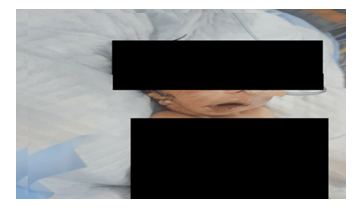
Figure 1: Demonstrates the characteristic craniofacial abnormalities associated with Goldenhar syndrome, indicating the potential for a difficult airway.
Preoperative airway assessment revealed marked craniofacial asymmetry with deviation of the oral aperture towards the right side. Mouth opening was approximately 10-20 mm. There was no cleft lip or cleft palate. The neonate had no history of respiratory distress, stridor, cyanotic episodes, or feeding difficulties. However, considering the craniofacial anomalies and neonatal age, difficult mask ventilation and tracheal intubation were anticipated. Preoperative laboratory investigations showed a haemoglobin concentration of 19.3 g/dL, total leukocyte count of 10.41 × 10³/µL, platelet count of 185 × 10³/µL, and normal serum electrolyte levels. Echocardiography could not be performed before surgery because of the urgency of surgical correction. Written informed parental consent for anaesthesia and publication of the clinical details and image was obtained. In the operating room, standard American Society of Anaesthesiologists (ASA) monitoring, including electrocardiography, pulse oximetry, non-invasive blood pressure, end-tidal carbon dioxide, and temperature monitoring, was instituted. Intravenous access was secured with a 24-gauge cannula. A comprehensive difficult airway cart was prepared before induction, including appropriately sized face masks, cuffed and uncuffed endotracheal tubes, stylets, a size-1 laryngeal mask airway, a neonatal C-MAC video laryngoscope, and a paediatric fibreoptic bronchoscope. The surgical team was informed regarding the anticipated difficult airway and the possible need for emergency airway rescue. Anaesthesia was induced with incremental concentrations of sevoflurane in 100% oxygen while maintaining spontaneous ventilation. After achieving an adequate depth of anaesthesia, intravenous fentanyl (2 µg/kg) was administered. Video laryngoscopy was performed using a neonatal C-MAC blade, providing an adequate view of the glottis. Tracheal intubation was successfully achieved on the first attempt using a 2.5-mm cuffed endotracheal tube mounted on a stylet. Correct tube placement was confirmed by bilateral chest auscultation and continuous waveform capnography, following which atracurium (0.5 mg/kg) was administered. Anaesthesia was maintained with oxygen-air-sevoflurane (minimum alveolar concentration approximately 1.0), intermittent fentanyl supplementation, and atracurium. Intravenous dexamethasone (0.1 mg/kg) and paracetamol (7.5 mg/kg) were administered for prophylaxis against airway oedema and postoperative analgesia, respectively.
The surgery lasted approximately 90 minutes, with an estimated blood loss of less than 10 mL. Haemodynamic and respiratory parameters remained stable throughout the procedure. No episodes of difficult mask ventilation, oxygen desaturation, bradycardia, hypotension, bronchospasm, or airway-related complications occurred. At the completion of surgery, neuromuscular blockade was reversed with neostigmine (0.05 mg/kg) and glycopyrrolate (0.01 mg/kg). The neonate was extubated after demonstrating adequate spontaneous ventilation, intact airway reflexes, satisfactory muscle strength, and sustained oxygenation. He was subsequently transferred to the neonatal intensive care unit for postoperative observation. The postoperative recovery was uneventful, and the patient was discharged on postoperative day three. A detailed note regarding the anticipated difficult airway and successful video laryngoscope intubation was included in the discharge summary to facilitate future anaesthetic management.
Discussion
Goldenhar syndrome encompasses a heterogeneous spectrum of craniofacial and systemic abnormalities arising from defective embryological development of the first and second branchial arches. Airway management remains the foremost concern for anesthesiologists because mandibular hypoplasia, retrognathia, micrognathia, facial asymmetry, and restricted mouth opening may result in difficult mask ventilation and tracheal intubation [3]. Sculerati et al. reported that the incidence of difficult airway increases with the severity of mandibular hypoplasia and hemifacial microsomia [4]. Similar observations have been described in patients with Goldenhar syndrome and other craniofacial anomalies. Therefore, comprehensive airway assessment and the availability of alternative airway devices are essential before the induction of anesthesia. Maintenance of spontaneous ventilation during induction is a widely accepted strategy in anticipated difficult pediatric airways because it preserves airway patency and allows continued oxygenation if intubation proves difficult. In our patient, inhalational induction with sevoflurane facilitated airway assessment while maintaining spontaneous breathing until airway was secured. Video laryngoscopy has transformed the management of difficult pediatric airways. Recent studies have demonstrated improved glottic visualization, reduced intubation attempts, and higher first-pass success rates compared with conventional direct laryngoscopy [5]. In the present case, video laryngoscopy enabled successful first-attempt intubation despite significant craniofacial abnormalities. Another important consideration in Goldenhar syndrome is the presence of associated systemic anomalies. Cardiac defects have been reported in up to one-third of affected patients, and vertebral, renal, and respiratory abnormalities are also common [6]. Although urgent surgical intervention precluded complete cardiac evaluation in our patient, awareness of these associations influenced perioperative planning and postoperative monitoring of the patient. Anorectal malformations are among the most common congenital gastrointestinal anomalies and are frequently associated with other congenital defects [7]. Cho et al. reported that a significant proportion of patients with anorectal malformations have associated anomalies involving multiple organ systems [8]. However, the coexistence of anorectal malformation with Goldenhar syndrome remains uncommon. The novelty of the present report lies in the successful anesthetic management of a 3-day-old neonate with the rare association of anorectal malformation and clinical features suggestive of Goldenhar syndrome undergoing definitive neonatal anoplasty. Most previously published reports involving Goldenhar syndrome describe older children undergoing craniofacial, ophthalmological, or otorhinolaryngological procedures. Reports focusing on neonatal anorectal surgery in this syndrome are exceedingly limited. Furthermore, the combination of neonatal age, urgent surgical indication, anticipated difficult airway, and incomplete preoperative syndromic evaluation created a unique perioperative challenge. Successful first-pass video laryngoscope intubation following maintenance of spontaneous ventilation underscores the value of a structured difficult-airway strategy in such high-risk neonates.
Conclusion
Goldenhar syndrome presents significant an aesthetic challenge because of anticipated difficult airway management and the frequent presence of associated multisystem anomalies. Careful preoperative assessment, meticulous preparation of advanced airway equipment, preservation of spontaneous ventilation during induction, and early use of video laryngoscopy are essential components of successful management. The present case is unique because it describes the perioperative management of a 3-day-old neonate with suspected Goldenhar syndrome and anorectal malformation undergoing definitive anoplasty, a clinical scenario rarely reported in the literature. This report reinforces the importance of proactive airway planning, multidisciplinary coordination, and video laryngoscopy-assisted intubation in achieving favorable outcomes in syndromes.
References
- Beleza-Meireles A, Clayton-Smith J, Saraiva JM, Tassabehji M: Oculo-auriculo-vertebral spectrum: A review of the literature and genetic update. Clin Dysmorphol 23 (2014): 1-7.
- Rollnick BR, Kaye CI. Hemifacial microsomia and variants: Pedigree data. Am J Med Genet 15 (1983): 233-253.
- Dhanjal MK, Bhatia PK, Tulsiani KL. Anaesthetic considerations in Goldenhar syndrome. Indian J Anaesth 62 (2018): 759-762.
- Sculerati N, Gottlieb MD, Zimbler MS, et al. Airway management in children with major craniofacial anomalies. Laryngoscope 108 (1998): 1806-1812.
- Jagannathan N, Sohn LE, Huang A. Advances in videolaryngoscopy for difficult paediatric airway management. Paediatr Anaesth 31 (2021): 913-921.
- Levitt MA, Peña A. Anorectal malformations. Orphanet J Rare Dis 17 (2022): 98.
- Cho S, Moore SP, Fangman T. One hundred three consecutive patients with anorectal malformations and their associated anomalies. Arch Pediatr Adolesc Med 155 (2001): 587-591.
- Digilio MC, Calzolari F, Capolino R, et al. Congenital heart defects in patients with oculo-auriculo-vertebral spectrum (Goldenhar syndrome). Am J Med Genet A 146 (2008): 1815-1819.