Fahad Nawaz Sheikh1, Syed Adeel Hassan2,*, Hannan Asghar3, Noman Saleem4, Anam Fahad5, Ali Choudhry6, Sheel Iqbal7, Umar Farooque8
1Pathology, University of Illinois at Chicago, Chicago, USA
2Internal Medicine, Dow University of Health Sciences, Karachi, Pakistan
3Internal Medicine, Orange Park Medical Center, Orange Park, USA
4Forensic Medicine, Sahiwal Medical College, Sahiwal, USA
5Psychiatry, Sahiwal Medical College, Sahiwal, Pakistan
6Internal Medicine, Lahore Medical and Dental College, Lahore, Pakistan
7Research and Academics Society, Sahiwal Medical College, Sahiwal, Pakistan
8Neurology, Dow University of Health Sciences, Karachi, Pakistan
*Corresponding Author: Dr. Syed Adeel Hassan, Internal Medicine, Dow University of Health Sciences, Karachi, Pakistan
Received: 21 August 2020; Accepted: 27 August 2020; Published: 29 August 2020
DOI: 10.26502/jppd.2572-519X0111
ShareIntroduction: Students and professionals in Medicine face stressful situations on a regular basis. This study focuses on evaluating the prevalence of stress among students of a medical college in Pakistan and its variation on the basis of gender.
Materials and methods: This is a cross-sectional study that involves 88 second year medical students of Sahiwal Medical College, Sahiwal, Pakistan. The data was collected via a self-administered questionnaire based on Perceived Stress Scale-10 (PSS-10), and was analyzed using Statistical Package for the Social Sciences (SPSS) version 24 and Microsoft Excel 2014. Stress levels among students were evaluated by dividing the perceived stress scores into four quartiles. In order to compare the prevalence of stress among male and female students, the Independent Samples t-test was also used.
Results: The overall stress prevalence was 91.78% with a mean PSS-10 score of 20.178 (SD = 5.745). There was a significant difference (p = 0.016 and Cohen’s d = 0.7) between the mean stress scores of male and female students. The percentages of students with no, mild, moderate, and severe stress were found to be 8.2%, 24.7%, 27.4%, and 39.7%, respectively.
Conclusions: Our study revealed a high prevalence of stress among the medical students, more in females than in males. It points towards the need to take measures directed towards the improvement of the mental well-being of medical students.
Stress; Prevalence; Students; Sahiwal; Pakistan
1. Introduction
Stress is a physical or psychological stimulus which can produce mental tension or physiological reactions that may lead to illness. Human ability to keep up with stress is exhausted once it reaches a certain threshold. Increasing levels of stress proportionally relate to adverse mental and physical health effects [1]. In this study, we focus on a vital constituent of the healthcare industry: the medical student.
Studies have demonstrated that undergraduates in medical schools are exposed to higher levels of stress as compared to non-medical undergraduates [2]. Medical students have also exhibited higher levels of mental distress, anxiety, and depression when compared to the general population [3]. The successive buildup of stress hampers the integrative thought process which has a negative effect on the ability of students to learn important medical concepts and skills [4]. If any level of stress is left unattended, it can lead to sleep disorders, decreased academic performance due to burnout, and even high dropout rates [3].
There has been a tremendous increase in the number of medical schools recently [5]. Despite this surge, there are only a handful of studies conducted to assess the quality of the mental health of medical students. This study aims to calculate the prevalence of different levels of stress among medical students of a medical school in Pakistan. It also aims to figure out any differences in stress prevalence based on gender.
2. Materials and Methods
2.1 Study design and sampling
This study was performed in Sahiwal Medical College located in Sahiwal, Pakistan. It took a period of two months, from 04/01/2016 to 06/01/2016. Study participants were selected via convenience sampling from the second year of MBBS (Bachelor of Medicine and Surgery). Students who were detained in second year from the previous batch as a result of failing the exams were excluded to ensure that only new second year medical students were included. Based on this criteria, 88 students were included. This focus on a single batch was aimed at reducing confounding by other variables. Considering the margin of error (±5%), confidence level (95%), degree of variability (0.5), and the total number of students included (88), the minimum number of required responses was calculated to be 72 using an online sample size calculator (https://www.surveymonkey.com/mp/sample-size-calculator/). The objectives of the study were explained to all students; they were informed that their participation is voluntary. Informed written consent was obtained from all participants.
2.2 Data collection
The data was acquired using a self-administered questionnaire that was based on Perceived Stress Scale-10 (PSS-10). PSS-10 is a widely used psychological instrument consisting of 10 questions that measure perceived stressful experiences over the past month using a 5-point likert scale (a scale used to represent participants’ attitudes toward a topic) ranging from 0 to 1, where responses of 0, 1, 2, 3, 4, and 5 indicate never, almost never, sometimes, often, and very often, respectively [6]. "PSS-10 scores are obtained by reversing responses (i.e. 0 = 4, 1 = 3, 2 = 2, 3 = 1, and 4 = 0) to positively stated items (4, 5, 7, and 8), and then adding all of the responses" [6]. The possible scores range from 0 to 40. Scores in the range of 0-13 indicate low perceived stress, 14-26 indicate moderate perceived stress, and 27-40 indicate high perceived stress [6].
2.3 Data analysis
IBM Statistical Package for Social sciences (SPSS) version 24 and Microsoft Excel 2014 were the primary tools used for descriptive analysis of the data. The results were presented in tabular and graphical forms. Stress levels among students were evaluated by dividing the perceived stress scores into four quartiles. To determine the significance of any difference in the mean perceived stress of male and female participants, the Independent Samples t-test was performed. The p-value was considered to be significant when less than 0.05.
3. Results
Out of the 88 students, 73 (22 male and 51 female) completed and returned the questionnaires (response rate = 82.95%). All 73 were included in the data analysis. The participants' ages ranged from 18 to 23 years, with the mean age being 20.04 (standard deviation [SD] = 1.047).
The mean PSS-10 score obtained was 20.18 (SD = 5.74) and the median score was 21; both correspond to moderate perceived stress. 91.78% of the respondents reported to be suffering from some level of stress, either mild, moderate or severe. The data showed that there is a higher prevalence of stress among female students (mean score = 21.23 [SD = 5.97]) as compared to their male counterparts (mean score = 17.70 [SD = 4.39]). The lowest and highest reported scores were 8 and 34, respectively. Table 1 analyses the data obtained from the respondents as a whole, while table 2 splits and compares the results on the basis of gender.
|
Measure |
Value |
|
Mean |
20.18 |
|
Median |
20 |
|
Mode |
22 |
|
Standard Deviation |
5.75 |
|
Maximum Score |
34 |
|
Minimum Score |
8 |
|
Range |
26 |
Table 1: Statistical distribution of the perceived stress scale-10 scores of students.
|
Variable |
Males |
Females |
|
Mean |
17.70 |
21.23 |
|
Variance |
19.27 |
35.64 |
|
Standard Deviation |
4.39 |
5.97 |
|
Maximum Score |
25 |
34 |
|
Minimum Score |
8 |
9 |
|
Range |
17 |
25 |
Table 2: Statistical comparison between the perceived stress scale-10 scores of male and female students.
Perceived stress scale-10 scores were further divided into quartiles which were named in an ascending order to indicate the perceived stress severity they represent; Q1, Q2, Q3, and Q4 quartiles were equivalent to none, mild, moderate, and severe perceived stress, respectively. Quartile results are summarized in Table 3 and Figure 1.
|
Quartiles |
Q1 |
Q2 |
Q3 |
Q4 |
|
PSS-10 Scores |
0-12 |
13-17 |
18-21 |
> 21 |
|
Perceived Stress |
None |
Mild |
Moderate |
Severe |
|
Percentage of Subjects |
8.21 |
24.66 |
27.40 |
39.72 |
|
Number (%) of males |
2 (9.1%) |
9 (40.9%) |
5 (22.7%) |
6 (27.3%) |
|
Number (%) of females |
4 (7.8%) |
9 (17.6%) |
15 (29.5%) |
23 (45.1%) |
PSS = Perceived Stress Scale
Table 3: Analysis of data on the basis of quartiles.
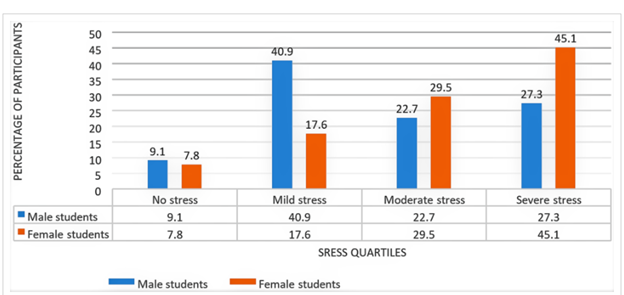
Figure 1: Percentage of participants in each stress quartile.
In order to determine whether the difference in mean PSS-10 scores of male and female students was significant, the Independent Samples t-test was used. It revealed a Cohen's d of 0.7 (Cohen’s U3 = 75.8%, percent overlap = 72.63%, probability of superiority = 68.97%), representing a medium standardized difference between the mean PSS-10 scores of males and females (Table 4). Therefore, the difference of stress prevalence between male and female students in our study is indeed significant.
|
Mean (±SD) PSS-10 Score |
t(df) |
p-value |
|
|
Males |
17.7 (±4.39) |
2.47 (71) |
0.016 |
|
Females |
21.2 (±5.96) |
PSS = Perceived Stress Scale, df = degrees-of-freedom
Table 4: Independent samples t-test result.
4. Discussion
Multiple studies conducted in countries like Pakistan, India, and Saudi Arabia have revealed a high prevalence of stress among medical students. Shaikh et al. and Inam et al. reported that greater than 90% of medical students suffered from stress of variable severity [7, 8]. Shah et al. calculated a mean perceived stress scale score of 30.84 (standard deviation 7.01) in a Pakistani medical school [9]. Sreedevi et al. found a stress prevalence of 78.19% among medical students [10]. Al Sunni et al. reported a mean perceived stress scale score of 17.31 (SD = 5.31) [11]. These studies also revealed a higher prevalence of stress in female students as compared to male, which may be due to the fact that females are generally more likely to experience stress than males, and possibly other factors that are out of the scope of our study [12].
On the contrary, a lower prevalence of stress has been reported in Europe; 12.9% of Swedish and 31.2% of British medical students have suffered from some form of stress [13, 14]. This discrepancy with our study is most likely due to a great difference between the quality of education between developing and industrialized countries, with the latter boasting an education more "uniform in quality" and students with more favorable "economic, sociological, and cultural and linguistic factors" [15]. Therefore, the results of our study should not be projected on or compared with those of developed countries.
Data from various studies reports academic burden, competition amidst students, and lack of recreational opportunities to be the main sources of stress among medical students [6, 7, 10]. Because of the negative impact of stress on academic performance and health, which is compounded by the fact that medical students tend to experience higher levels of stress as compared to non-medical students, steps need to be taken to assist students with stress reduction [1, 2, 4]. Redwood et al. concluded that teaching stress relieving techniques and self-care skills to medical students might be advantageous [16]. Mindfulness-based stress reduction has shown to be effective [17]. Mental health enhancing programs introduced in European medical schools have also shown encouraging results in mitigating the adverse effects of stress on medical students [18].
5. Limitations
The data was collected using a self-administered questionnaire which increases the potential for response bias and information bias. There was some degree of non-response bias which may be due to the proximity of this study to exams, making the students concerned about wasting time. The study did not focus on the causes of stress and hence fails to rule out personal/non-academic factors. Also, the restriction of this study to medical students from only one year of medical school decreases its external validity. Another study must be carried out which measures stress levels, along with the associated factors, across all five years of the medical school.
6. Conclusions
Our study identified a high prevalence of stress among medical students, with the female gender showing a higher prevalence than the male. This is an alarming finding that necessitates immediate actions to ensure the psychological and emotional well-being of medical students. It is the responsibility of policy makers and college administrations to ensure the provision of a low-stress, student-friendly environment that is as conducive to learning as possible.
Conflict of Interest
All authors have no conflict of interest to declare.
References
- Yaribeygi H, Panahi Y, Sahraei H, et al. The impact of stress on body function: a review. EXCLI J 16 (2017): 1057-1072.
- Jafri SAM, Zaidi E, Aamir IS, et al. Stress level comparison of medical and nonmedical Students: a cross sectional study done at various professional colleges in Karachi, Pakistan. Acta Psychopathol 3 (2017): 2.
- Dyrbye LN, Thomas MR, Harper W, et al. The learning environment and medical student burnout: a multicentre study. J Med Educ 43 (2009): 274-282.
- Abdulghani H, Al Kanhal A, Mahmoud E, et al. Stress and its effects on medical students: a cross-sectional study at a college of medicine in Saudi Arabia. J Health Pop Nutr 29 (2011): 516-522.
- Rigby PG, Gururaja RP. World medical schools: the sum also rises. JRSM Open 8 (2017): 1-6.
- Cohen S, Kamarak T, Mermelstein R. A global measure of perceived stress. J Health Soc Behav 24 (1983): 385-396.
- Shaikh BT, Kahloon A, Kazmi M, et al. Students, stress and coping strategies: a case of Pakistani medical school. Educ Health (Abingdon) 17 (2004): 346-353.
- Inam SN, Saqib A, Alam E. Prevalence of anxiety and depression among medical students of private university. J Pak Med Assoc 53 (2003): 44-47.
- Shah M, Hasan S, Malik S, et al. Perceived stress, sources and severity of stress among medical undergraduates in a Pakistani medical school. BMC Medical Education 10 (2010): 2.
- Sreedevi A, Rao GV, Bharath P, et al. Study on stress among first-year medical students of Kurnool Medical College, Kurnool. Int J Med Sci Public Health 5 (2016): 852-855.
- Al Sunni A, Latif R. Perceived stress among medical students in preclinical years: a Saudi Arabian perspective. Saudi J Health Sci 3 (2014): 155-159.
- Stress and your health. Accessed: 6/8/2019: https://www.womenshealth.gov/mental-health/good-mental-health/stress-and-your-health.
- Dahlin M, Joneborg N, Runeson B. Stress and depression among medical students: a cross-sectional study. Med Educ 39 (2005): 594-604.
- Firth J. Levels and sources of stress in medical students. Br Med J Clin Res Ed 292 (1986): 1177-1180.
- Grisay A, Mählck L. The quality of education in developing countries: a review of some research studies and policy documents. UNESCO. IIEP, Paris (1991).
- Redwood S, Pollak M. Student-led stress management program for first-year medical students. Teach Learn Med 19 (2007): 42-46.
- Rosenzweig S, Reibel DK, Greeson JM, et al. Mindfulness-based stress reduction lowers psychological distress in medical students. Teaching and Learning in Medicine 15 (2003): 88-92.
- Wolf T, Randall H, Faucett J. A survey of health promotion programs in U.S. and Canadian medical schools. Am J Health Promot 3 (1988): 33-36.