Safkat Faruk Sezan1, Sumaiya Islam Khan2, Faria Nazmin3, Khadija Akter4, Afroza Begum5, Sree Shibshankar Devnath Debu6, Israt Jahan Eti7, Orin Chowdhury Bristy8, Md Sarwar Miah9*
1Faculty of Clinical Medicine, Jinzhou Medical University, Jinzhou, China
2Department of Pharmacy, University of Asia Pacific, Dhaka, Bangladesh
3Department of Pharmacy, Daffodil International University, Dhaka, Bangladesh
4Department of Zoology, University of Dhaka, Dhaka, Bangladesh
5Department of Pharmacology & Therapeutics, Shaheed Monsur Ali Medical College, Dhaka, Bangladesh
6Department of Public Health, North South University, Dhaka, Bangladesh
7Department of Stroke Unit, National Institute of Neurosciences & Hospital, Dhaka, Bangladesh
8Department of Pediatrics Dentistry, Bangladesh Medical University, Dhaka, Bangladesh
9Department of Surgery, Medicine, Gynae and Obstetrics, Life Care Diagnostic & Dr Chember, CoxBazar, Bangladesh
*Corresponding Author: Md Sarwar Miah, Department of Surgery, Medicine, Gynae and Obstetrics, Life Care Diagnostic & Dr Chember, CoxBazar, Bangladesh
Received: 15 June 2026; Accepted: 22 June 2026; Published: 14 July 2026
DOI: 10.26502/anu.2644-2833113
ShareBackground: Diabetic Nephropathy is one of the most common microvascular complications of Type 2 Diabetes Mellitus and a leading cause of chronic kidney disease worldwide. Increasing evidence suggests that systemic inflammation plays an important role in the progression of diabetic nephropathy. Therefore, inflammatory biomarkers may be useful indicators for early detection and assessment of renal impairment among diabetic patients.
Objective: To evaluate the association between inflammatory markers and diabetic nephropathy among patients with Type 2 Diabetes Mellitus.
Methods: This hospital-based analytical cross-sectional study was conducted at a tertiary care hospital in Dhaka between February 2025 and January 2026. A total of 160 patients with Type 2 Diabetes Mellitus, including 80 with diabetic nephropathy (DN) and 80 without nephropathy, were enrolled. Clinical and laboratory data were collected from hospital records. Inflammatory markers (CRP, hs-CRP, ESR, and NLR) and renal function parameters (serum creatinine, eGFR, and urinary ACR) were analyzed. Statistical analyses included independent t-test, Pearson correlation, logistic regression, and ROC curve analysis. A p-value <0.05 was considered statistically significant.
Results: The mean age of the participants was significantly higher in the DN group compared to the non-DN group (58.6±9.4 vs 53.2±8.7 years; p=0.001). Patients with diabetic nephropathy had significantly higher duration of diabetes, systolic blood pressure, HbA1c, serum creatinine, urinary ACR, and lower eGFR compared to diabetic patients without nephropathy (p<0.001). Inflammatory markers were markedly elevated among DN patients. Mean CRP levels were 10.8±4.2 mg/L in the DN group compared to 4.9±2.1 mg/L in the Non-DN group (p<0.001). Similarly, hs-CRP (6.7±2.4 vs 2.8±1.3 mg/L), ESR (38.5±12.6 vs 18.7±7.4 mm/hr), and NLR (3.62±1.18 vs 1.98±0.74) were significantly higher in nephropathy patients (p<0.001 for all). NLR demonstrated significant positive correlations with serum creatinine (r=0.566, p<0.001) and urinary ACR (r=0.603, p<0.001), while showing a significant negative correlation with eGFR (r=-0.547, p<0.001). Multivariate logistic regression analysis identified duration of diabetes (OR=1.28, 95% CI: 1.12–1.46), HbA1c (OR=1.74, 95% CI: 1.26–2.41), hs-CRP (OR=1.58, 95% CI: 1.24–2.02), and NLR (OR=2.16, 95% CI: 1.43–3.28) as independent predictors of diabetic nephropathy. ROC analysis revealed that NLR had the highest diagnostic performance with an AUC of 0.864.
Conclusion: Inflammatory markers, particularly NLR and hs-CRP, were significantly associated with diabetic nephropathy among patients with Type 2 Diabetes Mellitus. These biomarkers may serve as useful and cost-effective indicators for early detection and progression monitoring of diabetic nephropathy.
Diabetes Mellitus; Diabetic Nephropathy; NLR; hs-CRP; Inflammation
Diabetes Mellitus artices; Diabetic Nephropathy artices; NLR artices; hs-CRP artices; Inflammation artices
Introduction
Type 2 Diabetes Mellitus (T2DM) is a major global public health concern, affecting millions of individuals worldwide and contributing substantially to morbidity and mortality. The prevalence of T2DM has increased rapidly over recent decades due to population aging, urbanization, sedentary lifestyles, and unhealthy dietary habits [1]. Chronic hyperglycemia associated with diabetes leads to various microvascular and macrovascular complications, among which diabetic nephropathy (DN) remains one of the most serious and debilitating conditions [2]. Diabetic nephropathy is a progressive kidney disease characterized by persistent albuminuria, declining glomerular filtration rate, and increased risk of end-stage renal disease (ESRD) [3]. It is recognized as one of the leading causes of chronic kidney disease and renal failure worldwide [4]. Despite advances in glycemic control and renal protective therapies, many patients with T2DM continue to develop nephropathy, highlighting the need for early identification of individuals at increased risk of renal impairment [5]. The pathogenesis of diabetic nephropathy is complex and multifactorial. Traditionally, hyperglycemia-induced metabolic and hemodynamic abnormalities have been considered the primary mechanisms underlying renal damage [6]. However, growing evidence suggests that chronic low-grade systemic inflammation plays a crucial role in the initiation and progression of diabetic nephropathy. Persistent hyperglycemia can stimulate the production of pro-inflammatory cytokines, oxidative stress, endothelial dysfunction, and activation of inflammatory pathways, all of which contribute to glomerular and tubular injury [6,7]. Several inflammatory biomarkers have been investigated as potential indicators of diabetic complications. Among them, C-reactive protein (CRP), high-sensitivity C-reactive protein (hs-CRP), erythrocyte sedimentation rate (ESR), and neutrophil-to-lymphocyte ratio (NLR) are inexpensive, readily available, and widely used markers of systemic inflammation [8]. Elevated levels of these markers have been associated with endothelial dysfunction, vascular injury, and progression of renal disease in patients with diabetes [9]. NLR has emerged as a promising biomarker reflecting the balance between innate and adaptive immune responses and may provide valuable prognostic information regarding diabetic nephropathy [10]. Although several studies have reported associations between inflammatory markers and renal dysfunction, data remain limited in many developing countries, including Bangladesh. Furthermore, the comparative diagnostic and predictive value of commonly used inflammatory markers among patients with diabetic nephropathy has not been fully established. Identifying reliable and cost-effective biomarkers may facilitate earlier detection and improved monitoring of renal complications in patients with T2DM [11]. Therefore, this study aimed to evaluate the association between inflammatory markers and diabetic nephropathy among patients with Type 2 Diabetes Mellitus, and to assess their potential role as indicators of renal impairment.
Materials and Methods
This hospital-based analytical cross-sectional study was conducted at a tertiary care hospital in Dhaka, Bangladesh, between February 2025 and January 2026. A total of 160 adult patients with T2DM were enrolled using purposive sampling. Participants were divided into two groups: 80 patients with diabetic nephropathy (DN group) and 80 patients without nephropathy (Non-DN group). Patients were selected based on the availability of complete clinical and laboratory data. Individuals with Type 1 diabetes mellitus, active infections, autoimmune diseases, malignancies, hematological disorders, non-diabetic kidney diseases, pregnancy, or incomplete records were excluded from the study. Sociodemographic and clinical information, including age, sex, duration of diabetes, body mass index (BMI), blood pressure, and relevant medical history, were collected from patient records and structured interviews. Laboratory parameters were obtained from hospital laboratory reports. Glycemic status was assessed using glycated hemoglobin (HbA1c), while renal function was evaluated by serum creatinine, estimated glomerular filtration rate (eGFR), and urinary albumin-creatinine ratio (ACR). Inflammatory status was assessed using C-reactive protein (CRP), high-sensitivity C-reactive protein (hs-CRP), erythrocyte sedimentation rate (ESR), and neutrophil-to-lymphocyte ratio (NLR). CRP and hs-CRP levels were measured using standard immunoturbidimetric methods, while ESR was determined by the Westergren method. Complete blood counts were performed using an automated hematology analyzer, and NLR was calculated as the ratio of absolute neutrophil count to absolute lymphocyte count. Diabetic nephropathy was defined by the presence of persistent albuminuria and/or impaired renal function. Patients with a urinary albumin-creatinine ratio (ACR) ≥30 mg/g and/or an eGFR <60 mL/min/1.73 m² were classified as having diabetic nephropathy. Data were analyzed using SPSS version 26.0 (IBM Corp., Armonk, NY, USA). Continuous variables were expressed as mean ± standard deviation (SD), and categorical variables as frequencies and percentages. Group comparisons were performed using the independent samples t-test and chi-square test. Pearson’s correlation, multivariable logistic regression, and receiver operating characteristic (ROC) curve analyses were conducted as appropriate. A p-value <0.05 was considered statistically significant.
Results
A total of 160 patients with Type 2 Diabetes Mellitus were included in the study, comprising 80 patients with diabetic nephropathy (DN group) and 80 patients without nephropathy (Non-DN group). Table 1 presents the baseline demographic and clinical characteristics of the study participants. The mean age of patients in the DN group was significantly higher than that of the Non-DN group (58.6 ± 9.4 vs. 53.2 ± 8.7 years, p=0.001). No significant difference was observed in sex distribution between the two groups (p=0.527). Similarly, BMI was comparable between groups (27.8 ± 3.9 vs. 26.9 ± 3.5 kg/m², p=0.124). However, patients with diabetic nephropathy had a significantly longer duration of diabetes (12.4 ± 4.8 vs. 7.1 ± 3.5 years, p<0.001), higher systolic blood pressure (146.5 ± 16.2 vs. 128.4 ± 12.8 mmHg, p<0.001), higher diastolic blood pressure (86.7 ± 9.4 vs. 83.2 ± 8.7 mmHg, p=0.017), and higher HbA1c levels (9.3 ± 1.5% vs. 7.6 ± 1.2%, p<0.001) compared to patients without nephropathy.
Table 1: Baseline Characteristics of the Study Participants.
|
Variable |
DN (n=80) |
Non-DN (n=80) |
p-value |
|
Age (years) |
58.6 ± 9.4 |
53.2 ± 8.7 |
0.001 |
|
Male, n (%) |
46 (57.5) |
42 (52.5) |
0.527 |
|
Female, n (%) |
34 (42.5) |
38 (47.5) |
|
|
BMI (kg/m²) |
27.8 ± 3.9 |
26.9 ± 3.5 |
0.124 |
|
Duration of Diabetes (years) |
12.4 ± 4.8 |
7.1 ± 3.5 |
<0.001 |
|
SBP (mmHg) |
146.5 ± 16.2 |
128.4 ± 12.8 |
<0.001 |
|
DBP (mmHg) |
86.7 ± 9.4 |
83.2 ± 8.7 |
0.017 |
|
HbA1c (%) |
9.3 ± 1.5 |
7.6 ± 1.2 |
<0.001 |
Table 2 summarizes the renal function parameters of the study population. Patients with diabetic nephropathy demonstrated significantly impaired renal function compared to those without nephropathy. The mean serum creatinine level was markedly higher in the DN group (2.08 ± 0.82 mg/dL) than in the Non-DN group (0.94 ± 0.24 mg/dL, p<0.001). Conversely, the mean eGFR was significantly lower among DN patients (49.6 ± 15.4 vs. 91.8 ± 18.7 mL/min/1.73 m², p<0.001). Furthermore, urinary albumin-creatinine ratio (ACR) was substantially elevated in the DN group (312.7 ± 118.5 mg/g) compared to the Non-DN group (18.4 ± 9.7 mg/g, p<0.001).
Table 2: Renal Function Parameters.
|
Variable |
DN (n=80) |
Non-DN (n=80) |
p-value |
|
Serum Creatinine (mg/dL) |
2.08 ± 0.82 |
0.94 ± 0.24 |
<0.001 |
|
eGFR (mL/min/1.73m²) |
49.6 ± 15.4 |
91.8 ± 18.7 |
<0.001 |
|
Urinary ACR (mg/g) |
312.7 ± 118.5 |
18.4 ± 9.7 |
<0.001 |
Table 3 compares inflammatory markers between the two study groups. All evaluated inflammatory biomarkers were significantly elevated among patients with diabetic nephropathy. Mean CRP levels were more than twofold higher in the DN group than in the Non-DN group (10.8 ± 4.2 vs. 4.9 ± 2.1 mg/L, p<0.001). Similarly, hs-CRP levels were significantly increased among DN patients (6.7 ± 2.4 vs. 2.8 ± 1.3 mg/L, p<0.001). ESR values were also markedly higher in the DN group (38.5 ± 12.6 vs. 18.7 ± 7.4 mm/hr, p<0.001). Notably, the neutrophil-to-lymphocyte ratio (NLR) showed a substantial increase among patients with nephropathy (3.62 ± 1.18 vs. 1.98 ± 0.74, p<0.001), suggesting a strong association between systemic inflammation and renal impairment.
Table 3: Comparison of Inflammatory Markers.
|
Marker |
DN (n=80) |
Non-DN (n=80) |
p-value |
|
CRP (mg/L) |
10.8 ± 4.2 |
4.9 ± 2.1 |
<0.001 |
|
hs-CRP (mg/L) |
6.7 ± 2.4 |
2.8 ± 1.3 |
<0.001 |
|
ESR (mm/hr) |
38.5 ± 12.6 |
18.7 ± 7.4 |
<0.001 |
|
NLR |
3.62 ± 1.18 |
1.98 ± 0.74 |
<0.001 |
Table 4 illustrates the correlations between inflammatory markers and renal function parameters. All inflammatory markers demonstrated significant positive correlations with serum creatinine and urinary ACR, while showing significant negative correlations with eGFR (all p<0.001). Among the evaluated biomarkers, NLR exhibited the strongest correlations with renal function indices, including serum creatinine (r=0.566), urinary ACR (r=0.603), and eGFR (r=-0.547). Similarly, hs-CRP showed moderate positive correlations with serum creatinine (r=0.518) and ACR (r=0.541), along with a negative correlation with eGFR (r=-0.486). These findings indicate that increasing inflammatory activity is closely associated with worsening renal function among patients with Type 2 Diabetes Mellitus.
Table 4: Correlation of Inflammatory Markers with Renal Function Parameters.
|
Marker |
Creatinine (r) |
p-value |
eGFR (r) |
p-value |
ACR (r) |
p-value |
|
CRP |
0.472 |
<0.001 |
-0.431 |
<0.001 |
0.495 |
<0.001 |
|
hs-CRP |
0.518 |
<0.001 |
-0.486 |
<0.001 |
0.541 |
<0.001 |
|
ESR |
0.394 |
<0.001 |
-0.376 |
<0.001 |
0.417 |
<0.001 |
|
NLR |
0.566 |
<0.001 |
-0.547 |
<0.001 |
0.603 |
<0.001 |
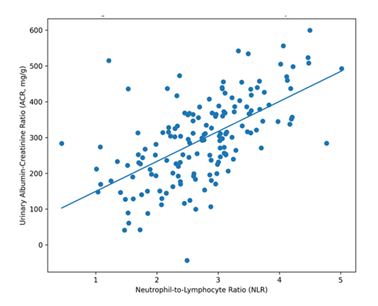
Figure 1: NLR–ACR Correlation.
Figure 1 Correlation between neutrophil-to-lymphocyte ratio (NLR) and urinary albumin-creatinine ratio (ACR) among patients with Type 2 Diabetes Mellitus. A significant positive correlation was observed between NLR and urinary ACR (r = 0.603, p < 0.001), indicating that higher systemic inflammatory activity was associated with increased albuminuria and greater severity of renal involvement.
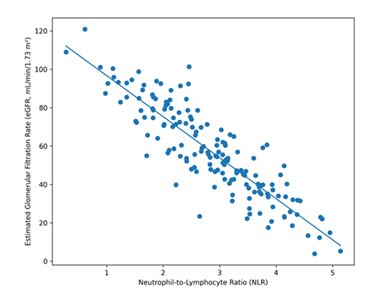
Figure 2: NLR–eGFR Correlation.
Figure 2 Correlation between neutrophil-to-lymphocyte ratio (NLR) and estimated glomerular filtration rate (eGFR) among patients with Type 2 Diabetes Mellitus. NLR showed a significant negative correlation with eGFR (r = -0.547, p < 0.001), indicating that higher levels of systemic inflammation were associated with reduced renal function.
Table 5 presents the results of multivariable logistic regression analysis for identifying independent predictors of diabetic nephropathy. After adjustment for potential confounding factors, duration of diabetes (OR=1.28, 95% CI: 1.12–1.46, p<0.001), HbA1c (OR=1.74, 95% CI: 1.26–2.41, p<0.001), hs-CRP (OR=1.58, 95% CI: 1.24–2.02, p<0.001), and NLR (OR=2.16, 95% CI: 1.43–3.28, p<0.001) emerged as significant independent predictors of diabetic nephropathy. Although age was statistically significant (OR=1.04, 95% CI: 1.01–1.08, p=0.018), its predictive effect was comparatively modest. In contrast, CRP and ESR did not retain statistical significance in the multivariable model, indicating that their associations with nephropathy may be influenced by other clinical factors.
Table 5: Multivariable Logistic Regression Analysis.
|
Variable |
OR |
95% CI |
p-value |
|
Age |
1.04 |
1.01–1.08 |
0.018 |
|
Duration of Diabetes |
1.28 |
1.12–1.46 |
<0.001 |
|
HbA1c |
1.74 |
1.26–2.41 |
<0.001 |
|
CRP |
1.12 |
0.98–1.29 |
0.091 |
|
hs-CRP |
1.58 |
1.24–2.02 |
<0.001 |
|
ESR |
1.03 |
0.99–1.06 |
0.081 |
|
NLR |
2.16 |
1.43–3.28 |
<0.001 |
Table 6 demonstrates the diagnostic performance of inflammatory markers for predicting diabetic nephropathy using ROC curve analysis. Among all evaluated biomarkers, NLR exhibited the highest discriminative ability, with an AUC of 0.864 (95% CI: 0.807–0.921), sensitivity of 84.6%, specificity of 80.1%, and an optimal cut-off value of 2.75. hs-CRP also showed excellent diagnostic performance with an AUC of 0.838 (95% CI: 0.775–0.901), sensitivity of 80.5%, and specificity of 77.5%. CRP demonstrated good predictive accuracy (AUC=0.802), whereas ESR showed comparatively lower diagnostic performance (AUC=0.756). Overall, NLR emerged as the most effective inflammatory biomarker for identifying diabetic nephropathy in patients with Type 2 Diabetes Mellitus.
Table 6: ROC Analysis of Inflammatory Markers for Predicting Diabetic Nephropathy.
|
Marker |
AUC |
95% CI |
Sensitivity (%) |
Specificity (%) |
Cut-off |
|
CRP |
0.802 |
0.735–0.869 |
78 |
72 |
7.1 mg/L |
|
hs-CRP |
0.838 |
0.775–0.901 |
80.5 |
77.5 |
4.5 mg/L |
|
ESR |
0.756 |
0.682–0.830 |
71.2 |
69.4 |
28 mm/hr |
|
NLR |
0.864 |
0.807–0.921 |
84.6 |
80.1 |
2.75 |
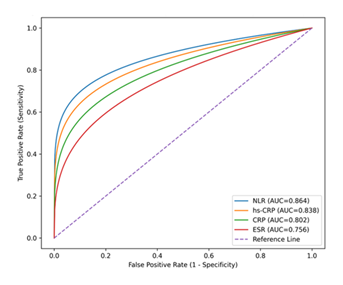
Figure 3: ROC Curves of Inflammatory Markers.
Figure 3. Receiver operating characteristic (ROC) curves of inflammatory markers for predicting diabetic nephropathy among patients with Type 2 Diabetes Mellitus. NLR demonstrated the highest diagnostic performance (AUC = 0.864), followed by hs-CRP (AUC = 0.838), CRP (AUC = 0.802), and ESR (AUC = 0.756), indicating superior discriminative ability of NLR for identifying diabetic nephropathy.
Discussion
The findings demonstrated that patients with diabetic nephropathy exhibited significantly elevated levels of inflammatory biomarkers, including CRP, hs-CRP, ESR, and NLR, compared with diabetic patients without nephropathy. Mean CRP levels increased from 4.9 ± 2.1 mg/L in the Non-DN group to 10.8 ± 4.2 mg/L in the DN group, while hs-CRP increased from 2.8 ± 1.3 mg/L to 6.7 ± 2.4 mg/L. Similarly, ESR nearly doubled (18.7 ± 7.4 vs. 38.5 ± 12.6 mm/hr), and NLR increased from 1.98 ± 0.74 to 3.62 ± 1.18 (all p<0.001). Furthermore, NLR demonstrated strong correlations with renal function parameters and emerged as the most effective inflammatory marker for predicting diabetic nephropathy. These findings support the growing body of evidence suggesting that chronic systemic inflammation plays a pivotal role in the development and progression of diabetic renal disease [12]. In the current study, patients with diabetic nephropathy were significantly older than those without nephropathy (58.6 ± 9.4 vs. 53.2 ± 8.7 years, p=0.001) and had a substantially longer duration of diabetes (12.4 ± 4.8 vs. 7.1 ± 3.5 years, p<0.001). Moreover, systolic blood pressure was significantly higher among DN patients (146.5 ± 16.2 vs. 128.4 ± 12.8 mmHg, p<0.001), accompanied by poorer glycemic control as reflected by elevated HbA1c levels (9.3 ± 1.5% vs. 7.6 ± 1.2%, p<0.001). These findings are consistent with previous studies identifying prolonged diabetes duration, hypertension, and poor glycemic control as major determinants of diabetic kidney disease [13]. Renal function parameters differed markedly between the two groups. Patients with diabetic nephropathy demonstrated significantly higher serum creatinine levels (2.08 ± 0.82 vs. 0.94 ± 0.24 mg/dL, p<0.001) and markedly elevated urinary ACR levels (312.7 ± 118.5 vs. 18.4 ± 9.7 mg/g, p<0.001). Conversely, mean eGFR was substantially reduced among DN patients (49.6 ± 15.4 vs. 91.8 ± 18.7 mL/min/1.73 m², p<0.001). These findings clearly indicate advanced renal impairment among patients with diabetic nephropathy and are in agreement with previous studies demonstrating that increasing albuminuria and declining eGFR are hallmarks of progressive diabetic kidney disease [14]. One of the principal findings of this study was the marked elevation of inflammatory biomarkers among patients with nephropathy. CRP levels were more than two-fold higher in the DN group, while hs-CRP and ESR also showed substantial increases. Most notably, NLR demonstrated the greatest relative increase, rising by approximately 83% in patients with nephropathy. These findings support the hypothesis that chronic low-grade inflammation contributes significantly to diabetic renal injury. Hyperglycemia-induced oxidative stress and activation of inflammatory mediators such as IL-6, TNF-α, and NF-κB may accelerate glomerular and tubular damage, leading to progressive renal dysfunction [15].
Among all inflammatory markers evaluated, NLR demonstrated the strongest association with renal impairment. Significant positive correlations were observed between NLR and serum creatinine (r=0.566, p<0.001) and urinary ACR (r=0.603, p<0.001), while a significant inverse correlation was identified between NLR and eGFR (r=-0.547, p<0.001). Notably, the correlation between NLR and ACR was the strongest observed relationship in the study, suggesting that NLR may reflect the degree of albuminuria and ongoing renal injury. In comparison, hs-CRP demonstrated moderately strong correlations with creatinine (r=0.518), ACR (r=0.541), and eGFR (r=-0.486), whereas CRP and ESR showed comparatively weaker associations. These findings suggest that NLR may be a more sensitive indicator of renal impairment than conventional inflammatory markers [16]. The multivariable logistic regression analysis further strengthened these observations. Duration of diabetes (OR=1.28, 95% CI: 1.12–1.46), HbA1c (OR=1.74, 95% CI: 1.26–2.41), hs-CRP (OR=1.58, 95% CI: 1.24–2.02), and NLR (OR=2.16, 95% CI: 1.43–3.28) emerged as independent predictors of diabetic nephropathy. Importantly, NLR demonstrated the highest odds ratio among all inflammatory markers, indicating that each incremental increase in NLR was associated with a substantially greater likelihood of nephropathy. Although CRP and ESR were significantly elevated in nephropathy patients, they did not remain significant after multivariable adjustment, suggesting that NLR and hs-CRP provide superior independent predictive information [17]. Receiver operating characteristic (ROC) analysis further highlighted the diagnostic utility of inflammatory biomarkers. NLR demonstrated the highest discriminative performance, with an AUC of 0.864 (95% CI: 0.807–0.921), sensitivity of 84.6%, specificity of 80.1%, and an optimal cut-off value of 2.75. hs-CRP also showed excellent predictive ability (AUC=0.838), followed by CRP (AUC=0.802) and ESR (AUC=0.756). The superior AUC of NLR suggests excellent diagnostic accuracy and supports its potential role as a screening biomarker for diabetic nephropathy. Given that NLR can be derived from a routine complete blood count without additional laboratory costs, it may represent a practical and cost-effective tool for risk stratification in routine clinical practice.
Conclusion
The present study demonstrated that inflammatory markers are significantly associated with diabetic nephropathy among patients with Type 2 Diabetes Mellitus. Patients with nephropathy exhibited significantly higher levels of CRP, hs-CRP, ESR, and NLR compared with those without nephropathy. Among the evaluated biomarkers, NLR showed the strongest correlation with renal function parameters and the highest diagnostic performance for predicting diabetic nephropathy. These findings suggest that NLR and hs-CRP may serve as simple, cost-effective, and readily available biomarkers for the early detection and monitoring of diabetic nephropathy in clinical practice.
Limitations of the Study
This study has several limitations. First, its cross-sectional design limits the ability to establish causal relationships between inflammatory markers and diabetic nephropathy. Second, the study was conducted at a single tertiary care center with a relatively small sample size, which may limit the generalizability of the findings. Third, advanced inflammatory cytokines and novel biomarkers were not assessed. Therefore, large-scale multicenter prospective studies are needed to further validate the role of inflammatory markers in predicting diabetic nephropathy.
Conflict of interest:
No
Author Contributions
Conceptualization: Safkat Faruk Sezan, Sumaiya Islam Khan, Md. Sarwar Miah
Methodology: Safkat Faruk Sezan, Sumaiya Islam Khan, Faria Nazmin, Khadija Akter, Md. Sarwar Miah
Data Collection: Faria Nazmin, Khadija Akter, Afroza Begum, Sree Shibshankar Devnath Debu, Israt Jahan Eti, Orin Chowdhury Bristy
Data Curation: Safkat Faruk Sezan, Sree Shibshankar Devnath Debu, Israt Jahan Eti, Orin Chowdhury Bristy
Formal Analysis: Safkat Faruk Sezan, Sumaiya Islam Khan, Sree Shibshankar Devnath Debu, Md. Sarwar Miah
Writing – Original Draft: Safkat Faruk Sezan, Sumaiya Islam Khan, Faria Nazmin, Khadija Akter, Md. Sarwar Miah
Writing – Review & Editing: Safkat Faruk Sezan, Sumaiya Islam Khan, Faria Nazmin, Khadija Akter, Afroza Begum, Sree Shibshankar Devnath Debu, Israt Jahan Eti, Orin Chowdhury Bristy, Md. Sarwar Miah
Final Approval: All authors read and approved the final manuscript.
References
- Guo S, Wang M, Yu Y, et al. The association of erythrocyte sedimentation rate, high-sensitivity C-reactive protein and diabetic kidney disease in patients with type 2 diabetes. BMC Endocrine Disorders 20 (2020): 103.
- Liu L, Gao B, Wang J, et al. Reduction in Serum High-Sensitivity C-Reactive Protein Favors Kidney Outcomes in Patients with Impaired Fasting Glucose or Diabetes. Journal of Diabetes Research (2020): 2720905.
- Islam SM, Salehin M, Zaman SB, et al. Factors associated with chronic kidney disease in patients with type 2 diabetes in Bangladesh. International Journal of Environmental Research and Public Health 18 (2021): 12277.
- Tang M, Cao H, Wei XH, et al. Association between high-sensitivity C-reactive protein and diabetic kidney disease in patients with type 2 diabetes mellitus. Frontiers in Endocrinology 13 (2022): 885516.
- Kamrul-Hasan AB, Mustari M, Asaduzzaman MD, et al. Evaluation of neutrophil-lymphocyte ratio and platelet-lymphocyte ratio as markers of diabetic kidney disease in Bangladeshi patients with type 2 diabetes mellitus. Journal of Diabetology 12 (2021): 58-62.
- Sarker PK, Sultana N, Islam H, et al. Thyroid dysfunction and metabolic dysregulation: a cross-sectional study of hormonal and glycemic parameters. Molecular Mechanism Research 3 (2025): 10227.
- Islam SM, Alam DS, Wahiduzzaman M, et al. Clinical characteristics and complications of patients with type 2 diabetes attending an urban hospital in Bangladesh. Diabetes & Metabolic Syndrome: Clinical Research & Reviews 9 (2015): 7-13.
- Fang Y, Wang B, Pang B, et al. Exploring the relations of NLR, hsCRP and MCP-1 with type 2 diabetic kidney disease: a cross-sectional study. Scientific Reports 14 (2024): 3211.
- Chanda M, Biswas T, Amiruzzaman M, et al. Association of serum uric acid and liver enzymes in adults at Tertiary Level Hospital in Bangladesh. Bangladesh Medical Journal 51 (2022): 18-27.
- Dullolli SS, Sidri A. Study on Serum High Sensitivity C Reactive Protein Levels in Patients with Type 2 Diabetes with Diabetic Nephropathy. European Journal of Cardiovascular Medicine 14 (2024): 877-888.
- Leucuța DC, Fumeaux PA, Almășan O, et al. Inflammatory markers as predictors of diabetic nephropathy in type 2 diabetes mellitus: a systematic review and meta-analysis. Medicina 61 (2025): 216.
- Chen Y, Liu X, Shengbu M, et al. Biomarkers: new advances in diabetic nephropathy. Natural Product Communications 20 (2025): 1934578X251321758.
- Liu H, Chen L, Zhu J, et al. The predictive value of neutrophil-to-lymphocyte ratio for the occurrence, progression, and mortality of diabetic nephropathy: a systematic review and meta-analysis. Scientific Reports (2026).
- Wang Y, Liu X, Xiao Z. The diagnostic value of immune-inflammatory markers for diabetic kidney disease in type 2 diabetic patients: a meta-analysis. Frontiers in Endocrinology 17 (2026): 1811189.
- Li H, Miao X. Influence and predictive value of systemic immune inflammation, fibrinogen and triglyceride glucose index on diabetic kidney disease. Chinese Journal of Diabetes (2024): 197-202.
- Wang Y, Liu X, Xiao Z. The diagnostic value of immune-inflammatory markers for diabetic kidney disease in type 2 diabetic patients: a meta-analysis. Frontiers in Endocrinology 17 (2026): 1811189.
Lee PH, Huang SM, Tsai YC, et al. Biomarkers in contrast-induced nephropathy: advances in early detection, risk assessment, and prevention strategies. International Journal of Molecular Sciences 26 (2025): 2869