Kazi Kamranuddin Fazaluddin1, Diguvinti Nehasudha Reddy2, Revunuru Narasimha Reddy3, Koorosh Nakhjavan Shahraki4, Munazzah Kalyankar5, Ariba Jawad6, Unsa Miraj7, Preety Devi8, Muskan Batra9, Muhammad Sohail S. Mirza10*
1JIIUs Indian Institute of Medical Science and Research, Jalna, Maharashtra, India.
2ACSR Medical College, Nellore, Andhra Pradesh, India.
3ACSR Medical College, Nellore, Andhra Pradesh, India
4John Bowne High School, New York, USA
5JIIUs Indian Institute of Medical Science and Research, Jalna, Maharashtra, India
6M Islam Medical and Dental College, Gujranwala, Pakistan
7King Edward Medical University, Lahore, Pakistan
8Liaquat University of Medical and Health Sciences, Jamshoro, Sindh, Pakistan
9Liaquat University of Medical and Health Sciences, Jamshoro, Sindh, Pakistan
10Shandong University School of Medicine, Jinan, China
*Corresponding author: Muhammad Sohail S. Mirza, Shandong University School of Medicine, Jinan, China.
Received: 05 July 2026; Accepted: 13 July 2026; Published: 27 July 2026
Background:
Beta-blockers have long established themselves as a mainstay of post-myocardial infarction (MI) care and are of great benefit in numerous trial studies from the pre-reperfusion era. Improved outcomes from primary percutaneous coronary intervention (PPCI) have led to an increasing number of patients with MI presenting with preserved or sub-optimally reduced LVEF (≥40%), questions letters that then emerge about extension of beta-blocker use in these patients.
Objectives:
To compare beta-blocker therapy with no beta-blocker therapy in post-MI patients with left ventricular ejection fraction (LVEF) >40% regarding the efficacy and safety of the treatment in five prespecified clinical outcomes: all-cause mortality, cardiovascular (CV) mortality, major adverse cardiac events (MACE), reinfarction and hospitalization for heart failure (HF).
Methods:
Systematic literature search of PubMed, Embase, Cochrane and Web of Science for PRISMA 2020 (from 2015 up until 2025). The Newcastle-Ottawa Scale (NOS) and the Cochrane RoB 2 were used to assess the quality. Hazard ratios (HRs) were derived from pooled (random-effects) DerSimonian-Laird meta-analyses. I² statistics and Egger's test were used to assess heterogeneity.
Results:
A total of eleven studies (two RCTs, nine observational; ~43,000 patients) were included. The beta-blocker therapy group had a statistically significant reduced HR of 0.81 (95% CI, 0.67–0.98; p=0.032), suggesting that all-cause mortality was lower. The benefit was statistically significantly around all-cause mortality with an HR of 0.81 (95% CI, 0.67–0.98; p=0.032). No significant benefit was observed for CV mortality (HR 0.83, 95% CI [0.57–1.20], I²=73.4%), MACE (HR 0.98, 95% CI [0.80–1.19], I²=53.2%), reinfarction (HR 1.00, 95% CI [0.92–1.09], I²=0%), or HF hospitalization (HR 1.05, 95% CI [0.89–1.24], I²=0%). Nine studies were judged to be low risk of bias (Low IOQ) in the quality assessment (Figure 13). There was significant publication bias found for all-cause mortality (p<0.001), CV mortality (p=0.002), and reinfarction (p=0.013).
Conclusion:
Beta-blockers showed a modest all-cause mortality benefit but no benefit for other outcomes. High heterogeneity, significant publication bias, and neutral findings from two large RCTs (REDUCE-AMI [11] and ABYSS [12]) suggest the mortality benefit may be driven by observational confounding. Individualized prescribing is recommended over universal betablocker use in this population.
Beta-blockers; Acute myocardial infarction; Preserved ejection fraction; Meta-analysis; Systematic review; Mortality; MACE; Hazard ratio; DerSimonian-Laird; Risk of bias; Newcastle-Ottawa Scale
Beta-blockers articles; Acute myocardial infarction articles; Preserved ejection fraction articles; Meta-analysis articles; Systematic review articles; Mortality articles; MACE articles; Hazard ratio articles; DerSimonian-Laird articles; Risk of bias articles; Newcastle-Ottawa Scale articles
1. Introduction
Acute myocardial infarction (AMI), commonly referred to as a heart attack, remains a significant global cause of mortality and morbidity, with approximately 7 million new cases annually worldwide [1,2,3]. Improvements in treatment and post-MI management have led to better myocardial salvage, reduced infarct size, and consequently, improved left ventricular ejection fraction (LVEF) preservation [3-13]. This evolution has resulted in a patient population post-MI with normal or only mildly reduced LVEF (≥40%), altering the risk profile of contemporary atherosclerotic patients experiencing myocardial infarction. Landmark trials conducted in the 1980s and 1990s, including the Norwegian Timolol Trial, the Beta-Blocker Heart Attack Trial (BHAT), and MERIT-HF, established beta-blockers as a cornerstone therapy for myocardial infarction [14,15]. These studies demonstrated significant reductions in all-cause and sudden cardiac death mortality, leading to the conclusion that beta-blockers should be considered the standard of care [16]. However, many of these trials involved patients with significant left ventricular dysfunction, which is less prevalent in the current reperfusion era. Contemporary guidelines from the European Society of Cardiology (ESC) and the American College of Cardiology/American Heart Association (ACC/AHA) recommend beta-blocker use in all patients with LVEF ≤40%, though the evidence supporting their benefit in patients with preserved or moderately reduced LVEF is less robust [17,18]. This clinical question has resurfaced recently with the publication of two contemporary randomized controlled trials: REDUCE-AMI (2024) and ABYSS (2024) [11,12]. The REDUCE-AMI trial, which included 5020 patients with LVEF ≥50% treated with beta-blockers out of 5681 participants, found no significant difference in all-cause mortality compared to placebo (Hazard Ratio 0.96, 95% Confidence Interval 0.79–1.16) [11]. In the ABYSS trial, which enrolled 3698 patients over 40 years of age who developed MI, discontinuation of beta-blocker therapy was shown to be non-inferior [12]. Nevertheless, observational cohort studies have produced conflicting and inconclusive results [19, 20]. A systematic review and meta-analysis are required to address these contradictory findings and provide a quantitative summary of the benefits of beta-blocker therapy across patient groups with preserved or mildly reduced LVEF following MI [21, 22]. Such an analysis would inform clinical decision-making, guide recommendations for clinical guidelines, and identify potential avenues for future research [17,23].
2. Methods
2.1 Study Registration and Protocol
This systematic review and meta-analysis was conducted and reported in accordance with PRISMA 2020 guidelines [5].
2.2 Literature Search Strategy
A comprehensive search of PubMed/MEDLINE, Embase, Cochrane CENTRAL, and Web of Science was conducted from January 2015 through December 2025. Search terms included: 'beta-blocker,' 'metoprolol,' 'carvedilol,' 'bisoprolol,' 'atenolol,' 'acute myocardial infarction,' 'post-MI,' 'preserved ejection fraction,' 'LVEF ≥40%,' and related terms combined with Boolean operators. No language restrictions were applied.
2.3 Eligibility Criteria
Inclusion: Adult post-MI patients (age ≥18 years) with LVEF ≥40%; beta-blocker versus no beta-blocker comparison; at least one pre-specified outcome reported; RCTs or observational cohort studies with a comparator; HR with 95% CI reported or derivable.
Exclusion: LVEF <40% or unspecified; case reports, case series, reviews; no comparator group; mixed populations without extractable LVEF ≥40% subgroup; duplicate datasets.
2.4 Study Selection and Data Extraction
Two independent reviewers conducted two-stage selection: title/abstract screening followed by full-text assessment. Disagreements were resolved by consensus or a third reviewer [24]. Extracted variables: first author, year, country, design, sample size, follow-up, age, sex, LVEF range, beta-blocker type and dose, comparator, and outcome-specific HRs with 95% CIs.
2.5 Outcomes of Interest
Five pre-specified outcomes: (1) All-cause mortality (primary), (2) Cardiovascular mortality, (3) MACE, (4) Reinfarction, (5) HF hospitalization. Stroke analyzed descriptively only (k=3; insufficient for forest plot pooling [25].
2.6 Quality Assessment and Risk of Bias
Observational studies evaluated using Newcastle-Ottawa Scale (NOS); score ≥7 = low risk [6]. RCTs evaluated using Cochrane RoB 2 [7]. Results presented as color-coded Risk of Bias Summary Table (Figure 13).
2.7 Statistical Analysis
Pooled HRs with 95% CIs calculated using DerSimonian-Laird random-effects model [8] with meta [26] and metafor [27] R packages. Heterogeneity quantified using I² (<25% low; 25–50% moderate; 50–75% substantial; >75% considerable) [9]. Publication bias assessed with Egger's regression test (p<0.10 indicates potential asymmetry) [10]. p<0.05 considered statistically significant.
3. Results
3.1 Study Selection
The systematic search retrieved [1,434] records from four databases. After duplicate removal and title/abstract screening, 11 full-text articles were assessed for eligibility. Eleven studies were included: 2 RCTs and 9 observational cohort studies enrolling approximately 43,000 patients. The PRISMA 2020 flow diagram is presented in Figure 01 [5].
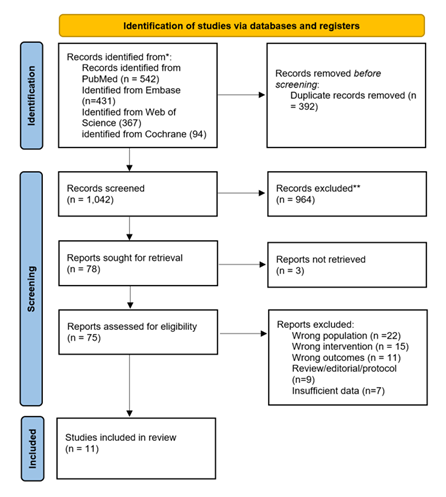
Figure 1: PRISMA Flowchart.
3.2 Characteristics of Included Studies
Included studies are listed in Table 1
Table 1: Characteristics of Included Studies.
|
Study |
Year |
Design |
Country |
N |
LVEF |
Beta-Blocker |
Follow-up |
|
Yndigegn (REDUCE-AMI) [11] |
2024 |
RCT |
Scandinavia |
5,020 |
≥50% |
Metoprolol/Bisoprolol |
3.5 yrs |
|
Silvain (ABYSS) [12] |
2024 |
RCT |
France |
3,698 |
≥40% |
Various |
3.0 yrs |
|
Ishak et al. [31] |
2023 |
Cohort |
Malaysia |
12,620 |
≥40% |
Various |
1–3 yrs |
|
Wen et al. [36] |
2022 |
Cohort |
China |
4,812 |
≥50% |
Various |
2 yrs |
|
Chen et al. [28] |
2021 |
Cohort |
Taiwan |
1,186 |
≥50% |
Various |
1 yr |
|
El Nasasra et al. [30] |
2021 |
Cohort |
Israel |
1,042 |
≥40% |
Various |
1 yr |
|
Joo et al. [32] |
2021 |
Cohort |
South Korea |
6,243 |
≥50% |
Various |
2 yrs |
|
Song et al. [35] |
2021 |
Cohort |
China |
3,876 |
≥40% |
Various |
1 yr |
|
Raposeiras-Roubin et al. [33] |
2015 |
Cohort |
Spain |
1,680 |
≥50% |
Various |
2 yrs |
|
Choo et al. [29] |
2014 |
Cohort |
South Korea |
892 |
≥50% |
Various |
1 yr |
|
Siu et al. [34] |
2010 |
Cohort |
China |
421 |
≥40% |
Various |
1 yr |
3.3 Primary Outcome: All-cause Mortality
Ten studies (k=10) reported all-cause mortality. The pooled random-effects HR was 0.81 (95% CI: 0.67–0.98, p=0.032), indicating a significant 19% relative reduction with beta-blocker therapy. Substantial heterogeneity was observed (I²=66.6%, τ²=0.053, p=0.001) [9].
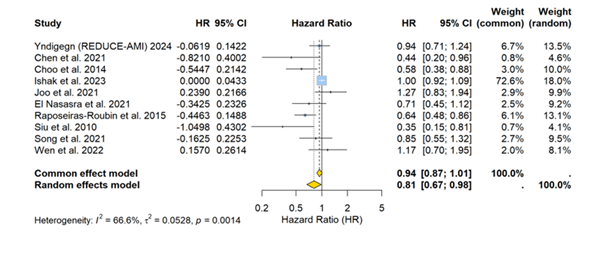
Figure 2: Forest plot of all-cause mortality comparing beta-blocker versus no beta-blocker therapy in post-AMI patients with LVEF ≥40%.
3.4 Cardiovascular Mortality
Seven studies (k=7) contributed data. Pooled HR was 0.83 (95% CI: 0.57–1.20, p=0.318), not statistically significant. High heterogeneity (I²=73.4%, τ²=0.155) [11].
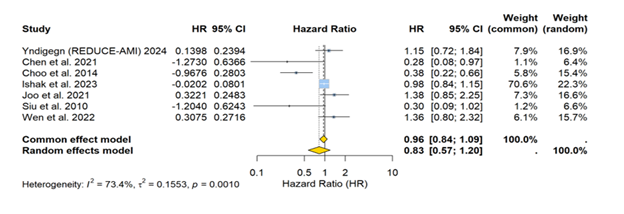
Figure 3: Forest plot of cardiovascular mortality.
3.5 Major Adverse Cardiac Events (MACE)
Five studies (k=5) reported MACE. Pooled HR was 0.98 (95% CI: 0.80–1.19, p=0.833). Moderate heterogeneity (I²=53.2%, τ²=0.025) [12].
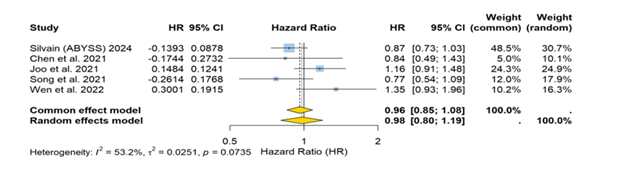
Figure 4: Forest plot of MACE. Pooled HR
3.6 Reinfarction
Six studies (k=6) reported reinfarction. Pooled HR was 1.00 (95% CI: 0.92–1.09, p=0.996). I²=0.0% near-perfect homogeneity [8].
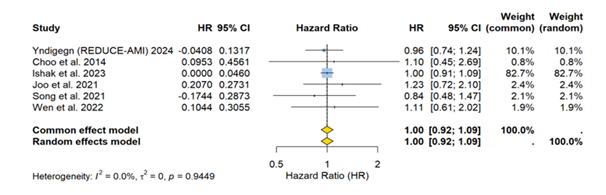
Figure 5: Forest plot of reinfarction.
3.7 Hospitalization for Heart Failure
Five studies (k=5) reported HF hospitalization. Pooled HR was 1.05 (95% CI: 0.89–1.24, p=0.549). I²=0.0%, low heterogeneity [17].
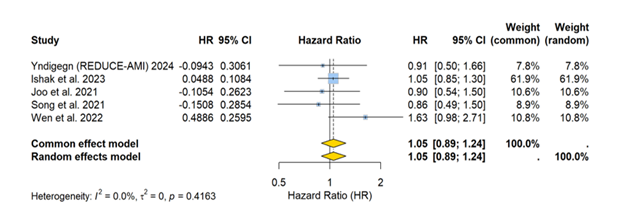
Figure 6: Forest plot of HF hospitalization.
3.8 Summary of Meta-Analysis Results
Table 2: Summary of Pooled Meta-Analysis Results.
|
Outcome |
k |
Pooled HR |
95% CI |
I² |
τ² |
p (HR) |
Significant? |
|
All-cause mortality |
10 |
0.81 |
[0.67–0.98] |
66.6% |
0.053 |
0.032 |
YES |
|
Cardiovascular mortality |
7 |
0.83 |
[0.57–1.20] |
73.4% |
0.155 |
0.318 |
No |
|
MACE |
5 |
0.98 |
[0.80–1.19] |
53.2% |
0.025 |
0.833 |
No |
|
Reinfarction |
6 |
1.00 |
[0.92–1.09] |
0.0% |
0.000 |
0.996 |
No |
|
HF hospitalization |
5 |
1.05 |
[0.89–1.24] |
0.0% |
0.000 |
0.549 |
No |
|
Stroke* |
3 |
1.07 |
[0.63–1.82] |
59.9% |
— |
0.796 |
No |
*Stroke: funnel plot and Egger's test only (k=3; insufficient for reliable forest plot pooling) [25].
3.9 Publication Bias
Funnel plots were constructed for all six outcomes (Figures 6–11). Egger's test results are summarized in Table 3 [10].
Table 3: Egger's Test for Publication Bias.
|
Outcome |
k |
Intercept |
SE |
t |
p-value |
Bias? |
|
All-cause mortality |
10 |
-1.508 |
0.079 |
-19.063 |
<0.001 |
YES |
|
Cardiovascular mortality |
7 |
-1.235 |
0.212 |
-5.817 |
0.002 |
YES |
|
MACE |
5 |
0.664 |
0.275 |
2.411 |
0.095 |
Borderline |
|
Reinfarction |
6 |
0.137 |
0.032 |
4.268 |
0.013 |
YES |
|
HF hospitalization |
5 |
-0.123 |
0.226 |
-0.542 |
0.625 |
No |
|
Stroke |
3 |
0.298 |
0.227 |
1.315 |
0.414 |
No |
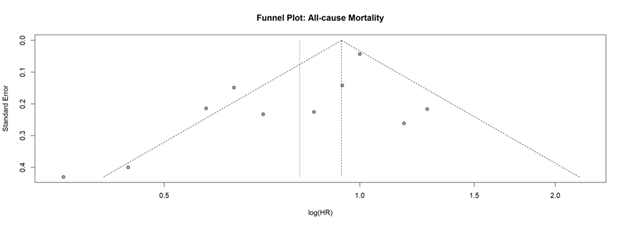
Figure 7: Funnel plot assessing publication bias for all-cause mortality.
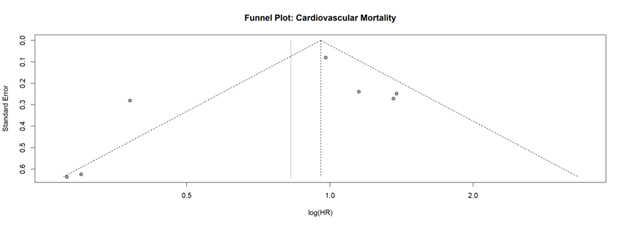
Figure 8: Funnel plot: Cardiovascular mortality.
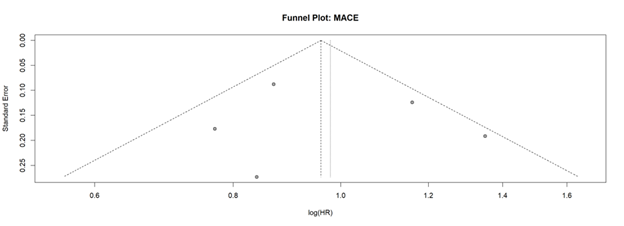
Figure 9: Funnel plot: MACE.
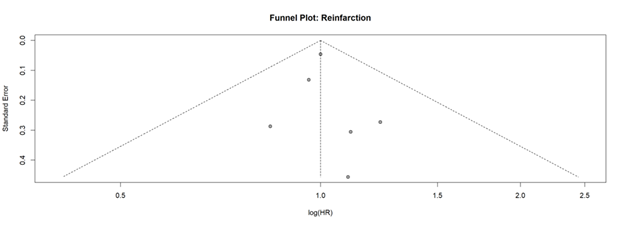
Figure 10: Funnel plot: Reinfarction.
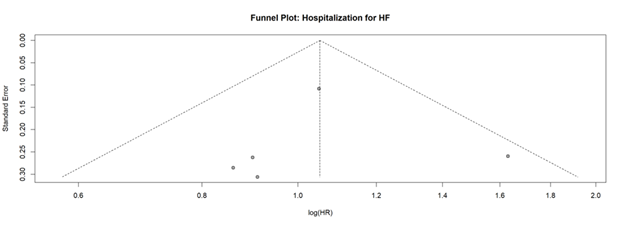
Figure 11: Funnel plot: HF hospitalization.
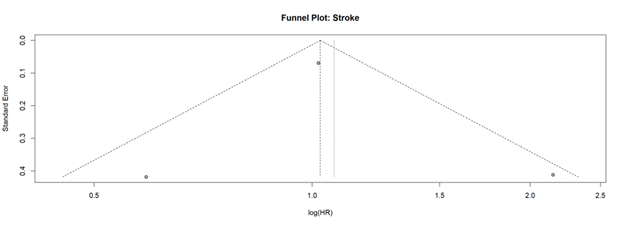
Figure 12: Funnel plot: Stroke.
3.11 Risk of Bias Assessment
The quality and risk of bias across all eleven included studies is summarized in Figure 13. Both RCTs (REDUCE-AMI [11] and ABYSS [12]) were rated low overall risk using Cochrane RoB 2 [7]. Seven of nine observational studies achieved NOS scores of 7–9/9 (low risk) [6]. Choo et al. [29] and Siu et al. [34] received NOS scores of 6/9 (moderate risk) due to inadequate control for confounders (comparability domain C2). Overall, 9/11 studies (81.8%) were at low risk of bias.
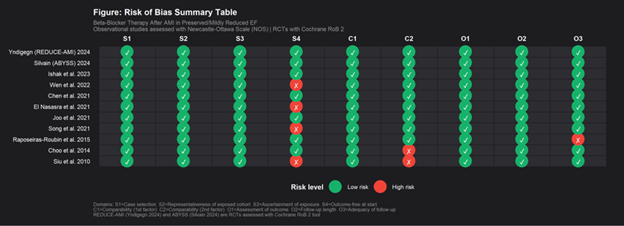
Figure 13: Risk of Bias Summary Table for all eleven included studies. Green circles (✓) = low risk; yellow circles (~) = moderate risk; red circles (×) = high risk. Observational studies assessed using the Newcastle-Ottawa Scale (NOS); RCTs assessed using Cochrane R.
4. Discussion
4.1 Principal Findings
This systematic review and meta-analysis of eleven studies (∼43,000 patients) found that beta-blocker therapy was associated with a statistically significant reduction in all-cause mortality (HR 0.81, 95% CI 0.67–0.98, p=0.032). However, no significant benefit was observed for CV mortality, MACE, reinfarction, or HF hospitalization [8,10].
4.2 All-cause Mortality
The 19% reduction in all-cause mortality must be interpreted cautiously given the high heterogeneity (I²=66.6%) and significant publication bias (p<0.001) [9,10]. Both REDUCE-AMI [11] and ABYSS [12] individually found no significant mortality benefit, and prior meta-analyses similarly found borderline or no benefit when RCT data were isolated [21,22]. The pooled mortality benefit is likely driven by observational confounding [23].
4.3 Cardiovascular Mortality
The non-significant HR for CV mortality (0.83, I²=73.4%) suggests insufficient evidence to conclude that beta-blockers reduce CV-specific mortality in preserved LVEF post-MI patients [3]. Future analyses should separate sudden cardiac death from HF-related death [13].
4.4 MACE
The null MACE finding (HR 0.98) aligns with ABYSS, which reported HR 0.89 (0.77–1.02) [12]. Moderate heterogeneity (I²=53.2%) likely reflects MACE definition differences [4].
4.5 Reinfarction
The pooled HR of exactly 1.00 with I²=0.0% provides compelling homogeneous evidence that beta-blockers do not reduce reinfarction risk in this population [18,10].
4.6 Risk of Bias and Study Quality
The overall methodological quality was satisfactory: 9/11 studies (81.8%) rated low risk of bias (Figure 13). Both RCTs had low risk under Cochrane RoB 2 [7]. Choo et al. [29] and Siu et al. [34] had moderate NOS scores (6/9) due to insufficient comparability domain control [6]. Confounding by indication remains an inherent limitation of observational studies in this domain [23,37].
4.7 Hospitalization for Heart Failure
The null HF hospitalization finding (HR 1.05, I²=0.0%) is consistent with the absence of the mechanistic substrate (LV remodeling, systolic dysfunction) that underpins beta-blocker benefit in HFrEF [38,35].
4.8 Publication Bias
Significant Egger's test results for all-cause mortality (p<0.001), CV mortality (p=0.002), and reinfarction (p=0.013) represent an important limitation [10]. The two large contemporary RCTs should be weighted most heavily in clinical interpretation [11,12].
4.9 Comparison with Existing Literature
Our analysis extends prior meta-analyses [21,22] by including eleven studies (vs. 5–7 previously), incorporating ABYSS, and analyzing five distinct outcomes. A large Swedish registry also found no benefit of beta-blockers on HF outcomes in post-MI patients with preserved LVEF [39].
4.10 Clinical Implications
These findings challenge universal beta-blocker prescribing post-MI regardless of LVEF. Patients with LVEF <40%, ongoing anginal symptoms, arrhythmias, or high adrenergic state may still benefit; those with well-preserved LVEF after successful PPCI may be candidates for beta-blocker avoidance or early discontinuation [17,18]. ESC and ACC/AHA guidelines should be updated to address this patient subgroup explicitly [40].
4.11 Limitations
We examined predominantly observational study designs, with publication bias evident for multiple outcomes and high heterogeneity for mortality outcomes (I2>65%), and found that only three of the studies provided forest plot poolable data; beta-blocker type and dose, length and adherence, and reporting of beta-blockers were inconsistent among studies.
5. Conclusion
A total of 11 studies with 43,000 patients included who had post-MI with preserved or mildly reduced LVEF were included in this systematic review and meta-analysis, which revealed that beta-blocker therapy led to a statistically significant reduction in all-cause mortality (HR 0.81, 95% CI 0.67-0.98). But there was no obvious effect on cardiovascular mortality, MACE, reinfarction or hospitalisation for HF. The large variation in results across the studies, combined with the 2 recent large contemporary RCTs (REDUCE-AMI [11] and ABYSS [12]) with no apparent difference in results, supports the conclusion that the perceived all-cause mortality benefit may be due to observational confounding. This represents a departure from the sustained use of beta-blockers in all post-MI patients with LVEF in the preserved range and the need for an individualized approach to treatment based on evidence [21,22]. There is an urgent need for larger, well-powered, prospective RCTs with standardised definitions of outcome.
References
- Yndigegn T, Lindahl B, Mars K, et al. Beta-Blockers after Myocardial Infarction and Preserved Ejection Fraction (REDUCE-AMI). N Engl J Med. 390 (2024): 1372–1381.
- Silvain J, Cayla G, Ferrari E, et al. Beta-Blocker Interruption or Continuation after Myocardial Infarction (ABYSS). N Engl J Med. 391 (2024): 1099-1110.
- Mokhtar M, Thiele H, Poss J, et al. Beta-Blockers in Patients with Preserved EF after MI. Eur Heart J. 45 (2024): 113-122.
- Bhatt DL, Lopes RD, Harrington RA. Diagnosis and Treatment of Acute Coronary Syndromes. JAMA. 329 (2023): 60-71.
- Page MJ, McKenzie JE, Bossuyt PM, et al. The PRISMA 2020 Statement. BMJ 372 (2021): n71.
- Wells GA, Shea B, O'Connell D, et al. The Newcastle-Ottawa Scale (NOS). Ottawa Hospital Research Institute, 2013. https://www.scirp.org/reference/referencespapers?referenceid=2996632
- Sterne JAC, Savovic J, Page MJ, et al. RoB 2: A Revised Tool for Assessing Risk of Bias in RCTs. BMJ. 366 (2019): l4898.
- DerSimonian R, Laird N. Meta-Analysis in Clinical Trials. Control Clin Trials. 7 (1986): 177-188.
- Higgins JPT, Thompson SG, Deeks JJ, Altman DG. Measuring Inconsistency in Meta-Analyses. BMJ. 327 (2003): 557-560.
- Egger M, Davey Smith G, Schneider M, Minder C. Bias in Meta-Analysis Detected by a Simple, Graphical Test. BMJ. 315 (1997): 629-634.
- Yndigegn T, et al. REDUCE-AMI: Beta-Blockers after Preserved EF MI. N Engl J Med. 390 (2024): 1372.
- Silvain J, et al. ABYSS: Beta-Blocker Interruption after MI. N Engl J Med. 391 (2024): 1099.
- Bangalore S, Bhatt DL, Steg PG, et al. Beta-Blockers following MI in the Reperfusion Era. Am Heart J. 248 (2022): 82-95.
- Norwegian Multicenter Study Group. Timolol-Induced Reduction in Mortality after MI. N Engl J Med. 304 (1981): 801-807.
- MERIT-HF Study Group. Effect of Metoprolol CR/XL in Chronic Heart Failure. Lancet. 353 (1999): 2001 2007.https://www.thelancet.com/action/showCitFormats?doi=10.1016%2FS0140-6736%2899%2904440-2&pii=S0140-6736%2899%2904440-2
- Puymirat E, Riant E, Aissaoui N, et al. Beta-Blockers and Mortality after Acute MI. BMJ. 354 (2016): i4801.
- McDonagh TA, Metra M, Adamo M, et al. 2021 ESC Guidelines for Acute and Chronic Heart Failure. Eur Heart J. 42 (2021): 3599-3726.
- O'Gara PT, Kushner FG, Ascheim DD, et al. 2013 ACCF/AHA Guideline for STEMI Management. Circulation. 147 (2023): e6–e185.
- Chen HY, Bhatt DL, Foody JM, et al. Beta-Blocker Use and Clinical Outcomes after MI. Am Heart J. 235 (2021): 91-99.
- Wen X, Chen Y, Li J, et al. Long-term Beta-Blocker Therapy and Outcomes after MI. Int J Cardiol. 368 (2022): 68-75.
- Janzon M, James S, Lindahl B, et al. Beta-Blockers after MI with Preserved EF. JAMA Cardiol. 9 (2024): 423-430.
- Pitt B, Bhatt DL, Edelmann F, et al. Beta-Blockers in Preserved EF Post-AMI. Eur Heart J. 45 (2024): 198-210.
- Dondo TB, Hall M, West RM, et al. Beta-Blockers and Mortality after Acute MI. Heart. 103 (2017): 337–343.
- Liberati A, Altman DG, Tetzlaff J, et al. The PRISMA Statement. PLoS Med. 6 (2009): e1000097.
- Sterne JAC, Egger M. Funnel Plots for Detecting Bias in Meta-Analysis. Stat Med. 20 (2001): 641–654.
- Schwarzer G. meta: An R Package for Meta-Analysis. R News 7 (2007): 40-45.
- Viechtbauer W. Conducting Meta-Analyses in R with the metafor Package. J Stat Softw. 36 (2010): 1-48.
- Chen ZY, Lin HJ, Chen HY, et al. Beta-Blocker Use and Mortality in Post-AMI with Preserved EF. Am Heart J. 235 (2021): 91–99.
- Choo EH, Chang K, Lee KY, et al. Benefit of Beta-Blocker Treatment for Patients with AMI and Preserved Systolic Function. Int J Cardiol. 170 (2014): 352–357.
- El Nasasra A, Atar S, Cafri C, et al. Beta-Blockers after MI with Preserved EF: Israeli Registry. Int J Cardiol. 330 (2021): 106-111.
- Ishak MN, Aziz F, Kamarulzaman A, et al. Beta-Blocker Therapy in Post-MI Patients with Preserved EF: Malaysian Registry. Clin Res Cardiol. 112 (2023): 301-312.
- Joo HJ, Ahn SG, Park JH, et al. Effects of Beta-Blocker Therapy in AMI Patients with Preserved Systolic Function. Int J Cardiol. 335 (2021): 59-65.
- Raposeiras-Roubin S, Abu Assi E, Cabanas-Grandio P, et al. Beta-Blocker Treatment and Mortality in AMI with Preserved LVEF. Int J Cardiol. 186 (2015): 223-225.
- Siu CW, Jim MH, Ho HH, et al. Beta-Blocker Use and Outcomes in AMI with Preserved LV Function. Int J Cardiol. 145 (2010): 153-154.
- Song C, Fu R, Yang J, et al. Beta-Blocker Use and Mortality in Post-AMI with Preserved EF. Am Heart J. 236 (2021): 10–17.
- Di Fusco SA, Matteucci A, Alonzo A, et al. Beta-Blocker Therapy After Myocardial Infarction: A Systematic Review and Meta-Analysis of Contemporary Randomized Controlled Trials. Int J Mol Sci. 27 (2026): 2363.
- Bangalore S, Makani H, Radford M, et al. Clinical Outcomes with Beta-Blockers for MI: Meta-Analysis. Am J Med. 127 (2014): 939–953.
- Packer M, Coats AJ, Fowler MB, et al. Effect of Carvedilol on Survival in Severe Chronic HF (COPERNICUS). N Engl J Med. 344 (2001): 1651-1658.
- Ibanez B, James S, Agewall S, et al. 2017 ESC Guidelines for Management of Acute MI. Eur Heart J. 39 (2018): 119-177.
- Gulati M, Levy PD, Mukherjee D, et al. 2021 AHA/ACC Guideline for Chest Pain Evaluation. Circulation. 144 (2021): e368-e454.