Uro-Chukwu HC1,2,3,4, Obuna JA1, Okorie UC5*, Udeme KE1, Yakubu EN1, Aja DO1
1Department of Internal Medicine, National Obstetric Fistula Centre, Abakaliki, Ebonyi State, Nigeria
2Department of Medical laboratory Science, National Obstetric Fistula Centre, Abakaliki, Ebonyi State, Nigeria
3Director of research, Institute for Nutrition, Nutraceutical & Public Health Research and Development, Nigeria
4Department of Medical Biochemistry, David Umahi Federal University of Health Sciences, Uburu, Ebonyi State, Nigeria
5Department of Biochemistry, Alex-Ekwueme Federal University, Ndufu Alike, Abakaliki, Ebonyi State, Nigeria
Corresponding Author: Okorie UC, Department of Biochemistry, Alex-Ekwueme Federal University, Ndufu Alike, Abakaliki, Ebonyi State, Nigeria
Received: 07 October 2025; Accepted: 15 October 2025; Published: 14 August 2026
DOI: 10.26502/fjwhd.2644-288400154
ShareBlood donors` type and recipients` distribution patterns are critical medical and surgical issues but documentation gap strongly exists concerning obstetric fistulae patients who are usually confronted with serious stigmatization. The blood donors` type and recipients` distribution pattern in National Obstetric Fistula Centre (NOFIC), Abakaliki, South-eastern, Nigeria was investigated. Records of 562 recipients’ and the donors’ blood groups type collected retrospectively from the register for 10-year period (2013 to 2022). The frequency and pattern of blood donors’ type were as follows: O+ve (89.5%), O-ve (5.3%), A+ve (3.2%), B+ve (1.8%), AB+ve (0.2%) with O+ve blood donor type having highest frequency. The least frequency of blood group donors was the AB+ve blood group, having frequency of 2%. The frequency and distribution pattern of the transfused or recipient blood group types were: O+ve (56.6%), A+ve (19.8%), B+ve (17.3%), O-ve (3.4%), AB+ve (2.1%), B-ve (0.7%) and A-ve (0.2%). The highest blood group recipient type was O positive rhesus factor with A negative rhesus blood group recording the least (0.2%). Finally, O positive rhesus factor type recipients and donors dominated among the vesico-vagina fistula patients at NOFIC, Abakaliki. The A-ve, B-ve and AB-ve types not recorded for donors, no AB-ve observed among recipient patient, thus, providing strategic planning for blood sourcing.
Rhesus, Frequency, Transfusion; Stigmatization; Distribution pattern
Rhesus articles, Frequency articles, Transfusion articles; Stigmatization articles; Distribution pattern articles
Introduction
Blood transfusion is critical in the medical and surgical practices [10]. It is even worse among patients with cases that mark them for stigmatization. Obstetric fistulae (Vesico-vaginal fistulae, VVF and Recto-vaginal Fistulae, RVF) are some of the diseases that the sufferers are being stigmatized, especially in developing country like Nigeria where the awareness is low. This type of health challenge comes with enormous medico-social and psychological consequences [3] such as withdrawal syndrome. VVF (An abnormal pathological connection between the bladder and the vagina, resulting in continuous and involuntary leakage of urine through the vaginal tract [3] is common in developing country due to substandard care; cases arise in developed country mostly due to radiation therapy or surgery [3; 15], though caesarian surgery conducted by quacks and inexperienced health care workers, in addition to prolonged obstructed labour are the major causes of RVF and VVF in Southern Nigeria and developing countries. Surgical repair approach is a major treatment module for the obstetric fistulae condition at NOFIC Abakaliki, a specialized fistula hospital in the South-eastern Nigeria. Just like most surgery, blood transfusion is one of the major challenges during surgery [7]. In order to achieve blood transfusion perfection when operating on the patients, blood transfusion has to be appropriately available and judiciously used. However, availability of adequate safe blood has been challenging [14]. This is worse in developing countries due to shortage of voluntary compatible blood donors [5]. Other factors range from lack of infrastructures for storage, and poor facilities for storage and blood component preparation as well as unsuitable blood ordering and utilization including fears usually displayed by donors [9]. Furthermore, regular appraisal of transfusion practice is vital to expose shortcomings that will catalyze the provision of adequate safe blood or good practice(s) that could be strengthened [7; 16]. Blood bank is one of the vital pillars in modern medicine but unfortunately it carries the potential risk of lethal infectious disease transmission [5; 6]. Thus, ensuring the quality of donors and avoiding the risk of transfusion-transmitted diseases through proper screening are truly indispensable [10]. The provision of safe, sufficient and timely supply of blood and blood products is the primary responsibility of blood transfusion service provider [10]. While, numerous studies have pointed out variable distributions in terms of demands for blood and its various components [7] including blood group type of transfused patients (recipients), and variability in the blood use in relation to diseased classification (1CD-10), There exist a gap on blood donor type and recipient distribution pattern among obstetric fistulae patients. So, based on our research, the blood donor type and recipient distribution pattern among vesicovaginal fistula patients in Nigeria who are managed at obstetric centre in the region and Nigeria in general have not been reported. Although significant need for blood transfusion among vesicovaginal fistula patients in Nigeria was documented by [1], hence the reason for this study to investigate the blood donor type and recipient distribution pattern among the obstetric fistula clients in a specialized health care facility for obstetric fistula management in the South-eastern region of Nigeria. It is anticipated that the report of such study, will help to understand the blood donor and recipient distribution pattern, with a view to supporting seamless service delivery and favourable care outcome, at such dedicated facility as well as act as evidence-based planning approach for health facilities with similar mandates, to make adequate blood donation preparation for the present and future demands for blood by her patients so as to avoid unnecessary transfusions hiccups. Since, the information will be vital on the prevailing blood type, such hospitals can establish suitable blood sourcing guidelines in addition to strategizing on new donor recruitment, and streamlining resources for the therapeutic advantage of the patient.
Methodology
Study design
This study employed retrospective analysis of blood transfusion recipients and donors data covering blood transfused within the period from 2013-2022 at National Obstetrics Fistulae Centre, South Eastern Nigeria.
Data collection
Data were collected retrospectively from the register of the blood bank for the 10-year period from 2013 to 2022 and covered all blood recorded in the blood bank which were collected and transfused. Issue registers were accessed to retrieve the records 562 recipients’ and the donors’ blood groups and the rhesus factors.
Statistical analysis
The data were analyzed using SPSS version 21 software (Armonk, NY. IBM Corp.). Frequency and percentages were used to summarize ABO groups and rhesus factor of blood donors’ type and recipients’ pattern of blood.
Ethics approval and consent to participate
Approval to conduct the study was obtained from the NOFIC research ethics committee.
Results
|
PATIENTS (RECIPIENTS) |
||||
|
Frequency |
Percent |
Valid Percent |
Cumulative Percent |
|
|
O- |
19 |
3.4 |
3.4 |
3.4 |
|
O+ |
318 |
56.6 |
56.6 |
60 |
|
A- |
1 |
0.2 |
0.2 |
60.1 |
|
A+ |
111 |
19.8 |
19.8 |
79.9 |
|
AB+ |
12 |
2.1 |
2.1 |
82 |
|
B- |
4 |
0.7 |
0.7 |
82.7 |
|
B+ |
97 |
17.3 |
17.3 |
100 |
|
Total |
562 |
100 |
100 |
|
Distribution of blood transfusion (Table 1) indicated a total of 562 recipients with O+ve the highest percentage (56.6 %) of recipients while A-ve. blood group was the least (0.2 %). The study did not record AB-ve recipient.
Table 1: Distribution of blood transfusion recipients at NOFIC, South-Eastern, Nigeria Between 2013-2022.
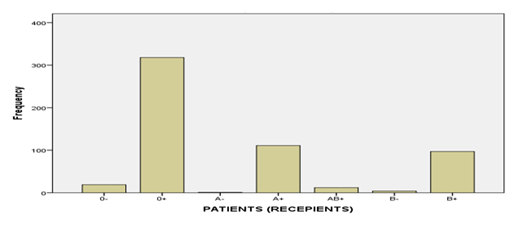
Figure 1: Recipients blood pattern.
Recipients blood pattern (Figure 1) indicted that O+ve was the highest frequency of patients’ transfusion (recipients) while A-ve was the least.
|
DONORs |
|||||
|
Frequency |
Percent |
Valid Percent |
Cumulative Percent |
||
|
Valid |
O+ve |
503 |
89.5 |
89.5 |
89.5 |
|
O-ve |
30 |
5.3 |
5.3 |
94.8 |
|
|
B+ve |
10 |
1.8 |
1.8 |
96.6 |
|
|
A+ve |
18 |
3.2 |
3.2 |
99.8 |
|
|
AB+ve |
1 |
0.2 |
0.2 |
100 |
|
|
Total |
562 |
100 |
100 |
||
Table 2: Distribution of patterns of blood donors at NOFIC, Abakaliki, Nigeria between 2013-2022.
Patterns of blood donors at NOFIC Abakaliki (Table 2) put the highest frequency of blood donors at 503 for O+ve with the percentage of 89.5. The least frequency of blood donors was the AB +ve blood groups, having frequency of 1 with 2 %. There was no A-ve, B-ve and AB-ve rhesus donor recorded in the present study.
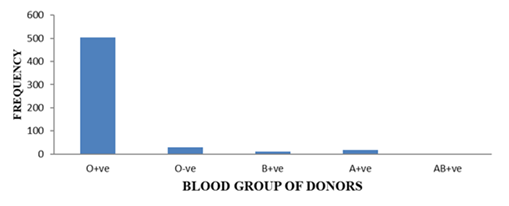
Figure 2: Pattern of blood donors at nofic between 2013-2022.
Patterns of blood donors at NOFIC (Figure 2) put the highest frequency of blood donors at 503 for O+ve with 89.5 %. The least frequency of blood donors was the AB+ve blood groups, having frequency of 1 with the percentage of 2.
Discussion
The distribution of blood transfusion (Table 1) indicated a total of 562 recipients with O +ve having the highest percentage (56.6 %) of recipients while A-ve. blood group was the least (0.2 %). While the Recipients blood pattern (Figure 1) indicted that O +ve was the highest frequency of patients’ transfusion (recipients), the A-ve group was the least. In our study, 100 % of patients who underwent obstetric fistula surgery in the hospital received blood as against only 6.2 % out of 546 patients reported by [8] in their study. The blood transfusion rate in this facility was remarkably high at NOFIC Abakaliki because of the class of the obstetric fistula cases that presented to the facility. In the facility, the most common obstetric fistulae were ones located at the juxta-cervical and hence classified as the juxta-cervical or vault fistulas, necessitating the vaginal surgery approach for the majority of patients.
According to the World Health Organization (WHO) , 2025, the distribution of blood transfusion recipients varies depending on the country’s income level. In high-income countries, the most frequently transfused patient group is over 60 years of age, accounting for up to 76% of all transfusions. On the other hand, in low-income countries, up to 54% of blood transfusions are given to children under 5 years of age. Blood transfusion is endemic in developing country such as Nigeria where quality of life is very low due to low-resource setting that predisposes the vulnerable groups to poor nutrient with co-existing infections and hence anaemia. In our study, it was noted that the order of the highest transfused or recipient blood was O+ve (56.6%), A+ve (19.8%), B+ve (17.3%), O-ve (3.4%), AB+ve (2.1%), B-ve (0.7%) and A-ve (0.2%). AB rhesus negative type recipient patient was not recorded. However, O and A rhesus positive blood type recipient among the obstetric fistulae patients were highest. This is in tandem with the blood recipient type, O and A+ve, recorded at Jimma Medical Center, Ethiopia by Feyisa and colleagues [13]. A research in the United State which was a multi race/ethnic study had also found blood type O as the most prevalent (46.6%) with White non-Hispanic, Hispanic, Black non-Hispanic, Asian and North American [14].
Patterns of blood donors at NOFIC Abakaliki (Table 2) observed the highest frequency of blood donors at 503 for O+ve with the percentage of 89.5. The least frequency of blood donors’ type was the AB+ve blood groups, having frequency of 2%. Frequency and pattern of blood donors’ type were as follows: O+ve (89.5%), O-ve (5.3%), A+ve (3.2%), B+ve (1.8%), AB+ve (0.2%). It is however striking to note that there was no A- ve and AB-ve rhesus blood type documented in the present study. The reason might be due to inability to recruit blood donor volunteers from among the populace since the obstetric fistula clients, always want to avoid stigmatization by maintaining confidential their clinical condition. Secondly the family members of such clients for similar reason also limit the scope of sourcing for donors. However, the prevalence of family replacement donor (FRD) in this part of the country which had been documented might be a contributing factor [11].
Thirdly, the economic status of a given population affects the patterns of their blood donation. The WHO reports showed that the blood donation frequencies per 1000 people is 31.5 for high-income countries, 16.4 for upper-middle-income countries, 6.6 for lower-middle-income countries, and 5.0 for low-income [14]. The report of Rivera and colleagues indicates that the rate of donor unsuitability (such as sexual risk behavior, nutritional status, chronic health problems, High blood pressure etc) could limit suitable donor, hence affect blood donor type [12]. The finding of the study could help vesico-vagina fistula (VVF) managing facility to plan for blood need of the VVF patients. Since the NOFIC located in a poor resource setting in one of the poorest states in Nigeria have a militating factor; i.e. low-income status of the majority of the population as a major reason for limited blood donor volunteers that affected the donor distribution pattern in this study.
It is therefore hoped that a study of this nature will assist the Nigeria national blood transfusion policy whose mandate is on national blood transfusion practice that is centered on series of themes; including plan on constant supply of safe and affordable blood, advocating for blood donation sourcing, and storage infrastructural support that can improve blood transfusion challenges.
Furthermore, the evidence obtained from this study can contribute significantly to enhancing the safety of VVF surgeries. The findings can be utilized to deliberately organize and optimize blood donor units, ensuring the timely accessibility of compatible and high-quality blood types for transfusion in vesicovaginal fistula treatment centres.
Ethical clearance
Ethical clearance was obtained from the National Obstetrics Fistula Centre (NOFIC) research ethical approval committee.
Acknowledgement
The authors wish to acknowledge the management of NOFIC, Nigeria for approving the use of the hospital records.
Funding
Funded by NOFIC.
Conflict of interest
The authors declare no conflict of interest.
References
- Chigbu C, Asimadu E, Onah HE, et al. Juxtacervical Vesicovaginal Fistulae: Outcome by Route of Repair. J Obstet Gynaecol 26 (2006): 795-798.
- Okoroiwu HU, Okafor IM. Demographic Characteristics of Blood and Blood Components Transfusion Recipients and Pattern of Blood Utilization in a Tertiary Health Institution in Southern Nigeria. BMC Hematol 18 (2018): 16.
- Okorie UC Sunday-Adeoye I, Obuna JA, Daniyan ABC, Ekwedigwe KC, Oje AO, Yakubu EN, Chukwu CJ, Uro-Chukwu and Omaka ON.). Metal and organic characterization of bladder stones removed surgically from VesicoVaginal Fistula patients at the National Obstetric Fistula Centre, Abakaliki, Ebonyi State. Arch Urol Res 6(1) (2022): 001-013. Ndakotsu MA, Hassan AA, et al. Pattern of Blood Transfusion Request and Utilization at a Nigerian University Teaching Hospital. Sahel Med J 17 (2014): 19-22.
- Damulak DO, Ogbenna AA, Adediran AO, et al. The Pattern of Blood Donation and Transfusion Transmissible Infections in the National Blood Transfusion Service in North Central Nigeria. Highland Med Res J 14 (2014): 80-84.
- Ogunlesi TA, Ogunfowora OB. Pattern and Determinants of Blood Transfusion in a Nigerian Neonatal Unit. Niger J Clin Pract 14 (2011): 354-358.
- Sparrow RL. Red Blood Cell Components: Time to Revisit the Sources of Variability. Blood Transfus 15 (2017): 116-125.
- Potluri TK, Holt LM, Tanner JP, et al. Risk Factors for Perioperative Blood Transfusions After Urogenital Fistula Repair in Uganda: A Retrospective Cohort Study. BJOG 129 (2022): 120-126.
- Ossai EN, Eze NC, Chukwu O, et al. Determinants of Practice of Blood Donation Among Undergraduate Students of Ebonyi State University Abakaliki, Southeast Nigeria. Arch Community Med Public Health 4 (2018): 001-007.
- Kimani D, Mwangi J, Mwangi M, et al. Blood Donors in Kenya: A Comparison of Voluntary and Family Replacement Donors Based on a Population-Based Survey. Vox Sang 100 (2011): 212-218.
- Ugwu AO, Madu AJ, Efobi CC, et al. Pattern of Blood Donation and Characteristics of Blood Donors in Enugu, Southeast Nigeria. Niger J Clin Pract 21 (2018): 1438-1443.
- Rivera GMC, Barbosa AN, Pontes GS. Trends in Unsuitability for Blood Donation in the Brazilian Amazon. Front Public Health 10 (2022): 1056332.
- Feyisa T, Kiya GT, Maleko WA. Assessment of recipients' characteristics, transfusion appropriateness, and utilization pattern of blood and blood products in Jimma Medical Center, Jimma, Ethiopia. PLoS ONE.16(4) (2021):e0250623.
- Anifowoshe, A. T., Owolodun, O. A., Akinseye, K. M., Iyiola, O. A., & Oyeyemi, B. F. (2017). Gene frequencies of ABO and Rh blood groups in Nigeria: A review. Egyptian Journal of Medical human genetics, 18(3): 205-210.
- Gharoro, E.P. and Abedi, H.O. Vesico-vaginal fistula in Benin City, Nigeria. International Journal of Gynecology & Obstetrics, 64((1999): 313-314
- Musa AU, Ndakotsu MA, Hassan A, Kilishi A, Kwaifa IK. Pattern of blood transfusion request and utilization at a Nigerian University Teaching Hospital. Sahel Med J ,17 (2014):19-22.
- World Health Organization (WHO). Blood safety and availability. World Health Organization https://www.who.int/en/news-room/fact-sheets/detail/blood-safety-and-availability?utm_source=chatgpt.com. Assessed June 10, 2025.