Diego Prada-Cardozo*,1, Jaime Moreno1, Verónica Rincón2,3, Sandra Yamile Saavedra1, María T. Reguero3, Carolina Duarte1, Jhon Donato2, Camila Pérez3, Laurent Falquet4, Emiliano Barreto-Hernández2,3
1Grupo de Microbiología, Instituto Nacional de Salud (INS), Bogotá, Colombia
2Bioinformatics Group, Biotechnology Institute, Universidad Nacional de Colombia, Bogotá, Colombia
3Molecular Epidemiology Laboratory, Biotechnology Institute, Universidad Nacional de Colombia, Bogotá, Colombia
4Biology department, Université de Fribourg and Swiss Institute of Bioinformatics, Fribourg, Switzerland
*Corresponding author: Diego Prada-Cardozo, Microbiology Group, National Institute of Health, Avenida Calle 26 No. 51-20, Bogotá, Colombia.
Received: 29 October 2025; Accepted: 06 November 2025; Published: 23 October 2026
Objectives: To characterize carbapenem-resistant Acinetobacter baumannii isolates associated with healthcare-associated infections (HAIs) in Colombia using whole-genome sequencing (WGS).
Methods: A total of 83 A. baumannii isolates collected between 2012 and 2015 were sequenced using the Illumina platform. Raw reads were assembled by SPAdes and classified via multilocus sequence typing (MLST), using the Pasteur, Oxford, and core genome MLST (cgMLST) schemes. Antimicrobial resistance determinants, capsule types, and outer core (OC) serotypes were identified. Phylogenetic relationships were inferred through single nucleotide polymorphism (SNP) analysis using IQ-TREE.
Results: MLST analysis assigned isolates to 10 sequence types (STs) in the Pasteur scheme and 20 STs in the Oxford scheme. The most prevalent types were ST79P (68.7%) and ST124O (25.3%). International Clone (IC)V (ST79P) and ICVII (ST25P/ST945P) were the predominant ICs, confirming their endemic presence in Colombia and highlighting the genetic diversity of emerging clonal variants. cgMLST identified 13 minimum spanning trees (MSTSs), with MST1 grouping 19 isolates. Carbapenem resistance was primarily driven by the presence of the class D β-lactamase gene blaOXA-23. The most common K locus types were KL9 and KL151, while the dominant OC locus was OCL10. Phylogenetic analysis revealed two major clades and seven minor clusters.
Conclusions: This study provides a comprehensive genomic overview of carbapenem-resistant A. baumannii isolates circulating in Colombia, highlighting key resistance determinants and population structure. These findings can inform public health strategies to mitigate the spread of high-risk clones and improve antimicrobial resistance surveillance.
Acinetobacter baumannii, carbapenemases, antimicrobial resistance, clone, whole-genome sequencing
Acinetobacter baumannii articles, carbapenemases articles, antimicrobial resistance articles, clone articles, whole-genome sequencing articles
Introduction
Carbapenem-resistant Acinetobacter baumannii (CRAB) is a major cause of healthcare-associated infections (HAIs) worldwide, including ventilator-associated pneumonia, wound infections, and bloodstream infections, these infections are particularly challenging to manage due to limited therapeutic options [1]. CRAB develops resistance through diverse molecular mechanisms, including horizontal gene transfer mediated by plasmids and mobile genetic elements, which facilitate the dissemination of antibiotic resistance genes. The accumulation of several resistance genes makes this microorganism a potential multidrug-resistant (MDR) bacterium [2].
Population structure analysis of A. baumannii has contributed to understanding its dynamics and behavior in clinical environments. These studies have been based mainly on different genotyping methods: multilocus sequence typing (MLST), which includes two schemes, Oxford [3] and Pasteur [4], and has become the reference method [5], and whole-genome sequencing (WGS), which at present has been used to characterize bacterial strains with high resolution compared to other techniques [6]. Worldwide, A. baumannii has shown the presence of international clones (IC) I, II, and III, of which clone II and its divergent strains have spread more frequently than the other two ICs [4]. However, other minor clones have been reported [7].
Epidemiological studies in Colombia indicate a rising prevalence of antimicrobial resistance in A. baumannii, highlighting its growing clinical significance and impact on healthcare settings [8]. In 2005, 2008, 2009, and 2014, A. baumannii was reported to carry resistance to carbapenems in approximately 38%, 41%, 45.5%, and 56% of the isolates, respectively [9-11]. The most common carbapenem resistance mechanisms found in these microorganisms are carbapenemases, represented mainly by class D (OXA-23-like, OXA-24-like, and OXA-58-like) and to a lesser extent by class B (NDM, VIM, IMP) [12-14].
This study aimed to analyze the genomic determinants responsible for antimicrobial resistance profiles, the epidemiology and phylogenetic relationship of 83 CRAB from 14 Colombian states (46 hospitals) from 2012-2015.
Materials and Methods
Description of the isolates, identification, and antimicrobial susceptibility
Between 2012 to 2015, 188 carbapenem-resistant Acinetobacter spp. isolates (14 in 2012, 42 in 2013, 45 in 2014, and 87 in 2015) were sent to the Microbiology Group of the National Reference Laboratory (NRL) of the Instituto Nacional de Salud (INS) for phenotypic and genotypic characterization as part of voluntary, laboratory-based surveillance of antimicrobial resistance in HAIs. Isolates were reidentified up to the Acinetobacter baumannii-calcoaceticus complex using Vitek-2 compact® (bioMérieux SA, Marcy-l’Etoile, France) and/or PhoenixTM (Becton Dickinson). Antimicrobial susceptibility profiles for imipenem (IMP), meropenem (MEM), ceftazidime (CAZ), cefepime (FEP), ampicillin-sulbactam (SAM), ciprofloxacin (CIP), gentamicin (GEN), amikacin (AMK) and piperacillin-tazobactam (PTZ) were determined by the disk diffusion (DD) method and interpreted according to the parameters of the Clinical & Laboratory Standards Institute [15]. MDR isolates were those nonsusceptible to at least one agent in three or more antimicrobial categories. A subset of 83 CRAB isolates, collected from 46 hospitals across 14 departments (political states), was selected for WGS at the molecular epidemiology and bioinformatics laboratories of the National University of Colombia. The selection was based on the following criteria: molecular confirmation of A. baumannii via rpoB amplification by PCR; isolates associated with HAIs; year of isolation between 2012 and 2015; and carbapenem resistance determined by DD.
DNA extraction, sequencing, and assembly
- baumannii isolates were cultured in Luria Bertani broth and incubated at 37 °C until obtaining an optical density of 0.6 to 0.8 (λ 600 nm). DNA extraction was performed following the instructions of the UltraClean® Microbial DNA Isolation Kit (MOBIO Laboratories, Inc.). A NanoDrop® 2000 spectrophotometer (Thermo Scientific™) and agarose gel (0.8%) were used to evaluate the concentration and purity of DNA. Purified bacterial DNA was sent to Macrogen, Korea, for WGS by the HiSeq 2000 platform (Illumina, San Diego, CA). Library preparation was performed using the Illumina TruSeq Nano kit. Paired-end reads of 101 bp in length were produced, the quality was analyzed with FastQC v0.12.1 [16], and read cleaning was performed with Trimmomatic v0.39 [17]. Genomes were assembled by the de novo method Spades v.3.8 [18], and genome characteristics and quality were obtained by QUAST v5.2.0 [19]. Raw sequencing reads were deposited in NCBI under BioProject accession PRJNA1541360.
Genomic identification, typing and identification of resistance genes
Molecular identification and typing were performed using MLST 1.8 with the Pasteur and Oxford schemes [20]. Novel alleles and sequence types (ST) were submitted to the MLST database. Lipooligosaccharide outer core loci (OCL), capsular polysaccharide loci (KL), and biofilm-related genes were identified by Pathogenwatch v12.0.4 https://pathogen.watch/, and PubMLST (20). Additionally, cgMLST was determined by Ridom SeqSphere+ software v.8.2.0 [21], and a clonal relationship analysis was carried out based on 2390 target genes of strain ACICU by the scheme for A. baumannii [22]. The distances between their allelic profiles were visualized in a minimum spanning network using the parameter ‘pairwise ignoring missing values’. Antibiotic resistance mediator genes and mutations were identified by the ABRicate program v1.0.1 [23] https://github.com/tseemann/abricate, in which the following databases were included: NCBI [24], CARD [25], ARG-ANNOT [26] Resfinder [27], MEGARES [28], and PlasmidFinder [29]. The K and OC locus were identified by the Pathogenwatch platform v12.0.4 https://pathogen.watch/.
Comparative genomics and phylogeny
Single nucleotide polymorphism (SNP) calling was performed by Snippy v2 [30]. IQ-TREE software v2.3.3 [31] was used to infer the phylogenetic relationship, including A. baumannii ATCC 19606 as a reference genome (GenBank accession number CP045110.1). Finally, the phylogenetic tree was edited with FigTree v1.4.4 [32] and visualized with Microreact [33].
Results
Origin of the isolates
Eighty-three A. baumannii isolates collected between 2012 and 2015, but mainly in 2014 (n=29, 34.9%) and 2013 (n= 26, 31.3%), were sequenced. Isolates came from 14 Colombian departments, of which Valle del Cauca (n=14, 16.9%), Antioquia (n=14, 16.9%) and Santander (n=12, 14.4%) were the primary sources. Isolates were obtained from several tissues and fluids, mainly from skin and soft tissues (n=27, 32.5%) and upper and lower respiratory tract (n=21, 25.3%). Hospitalized patients were mainly old-aged adult (age > 45 years; n=49, 59%) and male patients (n=55, 66.3%) (Table 1).
Table 1: Origin of the isolates.
|
|
Origin of the Isolate |
No. of Isolates |
% |
|
Year of Isolate
|
2012 |
7 |
8.4 |
|
2013 |
26 |
31.3 |
|
|
2014 |
29 |
34.9 |
|
|
2015 |
21 |
25.3 |
|
|
Age Groups
|
Child (0-16) |
3 |
3.6 |
|
Young Adult (17-30) |
12 |
14.4 |
|
|
Middle-aged Adult (31-45) |
13 |
15.7 |
|
|
Old-aged Adult (Above 45) |
49 |
59 |
|
|
ND |
6 |
7.2 |
|
|
Sample of Isolate |
Skin and Soft Tissue |
27 |
32.5 |
|
Upper and Lower Respiratory Tract |
21 |
25.3 |
|
|
Bloodstream |
15 |
18.1 |
|
|
Sterile Body Fluids |
8 |
9.6 |
|
|
Urine |
8 |
9.6 |
|
|
Bones |
3 |
3.6 |
|
|
Gastrointestinal Tract |
1 |
1.2 |
ND: No data
Characteristics of genomes
The properties of WGS are summarized in Supplementary Table. The genome size for all sequenced isolates remained close to the expected size, with an average of 4.042.638 bp. The highest and lowest N50 values were 423.623 bp and 52.691 bp, respectively, with an average of 150.265 bp. The annotation variables showed an average CDS of 3.857, 63 tRNA, three rRNA, and one tmRNA. values within the expected ranges, according to the summary of the sequenced genomes in the NCBI (https://www.ncbi.nlm.nih.gov/genome/?term=Acinetobacter+baumannii+genome).
MLST typing
According to MLST typing, isolates were classified into 10 Pasteur (STP) and 20 Oxford (STO) (Table 2). Three STPs (STP920, STP944 and STP945) and nine STOs (STO2122, STO2123, STO2124, STO2125, STO2126, STO2127, STO2128, STO2129, and STO2131/STO2140) were novel and reported in the pubMLST database (Table 2). ST79P (n=57, 68.7%), ST25P (n=14, 16.9%), ST124O (n=21, 25.3%), and ST758O (n=19, 22.9%) were the dominant STs according to the Pasteur and Oxford MLST schemes, respectively. Other less frequent STPs accounted for 14.4% (n=12) and STOs accounted for 51.8% (n=43) of the isolates.
Table 2: Comparison of Pasteur, Oxford, and MST cluster
|
Pasteur ST |
Oxford ST |
MST Cluster |
No. of isolates |
|
15 |
236 |
13 |
2 |
|
25 |
229 |
Singleton |
4 |
|
1641 |
Singleton |
3 |
|
|
*2122 |
11 |
2 |
|
|
Singleton |
2 |
||
|
*2123 |
10 |
2 |
|
|
*2124 |
Singleton |
1 |
|
|
78 |
944/1961 |
12 |
2 |
|
79 |
124 |
1 |
19 |
|
7 |
2 |
||
|
205 |
Singleton |
1 |
|
|
758 |
2 |
7 |
|
|
3 |
5 |
||
|
Singleton |
7 |
||
|
1942 |
6 |
2 |
|
|
*2125 |
8 |
2 |
|
|
*2126 |
4 |
3 |
|
|
5 |
3 |
||
|
Singleton |
5 |
||
|
*2128 |
Singleton |
1 |
|
|
158 |
499 |
Singleton |
1 |
|
374 |
*2129 |
14 |
2 |
|
886 |
1436 |
Singleton |
1 |
|
*920 |
*2127 |
Singleton |
1 |
|
*944 |
*2131/*2140 |
Singleton |
1 |
|
*945 |
813 |
Singleton |
2 |
* (new ST profiles uploaded in pubMLST).
cgMLST typing
cgMLST analysis identified 13 clusters or minimum spanning tree (MST), consisting of closely related genotypes (≤10 allele differences) and 30 isolates were assigned as singletons (Figure 1A). Seven of the 13 MST groups included isolates from the same location and year (MST-4, MST-7, MST-8, MST-9, MST-10, MST-12, MST-13), which means possible direct nosocomial transmissions since these groups are not found in other places, nor are they prolonged in time. Instead, the main group, MST-1, comprised 19 ST79P/ST124O isolates from different departments, and all except one isolate were resistant to all the evaluated antimicrobials. According to the higher resolution of cgMLST, ST79P isolates were divided into eight clusters and 14 singletons; moreover, the second most prevalent ST, ST25P, and its single locus variant (SLV) ST945P showed two groups and 12 singletons, showing more significant differences between the alleles of these isolates than the ST79P isolates.
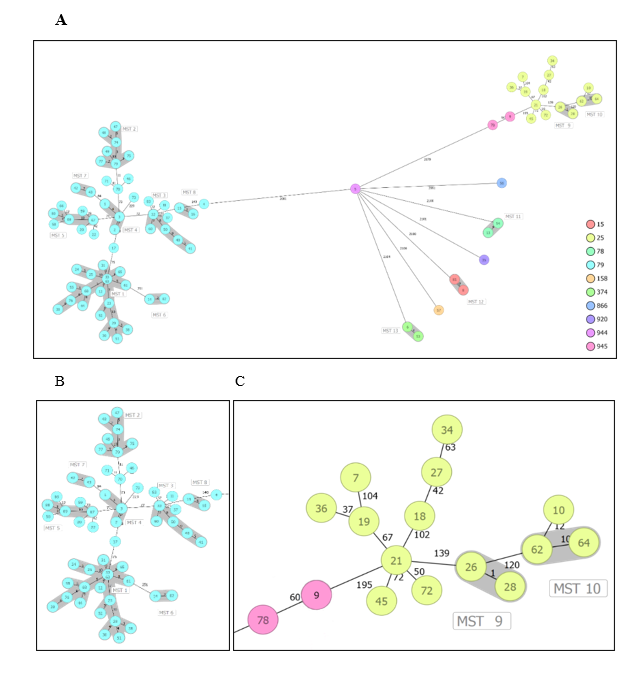
Figure 1: A: Minimum spanning tree of the 83 carbapenem-resistant Acinetobacter baumannii isolates based on core genome multilocus sequence typing (cgMLST). Nodes represent the isolates which are colored by ST Pasteur, MST clusters are shaded, and numbers between the nodes indicate the number of allelic differences. Major ICs are shown, ICV (B) and ICVII (C).
Analysis by clades
The major clade of isolates was related to the ICV; this clade grouped 57 isolates (68.7%). These isolates were genetically very close, with maximum SNPs of 1959 and all the isolates belonged to ST79P, meanwhile by the Oxford scheme seven STs were identified, which ST124O (n=21; 36.8%) and ST758O (n=19; 33.3%) were the principal. Eight cgMLST (n=43; 75.4%) and 14 singletons were identified in this clade (Figure 1A, 1B). All the isolates, except one, were OCL10 serotype. Seven K locus were identified; K151 and K9 were associated with ST124O and ST758O, respectively. The isolates of this clade came from eleven departments, of the four years of study (Figure 2). All isolates carried blaOXA-23, 49 isolates presented blaOXA-65, and the other 8 isolates presented blaOXA-64 and distinctively were ST2126O and KL16; and recovered mainly from Antioquia, finally 82.4 % of the isolates carried TEM-1.
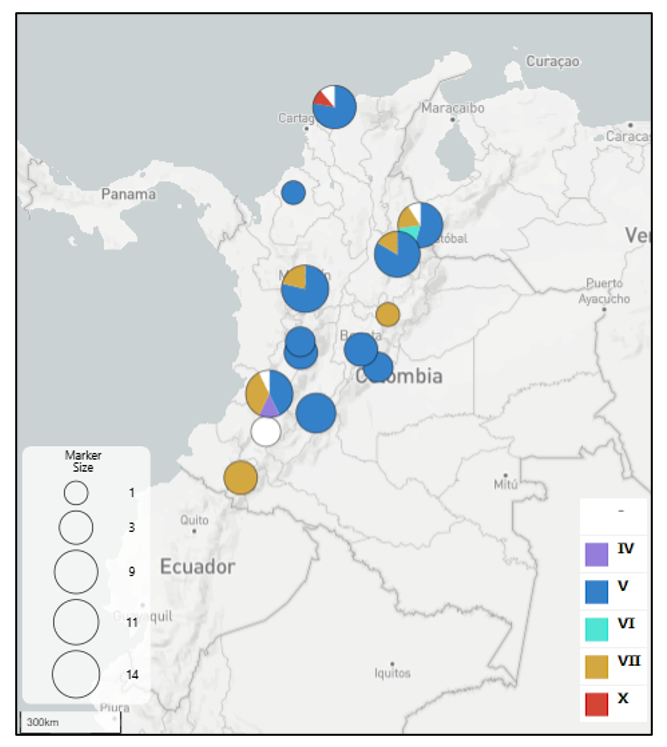
Figure 2: Distribution of the isolates by International Clones (IC). Five ICs were identified; other isolates were not identified. The size of each circle is proportional to the number of isolates recovered in each state.
The second largest clade was related to ICVII; this clade grouped 16 isolates (19.3%), with maximum SNPs of 2627. Isolates belonged to ST25P (n=14), and ST945P (n=2), meanwhile by the Oxford scheme six STs were identified, which ST229O (n=4; 25%) and ST2122O (n=4; 25%) were the principal. Two cgMLST (n=4; 25%) and 12 singletons were identified in this clade (Figure 1A, 1C). Two OCL serotypes were identified: OCL5 (n=8; 50%) and OCL6 (n=8; 50%). Seven K locus were identified; K167 was the most prevalent (n=4; 25%) and was associated with ST2122O. The isolates of this clade came from six departments, of the four years of study, (Figure 2). In general, this clade was more variable and presented more enzymes different from the OXA type: 13 isolates carried blaOXA-23, and all isolates carried blaOXA-64. Eight isolates had TEM-1, two carried NDM-1, and one carried KPC-2.
Clade ICIV was identified in two ST15P/ST236O isolates with 267 SNPs. These isolates generated the CgMLST12 (Figure 1A), were related to OCL7 and K9 and came from the Valle del Cauca department in the year 2013, and carried blaOXA-23 and blaOXA-51, (Figure 2, 3).
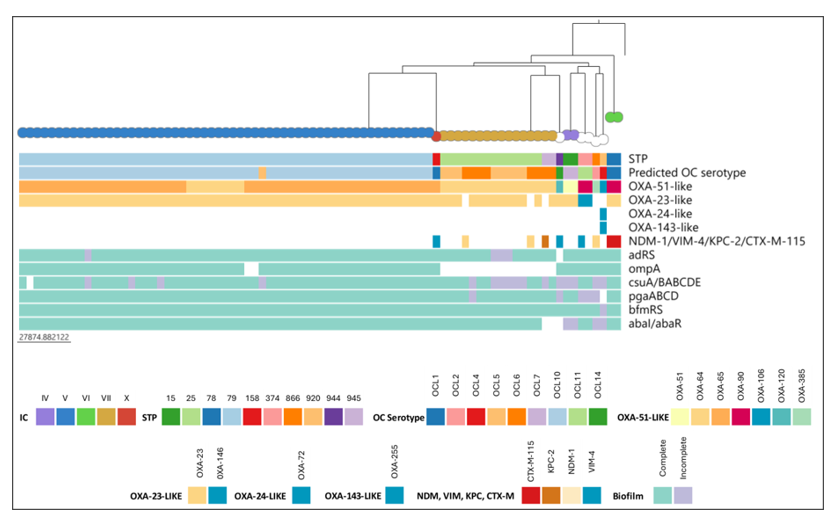
Figure 3: The phylogenetic relationship of the 83 isolates is represented on the top colored by International Clones. Metadata in blocks on the bottom represent in order: Pasteur ST, predicted OC serotype, carbapenemases and biofilm genes. https://microreact.org/project/cBr2FH4Mjge16gp7GopS64-acineto.
Clade ICVI was identified in two ST78P/ST944O isolates with 292 SNPs. These isolates generated the CgMLST11 (Figure 1A). Isolates were related to OCL1 and K3 and came from the Norte de Santander department in 2013 and 2014 years and carried blaOXA-23, blaOXA-90, and CTX-M-115, (Figure 2, 3). Clade ICX was represented just for one ST158P/ST499O isolate. This isolate was singleton by cgMLST (Figure 1A) and was related to OCL1 and K6. The isolate came from Atlántico department in 2013 and carried blaOXA-23, blaOXA-65, and VIM-4, (Figure 2, 3).
The other four clades were unrelated to any IC. One clade is represented in two ST374P/ST2129O isolates with 177 SNPs. These isolates generated the CgMLST13 (Figure 1A). Isolates were related to OCL11 and K69 and came from the Cauca department in 2012, (Figure 2). Isolates carried blaOXA-146 (OXA-23-like), blaOXA-90, and one had VIM-4. The other 3 clades are represented by one sample each. ST866P/ST1436O isolate which was singleton, OCL2, K9, from Valle del Cauca in 2015 and carried blaOXA-385, NDM-1, TEM-1 and VEB-9. ST920P/ST2127O isolate, singleton, OCL4, K172, from Norte de Santander in 2014 and carried blaOXA-106 (OXA-51-like), blaOXA-72 (OXA-24-like) and blaOXA-255 (OXA-143-like). ST944P/ST2131O isolate which was singleton, OCL14, K52, from Atlántico in 2012 and carried blaOXA-23, blaOXA-120 and VIM-4, (Figure 1A, 2).
The phylogenetic relationships among isolates were further supported by SNP-based analysis, which revealed genetic distances consistent with the clade and ST classifications described previously. The phylogenetic tree and SNP distance heatmap clearly illustrate the close genetic proximity within clade ICV (maximum of 1,959 SNPs) and clade ICVII (maximum of 2,627 SNPs), as well as the broader divergence observed among minor clades and singleton isolates. Pairwise comparisons revealed up to 37,104 SNPs between the most genetically distant isolates, highlighting the genomic diversity across the dataset (Figure 4).
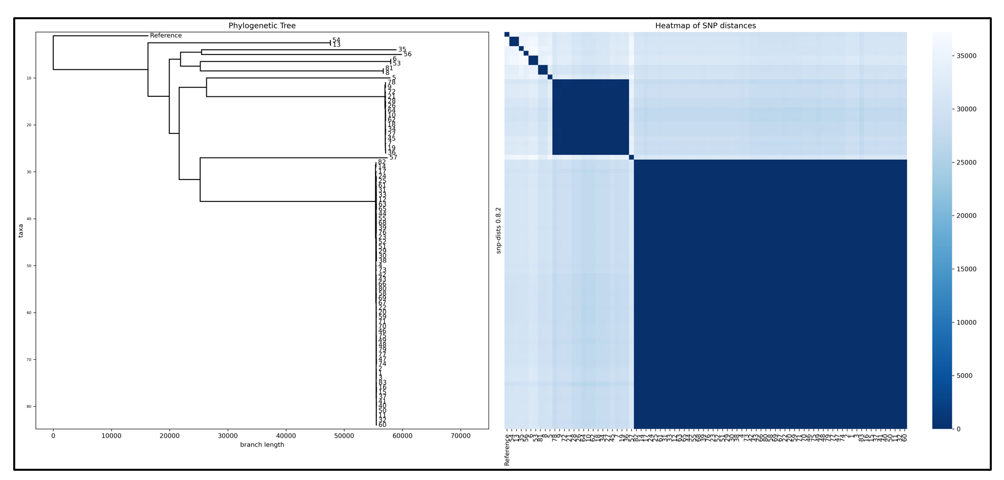
Figure 4: Phylogenetic tree and SNP distance heatmap of selected A. baumannii isolates. Left panel: Maximum-likelihood phylogenetic tree based on core genome SNPs, showing genetic relationships among isolates. Branch lengths represent SNP distances. Right panel: Heatmap of pairwise SNP distances among the same isolates. Lighter colors indicate greater SNP distances and genetic divergence, while darker shades represent closely related isolates with minimal SNP differences. The clustering patterns support the clade structure described in the cgMLST and MLST analyses.
Resistance
All isolates were resistant to IMP and PTZ, which were also resistant to FEP (98.8%), MEM (97.7%), CIP (95.3%), SAM (80%), CAZ (91.9%), AMK (91.9%) and GEN (88.4%) (Table 3). All isolates had OXA-51-like carbapenemase and Acinetobacter-derived cephalosporinase 2 (ADC-2), which are intrinsic to A. baumannii. OXA-23-like + OXA-51-like was identified in 78 isolates (94%), followed by NDM-1 + OXA-51-like (n=3; 3.6%), VIM-4 + OXA-23-like + OXA-51-like (n=3; 3.6%), KPC-2 + OXA-51-like (n=1; 1.2%), and OXA-24-like + OXA-143-like + OXA-51-like (n=1; 1.2%), (Figure 3, Supplementary Table).
Table 3: Resistance of isolates and their mediator genes.
|
Antimicrobial pattern resistant (n) |
Pasteur ST (n) |
Oxford ST (n) |
MST (n) |
Betalactamases |
Aminoglycoside modifying enzymes (n) |
Mutations |
||
|
Carbapenemases (n) |
Other Betalactamases (n) |
gyrA |
parC |
|||||
|
IMP, MEM, CAZ, FEP, SAM, PTZ, CIP, GM, AK (65) |
|
|
|
OXA-23-like + OXA-51-like (61) |
||||
|
ST79 (43) |
ST124 (20) ST758 (17) ST2126 (3) ST2125 (2) ST2128 (1) |
1(18), 7(2) 2(7), 3(5), Sing.(5) 4(3) 8(2) Sing.(1) |
OXA-23 + OXA-65 (43) |
TEM-1 (36), ADC-2 (43) |
APH(3´´)-lb + APH(6)-ld (41) |
Ser83>Leu |
Ser80>Leu |
|
|
ST79 (8), ST25 (7) |
ST2126 (8) ST1641 (2) ST2122 (2) ST2123 (2) ST2124 (1) |
5(3), Sing.(5) Sing.(2) 10(1), Sing.(1) 9(2) Sing.(1) |
OXA-23 + OXA-64 (15) |
TEM-1 (14), ADC-2 (15) |
APH(3´´)-lb + APH(6)-ld (15) |
|||
|
ST78(2) |
ST944/ ST1961 (2) |
11(2) |
OXA-23 + OXA-90 (2) |
TEM-1 + CTX-M-115 + ADC-2 (1) |
APH(3´´)-la + ANT(2´´)-la (1) |
|||
|
TEM-1 + CTX-M-115 + CARB-16 + ADC-2(1) |
APH(3´´)-la + ANT(2´´)-la + armA (1) |
|||||||
|
ST15 (1) |
ST236 (1) |
12(1) |
OXA-23 + OXA-51 (1) |
ADC-2 (1) |
APH(3´´)-lb + APH(6)-ld + APH (3´´)-VIa(1) |
|||
|
|
|
|
VIM + OXA-23-like + OXA-51-like (2) |
|||||
|
ST158 (1) |
ST499 (1) |
Sing.(1) |
VIM-4 + OXA-23 + OXA-65 (1) |
ADC-2 (2) |
AAC6' - lb10 + APH(3´´)-lb |
Ser83>Leu |
Ser80>Leu |
|
|
ST374 (1) |
ST2129 (1) |
13(1) |
VIM-4 + OXA-146 + OXA-90 (1) |
AAC6' - lb10 + APH(3´´)-lb + APH(3´´)-Iva |
Ser83>Ala |
- |
||
|
|
|
|
NDM + OXA-51-like (2) |
|||||
|
ST25 (2) |
ST229 (2) |
Sing.(2) |
NDM-1 + OXA-64 (2) |
TEM-1 + ADC-2 (2) |
APH(3´´)-lb + APH(6)-ld (2) |
Ser83>Leu |
Ser80>Leu |
|
|
IMP, MEM, - , FEP, SAM, PTZ, CIP, GM, AK (3) |
|
|
|
OXA-23-like + OXA-51-like (3) |
||||
|
ST25 (2) |
ST229 (1) ST2122 (1) |
Sing.(1) Sing.(1) |
OXA-23 + OXA-64 (2) |
ADC-2 (2) |
APH(3´´)-lb + APH(6)-ld (3) |
Ser83>Leu |
Ser80>Leu |
|
|
ST79 (1) |
ST1942 (1) |
6(1) |
OXA-23 + OXA-65 (1) |
TEM-1 + ADC-2 (1) |
Ser80>Ala |
|||
|
IMP, MEM, CAZ, FEP, SAM, PTZ, -, GM, AK (2) |
|
|
|
OXA-23-like + OXA-51-like (1) |
||||
|
ST374 (1) |
ST2129 (1) |
13(1) |
OXA-146 + OXA-90 (1) |
ADC-2 (1) |
- |
Ser83>Ala |
- |
|
|
|
|
|
VIM + OXA-23-like + OXA-51-like (1) |
|||||
|
ST944 (1) |
ST2131/ ST2140 (1) |
Sing.(1) |
VIM-4 + OXA-23+ OXA-120 (1) |
ADC-2 (1) |
APH(3´´)-lb + APH(3´´)-lVa + aac(6)-lb 10 (1) |
- |
- |
|
|
IMP, MEM, CAZ, FEP, SAM, PTZ, CIP, -, AK (2) |
|
|
|
OXA-23-like + OXA-51-like (2) |
||||
|
ST15 (1) |
ST236 (1) |
12(1) |
OXA-23 + OXA-51 (1) |
ADC-2 (1) |
APH(3´´)-IVa + APH(6)-ld (1) |
Ser83>Leu |
Ser80>Leu |
|
|
ST79 (1) |
ST124 (1) |
1(1) |
OXA-23 + OXA-65 (1) |
ADC-2 (1) |
APH(3´´)-Id + APH(6)-ld (1) |
|||
|
IMP, MEM, CAZ, FEP, -, PTZ, CIP, GM, AK (2) |
|
|
|
OXA-23-like + OXA-51-like (2) |
||||
|
ST79 (2) |
ST205 (1) |
Sing.(1) |
OXA-23 + OXA-65 (2) |
TEM-1 + ADC-2 (1) |
APH(3´´)-Id + APH(6)-ld (2) |
Ser83>Leu |
Ser80>Leu |
|
|
ST758 (1) |
Sing.(1) |
ADC-2 (1) |
||||||
|
IMP, MEM, CAZ, FEP, SAM, PTZ, CIP, GM, - (1) |
|
|
|
NDM + OXA-51-like (1) |
||||
|
ST886 (1) |
ST1436 (1) |
Sing.(1) |
NDM-1 + OXA-385 (1) |
TEM-1 + VEB-9 + ADC-2 (1) |
- |
Ser83>Leu |
Ser80>Leu |
|
|
IMP, MEM, CAZ, FEP, SAM, PTZ, CIP, -, - (2) |
|
|
|
OXA-23-like + OXA-51-like (2) |
||||
|
ST25 (2) |
ST1641 (1) ST2122 (1) |
Sing.(1) 10 (1) |
OXA-23 + OXA-64 (2) |
ADC-2 (2) |
APH(3´´)-lb + APH(6)-ld (2) |
Ser83>Leu |
Ser80>Leu |
|
|
IMP, MEM, CAZ, FEP, -, PTZ, CIP, -, AK (1) |
|
|
|
OXA-23-like + OXA-51-like (1) |
||||
|
ST79 (1) |
ST758 (1) |
Sing.(1) |
OXA-23 + OXA-65 (1) |
ADC-2 (1) |
APH(3´´)-lb + APH(6)-ld (1) |
Ser83>Leu |
Ser80>Leu |
|
|
IMP, MEM, CAZ, FEP, -, PTZ, CIP, -, - (2) |
|
|
|
OXA-23-like + OXA-51-like (1) |
||||
|
ST945 (2) |
ST813 (2) |
Sing.(1) |
OXA-23 + OXA-64 (1) |
ADC-2 (1) |
- |
Ser83>Leu |
Ser80>Leu |
|
|
|
KPC + OXA-51-like (1) |
|||||||
|
Sing.(1) |
kPC-2 + OXA-64 (1) |
ADC-2 (1) |
- |
|||||
|
IMP, MEM, - , FEP, SAM, PTZ, CIP, - , - (1) |
|
|
|
OXA-23-like + OXA-51-like (1) |
||||
|
ST25 (1) |
ST229 (1) |
Sing.(1) |
OXA-23 + OXA-64 (1) |
ADC-2 (1) |
- |
Ser83>Leu |
Ser80>Leu |
|
|
IMP, - , - , FEP, SAM, PTZ, CIP, GM, AK (1) |
|
|
|
OXA-23-like + OXA-51-like (1) |
||||
|
ST79 (1) |
ST1942 (1) |
6(1) |
OXA-23 + OXA-65 (1) |
TEM-1 + ADC-2 (1) |
APH(3´´)-lb + APH(6)-ld (1) |
Ser83>Leu |
Ser80>Ala |
|
|
IMP, MEM, - , - , - , PTZ, - , - , - (1) |
|
|
|
OXA-24-like + OXA143-like + OXA-51-like (1) |
||||
|
ST920 (1) |
ST2127 (1) |
Sing.(1) |
OXA-72 + OXA-255-like + OXA-106-like (1) |
ADC-2 (1) |
- |
- |
- |
|
Aminoglycoside phosphotransferases APH(3'')-Ib and APH(6)-Id were found in 86.7% (n=72) and 84.3% (n=70) of the isolates, respectively. Mutations encoding Ser83>Leu in the gyrA gene and Ser80>Leu in the parC gene were detected in 92.8% (n= 77) of the isolates. Additionally, two new mutations were identified: i) Ser83>Ala in the gyrA gene was found in two isolates (ST374P/ST2129O) without mutations in the parC gene, of which one was resistant to CIP, and the other was susceptible. ii) Ser80>Ala mutation in the parC gene was found in two quinolone-resistant isolates (ST79P/ST1942O) that also had Ser83>Leu mutation in the gyrA gene. On the other hand, 30 different genomic resistance profiles were identified in all the isolates, and the most frequent profile was found in 29 ST79P isolates with 19 genetic elements associated with resistance (Supplementary Table).
Biofilm
Biofilm-related genes were identified, including bfmRS (two components system, which upregulates the csu pili operon) (n=82; 98.8%), incomplete bfmRS (n=1; 1.2%), csuA/BABCDE (chaperone-usher pili) (n=66; 79.5%), incomplete csuA/BABCDE (n=16; 19.3%), one isolate did not present the operon. pgaABCD (n=77; 92.8%), incomplete pgaABCD (n=5; 6%), one isolate did not present the operon. ompA (outer membrane protein) was identified in 65 isolates (78.3%). Isolates without ompA (n=18; 21.7%), interestingly, most of these (n=16; 88.9%) were related to ICVII. Furthermore, quorum sensing genes adRS were found in 78 isolates (94%), incomplete form of adRS in four isolates (4.8%), abaIR (n=76; 91.6%) and incomplete abaIR (n=4; 4.8%).
Discussion
Antibiotic resistance in A. baumannii has been a growing concern since the 1970s, with a progressive increase in resistant strains worldwide [34]. In 2018, resistance rates for imipenem (57.5%) and meropenem (48.5%) were reported in Colombian adult intensive care units (ICUs), highlighting the growing challenge of carbapenem-resistant A. baumannii infections [8], considered the last therapeutic option for MDR A. baumannii infections. In this study, we found A. baumannii isolates mainly related to ICV, ST79P, OCL 10, and OXA-23 as the principal carbapenemase, followed by isolates associated with ICVII, which was more diverse genetically.
Most isolates came from soft tissues and upper and lower respiratory tract. These data agree with other studies that report nosocomial infections caused by A. baumannii associated with skin and soft tissue and pneumonia associated with mechanical ventilation and bloodstream infections [35-37]. Patients most frequently affected by A. baumannii infections were old-aged adults (above 45) and middle-aged adults (31-45), probably because these patients may be more likely to be colonized and infected by resistant isolates due to previous exposures to antibiotics during their life [38].
We identified ten different Pasteur STs corresponding to 20 Oxford STs; this is because the genes of the Oxford scheme have more alleles than the Pasteur scheme. Although the two schemes are widely used, some studies have considered that the Pasteur scheme is more appropriate for population and epidemiological studies, and to compare A. baumannii with international isolates [39]. On the other hand, analysis by cgMLST is more robust due to the comparison of allelic profiles, in this case, based on the 2390 target genes according to the scheme published by Higgins et al. [22].
Currently, CRAB isolates have been grouped into 11 ICs [40]. Global analysis of CRAB found that ICV was predominant in Latin America, and this lineage has a distinct emergence of clades with particular geographic dominance [41-44]. For our study, ICV (ST79P) was the most prevalent IC, which was characterized by the presence of OXA-23 as the main beta-lactamase in all CRABs. In addition, the isolates were found in 11 departments out of 14 sampled and in the 4 years of study, demonstrated that ICV (ST79P) was widely present in Colombian territory and reinforces that it is endemic to Latin America [45, 46], which suggests a potential regional adaptation or selective advantage of this lineage. Previous studies show that this IC has been circulating in Colombia since 2008 in Bogotá [12], persisting over time. The ICV isolates have a close relationship despite having the greatest number of isolates compared with other ICs, presenting few differences at the level of SNPs compared to the other groups and representing a successful clonal group that has been established and spread in various regions of Colombia.
ICVII (ST25P and ST945P) was the second predominant IC in this study; ICVII has been documented widely in Latin America, for example, in Brazil [47], Bolivia [48, 49], Argentina [14], and Venezuela [43]. In Colombia, ICVII circulated with isolates classified as ST229O from Medellin city [37]. The ICVII isolates had OXA‐64, the characteristic blaOXA-51 variant from this lineage. Both, ICV and ICVII are currently recognized as other lineages that contribute to the global distribution and dispersal of CRAB associated with the blaOXA-23 gene [50, 51]. ICVII was more diverse than ICV and the genetic diversity is mainly due to homologous recombination, which can significantly affect phenotypic diversity [52]. The identification of the new STs, ST920P, ST944P, and especially the ST945P within the ICVII and its SLV of ST25P may indicate the possible emergence of new lineages in Colombia. The emergence and proliferation of new clonal lineages in A. baumannii is due to high genomic plasticity, characterized by recombination and horizontal gene transfer [52].
Other less prevalent ICs identified in this study have been found in other countries. ICIV has been described in Europe and Brazil. CTX-M-115-carrying isolates from ICVI have been reported in Russia, Italy, and Germany [53]. cgMLST analysis allowed us to identify concrete clusters of isolates that share more than 99% of their allelic profiles in the country, thus establishing clonal groups present in the country's different regions. The presence of ST79P isolates, specifically from MST-1, which are multidrug-resistant, could be a public health problem due to its prevalence in patients with HAIs. Genomic surveillance and the identification of these patterns in A. baumannii can contribute to preventing the dissemination and propagation of resistance elements.
We found that blaOXA-23-like β-lactamases were the most frequent resistance element after the intrinsic chromosomal genes blaOXA-51-like and ADC-2 within the isolates. Interestingly, the isolates that did not present blaOXA-23-like β-lactamases carried blaOXA-24-like, blaOXA-143-like or other enzymes, such as KPC-2 or NDM-1. blaOXA-like β-lactamases are one of the most important determining factors that contribute to resistance to carbapenems, which has also been described in other studies in the country and the world [50, 54].
The detection of the phenotypic coexistence of carbapenemases is considered a challenge [55]. In the case of Acinetobacter spp., the detection of coproduction of carbapenemases using inhibitors can be difficult, considering that the most common carbapenemases are class D or OXAs and for these enzymes, there is no efficient inhibitor [56], and their confirmation requires molecular methods, such as polymerase chain reaction (PCR). In this study, nine coproductions were found with other carbapenemases. Coproduction of NDM-1 and blaOXA-23 was previously reported [57], and our results demonstrate the spreading of NDM-1 to other regions of the country with different genetic backgrounds. The blaNDM gene in Acinetobacter species is frequently detected worldwide, including in Latin America [58], and is mainly carried by the family of plasmids known as pNDM-BJ01-like [59]. Carbapenemase VIM-4 was present as a coproduction in 3 isolates transported in plasmids. VIM-4 was first described in a Pseudomonas aeruginosa isolate from Greece, and blaVIM genes were carried on gene cassettes in class 1 integrons, which can disseminate rapidly [60, 61]. KPC-2 in A. baumannii, previously identified in Puerto Rico in Latin America, [62] was observed in one isolates, ST945P, carried on the transposon Tn4401 from the Santander department. The circulation and spread of carbapenemase-coproducing strains are of concern because some of these isolates may be associated with increased resistance to carbapenems and other antibiotics, making their treatment a challenge [63-65].
In A. baumannii, quinolone resistance is determined predominantly by alterations in the quinolone resistance-determining regions (QRDRs) of gyrA (Ser83Leu, Gly81Asp) and parC (Ser80Leu, Glu84Lys, Gly78Cys) [66]. Following our results, 77 isolates (92.8%) presented the Ser83Leu and Ser80Leu mutations in gyrA and parC, respectively. Two new mutations in the gyrA (Ser83>Ala) and parC (Ser80>Ala) genes were identified in phenotypically resistant isolates. Additional analyses are recommended to confirm the role of resistance due to these new mutations. Aminoglycoside resistance in A. baumannii is mainly associated with modifying enzymes, such as acetyltransferases (AAC), phosphotransferases (APH), and adenyltransferases (ANT) (66). Our analysis showed that APH(3'')-Ib and APH(6)-Id were the most frequently identified enzymes (86.7% and 84.3%, respectively).
The comparison of the phenotypic resistance profiles with the genetic elements identified in each isolate showed significant concordance. It allowed us to directly relate the resistance to each antibiotic with the elements found. The most common genomic resistance profile was associated with ICV isolates resistant to all antibiotics. In general, in the 83 isolates, genes coding for the 4 resistance mechanisms were identified, a characteristic that makes A. baumannii multidrug-resistant. This condition helps it survive in an environment of pressure from antibiotics since the presence of several mechanisms makes it possible to avoid antibiotics in different ways.
This study was limited to isolates from voluntary surveillance at the national level, nevertheless, it is the study with the most departments included so far in the territory. The results offer a general overview at the genomic level of the isolates of A. baumannii that circulate in Colombia, and the information obtained is essential for national surveillance. A strategy to prevent the appearance and dissemination of CRAB in health institutions is necessary to establish and strengthen policies related to the proper use of antibiotics, improve molecular surveillance, and adapt genomic surveillance to better monitor this pathogen.
Conflict of Interest
The authors have declared that no competing interests exist.
Funding Source
This study was supported by COLCIENCIAS, Instituto Nacional de Salud, Universidad Nacional de Colombia and was partially supported by the EPFL Leading House seed money 2015, Switzerland.
Ethical Approval Statement
This study did not involve human subjects, identifiable human data, or biological samples. The bacterial isolates were obtained through voluntary laboratory-based surveillance. Therefore, no IRB or ethics committee approval, patient consent, or clinical trial registration was required. All relevant ethical guidelines have been followed.
Acknowledgments
The authors thank the National Network of Laboratories for the isolates.
References
- Antunes LCS, Visca P, Towner KJ. Acinetobacter baumannii : evolution of a global pathogen. Pathog Dis 71 (2014): 292-301.
- Lee CR, Lee JH, Park M, et al. Biology of Acinetobacter baumannii: Pathogenesis, Antibiotic Resistance Mechanisms, and Prospective Treatment Options. Front Cell Infect Microbiol (2017).
- Bartual SG, Seifert H, Hippler C, et al. Development of a Multilocus Sequence Typing Scheme for Characterization of Clinical Isolates of Acinetobacter baumannii. J Clin Microbiol 43 (2005): 4382-90.
- Diancourt L, Passet V, Nemec A, et al. The Population Structure of Acinetobacter baumannii: Expanding Multiresistant Clones from an Ancestral Susceptible Genetic Pool. Ahmed N, editor. PLoS ONE 5 (2010): e10034.
- Larsen MV, Cosentino S, Rasmussen S, et al. Multilocus Sequence Typing of Total-Genome-Sequenced Bacteria. J Clin Microbiol 50 (2012): 1355-61.
- Fitzpatrick MA, Ozer EA, Hauser AR. Utility of Whole-Genome Sequencing in Characterizing Acinetobacter Epidemiology and Analyzing Hospital Outbreaks. Forbes BA, editor. J Clin Microbiol 54 (2016): 593-612.
- Giannouli M, Tomasone F, Agodi A, et al. Molecular epidemiology of carbapenem-resistant Acinetobacter baumannii strains in intensive care units of multiple Mediterranean hospitals. J Antimicrob Chemother 63 (2009): 828-30.
- INFORME DE RESULTADOS DE LA VIGILANCIA POR LABORATORIO DE RESISTENCIA ANTIMICROBIANA EN INFECCIONES ASOCIADAS A LA ATENCIÓN EN SALUD (IAAS) (2018).
- Briceño DF, Correa A, Valencia C, et al. Antimicrobial resistance of Gram negative bacilli isolated from tertiary-care hospitals in Colombia. Biomed Rev Inst Nac Salud 30 (2010): 371-81.
- Miranda MC, Pérez F, Zuluaga T, et al. Antimicrobial resistance in gram negative bacteria isolated from intensive care units of Colombian hospitals, WHONET 2003, 2004 and 2005. Biomed Rev Inst Nac Salud (2006): 424-33.
- Organización Panamericana de la Salud. Organización Mundial de la Salud. Informe anual de la red de monitoreo de la resistencia a los antimicrobianos y vigilancia de las infecciones asociadas a la atención de la salud. Rev Patol Trop 43 (2014): 1, 108.
- Correa A, del Campo R, Escandón-Vargas K, et al. Distinct Genetic Diversity of Carbapenem-Resistant Acinetobacter baumannii from Colombian Hospitals. Microb Drug Resist 24 (2018): 48-54.
- Hernández-Gómez C, Blanco VM, Motoa G, et al. Evolution of antimicrobial resistance in Gram negative bacilli from intensive care units in Colombia. Biomed Rev Inst Nac Salud 34 (2014): 91-100.
- Rodríguez CH, Nastro M, Famiglietti A. Carbapenemases in Acinetobacter baumannii. Review of their dissemination in Latin America. Rev Argent Microbiol 50 (2018): 327-33.
- M100-S25 Performance Standards for Antimicrobial Susceptibility Testing; Twenty-Fifth Informational Supplement (2015).
- Andrews S. FastQC. Babraham Bioinformatics (2016).
- Bolger AM, Lohse M, Usadel B. Trimmomatic: a flexible trimmer for Illumina sequence data. Bioinformatics 30 (2014): 2114-20.
- Bankevich A, Nurk S, Antipov D, et al. SPAdes: A New Genome Assembly Algorithm and Its Applications to Single-Cell Sequencing. J Comput Biol 19 (2012): 455-77.
- Gurevich A, Saveliev V, Vyahhi N, et al. QUAST: quality assessment tool for genome assemblies. Bioinformatics 29 (2013): 1072-5.
- Jolley KA, Bray JE, Maiden MCJ. Open-access bacterial population genomics: BIGSdb software, the PubMLST.org website and their applications. Wellcome Open Res 3 (2018): 124.
- Jünemann S, Sedlazeck FJ, Prior K, et al. Updating benchtop sequencing performance comparison. Nat Biotechnol 31 (2013): 294-6.
- Higgins PG, Prior K, Harmsen D, et al. Development and evaluation of a core genome multilocus typing scheme for whole-genome sequence-based typing of Acinetobacter baumannii. Gao F, editor. PLOS ONE 12 (2017): e0179228.
- Seemann T. Abricate Github (2020).
- Feldgarden M, Brover V, Haft DH, et al. Validating the AMRFinder Tool and Resistance Gene Database by Using Antimicrobial Resistance Genotype-Phenotype Correlations in a Collection of Isolates. Antimicrob Agents Chemother 63 (2019): e00483-19.
- McArthur AG, Waglechner N, Nizam F, et al. The Comprehensive Antibiotic Resistance Database. Antimicrob Agents Chemother 57 (2013): 3348-57.
- Gupta SK, Padmanabhan BR, Diene SM, et al. ARG-ANNOT, a New Bioinformatic Tool to Discover Antibiotic Resistance Genes in Bacterial Genomes. Antimicrob Agents Chemother 58 (2014): 212-20.
- Florensa AF, Kaas RS, Clausen PTLC, et al. ResFinder - an open online resource for identification of antimicrobial resistance genes in next-generation sequencing data and prediction of phenotypes from genotypes. Microb Genomics 8 (2022).
- Lakin SM, Dean C, Noyes NR, et al. MEGARes: an antimicrobial resistance database for high throughput sequencing. Nucleic Acids Res 45 (2017): D574-80.
- Carattoli A, Hasman H. PlasmidFinder and In Silico pMLST: Identification and Typing of Plasmid Replicons in Whole-Genome Sequencing (WGS). In: De La Cruz F, editor. Horizontal Gene Transfer [Internet]. New York, NY: Springer US (2020): 285-94.
- Seemann T. Snippy Github (2020).
- Minh BQ, Schmidt HA, Chernomor O, et al. Corrigendum to: IQ-TREE 2: New Models and Efficient Methods for Phylogenetic Inference in the Genomic Era. Mol Biol Evol 37 (2020): 2461-2461.
- FigTree: Tree Figure Drawing Toll (2014).
- Argimón S, Abudahab K, Goater RJE, et al. Microreact: visualizing and sharing data for genomic epidemiology and phylogeography. Microb Genomics 2 (2016).
- Bergogne-Bérézin E, Towner KJ. Acinetobacter as nosocomial pathogens: microbiological, clinical, and epidemiological features. Clin Microbiol Rev (1996): 148-65.
- Dijkshoorn L, Nemec A, Seifert H. An increasing threat in hospitals: multidrug-resistant Acinetobacter baumannii. Nat Rev Microbiol (2007): 939-51.
- McConnell MJ, Actis L, Pachón J. Acinetobacter baumannii: human infections, factors contributing to pathogenesis and animal models. FEMS Microbiol Rev 37 (2013): 130-55.
- Vanegas JM, Higuita LF, Vargas C, et al. Acinetobacter baumannii resistente a carbapenémicos causando osteomielitis e infecciones en piel y tejidos blandos en hospitales de Medellín, Colombia. Biomédica 35 (2015).
- Said D, Willrich N, Ayobami O, et al. The epidemiology of carbapenem resistance in Acinetobacter baumannii complex in Germany (2014-2018): an analysis of data from the national Antimicrobial Resistance Surveillance system. Antimicrob Resist Infect Control 10 (2021): 45.
- Gaiarsa S, Batisti Biffignandi G, Esposito EP, et al. Comparative Analysis of the Two Acinetobacter baumannii Multilocus Sequence Typing (MLST) Schemes. Front Microbiol (2019).
- Hansen F, Porsbo LJ, Frandsen TH, et al. Characterisation of carbapenemase-producing Acinetobacter baumannii isolates from danish patients 2014-2021: detection of a new international clone - IC11. Int J Antimicrob Agents 62 (2023): 106866.
- Bado I, Papa-Ezdra R, Delgado-Blas JF, et al. Molecular Characterization of Carbapenem-Resistant Acinetobacter baumannii in the Intensive Care Unit of Uruguay’s University Hospital Identifies the First rmtC Gene in the Species. Microb Drug Resist 24 (2018): 1012-9.
- Levy-Blitchtein S, Roca I, Plasencia-Rebata S, et al. Emergence and spread of carbapenem-resistant Acinetobacter baumannii international clones II and III in Lima, Peru. Emerg Microbes Infect 7 (2018): 1-9.
- Müller C, Reuter S, Wille J, et al. A global view on carbapenem-resistant Acinetobacter baumannii. Buchrieser C, editor. mBio 14 (2023): e02260-23.
- Rodríguez CH, Balderrama Yarhui N, Nastro M, et al. Molecular epidemiology of carbapenem-resistant Acinetobacter baumannii in South America. J Med Microbiol 65 (2016): 1088-91.
- Camargo CH, Cunha MPV, De Barcellos TAF, et al. Genomic and phenotypic characterisation of antimicrobial resistance in carbapenem-resistant Acinetobacter baumannii hyperendemic clones CC1, CC15, CC79 and CC25. Int J Antimicrob Agents 56 (2020): 106195.
- Moreno-Manjón J, Castillo-Ramírez S, Jolley KA, et al. Acinetobacter baumannii IC2 and IC5 Isolates with Co-Existing blaOXA-143-like and blaOXA-72 and Exhibiting Strong Biofilm Formation in a Mexican Hospital. Microorganisms 11 (2023): 2316.
- da Silva KE, Maciel WG, Croda J, et al. A high mortality rate associated with multidrug-resistant Acinetobacter baumannii ST79 and ST25 carrying OXA-23 in a Brazilian intensive care unit. Cartelle Gestal M, editor. PLOS ONE 13 (2018): e0209367.
- Cerezales M, Xanthopoulou K, Wille J, et al. Acinetobacter baumannii analysis by core genome multi-locus sequence typing in two hospitals in Bolivia: endemicity of international clone 7 isolates (CC25). Int J Antimicrob Agents 53 (2019): 844-9.
- Sennati S, Villagran AL, Bartoloni A, et al. OXA-23-producing ST25 Acinetobacter baumannii: First report in Bolivia. J Glob Antimicrob Resist 4 (2016): 70-1.
- Hamidian M, Nigro SJ. Emergence, molecular mechanisms and global spread of carbapenem-resistant Acinetobacter baumannii. Microb Genomics 5 (2019).
- Zarrilli R, Pournaras S, Giannouli M, et al. Global evolution of multidrug-resistant Acinetobacter baumannii clonal lineages. Int J Antimicrob Agents 41 (2013): 11-9.
- Sahl JW, Del Franco M, Pournaras S, et al. Phylogenetic and genomic diversity in isolates from the globally distributed Acinetobacter baumannii ST25 lineage. Sci Rep 5 (2015): 15188.
- Pfeifer Y, Hunfeld KP, Borgmann S, et al. Carbapenem-resistant Acinetobacter baumannii ST78 with OXA-72 carbapenemase and ESBL gene bla CTX-M-115 : Table 1. J Antimicrob Chemother 71 (2016): 1426-8.
- Villegas MV, Kattan JN, Correa A, et al. Dissemination of Acinetobacter baumannii Clones with OXA-23 Carbapenemase in Colombian Hospitals. Antimicrob Agents Chemother 51 (2007): 2001-4.
- Giakkoupi P, Pappa O, Polemis M, et al. Emerging Klebsiella pneumoniae Isolates Coproducing KPC-2 and VIM-1 Carbapenemases. Antimicrob Agents Chemother 53 (2009): 4048-50.
- Walther-Rasmussen J, Høiby N. OXA-type carbapenemases. J Antimicrob Chemother 57 (2006): 373-83.
- Instituto Nacional de Salud. Circulación de carbapenemasas tipo Nueva Delhi Metalo-β-lactamasa (NDM) en Colombia 2012-2014 (2014).
- García-Betancur JC, Appel TM, Esparza G, et al. Update on the epidemiology of carbapenemases in Latin America and the Caribbean. Expert Rev Anti Infect Ther 19 (2021): 197-213.
- Marquez-Ortiz RA, Haggerty L, Olarte N, et al. Genomic Epidemiology of NDM-1-Encoding Plasmids in Latin American Clinical Isolates Reveals Insights into the Evolution of Multidrug Resistance. Genome Biol Evol (2017): 1725-41.
- Lassaux P, Traoré DAK, Loisel E, et al. Biochemical and Structural Characterization of the Subclass B1 Metallo-β-Lactamase VIM-4. Antimicrob Agents Chemother 55 (2011): 1248-55.
- Pournaras S, Tsakris A, Maniati M, et al. Novel variant (bla(VIM-4)) of the metallo-beta-lactamase gene bla(VIM-1) in a clinical strain of Pseudomonas aeruginosa. Antimicrob Agents Chemother 46 (2002): 4026-8.
- Martinez T, Martinez I, Vazquez GJ, et al. Genetic environment of the KPC gene in Acinetobacter baumannii ST2 clone from Puerto Rico and genomic insights into its drug resistance. J Med Microbiol 65 (2016): 784-92.
- Anane YA, Apalata T, Vasaikar S, et al. Molecular Detection of Carbapenemase-Encoding Genes in Multidrug-Resistant Acinetobacter baumannii Clinical Isolates in South Africa. Int J Microbiol 13 (2020): 1-10.
- Kazi M, Nikam C, Shetty A, et al. Dual-tubed multiplex-PCR for molecular characterization of carbapenemases isolated among Acinetobacter and Pseudomonas spp. J Appl Microbiol 118 (2015): 1096-102.
- Khajuria A. Emergence of Escherichia coli, Co-Producing NDM-1 and OXA-48 Carbapenemases, in Urinary Isolates, at a Tertiary Care Centre at Central India. J Clin Diagn Res (2014).
- Kyriakidis I, Vasileiou E, Pana ZD, Tragiannidis A. Acinetobacter baumannii Antibiotic Resistance Mechanisms. Pathogens 10 (2021): 373.