Dr. Kalyan Kumar1, Dr. Hari Krishna Koya1, Dr. Aditya Ch RSS2, Dr. Satya Kumar K3,*
1Assistant Professor of Orthopaedics, NRI Academy of Sciences, Chinakakani, Andhra Pradesh, India
2Junior Resident of Orthopaedics, NRI Academy of Sciences, Chinakakani, Andhra Pradesh, India
3Professor and Hod Orthopaedics, NRI Academy of Sciences, Chinakakani, Andhra Pradesh, India
*Corresponding Author: Dr. Satya Kumar K, Ms (Ortho), Professor and Hod Orthopaedics, NRI Academy of Sciences, Chinakakani, Andhra Pradesh, India
Received: 08 December 2020; Accepted: 14 December 2020; Published: 21 December 2020
Aim: To assess the efficacy of local injection of autologous P.R.P. into the shoulder joint on pain and function of patients with rotator cuff tears.
Objectives: To evaluate and analyze the results of local injection of platelet rich plasma in elderly with rotator cuff tear; To follow up the patients who had undergone the procedure and note the functional outcome and complications pertaining to the procedure.
PRP; Platelet Rich Plasma; Rotator cuff tears
1. Introduction
Rotator Cuff Tears (R.C.T.S) are a common injury among diverse patients, with the prevalence of injury increasing linearly with age [1]. It is a condition typically characterized by weakness and pain in the shoulder that is aggravated by overuse, applied weight, raising/lowering or rotating the involved arm, and overhead physical activities such as tennis, baseball, and swimming [2]. The supraspinatus muscle and tendon are the most common injury sites and can be damaged by traumatic injuries and degenerative changes [3]. Data obtained from cadaveric studies suggest that as many as 65% of individuals over the age of 70 years have a partial-thickness rotator cuff tear [4]. Often, rotator cuff tears are asymptomatic, making a diagnosis and early treatment challenging [5, 1]. The decision to pursue operative versus non-operative management is, therefore, often controversial. Surgical management may provide more immediate pain relief and functional improvement, but it signifies a higher risk of morbidity than non-surgical measures, particularly with an older population of patients [6]. Moreover, surgical repair is often followed by a lengthy recovery period and has variable outcomes. Current conservative treatments of partial rotator cuff tears include activity modification, oral medication, corticosteroid injection, and two targeted physical therapy [7]. Improperly managed partial rotator cuff tears can progress to debilitating full-thickness tears if left untreated [6]. This review seeks to assess an innovative, biological approach to treating R.C.T.s using autologous platelet-rich plasma (P.R.P.), intending to distill a safe and readily available, long-lasting treatment option that can be offered to a wide range of patients. Platelet-rich plasma for the conservative management of degenerative and acutely injured tissues is gaining recognition and popularity in the international community of clinician-scientists. A broad retrospective review on the use of ultrasound- guided P.R.P. injections for chronic tendinopathy in various bodily regions reported an 82% improvement in symptoms across all surveyed patients [6]. Furthermore, experiential clinical data suggests that P.R.P. is often an effective treatment for partial rotator cuff tears. Still, supportive data from published literature remains limited and is of variable quality and consistency. This paper will provide relevant background information on the anatomical function of the shoulder complex, with an emphasis on the rotator cuff and its pathophysiology. Next, explore some of the most currently utilized therapeutic interventions. The use of P.R.P. as an innovative biologic augmentation of rotator cuff repair will then be introduced, and various proposed studies involving the use of P.R.P. as an alternative treatment option will be discussed, leading to an analysis of patient outcomes and a critique of each study’s value. By evaluating the therapeutic value of P.R.P., this review can three potentially validate an additional nonsurgical alternative for the treatment of partial R.C.T.s and contribute to identifying specific subgroups of patients and pathologies that would gain the great benefit from its use in future studies.
2. Methodology
The main objective of our study was to compare the functional outcome in patients who were treated with platelet rich plasma for rotator cuff tear for this study purpose we have employed
- U C L A (University of California Los Angeles) shoulder scoring
- Vas Pain Score for evaluating the functional outcome.
2.1 Inclusion criteria
- Men and women between 50 to 80 year
- Primary, traumatic or degenerative rotator cuff tears of less than 15% thickness within 18 months of initial diagnosis
- Patients who gives consent.
2.2 Exclusion criteria
- Rotator cuff tears secondary to fracture and dislocations.
- Patients with an associated dislocation at the time of study.
- Rotator cuff tears that underwent prior surgical repair or revision arthroscopy.
- Preexisting conditions associated with upper extremity pain, including arthritis ,ongoing infection, carpal tunnel syndrome, cervical neuropathy or other nerve pathology, local malignancy, and systemic disorders(hypothyroidism, uncontrolled diabetes)
- Gross shoulder instability.
- Active infection.
- Pregnant or planned to become pregnant in next 12 months.
- Platelet count less than 180,000.
- Problems with follow up.
Autologous platelet rich plasma [7] was prepared in the N.R.I. Medical College Department of Orthopedics.
2.3 Procedure
Step 1: Take two 20 ml syringe with each 3 ml Acda and 17 ml venous blood (overall 34 ml blood)
Step 2: Remove needles, cover the tip of barrels with insulin caps
Step 3: Cut the edges of the syringe (cut the plunger and overhangs of the barrel)
Step 4: Place it in centrifuge with a pre-set spin of 1500 rpm for 15 mins. Place two syringes in the opposite direction in the centrifuge
Step 5: Start the procedure
Step 6: Aspirate plasma and buffy coat through three-way stopcock into another syringe. As a result, 20 ml will be collected
Step 7: Take another 20 ml of normal saline as a counterweight
Step 8: Place two syringes in opposite directions in the centrifuge
Step 9: Set the spin for 3500 rpm for 7 mins
Step 10: Discard plasma except for 1-2 ml
Step 11: Collect buffy coat with 1-2 ml of plasma.
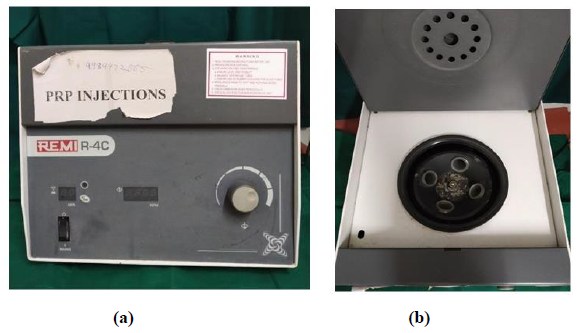
Figure 1: (a) Centrifuge machine; (b) Centrifuge rotor at center.
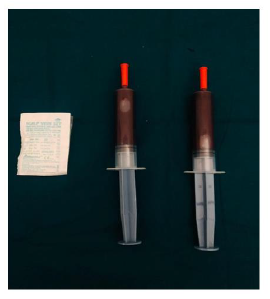
3ml ACDA+17 ml blood in each syringe;
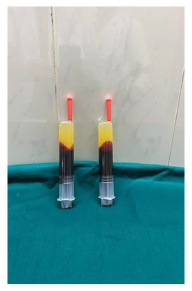
After first spin 1500 RPM for 15 minutes in centrifuge.
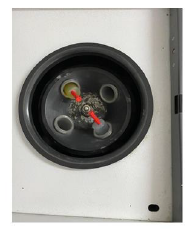
Second spin 3500 RPM for 7 minutes.
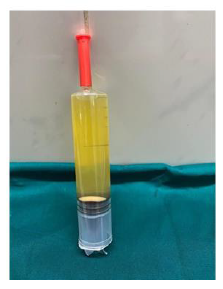
After second spin-remove platelet poor plasma leaving 3- 4 ml at the bottom.
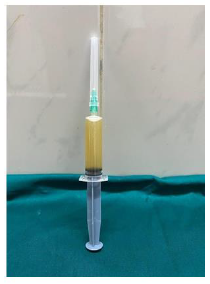
Reconstituted 3-4 ml platelet- rich plasma.
The process of separating platelet rich plasma was done under strict aseptic conditions. The patient’s baseline platelet count and leukocyte count were noted, and platelet rich plasma was calculated as having eight to ten times the baseline valve of platelets. The platelets concentration in the final product was corroborated by the department of the pathology, N.R.I. medical college on a periodic basis. We in this study did not use a leucocyte filter, and the final platelet rich plasma contained minute traces of leucocytes.
2.4 Injection protocol
The injection procedure was performed in the emergency operation theatre. The patient was placed supine on the operation table. Parts scrubbed, painted, and draped. Under sterile aseptic precautions, 3ml of platelet rich plasma was administered into the pathological site. The patient has advised analgesics and ice fomentation for pain after the procedure. The patients were advised to carry on with their regular work from day 1.
2.5 Outcome analysis
The patients were advised to follow up at 6 weeks, 3 months, and 6 months and 12 months .outcome analysis was done for the reduction in pain, decrease in stiffness, and improvement in physical function using the ucla score and vas pain score. The patients were also assessed for reduction in pain using visual analog scale both at pre-injection and at 3weeks, 6weeks, 3months and 6 months post-injection.
2.6 Follow up
Patient functional assessment was done based on pain relief, ability to carry on activities of daily living, strength.
3. Results
The Results were finally evaluated using shoulder scoring system.
- UCLA (University of California Los Angeles).
- Vas Pain Score (Visual Analog Score).
We studied 40 patients with rotator cuff tear who were treated with platelet rich plasma therapy.
|
Age in years |
Number of patients |
% |
|
51-60 |
18 |
45 |
|
61-70 |
17 |
42.5 |
|
>70 |
5 |
12.5 |
|
Total |
40 |
100.0 |
Mean ± Sd: 61.65 ± 6.5021
Table 1: Age distribution of patients studied.
|
Gender |
Number of patients |
% |
|
Male |
26 |
65 |
|
Female |
14 |
35 |
|
Total |
40 |
100 |
In our study maximum number of patients were male.
Table 2: Gender distribution of patients studied.
|
Type of tear |
Number of patients |
% |
|
Full thickness |
18 |
45 |
|
Partial |
22 |
55 |
|
Total |
40 |
100.0 |
Major part of our study contained partial thickness tears rather than full thickness tears.
Table 3: Distribution of type of tear of patients studied.
|
Etiology |
Number of patients |
% |
|
Degenerative |
32 |
80 |
|
Trauma |
8 |
20 |
|
Total |
40 |
100.0 |
Most common cause noted in our study for rotator cuff tears is degenerative.
Table 4: Distribution of etiology of patients studied.
|
Habits |
Number of patients (N=40) |
% |
|
Smoking |
||
|
· No |
38 |
95 |
|
· Yes |
2 |
5 |
|
Alcohol |
||
|
· No |
36 |
90 |
|
· Yes |
4 |
10 |
The incidence of smoking and alcohol is as shown and is of not much significance.
Table 5: Distribution of habits of patients studied.
|
Symptom |
Number of patients |
% |
|
Inability to lift shoulder |
27 |
67.5 |
|
Pain in shoulder |
13 |
32.5 |
|
Total |
40 |
100.0 |
Majority of patients complain of inability to lift affected shoulder.
Table 6: Distribution of symptom of patients studied.
|
Jobes empty can |
Number of patients |
% |
|
Negative |
0 |
0.0 |
|
Positive |
40 |
100.0 |
|
Total |
40 |
100.0 |
Jobes empty can test is positive in all the cases.
Table7: Distribution of jobes empty can of patients studied.
|
Restriction of extrotation |
Number of patients |
% |
|
Negative |
8 |
20 |
|
Positive |
32 |
80 |
|
Total |
40 |
100.0 |
Restriction of external rotation seen in 32 patients.
Table 8: Distribution of restriction of external rotation of patients studied.
|
Arm lift off |
Number of patients |
% |
|
Negative |
36 |
90 |
|
Positive |
4 |
10 |
|
Total |
40 |
100.0 |
Arm lift off was negative in 89.35% patient.
Table 9: Restriction of external rotation seen in 32 patients.
|
Belly press test |
Number of patients |
% |
|
Negative |
25 |
62.5 |
|
Positive |
15 |
37.5 |
|
Total |
40 |
100.0 |
Belly press was negative in 62.5 % patients.
Table 10: Distribution of belly press test studied.
|
Speed test |
Number of patients |
% |
|
Negative |
40 |
100.0 |
|
Positive |
0 |
0.0 |
|
Total |
40 |
100.0 |
Table 11: Distribution of speed test of patients studied.
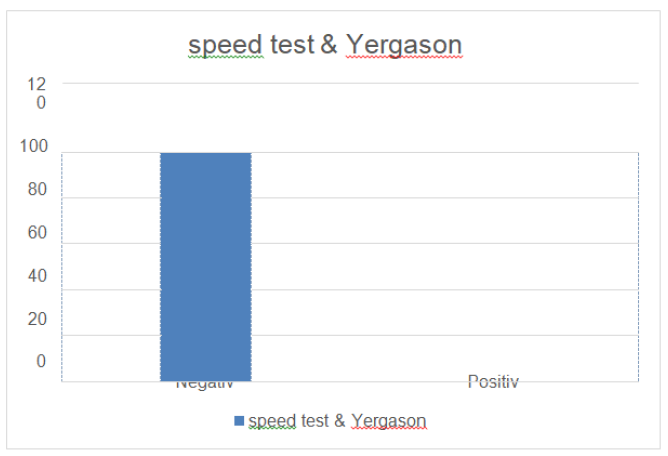
|
Neer and Hawkin test |
Number of patients |
% |
|
Negative |
28 |
70 |
|
Positive |
12 |
30 |
|
Total |
40 |
100.0 |
Table 12: Distribution of Neer and Hawkin test of patients studied.
|
Ucla |
||||||
|
At presentation |
At 3 Wks |
At 6 Wks |
At 12 Wks |
At 6 Months |
At 1 Year |
|
|
Min-max |
6.00-19.00 |
8.00-17.00 |
8.00-18.00 |
14.00-29.00 |
17.00-32.00 |
30.00-35.00 |
|
Mean ±sd |
10.325±3.50 |
12.075±2.21 |
15.525±2.25 |
19.9±3.814 |
27.32±3.561 |
32.7±1.381 |
|
95 % Ci |
9.23 To 11.4 |
11.4 To 12.8 |
14.8 To 16.2 |
18.7 To 21.1 |
26.2 To 28.4 |
32.3 To 33.1 |
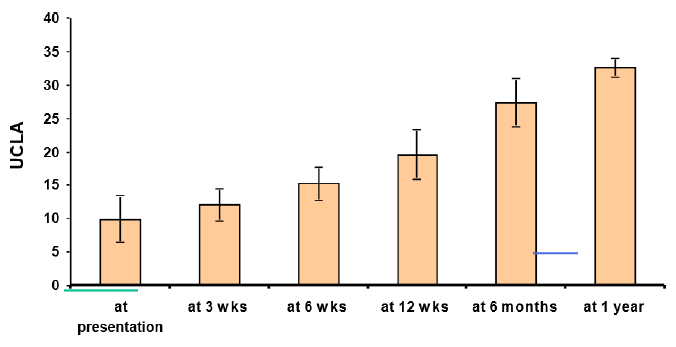
Evaluation of Ucla score.
There is a significant improvement in the Ucla shoulder score pre and post Prp injection reviewed at 3 weeks, 6 weeks, 12 weeks, 6 months and 1 year post injection.
|
Difference |
Ucla at presentation -At 3 wks |
Ucla at presentation – at 6 wks |
Ucla at presentation - at 12 wks |
Ucla at presentation - at 6 months |
Ucla at presentation - at 1 year |
||
|
Mean ±sd |
-2.14±2.34 |
-5.38±0.96 |
-9.73±4.88 |
-17.53±4.95 |
-22.84±3.82 |
||
|
P value |
<0.001** |
<0.001** |
<0.001** |
<0.001** |
<0.001** |
||
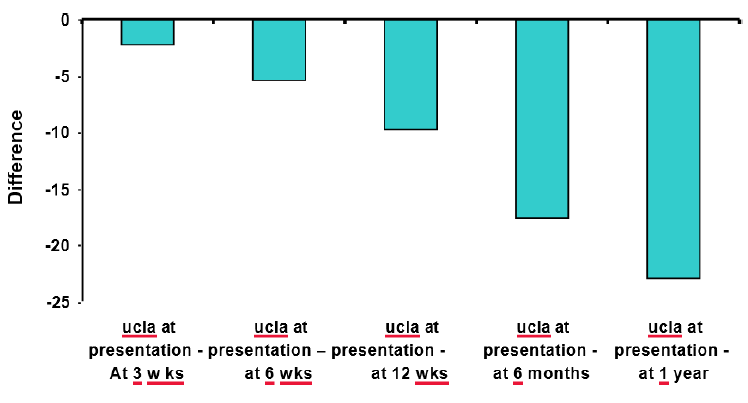
Difference of Ulca and pair wise significance.
|
Ulca |
Type of tear |
P value |
|
|
Full thickness |
Partial |
||
|
At presentation |
10.00±4.24 |
9.88±3.05 |
0.930 |
|
At 3 weeks |
11.91±2.39 |
12.19±2.51 |
0.775 |
|
At 6 weeks |
15.40±3.13 |
15.06±2.08 |
0.743 |
|
At 12 weeks |
18.90±3.28 |
19.94±4.06 |
0.503 |
|
At 6 wonths |
27.00±3.94 |
27.56±3.58 |
0.711 |
|
At 1 year |
33.10±1.66 |
32.38±1.20 |
0.209 |
No significance difference noted based on full thickness and partial rotator cuff tear.
Comparison of Ulca score according to type of tear.
|
Vas Pain Score |
||||
|
At presentation |
At 3 wks |
At 6 wks |
At 6 months |
|
|
Min-Max |
6-9 |
4-6 |
2-5 |
2-4 |
|
Mean ±sd |
7.575±0.843 |
4.775±0.891 |
3.6±0.744 |
2.35±0.662 |
Evaluation of Vas score (Visual Analog Score).
There is significant decrease in the visual analog pain score pre and post injection of platelet rich plasma followed between 3 weeks, 6 weeks, and 6 months.
Case 1
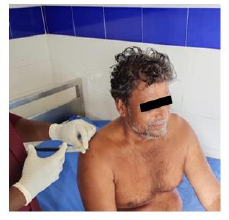
Patient during Platelet Rich Plasma injection- Right shoulder for Partial thickness Rotator cuff tear (Supraspinatus tear).
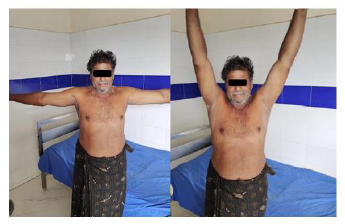
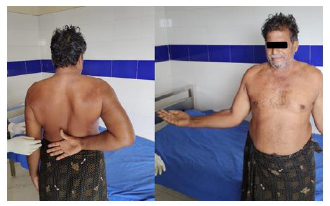
Range of movements at 6 months follow up post injection.
4. Discussion
Rotator cuff disease encompasses a wide range of pathology from minimal bursal or articular side irritation and tendonitis to severe degenerative rotator cuff arththropathy. Rotator cuff pathology affects adults of all ages and other shoulder afflictions must be ruled out by careful history and physical examination [1]. Epidemiological studies strongly support a relationship between age and cuff tears prevalence. The use of biological agents, including Prp and mesenchymal stem cells (Mscs) in orthopedics, has increased exponentially over the last few years due to its autologous nature, lack of side-effects, and supposed effectiveness.
Platelet-rich plasma is an autologous blood product with platelet concentrations above baseline. The preparation process involves the extraction of 34 ml of blood from the patient with the help of a scalp vein set, and after adding anticoagulant (Acda) centrifuged to obtain a concentrated suspension of platelets by plasmapheresis which then undergoes a two-stage centrifugation process to separate the solid and liquid components of the blood. The initial phase separates plasma and platelets from the erythrocytes and leucocytes. The second hard spin to concentrate the platelets further into platelet-rich and platelet-poor plasma components. The final platelet-rich product is then injected into the knee joint space. There is also debate on the potential benefits of platelet-poor plasma on healing, and some formulations do not incorporate this step.
As well as platelets, Prp contains white blood cells and some proteins. Tissue repair is a complex process comprising chemotaxis, angiogenesis, cell proliferation, and matrix formation. Platelets are involved in all of these functions by the release of growth factors. High concentrations of proteins such as platelet-derived growth factor (Pdgf), vascular endothelial growth factor (Vegf), endothelial cell growth factor, and the fibroblast growth factor have led to suggestions that Prp may be useful in conditions requiring tissue healing. Conversely, the other protein in Prp, transforming growth factor (Tg)F-Β1, has an inhibitory effect and can lead to non-predictable results.
5. General Observations
- Majority of patients were between age 51-60 years who had difficulty in carrying out their activities of daily living.
- Age distribution revealed a mean age in to be 65.
- Gender distributions were comparable in both groups, with 65 % being male 35% being
- Thus the study of platelet-rich plasma ensured that all patients were comparable to
- Majority of them were men forming 64.3 % whereas the rest of them were women forming 7%.
- The ucla score showed a mean of 325 at the pre-injection period, which increased to 27.32 and 32.7 at 6 weeks and 1year follow up respectively.
- The study showed a significant increase in the ucla score, which was also consistent throughout the study period.
- Majority of patients the etiology was Degenerative tear about 80%.
- Majority of patients complained of inability to lift the shoulder following
- The incidence of partial thickness tears was 22 out of 40 evaluated and full thickness tears noted in rest
- Bilateral rotator cuff tears was noted in one
- The visual analog score showed a decrease in mean of 575 to 2.35, which denotes a change of patient‘s perception of pain from intense, dreadful, horrible pain to mild annoying pain.
6. Conclusion
Our study of platelet-rich plasma relied on injecting a highly concentrated mix of platelets into the shoulder and observing the patients for the decrease in symptoms of pain, and improvement in physical function .our study has revealed a consistent reduction in pain and a definite improvement in lifestyle of the patients. Our study of platelet-rich plasma has thrown up an exciting choice of treatment modality using platelet rich plasma in the treatment of rotator cuff tears, and it has proved efficient in the observation period of one year.
7. Summary
A prospective study was done in NRI Institute of Sciences which included patients who were treated with platelet rich plasma for rotator cuff tear from 2018 t0 2020 . Patients were followed up at 3 weeks 6 weeks 12 weeks, 6 months and at 1 year. The patient was evaluated at presentation and at follow up. At follow up patient is asked to fill proforma and functional outcome was assessed using vas and Ucla shoulder scoring system. The study showed that there was significant improvement in pain, strength, patient satisfaction, range of motion and ability to carry activities of daily living irrespective of type of tear and technique used when strict post-operative physiotherapy is followed. Further there is no hospital stay and can be done in outpatient department and patient can return early to their activities. A study with larger sample size, with more number of cases in each group to make definite recommendations.
References
- Via AG, decupis MD, Spoliti M, et al. Clinical and biological aspects of rotator cuff tears. Muscles Ligaments and Tendons Journal 3 (2013): 70-79.
- Sadoghi P, Lohberger B Aigner, et al. Effects of platelet-rich plasma on the biologic activity of the human rotator-cuff fibroblasts: A controlled in vitro study. Journal of Orthopedic Research (2013): 1249-1253
- Della-Giustina D, Harrison B. Shoulder Pain. In Tintinalli JE, Stapczynski J, Ma O, et al. T(Eds), Tintinallis Emergency Medicine: A Comprehensive studyguide (2011): 7e.
- Milgrom C, Schaffler M, Gilbert S, et al. Rotator cuff changes in asymptomatic adults. The effect of age, hand dominance, and gender. J Bone Joint Surg Br 77 (1995): 296-298.
- Jost B, Zumstein M, Pfirrmann CW, et al. Long-term outcome after structural failure of rotator cuff repairs. JBJS 88 (2006): 472-479.
- Mautner K, Colberg RE, Malanga G, et al. Outcomes after ultrasound-guided platelet-rich plasma injections for chronic tendinopathy: A multicenter, retrospective review. PM and R 5 (2013): 169-175.
- Longo UG, Franceschi F, Berton A, et al. Conservative treatment and rotator cuff tear progression. Med Sport Sci 57 (2012): 90-99.