Nardia Eneida Montesinos-Peña1,2,3, Ariana Cabrera-Licona4,5, Iván Delgado-Enciso5,6, Brenda A. Paz-Michel4,6*
1Private Medical Office, Av. Victor Hugo 44, Colonia Moderna, Benito Juárez, 03510, México City, México.
2La Viga MAC Hospital, Calz. De la Viga 1174, El Triunfo, 09430, Iztapalapa, México City, México.
3Gynecology and Obstetrics Service, IMSS General Hospital 2A Zone Francisco del Paso y Troncoso, Viad. Río de la Piedad 144, Granjas México, Iztacalco, 08400, México City, México.
4Esteripharma SA de CV, Jorge Jiménez Cantú OTE, Colonia 2 de abril, 03100, Atlacomulco estado de México.
5Instituto Estatal de Cancerología, Servicios de Salud del Estado de Colima, Colima, Av. Liceo de varones 401, Colonia la Esperanza, CP 28085.
6Facultad de Medicina, Universidad de Colima, Av. Universidad 333, Las Víboras, 28040, Colima, México.
*Corresponding authors: Brenda A. Paz-Michel. Esteripharma S.A. de C.V, Jorge Jiménez Cantú Ote 412, 2 de abril, 50450 Atlacomulco, Estado de México, México.
Received: 26 August 2026; Accepted: 03 September 2026; Published: 22 September 2026
The genitourinary syndrome of menopause (GSM) is a regular condition in all mature women due to hormonal changes associated with menopause. It reduces quality of life by causing typical signs and symptoms. Nonpharmacological therapies, such as intravaginal moisturizing agents, are recommended besides hormone replacement therapy. This study evaluated the safety and performance of an intravaginal moisturizing gel made from electrolyzed water (SESG), compared to commercial products [glycerin (GG) or hyaluronic acid (HAG) based-gels] in a controlled, randomized, singleblind clinical trial, to improve typical symptoms and signs in patients with different levels of GSM severity. All treatments were administered 2-3 times a week, at night, during 4 or 8 weeks. Forty-two patients (42-70 years old) were included, with an average evolution time since menopause event of 6 years. Within the same group, all patients reported improvement in all their symptoms, although not all were statistically significant. Among groups, a significant improvement was observed according to the percentage change from baseline severity, with the best results observed in those patients treated with SESG (p ≤ 0.001). The clinical efficacy of both, 4 and 8 weeks of SESG treatments, were superior than glycerin-based gel (GG) (p ≤ 0.001 vs SESG-2M; p = 0.008 vs SESG-2M/Rp) or hyaluronic acid-based gel (HAG) (1-month treatment: p = 0.015; 2-month treatment: p = 0.004, vs SESG-2M). SESG treatments were well tolerated and did not cause important adverse effects or pathological alteration of vaginal tissue. SESG might be a good alternative therapy to improve quality of life in women with GSM.
Genitourinary Syndrome of Menopause; GSM; Vulvovaginal atrophy (VVA); Electrolyzed water (SES); Moisturizing intravaginal gel
Genitourinary Syndrome of Menopause articles; GSM articles; vulvovaginal atrophy (VVA) articles; electrolyzed water (SES) articles; moisturizing intravaginal gel articles
Introduction:
Genitourinary Syndrome of Menopause (GSM) is defined as a compendium of chronic and progressive signs and symptoms associated with aging and with the consequent decrease in the concentration of circulating estrogens and other sex hormones in women, generally during menopause and postmenopause. It includes internal and external genital (e.g. labia majora/minora, clitoris, vestibule, introitus, vagina) functional changes, as well as modifications in the urethra and the urinary bladder [5,60]. Since the drop in estrogen levels induces loss of normal collagen, adipose tissue, and impaired water retention in the vaginal epithelium, characteristic signs are manifested such as pallor, dryness, thinning and laxity of the vaginal lining, loss of the vaginal rugae, smoothing of the vaginal fornix, and presence of friability, petechiae and/or inflammation in the vaginal tissue. External manifestations include prominent urethral meatus, introital stenosis, shrinkage of the labia majora and minora, and urethral prolapse [27]. Together, these constitute typical signs of vaginal atrophy [66]. Additionally, since glycogen production is also reduced, normal eutrophic flora is deeply affected, so a reduction/change of lactobacilli population and lactic acid production also occurs, leading to vaginal pH increment and predisposition to urogenital infections [37].
In addition to the multiple functional changes and signs, a variety of symptoms may also occur, like vaginal dryness or lack of lubrication, dyspareunia, bleeding after or during sexual intercourse, pruritus, stinging pain, soreness, odorless discharge, dysuria, nocturia, urinary urgency, frequency, and incontinence [69,65].
Due to the nature of the aforementioned signs and symptoms attributable to aging and menopause, the Board of Directors of the International Society for the Study of Women’s Sexual Health (ISSWSH) and the Board of Trustees of the North American Menopause Society (NAMS) agreed to adopt the terminology “genitourinary syndrome of menopause (GSM),” instead of the former “vulvovaginal atrophy (VVA)” and “atrophic vaginitis” since 2014, to better describe the spectrum of sexual, genital, and urinary changes associated with the condition [60].
Menopause occurs in most women in their late 40s or early 50s, although some differences may be observed according to geographical regions [51]. In Mexico, the average age at which menopause occurs is 49-50 years [1,50]. On the other hand, the prevalence of genitourinary syndrome of menopause (GSM) ranges widely from 13% to 87%, as no consensus has been reached regarding which signs and symptoms (sexual, genital, urinary), and how many of them, must be present for a diagnosis [4,35]. Consequently, diverse criteria have been used across different research studies [42,44,54,74]. This variation is further compounded by the fact that the severity of symptoms does not always correlate with signs/physical findings [12,19,35]. However, it has been reported worldwide that the condition is underdiagnosed and undertreated (less than 10% of all diagnosed cases are treated), despite the significant impact on the quality of life of the women who suffer from it [25,35,44,47,65,66].
Typically, genital signs (vulvovaginal atrophy) and urinary symptoms are predominantly present in late postmenopausal women (Stage +2 according to the STRAW+10 criteria); by contrast, sexual symptoms are widespread among both early (Stage +1) and late postmenopausal women [52]. Particularly, vaginal dryness is the most clinically relevant symptom, regardless of whether they are sexually active. Among those who are sexually active, dyspareunia is also highly prevalent and severely impacts their sex life and emotional health [44,46,55,56,1].
The first-line pharmacologic treatment for GSM is local estrogen therapy, but systemic hormones might also be prescribed, especially when vasomotor symptoms are present. Nevertheless, treatment must be personalized, since not all women are candidates for hormonal therapy or willing to accept it [1,4,12,31,35,37,53].
Alternatively, non-pharmacologic therapies such as changes in lifestyle, lubricants, moisturizers, laser, and radiofrequency are also available [12,23,34,40]. Vaginal laser and radiofrequency are relatively new technologies that claim to stimulate neocollagenesis and promote vaginal rejuvenation [34,6]. Nevertheless, such therapies continue to be considered experimental and are not yet part of expert recommendations for the treatment of GSM [35,38].
Lubricants, on the other hand, are indicated as short-term products to improve vaginal dryness and relieve dyspareunia during sexual contact [35,53], while moisturizers offer longer-lasting effects, can be used multiple times per week, and are recommended to ameliorate GSM signs and symptoms [18,23,24,35]. Both therapies can be used alone or in combination with hormonal regimens [35,46]. However, moisturizers offer an interesting option for those patients with medical or personal restrictions to hormonal therapies [12,46,48].
Given the high prevalence and significant impact of GSM on women's health, pursuing novel and superior alternatives is essential to improve patient quality of life. Specifically, regarding moisturizers, since they are intended for long-term use to improve GSM signs and symptoms, it is important that their compositions do not include ingredients that might compromise or negatively affect the vaginal lining cells, pH, or normal microbiome [24]. Based on the above, a novel promising product, an electrolyzed water-based intravaginal moisturizing gel, is proposed.
Neutral electrolyzed water is known not only for its antiseptic properties and safety when applied to peritoneal [73] and cervical tissue [43], but also for its anti-inflammatory effects and ability to promote healing of complicated wounds, such as full-thickness burns or cervical erosion [84,20,43]. For this reason, it was considered a good candidate for exploring its effect on GSM symptoms and signs. The present study evaluated the safety and efficacy of an electrolyzed water-based intravaginal moisturizing gel, compared with glycerin- or hyaluronic acid-based gels, for the management of symptoms associated with GSM and the improvement of postmenopausal women’s quality of life.
Materials and methods
Study design
A prospective, randomized 2-arm, parallel-group, open-label, and dose-ranging clinical trial was conducted to compare the effectiveness of a moisturizing intravaginal gel formulated with neutral electrolyzed water, versus two conventional and commercially available non-hormonal hyaluronic acid- or glycerin-based intravaginal gels, to improve signs and symptoms associated with the genitourinary syndrome of menopause (GSM) in patients from a private gynecological practice in Mexico City. The study was approved by the research ethics committee of the Health Ministry of Colima City, Mexico (Cancerology State Institute, Colima State Health Services; Reg. CEICANCL16092022-HIDRAFEM-15; September 2022) and was conducted, from September 2022 to August 2024, in accordance with the ethical international standards established in the Declaration of Helsinki. A written informed consent was obtained from each participant before participation in the study.
Study subjects
Inclusion criteria were adult women with at least 12 months of evolution since last menstrual period (menopause), undergoing early or late postmenopause [50], sexually active, and with signs and symptoms associated with genitourinary syndrome of menopause (GSM). The exclusion criteria were women presenting any cervicovaginal infection or cervical lesion compatible with HPV infection (according to cervical cytology); women using any kind of systemic or topical hormone treatment at the moment of recruitment or at any time in the past 6 months, and women using any kind of non-hormonal moisturizing treatment for more than a week at the moment of recruitment or at any time in the past 2 months; presence of cancer; autoimmune pathology; history of recurrent (3 or more in the last year) urinary tract infections; antibiotics intake in the last month or less. Additionally, the following elimination criteria were considered: women without treatment attachment, women who presented any moderate or severe adverse event according to the Common Terminology Criteria for Adverse Events (CTCAE), version 5.0 [49] attributable to the treatments, and women that voluntarily decided to suspend the treatment or to abandon the study.
Patients were invited to participate by the physician during their routine gynecologist visit. Immediately after their recruitment (acceptance, read and signed informed consent), each patient was randomly assigned to one of six treatment groups, until reaching seven members per group.
Diagnostic criteria, Outcome Measures and Follow-up
Medical history (obstetrics and gynecology; OB/GYN) was completed by anamnesis. Additionally, to determine the GSM severity per group, each patient had a full clinical evaluation through a gynecological exam with vaginal speculum and colposcopy. All patients completed a Likert-type questionnaire regarding presence and severity (0 = absent, 1 = mild, 2 = moderate, 3 = severe) of typical symptoms [27,35,44,46,53,60,74]: dyspareunia, pain/soreness, pruritus, vaginal dryness, odorless discharge/flux, dysuria, post-coital bleeding, urinary urgency, and stinging pain. The sum of all the scores of the questionnaire was established as the Subjective Symptom Score (SSS). A Likert-type format was also completed by the physician after the full clinical evaluation of each patient, grading with 0 - 4 points (0 = none; 1 = mild; 2 = moderate; 3 = severe; 4 = very severe), according to the degree of severity of the following GSM signs: 1) pale/dry vaginal lining, 2) thinning of vaginal epithelium/surface, 3) loss of vaginal folds/roughness, 4) petechiae/inflammation, 5) vaginal laxity (loss of elasticity), 6) smoothing of vaginal fornix, 7) narrowing of the vaginal introitus, and 8) atrophic appearance [27,35,41,44,46,47,53,60,74]. The sum of all scores of this format was used as the Objective Vulvovaginal Atrophy Sign Score (OVASS) and represents a modified version of the Vaginal Health Index (VHI), as originally proposed by Bachmann (1995).
The Genitourinary Syndrome of Menopause Severity Score (GSMSS) per group was calculated as the sum of all 17 individual scores of symptoms and signs (SSS + OVASS), before each treatment. The highest possible score per treatment group was 413 points (59 points per patient), considering the maximum severity score for all evaluated categories.
Additionally, for the 1-month treatments, a long-term follow-up was conducted analyzing the percentage change from baseline of the nine most relevant (severe) signs and symptoms of GSM initially observed in the patients of this protocol: dyspareunia, pain/soreness, pruritus, vaginal dryness, pale/dry vaginal lining, thinning of vaginal epithelium/surface, loss of vaginal folds/roughness, petechiae/inflammation, and vaginal laxity.
Patients from all groups were clinically evaluated as previously described, prior to treatment and 10-14 days after the last administration. Patients undergoing 1-month treatment had an additional follow-up one month after the last monitoring visit (Table 1).
Table 1: Treatment and monitoring plan, per group.
|
1-MONTH TREATMENTS |
WEEK |
||||||||||||||
|
HAG-1M |
0 |
1 |
2 |
3 |
4 |
5 |
6 |
7 |
8 |
9 |
10 |
11 |
12 |
13 |
14 |
|
SESG-1M |
|||||||||||||||
|
Initial exploration |
X |
||||||||||||||
|
Product administration |
X |
X |
X |
X |
|||||||||||
|
Final Exploration |
X |
||||||||||||||
|
Follow up |
X |
||||||||||||||
|
2-MONTH TREATMENTS |
|||||||||||||||
|
GG-2M |
|||||||||||||||
|
HAG-2M |
|||||||||||||||
|
SES-2M |
|||||||||||||||
|
Initial exploration |
X |
||||||||||||||
|
Product administration |
X |
X |
X |
X |
X |
X |
X |
X |
|||||||
|
Final Exploration |
X |
||||||||||||||
|
2-MONTH TREATMENT WITH REST PERIOD |
|||||||||||||||
|
SESG-2M/Rp |
|||||||||||||||
|
Initial exploration |
X |
||||||||||||||
|
Product administration |
X |
X |
X |
X |
X |
X |
X |
X |
|||||||
|
Rest period |
X |
X |
X |
X |
|||||||||||
|
Final Exploration |
X |
||||||||||||||
All participants were instructed to report to the physician, through a phone call or during the next check-up, any adverse effects (irritation, pain, erythema, bleeding, etc.) potentially attributable to the use of the new intravaginal moisturizing gel; and to immediately suspend the treatment if they presented with any moderate or severe side effects.
Primary and secondary endpoints
The primary endpoint was defined as the clinical success (effectiveness) of treatments based on clinical baseline outcomes. A treatment was considered clinically successful (effective) when it was able to improve at least 35% (6 or more) of all 17 analyzed GSM symptoms and signs. Any symptom or sign was considered clinically improved when the percentage change from baseline severity was at least 50% for symptoms and 30% for signs, and when such percentage change was statistically significant. For the 1-month treatment groups (SESG-1M and HAG-1M), an additional primary endpoint was selected: the percentage change in severity from baseline of the nine most relevant signs and symptoms of GSM at the long-term follow-up named Long-term Genitourinary Syndrome of Menopause Severity Score (9-GSMSS).
Analysis of the percentage change from baseline of the Subjective Symptom Score (%DSSS), percentage change from baseline of the Objective Vulvovaginal Atrophy Signs Score (%DOVASS), and percentage change from baseline of the Genitourinary Syndrome of Menopause Severity Score (%DGSMSS), as well as the evolution (before/after) of the severity of symptoms in patients within the same treatment group were established, as secondary endpoints. Additionally, a statistical analysis of the percentage change from baseline of GSM symptom and sign severity among treatment groups was performed.
Treatment regimens with intravaginal moisturizing gels
Patients in each of the six groups received moisturizing treatment with an intravaginal gel, during 1 or 2 months (Table 1).
Commercially available conventional (over-the-counter) products were acquired in local drugstores and administered according to the manufacturer’s recommendations:
GG-2M: Polycarbophil/Glycerin-based intravaginal gel, 5.9 g per dose, applied on Mondays, and Thursdays, at night. 16 doses in total over 8 weeks.
HAG-1M and HAG-2M: Glycerin/Polyacrylic- and Hyaluronic acid-based intravaginal gel enriched with natural extracts, 2.5 mL per dose, applied seven consecutive days at night, followed by application on Mondays and Thursdays, at night. Thirteen doses in total over 4 weeks or 21 doses in total over 8 weeks, respectively.
Polyacrylic acid polymer and electrolyzed water-based intravaginal gel was administered according to the following directions:
SESG-1M and SESG-2M: 5.0 g per dose, applied on Mondays, Wednesdays, and Fridays, at night. 12 doses in total over 4 weeks or 24 doses in total over 8 weeks, respectively.
SESG-2M/Rp: Electrolyzed water-based intravaginal gel administered over 2 months with a resting period: 5.0 g per dose, applied on Mondays, Wednesdays, and Fridays, at night, over 4 weeks; followed by a resting period of 4 weeks. Then, an additional cycle of 4 weeks was applied, as previously described. 24 doses in total.
The experimental electrolyzed water-based intravaginal gel (SESG) was manufactured meeting good manufacturing practices for an intravaginal product and provided by Esteripharma S.A. de C.V. as a product with similar formulation to the commercial (OTC) product EsteriFem V® (COFEPRIS registration no. 0195E2021 SSA). The commercial glycerin and hyaluronic acid formulations were acquired from local drugstores as over-the-counter (OTC) products, under the commercial trademarks Replens® and Gynomunal®, respectively.
Blinding
Only the researchers who performed the statistical analyses were blinded.
Sample Size
A non-probability consecutive sampling was used until completing six groups with seven members each.
Statistical analysis
Values were expressed as the mean ± standard deviation (for data with a normal distribution), median with the 25th and 75th percentiles (interquartile range) for data with a non normal distribution or percentages. The normality of the distribution of data was first determined using Shapiro-Wilk test and the equality of variances was confirmed using Levene's test (based on the median). Parametric data with a normal distribution (e.g., age, weight and body mass index [BMI]) were compared between groups utilizing the ANOVA test, followed by the Tukey post hoc test. Categorical variables were compared using Fisher's exact test or likelihood ratio χ2 test. To compare data in an ordinal scale among independent groups, the Kruskal-Wallis test was used with Bonferroni correction; between two groups, the Mann Whitney U test with exact significance was applied. The Wilcoxon signed rank test was applied to matched samples. All statistical analyses were performed using the SPSS version 31.0.2.0 software (IBM Corp.). A p <0.05 was considered statistically significant.
Results
A total of 47 women going through early or late postmenopause were screened but 5 were excluded for presenting a cervicovaginal infection. 45 were randomized into 6 treatment groups. 1-month (HAG-1M, SESG-1M) and 2-month (GG-2M, HAG-2M, SESG-2M, SESG-2M/Rp) therapies were explored for experimental electrolyzed water-based gel, and commercial glycerin-based or hyaluronic acid-based intravaginal moisturizing gels. Table 2A shows patients’ characteristics per group, including average age, weight, body mass index, and age at last menstrual cycle (menopause event). Generally, body mass indices considered overweight (30.0 kg/m2 > BMI ≥ 25 kg/m2), without reaching obesity levels, were observed for all groups [75].
Table 2A: Characteristics of patients, per group before treatment.
|
Group |
N (%) |
Age; years (STD) |
Weight; Kg (STD) |
BMI; Kg/m2 (STD) |
&Age at menopause; years (STD) |
&Years since menopause (STD) |
|
GG-2M |
7 (100) |
50.1 (7.3) |
66.5 (9.4) |
25 (3.7) |
47.0 (4.4) |
3.1 (3.5) |
|
HAG-1M |
7 (100) |
53.1 (4.2) |
68.4 (6.6) |
27 (2.7) |
49.0 (1.7) |
4.1 (3.8) |
|
HAG-2M |
7 (100) |
53.7 (7.0) |
71.1 (11.1) |
26.8 (4.9) |
49.2 (3.6) |
4.4 (4.0) |
|
SESG-1M |
7 (100) |
56.1 (6.6) |
70 (9.5) |
28.2 (4.0) |
48.6 (2.5) |
7.7 (7.8) |
|
SESG-2M |
7 (100) |
57.2 (6.6) |
64.7 (6.7) |
25.2 (3.4) |
50.3 (1.5) |
7.0 (5.9) |
|
SESG-2M /Rp |
7 (100) |
58.5 (5.4) |
70.7 (5.2) |
27.7 (2.3) |
49.3 (1.8) |
9.2 (4.0) |
|
Mean |
- |
54.8 (6.1) |
68.6 (8.1) |
26.7 (3.5) |
48.9 (2.5) |
5.9 (4.8) |
|
P |
- |
0.16 |
0.67 |
0.47 |
0.62 |
0.16 |
One-way ANOVA test and Tukey post hoc were applied for the comparison of groups with normal distribution. For groups with no normal distribution (&), the Kruskal-Wallis test was applied.
Most patients presented menopause at 45 years of age or older (mean 48.9 ± 2.8 years old). Only three patients presented early menopause (at 41, 42, and 44 years old). One was a member of treatment group HAG-2M and two of GG-2M. Thus, GG-2M had the lowest average age at menopause (47.0 ± 4.4 years old), and together with HAG-1M (49.0 ± 1.7 years old) and HAG-2M (49.2 ± 3.6 years old) formed the groups with the youngest members at the moment of the trial (50.1 ± 7.3, 53.1 ± 4.2, and 53.7 ± 7.0 years old, respectively). Also, these groups had the lowest evolution time since menopause: 3.1 ± 3.5, 4.1 ± 3.8 and 4.1 ± 4.0 years, respectively (Table 2). According to STRAW+10 criteria [2,31], in GG-2M, most patients (5 of 7) were in stage +1b, and the rest in stages +1c and +2 (one in each stage). In HAG-1M, three patients were in stage +1b, one in stage +2, and the rest in stage +1c. In HAG-2M, three patients were in stage +1b, and the rest in stages +1c and +2 (two in each stage) (Table 2B).
Table 2B: Number of women, per treatment group and stage of female reproductive aging, according to STRAW+10 criteria.
|
STRAW+10 Stage |
||||
|
Group |
N (%) |
+1b N (%) |
+1c N (%) |
+2 N (%) |
|
GG-2M |
7 (100) |
5 (71.4) |
1 (14.3) |
1 (14.3) |
|
HAG-2M |
7 (100) |
3 (42.9) |
2 (28.6) |
2 (28.6) |
|
HAG-1M |
7 (100) |
3 (42.9) |
1 (14.3) |
3 (42.9) |
|
SESG-2M |
7 (100) |
2 (28.6) |
2 (28.6) |
3 (42.9) |
|
SESG-1M |
7 (100) |
2 (28.6) |
1 (14.3) |
4 (57.1) |
|
SESG-2M/Rp |
7 (100) |
1 (14.3) |
1 (14.3) |
5 (71.4) |
|
Total (%) |
42 (100) |
16 (38.1) |
8 (19.0) |
18 (42.9) |
|
P& |
- |
0.42 |
||
&Statistical significance among groups according to Kruskal-Wallis test per type of treatment.
Patients treated with the experimental electrolyzed-water based intravaginal gel were the oldest, with mean ages at the time of the study of 56.1 to 58.5 years old. Their average evolution time since menopause was 7.7 ± 7.8 years (four patients in Stage +2, one in Stage +1c, and the rest in Stage +1b), 7.0 ± 5.9 years (three patients in Stage +2, two in Stage +1c, and the rest in Stage +1b) and 9.2 ± 4.0 years (one patient in Stage +1b, other in Stage +1c, and the rest in Stage +2) for SESG-1M, SESG-2M and SESG-2M/Rp, respectively. No significant differences were observed between groups’ mean data regarding age, weight, BMI, age at the time of menopause, years since menopause (Table 2A), or stage of female reproductive aging, according to STRAW+10 criteria (Table 2B).
Nevertheless, concerning the initial GSM status of the patients, important differences were observed. Basal data of Genitourinary Syndrome of Menopause Severity Score (GSMSS), Subjective Symptom Score (SSS), and Objective Vulvovaginal Atrophy Sign Score (OVASS) are described in Tables 3 and 4. Patients comprising the groups SESG-1M, -2M, and -2M/Rp had GSMSS scores higher than 300 points (304, 327 and 330, respectively), which corresponds to a severe GSM status. Patients in groups HAG-1M and -2M presented with moderate to mild severity (237 and 179 points, respectively) while patients from group GG-2M scored 135 GSMSS points, corresponding to a mild status.
Groups GG-2M, HAG-2M, and HAG-1M, treated with commercially available products, also presented the lowest intensity of symptoms or signs, according to their SSS (70, 98 and 118 points, respectively) and OVASS (65, 81 and 119 points, respectively). Taken together, these data represent a mild to moderate GSM intensity. Conversely, in all groups treated with the experimental electrolyzed water-based gel, severe OVASS (173-200 points) intensity stands out, as well as SSS values corresponding to moderate to severe intensity (130-139 points). Statistical analysis of GSMSS showed significant differences between most groups, which is congruent with different baseline GSM status levels (Tables 3-4).
Table 3: Genitourinary Syndrome of Menopause Severity Score (GSMSS) per group before 2-month treatment.
|
Treatment Group |
Symptoms |
Subjective Symptom Score (SSS) |
Signs |
|||||||||||||
|
Dyspareunia |
Pain/ soreness |
Pruritus |
Vaginal dryness |
Dysuria |
Urinary urgency |
Odorless flux |
Post-coital bleeding |
Stinging pain |
Pale/dry vaginal lining |
Thinning of vaginal epithelium |
Loss of vaginal rugae |
Petechiae/ inflammation |
||||
|
GG-2M |
8 |
10 |
13 |
8 |
6 |
6 |
7 |
6 |
6 |
70 |
7 |
8 |
7 |
11 |
||
|
HAG-2M |
13 |
14 |
14 |
12 |
9 |
7 |
10 |
8 |
11 |
98 |
11 |
11 |
9 |
12 |
||
|
SESG-2M |
17 |
20 |
19 |
19 |
17 |
12 |
10 |
13 |
12 |
139 |
25 |
26 |
19 |
27 |
||
|
SESG-2M/Rp |
19 |
14 |
21 |
16 |
12 |
13 |
11 |
13 |
11 |
130 |
25 |
25 |
27 |
26 |
||
Table 3: Genitourinary Syndrome of Menopause Severity Score (GSMSS) per group before 2-month treatment (CONT).
|
Treatment Group |
Signs (CONT) |
Objective Vulvovaginal Atrophy Sign Score (OVASS) |
Genitourinary Syndrome of Menopause Severity Score (GSMSS) |
P& |
P# |
|||||||
|
Vaginal laxity |
Smooth vaginal fornix |
Narrowed introitus |
Atrophic appearance |
|||||||||
|
GG-2M |
8 |
8 |
8 |
8 |
65 |
135 |
≤ 0.001c |
|||||
|
HAG-2M |
11 |
10 |
7 |
10 |
81 |
179 |
0.328 |
|||||
|
SESG-2M |
23 |
22 |
20 |
26 |
188 |
327 |
≤ 0.001c |
0.002b |
||||
|
SESG-2M/Rp |
25 |
27 |
20 |
25 |
200 |
330 |
≤ 0.001c |
0.002b |
1 |
|||
&Statistical significance among groups according to Kruskal-Wallis test per type of treatment. #Statistical significance among groups according to Mann-Whitney U test per type of treatment. a,b,c Statistically significant values, aP = 0.05, bP = 0.01, cP ≤ 0.001.
Table 4: Genitourinary Syndrome of Menopause Severity Score (GSMSS) per group before 1-month treatment.
|
Treatment Group |
Symptoms |
Subjective Symptom Score (SSS) |
Signs |
|||||||||||||
|
Dyspareunia |
Pain/ soreness |
Pruritus |
Vaginal dryness |
Dysuria |
Urinary urgency |
Odorless flux |
Post-coital bleeding |
Stinging pain |
Pale/dry vaginal lining |
Thinning of vaginal epithelium |
Loss of vaginal rugae |
Petechiae/ inflammation |
||||
|
HAG-1M |
17 |
18 |
16 |
15 |
10 |
14 |
5 |
7 |
16 |
118 |
15 |
16 |
16 |
14 |
||
|
SESG-1M |
20 |
16 |
20 |
21 |
12 |
8 |
12 |
10 |
12 |
131 |
21 |
25 |
20 |
25 |
||
Table 4: Genitourinary Syndrome of Menopause Severity Score (GSMSS) per group before 1-month treatment (CONT).
|
Treatment Group |
Signs (CONT) |
Objective Vulvovaginal Atrophy Sign Score (OVASS) |
Genitourinary Syndrome of Menopause Severity Score (GSMSS) |
P# |
|||||
|
Vaginal laxity |
Smooth vaginal fornix |
Narrowed introitus |
Atrophic appearance |
||||||
|
HAG-1M |
15 |
17 |
8 |
18 |
119 |
237 |
0.041a |
||
|
SESG-1M |
26 |
19 |
12 |
25 |
173 |
304 |
|||
#Statistical significance among groups according to Mann-Whitney U test per type of treatment. a,b,c Statistically significant values, aP = 0.05, bP = 0.01, cP ≤ 0.001.
Regarding the occurrence of specific symptoms in patients, Tables 5 and 6 present their relative intensity and percentage of occurrence, per treatment group, before and after the intervention. All participants exhibited dyspareunia, pruritus, vaginal dryness, and pain/soreness to a significant degree, so these symptoms were considered the most representative for the population analyzed in this trial.
Pruritus was the most incapacitating symptom, with relative intensity considered severe in 100%, 71.4%, 85.7%, 28.6%, and 28.6% of patients in treatment groups SESG-2M/Rp, SESG-2M, SESG-1M, HAG-2M, and HAG-1M, respectively. In GG-2M, 85.7% of patients reported pruritus with moderate relative intensity. Vaginal dryness was the second most important symptom, present with severe relative intensity in 100%, 71.4%, 57.1%, and 42.9% of patients from treatment groups SESG-1M, SESG-2M, SESG-2M/Rp, and HAG-1M, respectively. Patients in groups HAG-2M and GG-2M manifested the symptom with moderate intensity in 71.4% and 14.3%, respectively. Dyspareunia was severe for the majority of patients in SESG-1M and SESG-2M/Rp groups, as it was pain/soreness for treatment group SESG-2M (Table 5).
Table 5: Evolution of the most significant symptoms in patients by treatment group.
|
Treatment Group |
Relative Intensity |
Dyspareunia |
P* |
Pain/Soreness (%) |
P* |
Vaginal dryness |
P* |
Pruritus |
P* |
||||||
|
before |
after |
before |
after |
before |
after |
before |
after |
||||||||
|
GG-2M |
Severe |
0 |
0 |
0.083 |
0 |
0 |
0.046a |
0 |
0 |
0.157 |
0 |
0 |
0.008b |
||
|
Moderate |
14.3 |
0 |
42.9 |
0 |
14.3 |
14.3 |
85.7 |
0 |
|||||||
|
Mild |
85.7 |
71.4 |
57.1 |
85.7 |
85.7 |
57.1 |
14.3 |
85.7 |
|||||||
|
Absent |
0 |
28.6 |
0 |
14.3 |
0 |
28.6 |
0 |
14.3 |
|||||||
|
HAG-1M |
Severe |
42.9 |
0 |
0.034a |
57.1 |
0 |
0.014a |
42.9 |
0 |
0.025a |
28.6 |
0 |
0.023a |
||
|
Moderate |
57.1 |
42.9 |
42.9 |
28.6 |
28.6 |
0 |
71.4 |
28.6 |
|||||||
|
Mild |
0 |
57.1 |
0 |
71.4 |
28.6 |
71.4 |
0 |
71.4 |
|||||||
|
Absent |
0 |
0 |
0 |
0 |
0 |
28.6 |
0 |
0 |
|||||||
|
HAG-2M |
Severe |
28.6 |
0 |
0.020a |
14.3 |
0 |
0.038a |
0 |
0 |
0.038a |
28.6 |
0 |
0.038a |
||
|
Moderate |
28.6 |
14.3 |
71.4 |
14.3 |
71.4 |
0 |
42.8 |
0 |
|||||||
|
Mild |
42.8 |
71.4 |
14.3 |
71.4 |
28.6 |
71.4 |
28.6 |
85.7 |
|||||||
|
Absent |
0 |
14.3 |
0 |
14.3 |
0 |
28.6 |
0 |
14.3 |
|||||||
|
SESG-1M |
Severe |
85.7 |
0 |
0.024a |
42.85 |
0 |
0.047a |
100 |
0 |
0.017a |
85.7 |
0 |
0.015a |
||
|
Moderate |
14.3 |
14.3 |
42.85 |
28.6 |
0 |
28.6 |
14.3 |
28.6 |
|||||||
|
Mild |
0 |
42.85 |
14.3 |
42.8 |
0 |
42.8 |
0 |
71.4 |
|||||||
|
Absent |
0 |
42.85 |
0 |
28.6 |
0 |
28.6 |
0 |
0 |
|||||||
|
SESG-2M |
Severe |
42.9 |
0 |
0.014a |
85.7 |
0 |
0.014a |
71.4 |
0 |
0.011a |
71.4 |
0 |
0.023a |
||
|
Moderate |
57.1 |
28.6 |
14.3 |
71.4 |
28.6 |
0 |
28.6 |
28.6 |
|||||||
|
Mild |
0 |
57.1 |
0 |
14.3 |
0 |
85.7 |
0 |
71.4 |
|||||||
|
Absent |
0 |
14.3 |
0 |
14.3 |
0 |
14.3 |
0 |
0 |
|||||||
|
SESG-2M/Rp |
Severe |
71.4 |
0 |
0.014a |
28.6 |
0 |
0.025a |
57.1 |
0 |
0.038a |
100 |
0 |
0.015a |
||
|
Moderate |
28.6 |
42.9 |
42.8 |
28.6 |
14.3 |
14.3 |
0 |
42.9 |
|||||||
|
Mild |
0 |
57.1 |
28.6 |
71.4 |
28.6 |
85.7 |
0 |
57.1 |
|||||||
|
Absent |
0 |
0 |
0 |
0 |
0 |
0 |
0 |
0 |
|||||||
*Statistical significance according to Wilcoxon test: before-after effect per type of treatment. a,b,c Statistically significant values, aP = 0.05, bP = 0.01, cP ≤ 0.001.
Other important symptoms, presented in severe or moderate relative intensity in more than 50% of patients per group were: stinging pain for HAG-2M, urinary urgency for HAG-1M and -2M; odorless flux, stinging pain, and post-coital bleeding for SESG-1M; urinary urgency, post-coital bleeding, odorless flux, and dysuria for SESG-2M and -2G/Rp. Patients from GG-2M presented all previously mentioned symptoms mostly in mild intensity (Table 6).
Table 6: Evolution of other symptoms in patients by treatment group.
|
Treatment Group |
Relative Intensity |
Odorless flux |
P* |
Dysuria |
P* |
Post-coital bleeding (%) |
P* |
Urinary urgency (%) |
P* |
Stinging pain (%) |
P* |
|||||||
|
before |
after |
before |
after |
before |
after |
before |
after |
before |
after |
|||||||||
|
GG-2M |
Severe |
0 |
0 |
0.157 |
0 |
0 |
0.317 |
0 |
0 |
0.317 |
0 |
0 |
0.317 |
0 |
0 |
0.317 |
||
|
Moderate |
14.3 |
0 |
0 |
0 |
0 |
0 |
0 |
0 |
0 |
0 |
||||||||
|
Mild |
71.4 |
71.4 |
85.7 |
71.4 |
85.7 |
71.4 |
85.7 |
71.4 |
85.7 |
71.4 |
||||||||
|
Absent |
14.3 |
28.6 |
14.3 |
28.6 |
14.3 |
28.6 |
14.3 |
28.6 |
14.3 |
28.6 |
||||||||
|
HAG-1M |
Severe |
0 |
0 |
0.317 |
28.6 |
0 |
0.157 |
14.3 |
0 |
0.063 |
28.6 |
0 |
0.063 |
57.1 |
0 |
0.038a |
||
|
Moderate |
14.2 |
0 |
0 |
0 |
14.3 |
0 |
42.9 |
14.3 |
14.3 |
28.6 |
||||||||
|
Mild |
42.9 |
57.1 |
57.1 |
85.7 |
28.6 |
14.3 |
28.6 |
85.7 |
28.6 |
71.4 |
||||||||
|
Absent |
42.9 |
42.9 |
14.3 |
14.3 |
42.8 |
85.7 |
0 |
0 |
0 |
0 |
||||||||
|
HAG-2M |
Severe |
0 |
0 |
0.102 |
0 |
0 |
0.083 |
0 |
0 |
0.083 |
0 |
0 |
0.157 |
0 |
0 |
0.059 |
||
|
Moderate |
42.9 |
0 |
42.9 |
14.3 |
28.6 |
0 |
14.3 |
0 |
57.4 |
0 |
||||||||
|
Mild |
57.1 |
85.7 |
42.9 |
57.1 |
57.1 |
71.4 |
71.4 |
71.4 |
42.9 |
85.7 |
||||||||
|
Absent |
0 |
14.3 |
14.2 |
28.6 |
14.3 |
28.6 |
14.3 |
28.6 |
0 |
14.3 |
||||||||
|
SESG-1M |
Severe |
28.6 |
0 |
0.026a |
28.6 |
0 |
0.034a |
14.3 |
0 |
0.039a |
0 |
0 |
0.063 |
14.3 |
0 |
0.068 |
||
|
Moderate |
28.6 |
14.3 |
14.3 |
14.3 |
42.8 |
0 |
42.8 |
14.3 |
57.1 |
14.2 |
||||||||
|
Mild |
28.6 |
0 |
57.1 |
57.1 |
14.3 |
0 |
28.6 |
0 |
14.3 |
42.9 |
||||||||
|
Absent |
14.2 |
85.7 |
0 |
28.6 |
28.6 |
100 |
28.6 |
85.7 |
14.3 |
42.9 |
||||||||
|
SESG-2M |
Severe |
28.6 |
0 |
0.059 |
42.9 |
0 |
0.015a |
28.6 |
0 |
0.014a |
28.6 |
0 |
0.034a |
28.6 |
0 |
0.083 |
||
|
Moderate |
28.6 |
0 |
57.1 |
14.3 |
28.6 |
0 |
28.6 |
14.3 |
14.3 |
0 |
||||||||
|
Mild |
0 |
42.9 |
0 |
71.4 |
42.8 |
57.1 |
28.6 |
57.1 |
57.1 |
85.7 |
||||||||
|
Absent |
42.8 |
57.1 |
0 |
14.3 |
0 |
42.9 |
14.2 |
28.6 |
0 |
14.3 |
||||||||
|
SESG-2M/Rp |
Severe |
0 |
0 |
0.025a |
14.2 |
0 |
0.059 |
28.6 |
0 |
0.038a |
28.6 |
0 |
0.18 |
14.3 |
14.3 |
0.102 |
||
|
Moderate |
71.4 |
0 |
42.9 |
0 |
28.6 |
0 |
28.6 |
42.9 |
28.6 |
28.6 |
||||||||
|
Mild |
14.3 |
85.7 |
42.9 |
100 |
42.8 |
85.7 |
42.8 |
57.1 |
71.4 |
57.1 |
||||||||
|
Absent |
14.3 |
14.3 |
0 |
0 |
0 |
14.3 |
0 |
0 |
0 |
0 |
||||||||
Statistical significance according to Wilcoxon test: before-after effect per type of treatment. a,b,c Statistically significant values, aP = 0.05, bP = 0.01, cP ≤ 0.001.
On the other hand, another OB/GYN relevant data included a 69-year-old patient from treatment group SESG-1M who underwent a hysterectomy procedure due to uterine bleeding and fibroids 24 years before, with no complications; two patients (50 and 58 years old) from treatment group HAG-2M who presented mild urethral prolapse; a 60-year-old patient in HAG-1M and a 70-year-old patient in SES-2M who presented moderate to severe urethral prolapse and prominent meatus; and both conditions, mild or moderate in five patients (mean age 61.4 ± 1.7 years old) from SESG-2M/Rp (data not shown).
Figure S1 shows images of gynecologic pelvic examination as well as images of colposcopy, with and without green filter, from a representative patient of each group before treatment.
After the administration of the intravaginal moisturizing gels, all treatments showed improvement in individual symptoms within the same group, particularly for the most incapacitating ones. The reduction of pruritus and pain/soreness was statistically significant for all groups, as well as dyspareunia and vaginal dryness, except for group GG-2M. Most changes comprised a reduction of at least one point in the relative intensity of a given symptom (Table 5). For the rest of the symptoms, only some treatment groups showed significant differences (Table 6): stinging pain (HAG-1M, p = 0.038), urinary urgency (SESG-2M, p = 0.034), odorless flux (SESG-1M, p = 0.026; SESG-2M/Rp, p = 0.025), dysuria (SESG-1M, p = 0.034; SESG-2M, p = 0.015), and post-coital bleeding (SESG-1M, p = 0.039; SESG-2M, p = 0.014; SESG-2M/Rp, p = 0.038).
Due to the significant differences observed in the baseline intensity of signs and symptoms among different treatment groups, and in order to compare their post-treatment evolution, analyses of the percentage change from baseline scores of SSS (%DSSS), OVASS (%DOVASS), and GSMSS (%DGSMSS) were performed. Negative values imply a decrease from the initial score value, which is interpreted as an improvement of that particular outcome.
Generally, all treatments induced amelioration of SSS and OVASS, observing %DSSS and %DOVASS that correspond to ~ 50% of improvement in groups, SESG-
1M (67% and 48%), -2M (57% and 56%), and -2M/Rp (44% and 61%). Consequently, a statistically significant improvement in GSMSS (> 50%) was achieved in groups SESG-1M, -2M, and -2M/Rp, when compared with HAG-1M (vs SESG-1M, p = 0.001), GG-2M (vs SESG-2M or SESG-2M/Rp, p ≤ 0.001), and HAG-2M (vs SESG-2M, p = 0.003). Changes in GSMSS values after treatment with electrolyzed water-based moisturizing gel (43, 60, and 73 points, respectively for SESG-1M, -2M and -2M/Rp) represent remarkable improvements in the severity status levels from severe to mild. No significant differences were observed between treatments GG-2M and HAG-2M or SESG-2M and SESG-2M/Rp (Tables 7-8, and S1-S2).
Table 7: Genitourinary Syndrome of Menopause Severity Score (GSMSS) per group after 2-month treatment.
|
Treatment Group |
Symptoms |
Subjective Symptom Score (SSS) |
Signs |
|||||||||||||
|
Dyspareunia |
Pain/ soreness |
Pruritus |
Vaginal dryness |
Dysuria |
Urinary urgency |
Odorless flux |
Post-coital bleeding |
Stinging pain |
Pale/dry vaginal lining |
Thinning of vaginal epithelium |
Loss of vaginal rugae |
Petechiae/ inflammation |
||||
|
GG-2M |
5 |
6 |
6 |
6 |
5 |
5 |
5 |
5 |
5 |
48 |
7 |
7 |
7 |
8 |
||
|
HAG-2M |
7 |
7 |
6 |
5 |
6 |
5 |
6 |
5 |
6 |
53 |
8 |
7 |
7 |
7 |
||
|
SESG-2M |
8 |
11 |
9 |
6 |
7 |
6 |
3 |
4 |
6 |
60 |
11 |
12 |
10 |
10 |
||
|
SESG-2M/Rp |
10 |
9 |
10 |
8 |
7 |
10 |
6 |
6 |
7 |
73 |
12 |
10 |
11 |
8 |
||
Table 7: Genitourinary Syndrome of Menopause Severity Score (GSMSS) per group after 2-month treatment (CONT).
|
Treatment Group |
Signs (CONT) |
Objective Vulvovaginal Atrophy Sign Score (OVASS) |
Genitourinary Syndrome of Menopause Severity Score (GSMSS) |
%DSSS |
%DOVASS |
%DGSMSS |
|||||
|
Vaginal laxity |
Smooth vaginal fornix |
Narrowed introitus |
Atrophic appearance |
||||||||
|
GG-2M |
7 |
8 |
7 |
7 |
58 |
106 |
-31.4 |
-10.8 |
-21.5 |
||
|
HAG-2M |
7 |
7 |
7 |
7 |
57 |
110 |
-45.9 |
-29.6 |
-38.6 |
||
|
SESG-2M |
10 |
10 |
8 |
11 |
82 |
142 |
-56.8 |
-56.4 |
-56.6 |
||
|
SESG-2M/Rp |
7 |
9 |
13 |
9 |
79 |
152 |
-43.8 |
-60.5 |
-53.9 |
||
%DSSS: Percentage change from baseline of Subjective Symptom Score; %DOVASS: Percentage change from baseline of Objective Vulvovaginal Atrophy Signs Score; %DGSMSS: Percentage change from baseline of Genitourinary Syndrome of Menopause Severity Score.
Table 8: Genitourinary Syndrome of Menopause Severity Score (GSMSS) per group after 1-month treatment.
|
Treatment Group |
Symptoms |
Subjective Symptom Score (SSS) |
Signs |
|||||||||||||
|
Dyspareunia |
Pain/ soreness |
Pruritus |
Vaginal dryness |
Dysuria |
Urinary urgency |
Odorless flux |
Post-coital bleeding |
Stinging pain |
Pale/dry vaginal lining |
Thinning of vaginal epithelium |
Loss of vaginal rugae |
Petechiae/ inflammation |
||||
|
HAG-1M |
10 |
9 |
9 |
5 |
6 |
8 |
4 |
1 |
9 |
61 |
7 |
12 |
10 |
9 |
||
|
SESG-1M |
5 |
7 |
9 |
7 |
6 |
2 |
2 |
0 |
5 |
43 |
11 |
14 |
11 |
12 |
||
Table 8: Genitourinary Syndrome of Menopause Severity Score (GSMSS) per group after 1-month treatment (CONT).
|
Treatment Group |
Signs (CONT) |
Objective Vulvovaginal Atrophy Sign Score (OVASS) |
Genitourinary Syndrome of Menopause Severity Score (GSMSS) |
%DSSS |
%DOVASS |
%DGSMSS |
|||||
|
Vaginal laxity |
Smooth vaginal fornix |
Narrowed introitus |
Atrophic appearance |
||||||||
|
HAG-1M |
13 |
10 |
8 |
13 |
82 |
143 |
-48.3 |
-31.1 |
-39.7 |
||
|
SESG-1M |
12 |
11 |
6 |
13 |
90 |
133 |
-67.1 |
-48 |
-56.3 |
||
%DSSS: Percentage change from baseline of Subjective Symptom Score; %DOVASS: Percentage change from baseline of Objective Vulvovaginal Atrophy Signs Score; %DGSMSS: Percentage change from baseline of Genitourinary Syndrome of Menopause Severity Score.
Finally, to evaluate the clinical success of each moisturizing intravaginal treatment, the improvement of specific signs and symptoms was considered not only according to statistical significance, but also to clinical relevance. A percentage change from baseline of at least 50% for symptoms and 30% for signs was considered clinically relevant (Tables S1 and S2). A treatment was considered clinically successful when it was capable of ameliorating 6 or more GSM symptoms/signs, representing 35% of the total number of signs and symptoms. Tables 9 and 10 show these results.
Table 9: Clinical success of the two-month treatments according to clinical baseline outcomes.
|
Treatment Group |
SUCCESSFUL IMPROVEMENT OF SIGNS-SYMTPOMS |
SUCCESSFUL TREATMENT |
P$ |
||||
|
NO |
YES |
NO |
YES |
||||
|
GG-2M |
16 |
1 |
X |
||||
|
HAG-2M |
11 |
6 |
X |
0.085a |
|||
|
SESG-2M |
3 |
14 |
X |
≤ 0.001c |
0.004b |
||
|
SESG-2M/Rp |
7 |
10 |
X |
0.008b |
0.303 |
0.118 |
|
$Statistical significance according to Fisher’s exact test. a Statistic significant values: aP = 0.05, bP = 0.01, cP ≤ 0.001. Calculations performed for a 2x2 table.
Table 10: Clinical success of the one-month treatments according to clinical baseline outcomes.
|
Treatment Group |
SUCCESSFUL IMPROVEMENT OF SIGNS-SYMTPOMS |
SUCCESSFUL TREATMENT |
P$ |
||
|
NO |
YES |
NO |
YES |
||
|
HAG-1M |
12 |
5 |
X |
0.015b |
|
|
SESG-1M |
4 |
13 |
X |
||
$Statistical significance according to Fisher’s exact test. a Statistic significant values: aP = 0.05, bP = 0.01, cP ≤ 0.001. Calculations performed for a 2x2 table.
According to the aforementioned criteria, all treatments including the electrolyzed water-based intravaginal gel (SESG-1M, SESG-2M, and SESG-2M/Rp) and the hyaluronic acid/glycerin-based intravaginal gel administered for 2 months (HAG-2M) were successful. Within treatment groups, statistically significant differences were observed between SESG-1M and HAG-1M (p = 0.015), GG-2M and SESG-2M (p ≤ 0.001), GG-2M and SESG-2M/Rp (p = 0.008), HAG-2M and SESG-2M (p = 0.004), all in favor of the SESG-treatments. Therefore, this evidence demonstrates the superiority of the electrolyzed water-based moisturizing gel over the commercial products studied.
Figure S2 shows images of gynecologic pelvic examination, as well as images of colposcopy, with and without green filter, from a representative patient of each group after treatment.
For the 1-month treatment scheme (HAG-1M and SESG-1M), a follow-up was performed 30 days after the last evaluation (Table 1). For this analysis, the nine most significant signs and symptoms manifested in the first assessment were emphasized: pruritus, vaginal dryness, dyspareunia, pain/soreness, pale/dry vaginal lining, thinning of vaginal epithelium/surface, loss of vaginal rugae, petechiae/inflammation, and vaginal laxity (Table 11).
Table 11: Percentage change of severity from baseline of the nine most relevant signs and symptoms of GSM, per treatment group, at long-term follow-up.
|
Treatment Group |
Symptoms |
Signs |
P |
Long-term Genitourinary Syndrome of Menopause Severity Score (9-GSMSS) |
%D9-GSMSS |
|||||||||
|
Dyspareunia |
Pain/ soreness |
Pruritus |
Vaginal dryness |
Pale/dry vaginal lining |
Thinning of vaginal epithelium |
Loss of vaginal rugae |
Petechiae/ inflammation |
Vaginal laxity |
||||||
|
HAG-1M |
-52.9 |
-61.1 |
-50 |
-53.3 |
-46.7 |
-31.3 |
-43.8 |
-42.9 |
-40 |
≤ 0.001c |
75 |
-47.2 |
||
|
SESG-1M |
-90 |
-87.5 |
-80 |
-95.2 |
-85.7 |
-68 |
-60 |
-68 |
-76.9 |
42 |
-77.7 |
|||
Negative values mean a decrease from the initial value, translated as an improvement in the GSM severity status. #Statistical significance among groups according to Mann-Whitney U test per type of treatment. a,b,c Statistically significant values, aP = 0.05, bP = 0.01, cP ≤ 0.001. %D9-GSMSS: Percentage change from baseline of Long-term Genitourinary Syndrome of Menopause Severity Score.
A Long-term Genitourinary Syndrome of Menopause Severity Score (9-GSMSS) of 75 and 42 points were calculated for HAG-1M and SESG-1M, respectively. Baseline and post-treatment values for the GSMSS considering only the 9 most significant signs and symptoms were, respectively, 142 and 84 points for HAG-1M, and 188 and 88 points for SES-1M (Tables 4 and 8). It was remarkable that the improvement in the GSM status in SESG-1M was not only maintained but further improved, with all symptoms reduced by more than 80% and all signs improved by at least 60% (%D9-GSMSS = -77.7). Improvement was also observed in the HAG-1M treatment group, corresponding to better symptom status but not to signs, this improvement only lasted while the moisturizer was applied (%D9-GSMSS = -47.2). Statistical significance prevailed in favor of treatment group SESG-1M (p ≤ 0.001), also demonstrating superiority in short- and long-lasting treatment schemes.
Discussion
This prospective clinical trial was conducted to compare the effectiveness and safety of a novel, non-hormonal, moisturizing intravaginal gel formulated with neutral electrolyzed water as the active ingredient, versus two conventional and commercially available non-hormonal natural extract and hyaluronic acid- or polycarbophil and glycerin-based intravaginal gels, for improving the signs and symptoms associated with GSM in early- and late-postmenopausal women.
Forty-two women participated in the trial. The mean age of menopause for women in this study (48.9 ± 2.8 years) was slightly below the reported median for the Mexican population of 49-50 years [1,38,51]. This lower average could be due to the inclusion of three patients with early menopause at ages of 41, 42, and 44 years. Two of these patients were in group GG-2M, which resulted in this group having the lowest average age at menopause (47 ± 4.4 years). According to the STRAW+10 criteria, the majority of patients of the trial (24 of 42; 57.1%) were in early postmenopause (stages +1b and +1c). Per treatment groups, only SESG-1M and SESG-2M/Rp were mainly composed of late postmenopausal women (5 of 7; 71%, and 4 of 7; 57%, respectively).
As expected, vaginal atrophy was more pronounced in late postmenopausal women (stage +2), as reflected in the OVASS of the SESG groups, with 173-200 points (average intensity of signs corresponding to severe to very severe). Among such groups, the four most important signs were vaginal laxity, thinning of vaginal epithelium, presence of petechiae/inflammation, and presence of pale/dry vaginal lining. The group SESG-2M/Rp, with the oldest patients, also showed smoothing of the vaginal fornix and significant loss of vaginal rugae. These results are in agreement with those observed by Moral et al. (2018) in the GENISSE study, where women with more than 5 years since menopause showed significant differences in the aforementioned signs, in comparison with women with less than 5 years since menopause.
On the other hand, vaginal dryness, dyspareunia, pruritus, and pain/soreness were identified as the most prominent symptoms across all treatment groups in this trial, with the majority of patients experiencing moderate to severe intensity, except those in GG-2M and HAG-2M, where intensity was mild to moderate. Several authors recognize the clinical relevance of those four GSM symptoms as the most debilitating, to the extent that they are frequently used as key criteria for its diagnosis and main indicators of sexual dysfunction and/or decreased quality of life [65,10,11,18,22,42,44,50,51,53,54,1,62,63,64].
Topical low concentration hormone-based formulations are the first-line treatment for the relief of moderate to severe persistent GSM signs and symptoms [35]. Despite the fact that the safety of long-term local administration of low dose-hormonal therapies has been demonstrated mostly for women without oncological background, some women and physicians still harbor reservations about using or recommending them due to cultural, personal, or particular medical reasons [16,31,35,46,71]. As a consequence, many authors have explored the efficacy of non-hormonal moisturizing formulations based on different polymers and with natural or synthetic actives, as alternative options to control not only mild but also moderate to severe and persistent GSM signs and symptoms in perimenopausal and postmenopausal women [8,10,11,12,15,22,28,33,40,45,48,62,63,64,68,70].
For example, intravaginal gels that include glycerin as the active compound, formulated with either polycarbophil or polyacrylic acid, offer the benefit of moisturization during the continuous administration of the gel [10,11,28,40,63].
Specifically, the administration of 1g. of the product with glycerin and polycarbophil, twice a week for 4 weeks, was effective and safe, reducing the initial moderate to severe intensity of vaginal dryness and dyspareunia by one point, and improving the vaginal health index by 23% (initial VHI = 12.5 points). When the administration of the gel was continued for 7 months, the initial intensity was reduced by 92%-95%, and the VHI improved by 45.5% [10,11]. Clearly, the product's effectiveness was dependent on its continuous administration.
In another study, a similar moisturizing gel, which included glycerin as the active compound along with a polyacrylic acid polymer, was administered 3 times (6 mL each) per week for 12 weeks to evaluate its effect on postmenopausal women with moderate to severe dyspareunia and vaginal dryness, together with a vaginal health index (VHI) < 15 points. After one month of administration, the initial intensity of symptoms decreased by one point, and the VHI improved by 30%. Nevertheless, no further improvement was observed at three months [63]. Thus, not only is the continuous use of the moisturizer important for efficacy, but also its composition [8,24].
This has been supported by controlled studies, where a hydroxyethylcellulose placebo gel, a polycarbophil- and glycerin-based moisturizer, and/or vaginal estradiol tablets (0.01 mg) were administered to different groups of postmenopausal women suffering from moderate to severe symptoms of vaginal dryness, dyspareunia, soreness/pain, and pruritus. The studies concluded that all products were effective in decreasing the severity of symptoms but only estradiol tablets provided a long-lasting effect, increasing the percentage of superficial vaginal cells, decreasing vaginal pH [40], and improving vaginal microbiota [68].
Other examples of non-hormonal formulations include hyaluronic acid gels and creams, with or without natural extracts and different polymers and/or emulsifiers, that claim to promote collagen production and epithelial water retention, as well as decrease vaginal pH, improve vaginal atrophic signs, and control associated symptoms [10,22,45,48,70].
Stute et al. (2015) explored the effects of an oil-in-water cream and a polyacrylic acid polymer and hyaluronic acid-based gel in fertile, perimenopausal, and postmenopausal women with signs and symptoms of GSM in different intensities. Both formulations were administered intravaginally to two different groups of women for 4 weeks (2.5 g); daily for the case of the cream, and daily for the first week, followed by twice weekly thereafter for the gel. Most women presented moderate or severe vaginal dryness that was reduced by one point or eliminated after treatment. Additionally, 40% of the women involved presented mild or moderate petechiae that were reduced to mild or eliminated. Finally, half of the women with moderate to severe thinning of vaginal epithelium improved their condition by one point at the end of the one-month follow-up. The authors concluded that the cream formulation showed better performance due to its high lipid content.
Cagnacci et al. (2022) also investigated the efficacy of a hyaluronic acid gel formulated with a polyacrylic acid polymer to control moderate to severe symptoms of vaginal dryness and dyspareunia. Other research groups [22,45] studied the safety and efficacy of hyaluronic acid formulations enriched with plant extracts. They found similar benefits in eradicating or controlling vaginal dryness, dyspareunia, burning, pruritus, and petechiae in postmenopausal women after 12 weeks of continuous administration of intravaginal gel (2.5 g daily for one or two weeks, and then twice a week).
When some of the previous non-hormonal hyaluronic acid-based gels and/or oil-in-water cream moisturizers were compared with local hormonal creams (vaginal estriol cream at 0.1%) the results demonstrated that the safety and performance of non-hormonal formulations to control the mild to moderate typical symptoms of GSM were not inferior. However, regarding typical clinical signs (elasticity, pH, petechiae, and the improvement of normal flora and superficial cells) hormonal treatment was better and provided more long-lasting effects [84,28]. Nonetheless, some authors have reported important benefits for vaginal thinning/humectation after 30 days of using the hyaluronic acid formulation [84] based on its efficacy to promote collagen production and to favor epithelial water retention [25,48]. According to these results and compared with those observed after treatments with glycerin-based moisturizers, it is clear that the composition of the formulation is critical for both safety and efficacy [24].
Regarding the experimental gel evaluated in this trial, its formulation includes a polyacrylic acid polymer and, as active ingredient, electrolyzed water with active species of chlorine and oxygen, among which hypochlorous acid (HOCl) stands out. While this substance is globally recognized as an effective and safe antiseptic, its anti-inflammatory and re-epithelization or wound healing properties have also been demonstrated [23,14,61,79,80,81]. Multiple preclinical and clinical studies have also demonstrated the anti-inflammatory and/or wound healing effect of electrolyzed water when administered as part of the treatment for infectious and non-infectious conditions [20,21,26,29,30,39,43,57,59,72,73,82,83]. These benefits stem from the fact that the active agents in electrolyzed water-active chlorine and oxygen species-are naturally produced within our bodies as part of the enzymatic processes carried out by the immune system in response to infections and injuries [3,36,58,78].
It was demonstrated in vitro that the electrolyzed water reduces the release of pro-inflammatory mediators, such as the cytokines TNF-a, IL-13, and IL-6, as well as the chemokine MIP-1-a [39], primarily produced by macrophages and leukocytes in response to various stimuli typically associated with infection, irritation, and inflammation [7]. Likewise, Robins et al. (2021) described the effectiveness of hypochlorous acid, the main component of electrolyzed water, in controlling local inflammation through the inactivation of the cytokine IL-6. Viral infection models, typically known to stimulate the production of inflammatory cytokines such as IL-6 and IL-8 by the respiratory epithelium, also demonstrated a decrease in pro-inflammatory cytokine production after the administration of a low-concentration solution of hypochlorous acid to rhinovirus-infected nasal epithelial cells [81]. Finally, we previously demonstrated the benefit of electrolyzed water in controlling IL-6 serum levels and reducing joint damage in a murine model of rheumatoid arthritis [83].
Regarding the wound healing and re-epithelialization effects of a highly similar electrolyzed water-based gel, our group previously demonstrated that this formulation successfully expedites the recovery of full-thickness burns through a combined effect of infection prevention, inflammation control, enhanced moisturization, and improved organization and deposition of collagen matrix [83].
Specifically, concerning the vaginal mucosal microenvironment, an electrolyzed water with a low concentration of oxygen and chlorine active species was shown to be effective eliminating Gardnerella spp. in vitro, without significant damage to vaginal Lactobacillus acidophilus [84]. Furthermore, our research group has shown that a very similar electrolyzed water-based intravaginal gel, with antiseptic properties and a composition comparable to the investigated intravaginal moisturizer, was safe and effective in eradicating cervicovaginal infections and promoting the re-epithelialization of cervical erosions and vaginal micro-lesions. These conditions are mainly caused by a dysbiosis of natural components of the vaginal flora, such as Candida, certain Mycoplasma genera, and anaerobic species like Gardnerella, Prevotella, and Mobiluncus. The gel was also able to resolve the infection and petechial lesions associated with Trichomonas vaginalis [13,17], and to normalize the vaginal pH with no damage to the healthy microbiome, owing to its compatibility with the vaginal environment [43].
Due to all previously established properties and benefits of the electrolyzed water-based gel formulation, its performance as a moisturizer was superior to commercial control substances. It effectively controlled typical GSM signs and symptoms and provided a successful, clinically significant therapy according to subjective and objective parameters. Furthermore, none of the previously analyzed clinically controlled trials or quasi-experimental studies on the performance of non-hormonal moisturizers to control typical GSM signs and symptoms demonstrated superior clinical efficacy or a long-lasting effect comparable to that of the new electrolyzed water-based gel moisturizer.
In this trial the electrolyzed water-based formulation, with active species of chlorine and oxygen along with a polyacrylic acid polymer, demonstrated superiority over both the glycerin/polycarbophil formulation and the polyacrylic/hyaluronic acid gel enhanced with natural extracts. Specifically, the new electrolyzed water-based gel formulation showed greater efficacy in improving or eliminating moderate-to-severe signs and symptoms of GSM during both short- and long-term treatments, and with a prolonged effect.
Conclusions
The Genitourinary Syndrome of Menopause (GSM) is a chronic, highly prevalent, underdiagnosed condition that persists among women worldwide. Furthermore, among the few women who are aware of their condition, only a small percentage actually receives treatment [67]. The global life expectancy for women is 74 years [76], and in Mexico, it is 79.2 years [32]. Because menopause occurs around the age of 49 to 52 [1,77], women suffering from untreated GSM experience a diminished quality of life for at least 30% of their lives. This overwhelming reality stems from several factors, many of which are cultural, notably the fact that physicians do not advise or inform patients about diverse treatments as they should, and women's general reluctance to use hormonal therapies [25,35,44,53]. Additionally, many women assume their condition is normal and intrinsic to aging, leading them to simply accept it [66].
GSM is a highly treatable condition that can be successfully addressed through a combination of physicians' advice, targeted information campaigns, and a diversity of treatment options [56]. Alternative therapies, such as safe and effective non-hormonal moisturizers, should be accessible to both specialists and patients so they can collaboratively decide on the best therapy to improve patients’ quality of life [12].
All aforementioned treatments, including the intravaginal moisturizing electrolyzed water-based gel, may be useful alternatives to hormone replacement therapy for women with restrictions on the use of hormonal agents, such as breast cancer survivors [48,8], as well as patients with other medical contraindications or cultural or personal objections to hormonal treatments [63]. Nonetheless, the electrolyzed water-based intravaginal gel proved not only to significantly improve GSM signs and symptoms but also to provide clinically relevant and long-lasting therapeutic effects, which persisted even after treatment discontinuation. Therefore, we propose it as a viable, safe, and effective alternative therapy, suitable for consideration as a non-hormonal first-line treatment for GSM.
However, this study had some limitations. First, the distribution of participants according to the STRAW+10 criteria varied between groups; patients in Stage +2 were predominantly assigned to the groups treated with the new moisturizing gel, whereas patients in Stage +1 were mostly assigned to the groups using commercial products. Second, objective vaginal parameters, such as pH and the vaginal maturation index, were not analyzed. Finally, a positive control group treated with an estrogen-enriched moisturizer was not included.
Additional trials, considering the aforementioned variables, should be performed in order to reinforce the new electrolyzed water-based moisturizing gel as the first-line treatment for controlling moderate to severe GSM signs and symptoms, even over hormonal therapies.
Acknowledgments
To Esteripharma company for providing the intravaginal moisturizing electrolyzed water-based gel for the study. To Vishlai Pineda Urbina for the professional translation services.
Availability of data and materials
Data is available from the corresponding author upon reasonable request.
Authors’ contributions
BAPM conceived and designed the study; NEMP carried out data acquisition and data curation; IDE participated with the activities related to clinical trial authorization; BAPM, ACL and IDE carried out data analysis and interpretation; All authors helped to prepare the manuscript and approved it for submission.
Ethics approval and consent to participate
The study was approved by the research ethics committee of the Health Ministry of Colima City, Mexico (Cancerology State Institute, Colima State Health Services; Reg. CEICANCL16092022-HIDRAFEM-15; September 2022) and conducted in accordance with the ethical international standards established in the Declaration of Helsinki. Each participant gave their informed consent, and data were processed according to national and international data protection laws.
Competing interests
The authors Nardia Eneida Montesinos Peña and Iván Delgado-Enciso declare no conflict of interest; Ariana Cabrera-Licona and Brenda A. Paz-Michel declare that they work at Esteripharma but did not participate in the selection of the patients or in the development of the trial, nor in the acquisition of data.
References
- Alvarado-García, A., Hernández-Quijano, T., Hernández-Valencia, M., et al. Guía de práctica clínica. Diagnóstico y tratamiento de la perimenopausia y la posmenopausia. Rev Med Inst Mex Seguro Soc., 53 (2015): 214-25. https://revistamedica.imss.gob.mx/index.php/revista_medica/article/view/18
- Ambikairajah, A., Walsh, E. & Cherbuin, N. A review of menopause nomenclature. Reprod Health 19 (2022): 29.
- Andrés, C. M. C., Pérez de la Lastra, J. M., Juan, C. A., et al. Hypochlorous Acid Chemistry in Mammalian Cells-Influence on Infection and Role in Various Pathologies. International journal of molecular sciences, 23 (2022): 10735.
- Angelou, K., Grigoriadis, T., Diakosavvas, M., et al. The Genitourinary Syndrome of Menopause: An Overview of the Recent Data. Cureus, 12 (2020): e7586.
- Bachmann, G. Urogenital ageing: an old problem newly recognized. Maturitas, 22 Suppl (1995): S1-S5.
- Barba, M., Cola, A., De Vicari, D., et al. Efficacy of a Diode Vaginal Laser in the Treatment of the Genitourinary Syndrome of Menopause. Bioengineering, 10 (2023): 1158.
- Bhavsar, I., Miller, C.S. & Al-Sabbagh, M. Macrophage Inflammatory Protein-1 Alpha (MIP-1 alpha)/CCL3: As a Biomarker. General Methods in Biomarker Research and their Applications, 1 (2015): 223-249.
- Biglia, N., Peano, E., Sgandurra, P., et al. Low-dose vaginal estrogens or vaginal moisturizer in breast cancer survivors with urogenital atrophy: a preliminary study. Gynecological endocrinology: the official journal of the International Society of Gynecological Endocrinology, 26 (2010): 404-412.
- Boecker, D., Zhang, Z., Breves, R., et al. Antimicrobial efficacy, mode of action and in vivo use of hypochlorous acid (HOCl) for prevention or therapeutic support of infections. GMS hygiene and infection control, 18 (2023): Doc07.
- Cagnacci, A., Barattini, D. F., Casolati, E., et al. Polycarbophil vaginal moisturizing gel versus hyaluronic acid gel in women affected by vaginal dryness in late menopausal transition: A prospective randomized trial. European journal of obstetrics, gynecology, and reproductive biology, 270 (2022): 239-245.
- Cagnacci, A., Franco Barattini, D., Casolati, E., et al. Short and long-term effect of polycarbophil vaginal gel on vaginal atrophy of peri- and post-menopausal women. The TRIPLE study. European journal of obstetrics, gynecology, and reproductive biology, 299 (2024): 303-308.
- Carlson, K. & Vadakekut, E.S. (2026). Genitourinary Syndrome of Menopause. StatPearls Publishing. https://www.ncbi.nlm.nih.gov/books/NBK559297/
- Chacko, M.R., Staat, M.A., & Woods, Jr. C.R. (2009). Genital Infections. In J. D. Cherry, G. J. Demmler-Harrison, S. L. Kaplan, W. J. Steinbach, & P. J. Hotez (Eds.), Feigin and Cherry's Textbook of Pediatric Infectious Diseases (6th ed., pp. 575-616). Saunders/Elsevier.
- Chen, B. K., & Wang, C. K. Electrolyzed Water and Its Pharmacological Activities: A Mini-Review. Molecules (Basel, Switzerland), 27 (2022), 1222.
- Chen, J., Geng, L., Song, X., et al. Evaluation of the Efficacy and Safety of Hyaluronic Acid Vaginal Gel to Ease Vaginal Dryness: A Multicenter, Randomized, Controlled, Open‐Label, Parallel‐Group, Clinical Trial, The Journal of Sexual Medicine, 10 (2013): 1575-1584.
- Committee on Clinical Consensus–Gynecology. (2024). Treatment of Urogenital Symptoms in Individuals with a History of Estrogen-dependent Breast Cancer. https://www.acog.org/clinical/clinical-guidance/clinical-consensus/articles/2021/12/treatment-of-urogenital-symptoms-in-individuals-with-a-history-of-estrogen-dependent-breast-cancer
- Cooper, M.D., & Rompalo, A.M. (2013). The Genital Tract: Anatomical, Developmental, and Microbiological Factors Affecting Sexually Transmitted Disease Acquisition. In L. R. Stanberry & S. L. Rosenthal (Eds.), Sexually Transmitted Diseases Vaccines, Prevention, and Control (2nd ed., pp. 45-70). Academic Press. http://doi.org/10.1016/C2010-0-65551-9
- Dahab, M., Ramasamy, K., & Ibrahim, B. Hyaluronic acid for vaginal health and quality of life in postmenopausal women: A systematic review and meta-analysis of randomized controlled trials. Int J Gynecol Obstet. (2026): 1-12.
- Davila, G. W., Singh, A., Karapanagiotou, I., et al. Are women with urogenital atrophy symptomatic? American journal of obstetrics and gynecology, 188 (2003): 382-388.
- Delgado-Enciso, I., Aurelien-Cabezas, N. S., Meza-Robles, C., et al. Efficacy of neutral electrolyzed water vs. common topical antiseptics in the healing of full thickness burn: Preclinical trial in a mouse model. Biomedical reports, 21 (2024): 189.
- Delgado-Enciso, I., Paz-García, J., Barajas-Saucedo, et al. Safety and efficacy of a COVID-19 treatment with nebulized and/or intravenous neutral electrolyzed saline combined with usual medical care vs. usual medical care alone: A randomized, open-label, controlled trial. Exp Ther Med, 22 (2021): 915.
- De Seta, F., Caruso, S., Di Lorenzo, G., et al. Efficacy and safety of a new vaginal gel for the treatment of symptoms associated with vulvovaginal atrophy in postmenopausal women: A double-blind randomized placebo-controlled study. Maturitas, 147 (2021): 34-40.
- Dos Santos, C.C.M., Uggioni, M.L.R., Colonetti, T., et al. Hyaluronic Acid in Postmenopause Vaginal Atrophy: A Systematic Review, The Journal of Sexual Medicine, 18 (2021): 156–166.
- Edwards, D., & Panay, N. Treating vulvovaginal atrophy/genitourinary syndrome of menopause: how important is vaginal lubricant and moisturizer composition? Climacteric: the journal of the International Menopause Society, 19 (2016): 151-161.
- Farrell, E. Genitourinary syndrome of menopause. Australian family physician, 46 (2017): 481-484. https://www.racgp.org.au/afp/2017/july/genitourinary-syndrome-of-menopause/
- Fukuyama, T., Martel, B.C., Linder, K.E., et al. Hypochlorous acid is antipruritic and anti-inflammatory in a mouse model of atopic dermatitis. Clin Exp Allergy. 48 (2018): 78-88.
- Gandhi, J., Chen, A., Dagur, G., et al. Genitourinary syndrome of menopause: an overview of clinical manifestations, pathophysiology, etiology, evaluation, and management. American Journal of Obstetrics & Gynecology, 215 (2016): 704-711.
- García de Arriba, S., Grüntkemeier, L., Häuser, M., et al. Vaginal hormone-free moisturising cream is not inferior to an estriol cream for treating symptoms of vulvovaginal atrophy: Prospective, randomized study. PLoS ONE 17 (2022): e0266633.
- González-Cantú, C.C., Torres-Muñoz, Á., Urrutia-Baca, V.H., et al. Antibacterial efficacy of a pH-neutral electrolyzed super-oxidized solution for nonsurgical periodontal treatment. Heliyon, 8 (2022), e12291.
- Gutiérrez-García, R., De La Cerda-Ángeles, J. C., Cabrera-Licona, A., et al. Nasopharyngeal and oropharyngeal rinses with neutral electrolyzed water prevents COVID-19 in front-line health professionals: A randomized, open-label, controlled trial in a general hospital in Mexico City. Biomedical reports, 16 (2022): 11.
- Instituto Mexicano del Seguro Social (IMSS). (2013). Guía de Práctica Clínica: Diagnóstico y Tratamiento de la Perimenopausia y postmenopausia. México. Instituto Mexicano del Seguro Social. https://www.imss.gob.mx/sites/all/statics/guiasclinicas/019GER.pdf
- Instituto Nacional de Estadística y Geografía (INEGI). (2026, January 9th). Esperanza de vida al nacimiento por entidad federativa según sexo, serie anual de 2010 a 2026. https://www.inegi.org.mx/app/tabulados/interactivos/?pxq=Mortalidad_Mortalidad_09_b87a4bf1-9b47-442a-a5fc-ee5c65e37648
- Jokar, A., Davari, T., Asadi, N., et al. Comparison of the Hyaluronic Acid Vaginal Cream and Conjugated Estrogen Used in Treatment of Vaginal Atrophy of Menopause Women: A Randomized Controlled Clinical Trial. International Journal of Community-Based Nursing and Midwifery, 4 (2016): 69-78.
- Karcher, C., & Sadick, N. Vaginal rejuvenation using energy-based devices. International journal of women's dermatology, 2 (2016): 85-88.
- Kaufman, M. R., Ackerman, A. L., Amin, K. A., Coffey, M., et al. The AUA/SUFU/AUGS Guideline on Genitourinary Syndrome of Menopause. Journal of Urology, 214 (2025): 242–250.
- Koyama, S., Ishii, K. J., Coban, C., et al. Innate immune response to viral infection. Cytokine, 43 (2008): 336-341.
- Mac Bride, M. B., Rhodes, D. J., et al. Vulvovaginal atrophy. Mayo Clinic proceedings, 85 (2010): 87-94.
- Martínez-Pizarro, S. Láser fraccionado de CO2 para el tratamiento de pacientes con síndrome genitourinario de la menopausia. Ginecología y obstetricia de México, 88 (2020): 353-355.
- Medina-Tamayo, J., Sánchez-Miranda, E., Balleza-Tapia, H., et al. Super-oxidized solution inhibits IgE-antigen-induced degranulation and cytokine release in mast cells. Int Immunopharmacology, 7 (2007): 1013-1024.
- Mitchell, C.M., Reed, S.D., Diem, S., et al. Efficacy of Vaginal Estradiol or Vaginal Moisturizer vs Placebo for Treating Postmenopausal Vulvovaginal Symptoms: A Randomized Clinical Trial. JAMA Intern Med., 178 (2018): 681-690.
- Monterrosa-Castro, A., & Portela-Buelvas, K. Manejo de la atrofia vulvovaginal posmenopáusica. Revista chilena de obstetricia y ginecología, 79 (2014): 489-501.
- Monterrosa-Castro, A., Redondo-Mendoza, V., y Monterrosa-Blanco, A. Evaluación del síndrome genitourinario de la menopausia con el Vulvovaginal Symptoms Questionnaire en afrodescendientes del Caribe colombiano. Ginecología y obstetricia de México, 89 (2021), 115-128.
- Montesinos-Peña, N.E., Hernández-Valencia, M., Delgado-Enciso, I., et al. Evaluación de un gel antiséptico de aplicación intravaginal para pacientes con infecciones cervicovaginales multitratadas. Ginecología y obstetricia de México, 87 (2019), 454-466.
- Moral, E., Delgado, J. L., Carmona, F., et al. Genitourinary syndrome of menopause. Prevalence and quality of life in Spanish postmenopausal women. The GENISSE study. Climacteric: the journal of the International Menopause Society, 21 (2018): 167-173.
- Morali, G., Polatti, F., Metelitsa, E.N., et al, Open, non-controlled clinical studies to assess the efficacy and safety of a medical device in form of gel topically and intravaginally used in postmenopausal women with genital atrophy. Arzneimittelforschung 56 (2006): 230–238.
- The NAMS 2020 GSM Position Statement Editorial Panel (NAMS). The 2020 genitourinary syndrome of menopause position statement of The North American Menopause Society. Menopause. 27 (2020): 976-992.
- Nappi, R.E., Martini, E., Cucinella, L., et al. Addressing Vulvovaginal Atrophy (VVA)/Genitourinary Syndrome of Menopause (GSM) for Healthy Aging in Women. Front. Endocrinol. 10 (2019): 561.
- Nappi, R.E., Martella, S., Albani, F., et al. Hyaluronic Acid: A Valid Therapeutic Option for Early Management of Genitourinary Syndrome of Menopause in Cancer Survivors? Healthcare, 10 (2022): 1528.
- National Cancer Institute. (2017). Common Terminology Criteria for Adverse Events (CTCAE) version 5.0 (NIH Publication No. 17-5416). U.S. Department of Health and Human Services. https://ctep.cancer.gov/protocolDevelopment/electronic_applications/docs/ctcae_v5_quick_reference_5x7.pdf
- Ortiz-Luna, G.F., Arellano-Eguiluz, A., Sánchez-Ceballos, A., et al. Descripción demográfica, bioquímica y sintomática según los estadios reproductivos STRAW+10 en mujeres mexicanas en la peri y posmenopausia. Ginecol Obstet Mex. 88 (2020): 29-40.
- Palacios, S., Henderson, V. W., Siseles, N., et al. Age of menopause and impact of climacteric symptoms by geographical region. Climacteric: the journal of the International Menopause Society, 13 (2010): 419-428.
- Palacios, S., Nappi, R.E., Bruyniks, N., et al. The European Vulvovaginal Epidemiological Survey (EVES): prevalence, symptoms and impact of vulvovaginal atrophy of menopause. Climacteric, 21 (2018): 286–291.
- Palacios, S., Hidalgo, M. J. C., González, S. P., et al. Genitourinary syndrome of menopause: Recommendations from the Spanish society of obstetrics and gynecology. Progresos de Obstetricia y Ginecología, 62 (2019): 141-148. https://sego.es/documentos/progresos/v62-2019/n2/09-AE_Sindrome-menopausia.pdf
- Palacios, S., González, S.P., Fernández-Abellán, M., et al. Impact Of Vulvovaginal Atrophy of Menopause in Spanish Women: Prevalence and Symptoms According to the EVES Study, Sexual Medicine, 7 (2019): 207-216.
- Palma, F., Volpe, A., Villa, P. & Cagnacci, A. Vaginal atrophy of women in postmenopause. Results from a multicentric observational study: The AGATA study. Maturitas, 83 (2016): 40-44.
- Panay, N., Palacios, S., Bruyniks, N., et al. Symptom severity and quality of life in the management of vulvovaginal atrophy in postmenopausal women. Maturitas, 124 (2019): 55-610.
- Panatto, D., Orsi, A., Bruzzone, B., et al. Efficacy of the Sentinox Spray in Reducing Viral Load in Mild COVID-19 and Its Virucidal Activity against Other Respiratory Viruses: Results of a Randomized Controlled Trial and an In Vitro Study. Viruses, 14 (2022), 1033.
- Parker, H.A., Forrester, L., Kaldor, C.D., et al. Antimicrobial Activity of Neutrophils Against Mycobacteria. Frontiers in Immunology, 12 (2021): 782495.
- Paz-García, J., Maldonado-Rodríguez, A., Díaz-Reval, I., et al. Sustitución del uso de solución salina fisiológica como irrigante por solución electrolizada. Revista Mexicana de Cirugía Bucal y Maxilofacial, 7 (2011): 46-52.
- Portman, D.J. & Gass, M.L. Vulvovaginal Atrophy Terminology Consensus Conference Panel. Genitourinary syndrome of menopause: new terminology for vulvovaginal atrophy from the International Society for the Study of Women's Sexual Health and the North American Menopause Society. Menopause, 21 (2014): 1063-1068.
- Robins, L.I., Keim, E.K., Robins, D.B., et al. Modifications of IL 6 by Hypochlorous Acids: Effects on Receptor Binding. ACS Omega, 6 (2021): 35593-35599.
- Sánchez-Prieto, M., Lubián-López, D. M., Peña, M. E., et al. Real-World Effectiveness, Tolerability, and Patient Satisfaction with a Hyaluronic Acid-Based Vaginal Moisturizer in Women with Vaginal Dryness: A Prospective, Multicenter, Observational Study. Cureus, 18 (2026): e106828.
- Sánchez-Prieto, M., Mendoza, N., Chedraui, P., et al. An open, single center, clinical investigation to evaluate the efficacy and safety of a non-hormonal vaginal moisturizer for the symptomatic treatment of vulvovaginal atrophy in postmenopausal woman, Gynecological Endocrinology, 41 (2025): 2500480.
- Sánchez-Prieto, M., Pingarrón, C., Bergamaschi, L., et al. Prospective, multicenter, uncontrolled study on the effectiveness and safety of a hyaluronic acid water-based vaginal lubricant in alleviating vaginal dryness and dyspareunia. Gynecological endocrinology: the official journal of the International Society of Gynecological Endocrinology, 40 (2024), 2317268.
- Sarmento, A.C.A., Costa, A.P.F., Vieira-Baptista, P., et al. Genitourinary Syndrome of Menopause: Epidemiology, Physiopathology, Clinical Manifestation and Diagnostic. Front. Reprod. Health 3 (2021): 779398.
- Shifren, J. L. Genitourinary Syndrome of Menopause. Clinical obstetrics and gynecology, 61 (2018): 508-516.
- Szymański, J., Zaręba, K., Jakiel, G., et al. Genitourinary syndrome of menopause - is the problem solved? State of the art 2018. Przeglad menopauzalny = Menopause review, 17 (2018): 168-174.
- Srinivasan, S., Hua, X., Wu, M. C., et al. Impact of Topical Interventions on the Vaginal Microbiota and Metabolome in Postmenopausal Women: A Secondary Analysis of a Randomized Clinical Trial. JAMA network open, 5 (2022), e225032.
- Sturdee, D. W., Panay, N., & International Menopause Society Writing Group. Recommendations for the management of postmenopausal vaginal atrophy. Climacteric: the journal of the International Menopause Society, 13 (2010): 509-522.
- Stute, P., May, T. W., Masur, C., et al. Efficacy and safety of non-hormonal remedies for vaginal dryness: open, prospective, randomized trial. Climacteric: the journal of the International Menopause Society, 18 (2015): 582-589.
- Trischuk, T., Visentin, J., & Morissette, R. How to help patients navigate genitourinary syndrome of menopause. Canadian family physician Medecin de famille canadien, 70 (2024): 710-714.
- Urrutia-Baca, V. H., Paz-Michel, B. A., Calderon-Porras, A. N., et al. Oral Hygiene with Neutral Electrolyzed Water and Systemic Therapy Increases Gastric Helicobacter pylori Eradication and Reduces Recurrence. Clinical and experimental dental research, 10 (2024): e927.
- Valdés, P.J.O., Gutiérrez, H.L.R., López, C.J., Ruiz, M.G., et al. Resultados del lavado peritoneal con solución electrolizada en pacientes con abdomen agudo abordados por cirugía laparoscópica comparados con lavados con solución salina fisiológica o sin lavados. Rev Mex Cir Endoscop, 21(2020): 191-199.
- Weber, M.A., Limpens, J. & Roovers, J.P.W.R. Assessment of vaginal atrophy: a review. Int Urogynecol J, 26 (2014): 15-28.
- World Health Organization (WHO). (2025, December 8th). Obesity and overweight. https://www.who.int/news-room/fact-sheets/detail/obesity-and-overweight
- (2026). Life expectancy at birth (years). https://www.who.int/data/gho/data/indicators/indicator-details/GHO/life-expectancy-at-birth-(years)
- (2024, October 16th). Menopause. https://www.who.int/news-room/fact-sheets/detail/menopause
- Winter, M., Boecker, D., & Posch, W. Hypochlorous Acid (HOCl) as a Promising Respiratory Antiseptic. Viruses, 17 (2025), 1219.
- Yahagi, N., Kono, M., Kitahara, M., et al. Effect of electrolyzed water on wound healing. Artificial organs, 24 (2000): 984-987.
- Yan, P., Daliri, E. B., & Oh, D. H. New Clinical Applications of Electrolyzed Water: A Review. Microorganisms, 9 (2021): 136.
- Yu, M.S., Park, H.W., Kwon, H.J. et al. The effect of a low concentration of hypochlorous acid on rhinovirus infection of nasal epithelial cells. Am J Rhinol Allergy. 25 (2011): 40-44.
- Yu, M.S., Kim, B.H., Kang, S.H. et al. Low-concentration hypochlorous acid nasal irrigation for chronic sinonasal symptoms: a prospective randomized placebo-controlled study. Eur Arch Otorhinolaryngol. 274 (2017): 1527-1533.
- Zaizar-Fregoso, S. A., Paz-Michel, B. A., Rodriguez-Hernandez, A., et al. Systemic Administration of Neutral Electrolyzed Saline as a Novel Treatment for Rheumatoid Arthritis Reduces Mechanical and Inflammatory Damage to the Joints: Preclinical Evaluation in Mice. Evidence-based complementary and alternative medicine: eCAM, (2022): 1717614.
- Zhao, C., Chen, Y., Gao, L., et al. Acidic Electrolyzed Water Inhibits the Viability of Gardnerella spp. Via Oxidative Stress Response. Front. Med. 9 (2022): 817957.
Supplementary Data
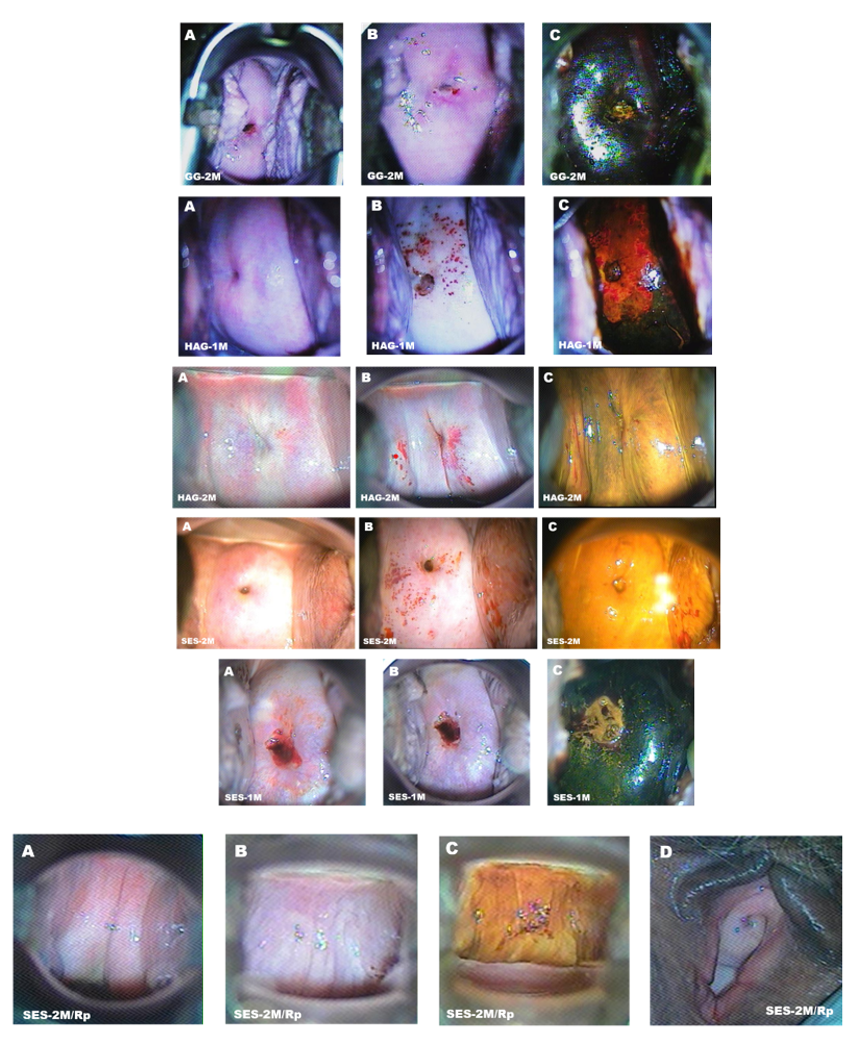
Figure S1: Baseline images of gynecologic pelvic examination and colposcopy from a representative patient of each group (GG-2M, HAG-1M, HAG-2M, SES-1M, SES-2M, SES-2M/Rp) showing, A) Speculum examination, B) Visual inspection with acetic acid, C) Schiller test; and for group SES-2M/Rp, D) Image of the vulva.
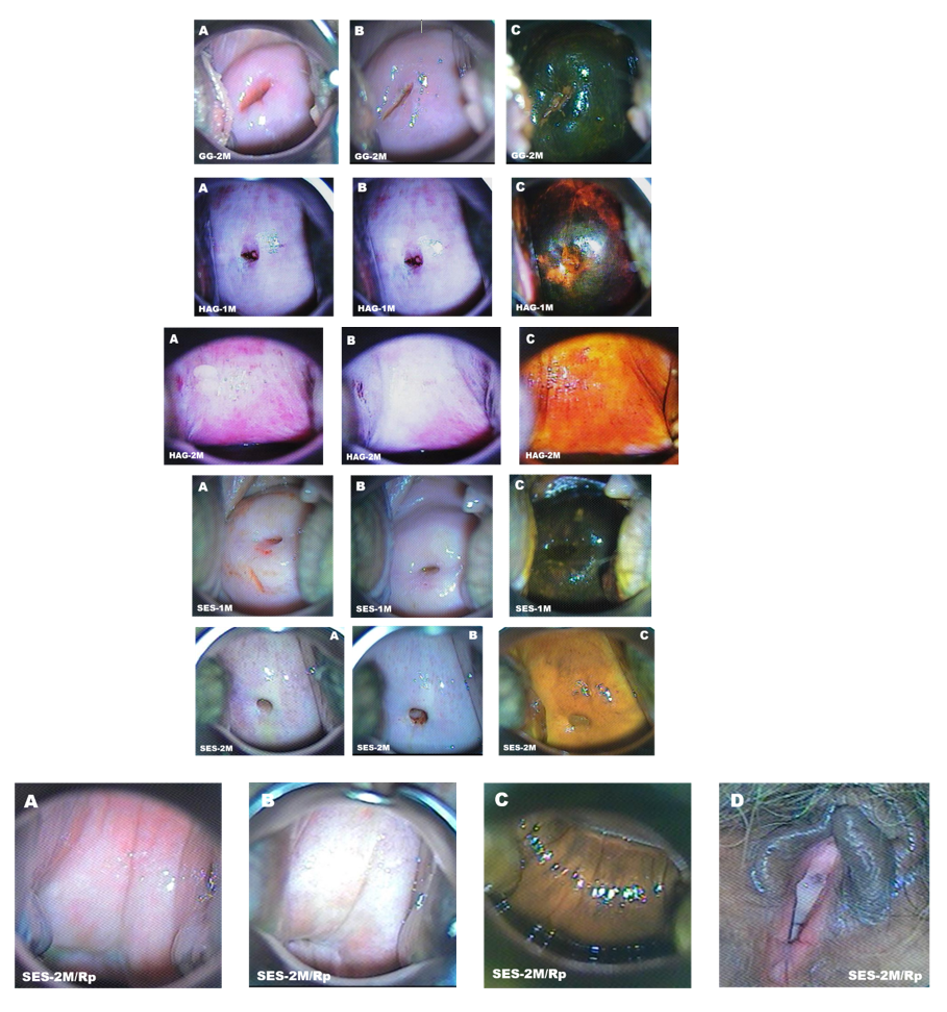
Figure S2: Post-treatment images of gynecologic pelvic examination and colposcopy from a representative patient of each group (GG-2M, HAG-1M, HAG-2M, SES-1M, SES-2M, SES-2M/Rp) showing, A) Speculum examination, B) Visual inspection with acetic acid, and C) Schiller test; and for group SES-2M/Rp, D) Image of the vulva.
Table S1: Percentage change from baseline of GSM symptoms and signs severity per group after 2-month treatment.
|
Treatment Group |
Symptoms |
Signs |
|||||||||||
|
Dyspareunia |
Pain/ soreness |
Pruritus |
Vaginal dryness |
Dysuria |
Urinary urgency |
Odorless flux |
Post-coital bleeding |
Stinging pain |
Pale/dry vaginal lining |
Thinning of vaginal epithelium |
Loss of vaginal rugae |
Petechiae/ inflammation |
|
|
GG-2M N = 7 |
-37.5 |
-40 |
-53.8 |
-25 |
-16.7 |
-16.7 |
-28.6 |
-16.7 |
-16.7 |
0 |
-12.5 |
0 |
-27.3 |
|
HAG-2M N =7 |
-46.2 |
-50 |
-57.1 |
-58.3 |
-33.3 |
-28.6 |
-40 |
-37.5 |
-45.5 |
-27 |
-36.4 |
-22.2 |
-41.6 |
|
SESG-2M N =7 |
-52.9 |
-45 |
-52.6 |
-68.4 |
-58.8 |
-50 |
-70 |
-69.2 |
-50 |
-56 |
-53.8 |
-50 |
-63 |
|
SESG-2M/Rp N = 7 |
-47.4 |
-35.7 |
-52.4 |
-50 |
-41.6 |
-23.1 |
-45.5 |
-53.8 |
-36.4 |
-52 |
-60 |
-59.3 |
-69.2 |
Table S1: Percentage change from baseline of GSM symptoms and signs severity per group after 2-month treatment (CONT).
|
Treatment Group |
Signs (CONT) |
P& |
P# |
|||||
|
Vaginal laxity |
Smooth vaginal fornix |
Narrowed introitus |
Atrophic appearance |
|||||
|
GG-2M N = 7 |
-12.5 |
0 |
-12.5 |
-12.5 |
≤ 0.001c |
|||
|
HAG-2M N =7 |
-36.4 |
-30 |
0 |
-30 |
0.199 |
|||
|
SESG-2M N= 7 |
-56.5 |
-54.5 |
-60 |
-57.6 |
≤ 0.001c |
0.003b |
||
|
SESG-2M/Rp N = 7 |
-72 |
-66.7 |
-35 |
-64 |
≤ 0.001c |
0.117 |
1.000 |
|
Negative values mean a decrease from the initial value, translated as an improvement in the GSM severity status. &Statistical significance among groups according to Kruskal-Wallis
test per type of treatment. #Statistical significance among groups according to Mann-Whitney U test per type of treatment. a,b,c Statistically significant values, aP = 0.05, bP = 0.01, cP ≤ 0.001.
Table S2: Percentage change from baseline of GSM symptoms and signs severity per group after 1-month treatment.
|
Treatment Group |
Symptoms |
Signs |
|||||||||||
|
Dyspareunia |
Pain/ soreness |
Pruritus |
Vaginal dryness |
Dysuria |
Urinary urgency |
Odorless flux |
Post-coital bleeding |
Stinging pain |
Pale/dry vaginal lining |
Thinning of vaginal epithelium |
Loss of vaginal rugae |
Petechiae/ inflammation |
|
|
HAG-1M N =7 |
-41.2 |
-50 |
-43.8 |
-66.7 |
-40 |
-42.9 |
-20 |
-85.7 |
-43.8 |
-53.3 |
-41.2 |
-60 |
-35.7 |
|
SESG-1M N =7 |
-75 |
-56.3 |
-55 |
-66.7 |
-50 |
-75 |
-83.3 |
-100 |
-58.3 |
-47.6 |
-44 |
-45 |
-52 |
Table S2: Percentage change from baseline of GSM symptoms and signs severity per group after 1-month treatment (CONT).
|
Treatment Group |
Signs (CONT) |
P# |
|||
|
Vaginal laxity |
Smooth vaginal fornix |
Narrowed introitus |
Atrophic appearance |
||
|
HAG-1M N =7 |
-13.3 |
-25 |
0 |
-27.8 |
0.001C |
|
SESG-1M N= 7 |
-53.8 |
-42.1 |
-50 |
-48 |
|
Negative values mean a decrease from the initial value, translated as an improvement in the GSM severity status. #Statistical significance among groups according to Mann-Whitney U test per type of treatment. a,b,c Statistically significant values, aP = 0.05, bP = 0.01, cP ≤ 0.001.