Estefan Monteiro da Fonseca1*, Christine Gaylarde2
1Department of Geology and Geophysics/LAGEMAR - Marine Geology Laboratory, Institute of Geosciences, Universidade Federal Fluminense (UFF), Avenida Litorânea s/n, 24210-340 Niterói, RJ, Brazil.
2Department of Microbiology and Plant Biology, Oklahoma University, 770 Van Vleet Oval, Norman, OK, 73019, USA.
*Corresponding Author: Estefan Monteiro da Fonseca, Department of Geology and Geophysics/LAGEMAR - Marine Geology Laboratory, Institute of Geosciences, Universidade Federal Fluminense (UFF), Avenida Litorânea s/n, 24210-340 Niterói, RJ, Brazil.
Received: 13 July 2026; Accepted: 16 July 2026; Published: 00 July 2026
Marine plastic debris provides persistent artificial substrates for the establishment of complex microbial biofilms collectively known as the plastisphere. Although considerable progress has been made in describing plastisphere diversity and composition, current knowledge remains largely descriptive, offering limited mechanistic understanding of the ecological processes governing microbial community assembly. Here, we integrate concepts from Community Assembly Theory, biofilm ecology and microbial ecosystem dynamics to propose a new conceptual framework explaining plastisphere development. We argue that plastisphere communities are continuously assembled through the interaction of hierarchical ecological filters, comprising polymer properties, physicochemical environmental conditions and biological interactions. Polymer filters define the initial habitat available for microbial colonization, environmental filters regulate microbial recruitment and persistence during particle transport, and biological filters—including competition, cooperation, functional redundancy, horizontal gene transfer, viral predation and protozoan grazing—continuously reorganize community structure and ecosystem functioning. We further propose the concept of Dynamic Ecological Adjustment, whereby plastisphere communities remain in continuous ecological reorganization rather than converging toward stable equilibrium states. Building upon these concepts, we introduce the Hierarchical Ecological Assembly Framework (HEAF) as a mechanistic model explaining how plastisphere communities develop, reorganize and persist across heterogeneous marine environments. This framework shifts plastisphere research from a predominantly descriptive discipline toward a predictive ecological perspective and generates experimentally testable hypotheses regarding microbial succession, ecological filtering and community dynamics. We suggest that understanding plastisphere ecology through the lens of hierarchical ecological assembly will improve predictions of microbial responses to environmental change and provide new directions for future research on marine plastic pollution.
Plastisphere ; Community Assembly Theory; Biofilm Ecology; Hierarchical Ecological Filters; Dynamic Ecological Adjustment; Microplastics; Marine Microbial Ecology; Biofilm Succession; Functional Redundancy; Microbial Community Assembly.
Plastisphere articles; Community Assembly Theory articles; Biofilm Ecology articles; Hierarchical Ecological Filters articles; Dynamic Ecological Adjustment articles; Microplastics articles; Marine Microbial Ecology articles; Biofilm Succession articles; Functional Redundancy articles; Microbial Community Assembly articles.
1. Introduction
Plastic pollution has become one of the most pervasive anthropogenic disturbances affecting marine ecosystems, with millions of metric tons of plastic entering the oceans annually despite increasing mitigation efforts [1, 2]. Once released into aquatic environments, plastic debris undergoes continuous weathering through ultraviolet radiation, thermal stress, oxidation and mechanical abrasion, progressively fragmenting into microplastics (<5 mm) and nanoplastics. These weathering processes modify polymer physicochemical properties, increasing surface roughness, altering surface chemistry and promoting microbial attachment and biofilm development [2, 3]. Owing to their persistence, buoyancy and environmental stability, microplastics have become ubiquitous throughout marine ecosystems, occurring from estuaries and coastal habitats to the deep sea and remote polar regions, where they interact with biological communities across multiple trophic levels [4, 5].
Beyond serving as persistent pollutants, marine microplastics provide novel artificial substrates that are rapidly colonized by microorganisms. Shortly after entering aquatic environments, polymer surfaces become coated with conditioning films composed of dissolved organic matter, proteins and extracellular polymeric substances, facilitating microbial attachment and biofilm formation. These biofilms, collectively known as the plastisphere, comprise diverse assemblages of bacteria, archaea, fungi, protists, microalgae and viruses whose taxonomic composition and metabolic functions differ markedly from surrounding planktonic communities [6-9]. Consequently, marine plastic debris should no longer be regarded as inert material but rather as biologically active habitats in which microbial succession, horizontal gene transfer, quorum sensing, biodegradation and contaminant cycling interact continuously.
Unlike most natural particles, however, plastic debris may remain in the environment for years or even decades while being transported across multiple aquatic ecosystems. During this environmental journey, individual particles successively experience contrasting physicochemical conditions, including changes in temperature, salinity, nutrient availability, hydrodynamics, solar radiation and pollutant exposure. Each environmental transition has the potential to modify microbial recruitment, species interactions, ecological succession and community functioning. Consequently, plastisphere communities are continuously exposed to changing ecological conditions, suggesting that their contemporary structure may reflect not only present environmental conditions but also the sequence of environments previously encountered throughout the particle's environmental trajectory.
Despite substantial advances in plastisphere research, most studies have primarily described microbial diversity, dominant taxa or differences among polymer types and geographic regions [10, 11]. These investigations consistently demonstrate that plastisphere communities vary considerably across environmental gradients and polymer characteristics [12-14]. However, the mechanisms responsible for generating this remarkable variability remain incompletely understood. Most importantly, plastisphere composition is generally interpreted as the outcome of local environmental conditions, whereas the potential influence of previous environmental exposure on subsequent community assembly has received comparatively little attention.
Community Assembly Theory provides an appropriate ecological framework for addressing this question. Biological communities emerge through the combined action of environmental filtering, species sorting, dispersal, ecological drift, historical contingency, priority effects and biotic interactions operating across multiple spatial and temporal scales [15-17]. Rather than responding exclusively to present environmental conditions, community composition often reflects cumulative ecological processes operating throughout community development. Historical contingencies generated during previous assembly stages may persist long after environmental conditions have changed, producing ecological legacies that influence future recruitment, species replacement and ecosystem functioning [18, 19]. Although these concepts have become central to contemporary microbial ecology, they have only recently begun to be explored in studies of plastisphere assembly [20-22].
This perspective is particularly relevant because plastic particles experience continuous transport among heterogeneous marine environments. Temperature, salinity, oxygen concentration, nutrient availability, ultraviolet radiation and hydrodynamic conditions act as successive environmental filters regulating microbial growth, metabolism and ecological interactions [23, 13]. Simultaneously, polymer weathering progressively alters surface roughness, hydrophobicity, crystallinity and additive release, continuously modifying the habitat available for microbial colonization [24, 25]. Consequently, plastisphere assembly is likely governed by the interaction between changing environmental conditions and evolving substrate properties throughout the environmental lifetime of the particle rather than by any single environmental condition.
A fundamental question therefore emerges: does the contemporary composition of the plastisphere simply reflect the environment in which it is currently found, or does it preserve ecological signatures accumulated throughout its environmental trajectory? If plastisphere communities retain such ecological legacies, then marine microplastics may function not only as vectors of microbial dispersal but also as ecological archives recording the cumulative history of microbial assembly experienced during transport.
In this review, we develop this hypothesis by proposing that plastisphere communities retain ecological legacies generated throughout successive environmental trajectories. We argue that plastisphere assembly is governed by hierarchical ecological filters operating across multiple spatial and temporal scales, including polymer properties, physicochemical environmental conditions and biological interactions. Building upon Community Assembly Theory, we introduce the Hierarchical Ecological Assembly Framework (HEAF) as a mechanistic model explaining how successive environmental transitions continuously reorganize microbial communities throughout the lifetime of marine microplastics. Rather than interpreting the plastisphere as a static microbial biofilm determined solely by local environmental conditions, we propose that it should be viewed as a dynamic ecological system whose contemporary structure reflects the cumulative imprint of its environmental trajectory. This perspective provides a predictive framework that generates experimentally testable hypotheses regarding microbial succession, ecological legacies and functional adaptation in plastisphere communities.
2. Plastisphere Assembly: Current Understanding
The formation of the plastisphere begins immediately after plastic debris enters aquatic environments. Within minutes to hours, polymer surfaces become coated by a conditioning layer composed of dissolved organic matter, proteins, polysaccharides and other organic molecules naturally present in seawater [23, 26]. This conditioning film modifies the physicochemical properties of the polymer surface, increasing its suitability for microbial attachment and initiating the development of surface-associated biofilms. Primary microbial colonization is typically dominated by fast-growing pioneer microorganisms capable of rapidly adhering to newly available substrates. These early colonizers produce extracellular polymeric substances (EPS), which stabilize surface attachment, facilitate cell-to-cell interactions and establish a three-dimensional matrix that promotes the recruitment of additional microorganisms [27, 13]. As biofilm complexity increases, microbial diversity progressively expands through ecological succession, resulting in structurally and functionally heterogeneous communities collectively known as the plastisphere [6, 12, 7, 9].
Unlike most natural marine particles, plastic substrates exhibit exceptional environmental persistence, allowing microbial communities to remain attached for prolonged periods while plastic particles are transported across multiple marine habitats. Consequently, plastisphere development should not be interpreted as a single colonization event but rather as a continuous ecological process in which microbial recruitment, competition, succession, species replacement and functional reorganization occur simultaneously throughout the environmental lifetime of the particle [10, 11, 28, 29]. Current evidence consistently demonstrates that plastisphere communities differ from surrounding planktonic microbial assemblages. Although seawater provides the principal microbial source for initial colonization, plastic-associated biofilms rapidly develop distinct taxonomic and functional characteristics driven by surface-associated lifestyles, microbial interactions and environmental selection [12, 7, 9, 28]. These observations indicate that plastisphere communities emerge through deterministic ecological processes rather than through the random accumulation of microorganisms.
The composition of plastisphere communities also changes predictably through time. Early-stage biofilms are generally dominated by opportunistic bacterial taxa exhibiting rapid growth and efficient surface colonization strategies. As biofilms mature, increasing structural complexity favors the establishment of microorganisms occupying complementary ecological niches, including autotrophic and heterotrophic bacteria, filamentous microorganisms, fungi, archaea, protists and viruses [13, 30, 9]. This progressive replacement of microbial taxa resembles classical ecological succession observed in terrestrial and aquatic ecosystems, suggesting that similar ecological principles govern microbial assembly on artificial marine substrates.
However, succession on marine plastics differs from succession occurring on relatively stable substrates because plastic particles are continuously displaced over their long lifetimes, passing through heterogeneous environments following ocean circulation. During transport, plastisphere communities are repeatedly exposed to changing gradients of temperature, salinity, nutrient availability, hydrodynamic conditions, ultraviolet radiation and oxygen concentration. Each environmental transition imposes new selective pressures capable of modifying community composition, altering ecological interactions and redirecting successional trajectories [20, 21]. Consequently, plastisphere succession is unlikely to follow a single deterministic pathway, but instead reflects successive episodes of ecological selection occurring throughout the environmental trajectory of the particle. Despite substantial advances in describing plastisphere diversity, most available studies remain largely descriptive, emphasizing taxonomic composition or differences of polymer type. Comparatively fewer investigations have examined how successive environmental transitions influence community assembly or whether microbial communities retain biological signatures acquired during previous stages of environmental transport [22]. This represents an important conceptual gap because the microbial community associated with a plastic particle may reflect not only the environmental conditions at the sampling location but also the cumulative influence of habitats previously encountered during transport.
Recognizing this distinction fundamentally changes the ecological interpretation of the plastisphere. Colonization represents only the initial stage of biofilm formation, whereas community assembly encompasses the hierarchical interactions among substrate characteristics, environmental filtering, species sorting, ecological succession and biological interactions that ultimately determine community composition and ecosystem functioning [15, 31, 17, 19]. If successive ecological filters leave persistent biological signatures within plastisphere communities, then the contemporary microbial assemblage may preserve ecological legacies generated throughout the environmental history of the plastic particle rather than representing solely its present environment. From this perspective, understanding plastisphere ecology requires shifting the central question from "Which microorganisms colonize marine plastics?" to "How do successive ecological processes shape plastisphere communities throughout the environmental trajectory of a plastic particle?" Addressing this question requires a theoretical framework capable of explaining not only microbial colonization but also the ecological mechanisms governing community assembly across space and time. The following section therefore introduces Community Assembly Theory as the ecological foundation for interpreting plastisphere development within this broader conceptual perspective.
3. Community Assembly Theory as a Framework for Understanding Plastisphere Development
The composition of biological communities is not determined solely by species availability but emerges from ecological processes regulating colonization, establishment, persistence and replacement over time. Community Assembly Theory provides a comprehensive conceptual framework describing how environmental filtering, species sorting, dispersal, ecological drift, historical contingency, priority effects and biotic interactions collectively determine community composition across ecosystems [15, 31, 16, 19]. Although these principles have become central to contemporary microbial ecology, their explicit application to plastisphere research remains relatively recent, despite increasing recognition that plastic-associated microbial communities represent ideal systems for investigating ecological assembly processes [7, 22]. Marine plastic debris constitutes a unique ecological habitat because it combines long-term environmental persistence with continuous physical transport. Unlike benthic surfaces or suspended organic particles that typically remain within relatively stable environmental settings, plastic particles are transported through heterogeneous aquatic environments while maintaining persistent microbial biofilms. Consequently, plastisphere communities experience repeated episodes of environmental selection throughout the environmental lifetime of each particle. Under these conditions, microbial community assembly should be interpreted as a continuous ecological process rather than as the outcome of a single colonization event.
Environmental filtering represents one of the primary mechanisms governing microbial community assembly. Abiotic conditions selectively favor microorganisms possessing physiological and metabolic traits compatible with prevailing environmental conditions [32]. In marine ecosystems, temperature, salinity, nutrient availability, oxygen concentration, ultraviolet radiation and hydrodynamic conditions directly influence microbial growth, metabolism and competitive performance [23]. As plastic particles move across contrasting marine habitats, successive environmental filters continuously reshape the selective landscape experienced by attached microbial communities, promoting repeated episodes of community reorganization [30, 26]. Following environmental filtering, species sorting further structures plastisphere communities through differences in ecological performance among microorganisms occupying similar habitats [33]. Microbial taxa exhibiting greater fitness under prevailing environmental conditions progressively replace less competitive populations, generating predictable shifts in community composition through time. Because environmental conditions change repeatedly during particle transport, species sorting is likewise expected to operate continually, redirecting assembly trajectories whenever plastic particles encounter new ecological conditions.
A particularly important component of Community Assembly Theory is historical contingency, which recognizes that present community composition depends not only on current environmental conditions but also on the sequence of ecological events experienced during community development [18]. Each episode of colonization, environmental filtering and species replacement modifies the ecological context in which subsequent assembly occurs, causing communities exposed to different environmental histories to follow distinct developmental trajectories even when they ultimately occupy similar habitats. Experimental studies on marine microbial communities have demonstrated that historical contingency can generate measurable differences in community composition and ecosystem functioning, highlighting the long-lasting influence of early assembly processes on subsequent ecological development [34, 19]. Historical contingency may be particularly important in plastisphere ecology because plastic particles rarely experience identical environmental trajectories. Two particles composed of the same polymer and collected from the same location may nevertheless have been transported through markedly different combinations of temperature, salinity, nutrient regimes, hydrodynamic conditions and pollution gradients before reaching the sampling site. Consequently, differences among plastisphere communities may reflect not only local environmental selection but also ecological legacies accumulated throughout the environmental trajectory of each individual particle.
Priority effects constitute one of the principal mechanisms through which historical contingency emerges. Pioneer microorganisms rapidly colonizing newly available plastic surfaces modify substrate characteristics through extracellular polymeric substance production, nutrient transformation, biofilm architecture and local chemical gradients (27; 61; 35). These modifications alter the ecological conditions experienced by subsequent colonizers, either facilitating or inhibiting their establishment. Consequently, identical plastic particles exposed to similar environmental conditions may nevertheless develop distinct microbial communities simply because their initial colonization histories differed. As plastisphere communities mature, ecological succession continuously reorganizes microbial composition and ecosystem functioning. Pioneer microorganisms characterized by rapid colonization strategies are progressively replaced by taxa exhibiting greater competitive ability, metabolic specialization and increasingly complex cooperative interactions within mature biofilms [36, 13]. Unlike succession occurring on relatively stable substrates, however, marine plastisphere succession unfolds under continuously changing environmental conditions generated by environmental transport. Community development therefore reflects repeated cycles of environmental filtering, biological interactions and ecological reorganization rather than progression toward a single deterministic climax community [7, 9].
Deterministic ecological processes are further complemented by ecological drift, in which stochastic demographic fluctuations introduce variability independently of environmental selection [15]. Although random events may contribute to variability during the earliest stages of biofilm development, accumulating evidence indicates that deterministic mechanisms—including environmental filtering, species interactions and ecological succession—become progressively more influential as microbial biofilms mature [31, 16, 19]. Consequently, stochasticity contributes to variation among plastisphere communities without fully explaining their long-term ecological organization. Importantly, these ecological mechanisms do not operate independently. Environmental filtering influences species sorting; priority effects modify subsequent ecological interactions; succession continuously reorganizes community composition; while stochastic demographic processes introduce additional variability throughout community development. Furthermore, repeated encounters among microbial assemblages during environmental transport may promote community coalescence, generating additional opportunities for ecological reorganization and functional innovation [22]. The resulting plastisphere therefore represents the cumulative outcome of multiple interacting ecological processes operating simultaneously across both space and time.
From this perspective, plastisphere communities should not be interpreted merely as microbial assemblages responding to present environmental conditions. Rather, their contemporary composition may preserve ecological legacies generated by successive episodes of colonization, environmental filtering, species sorting and ecological succession experienced throughout the environmental trajectory of each plastic particle. Community Assembly Theory therefore provides not only an ecological framework for explaining plastisphere development but also the theoretical foundation for investigating whether plastisphere communities retain biological signatures of their cumulative environmental history. This conceptual interpretation establishes the basis for the following section, in which we examine how physicochemical properties of both marine environments and plastic polymers function as hierarchical ecological filters that continuously shape plastisphere assembly and generate ecological legacies throughout the environmental lifetime of marine microplastics.
4. Hierarchical Environmental Filters as Drivers of Ecological Legacies in the Plastisphere
The assembly of plastisphere communities is governed by complex interactions between substrate properties and environmental conditions operating across multiple spatial and temporal scales. While plastic surfaces provide the physical habitat for microbial colonization, the surrounding environment continuously influences which microorganisms successfully arrive, establish, persist and contribute to biofilm development. Because marine plastic particles are transported through heterogeneous environments, their associated microbial communities experience repeated episodes of ecological selection throughout the long environmental lifetime of the particle. Plastisphere assembly should therefore be interpreted as the cumulative outcome of interacting and temporally ordered ecological filters rather than as the product of a single colonization event [31, 32, 28, 37]. Recent syntheses further indicate that plastisphere assembly reflects a dynamic balance between deterministic selection, dispersal limitation and ecological drift rather than the exclusive action of any single assembly mechanism.
Temperature represents one of the most influential environmental filters regulating microbial community assembly. Variations in seawater temperature directly affect microbial growth rates, enzymatic activity, membrane stability, nutrient processing and metabolic performance, thereby altering both the taxonomic composition and functional potential of plastisphere communities [23, 38]. Seasonal observations from the Eastern Mediterranean demonstrate that plastisphere communities exhibit detectable temporal signatures associated with environmental fluctuations, including substantial variation in seawater temperature. Nevertheless, plastic-associated communities may be less seasonally variable than surrounding planktonic assemblages, suggesting that biofilm organization can partially buffer environmental fluctuations while still retaining evidence of seasonal selection. Elevated temperatures may accelerate microbial turnover and favor thermotolerant or metabolically active taxa. As plastic particles move through thermal gradients, repeated episodes of temperature-driven selection may therefore progressively reorganize community composition and leave persistent ecological signatures within the developing plastisphere (Figure 1).
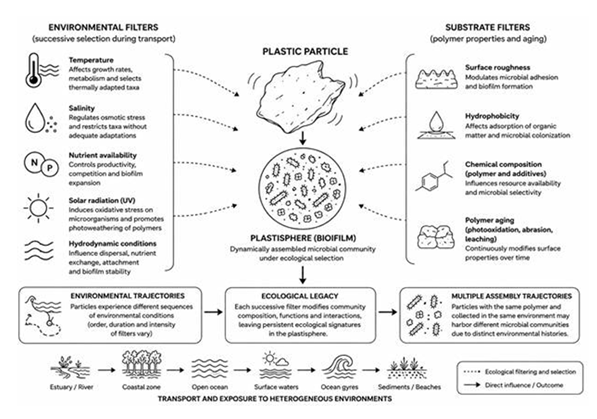
Figure 1: Hierarchical environmental filtering during plastisphere development.
Salinity constitutes another major determinant of microbial selection. Osmotic stress regulates membrane transport, cellular homeostasis, protein stability and cellular energy allocation, restricting the establishment of microorganisms lacking appropriate physiological adaptations [39, 23]. Because floating plastics frequently move among riverine, estuarine, coastal and open-ocean environments, changes in salinity can repeatedly reorganize plastisphere communities through differential survival, recruitment and species replacement. Contemporary field studies confirm that geographic setting, water type and local physicochemical conditions strongly influence microbial communities associated with plastic surfaces [40, 38, 41]. These transitions may contribute to ecological legacies that reflect the sequence of salinity regimes experienced during particle transport rather than only the conditions prevailing at the final sampling location. Nutrient availability further regulates plastisphere development by controlling microbial productivity, resource competition, extracellular polymer production and biofilm expansion. Oligotrophic environments generally favor microorganisms with efficient nutrient-acquisition, recycling and retention strategies, whereas eutrophic environments may stimulate rapid growth, increased biomass and stronger competitive interactions [23, 28]. Recent observations from the ultra-oligotrophic Eastern Mediterranean suggest that plastic-associated biofilms may maintain relatively rich communities by concentrating and internally recycling limiting nutrients, thereby creating microenvironments that differ substantially from the surrounding water column. Consequently, identical particles exposed to contrasting trophic regimes may develop different community structures and functional organizations despite sharing the same polymer composition.
Solar radiation acts simultaneously on microorganisms and plastic substrates. Ultraviolet radiation induces oxidative stress, damages microbial DNA and modifies microbial survival, while also promoting photooxidation, embrittlement and chemical alteration of polymer surfaces [3, 42]. Progressive aging increases surface roughness, changes hydrophobicity and generates oxygen-containing functional groups, thereby modifying microbial adhesion, organic-matter adsorption and biofilm architecture. Contemporary reviews of microplastic surface biofilms emphasize that weathering and substrate transformation are central determinants of colonization and community development [37]. Ultraviolet radiation therefore functions as a dual ecological filter: it acts directly upon microbial physiology while indirectly transforming the physical and chemical habitat on which community assembly occurs. Hydrodynamic conditions provide an additional layer of environmental selection. Water turbulence, current velocity, wave exposure and particle transport influence microbial dispersal, nutrient exchange, cell attachment and biofilm stability [43, 23]. High-energy environments may favor microorganisms capable of strong adhesion and rapid matrix production, whereas lower-energy conditions can promote biofilm thickening, microscale heterogeneity and increased structural complexity. Hydrodynamics also regulate the movement of plastic particles among surface waters, water columns, sediments and shorelines, exposing their associated communities to distinct source pools and environmental filters. Recent coastal comparisons have demonstrated that plastisphere community composition varies among contrasting coastal systems and environmental matrices, reinforcing the importance of location-specific transport and environmental conditions [41].
Beyond environmental conditions, the physicochemical properties of plastic polymers constitute a complementary level of ecological filtering. Surface roughness, hydrophobicity, crystallinity, density, additive composition, particle morphology and weathering stage regulate microbial attachment efficiency, conditioning-film formation and habitat availability [24, 25, 37]. Importantly, substrate properties are not static. Weathering, contaminant adsorption, biofilm growth and microbial activity continuously alter the plastic-water interface. Consequently, the selective habitat experienced by the plastisphere evolves throughout the lifetime of the particle. However, recent evidence also cautions against assuming universal polymer control: some long-term and field-based investigations indicate that temporal succession, geographic context or surrounding environmental conditions may exert stronger effects than polymer identity alone [38, 44, 41]. Rather than acting independently, these filters operate simultaneously and interact through continuous ecological feedback. Temperature modifies microbial metabolism; ultraviolet radiation accelerates polymer aging; hydrodynamics regulates dispersal and attachment; nutrient availability alters competition and cooperation; and biofilm development progressively transforms particle density, surface properties and microscale chemical gradients. Together, these processes generate a multidimensional ecological landscape in which plastisphere communities are repeatedly reorganized throughout environmental transport. Recent marine studies support this dynamic interpretation. Temporal succession has been shown to drive community convergence in subtropical coastal waters, while seasonal and regional variation continues to produce distinct taxonomic signatures in natural marine plastispheres [38, 44].
Within this perspective, environmental filters should not be interpreted as isolated selective events but as sequential processes whose cumulative effects influence subsequent community development. Each filtering episode modifies community composition, biofilm structure and functional potential before the particle encounters the next environmental regime. These earlier community states may then affect later microbial recruitment, competition, facilitation and succession through priority effects and historical contingency. Experimental research in marine microbial systems has demonstrated that contrasting initial community histories can produce measurable differences in subsequent assembly and ecosystem functioning, even when communities are eventually exposed to similar contemporary conditions [34]. Although this mechanism remains insufficiently tested in the plastisphere, it provides a credible theoretical basis for expecting environmental trajectories to generate ecological legacies on marine plastics. Consequently, plastisphere communities may preserve ecological legacies generated by successive filtering events rather than reflecting exclusively the physicochemical conditions prevailing at the time of sampling. These legacies need not consist of the long-term persistence of individual microbial taxa. They may instead be expressed through altered functional potential, interaction networks, biofilm architecture, nutrient-processing strategies or the continued influence of priority effects on later community assembly. This distinction is consistent with recent evidence that plastisphere communities can remain taxonomically distinct from surrounding seawater, exhibit temporal succession and retain comparatively stable ecological organization despite seasonal environmental change [38, 44].
We therefore propose that hierarchical environmental filtering represents a principal mechanism through which the environmental history of marine plastic particles becomes progressively incorporated into plastisphere community structure. Rather than converging inevitably toward a single stable ecological state, plastisphere communities are expected to follow multiple assembly trajectories determined by the order, duration and intensity of environmental conditions encountered during transport. Two particles composed of the same polymer and collected within the same habitat may consequently support different microbial communities if they previously experienced contrasting ecological trajectories. This interpretation provides the conceptual basis for understanding how biological interactions subsequently reorganize environmentally filtered communities and how functional or structural ecological legacies may persist despite continuous taxonomic turnover.
5. Biological Filters and the Dynamic Ecological Adjustment of the Plastisphere
Following the initial stages of microbial colonization and the selective pressures imposed by polymer characteristics and environmental conditions, plastisphere development becomes increasingly regulated by biological interactions occurring within the microbial community itself. As biofilms mature, ecological processes operating among microorganisms progressively modify community composition, functional organization and ecosystem stability. Consequently, plastisphere assembly cannot be explained exclusively by abiotic selection, but rather emerges from the continuous interaction between environmental constraints and biological processes that collectively regulate microbial persistence and community restructuring [45, 46, 47]. Microbial competition represents one of the primary biological filters shaping plastisphere communities. Space and nutrient availability on plastic surfaces are inherently limited, forcing microorganisms to compete for attachment sites, metabolic resources and access to favorable microscale niches. Species exhibiting greater growth efficiency, superior biofilm-forming capacity or more efficient resource acquisition strategies progressively outcompete less adapted taxa, resulting in continuous species replacement throughout biofilm maturation. Competition is further intensified by the production of antimicrobial compounds, contact-dependent inhibition, secretion systems, interference with quorum sensing and niche partitioning, all of which contribute to the spatial and functional organization of mature biofilms [35, 45, 46, 47].
Competition, however, represents only one component of a broader network of biological interactions. Cooperative processes become increasingly important as plastisphere biofilms mature. Extracellular polymeric substances (EPS) produced by pioneer microorganisms generate a dynamic three-dimensional matrix that stabilizes biofilm architecture, retains nutrients, concentrates extracellular enzymes and signaling molecules, and facilitates metabolic cooperation among phylogenetically distinct microorganisms [46]. Rather than serving merely as structural scaffolds, EPS create heterogeneous microhabitats characterized by physicochemical gradients that promote niche differentiation, resource sharing and functional complementarity within the biofilm. Cooperative interactions are further reinforced by quorum sensing, metabolite exchange and division of labor, allowing microbial populations to coordinate collective behaviors and adapt to changing environmental conditions [48, 49]. Together, these interactions increase community resilience while simultaneously promoting ecological specialization and functional diversification within the plastisphere. Microbial communication mediated by quorum sensing constitutes another fundamental biological mechanism regulating plastisphere development. Cell-to-cell signaling coordinates collective behaviors including biofilm maturation, extracellular polymeric substance production, nutrient acquisition, stress responses, motility and the expression of extracellular enzymes, thereby synchronizing microbial activities at the community level [50, 51, 45]. Because quorum sensing depends on both cell density and community composition, changes in microbial diversity resulting from environmental filtering or species replacement may directly modify the functional behavior of plastisphere communities. Consequently, community assembly influences not only taxonomic composition but also the regulation of ecological functions performed by the biofilm. Recent studies further suggest that quorum sensing contributes to maintaining functional stability while facilitating rapid ecological adjustment to changing environmental conditions, reinforcing its central role in plastisphere organization [52, 46].
An additional mechanism contributing to plastisphere persistence is functional redundancy, whereby phylogenetically distinct microorganisms perform similar ecological functions despite substantial differences in taxonomic composition [53, 54]. Recent advances in microbial ecology indicate that functional redundancy represents a major determinant of ecosystem stability because it buffers microbial communities against environmental disturbances while maintaining essential ecosystem processes [55, 47]. Within plastisphere communities, species replacement therefore does not necessarily imply functional disruption, as newly established microorganisms may compensate for ecological functions previously performed by other taxa. Functional redundancy, together with metabolic plasticity and cooperative interactions, allows plastisphere communities to remain metabolically active despite continuous environmental perturbation and repeated episodes of ecological filtering throughout particle transport. Beyond species replacement, microbial communities may also undergo rapid functional innovation through horizontal gene transfer (HGT). Conjugation, transformation and transduction facilitate the exchange of genetic material among neighboring microorganisms within densely structured biofilms, promoting the dissemination of metabolic traits associated with stress tolerance, xenobiotic degradation, biofilm formation and antimicrobial resistance [56, 46]. The highly structured architecture, prolonged persistence and elevated cell densities characteristic of plastisphere biofilms create favorable conditions for horizontal gene transfer, potentially accelerating microbial adaptation to continuously changing environmental conditions [57, 52]. Consequently, plastisphere communities may evolve not only through ecological selection but also through the rapid acquisition of novel functional capabilities mediated by genetic exchange.
Biological filtering is further reinforced by top-down ecological interactions. Bacteriophages continuously regulate bacterial abundance through selective infection, viral lysis and horizontal gene transfer, thereby reshaping microbial diversity, competitive interactions and functional organization within biofilm communities [58, 59]. Similarly, protozoan grazing selectively removes susceptible bacterial populations, modifying species composition while favoring microorganisms possessing defensive strategies, biofilm-associated phenotypes or protected spatial positions within the extracellular polymeric matrix [60, 45]. Together, viral predation and protistan grazing generate additional ecological filters that contribute to the continuous restructuring of plastisphere communities throughout environmental transport. Importantly, these biological processes operate simultaneously with the physicochemical filters discussed in the previous section. Environmental variation modifies microbial physiology, metabolism and stress tolerance, whereas biological interactions determine how communities reorganize in response to these changing environmental conditions. Consequently, plastisphere assembly should be interpreted as a multilevel ecological process emerging from continuous feedbacks between abiotic selection and biological regulation rather than from the independent action of either process alone [46, 47].
Within this framework, plastisphere communities are unlikely to converge toward a stable equilibrium. Instead, they undergo continuous ecological adjustment characterized by ongoing species recruitment, competitive exclusion, metabolic cooperation, functional compensation, horizontal gene transfer and trophic regulation. These interacting processes generate microbial communities whose taxonomic composition may change substantially through time while maintaining relatively stable ecological functions through functional redundancy, metabolic plasticity and adaptive reorganization [54, 55, 47]. Stability therefore emerges not from taxonomic constancy but from the continuous capacity of microbial communities to reorganize while preserving essential ecosystem functions. Rather than progressing toward a stable ecological equilibrium, plastisphere communities continuously reorganize through the interaction of ecological and evolutionary processes operating across spatial and temporal scales. We therefore propose that Dynamic Ecological Adjustment constitutes the defining ecological property of the plastisphere, whereby community persistence emerges from continuous reorganization rather than taxonomic stability. Rather than representing static biofilms whose composition simply reflects initial colonization, plastisphere communities should be viewed as continuously reorganizing microbial ecosystems maintained through the interaction of hierarchical environmental filters, biological interactions and evolutionary processes operating across spatial and temporal scales. This perspective provides a mechanistic explanation for the remarkable variability consistently reported among plastisphere communities worldwide while simultaneously explaining how these systems maintain ecological functionality despite persistent environmental change.
Within this conceptual framework, plastisphere variability should not be interpreted as inconsistency among independent observations but rather as the expected outcome of microbial communities occupying different positions along multiple ecological assembly trajectories. Each plastic particle therefore represents a unique ecological history in which polymer characteristics, environmental transitions, biological interactions and evolutionary processes continuously interact to shape community composition, functional organization and ecological resilience throughout its environmental lifetime.
5.1 Competition and Cooperation: Self-Organization of Plastisphere Communities
Following initial colonization, microbial community development on plastic surfaces becomes increasingly regulated by interactions among microorganisms themselves. As biofilms mature, the availability of attachment sites, nutrients and electron acceptors becomes progressively limited, intensifying competition among microbial populations. Species exhibiting higher growth efficiency, superior resource acquisition strategies or enhanced biofilm-forming capacity gradually dominate the community, while less competitive taxa decline or disappear [35]. Consequently, community composition reflects not only environmental selection but also competitive exclusion operating within the biofilm. However, competition alone cannot explain plastisphere organization. Cooperative interactions emerge simultaneously through the production of extracellular polymeric substances (EPS), metabolite exchange and quorum sensing, generating structurally complex biofilms that facilitate colonization by additional microorganisms [27, 61]. These interactions promote niche diversification and metabolic complementarity, allowing taxonomically distinct microorganisms to coexist within the same biofilm. The balance between competitive exclusion and cooperative facilitation therefore acts as an intrinsic biological filter that continuously regulates plastisphere assembly.
5.2 Functional Redundancy and Ecological Stability
Microbial communities frequently maintain ecosystem functioning despite substantial temporal variation in species composition. This apparent paradox results from functional redundancy, whereby phylogenetically distinct microorganisms perform similar ecological functions, allowing ecosystem processes to persist even when community composition changes [53, 54]. Within the plastisphere, continuous species turnover does not necessarily imply functional instability. As environmental conditions change during particle transport, microorganisms adapted to previous conditions may be replaced by taxa better suited to newly encountered environments. Nevertheless, nutrient cycling, organic matter degradation and biofilm maintenance may remain largely preserved because newly recruited microorganisms perform comparable metabolic roles. Functional redundancy therefore increases ecological resilience by buffering plastisphere function against environmental perturbations.
Rather than maintaining taxonomic stability, plastisphere communities may preserve functional stability through continuous species replacement. This distinction is fundamental because it suggests that ecological persistence depends more on maintaining functional traits than on conserving particular microbial taxa.
5.3 Horizontal Gene Transfer and Functional Innovation
Microbial biofilms provide ideal conditions for horizontal gene transfer (HGT), owing to high cell density, close physical proximity and prolonged cellular interactions. Within plastisphere communities, conjugation, transformation and bacteriophage-mediated transduction facilitate the exchange of genetic material among microorganisms, promoting the dissemination of genes involved in stress tolerance, xenobiotic degradation and antimicrobial resistance [62]. Although HGT occurs in many microbial ecosystems, the persistence of plastic particles in marine environments may increase opportunities for repeated genetic exchange over extended periods. Consequently, plastisphere communities possess the capacity not only to reorganize their taxonomic composition but also to acquire novel functional capabilities during environmental transport. Rather than acting as the primary driver of community assembly, horizontal gene transfer should therefore be viewed as a complementary mechanism promoting functional innovation within dynamically assembled microbial communities.
5.4 Top-Down Biological Filters: Viral Predation and Microbial Grazing
Community assembly is influenced not only by interactions among microorganisms but also by higher trophic levels. Marine bacteriophages represent the most abundant biological entities in the oceans and continuously regulate bacterial abundance through selective infection and lysis [59, 63]. Viral predation modifies competitive interactions, controls dominant bacterial populations and promotes microbial turnover, thereby contributing to the maintenance of microbial diversity within plastisphere communities. Similarly, protozoan grazing selectively removes susceptible bacterial populations, favoring microorganisms capable of resisting predation through biofilm formation, extracellular polymer production or occupation of protected microhabitats [64]. These trophic interactions represent additional biological filters acting independently of physicochemical environmental conditions. Consequently, plastisphere development results not only from bottom-up environmental selection but also from continuous top-down regulation mediated by predators and viruses.
5.5 Dynamic Ecological Adjustment: The Mechanism Underlying Ecological Legacies
The interaction among competition, cooperation, functional redundancy, horizontal gene transfer and trophic regulation indicates that plastisphere communities are inherently dynamic ecological systems. Rather than progressing toward a stable climax community, microbial assemblages undergo continuous reorganization in response to simultaneous abiotic and biotic selective pressures. Species replacement, metabolic plasticity and ecological interactions occur throughout the environmental lifetime of plastic particles, generating communities that remain functionally active despite persistent changes in taxonomic composition [53, 54] (Figure 2).
This apparent paradox—continuous taxonomic turnover accompanied by sustained ecological functioning—suggests that plastisphere persistence depends less on the permanence of individual microbial taxa than on the maintenance of ecological functions and interaction networks. Functional redundancy, metabolic flexibility and biofilm organization enable essential ecosystem processes to persist even as species composition changes, allowing microbial communities to respond continuously to environmental variability without losing overall ecological integrity [55, 61]. Within this context, we propose that Dynamic Ecological Adjustment constitutes the fundamental ecological mechanism governing plastisphere development. Rather than representing a succession toward equilibrium, plastisphere assembly should be interpreted as a continuous process of ecological reorganization driven by hierarchical interactions among polymer characteristics, environmental filters and biological processes. Each episode of environmental filtering modifies community structure, while biological interactions reorganize the resulting assemblage, generating successive ecological states throughout the lifetime of the particle. Importantly, Dynamic Ecological Adjustment does not imply that plastisphere communities preserve a stable taxonomic composition. Instead, we hypothesize that successive episodes of ecological reorganization may preserve ecological legacies, expressed primarily through functional organization, interaction networks and biofilm architecture rather than through the persistence of individuals.
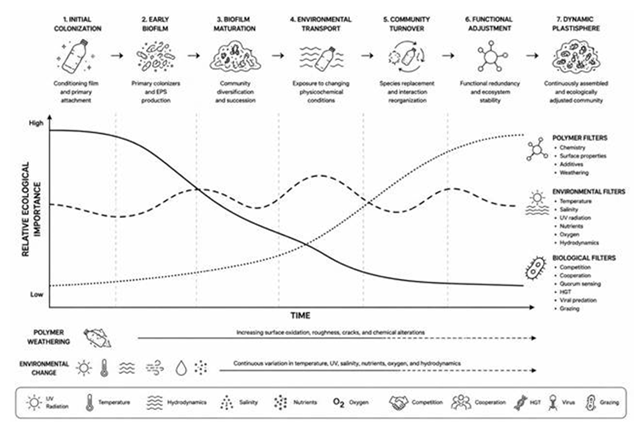
Figure 2: Relative importance of hierarchical ecological filters during plastisphere development.
Schematic representation of the proposed temporal dynamics of plastisphere assembly. Polymer filters dominate the earliest stages of microbial colonization by determining substrate characteristics and initial habitat availability. As biofilms develop and plastic particles are transported through heterogeneous marine environments, environmental filters become increasingly important, continuously reshaping community composition through changing physicochemical conditions. During later stages of biofilm maturation, biological filters—including competition, cooperation, quorum sensing, functional redundancy, horizontal gene transfer, viral predation and protozoan grazing—progressively regulate community organization. The interaction among these hierarchical filters promotes continuous community reorganization through Dynamic Ecological Adjustment, resulting in a plastisphere that remains functionally active despite ongoing taxonomic turnover and environmental change.
5. The Hierarchical Ecological Assembly Framework: From Environmental Trajectories to Ecological Legacies
The evidence synthesized throughout this review suggests that plastisphere communities are continuously reorganized as plastic particles are transported through heterogeneous marine environments I suggest removing these references, since the sentence before suggests that this is a conclusion of this article, rather than of the referred papers. Rather than experiencing a single colonization event followed by biofilm maturation, plastisphere communities undergo repeated episodes of ecological selection driven by changing environmental conditions and biological interactions. This observation raises a fundamental ecological question: does the contemporary plastisphere simply reflect the environmental conditions prevailing at the time of sampling, or does it also preserve ecological signatures of the environmental trajectory experienced by the particle? Community Assembly Theory predicts that present community composition depends not only on current environmental conditions but also on the sequence of ecological events occurring throughout community development [15, 31, 18]. Likewise, biofilm ecology demonstrates that mature microbial communities are continuously reorganized through competition, cooperation, extracellular polymer production, functional redundancy and trophic interactions rather than remaining taxonomically static [23, 61, 35]. Together, these ecological principles suggest that plastisphere communities may preserve ecological legacies generated throughout successive stages of environmental transport.
To explain how these ecological legacies may emerge, we propose the Hierarchical Ecological Assembly Framework (HEAF) (Figure 3). Rather than viewing plastisphere development as a linear sequence of colonization and succession, the HEAF interprets community assembly as the cumulative outcome of three interacting levels of ecological selection operating continuously throughout the environmental lifetime of marine plastic particles: polymer filters, environmental filters and biological filters. Within this framework, polymer filters establish the initial physicochemical template upon which microbial colonization begins. Polymer chemistry, hydrophobicity, crystallinity, surface roughness, additive composition and weathering determine microbial attachment efficiency, nutrient adsorption and habitat availability [3, 24, 25]. Importantly, these substrate properties evolve continuously as plastics weather, indicating that the habitat itself changes throughout environmental transport.
The second hierarchical level comprises environmental filters, which successively regulate microbial selection as plastic particles move among contrasting marine environments. Temperature, salinity, ultraviolet radiation, nutrient availability, oxygen concentration and hydrodynamic conditions modify microbial physiology, metabolism and ecological performance, continuously reshaping community composition [23, 32, 13]. Marine plastic particles experience different sequences of environmental conditions, and each filtering episode modifies the ecological context in which subsequent community assembly occurs. Following environmental selection, biological filters progressively dominate community organization. Competition, cooperation, quorum sensing, extracellular polymer production, viral predation, protozoan grazing, horizontal gene transfer and functional redundancy continuously reorganize microbial communities while maintaining ecosystem function despite substantial taxonomic turnover [61, 35, 53, 54, 59]. Consequently, biological interactions do not erase previous ecological states but instead continuously integrate new selective pressures into the developing biofilm.
Within the HEAF, these three hierarchical filters operate through a process that we term Dynamic Ecological Adjustment. Rather than representing movement toward ecological equilibrium, Dynamic Ecological Adjustment describes the continuous reorganization of plastisphere communities as successive environmental filters interact with biological processes throughout particle transport. Functional redundancy, metabolic flexibility, and biofilm organization enable essential ecological functions to persist even as microbial taxa are replaced, allowing plastisphere communities to remain ecologically coherent despite continuous environmental change [53-55] (Figure 3). A central implication of this framework is that ecological legacies are unlikely to be preserved primarily through the persistence of individual microbial taxa. Instead, legacy effects are expected to emerge through the maintenance of functional organization, interaction networks and biofilm structure, despite ongoing taxonomic replacement. Consequently, the plastisphere associated with a given plastic particle may reflect not only its present environmental conditions but also the cumulative influence of ecological processes experienced throughout its environmental trajectory.
This interpretation provides a mechanistic explanation for the remarkable variability consistently reported among plastisphere communities worldwide [12, 13, 65-68]. Rather than representing inconsistency among independent observations, differences among plastisphere communities are expected outcomes of distinct environmental histories experienced by individual plastic particles. Under this perspective, every plastisphere represents a unique ecological trajectory shaped by successive interactions among substrate properties, environmental selection and biological adjustment.
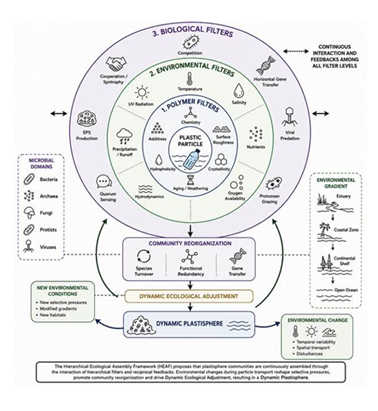
Figure 3: Hierarchical Ecological Assembly Framework (HEAF) linking environmental trajectories to ecological legacies in plastisphere communities.
Conceptual model illustrating how successive ecological filters shape plastisphere development throughout the environmental lifetime of marine plastic particles. Polymer filters (e.g., surface chemistry, hydrophobicity, surface roughness and weathering) establish the initial habitat for microbial colonization. During transport, environmental filters (e.g., temperature, salinity, ultraviolet radiation, nutrient availability and hydrodynamics) repeatedly modify microbial selection, while biological filters (e.g., competition, cooperation, functional redundancy, horizontal gene transfer, viral predation and protozoan grazing) continuously reorganize community structure through Dynamic Ecological Adjustment. Together, these interacting processes generate ecological legacies, whereby the contemporary plastisphere reflects not only present environmental conditions but also the cumulative environmental trajectory experienced by the plastic particle.
Based on this framework, we propose five experimentally testable predictions:
- Plastic particles experiencing different environmental trajectories will develop distinct plastisphere communities even when composed of the same polymer and sampled within the same habitat.
- Functional similarity among plastisphere communities will exceed taxonomic similarity because ecological legacies are primarily maintained through functional organization rather than species identity.
- Biological filters will progressively increase in importance as biofilms mature, whereas polymer properties will dominate only the earliest stages of community assembly.
- Environmental perturbations will redirect assembly trajectories rather than resetting plastisphere development, producing new ecological states that retain functional legacies from previous stages.
- The ecological state of a plastisphere will correlate more strongly with the cumulative environmental trajectory experienced by the particle than with its current environmental conditions alone.
Collectively, the Hierarchical Ecological Assembly Framework shifts the interpretation of plastisphere ecology from a static description of microbial colonization to a mechanistic understanding of how environmental trajectories are translated into ecological legacies through continuous community assembly. Rather than representing mature microbial biofilms reflecting only local environmental conditions, plastisphere communities are interpreted as dynamic ecological systems whose contemporary organization emerges from the cumulative interaction between hierarchical ecological filters and the environmental history experienced by marine plastic particles.
7. Ecological Implications and Future Perspectives
The conceptual framework proposed here expands the current understanding of plastisphere ecology by shifting the focus from descriptive analyses of microbial composition toward the ecological processes governing community assembly across space and time. Rather than interpreting plastisphere communities as static microbial biofilms associated with plastic surfaces, we propose that they should be viewed as continuously assembled ecological systems whose contemporary organization may retain ecological legacies generated throughout the environmental trajectory of marine plastic particles. This perspective substantially changes the interpretation of plastisphere variability. Most studies have concentrated on describing taxonomic differences among polymer types, geographic regions or environmental conditions [6, 12, 69-71]. While these investigations have significantly expanded our knowledge of plastisphere biodiversity, they implicitly assume that community composition primarily reflects the conditions prevailing at the sampling location. In contrast, the framework proposed here suggests that plastisphere communities may also preserve biological signatures inherited from previous stages of environmental transport. Consequently, observed differences among plastisphere communities may represent distinct environmental histories rather than simply local environmental variability.
An equally important implication concerns the interpretation of microbial succession. Succession on marine plastics should not be viewed as a linear progression toward increasingly mature biofilms. Instead, each episode of environmental transport exposes plastisphere communities to new ecological filters that redirect community assembly while interacting with the biological organization already established. Under this perspective, plastisphere development consists of multiple, historically contingent assembly trajectories rather than a single deterministic successional pathway. This interpretation also opens new perspectives for microbial biogeography. If plastisphere communities retain ecological legacies of previously encountered environments, marine plastics become more than passive dispersal vectors. Instead, they may function as mobile ecological archives recording aspects of the environmental trajectory experienced during transport. Investigating whether plastisphere composition reflects cumulative environmental history rather than only local conditions, as suggested for other communities [33, 18], represents a new research frontier linking microbial ecology, metacommunity theory and marine biogeography.
Climate change further reinforces the importance of this conceptual framework. Increasing sea surface temperatures, altered circulation patterns, intensified ultraviolet radiation, and accelerated polymer weathering are expected to modify not only the environmental filters acting on plastisphere communities but also the sequence and intensity of ecological selection experienced during particle transport [3, 72]. Consequently, global environmental change may influence not only microbial composition but also the environmental trajectories from which plastisphere communities emerge. The hypothesis proposed here also generates several experimentally testable research directions. Controlled experiments comparing identical plastic particles subjected to different environmental trajectories could determine whether plastisphere communities retain detectable ecological legacies after converging into similar environments. Likewise, reciprocal translocation experiments, long-term in situ deployments and multi-omics approaches integrating metagenomics, metatranscriptomics and metabolomics may reveal whether functional organization persists despite continuous taxonomic turnover.
More broadly, we suggest that plastisphere ecology represents a unique natural model for investigating one of the central questions of Community Ecology: to what extent does the present state of a biological community reflect its current environment versus its ecological history? Because marine plastic particles experience continuous transport while supporting persistent microbial biofilms, they provide an unprecedented opportunity to investigate how historical contingency, environmental filtering and biological interactions jointly determine microbial community assembly. Ultimately, the Hierarchical Ecological Assembly Framework extends beyond marine plastic pollution itself. By integrating Community Assembly Theory, biofilm ecology and microbial ecosystem dynamics, the framework provides a mechanistic explanation for how environmental trajectories may be translated into ecological legacies. This perspective may also contribute to understanding community assembly on other long-lived artificial substrates and reinforces the importance of considering ecological history as an integral component of microbial ecosystem organization.
8. Conclusions
Marine plastic pollution has traditionally been investigated through the perspectives of physical contamination, chemical transport and microbial colonization. Although these approaches have substantially advanced our understanding of the plastisphere, they primarily describe community composition rather than the ecological mechanisms governing its assembly. Throughout this review, we argue that plastisphere development is better interpreted as a continuous ecological process driven by hierarchical interactions among polymer characteristics, environmental conditions and biological processes operating throughout the environmental lifetime of marine plastic particles. Building upon Community Assembly Theory, biofilm ecology and microbial ecosystem dynamics, we proposed the Hierarchical Ecological Assembly Framework (HEAF) as a mechanistic model explaining how successive ecological filters regulate plastisphere development. Within this framework, polymer filters establish the initial habitat template, environmental filters continuously reshape microbial selection during transport, and biological filters reorganize community composition through Dynamic Ecological Adjustment. Together, these processes explain how plastisphere communities remain ecologically functional despite continuous taxonomic turnover.
The principal conceptual advance of this work extends beyond the framework itself. We propose the testable hypothesis that plastisphere communities preserve ecological legacies. Accordingly, the microbial community associated with a plastic particle should not necessarily be interpreted as a reflection of its present environment alone, but rather as the cumulative outcome of successive episodes of environmental filtering, biological reorganization and ecological succession experienced during transport. Importantly, this hypothesis does not imply taxonomic permanence. Instead, we propose that ecological legacies are more likely to be maintained through functional organization, interaction networks and biofilm architecture than through the persistence of individual microbial taxa. Dynamic Ecological Adjustment therefore provides the mechanism by which plastisphere communities continuously reorganize while preserving aspects of their cumulative ecological history, giving rise to ecological memory within the plastisphere.
This interpretation generates explicit and experimentally testable predictions. Future studies should investigate whether plastisphere communities developing under different environmental trajectories retain distinguishable functional and ecological signatures after reaching similar habitats. Integrating controlled experiments, long-term field observations and multi-omics approaches will be essential for evaluating this hypothesis and determining the extent to which environmental history contributes to plastisphere organization. More broadly, we propose that the plastisphere represents an exceptional natural system for investigating how historical contingency, environmental filtering and biological interactions jointly regulate microbial community assembly. Rather than viewing plastisphere communities simply as biofilms growing on marine plastics, we suggest they should be interpreted as dynamic ecological systems whose contemporary organization emerges from the interaction between present environmental conditions and ecological legacies accumulated throughout their environmental trajectory.
The principal contribution of this work is not merely the proposal of a new conceptual framework, but the introduction of a broader ecological perspective in which the plastisphere becomes a potential biological record of the environmental history experienced by marine plastic particles. If supported by experimental evidence, this hypothesis may redefine how plastisphere ecology is interpreted and may establish new links between microbial ecology, Community Assembly Theory and the study of environmental legacy effects in marine ecosystems.
Acknowledgments
Acknowledgments: The authors gratefully acknowledge Professor Juan Nogales Enrique, Head of the Department of Systems Biology and leader of the Systems Biotechnology Group at the Centro Nacional de Biotecnología (CNB-CSIC), Madrid, Spain, for his generous academic support, scientific discussions, and hospitality during the sabbatical stay of E.M.F. in Spain, which greatly contributed to the development of the conceptual framework presented in this manuscript. The authors also acknowledge the Department of Geology and Geophysics (LAGEMAR), Institute of Geosciences, Universidade Federal Fluminense (UFF), Brazil, for its continuous institutional support throughout the development of this work.
References
- Borrelle SB, Ringma J, Law KL, et al. Predicted growth in plastic waste exceeds efforts to mitigate plastic pollution. Science 369 (2020): 1515-1518.
- Napper IE, Thompson RC. Plastics and the environment. Annual Review of Environment and Resources 48 (2023): 55-79.
- Andrady AL. Microplastics in the marine environment. Marine Pollution Bulletin 62 (2011): 1596-1605.
- Pourebrahimi S, Pirooz M. Microplastic pollution in the marine environment: A review. Journal of Hazardous Materials Advances 10 (2023): 100327.
- Li W, Zu B, Yang Q, et al. Sources, distribution, and environmental effects of microplastics: A systematic review. RSC Advances 13 (2023): 15566-15574.
- Zettler ER, Mincer TJ, Amaral-Zettler LA. Life in the plastisphere: Microbial communities on plastic marine debris. Environmental Science & Technology 47 (2013): 7137-7146.
- Lear G, Kingsbury JM, Franchini S, et al. Plastics and the microbiome: Impacts and solutions. Environmental Microbiome 16 (2021): 2.
- Pinto M, Langer TM, Hüffer T, et al. The composition of bacterial communities associated with plastic biofilms differs between different polymers and stages of biofilm succession. PLoS ONE 14 (2019): e0217165.
- Rogers KL, Carreres-Calabuig JA, Gorokhova E, et al. The plastisphere: Emerging concepts in microbial ecology and plastic pollution. Trends in Microbiology (2024).
- Oberbeckmann S, Kreikemeyer B, Labrenz M. Environmental factors support the formation of specific bacterial assemblages on microplastics. Frontiers in Microbiology 8 (2018): 2709.
- Wright RJ, Erni-Cassola G, Zadjelovic V, et al. Marine plastic debris: A new surface for microbial colonization. Environmental Microbiology 23 (2021): 655-668.
- Amaral-Zettler LA, Zettler ER, Mincer TJ. Ecology of the plastisphere. Nature Reviews Microbiology 18 (2020): 139-151.
- Oberbeckmann S, Labrenz M. Marine microbial assemblages on microplastics: Diversity, adaptation, and role in degradation. Annual Review of Marine Science 12 (2020): 209-232.
- Nyaga, M.P., Zhang, W., Osman, D.M., et al. Seasonal variations of microplastics and plastisphere bacterial communities along Wuhan Reaches of Yangtze River. River. (2026): 69-81.
- Vellend M. Conceptual synthesis in community ecology. Quarterly Review of Biology 85 (2010): 183-206.
- Zhou J, Ning D. Stochastic community assembly: Does it matter in microbial ecology? Microbiology and Molecular Biology Reviews 81 (2017): e00002-17.
- Fukami T. Historical contingency in community assembly: Integrating niches, species pools, and priority effects. Annual Review of Ecology, Evolution, and Systematics 46 (2015): 1-23.
- Bittleston LS. Connecting microbial community assembly and function. Current Opinion in Microbiology 80 (2024): 102512.
- Sun Y, Li H, Zhang J, et al. Assembly mechanisms of microbial communities in plastisphere related to species taxonomic types and habitat niches. Marine Pollution Bulletin 198 (2024): 115894.
- Li X, et al. Community assembly and ecological succession of plastisphere microbiomes under environmental gradients (2024).
- Rillig MC, et al. Ecological processes governing plastisphere assembly (2024).
- Dang H, Lovell CR. Microbial surface colonization and biofilm development in marine environments. Microbiology and Molecular Biology Reviews 80 (2016): 91-138.
- Rochman CM, Hoh E, Hentschel BT, et al. Long-term field measurement of sorption of organic contaminants to plastic pellets. Environmental Science & Technology 47 (2013): 1646-1654.
- Pinto M, Langer TM, Hüffer T, et al. The composition of bacterial communities associated with plastic biofilms differs between different polymers and stages of biofilm succession. PLoS ONE 14 (2019): e0217165.
- Rogers KL, Carreres-Calabuig JA, Gorokhova E, et al. The plastisphere: Emerging concepts in microbial ecology and plastic pollution. Trends in Microbiology (2024).
- Flemming HC, Wingender J. The biofilm matrix. Nature Reviews Microbiology 8 (2010): 623-633.
- Bocci V, Galafassi S, Levantesi C, et al. Freshwater plastisphere: A review on biodiversity, risks, and biodegradation potential with implications for aquatic ecosystem health. Frontiers in Microbiology 15 (2024): 1386462.
- Dong X, He Y, Li C, et al. Microplastics form a dispersal-limited artificial niche that selectively enriches potential plastic-degrading bacteria and pathogens in coastal aquaculture systems. Marine Pollution Bulletin 227 (2026): 119466.
- Kesy K, Oberbeckmann S, Kreikemeyer B, et al. Spatial environmental heterogeneity determines young biofilm assemblages on microplastics in Baltic Sea mesocosms. Frontiers in Microbiology 12 (2021): 680186.
- Nemergut DR, Schmidt SK, Fukami T, et al. Patterns and processes of microbial community assembly. Microbiology and Molecular Biology Reviews 77 (2013): 342-356.
- Estrela, S., Sánchez, Á.., Rebolleda-Gómez, M. Multi-replicated enrichment communities as a model system in microbial ecology. Frontiers in Microbiology, 12 (2021): 657467.
- Kraft NJB, Adler PB, Godoy O, et al. Community assembly, coexistence and the environmental filtering metaphor. Functional Ecology 29 (2015): 592-599.
- Leibold MA, Holyoak M, Mouquet N, et al. The metacommunity concept: A framework for multi-scale community ecology. Ecology Letters 7 (2004): 601-613.
- Kalenitchenko D, Peru E, Galand PE. Historical contingency impacts on community assembly and ecosystem function in chemosynthetic marine ecosystems. Scientific Reports 11 (2021): 13994.
- Nadell CD, Drescher K, Foster KR. Spatial structure, cooperation and competition in biofilms. Nature Reviews Microbiology 14 (2016): 589-600.
- Odum EP. The strategy of ecosystem development. Science 164 (1969): 262-270.
- Chen H, Wang X, Yin H, et al. Microplastic surface biofilms: A review of structural assembly, influencing factors, and ecotoxicity. Frontiers in Marine Science 12 (2025): 1701766.
- Davidov K, Marsay KS, Itzahri S, et al. Community composition and seasonal dynamics of microplastic biota in the Eastern Mediterranean Sea. Scientific Reports 14 (2024): 26131.
- Lozupone CA, Knight R. Global patterns in bacterial diversity. Proceedings of the National Academy of Sciences USA 104 (2007): 11436-11440.
- Jiao Y, et al. Distinct microbial community structures formed on microplastics in different aquatic environments. Frontiers in Environmental Science 12 (2024): 1452523.
- Battulga B, Nakayama M, Matsuoka S, et al. Dynamics and functions of microbial communities in the plastisphere in temperate coastal environments. Water Research 262 (2024): 122207.
- Su X, Liu M, Dou J, et al. Comprehensive understanding on the aging process and mechanism of microplastics in the sediment-water interface: Untangling the role of photoaging and biodegradation. Environmental Science & Technology 58 (2024): 16164-16174.
- Kiørboe T. A Mechanistic Approach to Plankton Ecology. Princeton University Press (2008).
- Xu W, Lam C, Wang Y, et al. Temporal succession of marine microbes drives plastisphere community convergence in subtropical coastal waters. Environmental Pollution 367 (2025): 125572.
- Qian PY, Cheng A, Wang R, et al. Marine biofilms: Diversity, interactions and biofouling. Nature Reviews Microbiology 20 (2022): 671-684.
- Flemming HC, van Hullebusch ED, Neu TR, et al. The biofilm matrix: Multitasking in a shared space. Nature Reviews Microbiology 21 (2023): 70-86.
- Philipp LA, Bühler K, Ulber R, et al. Beneficial applications of biofilms. Nature Reviews Microbiology 22 (2024): 276-290.
- Wong LL, et al. Microbial biofilms are shaped by the constant dialogue between biological and physical forces in the extracellular matrix. Environmental Microbiology (2023).
- Zhang Y, et al. Quorum sensing-mediated microbial interactions: Mechanisms, applications, challenges and perspectives. Microbiological Research 273 (2023): 127414.
- Mukherjee S, Bassler BL. Bacterial quorum sensing in complex and dynamically changing environments. Nature Reviews Microbiology 17 (2019): 371-382.
- Whiteley M, Diggle SP, Greenberg EP. Progress in and promise of bacterial quorum sensing research. Nature 551 (2017): 313-320.
- Wang J, Lu L, Sun Y, et al. AHL-mediated quorum sensing drives plastisphere formation and elevates pathogenic potential. ISME Journal 20 (2026): wrag066.
- Allison SD, Martiny JBH. Resistance, resilience, and redundancy in microbial communities. Proceedings of the National Academy of Sciences of the United States of America 105 (2008): 11512-11519.
- Louca S, Polz MF, Mazel F, et al. Function and functional redundancy in microbial systems. Nature Ecology & Evolution 2 (2018): 936-943.
- Shade A, Peter H, Allison SD, et al. Fundamentals of microbial community resistance and resilience. Frontiers in Microbiology 3 (2012): 417.
- Hall JPJ, Brockhurst MA, Harrison E. Sampling the mobile gene pool: Innovation via horizontal gene transfer in bacteria. Philosophical Transactions of the Royal Society B: Biological Sciences 372 (2017): 20160424.
- Arias-Andres M, Klümper U, Rojas-Jimenez K, et al. Microplastic pollution increases gene exchange in aquatic ecosystems. Environmental Pollution 237 (2018): 253-261.
- Howard-Varona C, Hargreaves KR, Abedon ST, et al. Lysogeny in nature: Mechanisms, impact and ecology of temperate phages. ISME Journal 11 (2017): 1511-1520. https://doi.org/10.1038/ismej.2017.16
- Suttle CA. Marine viruses—Major players in the global ecosystem. Nature Reviews Microbiology 5 (2007): 801-812.
- Pernthaler J. Predation on prokaryotes in the water column and its ecological implications. Nature Reviews Microbiology 3 (2005): 537-546.
- Flemming HC, Wingender J, Szewzyk U, et al. Biofilms: An emergent form of bacterial life. Nature Reviews Microbiology 14 (2016): 563-575.
- Aminov RI. Horizontal gene exchange in environmental microbiota. Frontiers in Microbiology 2 (2011): 158.
- Wei, W., Tian, Y., Cai, L., et al. Survival of surface bacteriophages and their hosts in in situ deep-sea environments. Microbiology Spectrum 12 (2024): e04534-22.
- Thingstad TF. Elements of a theory for the mechanisms controlling abundance, diversity, and biogeochemical role of lytic bacterial viruses in aquatic systems. Limnology and Oceanography 45 (2000): 1320-1328.
- Luo, G., Jin, T., Zhang, H., et al. Deciphering the diversity and functions of plastisphere bacterial communities in plastic-mulching croplands of subtropical China. Journal of Hazardous Materials 422 (2022): 126865.
- Bairoliya, S., Koh, J., Cho, Z.T., et al. Phototrophs as the central components of the plastisphere microbiome in coastal environments. Environment International 190 (2024): 108901.
- Zhang, X., Liu, X., Zhang, Y., et al. Distinct microbial communities in the microplastisphere of inland wetlands: Diversity, composition, co-occurrence networks, and functions. Journal of Hazardous Materials 139868 (2025).
- Shi, J., Sun, C., Su, Y., et al. Ecosystem-specific composition and drivers of plastisphere resistome in freshwater and marine environments. Environmental Research 123858 (2026).
- Koh, J., Bairoliya, S., Salta, M., et al. Sediment-driven plastisphere community assembly on plastic debris in tropical coastal and marine environments. Environment International 179 (2023): 108153.
- Kingsbury, J.M., Laroche, O., Pochon, X., et al. Plastic physico-chemical properties shape the early marine plastisphere. Environmental Pollution 127532 (2025).
- Kim, H.J., Jeong, G., Kim, K.E., et al. Dynamics of attached bacteria and potentially pathogenic bacteria to expanded polystyrene plastic litter in marine field experiments. Toxics 14 (2026): 392.
- Climate Change 2023: Synthesis Report. Geneva: Intergovernmental Panel on Climate Change (2023).