Unícia Nyamula1, Angelica Sotomane1,3, Alfredo Dias1, Ana Duaja2, Luís Fole1, Manuel Companhia2 , João Manuel1, Edi Fulai1*
1Instituto Nacional de Saúde, Sofala, Mozambique
2Laboratório de Saude Publica de Sofala, Mozambique
3Centro de Investigação e Operacional da Beira, Mozambique
*Corresponding Author: Edi Fulai, Instituto Nacional de Saúde, Sofala, Mozambique
Received: 18 August 2026; Accepted: 24 August 2026; Published: 10 September 2026
Introduction: Acute hemorrhagic conjunctivitis (AHC) is a highly contagious viral eye infection characterized by the sudden onset of conjunctival hyperemia, subconjunctival hemorrhage, eyelid edema, tearing, and eye pain. Although it generally has a self-limiting course, its high transmissibility favors the occurrence of explosive outbreaks in closed environments with high population density. The main etiological agents associated with outbreaks are Enterovirus D70 (EV-D70) and the Coxsackievirus A24 variant (CV-A24v). In February 2024, an outbreak of acute hemorrhagic conjunctivitis was reported at the Teacher Training Institute (IFP) in the city of Beira, Sofala province, Mozambique.
Objective: To describe the epidemiological, clinical, and laboratory characteristics of the outbreak of acute hemorrhagic conjunctivitis that occurred at the Teacher Training Institute in the city of Beira, to identify the factors associated with transmission, and to provide evidence to guide prevention and control measures.
Methodology: A descriptive epidemiological investigation of the outbreak was conducted between February 24 and 28, 2024. Standardized questionnaires were applied to suspected cases, active case finding was carried out, and nasopharyngeal and conjunctival samples were collected for molecular diagnosis by polymerase chain reaction (PCR). The analyses included the description of epidemiological characteristics, the calculation of attack rates and relative risk to assess the magnitude of transmission among different population groups.
Results: Twenty-nine suspected cases were identified among 890 students and staff at the institution. Most cases occurred among boarding students (28/29; 96.6%), predominantly male (79.3%). The index case had a recent history of travel before the onset of symptoms, suggesting the introduction of the virus into the institution. Of the 12 samples analyzed, 11 (91.7%) were positive for Enterovirus by PCR, while all were negative for Adenovirus. The attack rate among boarding students was approximately 111 cases per 1,000 individuals, with the risk of illness being substantially higher than that observed among day students, evidencing intense transmission in the residential environment.
Conclusion: The study confirmed the occurrence of an outbreak of acute hemorrhagic conjunctivitis associated with Enterovirus circulation in a closed institutional setting. The high incidence among boarding students demonstrates the importance of close interpersonal contact, shared common spaces, and living conditions in the spread of the disease. Strengthening epidemiological surveillance, early laboratory confirmation, timely implementation of infection prevention and control measures, and the promotion of appropriate hygiene practices are essential strategies to limit transmission and prevent future outbreaks in educational institutions.
Hemorrhagic conjunctivitis; Enterovirus; Outbreak investigation; Epidemiological surveillance; Mozambique
Hemorrhagic conjunctivitis articles; Enterovirus articles; Outbreak investigation articles; Epidemiological surveillance articles; Mozambique articles
Introduction
Conjunctivitis is one of the most common eye diseases worldwide, characterized by inflammation of the conjunctiva, a transparent mucous membrane that covers the anterior surface of the eye and the inner part of the eyelids. The disease can have an infectious or non- infectious cause, with viruses being responsible for a considerable proportion of cases, especially in epidemic contexts [1]. Among viral forms, acute hemorrhagic conjunctivitis stands out for its high transmissibility and the risk of causing rapidly spreading community outbreaks. Clinically, it is characterized by the sudden onset of symptoms, which include intense ocular hyperemia, foreign body sensation, tearing, photophobia, eyelid edema, and subconjunctival hemorrhages. These signs are a consequence of acute inflammation of the superficial conjunctival vessels [2]. The first significant outbreak of hemorrhagic conjunctivitis was recorded in 1969 in Ghana and was later linked to Enterovirus 70. Since then, several epidemics have been recorded in Asia, Africa, Europe and Latin America, generally associated with the emergence of new viral variants with a high capacity for transmission between people [3,4]. Enteroviruses, which belong to the genus Enterovirus in the family Picornaviridae, have biological characteristics that facilitate their rapid spread. This includes high environmental resistance, a low infectious dose, and effective transmission through fecal-oral contact or contaminated secretions. EV-D70 and CV-A24v have specific ocular tropisms and are seen as the main agents responsible for epidemic hemorrhagic conjunctivitis [2]. Enterovirus 70 and Coxsackievirus A24 variants are the agents most associated with epidemic hemorrhagic conjunctivitis. These viruses have a genome composed of positive- sense single-stranded RNA and replicate in the cytoplasm of host cells. Genetic changes in these viruses can give rise to variants with greater potential to spread and adapt to the population [5]. CV-A24v has caused several recent global outbreaks, including large-scale epidemics in Asia and Africa. Molecular analysis indicates that new lineages can emerge through accumulated mutations and genetic recombination, affecting the epidemiological dynamics of outbreaks [5]. Direct contact with contaminated secretions, hand-to-eye contact after touching contaminated surfaces, and sharing personal items such as towels, handkerchiefs, beauty products, or shared equipment are the main forms of transmission. The rapid growth of outbreaks is favored by the short incubation period, which usually ranges from 12 to 48 hours, especially in places where there is prolonged contact between susceptible people [6]. Environments such as boarding schools and other residential institutions are especially susceptible, as there is close physical proximity between people, shared use of bathrooms and communal dormitories, as well as challenges in the immediate application of isolation measures. Research conducted in past outbreaks has shown that closed environments can have high attack rates if control measures are implemented late [5]. Since the first description of EV-D70, outbreaks of hemorrhagic conjunctivitis have been reported in several regions of the world. There were large outbreaks in Asia in the 1970s and 1980s, while Africa still faces frequent episodes due to factors such as population mobility, limitations in basic sanitation and high population density [7].
The World Health Organization classifies hemorrhagic conjunctivitis as a disease with the potential to cause epidemics, especially due to its short incubation period and ease of transmission. Although clinical severity is low in most cases, outbreaks can cause a significant social impact due to school and work absence [5]. In several provinces of Mozambique, cases of hemorrhagic conjunctivitis have been recorded, demonstrating the urgency of strengthening epidemiological monitoring systems for emerging or re-emerging communicable diseases. In February 2024, Sofala Province reported an outbreak of cases at the Teacher Training Institute in the city of Beira, which led to a joint investigation between provincial health authorities and the National Institute of Health. The analysis of this event is important both scientifically and operationally, as it allows for an understanding of the factors involved. related to transmission in institutional settings and offers evidence to improve prevention, preparedness and response strategies for hemorrhagic conjunctivitis outbreaks in Mozambique.
Methodology
Study design
An epidemiological outbreak investigation, based on the principles of field epidemiology, was conducted to characterize the incidence of hemorrhagic conjunctivitis at the Teacher Training Institute (IFP), located in the city of Beira, Sofala province, Mozambique. The research adopted a descriptive case methodology based on the traditional epidemiological variables of time, person, and place, in addition to laboratory confirmation of the etiological agents involved.
Study area
The research was conducted at the Teacher Training Institute of the City of Beira, an educational institution that receives both boarding and day students. During the investigation period, the institution had a population of approximately 890 people, of whom 800 were students and 90 were staff. Among the students, 251 were boarders living on the institution's premises, while 549 were day students, participating only in academic activities. The presence of shared dormitories, the daily flow of students, and the shared use of common areas were significant epidemiological elements for the analysis of transmission dynamics.
Investigation period
The investigation was carried out following the initial notification made on February 29, 2024, by the outbreak surveillance and investigation unit of the Sofala Provincial Delegation of the National Institute of Health (INS). This occurred after the Provincial Health Services reported suspected cases of hemorrhagic conjunctivitis among boarding students at the IFP. The epidemiological analysis mainly considered cases registered between February 24 and 28, 2024, a period that coincides with the beginning of the observed transmission chain.
Case definitions
For the research, operational case definitions based on clinical, epidemiological, and laboratory criteria were used. A suspected case was considered to be any person presenting signs or symptoms compatible with hemorrhagic conjunctivitis, such as conjunctival hyperemia, tearing, sensation of a foreign body or sand in the eyes, burning sensation in the eyes, swelling of the eyelids, photophobia, blurred vision, eye discharge, or eyes stuck together upon waking. A probable case was defined as a person who met the clinical criteria and had an epidemiological link to a suspected or confirmed case, characterized by close contact with a symptomatic individual in the four days preceding the onset of symptoms. A confirmed case was defined as a person with compatible symptoms and laboratory confirmation of infection through molecular detection of the viral agent using polymerase chain reaction (PCR).
Data collection
The data were obtained through an adapted semi-structured questionnaire, which covered sociodemographic data (age, sex, occupation, and status as a resident or day student), clinical characteristics (date of symptom onset, clinical manifestations, disease progression, and history of contact with symptomatic individuals), and epidemiological factors such as recent travel, exposure to confirmed cases, contact in dormitories, sharing of personal items , and time spent in communal environments . Active case identification was conducted through analysis of institutional records and screening of students and staff.
Laboratory investigation
Samples of conjunctival and nasopharyngeal secretion were collected and, after initial processing at the Sofala Public Health Laboratory, were sent to the INS Central Reference Laboratory in Maracuene. Etiological diagnosis was performed using Polymerase Chain Reaction (PCR) to identify the main thrips. related to the outbreak of hemorrhagic conjunctivitis. The use of molecular methods made it possible to confirm the etiology of the cases and to distinguish between viral agents with similar clinical manifestations.
Data analysis
Before analysis, the data were entered and organized into a Microsoft Excel database and underwent a consistency check, with duplicates removed. Descriptive case analysis was conducted based on temporal distribution. Temporal distribution was analyzed by constructing an epidemic curve, using the symptom onset date as a reference. The sociodemographic and epidemiological characteristics of the cases were examined, considering age, gender, and status as a boarding or day student. Over the investigation period, 29 suspected cases of hemorrhagic conjunctivitis were recorded in an institutional population of 890 people, resulting in an overall incidence of 32.6 cases per 1,000 individuals.
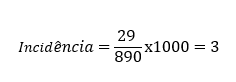
Similarly, the relationship between residency status (boarding and day students) and the incidence of hemorrhagic conjunctivitis was analyzed using Relative Risk (RR), determined by the following expression:
[RR = \ frac { \ text {Risk in exposed individuals}} { \ text {Risk in unexposed individuals}}]
Boarding students were considered exposed, while day students were considered unexposed. The cumulative incidence rate was 11.16% (28/251) for boarding students and 4.47% (14/313) for day students, yielding a relative risk (RR) of 2.50. The risk of developing hemorrhagic conjunctivitis was approximately 2.5 times higher among boarding students than among day students (RR = 2.50). This demonstrates a positive correlation between boarding school residence and disease incidence.
Ethical Considerations
This study was conducted within the framework of the public health emergency response resulting from the outbreak of Hemorrhagic Conjunctivitis in the city of Beira, Sofala province, Mozambique, in 2024. It provided an opportunity to document research findings based on secondary data and information routinely collected by health services. Considering the nature of the evaluation, which did not involve experimental interventions, recruitment of research participants, collection of biological samples, or use of personally identifiable information, submission to and approval by a Research Ethics Committee was not required. However, prior to implementation, institutional authorizations were obtained from the Sofala Provincial Health Directorate and the Beira District Health, Women and Social Action Service. All data used were anonymized, analyzed in aggregate, and treated with strict confidentiality, being used exclusively for the purposes of strengthening the outbreak response, programmatic monitoring, and scientific production. The study was conducted in accordance with the ethical principles established in the Declaration of Helsinki, including the principles of beneficence, non-maleficence, confidentiality, scientific integrity, and respect for the communities involved. Because this is an operational assessment integrated into public health emergency response activities and based exclusively on secondary analysis of routinely collected data without personal identifiers, the provision of individual informed consent was waived.
Results
Confirmation of the outbreak occurring.
The research identified 29 suspected cases of hemorrhagic conjunctivitis in an institutional population of 890 people. Confirmation of an institutional outbreak of hemorrhagic conjunctivitis was possible due to the occurrence of several related cases in a short period, along with laboratory detection of Enterovirus.
Sociodemographic characteristics of the cases
All identified cases were in the 18-26 age range. A predominance of males was noted, accounting for 79% of cases, while females represented 21%.
Temporal distribution of cases
The epidemic curve showed a pattern consistent with propagated source transmission. The first identified case presented symptoms on February 24, 2024, after a recent trip from Muanza to Beira, and is considered the possible initial case.
The temporal evolution of cases was marked by gradual growth, with 1 case registered on 24/02/2024, 3 cases on 26/02/2024, a peak of 23 cases on 27/02/2024, and a decrease to 2 cases on 28/02/2024. All cases had a direct or indirect epidemiological connection with the first identified case.
Clinical characteristics of the cases
Of the 29 cases analyzed, the most common signs and symptoms were red eyes and a sensation of sand or a foreign body in the eyes, both occurring in 96.6% of cases. In 86.2% of cases, there was tearing, photophobia, and watery or mucous ocular discharge, while 75.9% presented with eyelids stuck together upon waking. Subconjunctival hemorrhage was observed in 51.7% of cases, while blurred vision occurred in 48.3% of cases. No conjunctival pseudomembrane formed in any of the cases.
Laboratory investigation and etiological confirmation
During the investigation, 12 clinical samples were collected from cases selected based on epidemiological and clinical criteria. Conjunctival secretion and nasopharyngeal material were analyzed using polymerase chain reaction (PCR), a molecular detection technique used to identify Enterovirus and Adenovirus. Of the 12 individuals tested, 11 (91.6%) tested positive for Enterovirus, and 1 (8.4%) tested negative. All tests performed for Adenovirus yielded negative results. These results provided laboratory evidence that Enterovirus was circulating as an agent related to the outbreak under investigation.
Distribution of cases according to institutional exposure
Of the 29 cases identified, 28 involved boarding students and 1 involved a day student. There were no reported cases among staff. The cumulative incidence was 111.6 cases per 1,000 boarding students and 1.8 cases per 1,000-day students.
Analysis of the relationship between institutional residence and disease incidence revealed a higher prevalence of cases among boarding students. The relative risk (RR), determined by the ratio between the incidence among boarding students and the incidence among day students, was:
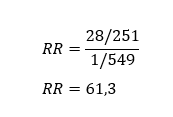
Compared to day students, boarding students demonstrated approximately 61 times greater risk of developing hemorrhagic conjunctivitis.
Table 1: Cumulative incidence of hemorrhagic conjunctivitis according to place of residence among students of the Teacher Training Institute of the City of Beira, February 2024.
|
Group |
Cases |
Exposed population |
Cumulative incidence |
|
Boarding students |
28 |
251 |
111.6/1,000 |
|
External students |
1 |
549 |
1.8/1,000 |
|
Institutional Total |
29 |
890 |
32.6/1,000 |
Source: Data from the epidemiological investigation of the hemorrhagic conjunctivitis outbreak at IFP-Beira, 2024.
Discussion
Epidemiological research conducted at the Teacher Training Institute in the City of Beira revealed the occurrence of an internal outbreak of hemorrhagic conjunctivitis associated with the presence of Enterovirus. The event presented characteristics marked by the rapid occurrence of cases in a short period of time, concentration of cases among internal students and laboratory confirmation of the viral agent, aspects that align with the epidemiological pattern observed in outbreaks of hemorrhagic conjunctivitis in collective environments [8]. The occurrence of the first case of hemorrhagic conjunctivitis at the institution, linked to Muanza's recent history of travel to Beira, indicated a probable initial introduction of the agent into the institutional environment. Although it was not possible to determine the origin of the index case, the occurrence of new cases in less than a week after the initial identification indicates rapid spread, consistent with the epidemiological pattern observed in hemorrhagic conjunctivitis outbreaks related to enteroviruses. Recent research indicates that viruses such as Coxsackievirus A24 variant and Enterovirus D70 have high transmissibility, facilitating outbreaks in communities and institutions. This is due to the short incubation period and transmission through contact with contaminated ocular secretions or contaminated surfaces and hands [9]. One of the most significant findings of this research was the high concentration of cases among boarding students, demonstrated by a considerably higher incidence rate in this group. The relative risk observed among boarding students is approximately 61 times higher than among day students, indicating a strong link between boarding school residence and the manifestation of the disease. This result highlights the possible role of residential environment characteristics in the transmission dynamics, since spaces of prolonged cohabitation can facilitate continuous exposure and the spread of infectious agents [8]. The greater vulnerability identified among boarding students can be attributed to several factors, such as staying in shared dormitories, high frequency of close contacts, circulation in common areas and greater intensity of social interactions during the exposure period. These factors can facilitate transmission, especially when there are limitations regarding preventive measures, adequate ventilation or early identification of cases [10].
Similar results have been observed in outbreaks in schools, military units and other collective residential settings, where physical proximity and the structure of community life are fundamental to the spread of infectious agents. Thus, the results of this research highlight the importance of treating boarding school settings as priority contexts for epidemiological surveillance, application of preventive measures and rapid response when identifying cases. However, when interpreting this association, the possibility that other factors, linked to the characteristics of the students and the conditions of the institution, may have influenced it should be considered [11]. The signs and symptoms observed in the current outbreak, including ocular hyperemia, foreign body sensation, tearing, photophobia, and ocular discharge, were consistent with the clinical manifestations frequently described in viral hemorrhagic conjunctivitis. The presence of subconjunctival hemorrhage in some cases constituted a suggestive clinical finding of this presentation, being described mainly in infections caused by enteroviruses associated with acute hemorrhagic conjunctivitis, such as enterovirus 70 (EV-D70) and Coxsackievirus A24 variant (CVA24v). Recent studies on viral conjunctivitis highlight that the clinical presentation may vary according to the etiological agent, but generally includes conjunctival inflammation, ocular discomfort, tearing, and discharge, characteristics observed in this investigation [8,9,13]. Despite its high transmissibility, viral hemorrhagic conjunctivitis usually has a favorable clinical course and a low risk of permanent complications. However, in institutional settings, especially those characterized by continuous co-existence, outbreaks can have significant impacts due to increased school absenteeism, disruption of collective activities, and the need to mobilize health services for epidemiological investigation and implementation of control measures. Thus, even diseases with low individual clinical severity can represent a significant public health problem when they occur in closed communities [8,9]. In the present study, the higher occurrence of cases among boarding students suggests that the characteristics of the collective residential environment played an important role in the transmission dynamics. Prolonged stay in shared dormitories, physical proximity between students, use of common facilities, and hand contact with contaminated secretions constitute conditions that can favor the spread of viruses responsible for infectious conjunctivitis. Similar results have been described in outbreaks that occurred in residential school institutions, in which close coexistence and intense circulation of individuals contributed to the rapid spread of the disease [9]. Another relevant factor is that the initial symptoms can be confused with less serious eye irritations, leading some individuals to remain in academic activities before the disease is recognized. This situation can increase opportunities for contact and favor transmission in environments with high social interaction. For this reason, early identification of cases and appropriate guidance for symptomatic individuals are essential components to reduce the spread during institutional outbreaks [12]. The control measures adopted should be aimed at interrupting the chain of transmission, including reducing close contact by symptomatic individuals, reinforcing hand hygiene, frequent cleaning and disinfection of shared surfaces, avoiding the sharing of personal objects and implementing health education actions. In addition, maintaining active epidemiological surveillance allows for the early identification of new cases and a rapid response to possible chains of transmission, reducing the impact of the outbreak on the institutional community [9].
Study limitations
The identification of cases was mostly based on clinical and epidemiological criteria, which may have led to underreporting of mild or asymptomatic cases. Furthermore, active screening of external students may not have been comprehensive, which could have led to an underestimation of the incidence in this group. Despite the circulation of Enterovirus Although the virus was confirmed by PCR, molecular characterization of the viral variant was not performed, which prevented the identification of the lineage that caused the outbreak.
Conclusion
Epidemiological research conducted at the Teacher Training Institute in the city of Beira confirmed the occurrence of an internal outbreak of hemorrhagic conjunctivitis linked to the presence of Enterovirus in February 2024. The combination of epidemiological, clinical, and laboratory data showed that transmission occurred mainly among boarding students, with a strong link between institutional residence and the manifestation of the disease. Molecular confirmation by PCR indicated that Enterovirus was the main agent involved in the event, while the observed temporal dynamics were aligned with the pattern of rapid spread described for epidemic hemorrhagic conjunctivitis active epidemiological surveillance, laboratory confirmation, and the early adoption of control measures in institutions with large population concentrations, in order to reduce transmission and mitigate the effects on educational activities and health services.
Consent for publication
Statement: Not applicable.
Availability of data and materials
The datasets generated and/or analyzed during this study are available at reasonable request to the corresponding author.
Financing
The authors did not receive specific funding for this work.
Conflicts of interest
The authors declare no conflicts of interest.
Authors' contributions
Unicia Nyamula- Conceptualization, study design, literature review, methodological review, data analysis and synthesis, interpretation of results, manuscript writing and critical review.
Angelica Sotomane- Methodological review, critical review of the manuscript, and intellectual contribution to the theoretical framework.
Alfredo Dias- Data collection and manuscript writing.
Ana Duaja- Data collection, manuscript writing and revision.
Luís Fole- Literature review, data analysis and synthesis, manuscript writing and revision.
Manuel Company- Literature review, data analysis and synthesis, manuscript writing and revision.
João Manuel- Study conception, methodological review, critical review, and final manuscript review.
Edi Fulai- Conceptualization, study design, literature review, methodological review, critical review, and final review and approval of the manuscript.
Acknowledgments
The authors would like to express their sincere gratitude to Virgilio Caetano, Dercia Rodrigues, and Leidita Picardo for their support during the implementation of the study. The authors also thank the Beira District Health, Women and Social Action Service and the Sofala Provincial Health Directorate, the rapid response team technicians, and the clinicians for their institutional support and collaboration during the data collection process.
References
- Azari AA, Barney NP. Conjunctivitis: A Systematic Review of Diagnosis and Treatment. JAMA 310 (2013): 1721.
- Muto T, Imaizumi S, Kamoi K. Viral Conjunctivitis. Viruses 15 (2023): 676.
- Rishi E, Thomas J, Fashina T, et al. Emerging Pathogenic Viral Infections of the Eye. Annu Rev Vis Sci 9 (2023): 71-89.
- Shunmugam M, Giovannetti F, Yeung SN, et al. An Update on Viral Conjunctivitis Treatment Strategies: A Narrative Literature Review. Microorganisms 13 (2025): 1712.
- Li J, Huang F, Zhang Y, et al. Molecular analysis of Coxsackievirus A24 variant isolates from three outbreaks of acute hemorrhagic conjunctivitis in 1988, 1994 and 2007 in Beijing, China. Virologica Sinica 37 (2022): 168-176.
- Sun W, Chen Y, Qin S, et al. Epidemiology and spatiotemporal analysis of acute hemorrhagic conjunctivitis in Zhejiang province, China (2004-2023). Front Public Health 13 (2025): 1509495.
- Lambisia AW, Morobe JM, Moraa E, et al. [version 2; peer review: 2 approved, 2 approved with reservations]. Wellcome Open Research (2025).
- Behera SP, Mishra N, Yadav R, et al. An Outbreak of Acute Hemorrhagic Conjunctivitis Caused by Coxsackievirus A24 in Eastern Uttar Pradesh, India 2023. Intervirology 67 (2024): 106-113.
- Gyeltshen S, Dorji T, Dorji K, et al. Coxsackievirus A24 variant associated with acute hemorrhagic conjunctivitis outbreak in Bhutan, 2023. Sci Rep 15 (2025): 14864.
- Muto T, Imaizumi S, Kamoi K. Viral Conjunctivitis. Viruses 15 (2023): 676.
- Harthan JS, Than T, Shorter E, et al. Natural history of adenoviral conjunctivitis in a US-based population: Viral load, signs, and symptoms. Contact Lens and Anterior Eye 47 (2024): 102110.
- Azari A, Arabi A. Conjunctivitis: A Systematic Review. JOVR 15 (2020): 372-395.
- Boro, Pallavi, et al. "An outbreak of acute hemorrhagic conjunctivitis due to Coxsackievirus A24 in a residential school, Naharlagun , Arunachal Pradesh: July 2023." Indian Journal of Medical Microbiology 48 (2024): 100549