TSE. Bouchema1*, J. Saunier1, J. Mauriello2, N. Yagoubi1
1SIA3M, Stratégies d'investigations analytiques: Medicaments, bioMateriaux, tissus et Matrices biologiques, Universit´ e Paris-Saclay, 91400 Orsay, France
2 ORTHOiN3D, Saint-Aubin, France
*Corresponding Author: TSE. Bouchema, Matériaux et Santé, UFR de pharmacie, Bâtiment Henri Moissan, 17 avenue de sciences 94100 Orsay.
Received: 17 August 2026; Accepted: 24 August 2026; Published: 31 October 2026
Tailor-made medical devices have developed significantly over the last few decades, with increasing attention paid to patients’ needs. Clear, customized, and removable orthodontic aligners are part of this evolution and represent an attractive alternative to traditional braces. This progress has been driven primarily by pioneering companies in the field, such as Align technology, which produces Invisalign® aligners, which have evolved over generations of treatments to manage malocclusions ranging from the simplest to the most severe, supported by clinical studies and accompanied by an appropriate regulatory paradigm, as well as by advances in materials chemistry and engineering, notably with the introduction of shape memory polymers. There are currently two processes used to manufacture these aligners: primarily thermoforming, used by most orthodontists, and secondarily, direct 3D printing, considered the future of this field. These two processes differ in several respects, including the processes themselves, the materials used, and the properties they impart. However, their clinical performance often remains limited due to inherent biomechanical constraints. Aligners offer some gingival and periodontal health advantages over fixed appliances, while requiring precautions to prevent enamel demineralization. This article aims to review current research on the materials most commonly used in the manufacture of aligners, as well as stability claims, focusing on their clinical and mechanical performance, based on the current literature. Informing orthodontists about aligner performance and providing them with the current regulatory framework can help them make informed choices in this area.
Orthodontic aligners, Traditional braces, Invisalign aligners.
Orthodontic aligners articles; Traditional braces articles; Invisalign aligners articles.
Abbreviations
3D Three dimensions
AFM Atomic force microscopy
BBP Benzyl butyl phthalate
Bis-EMA Bisphenol A glycol dimethacrylate
Bis-GMA Bisphenol A glycol dimethacrylate
BPA Bisphenol A
CAD Computer-aided design
CAGR Compound annual growth rate
CAM Computer-aided manufacturing
CE European conformity
COA Clear orthodontic aligner
DBP Dibutyl phthalate
DEHP di-2-ethylhexyl phthalate
DIDP Diisodecyl phthalate
DINP Diisononyl phthalate
DLP Digital light processing
EFSA European food safety authority
EIT Indentation modulus
FAO Food and Agriculture Organization
FDA Food and Drug Administration
FDM Fused deposition modelling
GC-MS Gas chromatography - mass spectrometry
HGF Human gingival fibroblast
HM Martens hardness
HPLC-MS High-performance liquid chromatography - mass spectrometry
ISO International Standard Organization
ITI Indentation relaxation index
JIS Japanese industrial standards
KFDA Korean food and drug administration
LCD Liquid-crystal display
LOAL Lower observed adverse effect level
MAUDE Manufacturer and user facility device experience
MDR Medical device regulation
MTT 3-(4,5-dimethylthiazol-2-yl)-2,5-diphenyltetrazolium bromide
NOAL No observed adverse effect level
nT Elastic index
PET Polyethylene terephthalate
PETG Polyethylene terephthalate glycol
SLA Stereolithography
TDI Tolerable daily intake
Tg Glass transition temperature
TPU Thermoplastic polyurethane
TTC Threshold of toxicological concern
UE European union
UV Ultra-violet
WHO World Health Organization
1. Introduction
The technological evolution in orthodontics, particularly in clear aligners, has significantly modified clinical practice over the last decades [1]. Dental aligners are transparent, removable orthodontic devices that gradually move teeth into a desired position. They are typically worn for 20-22 hours per day and are replaced every 7 to 14 days, depending on the treatment protocol, the material used, and the clinician’s strategy, rather than following a single standardized wear schedule [2]. They offer the advantage of being barely visible and must be removed for eating, drinking, and cleaning. Significant progress has been made since the early ebonite gum aligners in the 1950s, marking the beginning of an innovative era in orthodontics [3]. Notably, the advent of clear plastic aligners in the 1970s [4] and the subsequent development of thermoformed trays in the 1980s have profoundly transformed the orthodontic landscape [5].
This evolution was initiated by pioneers such as Align Technology, and it has led to increased adoption of clear aligners among orthodontists and patients, as these devices offer an aesthetic and functional alternative to conventional methods [2]. The introduction of CAD/CAM technologies enabled digital treatment planning and customized manufacturing of aligners. In the Invisalign® system, the orthodontist provides the digital impression and clinical prescription, while treatment planning is performed using ClinCheck® software by trained technicians and subsequently validated and approved by the clinician prior to manufacturing. [2]. Significant transformations have been observed over the last decades, culminating in the late 2010s with the first demonstrations of direct 3D printing of clear aligners at the research level [6]. More recently, a limited number of commercial systems have become available, further expanding the possibilities for aligner manufacturing. In 2022, the introduction of direct 3D-printed clear aligners by Graphy, Inc. marked a major milestone, offering the potential to revolutionize aligner production and enabling greater customization and efficiency in clinical practice [7]. This innovation has enabled greater device customization and propelled a fundamental shift towards an "in-house" manufacturing approach within orthodontic practices [8]. Although this approach represents a promising paradigm shift, its clinical adoption remains limited, and long-term in vivo and clinical evidence remains scarce compared with that for thermoformed systems.
This market is currently dominated mainly by Align Technology. The performance of successive generations of their aligners was consistently improved through technological advances such as SmartForce™, SmartTrack™, and SmartStage™ [9]. Today, the eighth generation, launched in 2020, represents a pinnacle of innovation, focusing on increased predictability of deep bite correction, minimization of unwanted crown tipping during posterior arch expansion, and optimization of ClinCheck® software [10]. As a result of this significant advancement, demand for aligners has increased over the last few decades, and the size of the global COAs market was valued at USD 5.13 billion in 2023 and is expected to increase at a compound annual growth rate (CAGR) of 30.7% from 2024 to 2030 [11]. These developments have led to a paradigm shift in dentistry, encouraging people of all ages to treat their malocclusion [12,13]. This holistic approach includes a normative assessment of the dental condition, as well as psychological and patient assessments. It must consider psychological aspects and a personalized evaluation of patients [14].
The manufacture of aligners has also undergone significant changes over time, with several generations manufactured by the traditional thermoforming process, coexisting with 3D printing, until 2022, with the introduction of Graphy Resin TC-85DAC light-curing resin, enabling COAs to be obtained by direct 3D printing, opening up new perspectives in orthodontics [2]. These methods have several advantages and disadvantages, influencing customization, precision, and flexibility in material selection. The clinical performance of clear aligners strongly depends on the properties of the materials used [12,15]. Thermoformed aligners are mainly based on thermoplastic polymers such as polyurethanes or polyesters, while 3D-printed aligners are generally produced from (meth)acrylate-based photopolymer resins [16], which raise specific concerns regarding durability, aging behavior, and biocompatibility [15,17,18].
This review provides a critical and balanced overview of transparent orthodontic aligners, covering material composition, manufacturing processes, mechanical behavior, aging, biocompatibility, and regulatory considerations based on the current state of the literature. By integrating these aspects, it aims to offer researchers and clinicians a comprehensive understanding of aligners, supporting informed decision-making in this rapidly evolving field.
1.1 Definition and History
At the beginning of the 20th century, dental malocclusions were corrected using metal arches attached to the teeth with brackets that exerted specific forces [19]. These devices were effective but often associated with discomfort and an increased risk of tooth decay. Maintaining good oral hygiene was made difficult by the presence of brackets, which encouraged the accumulation of dental plaque. These drawbacks led to the emergence of dental aligners, including thin, clear, removable aligners made from a clear polymer, which offer a more comfortable and hygienic alternative to traditional orthodontic treatment (Figure 1).
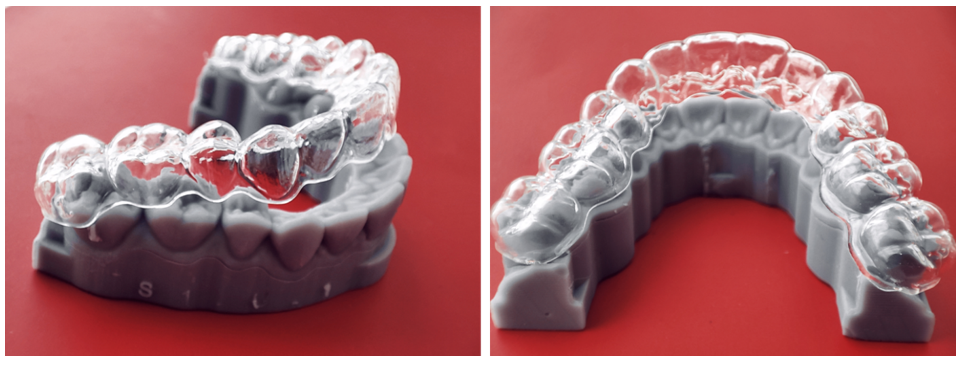
Figure 1: Clear Dental Aligner
The dental aligner is a clear plastic device that appeared in the 1990s as an alternative to traditional orthodontic treatment [19]. It fits over the teeth and allows them to be moved by applying small, low-amplitude movements [20] (Figure 2). Dental aligners are almost invisible. Thanks to their regular replacement (every 1 to 2 weeks) [21], the treatment duration can be reduced in some cases to around 6 months. They are also more comfortable, precise, practical, and less invasive to the teeth and surrounding tissues.
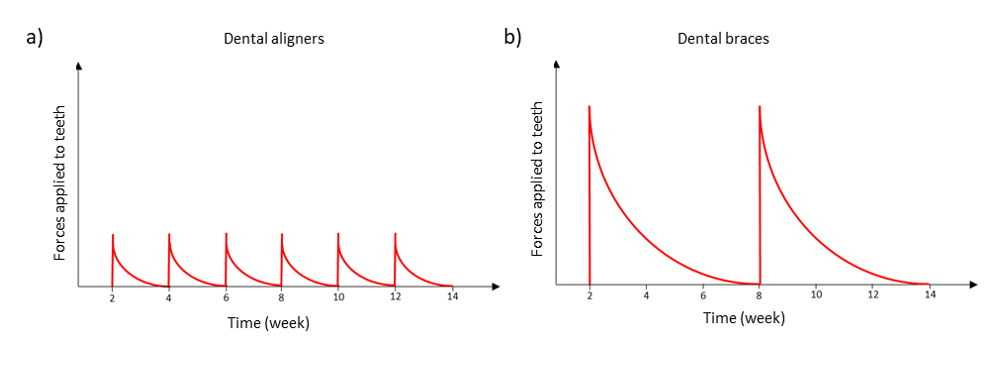
Figure 2: Force applied to teeth over time by a) dental aligners and b) braces during bracket adjustment.
The idea of orthodontic treatment using COA began in the 1950s with the first dental aligner made from cabinetmaker's gum by Harold D. Kesling [3], who demonstrated that these devices could maintain tooth position and reposition misaligned teeth sequentially. He thus laid the foundations for modern dental alignment, with the possibility of significant orthodontic movements using thermoplastic materials [3]. A significant breakthrough came in the 1970s with the introduction of clear plastic aligners, a technique that involves creating a plaster mold in which the teeth to be moved are cut out and then rearranged with wax. Various thermoplastic materials, such as polystyrene or polyethylene, can then be vacuum-formed on the mold to obtain dental aligners [22], offering a more aesthetic and discreet solution. The 1980s saw the introduction of the first pressure-thermoformed splints. McNamara improved Ponitz's technique by using 1 mm-thick Biocryl™ polymers and a Biostar vacuum-forming machine to create invisible retention devices. She was marking an important technical milestone [23]. Finally, in 1993, Jack Sheridan modified the manufacturing process for clear braces by using a 0.030-inch sheet of thermoplastic copolyester. He coined the term "Essix appliance" to describe an aesthetic method of tooth alignment [24]. He also recommended using a pressure-thermoforming method to reduce the sheet thickness by almost half after fabrication [24].
However, despite these advances, taking impressions, manufacturing models, selecting the teeth by rearranging them to align correctly, and repeating this process at each clinical appointment was highly laborious and time-consuming [25]. The solution to these disadvantages came from a clear aligner system called Invisalign®, launched in 1998 by Align Technology (Santa Clara, CA). It was the first orthodontic appliance manufactured using computer-aided design and manufacturing (CAD/ CAM) [21]. Today, this system involves a multi-step process described in Figure 3a. This process also applies to other thermoformed aligner brands or orthodontists who self-produce their own aligners. Specifically, an orthodontist takes a 3D scan or an impression of the patient's teeth. Then, this scan is sent to Align Technology, and non-orthodontic technicians create a treatment plan. Molds corresponding to the negatives of the different aligners are then printed using various processes, including Fused Deposition Modeling (FDM), Digital Light Processing (DLP), and stereolithography (SLA). A sheet of plastic is thermoformed onto these molds. A pressure-forming machine is generally recommended, as the 5 tons of pressurized air allow it to achieve higher levels of detail and use thicker materials than vacuum-forming machines (Figure 3b). After cutting, the aligners are sent to the orthodontist and delivered to the patient [26-28].
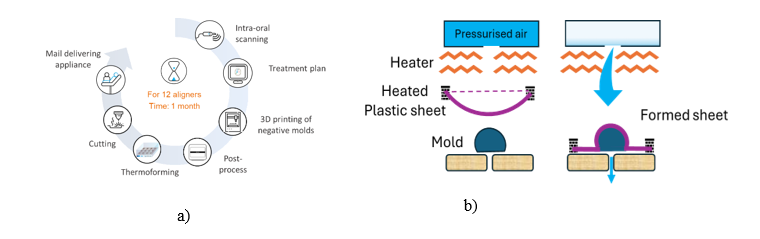
Figure 3: a) Thermoforming process of aligners by Align Technology, Inc. b) Pressure forming of the aligner
Today, the aligner market is 75 % owned by Align Technology Inc., and there are currently around 27 different products from other brands available for orthodontic treatment, such as Clear Correct, Zendura®, or Duran® [15].
Early generations of thermoplastic-based aligners faced limitations. With the evolution towards the second generation of Invisalign®, the introduction of attachments allowed improved control of tooth movement, supported by the innovative EX 30 material. These attachments are placed on the teeth and are very small and custom-made bumps. They help direct the aligner's force more effectively and predictably on the teeth where needed. Subsequent generations integrated optimized SmartForce™ features that correspond to the use of different kinds of attachments, features designed into the aligners or accessories that allow better control of some tooth displacements, but also material enhancements such as SmartTrack™, and targeted innovations, such as SmartStage™, that optimize progressive tooth movement, help eliminate both unwanted rotations and anterior extrusion during retraction [29]. Each iteration brought improvements. The eighth generation (2020) introduces innovations that improve the predictability of deep occlusal correction and optimize the ClinCheck software (Figure 4) [2,10].
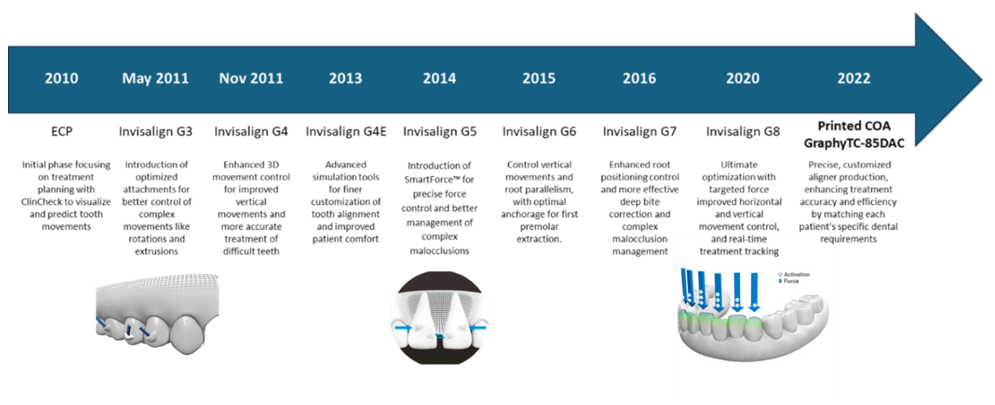
Figure 4: Evolution of clear aligner technologies from thermoformed generations to directly printed aligners
So, over the past two decades, the use of clear aligners has significantly evolved: initially used to correct mild crowding or spacing of anterior teeth, they are currently proposed as an approach capable of treating almost any orthodontic problem [30]. However, to fully exploit this capability, it is essential to understand the device's limitations and surpass the conventional treatment planning approaches. A 2018 study showed that orthodontists still avoid Invisalign® for extraction, surgical, or challenging cases [31]. The research on aligners is still in full swing to offer more competing products. Manufacturing is often outsourced, and shipping times can range from 3 to 6 weeks, significantly increasing treatment costs and doubling the price of braces. Major industry players like 3M and American Orthodontics are competing to offer products increasingly tailored to orthodontists’ needs, reflecting the strong industrial and technological momentum observed in this field over the past decade. Despite these advancements, the clinical performance of clear aligners is strongly dependent on material properties. The following section will present the materials used for dental aligners and their properties.
1.2 Materials used for thermoformed aligners
Thermoformed aligners are made using thermoplastic polymers. The most used materials for manufacturing orthodontic aligners are polyester, polyurethane, polypropylene, polycarbonate, ethylene-vinyl acetate, and polyvinyl chloride [1,32]. Recently, materials have evolved from single-layer plastics to multilayer materials that often include rigid and flexible layers. While the flexible layer gives the aligner elastic properties, allowing for smooth adjustment, the rigid layer ensures strength and durability.
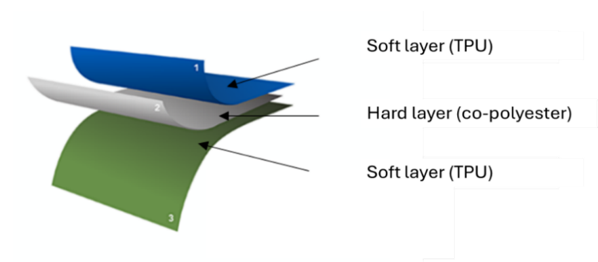
Figure 5: Structure of the multilayer materials of the SmartTrack™ range
The material used for aligners has evolved significantly. For example, Invisalign® aligners were initially made from a single-layer thermoplastic polyurethane called EX30. Over time, the materials evolved to improve performance and comfort. The current generation of Invisalign® aligners uses SmartTrack™ material, a proprietary multi-layer thermoplastic polyurethane that allows better control and more predictable tooth movements. (Figure 6) [33,34]. This material offers greater elasticity and better adaptability, which help achieve more efficient and comfortable treatment outcomes [18,30]. In addition to SmartTrack™ [35], other aligners, such as ClearCorrect™ [36] and Clarity™ (3M), use proprietary multi-layer polymer blends [35].
Among polyesters, polyethylene terephthalate (PET) and polyethylene terephthalate glycol (PETG) (Figure 6a), an amorphous non-crystalline copolymer of PET, are widely used in the manufacture of clear aligners due to their excellent mechanical and optical properties [37]. PETG is a suitable material for producing clear aligners as it has excellent transparency, adequate thermal properties, and significant resistance to various solvents [35]. Thermoplastic polyurethane (TPU) (Figure 6b) is another highly versatile polymer with several favorable properties for manufacturing aligners [35]. It has excellent mechanical properties, good chemical and abrasion resistance, and a high thermoforming capacity [38]. It also has high tear resistance and good resilience [39]. The presence of partly immiscible soft and hard segments provides the polymer with a heterophase structure: flexibility is given by soft segments, and elastic behavior arises from the hard segment physical crosslinks [40-42]. It should be noted that TPU is a broad family of polymers: the soft segment can have a polyether, polyester, or polycarbonate structure, and the hard segment can include aromatic or aliphatic structures. Playing on the chemical composition of hard and soft segments, and on their ratio, can yield different hardness values and chemical stabilities.
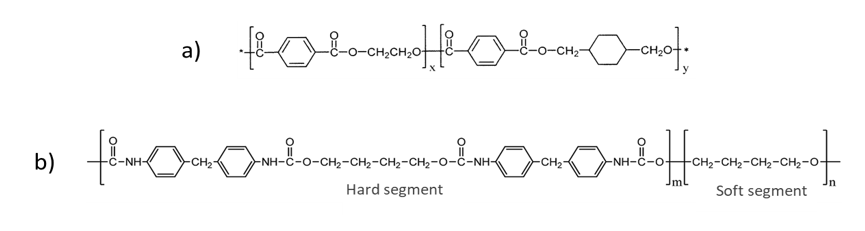
Figure 6: Molecular structure of a) PETG b) example of TPU
According to the Grand View Research report [43], polyurethane accounted for the largest share of materials used in aligner manufacturing at 76.7% in 2022.
1.3. 3D Printed Aligners: process and materials
The next paradigm shift in orthodontics is the direct 3D printing of aligners [44,45]. Figure 8 shows the step-by-step manufacturing process of directly 3D-printed clear aligners.
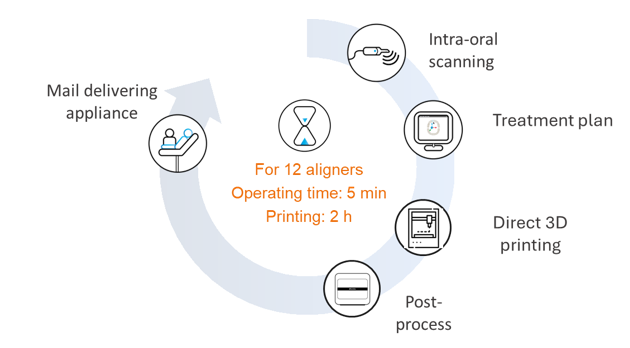
Figure 7: The manufacturing process of aligners by direct 3D printing.
Introduced by Nasef et al. [46], direct printing of aligners reduces errors generated throughout the many manufacturing steps [47]. In addition to improved accuracy, 3D printing reduces production time and costs and leads to a more sustainable process by generating less waste [48]. Theoretically, direct 3D printing allows the manufacturing of clear aligners with variable thicknesses depending on the teeth to be moved. Indeed, the thickness of the aligner and the chosen material influence the force exerted on the teeth and the mechanical properties of the aligners [45]. Various methods can be used to print aligners directly. Still, photopolymerization printing seems one of the most promising: it ensures precise control over device thickness and material properties, which is essential to guarantee optimal fit and good performance of the aligners [12,49]. Vat photopolymerization is also one of the fastest methods to print aligners compared to other techniques, such as FDM or two-photon [12]. To print the sample, a resin of adequate viscosity is used. Placed in a tank, it is polymerized layer by layer. The polymerization can be induced by specific UV wavelengths using lasers, digital light processing projectors, or LCD screens [12]. The resin is composed of at least a mix of monomers, reactive diluent, and photo-initiators. By absorbing light, these last compounds generate free radicals that can initiate polymerization of monomers and the reactive diluent (figure 9).
After printing, directly manufactured aligners undergo a post-processing step to remove uncured or residual resin, which may involve solvent-based washing or other approaches such as mechanical removal or centrifugation, depending on the manufacturing system and material. This final post-printing process has a profound impact on mechanical properties and biocompatibility.
It should be noted that solvent-based washing, particularly with isopropanol, can cause surface whitening or loss of transparency in certain photopolymer resins, leading some manufacturers to favor solvent-free cleaning methods. The choice of post-treatment protocol can therefore significantly influence the optical and surface properties of directly printed aligners, as well as their biocompatibility.
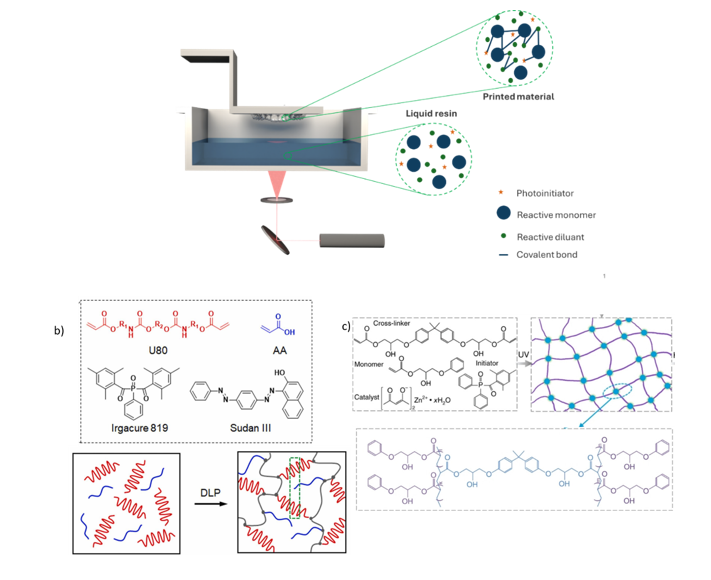
Figure 8: a) schematic representation of the 3D printing of an aligner by DLP and the composition of a 3D printing resin: it consists of one or several monomers, oligomers, and photo-initiator molecules. b-c) Examples of photopolymerizable resins constituted of a mix of monomers, crosslinkers, and photo-initiator that could be used in the stereolithography process to obtain a crosslinked network b) resin with a monofunctional monomer of acrylic acid (AA), a difunctional cross-linker of urethane diacrylate (UA), diluted with isobornyl acrylate and 2-phenoxyethyl acrylate. Irgacure 819 and Sudan III are used as photoinitiators and photoabsorbers (figure from [50]) c) another example of photo-polymerisable resin with the chemical structure of the network crosslinks (figure from [51]).
In September 2021, South Korean manufacturer Graphy introduced one of the first commercially promoted systems for the direct 3D printing of orthodontic aligners, produced from its proprietary 3D printing resin, according to Graphy [52]. While this technology was presented as a milestone, the number of commercially available materials specifically designed and approved for direct aligner fabrication remains limited. The company also stated that Graphy aligners can be manufactured using any 3D printer. In principle, this approach aims to eliminate the need for mold printing and thermoforming steps, potentially reducing production time and costs. However, these advantages are largely based on manufacturer claims and remain only partially supported by independent studies. Another feature claimed by the manufacturer is the aligner's ability to rotate teeth up to 35° [53]. Such claims should be interpreted with caution, as robust comparative clinical evidence supporting superior tooth-movement capabilities remains scarce.
To date, only a limited number of materials, such as Tera Harz TC-85DAC and, more recently, DCA LuxCreo, have obtained regulatory approval from the European Commission and/or the Food and Drug Administration [7,54]. In addition, 3Dresyns OD-Clear TF LTP holds CE certification, with FDA approval still pending [55]. Apart from these materials, no other commercially available resins have consistently demonstrated compliance with the combined requirements of biocompatibility, optical transparency, and mechanical performance necessary for direct clear orthodontic aligners (COAs). Other resins are commercially available for the fabrication of clear orthodontic devices, including Dental LT, BioMed Amber™, and NextDent Ortho Flex™; however, their clinical efficacy for direct aligner manufacturing has not yet been demonstrated, and they do not currently meet the specific regulatory and performance requirements for COAs [56-59].
At present, materials used for the direct 3D printing of COAs are predominantly based on acrylate-urethane photopolymer resins [2,60-62]. Their exact composition remains largely undisclosed due to patent protection. Nevertheless, several studies have reported that these materials are mainly composed of acrylate and methacrylate monomers, including bisphenol A ethoxylate methacrylate (Bis-EMA), urethane dimethacrylate (UDMA), triethylene glycol dimethacrylate (TEGDMA), and bisphenol A glycidyl methacrylate (Bis-GMA) [63,64]. These formulations typically incorporate reactive diluents, photoinitiator systems (such as acylphosphines, camphorquinone, and phosphine oxides), and, in some cases, nanoparticles intended to enhance mechanical or optical performance [65-67].
Unlike thermoformed COAs, COAs printed from resins such as TC-85 exhibit shape-memory-like behavior, allowing partial recovery of the original geometry under specific thermal conditions and offering new and improved biomechanical options. This property allows COAs to continuously apply orthodontic forces to the teeth at body temperature without force degradation due to aligner deformation (Figure 10). The COA returns to its original shape when exposed to body temperature. 3D-printed thermosets used in dental aligners are shape-memory materials due to their specific molecular structure, which allows the material to return to a predefined shape after deformation. In contrast, thermoformed aligners made from thermoplastics lack this property. Thermosets undergo chemical polymerization during manufacturing, forming a crosslinked structure that maintains its shape even after heating or deformation. This gives 3D-printed thermosets exceptional dimensional stability and the ability to "remember" their original shape, which is crucial for the precise fitting of aligners to the patient's teeth. In contrast, thermoplastics become pliable when heated and can be easily reshaped, but they do not exhibit long-term shape memory once cooled (Figure 11). This shape-memory property also increases patient comfort: if the COA is heated in hot water, it becomes flexible and can be inserted more easily into the teeth; at oral temperature, the aligner gradually recovers its shape and fits the teeth perfectly. It is also advantageous for disinfection, as it enables hot-water disinfection (Figure 10).
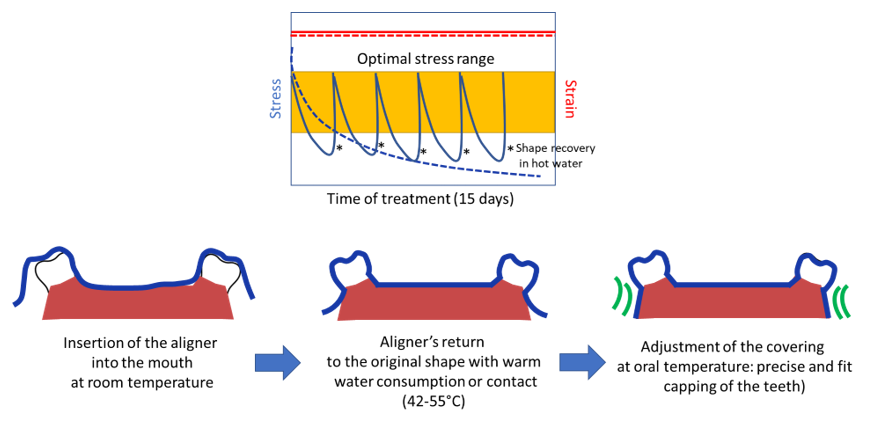
Figure 9:Stress-strain curve for COAs manufactured from thermoplastics and shape memory polymers over 15 days of testing. For the thermoplastic aligner, the force decays with time (too high at the beginning, but too low after several days). For shape memory aligners, contact with warm water allows them to recover their initial force and form (Figures adapted from [68]). It also allows a better insertion of the aligner on the teeth (figure based on the drawings of YouTube video A Game-Changer in Aligner Technology: Graphy World's First 3D Printed Shape Memory Aligner (SMA))
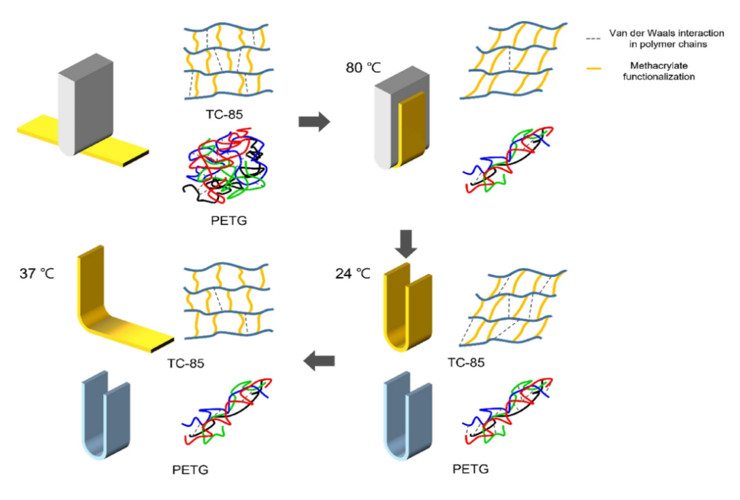
Figure 10: Shape memory property test procedure and mechanism; yellow and blue specimens indicate TC-85 and PETG, respectively. Figure from [53].
Although direct 3D printing of aligners is technically feasible, very few clinical studies on these aligners have been published. Based on these premises, further in vitro and in vivo studies are needed to test these new technologies and materials. Thus, particular attention should be paid to the cytotoxicity of printable resins. Additionally, the clinical performance of printed aligners needs to be evaluated and compared with that of thermoformed aligners [2,69]. The next section will focus on the preclinical evaluation of aligners, highlighting key studies and methodologies used to assess their mechanical, biological, and clinical performance before clinical application, along with an overview of the associated standards and regulations [70].
2. Preclinical Evaluation of Orthodontic Aligners
2.1 Properties to be evaluated and normative context
2.1.1. Regulatory and normative context
Class IIa medical devices, such as clear orthodontic aligners, are defined by Regulation (EU) 2017/745 on medical devices in Europe [71] and as Class II medical devices by the FDA (Food and Drug Administration) in the United States [72]. These devices pose a moderate risk to patients and require rigorous safety and performance assessment before marketing (Figure 12). To market Class IIa medical devices, such as COAs, it is necessary to obtain the CE mark in Europe under Regulation (EU) 2017/745 [71] and FDA clearance through the 510(k) pathway in the United States. The CE mark is issued after a notified body evaluates the technical documentation, including risk analysis and clinical evaluation, and, where applicable, clinical investigations. In contrast, the FDA 510(k) procedure is based on demonstrating substantial equivalence to a legally marketed predicate device rather than on direct clinical trial requirements in all cases [73].
It is important to note that regulatory pathways and approval requirements may differ significantly between markets. In the United States, clear aligners are typically regulated as Class II medical devices and cleared via the 510(k) pathway. Investigational Device Exemption (IDE) or Investigational New Drug (IND) applications are generally not required for conventional clear aligners, unless novel functionalities, drug-delivery components, or new therapeutic claims are introduced. In the European Union, compliance with the MDR involves a conformity assessment procedure that integrates clinical evaluation, post-market surveillance, and risk management. Other regulatory frameworks, such as those in Asia (e.g., PMDA in Japan or NMPA in China), follow region-specific approval processes that may impose different documentation and clinical evidence requirements.
Furthermore, international standards such as ISO play a vital role in supporting the development and evaluation of medical devices by providing harmonized test methods and performance criteria. However, compliance with individual standards does not, by itself, guarantee regulatory approval, as regulatory decisions are based on an overall assessment of device safety, performance, and intended use. One interesting ISO document for aligners is the ISO 20795, which is divided into two parts: the first covers resins used for denture bases (ISO 20795-1) [74], while ISO 20795-2 focuses on materials used in the construction of orthodontic appliances [75]. This standard primarily focuses on (meth)acrylate-based polymer materials, due to their widespread use in removable orthodontic appliances, but it can also be applied to the manufacture of clear orthodontic aligners (COAs). The Japanese standard JIS T6528, based on ISO 20795-2, is also used to evaluate printed materials for COAs [76].
ISO 20795-2 covers orthodontic resins used for dynamic and static orthodontic appliances [75] and defines physical and mechanical requirements such as stiffness, yield strength, and relaxation behavior to ensure functional performance (Table 1). These standardized tests provide essential supporting data for regulatory submissions, but are not sufficient on their own to demonstrate clinical safety and effectiveness. Furthermore, requirements for biological evaluation are specified in the ISO 10993 series [77], which governs the biological evaluation of medical devices, and in ISO 7405 [78], which specifically addresses the biocompatibility assessment of dental devices and materials. For the evaluation of mechanical performance, ISO 179 (Charpy impact strength) [79] and ISO 527 (tensile properties) [80] can also be applied.
Table 1: Some requirements of the ISO 20795-2
|
Requirements |
Flexural Properties |
Flexural Toughness |
Residual methyl methacrylate monomer |
Phthalate plasticizers |
Water sorption |
Water solubility |
||
|
Ultimate flexural strength |
Flexural modulus |
Maximum stress intensity factor |
Total fracture work |
|||||
|
MPa Min. |
MPa Min. |
MPa·m\(^{1/2}\) Min. |
J/m² Min. |
Percent mass fraction Max. |
Percent mass fraction Max. |
µg/mm³ Max. |
µg/mm³ Max. |
|
|
All types |
50 |
1500 |
1,1 |
250 |
5 |
Maximum 10% above stated valueᵃ |
32 |
5 |
ᵃ: For example, if the manufacturer states a percent mass fraction of 5% of phthalate plasticizers, the content shall not be more than 5.5%.
Orthodontic aligners are designed with specific physicochemical, mechanical, and biological properties, including elastic rebound, transparency, stored energy, tolerance to the oral environment, biocompatibility, and appropriate surface roughness. They must also exhibit suitable mechanical strength, flexibility, resistance to impact during mastication, and durability against routine cleaning procedures [81]. Regulatory assessment, therefore, integrates standardized testing results with clinical considerations and post-market surveillance data. Despite their growing popularity, aligners' durability can be affected by continuous exposure to saliva, temperature fluctuations, variations in oral pH, and occasional contact with beverages other than water. These misuse conditions can also lead to greater chemical alterations of the polymer, highlighting the importance of adequate hydrolysis resistance to prevent degradation [15].
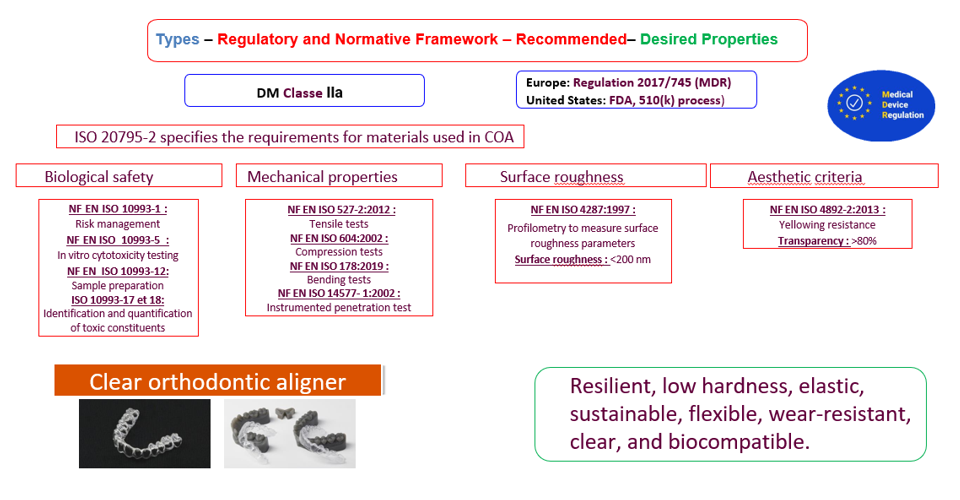
Figure 11: Diagram showing the regulatory and standards framework, recommendations, and desired properties for COAs.
2.1.1. Biocompatibility Requirements
Cytotoxicity
COAs can cause cytotoxic effects when used by patients. The assessment of the biological safety of these materials is essential and generally includes both in vitro and in vivo tests. Regulatory authorities often consider in vitro tests sufficient to obtain CE marking for COAs [82]. These tests enable the evaluation of the cytotoxicity and biological safety without the need for more complex in vivo tests. The in vitro method, primarily using MTT assays, is commonly used to evaluate cell viability in biomaterials, including clear orthodontic aligners, in accordance with ISO 10993 standards [82,83]. The MTT test (3-(4,5-dimethylthiazol-2-yl)-2,5-diphenyltetrazolium bromide) is a widely used colorimetric assay to assess cell viability and metabolic activity. The test is based on the ability of living cells to reduce the MTT reagent, a yellow compound, to formazan, a purple-colored product, through enzymatic activity in metabolically active cells. The amount of formazan formed is proportional to the number of viable cells and can be quantified by measuring the absorbance of the resulting solution with a spectrophotometer (Figure 13). Specifically, ISO 10993-5 outlines the requirements for testing cytotoxicity, while ISO 10993-12 provides guidelines for sample preparation and testing procedures. The method is highly effective in identifying potential cytotoxic effects that could harm tissue or cause adverse reactions when the aligners are used in clinical settings [83,84]. By following these internationally recognized guidelines, manufacturers can ensure that the materials used for aligners meet safety standards, providing a quick and reliable way to confirm their biocompatibility and suitability for patient use. The tests mainly use fibroblast cells. Due to their abundant presence and crucial role in maintaining oral tissue integrity, fibroblasts are often used in biocompatibility testing of dental biomaterials, an approach recommended because of the sensitivity of oral tissue cells, the primary cell line exposed to the toxic effects of COA materials [83,85]. Cell viability obtained using the MTT test is classified into three categories: cell viability above 90% indicates the absence of cytotoxicity; 60-90% indicates mild cytotoxicity; 30-59% indicates moderate cytotoxicity; and cell viability below 30% indicates severe cytotoxicity. ISO standards indicate that viability above 70% is safe for clear orthodontic trays [85,86]. Assessments should be carried out in three independent experiments, each performed in triplicate [83,85].
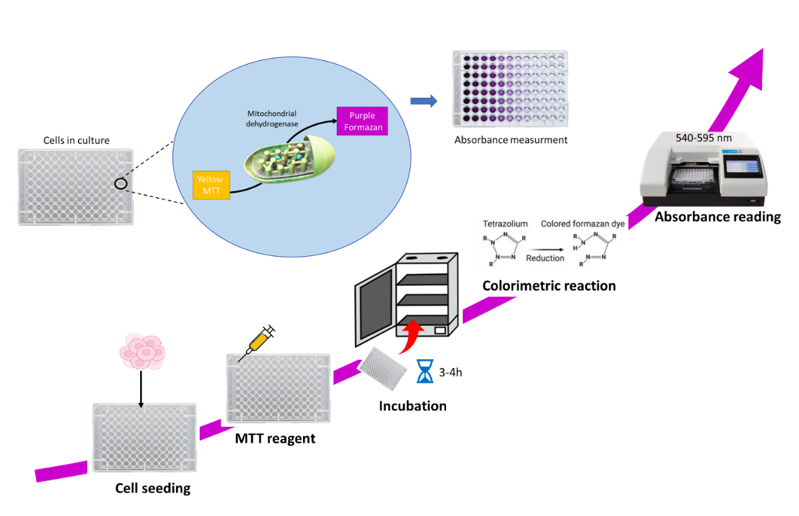
Figure 12: MTT test principle. Drawing based on the figure of [87].
In addition to cytotoxicity, ISO 10993-1 requires that materials used for medical devices do not exhibit mutagenic properties, induce erythema or edema, or show systemic toxicity. These additional criteria are essential to ensure that clear orthodontic aligners do not cause genetic damage, skin irritation, or adverse effects on the whole body, thereby guaranteeing their safety for prolonged patient use [85,86].
Acceptable limits of hazardous chemical compounds that can affect biocompatibility
Beyond biocompatibility, according to ISO 20795-2 [75] and JIS T6528, polymers used to produce orthodontic materials must contain less than 5% (mass fraction) of methyl methacrylate monomers (Table 1). The residual content declared by the manufacturer must not exceed 0.2% above the specified value, expressed as a mass fraction. If phthalate plasticizers (DEHP (Di(2-ethylhexyl) phthalate), DINP (Diisononyl phthalate), DIDP (Diisodecyl phthalate), BBP (Benzyl butyl phthalate), DBP (Dibutyl phthalate)) can be present in the polymer of orthodontic bases, they must be identified and quantified. The plasticizer content must not exceed the manufacturer's declared value by more than 10%. For example, if the manufacturer declares a plasticizer content of 5%, standard ISO 20795-2 stipulates that the actual content must not exceed 5.5%. This rule is designed to ensure that the information supplied by the manufacturer is accurate and that the products comply with safety and quality specifications. In addition, ISO standards 10993-17 and 18 specify methods for identifying and quantifying the hazardous constituents of medical devices to assess the associated toxicological risk. Irrespective of CE marking and ISO certification of biocompatibility, the residual monomers released, the products from material degradation, and the trace elements of the synthesis products used as catalysts (Al, Mn, Fe, for example) can cause irreversible damage to cellular DNA [36,88]. Because of these compounds, adverse local effects, such as cytotoxicity and mutagenicity, and systemic effects, such as teratogenicity and estrogenic effects, have been observed [17]. In this respect, several European and global organizations, including the Food and Agriculture Organization (FAO) and the World Health Organization (WHO), define an acceptance threshold known as the maximum tolerable or acceptable daily intake, expressed in mg.kg-1 of body weight per day. For example, the temporary tolerable daily intake for bisphenol A via the oral route is 4 µg/kg body weight per day. Table 2 shows the maximum tolerable or acceptable daily oral doses of some monomers and metals used to produce clear orthodontic aligners by different methods. These tolerable daily intakes (TDI) are not provided for all the compounds found in aligners, such as acrylate monomers potentially used for aligner 3D printing, which have been shown to be toxic in several studies [89,90]. However, reference toxicological values such as LOAEL (lowest-observed-adverse-effect level) or NOAEL (no-observed-adverse-effect level) can also be found in the literature; they are derived from animal experiments and are the key data used to calculate these TDI. For example, the NOAEL for TEGDMA, an acrylate monomer used in 3D-printed aligners, is 1.0 mg/kg/d in the study by Moilanen et al. in mice [91]. For compounds for which no NOAEL is available, a Threshold of Toxicological Concern (TTC) can be defined. For example, it is known that during PET or PETG synthesis and degradation, some linear and cyclic oligomers can be produced [92-95]. The in silico toxicity of the cyclic oligomers, according to the Cramer classification, is class III, corresponding to a TTC of 1.5 μg/kg body weight/day [96,97].
Table 2: Daily oral doses of certain monomers and metals used in the manufacture of COAs [36,98,99]
|
Monomer |
Dose |
|
Bisphenol A |
4 µg/kg body weight/day |
|
Terephthalic acid: |
20 to 40 mg/kg body weight/ day |
|
Éthylène Glycol and Diethylene Glycol |
0.5 mg/kg body weight/ day |
|
Éléments |
Dose |
|
Al (Aluminium) |
2 mg/kg body weight |
|
Co (Cobalt) |
5-50 µg/day |
|
Cr (Chromium) |
35-120 µg/day |
|
Sn (Tin) |
2 mg/kg of body weight |
|
Ni (Nickel) |
25 to 35 mg |
|
Fe (Iron) |
45 mg/kg of body weight |
|
Mn Manganese |
0.033 mg/kg of body weight |
2.1.2 Requirements in terms of mechanical and thermal properties
Understanding the mechanical properties of the materials that make clear orthodontic aligners is essential to ensure effective alignment treatment and facilitate future progress in this field.
Force exerted on the teeth.
Ideally, an orthodontic aligner should exert a light, constant force on the teeth over an extended period. Excessive force can have deleterious effects on the teeth and tissues (e.g., root resorption) and can be painful for the patient. Recommended force ranges are 0.5 - 0.75 N for tilt, 1 - 1.5 N for rotation, 0.75-1.25 N for torque control, and 0.75 - 1.25 N for body movement [7]. A review by Theodourou et al. reported that a force range of 0.5-1N is optimal for a good compromise between tooth movement rate, patient comfort, and limited side effects[100]. COAs ought to produce a displacement of 0.2-0.3 mm for translations and 1-3 degrees for rotations over 14 days. Recent studies indicate that the forces generated by aligners range from 0.18 to 2.91 N and are comparable to those of Ni-Ti wires used in traditional orthodontics [7]. These stress values can be used as a guide for choosing the aligner thickness to ensure the applied force is convenient [101]. As a consequence, the material must have adequate stiffness and a high elastic limit to obtain an effective aligner. These properties ensure that the force applied remains within the material's elastic range and, thus, will not lead to permanent deformation of the aligner [47,53].
Stress relaxation behavior
In addition, the stress-relaxation curve of the material (Figure 13) shows how it responds to stress over time and should be relatively flat. Viscoelastic materials, such as polymers, can indeed relax under constant stress. Typically, a stress decay is observed over time in a stress-time curve while elongation is held constant. This decrease is due to molecular relaxation and viscous flow, such as beta and alpha relaxations involving local movements of the side chain and reorientations of chain segments. For clear aligners, force decay is due to viscoelastic behavior and to the permanent deformation induced by repeated device insertion into the teeth. For example, it has been observed that clear thermoplastic aligners exhibit a 10-17% decrease in static force after repeated loads [53]. A flat curve (Figure 14) indicates that the material can withstand constant, continuous forces, ensuring the effectiveness of orthodontic treatment. If, over time, the aligner exerts a lower force than classical dental braces due to stress relaxation, it will be less effective at moving the teeth.
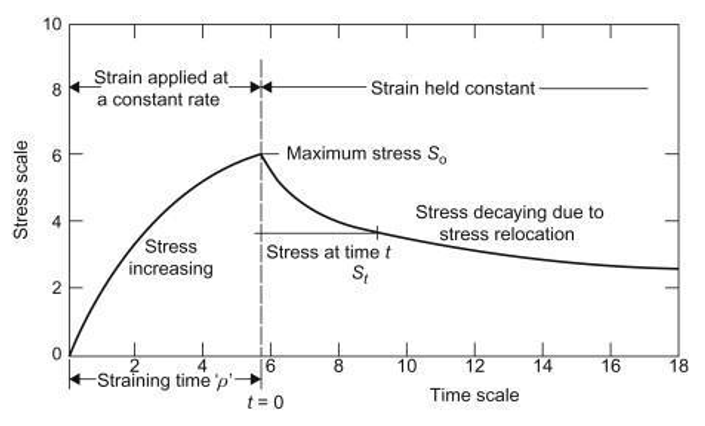
Figure 13: Stress relaxation curve. Figure from [35].
Material strength
Moreover, COAs must withstand the forces generated during chewing and biting to ensure their structural stability and effectiveness in the oral cavity. Stress-strain behavior depends on the material used, as shown in Figure 14. Forces applied to the aligners, such as biting, can be involuntary, as in bruxism that occurs during a patient’s sleep. This ability to withstand these forces ensures durable performance, adapted to the physical constraints of these repeated mechanical actions. The average voluntary human bite force is estimated to be around several hundred newtons [102]. For example, in a 2014 study [103], the average maximal bite force was 354 ± 134 N for young prepuberal men and 345 ± 60 N for young adult women. The maximum involuntary nocturnal bite force because of bruxism was between 150 and 800 N, according to the study of Nishigawa [104]. For this study, bite occurrence during the night can reach 11,5 bites/h. This represents a cyclic loading of 1480 stresses, considering an aligner used for 15 days and a sleep of 8h/day.
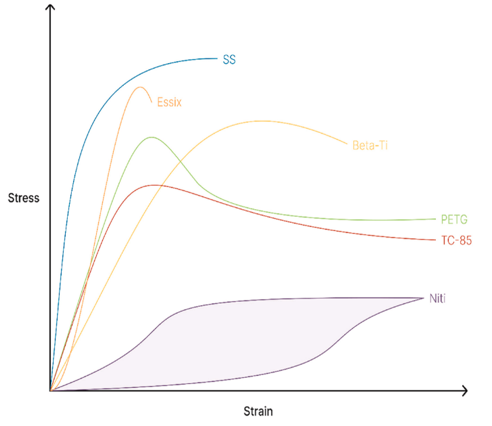
Figure 14: Stress-strain curves for various orthodontic materials. SS, stainless steel. Beta-Ti, beta titanium. Niti, nickel-titanium. Essix, clear retention material. PETG, polyethylene terephthalate glycol. TC-85DAC, photosensitive resin marketed by Graphy. Reproduced under the terms of the CC-BY.26 licence Copyright 2022, MDPI, Basel, Switzerland [2].
Tests to evaluate mechanical properties and intended values.
Several test standards have been described in the literature and referenced in ISO 20795-2 and JIS T6528 to evaluate the mechanical properties of thermoformed and printed COAs. In particular, the ISO 527-2:2025 standard [105] governs flexural tests on plastics and specifies methods for measuring flexural strength, yield strength, modulus of elasticity, and elongation at break using stress-strain curves as shown in Figure 14. Moreover, according to ISO 20795-2 [75], the bending strength of the polymer used for orthodontic bases must not be less than 50 MPa, the modulus of elasticity must be at least 1,500 MPa, the maximum stress intensity factor must be at least 1.1 MPa.m0.5, and the total breaking force expressed in energy must be at least 250 J.m-2. These criteria define the minimum mechanical properties required to ensure adequate material performance (Table 1). For three-point bending tests on reinforced plastics and composites, ISO 178:2019 [106] specifies sample preparation, experimental mounting, and methods for measuring bending strength and bending modulus of elasticity. The ISO 14577-1:2015 standard [107] also allows the evaluation of mechanical properties and their evolution by performing instrumented indentation directly on the final device. This test provides parameters such as Martens hardness (HM), indentation modulus (EIT), and the Welastic/Wtotal ratio (ηIT). Martens’ hardness test records the indentation depth h as a function of the applied force F and enables hardness measurement, the determination of an indentation modulus, and the assessment of indentation creep or relaxation (Figure 15). These parameters allow evaluating the evolution of mechanical properties of aligners and comparing them across different suppliers before and after intra-oral aging. For example, the values of these parameters for Invisalign® aligners are 110±6 N/mm2 for the Martens hardness (HM), 2216±168MPa MPa for the indentation modulus (EIT), 41.5±1.2% for the elasticity index (nΤ), 4.0±0.1% for the indentation relaxation index (ITI), and 0.41 for the estimated indentation relaxation index [108].
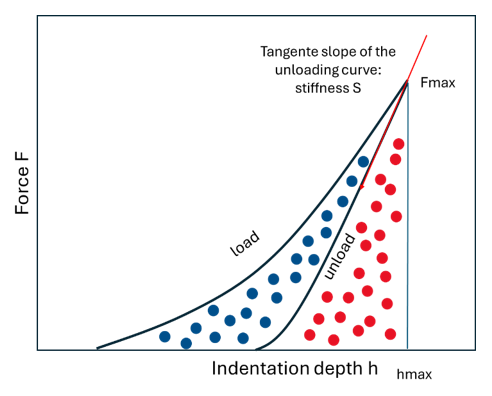
Figure 15: Typical indentation force-distance graph. The indenter is in contact with the surface and penetrates the material at a fixed speed until a defined maximum force or depth is reached. The unloading curve represents elastic recovery, and its slope defines the stiffness used to calculate EIT. The slope of the unloading curve is extracted and corresponds to the stiffness S of the material. The area with red plots represents the elastic work Welastic, and the one with blue plots the plastic work. To measure indentation relaxation or creep, the force or the indentation depth can be held after the load phase.
It is essential to follow these standards, which define precise test conditions, when performing mechanical tests to ensure test reproducibility, reliability, and comparable results. The effectiveness of a new aligner for a patient depends on comfort and the manner in which the constraint is applied [2,109]. The success of orthodontic treatment is conditioned by understanding the impact of the distribution and intensity of the stresses exerted by the aligner on tooth movement [110]. Therefore, the design and adaptation of COAs must consider these factors to ensure optimal results [1,110].
2.1.3. Requirement for surface properties and aesthetics
Aesthetics play an essential role in the acceptance of COAs by the patient, and the transparency of an aligner must remain constant for at least one to two weeks of use [111]. These samples must have a smooth, highly glossy, poreless surface when prepared. The color of the sample strips shall correspond to the manufacturer's specifications under specified test and control conditions.
2.1.3.1. Transparency: The materials used for aligners must have good light transmission and, ideally, transmit at least 80% of visible light for optimal clarity [112]. The transparency of polymers for orthodontic devices and their absence of discoloration can be verified by ISO 4892-2 [113], which provides guidelines for assessing color stability through accelerated aging in the ultraviolet (UV) region and visible region of the daylight spectrum at different light, heat, relative humidity, and water levels under controlled environmental conditions. On the other hand, water absorption and water solubility rates must also comply with specified limits to ensure that COAs retain their transparency and aesthetic appearance without discoloration or alteration when exposed to water, as excessive water absorption could lead to color changes or opacification of the material. According to ISO 20795-2 (2013) [75], the maximum allowable water absorption is 32 µg/mm³ and 5 µg/mm3 for water solubility (Table 1).
2.1.3.2 Roughness: Furthermore, according to recommendations, the average roughness of dental materials should be less than 0.2 μm to prevent plaque and microorganism accumulation [114,115]. In addition, maintaining a smooth surface is crucial to ensuring patient comfort when using orthodontic appliances: studies indicate that a hard intra-oral surface can cause discomfort and can be detected by the tongue if the roughness value exceeds 0.5 μm [116]. A standard (ISO 21920-2:2021) has been established to assess surface roughness, but it specifies only the parameters for measuring surface roughness by profilometry [117]. The limitation is that the samples used are flat and do not reflect the COA's actual shape. As a result, several recent studies have assessed surface roughness using Atomic Force Microscopy (AFM) [36,118,119], which offers higher resolution than profilometry and is suitable for characterizing COA surfaces.
2.1.4. Conditions of use and misuse
In an orthodontic context, these COAs are designed to exert controlled forces, allowing progressive tooth movement and the correction of malocclusions [120]. Practitioners generally advise patients to remove COAs during meals to avoid undesirable mechanical impacts when chewing and to limit the consumption of drinks other than water to reduce the risk of material degradation [112]. However, despite these recommendations, studies such as that of Tsomos [8,121] show that many patients following orthodontic treatment fail to follow instructions: one common misuse is not removing the aligner for drinking anything other than water. This non-compliance can compromise the effectiveness of orthodontic treatment, aesthetics, and patient safety, as keeping the trays in during meals can compromise the structural integrity of the devices under the effect of several parameters, in particular pH change and temperature, as well as dyes promote the degradation of the polymeric network constituting the COAs [122-125 ].Structural changes cause the release of potentially toxic polymeric residues and the infiltration of water, which can plasticize the material. These alterations affect the thermo-mechanical properties, with adverse consequences for the effectiveness and comfort of the treatment.
2.2. Demonstration of the previous requirement
2.2.1 Biological Tests for Biocompatibility
Over the past decades, potential biological risks associated with aligners have been identified: the literature highlights that they are principally linked to the formation of leachables due to incomplete conversion of monomers into polymers during manufacturing or to degradation reactions during aligner use [126,120,121]. The resulting residual monomers, oligomers, and/or polymers, and photo-initiators (in the case of printed COAs) can leach into oral saliva, causing undesirable reactions in oral tissues or even being ingested by the patient with consequences for patient safety [120,122]. The concentration of unreacted monomers depends on factors such as the polymerization method, the storage time before aligner use, and the various players involved in the manufacturing process used to produce these COAs [126,120,121].
These factors directly influence the cytotoxicity of these materials, raise concerns about their impact on patient safety, including oral health (Irritation and allergies, plaque and bacteria...) as well as systemic risks (inflammatory Reactions, ingestion of toxic substances...) [126,121,122]. Therefore, it is essential to understand and manage them to produce an efficient, durable, and safe orthodontic aligner. Many tests are performed on the aligners to check all these requirements [126,120,121]. It is important to note that most of the biological studies reported in the literature primarily assess cytocompatibility rather than biocompatibility. Cytocompatibility refers to the absence of acute cytotoxic effects observed in simplified in vitro cell culture models, whereas biocompatibility encompasses the overall biological response of a material in vivo, including local tissue reactions, immune responses, and potential systemic effects.
In vitro biocompatibility testing is the preferred approach used in many papers for screening new dental biomaterials for human use due to its simplicity and low cost (compared to in vivo), and above all because it is the only test required by the ISO 10993 standard to obtain CE and/or FDA marking [85,123]. However, these in vitro assays represent only an initial screening step and do not fully reproduce the complexity of the oral environment, which involves saliva, temperature fluctuations, mechanical loading, aging, and long-term exposure.
In the literature, several studies have been proposed to better understand standard cytotoxicity assays, including CCK-8, hemolysis, and LDH assays, using mouse fibroblasts (L929), human gingival fibroblasts (HGF), and human lung fibroblasts (MRC-5) [124]. For thermoformed aligners, 80% of studies evaluating COA's effects using the MTT test reported mild toxicity: cell proliferation was reduced but remained within acceptable limits. One study specifically contradicted these results, showing no toxic effects. In addition, estrogenic impact studies found no effect on the proliferation of MB-231 MDA cells, suggesting some specificity in cellular responses [125,126]. However, some results of different studies can contradict each other. For example, Ahrari et al. [127] studied the cytotoxicity of four materials used to produce thermoformed aligners, specifically those from the brands Duran, Biolon, Zendura, and the Invisalign material SmartTrack©. They found that Biolon had the highest toxic effects on HGF, followed by Zendura and SmartTrack©. Duran showed lower toxicity levels. In contrast, Eliades et al. [128] demonstrated the absence of estrogenic and toxic effects of the Invisalign material on HGF. These opposing results indicate that further studies in these areas are necessary.
These discrepancies also highlight the limitations of extrapolating cytotoxicity results to overall biocompatibility, as cellular responses can vary across cell type, experimental protocols, extraction conditions, and exposure duration.
For 3D-printed COAs, one key challenge is the use of light-curing resins, which can be toxic and allergenic before printing. However, this toxicity diminishes after 3D printing and/or post-polymerization due to the conversion reaction [17,121,129]. The conversion of monomers to polymers is not 100% complete during printing, and in some cases, stabilizers must be added to the resin formulation to enhance the final resin's stability [7]. If these stabilizers are not fully reacted or are not adequately removed during post-processing, along with any residual monomers or reactive diluents, they can be released into the patient's mouth, particularly as the material ages [7,130-132]. The toxicity and mechanism of cell death in human dental pulp cells caused by methacrylate monomers commonly used in the production of 3D printed COAs, notably bisphenol-A-glycidyl methacrylate (Bis-GMA), urethane dimethacrylate (UDMA), and triethylene glycol dimethacrylate (TEGDMA), were studied. The group of Lobner demonstrated that the order of toxicity was Bis-GMA > UDMA > TEGDMA [133,134]. It suggests that the impact on cellular health depends on the monomer used in the resin. Moreover, unlike TEGMA, Bis-GMA and UDMA induced oxidative stress in cells. Thus, they require particular attention when selected and used in dentistry [135-137]. These results highlight the importance of selecting appropriate monomers for orthodontic applications that do not significantly compromise cellular health or tissue response in the dental environment [133]. A study of Graphy's Tera Harz TC-85 resin on its cytotoxicity and estrogenic effect showed that the material is not cytotoxic to human gingival fibroblasts and does not affect their intracellular ROS levels. In addition, no estrogenic effect of the putative eluates was observed based on an E-screen test [124]. On the contrary, a recent study by Kim et al. demonstrated that Graphy’s material saliva eluates contained compounds which had a cytotoxic effect on cells, as shown by a transcriptomic analysis of fibroblasts. Recent studies have also examined the effect of modifying the various process stages on biocompatibility, in particular, the harshness and temperature of post-curing and the different cleaning methods, showing the impact of these parameters and how to improve the biocompatibility of these aligners, in particular, those produced with TC-85 resin [130,138-141].
Nevertheless, the absence of cytotoxic effects observed in vitro should not be directly interpreted as evidence of full biocompatibility under clinical conditions. Complementary long-term in vivo and clinical studies are still required to fully assess the biological safety of orthodontic aligners throughout their service life.
2.2.2. Physico-chemical tests
2.2.2.1 Extractables and leachables: The study of leachables in dental aligner materials is a fundamental research area in oral health. The nature and amount of leachables can directly impact the device's biocompatibility throughout its life cycle, and characterizing them can help understand how biocompatibility can be affected by conditions of use (for example, in the case of non-compliance with the orthodontist's instructions) [120,126,142]. Leaching results from the exposure of aligners to saliva and other biological fluids; notably, the potential release of compounds such as monomers raises concern. Various analysis techniques were employed in the literature, including gas chromatography-mass spectrometry (GC-MS) and high-performance liquid chromatography coupled with mass spectrometry (HPLC-MS) to quantify the amount and nature of the released compounds. Several studies have been carried out to particularly quantify bisphenol A, a substance known for its potential toxicity [36,125]. PETG is supposed to be BPA-free. However, BPA or its derivatives could be present in some PU and polyacrylate resins [143] and have also been found in manufactured PET-based bottles, which may be due to environmental or cross-contamination during manufacturing ([56] Katras S, Ma D, al, Dayeh A, Tipton D. Bisphenol A Release from Orthodontic Clear Aligners: An In-Vitro Study. Recent Prog Mater 2021;3(3):1-13. [57] Idrissi I, Bouchafra H, Zaoui F, Cheikh A, Faouzi M, Bahije L. Assessment of Bisphenol A Release by Orthodontic Aligners: In Vitro Study. Integr J Med Sci 2020;7.). Moreover, BPA is never present in a pure state in the acrylate blends used in orthodontic resins, but it is used as a raw material for the formulation of acrylate monomers such as Bis-GMA and, as a consequence, could be found as an impurity in these resins. It is also a degradation by-product in the case of BIS-GMA [144]. Moreover, it can be used in PU chain extenders [145] or in the synthesis of polyols used to produce PU [143]. For thermoformed aligners, studies, such as those on artificial saliva during simulated intraoral exposure [146,147] and on samples from patients wearing thermoformed mouth trays [148], have shown no monomer release and suggest the stability of the materials used. However, a slight release of BPA was observed in one study, but BPA levels remain below the safety thresholds established for adult patients. Notably, many BPA releases were observed within the first 24 hours after aligner integration [149,150]. However, more in-depth studies involving larger samples and over a longer time are required to draw more definitive conclusions, given the effects reported at very low doses in the current scientific data. For 3D-printed COAs, studies have focused on leaching, i.e., the release of substances from materials, in environments simulating intra-oral conditions. An analysis of Tera Harz TC-85A resin revealed no bisphenol A (BPA) release but showed significant variability in the amount of UDMA monomer extracted from the samples examined [122]. UDMA monomer is a substance that can also be used in the composition of other dental resins [142,151,152]. The observed variability may indicate differences in material formulation or 3D printing conditions, underscoring the need to understand these factors when assessing the safety of 3D aligners. A recent study by Kim et al. also identified other leachables, including caprolactam, various polyTHF structures, and decanamide.
2.2.2.2 Surface properties: The surface properties of aligners are a critical aspect of orthodontics, as they directly impact clinical efficiency and biological safety. These characteristics are essential for maintaining oral hygiene, aligner aesthetics, and overall aligner performance. Panayi et al. conducted a comparative study to examine surface roughness between printed COAs and those produced by thermoforming. The results showed a significant increase in roughness in the printed tray group, raising important questions about the potential impact on oral hygiene, aesthetics, and aligner functionality [153-155]. Another crucial consideration is the effect of intra-oral aging: studies have shown significant changes in surface roughness properties, which are increasingly pronounced in printed COAs. Any subsequent deterioration can compromise retention and orthodontic pressures [153,155,156]. Regarding surface morphology, several studies have examined COAs before and after aging and the impact of the thermoforming process, showing changes in morphology during the manufacturing process that are accentuated after aging. These changes vary depending on the suppliers of thermoformed COAs and are even more pronounced for 3D-printed COAs. This propensity for change is linked to a propensity to absorb more acidic solutions, thus favoring greater bacterial adhesion [32,148,157,158]. Intra-oral studies were also conducted in simulation environments designed to reproduce the effects of non-compliance with treatment instructions (including pH variations and drink consumption). They have shown that surface properties such as the morphology, roughness, and hydrophobicity of aligners are strongly influenced by the nature of the liquid to which the aligners are exposed, the contact time, and the materials used, with differences between brands. Because of these results, the authors stress the importance of following the instructions for use and replacing aligners after the 2-week period imposed by the orthodontist to preserve their structural integrity and reduce the impact of age-related surface wear [159,160]. Other studies have examined the effects of different cleaning protocols on the surface roughness and morphology of COAs (e.g., several washing solutions, brushing…) [157,160-163].
Taken together, these works have shown that most cleaning procedures significantly increase surface roughness, highlighting the importance of choosing appropriate cleaning methods to maintain the smoothness of orthodontic retainers. Indeed, the stability and durability of COAs' surface condition are essential to ensuring the effectiveness and safety of orthodontic treatment. Any surface deterioration can not only compromise the retention and effectiveness of the forces applied but also affect the aesthetics and comfort of the appliances, thus influencing the overall effectiveness of patient treatment.
2.2.3. Dimensional Monitoring
Recent research recommends a uniform thickness of 0.5 mm for aligners worn for one week and 0.7 mm for those worn for ten days, highlighting the effect of thickness on treatment efficacy and wear time [153,154]. Several comparative studies have examined the effects of thermoforming and 3D printing on aligner size. One study revealed significant differences in thickness and gap width between the groups manufactured using different protocols. After manufacturing, the thermoformed aligners showed reduced thickness, whereas the 3D-printed aligners showed increased thickness, as reported in a scientific source [164]. The printed COAs showed greater fit, accuracy, and geometric precision than the thermoformed ones [47,165,166].
Another study confirmed the reliability of thermoforming for orthodontic aligners, noting statistically significant but clinically insignificant changes in thickness after intraoral use [167]. This result underlines the thickness's stability, reinforcing the process's robustness. The adjustable thickness of 3D printed COAs, ranging from 0.25 mm to 1.2 mm, was reported to play a crucial role in their design by offering an alternative and/or solution to the limitations of thermoforming, such as loss of thickness or lack of precise control over the desired thickness in some cases [153]. However, this possibility of thickness adjustment requires in vitro and in vivo studies to evaluate its effectiveness. In addition, a recent study [168] highlighted that targeted increases in the thickness of 3D-printed aligners influence the forces and moments generated, suggesting the possibility of optimizing orthodontic movements while improving predictability. Regarding the customization of intra-aligner thickness for printed aligners [12,153], the flexibility of this function can reduce the need for accessories, thereby preserving the transparency of COAs.
2.2.4. Mechanical properties
The biomechanical performance of COA is complex and depends mainly on the material properties, thickness, production process, anatomical structure, type of teeth involved, and the degree of patient cooperation [30,169,170]. However, it should be emphasized that orthodontic force delivery does not rely solely on the material's intrinsic mechanical properties, but rather on an integrated system that combines material behavior with aligner geometry and digital treatment planning. Today, there are three ways to evaluate mechanical properties of COA: experimental methods (in vitro, in vivo, and clinical), which are the most widely used, and finite element analysis. Several studies have been carried out to compare the mechanical properties of materials used in COA, using in vitro and in vivo methods. This research revealed a correlation between the modulus of elasticity and the ability to maintain orthodontic forces, highlighting the importance of stable stress relaxation over 24 hours to maintain constant strength. A comparison of four thermoformed polymers, including Zendura, revealed that stress relaxation and recoverable creep contribute to variations in strength, while the increase in modulus of elasticity results from stiffening of the polymer network [171]. Other comparative in vitro studies have assessed the mechanical properties of COA materials by analyzing several parameters, including instrumented indentation (IIT) [172], stress relaxation [100], and the influence of constant stress on elasticity [173], in accordance with ISO 14577-1 [106] and ISO 4049 [174]. These works revealed a significant correlation between the modulus of elasticity of thermoplastic materials and the force exerted by aligners to move teeth progressively. Nevertheless, for a given material, the magnitude, direction, and duration of the orthodontic forces are strongly influenced by the aligner design, including thickness distribution, local stiffness modulation, attachment geometry, and activation strategy defined during digital treatment planning. It was also observed that to be effective, the aligners must maintain a flat relaxation curve over 24 hours, which means that the decrease in the force exerted on the teeth must be slight and regular to guarantee a constant application of force over time. Consequently, materials with similar mechanical properties may lead to different clinical outcomes when implemented within distinct aligner geometries or treatment protocols.
2.2.4.1 Thermoformed aligners: The thermoforming process itself affects the mechanical properties of the formed sheet. Increased water absorption and reduced strength are influenced by thermoforming, as demonstrated by a three-point bending test according to ISO 20795-2 (2013) [175], suggesting a correlation between mechanical properties and manufacturing methods. Several authors observed an adverse effect of the thermoforming process on the mechanical properties [19,176]. Most of the studies used 3-point bending tests (flexural modulus) or tensile tests, and sometimes DMA measurements. The recent review by Nugent et al. [177] reported a frequent decrease in flexural modulus after thermoforming and also highlighted that the methodologies used across studies can impact the results (e.g., the type of mold used, the part of the thermoformed sheet used...).This variability underlines the difficulty of directly translating isolated mechanical test results into predictable clinical force delivery. The nature of the material and sheet thickness can also impact the results: Ryu et al. [175] observed a decrease in the elastic modulus (tensile test) for Duran and eCligner PETG sheets, but for thin materials, the opposite trend was observed for flexural modulus; Dalaie et al [19] also showed a distinct behavior between Duran and Erkodur base PETG materials after thermoforming. Moreover, material choice was reported to impact the aligner's mechanical properties. A comparative study between two generations of Invisalign COAs using two different materials (Exceed 30 and Smart Track materials) showed that the Smart Track generation had better mechanical properties, such as higher elastic behavior and lower deformation tendency after use than the Exceed 30, as well as better adaptability to the dental arch and greater consistency in the application of orthodontic forces. These improvements reflect not only material evolution but also optimization of aligner design and thickness distribution across successive generations. Current data suggest that there is a difference between COAs across different Invisalign© generations in terms of surface, chemical, and mechanical properties during use, which may contribute to differences between predicted and final clinical outcomes [178]. Another study explored various thermomechanical properties, including bending modulus, glass transition temperature (Tg), elastic and viscous moduli, and loss factor, for several polymers (PETG, PET, and TPU) used in aligners. The results show that polyurethane-based materials exhibit higher hardness and stiffness, as well as greater creep and stress relaxation [179,180]. Many COA brands offer aligners with varying chemical compositions, thicknesses, and strengths. These variations influence the precision and efficiency of orthodontic movements, providing practitioners with a wide range of material choices [19]. However, material selection alone does not determine clinical performance, as force delivery also depends on aligner geometry, staging strategy, and attachment design. Despite these differences, and although material and design choices are essential to optimize the force applied and the durability of aligner performance during treatment, the mechanical properties of aligners are generally sufficient to ensure clinical efficacy. One concern is their stress-relaxation behavior when worn by the patient, which leads to a decrease in the applied forces on the teeth. It was shown that this decrease occurs in the first hours of insertion [100]. It was also shown that stress relaxation of approximately 17.9-62% over 24 h at 37 °C and 100% humidity occurs, and that the material type and the number of layers affect the relaxation behavior [100]. Thermoformed single-layer sheets were stiffer than thermoformed multi-layer sheets (such as Zendura FLX and CA Pro) [181]. A comparative study of the thermal stability of different brands of COAs (Invisalign™, Simpli5™, and ClearCorrect™) showed significant differences in the glass transition temperatures, with values above oral temperature, which has been shown to be beneficial for mechanical properties [41]. In another comparative study, Invisalign™ and Simpli5™ showed no significant difference (p>0.05) [165].
2.2.4.2 Printed aligners: For printed aligners, studies were mostly conducted on Tera Harz TC-85 resin (Graphy Inc., Seoul, South Korea) to evaluate their mechanical properties. The first study, published in 2019 before approval and certification, successfully demonstrated for the first time the direct manufacture of biocompatible printed aligners. However, the central part was particularly fragile and required improvement in the mechanical properties to maintain strength and flexibility [182].
Subsequently, another study showed that altering aligner thickness can influence the forces and moments generated, sometimes in complex and unpredictable ways. This finding emphasizes the strong interaction between material properties and geometrical design in determining orthodontic force systems, thereby improving movement precision while minimizing undesirable tooth displacements [168]. Several studies compared Graphy material to thermoplastic materials. In 2022, Lee et al. [53] compared the mechanical behavior of Graphy resin to thermoplastic PETG by focusing on the viscoelastic properties of creep and stress relaxation (Figure 16) and the thermomechanical properties (DMA), underlining the fact that the printed material can constantly apply a light force to the teeth because of its flexibility and viscoelastic properties. In 2024, Atta et al. compared three commercial thermoformed materials (CA Pro, Zendura A, Zendura FLX) with TC-85 printed aligners using DMA, shape recovery tests, three-point bending, and Vickers surface microhardness. At oral temperature, printed TC-85 aligners were less stiff than thermoformed aligners but exhibited comparable hardness. Their main advantage was their pronounced shape recovery at intraoral temperature, which may improve adaptation to tooth surfaces and limit force decay over time [181]. In this continuity, other studies have evaluated printable resins intended for oral medical devices, such as Dental LT Clear Resin. Compression values measured for these materials were reported to be an order of magnitude higher than the maximum forces transmitted to teeth, estimated around 700-800 N [183]. These findings indicate that bulk mechanical strength alone does not directly reflect clinically relevant orthodontic force levels, reinforcing the need for integrated biomechanical evaluation.
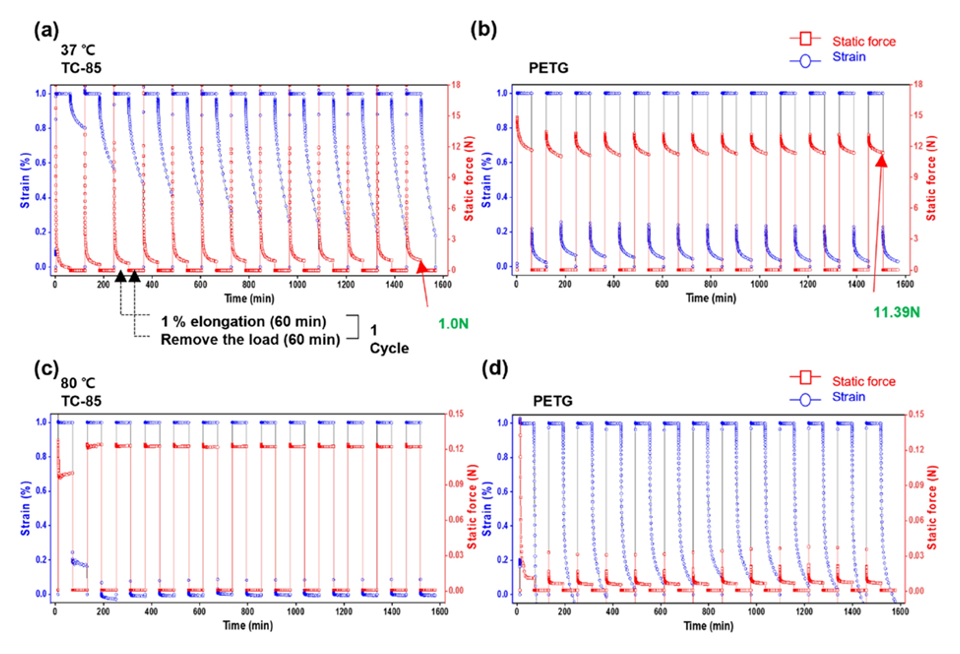
Figure 16: Stress relaxation and creep at 37 °C and 80 °C for a thermoset printed resin TC-85 and for a thermoplastic PETG. A cycle corresponding to 1% elongation for 60 min and recovery for 60 min; it was repeated 13 times. At 37°C TC-85 initially showed a rapid stress relaxation and a residual static force of 1 N so a bigger force relaxation than in PETG: after 13 cyclic loads, a residual static force of 1.0 N was observed. Although the stress relaxation occurred in PETG, the amount of relaxation was smaller than that of TC-85, with a residual static force of 11.39 N after 13 cyclic loads. For resin TC-85, at 80°C, the deformation was instantaneously recovered as the load was removed but for PETG the recovery was gradual. Figure from [53].
In this continuity, other studies have evaluated the mechanical properties of other printable resins intended for oral medical devices, such as Dental LT Clear Resin. Regarding the compression values, for example, those measured for the latter were found to be an order of magnitude higher than the maximum forces that can be transmitted to the teeth, estimated at around 700-800 N [183]. This force corresponds to the upper limit of the forces applied by the aligners during clinical use or mechanical testing.
2.2.4.3 Mechanical properties and aging: To evaluate the aging of the aligners, tensile, stress-relaxation, and creep tests were performed on Invisalign® COAs before and after patient use, and no significant differences in the tested mechanical properties were observed [158]. Although Invisalign® is the most widely used COA system, there remains a significant need for in vivo aging studies on other materials to determine the best material to precisely meet treatment needs and offer alternative options to practitioners, even though several comparative studies are available. For example, a comparative study of the thermal stability of different brands of COAs (Invisalign™, Simpli5™, and ClearCorrect™) showed no change in the glass transition temperature after intra-oral use [41]. Another comparative study on COA, Invisalign™, and Simpli5™ also showed favorable post-aging mechanical behavior: no statistically significant differences in storage modulus, loss modulus, tan δ, creep compliance, or deformation recovery were observed when comparing materials as received and after use [184]. Despite some articles suggesting that mechanical properties do not change before and after aging, several studies of real intra-oral aging in COAs have shown that aging increasingly affects the mechanical properties of orthodontic aligners under in-use conditions. However, the impact of this aging varies by brand and depends on the manufacturing method (thermoformed or printed), with notable differences between 3D-printed and thermoformed COAs (Table 3). Furthermore, the results remain contradictory, particularly regarding whether the mechanical degradation observed actually affects tooth movement efficiency. This uncertainty underscores the need to interpret mechanical aging data in the context of aligner design and force-delivery strategy, rather than treating material degradation alone as a predictor of clinical performance. An in vivo study of COAs printed from Tera Harz TC-85™ resin found that mechanical properties measured by instrumented indentation were unaffected after one week of use [70]. However, in another in vivo comparative study evaluating mechanical properties after aging, Tera Harz TC-85™ resin-printed COAs and thermoformed COAs manufactured by Scheu-Dental and Align Technology showed significant differences in mechanical properties after intraoral use, with Tera Harz TC-85™ resin-printed aligners exhibiting greater changes. Specifically, increased elastic index (η IT) and indentation relaxation (RIT) were measured in printed COAs after intraoral use, suggesting increased stiffness and a greater decrease in strength over time, which could compromise their clinical efficacy [185].
2.2.5. Transparency
As previously mentioned, the materials used for COAs must have good light transmission and, ideally, transmit at least 80% of visible light for optimal clarity [111]. The transparency and color stability of COAs are affected by the consumption of colored drinks, exposure to ultraviolet light, and the use of toothbrushes [186-188]. Although clinicians recommend that patients remove their aligners when eating or drinking to avoid pigment adsorption by the thermoplastic material, studies have shown that many patients often ignore these recommendations and consume food and/or drink with their COAs, which can compromise transparency and, consequently, aesthetics [18,111,189].
Several studies have been conducted on the color stability and transparency of aligners when exposed to coloring agents and saliva, evaluating various aligner materials such as SmartTrack™ multilayer PU, PETG (Erkodur), copolyester (Essix ACE), two PETs (Essix Plastic and Ghost aligner), and PU (Zendura) [2,190,191]. The results showed that all the materials showed no color change after 12 h of contact with coloring agents such as wine, coffee, black tea, Coca-Cola, and nicotine, except for the SmartTrack™ material, which showed color changes when subjected to coffee and red wine. When exposure to the various coloring agents was extended to 7 days, all the aligners showed slight color changes. The Erkodur and SmartTrack™ samples showed marked color changes in the presence of coffee and black tea, and SmartTrack™ also showed a significant color change after 7 days of immersion in red wine. No studies of this type have been conducted on direct 3D printed materials.
Table 3: Summary of the properties of the materials under investigation. Based on the table of [35] and completed with more recent references
|
Authors |
Year |
Title |
Journal |
|
Alexandros Alexandropoulos, Youssef S Al Jabbari, Spiros Zinelis, Theodore Eliades |
2015 |
Chemical and mechanical characteristics of contemporary thermoplastic orthodontic materials |
Australian Orthodontic Journal |
|
Luca Lombardo, Elisa Martines, Valentina Mazzanti, Angela Arreghini, Francesco Mollica, Giuseppe Siciliani |
2017 |
Stress relaxation properties of four orthodontic aligner materials: A 24-h in vitro study |
The angle orthodontist |
|
Fabienne Suter, Spiros Zinelis, Raffaello Patcas, Marc Schaetzle, Giorgio Eliades, Teodoro Eliades |
2020 |
Roughness and wettability of aligner materials |
Journal of orthodontics |
|
Francesco Tamburrino, Vincenzo D’Antò, Rosaria Bucci, Giulio Alessandri-Bonetti, Sandro Barone, Armando Viviano Razionale |
2020 |
Mechanical Properties of Thermoplastic Polymers for Aligner Manufacturing: In Vitro Study |
Dentistry Journal |
|
Valeria Daniele, Ludovico Macera, Giuliana Taglieri, Loredana Spera, Giuseppe Marzo, Vincenzo Quinzi |
2021 |
Color Stability, Chemico-Physical and Optical Features of the Most Common PETG and PU Based Orthodontic Aligners for Clear Aligner Therapy |
Polymers |
|
Man-Hin Kwok, Betina Porto, Shadi Mohebi, Lei Zhu, Mark Hans |
2021 |
Physical and chemical properties of five different clear thermoplastic materials |
Journal of Applied Polymer science |
|
Se Yeon Lee, Hoon Kim, Hyun-Joong Kim, Chooryung J. Chung, Yoon Jeong Choi, Su-Jung Kim, Jung-Yul Cha |
2022 |
Thermo-mechanical properties of 3D printed photocurable shape memory resin for clear aligners |
Scientific reports |
|
Bijan Golkhani, Anna Webber, Ludger Keilig, Susanne Reimann, Christoph Bourauel |
2022 |
Variation of the modulus of elasticity of aligner foil sheet materials due to thermoforming |
Journal of orofacial orthopedics |
|
Aseel Alhendi, Rita Khounganian, Raisuddin Ali, Saeed Ali Syed, Abdullazez Almudhi |
2022 |
Structural Conformation Comparison of Different Clear Aligner Systems: An In Vitro Study |
Dentistry journal |
|
Paolo Albertini, Valentina Mazzanti, Francesco Mollica, Federica Pellitteri, Mario Palone, Luca Lombardo |
2022 |
Stress Relaxation Properties of Five Orthodontic Aligner Materials: A 14-Day In-Vitro Study |
Bioengineering |
|
Isabella Pratto, Mauro Carlo Agner Busato, Paulo Rodrigo Stival Bittencourt |
2022 |
Thermal and mechanical characterization of thermoplastic orthodontic aligners discs after molding process |
Journal of the Mechanical Behavior of Biomedical Materials |
|
So Yeon Park, Sung-Hwan Choi, Hyung-Seog Yu, Su-Jung Kim, Hoon Kim, Ki Beom Kim, Jung-Yul Cha |
2023 |
Comparison of translucency, thickness, and gap width of thermoformed and 3D-printed clear aligners using micro-CT and spectrophotometer |
Scientific Report |
|
Luka Šimunović, Antonija Jurela, Karlo Sudarević, Ivana Bačić, Senka Meštrović |
2023 |
Differential Stability of One-layer and Three-layer Orthodontic Aligner Blends under Thermocycling: Implications for Clinical Durability |
Acta stomatologica Croatica |
|
Larine Ferreira Lira, Eduardo Otero Amaral Vargas, Eduardo Moreira da Silva, Juliana Nunes da Silva Meirelles Dória Maia, Amal Elzubair, Liliane Siqueira de Morais, Sérgio Alvaro de Souza Camargo Jr, Glaucio Serra, Margareth Maria Gomes de Souza |
2023 |
Effect of oral exposure on chemical, physical, mechanical, and morphologic properties of clear orthodontic aligners |
American Journal of Orthodontics and Dentofacial Orthopedics |
|
Nic Shirey, Gustavo Mendonca, Christian Groth, Hera Kim-Berman |
2023 |
Comparison of mechanical properties of 3-dimensional printed and thermoformed orthodontic aligners |
American Journal of Orthodontics and Dentofacial Orthopedics |
|
Juan Carlos Rodríguez Fernández, Francisco Pastor, José María Barrera Mora, Elena Demiquels, Eduardo Espinar, Javier Gil |
2024 |
Conformation Effect on the Mechanical and Microbiological Behavior of Invisible Orthodontic Aligners |
Materials |
|
Luka Šimunović, Antun Jakob Marić, Ivana Bačić,Tatjana Haramina, Senka Meštrović |
2024 |
Impact of UV Light Exposure During Printing on Thermomechanical Properties of 3D-Printed Polyurethane-Based Orthodontic Aligners |
Applied Sciences |
|
Nicolae Daniel Olteanu, Ionut Taraboanta, Tinela Panaite, Carina Balcos, Sorana Nicoleta Rosu, Raluca Maria Vieriu, Stefania Dinu, Irina Nicoleta Zetu |
2024 |
Color Stability of Various Orthodontic Clear Aligner Systems after Submersion in Different Staining Beverages |
Materials |
|
Xiaoling Liao, Fengqiong Huang, Wuya Chen, Xiaoyan Cai, Yu Lu, Zhiying Zhou |
2024 |
The thickness and gap width of aligners made of three types of thermoforming materials: An in-vitro study |
Seminars in Orthodontics |
|
Islam Atta, Christoph Bourauel, Yasmine Alkabani, Nesreen Mohamed, Hoon Kim, Abdulaziz Alhotan, Ahmed Ghoneima, Tarek Elshazly |
2024 |
Physiochemical and mechanical characterisation of orthodontic 3D printed aligner material made of shape memory polymers (4D aligner material) |
Journal of the Mechanical Behavior of Biomedical Materials |
3. State of Clinical Art
Clear aligner orthodontics is experiencing significant growth, driven by continually evolving clinical research. Clinical studies are crucial in evaluating its effectiveness compared to traditional orthodontic appliances, identifying specific indications, and detecting potential side effects. The clear aligner approach is gaining popularity due to its aesthetic advantages and ongoing technological advancements [2]. Nevertheless, its success depends on robust scientific evidence to ensure both efficacy and safety. The clinical studies have been guided by a progressive evolution through different generations of aligners to meet the growing requirements of orthodontic correction. However, it is essential to note that the clinical trials do not specify the generation of aligners used in their study. Nevertheless, these diverse research efforts contribute to a deeper understanding of the benefits, limitations, and clinical considerations surrounding using clear aligners in orthodontics.
3.1. Efficiency of the treatment
The first clinical studies on Invisalign™ aligners began in 1997, when these devices were first introduced to treat mild to moderate malocclusion. These early studies highlighted the effectiveness of these clear aligners in promoting the natural closure of spaces between teeth and correcting dental tilts. However, more complex movements, such as closing an extraction space, were less successful [192]. An initial misunderstanding of the biomechanics and effectiveness of the Invisalign® system in dental movement underscored the need for a better understanding. Subsequent studies emphasized the importance of this understanding for guiding patient selection, directing appropriate movement sequences, and reducing the need for later adjustments. In 2001, the first American clinical study assessed the feasibility of the initial generation of Invisalign®, achieving most of its objectives except for anterior overbite. Early studies on Invisalign® faced challenges with complex cases, but later reports demonstrated their effectiveness for moderate malocclusions with second-generation aligners [2].
A 2003 study demonstrated that Invisalign® aligners made of rigid and flexible materials had similar effects regardless of activation time. Aligners primarily improved anterior tooth alignment, transverse relationships, and the overbite. They closed spaces between incisors more effectively than between premolars without adverse effects on the gums [193,194]. These results support a two-week treatment duration, especially for patients without premolar extractions. Observations indicated that after premolar extractions, patients treated with Invisalign® aligners may exhibit dental tilting, correctable with fixed orthodontic appliances [195]. In 2005, a study based on the OGS in the United States compared Invisalign® to traditional orthodontic appliances, showing that Invisalign® was less effective in correcting certain malocclusions but performed well in closing spaces and correcting anterior dental rotations [196]. In 2008, Robert L. Boyd introduced a new best-practice protocol for Align Technology, enhancing anterior and posterior corrections through computer simulations [197].
The new protocol automated interproximal reduction to avoid IPR-related dental damage. A year later, Boyd demonstrated how computer-assisted clear aligner systems could be integrated into periodontal and restorative dentistry to achieve better results than without orthodontic treatment [197].
Other recent technological advances have significantly reduced the time required for anteroposterior correction of mandibular incisors with clear aligners, such as the VPro5 vibration tool. This innovation has the potential to improve treatment efficiency [198]. It can stimulate the cytokine and bone remodeling marker and increase the patient's comfort in the first days of treatment. A 2011 study highlighted that while Invisalign® can straighten arches, it has limitations in root tipping due to limited control of dental movement [199]. A morphometric analysis of changes in dental arch shape in Class II patients treated with clear aligners emphasizes that Invisalign® treatment induces notable arch expansion at the molar and premolar levels. Although variances between planned and achieved positions of about 50% were noted, they were not deemed clinically essential, and the treatment appears to produce functional and stable results [200]. Using Invisalign® aligners for subsequent years confirmed the effectiveness of clear aligners in treating chronic periodontal disease, with benefits in resolving crowding, spacing, and dental arch dimensions [201]. Studies also examined specific aspects, such as material fatigue, the effect of human relaxin on dental movement, and the impact of age, gender, and bone quality on orthodontic dental movement [202,203]. An evaluation of open-bite closure using clear aligners for patients treated between 2007 and 2018 demonstrates the effectiveness of this approach in reducing and controlling vertical dimensions in patients with open-bite occlusal patterns [204].
In 2014, clinical trials emerged comparing different clear aligner systems. Although all showed evident clinical limitations, they demonstrated good treatment efficiency. The key lies in accurate diagnosis, selecting achievable treatment goals, and considering patient expectations and needs [205-207]. In 2016, a specific analysis of mandibular incisor inclination revealed no significant difference between clear aligners and fixed labial appliances in cases of mild crowding [208]. Clinical studies comparing the effectiveness of clear aligners and fixed appliances for treating mild malocclusions in adolescents show equivalent efficacy, with advantages such as fewer appointments, emergency visits, and shorter treatment duration with clear aligners [209]. A retrospective cohort (2013-2017) evaluated the predictability of Nuvola® aligners in achieving anterior tooth torque movements, demonstrating clinical results comparable to those of digital configuration planning [31,210]. Recently, a clinical study has embraced the use of a thermoplastic polymer biomaterial to produce COAs from 3D-printed molds using a thermosetting polymer. Patients with issues such as crowding, spacing, deep bite, excessive overjet, and crossbite have been successfully treated with these clear aligners. As more individuals prioritize dental health and aesthetics, orthodontic treatment is rapidly gaining popularity, demonstrating significant improvements in patients’ teeth following this intervention [211]. Regarding the evaluation of clinical and predicted outcomes of clear aligner treatment, recent studies emphasize the need for overcorrection in treatment planning and execution to achieve the desired result [212].
3.2. Oral health
Studies comparing COAs with fixed orthodontic appliances show significant benefits for oral health. Several clinical studies have shown that COAs, such as Invisalign®, improve gingival health, particularly the loss and depth of periodontal pockets, compared with fixed appliances. In addition, they are recommended for patients at risk of periodontitis, as they promote a movement less favorable to the proliferation of periodontopathic bacteria [213-216].
Regarding microbial colonization, users of COAs showed improved gingival health when adequate oral hygiene was maintained, and no significant alteration in the oral microbiome's biodiversity was observed [216-218]. Regarding enamel demineralization, although both types of treatment can lead to lesions, COA treatments are often more extensive but less deep, underscoring the need for strict hygiene. However, another general evaluation found no significant difference in periodontal health between COA treatments and fixed appliances, highlighting the importance of regular check-ups and compliance with the practitioner's instructions to maintain good oral health [217,219-221].
3.3. Patient quality of life
Further research explored the impact on patients' quality of life treated with clear aligners compared to fixed orthodontic appliances. Clear aligners improved quality of life, especially regarding pain and oral hygiene [222]. Comparative studies demonstrated that using Invisalign® causes less pain than fixed brackets, reinforcing its appeal as an aesthetic and comfortable option for orthodontic treatment [223-225]. This can be explained by the difference in forces applied to the teeth between aligners and orthodontic appliances. Indeed, the force applied with an aligner is weaker but more consistent than that applied with dental braces during bracket tightening.
In 2022, the first clinical trial assessed the effects of vacuum-formed Hawley retention appliances on speech alteration. Patients initially experienced articulation difficulties, which diminished over time. After three weeks, speech clarity was no longer affected, although some sounds remained significantly altered [226].
Regarding oral hygiene, clear aligners and self-ligating brackets facilitate better hygiene than traditional fixed orthodontic appliances. However, a prospective randomized clinical study found no evidence of significant differences in oral hygiene levels among clear aligners, self-ligating brackets, and conventional brackets after 18 months of active orthodontic treatment [227].
3.4. Device degradation
A prospective clinical study examined the thickness stability of clear aligners after intraoral physiological aging, showing good stability in a population of healthy adults with an average age of 28.8 ± 9.6 years [167]. A study on the mechanical properties of Invisalign® aligners after clinical use found surface-morphology defects after 2 weeks of use. However, this did not significantly affect mechanical properties. However, releasing oligo-elements (e.g., Al, Si, Zn) may pose a risk for allergic patients [36,158,228].
A clinical study analyzed monomer release following the use of three types of orthodontic devices: Hawley retention devices, devices with thermal or chemical polymerization, and thermoformed aligners. BPA levels in patients’ saliva were measured before device placement and then at 1 day, 1 week, and 1 month. All retention devices showed increasing levels of BPA, but only thermoformable devices exhibited statistically significant increases [229].
3.5. Materiovigilance cases postponed
Post-market materiovigilance plays a key role in the continuous assessment of the safety of clear orthodontic aligners once they are placed on the market. Several regulatory agencies have established adverse event reporting systems, such as the MAUDE (Manufacturer and User Facility Device Experience) database managed by the US Food and Drug Administration (FDA), which collect reports from manufacturers, healthcare professionals, and patients.
A retrospective analysis of the MAUDE database has identified material-safety-related adverse events associated with the use of clear orthodontic aligners, summarized in Table 4. It should be noted that MAUDE reports do not establish a direct causal relationship between the reported adverse event and the material itself, but rather provide signals that may justify further investigation. Among the reported complications, soft-tissue adverse reactions were the most frequently documented, including burning sensations, tingling, a sore tongue, swollen lips, blisters, ulcers, and dry mouth [225,230-239].
Table 4: Material safety cases reported in the MAUD database
|
Examples of clinical adverse event |
Clinical adverse events (n) |
|
Difficulty breathing |
56 |
|
Sore throat |
35 |
|
Swollen throat |
34 |
|
Swollen tongue |
31 |
|
Hives and itchiness |
31 |
|
Anaphylaxis |
30 |
|
Swollen lips |
27 |
|
Chest pain |
19 |
|
Cough |
19 |
|
Nausea |
18 |
|
Difficulty swallowing |
12 |
|
Dry mouth |
11 |
|
Headaches |
10 |
|
Swelling of eyes |
9 |
|
Blisters or sores of lips |
9 |
|
Fatigue |
8 |
|
Burning/tingling/sore tongue |
7 |
|
Blisters or ulcerations on tongue |
6 |
These reactions may originate from multiple factors, including mechanical irritation, aligner fit and design, oral hygiene conditions, or potential leaching of residual substances from polymeric materials. As a result, distinguishing material-related adverse effects from those related to orthodontic biomechanics or patient-related factors remains challenging. Furthermore, under-reporting and variability in the quality of submitted reports represent well-known limitations of spontaneous reporting systems such as MAUDE.
Several studies have also reported periodontal and dental complications associated with clear aligner therapy, including gingival inflammation and root resorption [240-243]. While these effects are commonly reported in orthodontic treatments in general, attributing them solely to aligner materials should be interpreted with caution, as force magnitude, treatment planning, and patient compliance also play critical roles. Importantly, most adverse effects were reported during the early stages of treatment, with a tendency to stabilize or resolve over time.
Speech difficulties, oral dysfunctions, and systemic symptoms such as breathing difficulties have also been reported in isolated cases [230,244-249]. However, current evidence does not allow a definitive link between these systemic events and specific aligner materials to be established.
Finally, it should be emphasized that post-market materiovigilance data on directly 3D-printed clear aligners remain extremely limited, highlighting the need for dedicated surveillance studies and long-term clinical monitoring to better assess their safety profile.
Conclusion
The evolution of clear orthodontic aligners highlights the intersection of technological innovation, material science, and regulatory compliance. This review demonstrates that the regulatory and normative framework governing aligner production plays a crucial role in ensuring the clinical safety and performance of aligners. Properties such as biocompatibility, mechanical resilience, transparency, and surface smoothness are essential, as they directly influence both the efficacy and patient experience. The choice of materials, whether for thermoformed or directly 3D-printed aligners, significantly impacts these attributes, requiring rigorous preclinical evaluations and adherence to international standards such as ISO 10993 and ISO 20795.
Moreover, the challenges posed by aging, wear, and patient noncompliance underscore the need for continuous innovation in material formulation and manufacturing processes. The emergence of 3D printing has opened new avenues for customization and efficiency, yet it also requires additional scrutiny regarding cytotoxicity, residual monomers, and leachables. Aligners must withstand the dynamic conditions of the oral environment while balancing aesthetics and functional durability.
Ultimately, this regulatory emphasis compels manufacturers to adopt meticulous processes, as even slight deviations can compromise critical aligner properties. This diligence is vital not only for meeting legal standards but also for advancing aligners as a safe, effective, and patient-friendly alternative to traditional orthodontic treatments.
Reference
- Hartshorne J, Wertheimer MB. Emerging insights and new developments in clear aligner therapy: A review of the literature. AJO-DO Clinical Companion 2 (2022): 311-324.
- Bichu YM, Alwafi A, Liu X, et al. Advances in orthodontic clear aligner materials. Bioactive Materials 22 (2023): 384-403.
- Kesling HD. The philosophy of the tooth positioning appliance. American Journal of Orthodontics and Oral Surgery 31 (1945): 297-304.
- Ponitz RJ. Invisible retainers. American Journal of Orthodontics 59 (1971): 266-272.
- McNamara JA, Kramer KL, Juenker JP. Invisible retainers. J Clin Orthod 19 (1985): 570-578.
- Zinelis S, Panayi N, Polychronis G, et al. Comparative analysis of mechanical properties of orthodontic aligners produced by different contemporary 3D printers. Orthodontics & Craniofacial Research 25 (2022): 336-341.
- Narongdej P, Hassanpour M, Alterman N, et al. Advancements in Clear Aligner Fabrication: A Comprehensive Review of Direct-3D Printing Technologies. Polymers 16 (2024): 371.
- Bhushan J, Grover V. Additive manufacturing: current concepts, methods, and applications in oral health care. In: Biomanufacturing (2019):103-122.
- Kalia S, Reginald M, Melsen B. Clear aligners and their role in orthodontics. In: Adult Orthodontics (2022): 379-391.
- Moshiri M, Kravitz ND, Nicozisis J, et al. Invisalign eighth-generation features for deep-bite correction and posterior arch expansion. Seminars in Orthodontics 27 (2021): 175-178.
- S. Clear Aligners Market Size, Share, Trends | Report, 2030. Grand View Research (2025).
- Tartaglia GM, Mapelli A, Maspero C, et al. Direct 3D Printing of Clear Orthodontic Aligners: Current State and Future Possibilities. Materials 14 (2021): 1799.
- Huang W, Dong L, Yu S, et al. Stress distribution of the modified clear twin-block aligner on the temporomandibular joint, alveolar bone and teeth: A finite element analysis. International Orthodontics 21 (2023): 100815.
- Vig KWL, Weyant R, O’Brien K, Bennett E. Developing outcome measuresin orthodontics that reflect patient and provider values. Seminars in Orthodontics 5 (1999): 85-95.
- Gold BP, Siva S, Duraisamy S, et al. Properties of Orthodontic Clear Aligner Materials - A Review. jemds 10 (2021): 3288-3294.
- Dimitrova M, Vlahova A, Kalachev Y, et al. Recent Advances in 3D Printing of Polymers for Application in Prosthodontics. Polymers 15 (2023): 4525.
- Francisco I, Paula AB, Ribeiro M, et al. The Biological Effects of 3D Resins Used in Orthodontics: A Systematic Review. Bioengineering 9 (2022): 15.
- Macrì M, Murmura G, Varvara G, et al. Clinical performances and biological features of clear aligners materials in orthodontics. Front Mater 9 (2022): 819121.
- Weir T. Clear aligners in orthodontic treatment. Australian Dental Journal 62 (2017): 58-62.
- Upadhyay M, Arqub SA. Biomechanics of clear aligners: hidden truths & first principles. Journal of the World Federation of Orthodontists 11 (2022): 12-21.
- Cope JB, Groth C. Weighing the options of an in-office versus an outsourced aligner manufacturing approach. Seminars in Orthodontics 27 (2021): 179-183.
- Oral Health Group [Internet]. An historical overview of clear aligner therapy: the evolution of clear aligners (2020).
- Bates C. Dimensional accuracy of aged 3D-printed models and imparted effects on thermoformed retainers [thesis], University of Texas (2021).
- Sheridan JJ, LeDoux W, McMinn R. Essix retainers: fabrication and supervision for permanent retention. J Clin Orthod 27 (1993): 37-45.
- Att W, Witkowski S, Strub JR. Digital Workflow in Reconstructive Dentistry. Quintessenz Verlag 2021. 513 p.
- Beers A, Choi W, Pavlovskaia E. Computer-assisted treatment planning and analysis. Orthodontics & Craniofacial Research 6 (2003): 117-125.
- Martorelli M, Gerbino S, Giudice M, et al. A comparison between customized clear and removable orthodontic appliances manufactured using RP and CNC techniques. Dental Materials 29 (2013): 1-10.
- Venezia P, Ronsivalle V, Rustico L, et al. Accuracy of orthodontic models prototyped for clear aligners therapy: A 3D imaging analysis comparing different market segments 3D printing protocols. Journal of Dentistry 124 (2022): 104212.
- Invisalign [Internet]. Invisalign G6 - Discover New Possibilities (2025).
- Putrino A, Barbato E, Galluccio G. Clear Aligners: Between Evolution and Efficiency—A Scoping Review. International Journal of Environmental Research and Public Health 18 (2021): 2870.
- Ko HC, Liu W, Hou D, et al. Recommendations for clear aligner therapy using digital or plaster study casts. Prog Orthod 19 (2018): 22.
- Condò R, Mampieri G, Giancotti A, et al. SEM characterization and ageing analysis on two generation of invisible aligners. BMC Oral Health 21 (2021): 316.
- Alsaeed SA, Kennedy DB, Aleksejuniene J, et al. Outcomes of orthodontic treatment performed by individual orthodontists vs 2 orthodontists collaborating on treatment. American Journal of Orthodontics and Dentofacial Orthopedics 158 (2020): 59-67.
- Condo’ R, Pazzini L, Cerroni L, et al. Mechanical properties of “two generations” of teeth aligners: Change analysis during oral permanence. Dental Materials Journal 37 (2018): 835-842.
- Cenzato N, Di Iasio G, Martìn Carreras-Presas C, et al. Materials for Clear Aligners—A Comprehensive Exploration of Characteristics and Innovations: A Scoping Review. Applied Sciences 14 (2024): 6533.
- Bouchema TSE, Saunier J, Mauriello J, et al. Chemical analysis and performance evaluation of ClearCorrect® aligners as received and after intraoral use: Implications for durability, aesthetics, and patient safety. Dental Materials 40 (2024): 2135-2147.
- Wong BH. Invisalign A to Z. American Journal of Orthodontics and Dentofacial Orthopedics 2002;121(5):540-1.
- Frick A, Rochman A. Characterization of TPU-elastomers by thermal analysis (DSC). Polymer Testing 23 (2004): 413-417.
- Iijima M, Kohda N, Kawaguchi K, et al. Effects of temperature changes and stress loading on the mechanical and shape memory properties of thermoplastic materials with different glass transition behaviours and crystal structures. European Journal of Orthodontics 37 (2015): 665-670.
- Chen TK, Shieh TS, Chui JY. Studies on the First DSC Endotherm of Polyurethane Hard Segment Based on 4,4‘-Diphenylmethane Diisocyanate and 1,4-Butanediol. Macromolecules 31 (1998): 1312-1320.
- Wenger L. Thermal properties of commonly used clear aligner systems as received and after clinical use [thesis]. Marquette University (2017).
- Saadawi MN. Polymer-polymer composites: mechanical properties of inter-reinforced thermoplastics [thesis]. Materials Science and Engineering (2019).
- Mordor Intelligence [Internet]. Global Clear Aligners Market Size (2025).
- 56th volume CF growth series FINAL 02262020 [Internet] (2020).
- Edelmann A, English JD, Chen SJ, et al. Analysis of the thickness of 3-dimensional-printed orthodontic aligners. American Journal of Orthodontics and Dentofacial Orthopedics 158 (2020): 91-98.
- Nasef AA, El-Beialy AR, Mostafa YA. Virtual techniques for designing and fabricating a retainer. American Journal of Orthodontics and Dentofacial Orthopedics 146 (2014): 394-398.
- Jindal P, Juneja M, Siena FL, et al. Mechanical and geometric properties of thermoformed and 3D printed clear dental aligners. American Journal of Orthodontics and Dentofacial Orthopedics 156 (2019): 694-701.
- Peeters B, Kiratli N, Semeijn J. A barrier analysis for distributed recycling of 3D printing waste: Taking the maker movement perspective. Journal of Cleaner Production 241 (2019): 118313.
- Khorsandi D, Fahimipour A, Abasian P, et al. 3D and 4D printing in dentistry and maxillofacial surgery: Printing techniques, materials, and applications. Acta Biomaterialia 122 (2021): 26-49.
- Fang Z, Lu R, Chen J, et al. Vat photopolymerization of tough glassy polymers with multiple shape memory performances. Additive Manufacturing 5 (2022): 103171.
- Pruksawan S, Chong YT, Zen W, et al. Sustainable Vat Photopolymerization-Based 3D-Printing through Dynamic Covalent Network Photopolymers. Chemistry - An Asian Journal 19 (2024): 202400183.
- Alkhamees A. The new additive era of orthodontics: 3D-printed aligners and shape memory polymers-the latest trend-and their environmental implications. J Orthod Sci 13 (2024): 55.
- Lee SY, Kim H, Kim HJ, et al. Thermo-mechanical properties of 3D printed photocurable shape memory resin for clear aligners. Sci Rep 12 (2022): 6246.
- Kao CY, Huang TH, Ho CT, et al. RETRACTED: Biocompatibility and cytotoxicity assessment of 3D-printed orthodontic aligners: A comparative study of Graphy and LuxCreo resins on human periodontal ligament cells and osteosarcoma cells. J Dent Sci (2025).
- Bor Sabahattin. In-office aligner fabrication. DergiPark (Istanbul University) (2023).
- Yüceer ÖM, Kaynak Öztürk E, Çiçek ES, et al. Three-Dimensional-Printed Photopolymer Resin Materials: A Narrative Review on Their Production Techniques and Applications in Dentistry. Polymers 17 (2025): 316.
- NextDent [Internet]. NextDent Ortho Flex (2025).
- Nakornnoi T, Bunjerdjin P, Santiwong P, et al. The Influence of Thickness on the Mechanical Behaviors of 3D Printing Resins for Orthodontic Retainers. Int J Biomater 2024 (2024): 7398478.
- Paradowska-Stolarz A, Wezgowiec J, Mikulewicz M. Comparison of Two Chosen 3D Printing Resins Designed for Orthodontic Use: An In Vitro Study. Materials 16 (2023): 2237.
- Qin Z; Guangzhou HeyGears IMC Inc. Polyurethane acrylate, photocurable material, preparation method and use (2023).
- Zhu G, Lu Y, Gao J, et al Resin materials for making three-dimensional objects and methods of using the same (2024).
- Manoukakis T, Nikolaidis AK, Koulaouzidou EA. Polymerization kinetics of 3D-printed orthodontic aligners under different UV post-curing conditions. Prog Orthod 25 (2024): 42.
- Lin CH, Lin YM, Lai YL, et al. Mechanical properties, accuracy, and cytotoxicity of UV-polymerized 3D printing resins composed of Bis-EMA, UDMA, and TEGDMA. The Journal of Prosthetic Dentistry 123 (2020): 349-354.
- Asmussen E, Peutzfeldt A. Influence of UEDMA, BisGMA and TEGDMA on selected mechanical properties of experimental resin composites. Dental Materials 14 (1998): 51-56.
- Akın E, Çakır M. Effect of various reactive diluents on the mechanical properties of the acrylate-based polymers produced by DLP/LCD-type 3D printing. JIENS 4 (2024): 439-447.
- Duarte BM, Silva Neto JM, Pinheiro DP, et al. Effects of photoinitiators on dental composite resins: a narrative review. MedNext J Med Health Sci 7 (2022): 10.
- Barszczewska-Rybarek IM, Chrószcz MW, Chladek G. Physicochemical and Mechanical Properties of Bis-GMA/TEGDMA Dental Composite Resins Enriched with Quaternary Ammonium Polyethylenimine Nanoparticles. Materials 14 (2021): 2037.
- Graphy Inc [Internet]. 3D printable shape memory aligners & dental solutions 2025.
- Goracci C, Juloski J, D’Amico C, et al. Clinically Relevant Properties of 3D Printable Materials for Intraoral Use in Orthodontics: A Critical Review of the Literature. Materials 16 (2023): 2166.
- Can E, Panayi N, Polychronis G, et al. In-house 3D-printed aligners: effect of in vivo ageing on mechanical properties. Eur J Orthod 44 (2022): 51-55.
- European Parliament and Council of the European Union. Regulation (EU) 2017/745 of 5 April 2017 on medical devices. Official Journal of the European Union 117 (2017): 1-175.
- S. Food and Drug Administration [Internet]. Silver Spring (MD): FDA. Classify Your Medical Device (2025).
- S. Food and Drug Administration [Internet]. Silver Spring (MD): FDA. Premarket Notification 510(k) (2022).
- ISO 20795-1:2013. Dentistry — Base polymers — Part 1: Denture base polymers. Geneva: International Organization for Standardization (2013).
- ISO 20795-2:2013. Dentistry — Base polymers — Part 2: Orthodontic base polymers. Geneva: International Organization for Standardization (2013).
- Japanese Industrial Standards Committee [Internet]. Tokyo: Ministry of Economy, Trade and Industry. JISC - Japanese Industrial Standards Committee (2025).
- ISO 10993-1:2018. Biological evaluation of medical devices — Part 1: Evaluation and testing within a risk management process. Geneva: International Organization for Standardization (2018).
- ISO 7405:2025. Dentistry — Evaluation of biocompatibility of medical devices used in dentistry. Geneva: International Organization for Standardization (2025).
- ISO 179-1:2023. Plastics — Determination of Charpy impact properties — Part 1: Non-instrumented impact test. Geneva: International Organization for Standardization (2023).
- ISO 527-1:2019. Plastics — Determination of tensile properties — Part 1: General principles. Geneva: International Organization for Standardization (2019).
- Barone S, Paoli A, Neri P, et al. Mechanical and geometrical properties assessment of thermoplastic materials for biomedical application. Adv Mech Des Eng Manuf (2016): 437-446.
- Ozkan EC, Gok GD, Ordueri NE, et al. Cytotoxicity evaluation of different clear aligner materials using MTT analysis. Australasian Orthodontic Journal 38 (2022): 348-354.
- Bor S, Kaya Y, Demiral A, et al. Post-Process Cytotoxicity of Resins in Clear Aligner Fabrication. Polymers 17 (2025): 1776.
- Gruber S, Nickel A. Toxic or not toxic? The specifications of the standard ISO 10993-5 are not explicit enough to yield comparable results in the cytotoxicity assessment of an identical medical device. Front Med Technol 5 (2023): 1195529.
- ISO 10993-5:2009. Biological evaluation of medical devices — Part 5: Tests for in vitro cytotoxicity. Geneva: International Organization for Standardization (2009).
- Nunes C, Ornelas B, Marto CM, Paula A, Laranjo M, Mestre C, et al. CYTOTOXICITY OF ORTHODONTICS ALIGNERS: AN UMBRELLA REVIEW. Journal of Evidence-Based Dental Practice 25 (2025): 102168.
- ResearchTweet [Internet]. MTT assay protocol for cell viability and proliferation (2022).
- Goldberg M. In vitro and in vivo studies on the toxicity of dental resin components: a review. Clin Oral Invest 12 (2008): 1-8.
- Mohsen NM, Craig RG, Hanks CT. Cytotoxicity of urethane dimethacrylate composites before and after aging and leaching. J Biomed Mater Res 39 (1998): 252-260.
- Wisniewska-Jarosinska M, Poplawski T, Chojnacki CJ, et al. Independent and combined cytotoxicity and genotoxicity of triethylene glycol dimethacrylate and urethane dimethacrylate. Mol Biol Rep 38 (2011): 4603-4611.
- Moilanen LH, Dahms JK, Hoberman AM. Reproductive toxicity evaluation of the dental resin monomer triethylene glycol dimethacrylate (CASRN 109-16-0) in mice. Int J Toxicol 33 (2014): 106-115.
- Brenz F, Linke S, Simat TJ. Linear and cyclic oligomers in PET, glycol-modified PET and TritanTM used for food contact materials. Food Additives & Contaminants: Part A 38 (2021): 160-179.
- Tsochatzis ED, Alberto Lopes J, Kappenstein O, et al. Quantification of PET cyclic and linear oligomers in teabags by a validated LC-MS method - In silico toxicity assessment and consumer’s exposure. Food Chemistry 317 (2020): 126427.
- Ubeda S, Aznar M, Rosenmai AK, et al. Migration studies and toxicity evaluation of cyclic polyesters oligomers from food packaging adhesives. Food Chemistry 311 (2020): 125918.
- Eckardt M, Schneider J, Simat TJ. In vitro intestinal digestibility of cyclic aromatic polyester oligomers from polyethylene terephthalate (PET) and polybutylene terephthalate (PBT). Food Additives & Contaminants: Part A 36 (2019): 1882-1894.
- Serafimova R, Coja T, Kass GEN. Application of the Threshold of Toxicological Concern (TTC) in Food Safety: Challenges and Opportunities. Front Toxicol 3 (2021): 655951.
- Feng D, Li X, Fan X, et al. Cytotoxicity, endocrine disrupting activity, and chemical analysis of 42 food contact silicone rubber products. Science of The Total Environment 872 (2023): 162298.
- Ball GL, McLellan CJ, Bhat VS. Toxicological review and oral risk assessment of terephthalic acid (TPA) and its esters: A category approach. Critical Reviews in Toxicology 42 (2012): 28-67.
- Toshihiro Kawamoto, Koji Matsuno, Fujio Kayama, et al. Effect of ethylene glycol monomethyl ether and diethylene glycol monomethyl ether on hepatic metabolizing enzymes. Toxicology 62 (1990): 265-274.
- Theodorou CI, Kuijpers-Jagtman AM, Bronkhorst EM, et al. Optimal force magnitude for bodily orthodontic tooth movement with fixed appliances: A systematic review. Am J Orthod Dentofacial Orthop 156 (2019): 582-592.
- Lombardo L, Martines E, Mazzanti V, et al. Stress relaxation properties of four orthodontic aligner materials: A 24-hour in vitro study. The Angle Orthodontist 87 (2016): 11-18.
- Bakke M. (2006, June). Bite force and occlusion. Seminars in orthodontics 12 (2006): 120-126
- Takaki P, Vieira M, Bommarito S. Maximum bite force analysis in different age groups. Int Arch Otorhinolaryngol 18 (2014): 272-276.
- Nishigawa K, Bando E, Nakano M. Quantitative study of bite force during sleep associated bruxism. Journal of Oral Rehabilitation 28 (2001): 485-491.
- ISO 527-2:2025. Plastics — Determination of tensile properties — Part 2: Test conditions for moulding and extrusion plastics. Geneva: International Organization for Standardization (2025).
- ISO 178:2019. Plastics — Determination of flexural properties. Geneva: International Organization for Standardization (2019).
- ISO 14577-1:2015. Metallic materials — Instrumented indentation test for hardness and materials parameters — Part 1: Test method. Geneva: International Organization for Standardization (2015).
- Gerard Bradley T, Teske L, Eliades G, et al. Do the mechanical and chemical properties of InvisalignTM appliances change after use? A retrieval analysis. Eur J Orthod 38 (2016): 27-31.
- Safi’ai A, Ammarullah MI, Baharuddin MH, et al. Evaluation of Mechanical Properties, Color Stability, and Cleaning Efficacy of BioMed Clear Resin-Based Dental Aligners. Engineering Reports 7 (2025): e70052.
- Katib HS, Hakami AM, Albalawei M, et al. Stability and success of clear aligners in orthodontics: a narrative review. Cureus 16 (2024): e52038.
- Noar JH, Sharma S, Roberts-Harry D, et al. A discerning approach to simple aesthetic orthodontics. Br Dent J 218 (2015): 157-166.
- Liu CL, Sun WT, Liao W, et al. Colour stabilities of three types of orthodontic clear aligners exposed to staining agents. Int J Oral Sci 8 (2016): 246-253.
- ISO 4892-2:2013. Plastics — Exposure methods to laboratory light sources — Part 2: Xenon arc lamps. Geneva: International Organization for Standardization (2013).
- Bollenl CML, Lambrechts P, Quirynen M. Comparison of surface roughness of oral hard materials to the threshold surface roughness for bacterial plaque retention: A review of the literature. Dental Materials 13 (1997): 258-269.
- Komalsingsakul A, Srisatjaluk RL, Senawongse P. Effect of brushing on surface roughness, fluoride release, and biofilm formation with different tooth-colored materials. Journal of Dental Sciences 17 (2022): 389-398.
- Jones CS, Billington RW, Pearson GJ. The in vivo perception of roughness of restorations. Br Dent J 196 (2004): 42-45.
- ISO 21920-2:2021. Geometrical product specifications (GPS) — Surface texture: Profile — Part 2: Terms, definitions and surface texture parameters. Geneva: International Organization for Standardization (2021).
- Zecca PA, Borgese M, Raspanti M, et al. Comparative microscopic analysis of plastic dispersion from 3D-printed and thermoformed orthodontic aligners. European Journal of Orthodontics 47 (2025): cjaf014.
- Šimunović L, Pečanić P, Marić AJ, et al. Impact of various cleaning protocols on the physical and aesthetic properties of 3D-printed orthodontic aligners. Sci Rep 15 (2025): 19022.
- Rossini G, Parrini S, Castroflorio T, et al. Efficacy of clear aligners in controlling orthodontic tooth movement: a systematic review. Angle Orthod 85 (2015): 881-889.
- Tsomos, B. Ludwig, J. Grossen, et al. Objective assessment of patient compliance with removable orthodontic appliances: a cross-sectional cohort study, Angle Orthod 84 (2014): 56-61.
- Bouchema TS, Saunier J, Mauriello J, et al. In vitro hydrolytic and photooxidative stability of polyester-based materials for clear orthodontic aligners. Polymer Degradation and Stability 246 (2026): 111930.
- Raffta Sánchez MA, Hernández Castillo JA, Torres Cornejo AC, et al. Effect of pH on the mechanical properties of thermoplastic polyurethanes used to manufacture dental aligners: An in vitro study. International Journal of Engineering Technology and Scientific Innovation 8 (2023): 42.
- Olteanu ND, Taraboanta I, Panaite T, et al. Color stability of various orthodontic clear aligner systems after submersion in different staining beverages. Materials 17 (2024): 4009.
- Shimizu RH, Diavão MFC, Dalledone M, et al. Evaluation of color stability of orthodontic aligners: in vitro study. Rev Odontol UNESP 54 (2025): e20250010.
- Bouchema TS, Saunier J, Mollier L, et al. Comparison of three dental resins for 3D printing of orthodontic appliances: Comparison of leaching, biocompatibility, and thermo-mechanical properties after post-curing and aging. Dental Materials 42 (2026): 381-402.
- Alhendi A, Khounganian R, Almudhi A, et al. Leaching of Different Clear Aligner Systems: An In Vitro Study. Dentistry Journal 10 (2022): 27.
- Dantagnan CA, Babajko S, Nassif A, et al. Biocompatibility of direct printed clear aligners: A systematic review of in vitro studies. International Orthodontics 23 (2025): 101028.
- Willi A, Patcas R, Zervou SK, et al. Leaching from a 3D-printed aligner resin. European Journal of Orthodontics 45 (2023): 244-249.
- ISO 10993-12:2021. Biological evaluation of medical devices — Part 12: Sample preparation and reference materials. Geneva: International Organization for Standardization (2021).
- Pratsinis H, Papageorgiou SN, Panayi N, et al. Cytotoxicity and estrogenicity of a novel 3-dimensional printed orthodontic aligner. American Journal of Orthodontics and Dentofacial Orthopedics 162 (2022): e116-122.
- Chojnacka K, Mikulewicz M. Cytotoxicity and Endocrine Disruption in Materials Used for Removable Orthodontic Retainers: A Comprehensive Review. Dentistry Journal 13 (2025): 269.
- Yazdi M, Daryanavard H, Ashtiani AH, et al. A systematic review of biocompatibility and safety of orthodontic clear aligners and clear vacuum-formed thermoplastic retainers: Bisphenol-A release, adverse effects, cytotoxicity, and estrogenic effects. Dent Res J 20 (2023): 41.
- Ahrari F, Tavakkol Afshari J, Poosti M, et al. Cytotoxicity of orthodontic bonding adhesive resins on human oral fibroblasts. Eur J Orthod 32 (2010): 688-692.
- Eliades T, Pratsinis H, Athanasiou AE, et al. Cytotoxicity and estrogenicity of Invisalign appliances. Am J Orthod Dentofacial Orthop 136 (2009): 100-103.
- Lorusso M, Esperouz F, Di Carlo G, et al. Cytotoxicity of Printed Aligners: A Systematic Review. Dentistry Journal 13 (2025): 275.
- Alessandra C, Anastasia A, Giovanni B, et al. Comparison of the cytotoxicity of 3D-printed aligners using different post-curing procedures: an in vitro study. Australasian Orthodontic Journal 39 (2023): 49-56.
- Mohamed ME, Motawea IT, Essawy H. Synthesis and characterization of photocurable resin used in 3D printing for dental applications. Al-Azhar J Dent 10 (2023).
- Rogers HB, Zhou LT, Kusuhara A, et al. Dental resins used in 3D printing technologies release ovo-toxic leachates. Chemosphere 270 (2021): 129003.
- Schneider TR, Hakami-Tafreshi R, Tomasino-Perez A, et al. Effects of dental composite resin monomers on dental pulp cells. Dent Mater J 38 (2019): 579-583.
- Wiertelak-Makała K, Szymczak-Pajor I, Bociong K, Śliwińska A. Considerations about Cytotoxicity of Resin-Based Composite Dental Materials: A Systematic Review. International Journal of Molecular Sciences 25 (2024): 152.
- Pagano S, Coniglio M, Valenti C, et al. Biological effects of resin monomers on oral cell populations: descriptive analysis of literature. Eur J Paediatr Dent 20 (2019): 224-232.
- Krifka S, Spagnuolo G, Schmalz G, et al. A review of adaptive mechanisms in cell responses towards oxidative stress caused by dental resin monomers. Biomaterials 34 (2013): 4555-4563.
- Juráňová J. Illuminating the cellular and molecular mechanism of the potential toxicity of methacrylate monomers used in biomaterials. Drug and Chemical Toxicology 43 (2020): 266-278.
- Kollmuss M, Edelhoff D, Schwendicke F, et al. In Vitro Cytotoxic and Inflammatory Response of Gingival Fibroblasts and Oral Mucosal Keratinocytes to 3D Printed Oral Devices. Polymers 16 (2024): 1336.
- Kim JE, Mangal U, Yu JH, et al. Evaluation of the effects of temperature and centrifugation time on elimination of uncured resin from 3D-printed dental aligners. Sci Rep 14 (2024): 15206.
- Iodice G, Ludwig B, Polishchuk E, et al. Effect of post-printing curing time on cytotoxicity of direct printed aligners: A pilot study. Orthodontics & Craniofacial Research 27 (2024): 141-146.
- Migliorati M, Drago S, Lagazzo A, et al. Effect of Curing Time and Nitrogen Generator Usage on Direct 3D-Printed Aligners Thicknesses—An In Vitro Micro-CT Study. Applied Sciences 13 (2023): 11952.
- Iliadi A, Zervou SK, Koletsi D, et al. Surface alterations and compound release from aligner attachments in vitro. European Journal of Orthodontics 46 (2024): cjae026.
- Données technico-économiques sur les substances chimiques en France : Bisphénol A. DRC-10-102861-01251B (2010): 77.
- Söderholm KJ, Mariotti A. BIS-GMA-BASED RESINS IN DENTISTRY: ARE THEY SAFE? The Journal of the American Dental Association 130 (1999): 201-209.
- Laza JM, Veloso A, Vilas JL. Tailoring new bisphenol a ethoxylated shape memory polyurethanes. Journal of Applied Polymer Science 138 (2021): 49660.
- Gracco A, Mazzoli A, Favoni O, et al. Short-term chemical and physical changes in invisalign appliances. Aust Orthod J 25 (2009): 34-40.
- El Idrissi I, Bouchafra H, Zaoui F, et al. Assessment of Bisphenol A release by orthodontic aligners: an in vitro study. Int J Med Sci 7 (2020): 278.
- Schuster S, Eliades G, Zinelis S, et al. Structural conformation and leaching from in vitro aged and retrieved Invisalign appliances*. American Journal of Orthodontics and Dentofacial Orthopedics 126 (2004): 725-728.
- Kotyk MW, Wiltshire WA. An investigation into bisphenol-A leaching from orthodontic materials. Angle Orthod 84 (2014): 516-520.
- Katras S, Ma D, al Dayeh A, et al. Bisphenol A Release from Orthodontic Clear Aligners: An In-Vitro Study. Recent Progress in Materials 3 (2021): 1-13.
- Jungbauer R, Sabbagh H, Janjic Rankovic M, et al. 3D Printed Orthodontic Aligners—A Scoping Review. Applied Sciences 14 (2024): 10084.
- Barszczewska-Rybarek IM, Chrószcz MW, Chladek G. Novel Urethane-Dimethacrylate Monomers and Compositions for Use as Matrices in Dental Restorative Materials. International Journal of Molecular Sciences 21 (2020): 2644.
- Panayi N, Cha JY, Kim KB. 3D Printed Aligners: Material Science, Workflow and Clinical Applications. Seminars in Orthodontics 29 (2023): 25-33.
- Panayi NC. Directly Printed Aligner: Aligning with the Future. Turk J Orthod 36 (2023): 62-69.
- Koletsi D, Panayi N, Laspos C, et al. In vivo aging-induced surface roughness alterations of Invisalign® and 3D-printed aligners J Orthod 50 (2023): 352-360.
- Mei L, Jin C, Na A, et al. Biomechanical aging behaviour of clear aligners. Australasian Orthodontic Journal 40 (2024): 60-66.
- Lira LF, Vargas EOA, Silva EM da, et al. Effect of oral exposure on chemical, physical, mechanical, and morphologic properties of clear orthodontic aligners. American Journal of Orthodontics and Dentofacial Orthopedics 164 (2023): 51-63.
- Fang D, Li F, Zhang Y, et al. Changes in mechanical properties, surface morphology, structure, and composition of Invisalign material in the oral environment. American Journal of Orthodontics and Dentofacial Orthopedics 157 (2020): 745-753.
- Warnecki M, Sarul M, Kozakiewicz M, et al. Surface Evaluation of Aligners after Immersion in Coca-Cola and Orange Juice. Materials 15 (2022): 6341.
- Porojan L, Vasiliu RD, Porojan SD, et al. Surface Quality Evaluation of Removable Thermoplastic Dental Appliances Related to Staining Beverages and Cleaning Agents. Polymers 12 (2020): 1736.
- Agarwal M, Wible E, Ramir T, et al. Long-term effects of seven cleaning methods on light transmittance, surface roughness, and flexural modulus of polyurethane retainer material. The Angle Orthodontist 88 (2018): 355-362.
- Levrini L, Novara F, Margherini S, et al. Scanning electron microscopy analysis of the growth of dental plaque on the surfaces of removable orthodontic aligners after the use of different cleaning methods. Clin Cosmet Investig Dent 7 (2015): 125-131.
- Lombardo L, Martini M, Cervinara F, et al. Comparative SEM analysis of nine F22 aligner cleaning strategies. Prog Orthod 18 (2017): 26.
- Park SY, Choi SH, Yu HS, et al. Comparison of translucency, thickness, and gap width of thermoformed and 3D-printed clear aligners using micro-CT and spectrophotometer. Sci Rep 13 (2023): 10921.
- Koenig NL. Accuracy of fit of direct printed aligners versus thermoformed aligners [thesis]. St. Louis (MO): Saint Louis University (2020).
- Koenig N, Choi JY, McCray J, et al. Comparison of dimensional accuracy between direct-printed and thermoformed aligners. Korean J Orthod 52 (2022): 249-257.
- Bucci R, Rongo R, Levatè C, et al. Thickness of orthodontic clear aligners after thermoforming and after 10 days of intraoral exposure: a prospective clinical study. Prog Orthod 20 (2019): 36.
- Grant J, Foley P, Bankhead B, et al. Forces and moments generated by 3D direct printed clear aligners of varying labial and lingual thicknesses during lingual movement of maxillary central incisor: an in vitro study. Prog Orthod 24 (2023): 23.
- Castroflorio T, Parrini S, Rossini G. Aligner biomechanics: Where we are now and where we are heading for. Journal of the World Federation of Orthodontists 13 (2024): 57-64.
- D’Antò V, Bucci R, De Simone V, et al. Evaluation of Tooth Movement Accuracy with Aligners: A Prospective Study. Materials 15 (2022): 2646.
- Keller KJ. Stress relaxation in orthodontic aligner plastics; an in vitro comparison study [thesis]. Omaha (NE): University of Nebraska Medical Center (2020).
- Alexandropoulos A, Al Jabbari YS, Zinelis S, et al. Chemical and mechanical characteristics of contemporary thermoplastic orthodontic materials. Aust Orthod J 31 (2015): 165-170.
- Inoue S, Yamaguchi S, Uyama H, et al. Influence of constant strain on the elasticity of thermoplastic orthodontic materials. Dent Mater J 39 (2020): 415-421.
- ISO 4049:2019. Dentistry — Polymer-based restorative materials. Geneva: International Organization for Standardization (2019).
- Ryu JH, Kwon JS, Jiang HB, et al. Effects of thermoforming on the physical and mechanical properties of thermoplastic materials for clear orthodontic aligners. Korean J Orthod 48 (2018): 316.
- Golkhani B, Weber A, Keilig L, et al. Variation of the modulus of elasticity of aligner foil sheet materials due to thermoforming. J Orofac Orthop 83 (2022): 233-243.
- Nugent G, Munoz A, Louca C, et al. In Vitro Flexural Testing of Clear Aligner Materials: A Scoping Review of Methods, Results, and Clinical Relevance. Applied Sciences 15 (2025): 7516.
- Bakdach WMM, Haiba M, Hadad R. Changes in surface morphology, chemical and mechanical properties of clear aligners during intraoral usage: A systematic review and meta-analysis. International Orthodontics 20 (2022): 100610.
- Srinivasan B, Padmanabhan S, Srinivasan S. Comparative evaluation of physical and mechanical properties of clear aligners - a systematic review. Evid Based Dent 25 (2024): 53-53.
- Daniele V, Macera L, Taglieri G, et al. Thermoplastic Disks Used for Commercial Orthodontic Aligners: Complete Physicochemical and Mechanical Characterization. Materials (Basel) 13 (2020): 2386.
- Atta I, Bourauel C, Alkabani Y, et al. Physiochemical and mechanical characterisation of orthodontic 3D printed aligner material made of shape memory polymers (4D aligner material). Journal of the Mechanical Behavior of Biomedical Materials 150 (2024): 106337.
- Nakano H, Kato R, Kakami C, et al. Development of Biocompatible Resins for 3D Printing of Direct Aligners. Journal of Photopolymer Science and Technology 32 (2019): 209-216.
- Milovanović A, Sedmak A, Golubović Z, et al. The effect of time on mechanical properties of biocompatible photopolymer resins used for fabrication of clear dental aligners. J Mech Behav Biomed Mater 119 (2021):104494.
- Teske L. Mechanical properties and patient perceptions of commonly used clear aligner systems as-received and after clinical use [thesis]. Milwaukee (WI): Marquette University (2015).
- Sayahpour B, Zinelis S, Polychronis G, et al. Effects of intraoral aging on mechanical properties of directly printed aligners vs. thermoformed aligners: an in vivo prospective investigation. Eur J Orthod 46 (2024): cjad063.
- Kumar P, Sahoo S, Singh K, et al. Color stability of aesthetic restorative materials after exposure to commonly consumed beverages: A systematic review of literature. Eur J Prosthodont 2 (2014): 15.
- Ajwa N, Radhi F, Aloraini R, et al. Comparative color stability assessment of orthodontic clear aligners: an in vitro study. Sci Rep 15 (2025): 2041.
- Virji I. Evaluation of translucency and color changes of two retainer materials after staining and destaining [thesis]. Chicago (IL): University of Illinois at Chicago (2021).
- Venkatasubramanian P, Jerome MS, Ragunanthanan L, et al. Color stability of aligner materials on exposure to indigenous food products: An in-vitro study. J Dent Res Dent Clin Dent Prospects 16 (2022): 221-228.
- Daniele V, Macera L, Taglieri G, et al. Color Stability, Chemico-Physical and Optical Features of the Most Common PETG and PU Based Orthodontic Aligners for Clear Aligner Therapy. Polymers 14 (2022): 14.
- Porojan L, Bejan FR, Vasiliu RD, et al. Optical Behavior of Clear Thermoplastic Dental Materials in a Simulated Oral Environment. Polymers (Basel) 17 (2025): 472.
- Kravitz ND, Kusnoto B, BeGole E, et al. How well does Invisalign work? A prospective clinical study evaluating the efficacy of tooth movement with Invisalign. American Journal of Orthodontics and Dentofacial Orthopedics 135 (2009): 27-35.
- Bollen AM, Huang G, King G, et al. Activation time and material stiffness of sequential removable orthodontic appliances. Part 1: Ability to complete treatment. American Journal of Orthodontics and Dentofacial Orthopedics 124 (2003): 496-501.
- Clements KM, Bollen AM, Huang G, et al. Activation time and material stiffness of sequential removable orthodontic appliances. Part 2: Dental improvements. American Journal of Orthodontics and Dentofacial Orthopedics 124 (2003): 502-508.
- Baldwin DK, King G, Ramsay DS, et al. Activation time and material stiffness of sequential removable orthodontic appliances. Part 3: Premolar extraction patients. American Journal of Orthodontics and Dentofacial Orthopedics 2133 (2008): 837-845.
- Djeu G, Shelton C, Maganzini A. Outcome assessment of Invisalign and traditional orthodontic treatment compared with the American Board of Orthodontics objective grading system. American Journal of Orthodontics and Dentofacial Orthopedics 128 (2005): 292-298.
- Boyd RL. Esthetic orthodontic treatment using the invisalign appliance for moderate to complex malocclusions. J Dent Educ 72 (2008): 948-967.
- Alansari S, Atique MI, Gomez JP, et al. The effects of brief daily vibration on clear aligner orthodontic treatment. Journal of the World Federation of Orthodontists 7 (2018): 134-40.
- Pavoni C, Lione R, Laganà G, et al. Self-ligating versus Invisalign: analysis of dento-alveolar effects. Ann Stomatol (Roma) 2 (2011): 23-27.
- Deregibus A, Rossini G, Parrini S, et al. Morphometric analysis of dental arch form changes in class II patients treated with clear aligners. J Orthod 47 (2020): 62-70.
- Lee JW, Lee SJ, Lee CK, et al. Orthodontic treatment for maxillary anterior pathologic tooth migration by periodontitis using clear aligner. J Periodontal Implant Sci 41 (2011): 44.
- Drake CT, McGorray SP, Dolce C, et al. Orthodontic Tooth Movement with Clear Aligners. International Scholarly Research Notices 2012 (2012): 657973.
- McGorray SP, Dolce C, Kramer S, et al. A randomized, placebo-controlled clinical trial on the effects of recombinant human relaxin on tooth movement and short-term stability. American Journal of Orthodontics and Dentofacial Orthopedics 141 (2012): 196-203.
- Harris K, Ojima K, Dan C, et al. Evaluation of open bite closure using clear aligners: a retrospective study. Prog Orthod 21 (2020): 23.
- Ercoli F, Tepedino M, Parziale V, et al. A comparative study of two different clear aligner systems. Prog Orthod 15 (2014): 31.
- Han JY. A comparative study of combined periodontal and orthodontic treatment with fixed appliances and clear aligners in patients with periodontitis. J Periodontal Implant Sci 45 (2015): 193.
- Yezdani AA. Clear aligners: An invisible approach to correct mild skeletal class III malocclusion. J Pharm Bioallied Sci 7 (2015): 301-306.
- Hennessy J, Garvey T, Al-Awadhi EA. A randomized clinical trial comparing mandibular incisor proclination produced by fixed labial appliances and clear aligners. The Angle Orthodontist 86 (2016): 706-712.
- Borda AF, Garfinkle JS, Covell DA, et al. Outcome assessment of orthodontic clear aligner vs fixed appliance treatment in a teenage population with mild malocclusions. Angle Orthod 90 (2020): 485-490.
- Tepedino M, Paoloni V, Cozza P, et al. Movement of anterior teeth using clear aligners: a three-dimensional, retrospective evaluation. Prog Orthod 19 (2018): 9.
- Yu X, Li G, Zheng Y, et al. ‘Invisible’ orthodontics by polymeric ‘clear’ aligners molded on 3D-printed personalized dental models. Regenerative Biomaterials 9 (2022): rbac007.
- Izhar A, Singh G, Goyal V, et al. Comparative Assessment of Clinical and Predicted Treatment Outcomes of Clear Aligner Treatment: An in Vivo Study. Turk J Orthod 32 (2019): 229-235.
- Giannini L, Galbiati G, Tartaglia FC, et al. Orthodontic Treatment with Fixed Appliances Versus Aligners: An Experimental Study of Periodontal Aspects. Dent J (Basel) 13 (2025): 70.
- Pango Madariaga AC, Bucci R, Rongo R, et al. Impact of Fixed Orthodontic Appliance and Clear Aligners on the Periodontal Health: A Prospective Clinical Study. Dentistry Journal 8 (2020): 4.
- Kim JE, Kim S, Kim DH. Comparison of oral health status, oral hygiene management behaviours and satisfaction of patients with fixed orthodontic appliance and clear aligner: A quasi-experimental design. Int J Dent Hyg 22 (2024): 939-948.
- Rouzi M, Zhang X, Jiang Q, et al. Impact of Clear Aligners on Oral Health and Oral Microbiome During Orthodontic Treatment. International Dental Journal 73 (2023): 603-611.
- Shokeen B, Viloria E, Duong E, et al. The impact of fixed orthodontic appliances and clear aligners on the oral microbiome and the association with clinical parameters: A longitudinal comparative study. Am J Orthod Dentofacial Orthop 161 (2022): e475-485.
- Freitas AOAD, Marquezan M, Nojima MDCG, et al. The influence of orthodontic fixed appliances on the oral microbiota: A systematic review. Dental Press J Orthod 19 (2014): 46-55.
- Salmerón-Valdés EN, Lara-Carrillo E, Medina-Solís CE, et al. Tooth demineralization and associated factors in patients on fixed orthodontic treatment. Sci Rep 6 (2016): 36383.
- Albhaisi Z, Al-Khateeb SN, Abu Alhaija ES. Enamel demineralization during clear aligner orthodontic treatment compared with fixed appliance therapy, evaluated with quantitative light-induced fluorescence: A randomized clinical trial. Am J Orthod Dentofacial Orthop 157 (2020): 594-601.
- Impact of Aligners and Fixed Appliances on Oral Health during Orthodontic Treatment: A Systematic Review and Meta-Analysis. Oral Health and Preventive Dentistry 19 (2021): 659-672.
- Miller KB, McGorray SP, Womack R, et al. A comparison of treatment impacts between Invisalign aligner and fixed appliance therapy during the first week of treatment. Am J Orthod Dentofacial Orthop 131 (2007): 302-309.
- Masi C. Comparaison de la perception de la douleur entre le traitement orthodontique avec Invisalign® et le traitement avec fils et boîtiers fixes [thesis]. Montréal (QC) : Université de Montréal (2015).
- Chisari JR, McGorray SP, Nair M, Wheeler TT. Variables affecting orthodontic tooth movement with clear aligners. Am J Orthod Dentofacial Orthop 145 (2014): 82-91.
- Fujiyama K, Honjo T, Suzuki M, et al. Analysis of pain level in cases treated with Invisalign aligner: comparison with fixed edgewise appliance therapy. Prog Orthod 15 (2014): 64.
- Naik H, Patel K, Desai H, et al. Comparison of speech alteration on wearing of Hawley’s and vacuum formed retainer: a randomized controlled trial. Virtual J Orthod 12 (2021).
- Chhibber A, Agarwal S, Yadav S, et al. Which orthodontic appliance is best for oral hygiene? A randomized clinical trial. American Journal of Orthodontics and Dentofacial Orthopedics 153 (2018): 175-183.
- Chen S, Li S, Fang D, et al. Quantification of metal trace elements in orthodontic polymeric aligners and retainers by inductively coupled plasma mass spectrometry (ICP-MS). Int J Clin Exp Med 9 (2016): 16273-16282.
- Raghavan AS, Pottipalli Sathyanarayana H, Kailasam V, et al. Comparative evaluation of salivary bisphenol A levels in patients wearing vacuum-formed and Hawley retainers: An in-vivo study. American Journal of Orthodontics and Dentofacial Orthopedics 151 (2017): 471-476.
- Nedwed V, Miethke RR. Motivation, Acceptance and Problems of Invisalign® Patients. J Orofac Orthop 66 (2005): 162-173.
- Shalish M, Cooper-Kazaz R, Ivgi I, et al. Adult patients’ adjustability to orthodontic appliances. Part I: a comparison between Labial, Lingual, and InvisalignTM. Eur J Orthod 34 (2012): 724-730.
- Thavarajah R, Thennukonda RA. Analysis of adverse events with use of orthodontic sequential aligners as reported in the manufacturer and user facility device experience database. Indian J Dent Res 26 (2015): 582-587.
- Bräscher AK, Zuran D, Feldmann RE, et al. Erratum to: Patient survey on Invisalign® treatment comparing the SmartTrack® material to the previously used aligner material. J Orofac Orthop 78 (2017): 511-517.
- Allareddy V, Nalliah R, Lee MK, et al. Adverse clinical events reported during Invisalign treatment: Analysis of the MAUDE database. American Journal of Orthodontics and Dentofacial Orthopedics 152 (2017): 706-710.
- Awosika O, Kao S, Rengifo-Pardo M, et al. Angioedema, Stomatitis, and Urticaria Caused by Contact Allergy to Invisalign. Dermatitis 28 (2017): 323-324.
- Alajmi S, Shaban A, Al-Azemi R. Comparison of Short-Term Oral Impacts Experienced by Patients Treated with Invisalign or Conventional Fixed Orthodontic Appliances. Med Princ Pract 29 (2020): 382-388.
- Antonio-Zancajo L, Montero J, Albaladejo A, et al. Pain and Oral-Health-Related Quality of Life in Orthodontic Patients During Initial Therapy with Conventional, Low-Friction, and Lingual Brackets and Aligners (Invisalign): A Prospective Clinical Study. J Clin Med 9 (2020): 2088.
- Nota A, Caruso S, Ehsani S, et al. Short-Term Effect of Orthodontic Treatment with Clear Aligners on Pain and sEMG Activity of Masticatory Muscles. Medicina (Kaunas) 57 (2021): 178.
- Belgal P, Mhay S, Patel V, et al. Adverse Events Related to Direct-To-Consumer Sequential Aligners—A Study of the MAUDE Database. Dentistry Journal 11 (2023): 174.
- Butsabul P, Kanpittaya P, Nantanee R. Root resorption in clear aligner treatment detected by CBCT: a Systematic review and Meta-analysis. Int Dent J 74 (2024): 1326-1336.
- Mertoglu IE, Sahin D, Seker ED. Comparison of orthodontic adverse effects: braces versus clear aligners. J Clin Pediatr Dent 49 (2025): 74-86.
- Li Y, Deng S, Mei L, et al. Prevalence and severity of apical root resorption during orthodontic treatment with clear aligners and fixed appliances: a cone beam computed tomography study. Prog Orthod 21 (2020): 1.
- Aman C, Azevedo B, Bednar E, et al. Apical root resorption during orthodontic treatment with clear aligners: A retrospective study using cone-beam computed tomography. Am J Orthod Dentofacial Orthop 153 (2018): 842-851.
- Fraundorf EC, Araújo E, Ueno H, et al. Speech performance in adult patients undergoing Invisalign treatment: The Angle Orthodontist 92 (2022): 80-86.
- Al-Dboush R, Al-Zawawi E, El-Bialy T. Impact of clear aligner therapy on speech: does clear aligner therapy cause any speech difficulty? Evid Based Dent 25 (2024): 27-28.
- Hartogsohn CR, Sonnesen L. Clear Aligner Treatment: Indications, Advantages, and Adverse Effects—A Systematic Review. Dentistry Journal 13 (2025): 40.
- Roulias P, Vasoglou G, Angelopoulos G, et al. Effect of aligners on patients’ oral health-related quality of life and anxiety: a prospective pilot study. BMC Psychol 12 (2024): 346.
- Angelopoulos GG, Kanarelis P, Vagdouti G, et al. Oral Impacts of Aligners versus Fixed Self-Ligating Lingual Orthodontic Appliances. Applied Sciences 11 (2021): 10074.
- Pogal-Sussman-Gandia CB, Tabbaa S, Al-Jewair T. Effects of Invisalign® treatment on speech articulation. International Orthodontics 17 (2019): 513-518.
- Ronchi Lemos C, Ventura Fadel MA, Polmann H, et al. Clear aligner’s adverse effects: A systematic review protocol. PLoS One 19 (2024): e0302049.
- Inchingolo F, Inchingolo AM, Palmieri G, et al. Root Resorption during Orthodontic Treatment with Clear Aligners vs. Fixed Appliances—A Systematic Review. Applied Sciences 14 (2024): 690.
- Alam MK, Kanwal B, Abutayyem H, et al. Complications Arising Due to Orthodontic Treatment—A Systematic Review and Meta-Analysis. Applied Sciences 13 (2023): 4035.
- Selvaraj M, Nivethitha B, Madhan B. Orthodontically induced external apical root resorption with clear aligners compared to fixed appliance treatment: An umbrella review. Journal of Oral Biology and Craniofacial Research 15 (2025): 938-947.
- Tamer İ, Öztaş E, Marşan G. Orthodontic Treatment with Clear Aligners and The Scientific Reality Behind Their Marketing: A Literature Review. Turk J Orthod 32 (2019): 241-246.
- Ferreira M, Costa H, Veiga N, et al. Do Clear Aligners Release Toxic Chemicals?—A Systematic Review. Journal of Functional Biomaterials 16 (2025): 173.
- Nakornnoi T, Srirodjanakul W, Chintavalakorn R, et al. The biomechanical effects of clear aligner trimline designs and extensions on orthodontic tooth movement: a systematic review. BMC Oral Health 24 (2024): 1523.