Katharina A. Derda1, Sören Wiesner2, Florian Guthmann1, Manuela F. Richter1*
1Department of Neonatology, Children and Youth Hospital AUF DER BULT, Janusz-Korczak-Allee 12, 30173 Hannover, Germany
2Institute of Biostatistics, Hannover Medical School, Carl-Neuberg-Straße 1, 30625 Hannover, Germany
*Corresponding Author: Dr. med. Manuela Friederike Richter, MME, Department of Neonatology, Children and Youth Hospital AUF DER BULT, Janusz-Korczak-Allee 12, 30173 Hannover, Germany.
Received: 18 August 2026; Accepted: 27 August 2026; Published: 16 September 2026
Background: One of the most serious complications in premature infants is intraventricular haemorrhage (IVH). The risk depends on several factors, most of which are beyond pediatricians’ control, such as gestational age, birth weight, and perinatal inflammation. The mode of delivery such as caesarean section can also influence the occurrence of IVH but is associated with relevant risks for the mother. However, clinicians can reduce the risk for IVH by administering indomethacin in special cases. Several attempts have been made to introduce a predictive model for this purpose. As indomethacin can cause significant side effects, its use must be strictly indicated. At our center the indication for indomethacin therapy is based on various parameters. The study aimed to identify IVH risk factors and retrospectively evaluate the relevance of a furtherdeveloped score for a targeted prospective use.
Methods: This retrospective monocentric cohort study included 226 very preterm infants born before 32 weeks of pregnancy and weighing less than 1250 g at the Kinder- und Jugendkrankenhaus AUF DER BULT (Hannover, Germany) between 2019 and 2023. The primary observation point was defined as the occurrence of IVH. IVH was classified into different degrees of severity, ranging from mild to severe. We also retrospectively examined the center-based Indomethacin-Score introduced in 2024.
Results: Of 226 very preterm infants, 114 were female (50.4%). IVH occurred in 58 patients (25.6%). Of these, 21 (36.2%) suffered from severe IVH. Of all patients, 36 received indomethacin (16.0%). These patients had significantly less IVH (n(no IVH) = 20 (55.6%) vs. n(IVH) = 16 (44.4%), p = 0.005). Significantly more spontaneously delivered infants had IVH than patients delivered by caesarean section (n = 17, 43.6% vs. n = 41, 21.9%, p < 0.0001). An Indomethacin-Score > 3 was associated with more IVH (n = 30, 38.5%, p = 0.001) than a lower score. Infants with IVH died significantly more often (n = 12, 46.2%, p = 0.011). Using univariate analysis, the week of pregnancy (OR = 0.709; 0.614- 0.818; p < 0.001), caesarean section (OR = 0.363; 0.177- 0.748; p = 0.006), and antenatal corticosteroids (ACS) to improve fetal lung immaturity (OR = 0.491; 0.261-0.925; p = 0.028) were significant. In the multivariate regression, the week of pregnancy remains significant p-value < 0.001 (OR 0.644; 0.522- 0.794; p < 0.001).
Conclusion: It is possible to use a risk score to identify patients who are at increased risk of IVH and who may benefit from prophylactic administration of indomethacin. A useful, tried-and-tested decision-making tool is needed to identify high-risk IVH patients, especially to minimize side effects. This further-developed Indomethacin-Score serves this purpose. Further randomized prospective cohort studies are needed to establish a reliable decision-making tool and guide optimal patient care.
Indomethacin; Intraventricular haemorrhage; IVH; Cesarean section; Neonatology; Preterm infants
Indomethacin articles; Intraventricular haemorrhage articles; IVH articles; Cesarean section articles; Neonatology articles; Preterm infants articles
1. Introduction
Preterm birth is one of the most common causes of neonatal morbidity and mortality worldwide [1]. According to the World Health Organization's definition, a premature birth occurs before the 37th week of pregnancy [1]. Around 11% of all births worldwide are premature, with significant regional variations in incidence [2].
The etiology of premature birth is multifactorial and can be categorized as spontaneous or medically indicated. The most significant risk factors include maternal infections, multiple pregnancies, uterine or placental anomalies, a low socioeconomic environment, and a previous premature birth [3,4]. Several lifestyle factors have been demonstrated to exert a significant influence, including smoking, stress levels, and the weight of the mother, either being underweight or overweight [5]. Prematurity leads to many complications. These include respiratory distress syndrome (RDS) caused by a surfactant deficiency in immature lungs [6]. Likewise, other preterm complications can cause severe haemodynamic problems and perfusion restriction, e.g., persistent ductus arteriosus (PDA) [7] or necrotizing enterocolitis (NEC) (8). One of the most serious complications in premature infants is intraventricular haemorrhage (IVH). The incidence of IVH varies, ranging from 15 to 25% of premature infants < 32+0 weeks of pregnancy and/or < 1250 g [9,10]. This is associated with very high morbidity and mortality. In severe cases, bleeding can lead to cerebral palsy, hydrocephalus, epilepsy, and cognitive impairment in later life [11]. Mortality in severe IVH is around 35–50%, and the rate of severe neurological impairment is up to 75% [12].
One prophylactic medication that has been discussed is the postnatal administration of indomethacin in the first three days after birth, which has so far shown positive results for reducing IVH [13,14]. In the past, several attempts have been made to introduce a scoring system for this purpose [15,16]. At our specialized neonatology center an internal guideline for the administration of indomethacin has been established based on a scoring system (Indomethacin-Score) since 2024.
The aim of our study was to investigate the significance of indomethacin administration in preventing IVH in conjunction with the various parameters of the underlying decision score and other risk factors, such as the mode of delivery. This should provide important insights into the clinical treatment of premature infants.
2. Methods
2.1 Patient Data
This retrospective monocentric cohort study included 226 very preterm infants. After screening the clinical database of the Department of Neonatology at the Kinder- und Jugendkrankenhaus AUF DER BULT between 2019 and 2023, infants younger than 32 weeks of pregnancy and smaller than 1250 g were included. The primary observation point was defined as the occurrence of IVH. IVH was classified into four degrees of severity, with I-II being mild and III-IV being severe [12]. A newer classification divides it into Grade I- III and hemorrhagic infarction [17]. The diagnosis was made using sonography. Demographic and clinical data were recorded in the hospital information system (HIS).
We also described the further developed Indomethacin-Score, introduced in 2024 at the Kinder- und Jugendkrankenhaus AUF DER BULT, to support the decision about administering indomethacin. Therefore, we calculated the score value using the collected data. If the IL-6 category was missing, we replaced it with the CRP value. The score includes various parameters: gestational age, gender, IL-6 or CRP, twin pregnancy, mono- or dichorial twin pregnancy, discordant twins’ weight, and temperature, each weighted differently (Table 1). A score higher than 3 points is considered positive and indicates the administration of indomethacin after exclusion of a duct-dependent congenital heart lesion with fast-track echocardiography.
Table 1: Indomethacin Score. Premature infants < 32 weeks of gestation with a risk score > 3 points receive indomethacin prophylaxis. The score is calculated as follows:
|
Points |
1 |
2 |
3 |
4 |
|
Gestational age (weeks) |
26+0 – 26+6 |
25+0 – 25+6 |
24+0 – 24+6 |
< 24+0 |
|
Sex |
male |
|||
|
Antenatal corticosteroid administration |
Incomplete (single dose administration) |
none |
||
|
Multiples |
dichorionic |
monochorionic |
||
|
Discordance > 20% |
Lower weight twin* |
|||
|
Interleucin-6 (pg/ml) |
101 - 200 |
201 - 400 |
401 - 800 |
> 800 |
|
or CRP (mg/dl) ** |
1-2 |
> 2 |
||
|
Hypothermia (°C) |
35.5 - 36.0 |
< 35.5 |
* affects the lighter twin in cases where the weight difference is > 20%, regardless of chorionicity
** choosed for calculation if Il-6 data was missing
This study was approved by the responsible ethics committee of Hannover Medical School (No. 11913-BO-K-2025) and complies with the Declaration of Helsinki [18].
2.2 Statistical analysis
The chi-square or Fisher's exact test was used for dichotomous variables. The Kolmogorov-Smirnov and Shapiro-Wilk tests were employed to assess the normality of the metric variables. When the data were non-normal, the Mann-Whitney U test was used for comparison. When the data were normally distributed, the Student's t-test was used. Furthermore, univariate and multivariate analyses were performed using binary logistic regression. Tests for multicollinearity were carried out before the analyses. The statistical analysis was conducted using SPSS V 29.0 (Statistical Package for the Social Science, version 29.0 (IBM SPSS, Armonk, NY, USA). Significant data was then defined as a p-value less than 0.05. Analyses were exploratory, and significant p-values were interpreted accordingly.
3. Results
3.1 Retrospective Score evaluation
Of the 58 children with IVH, 16 patients (27.5%) received indomethacin and 42 patients (72.4%) did not (p = 0.005). Of these 42 patients, 16 children (38.1%) had a positive Indomethacin-Score > 3 points and thus would have received an indication for indomethacin administration according to the score. Of the 16 patients with IVH receiving indomethacin, 14 patients (87.5%) had a positive Indomethacin-Score.
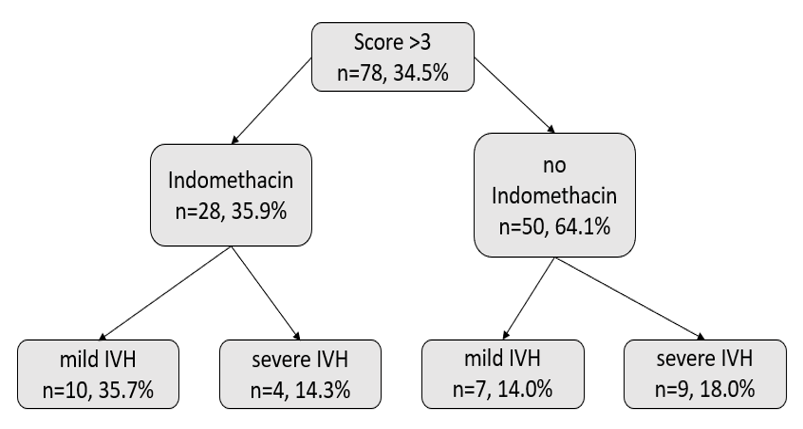
Figure 1: Positive Indomethacin-score, mild IVH (grade I+II), severe IVH (III+IV).
In Table 2, 190 patients in the total study population did not receive indomethacin (84.1%). Of these 140 children had a negative Indomethacin-Score (73.7%) and 42 patients developed an IVH (22.1%). Of the 36 patients treated with indomethacin, 28 (77.8%) had a positive indomethacin score and 20 (55.6%) did not develop IVH.
Table 2: Comparison Indomethacin, IVH and Indomethacin Score.
|
Indomethacin (n = 36, 15.9%) |
no Indomethacin (n = 190, 84.1%) |
||
|
IVH (n = 16, 44.4%) |
no IVH (n = 20, 55.6%) |
IVH (n = 42, 22.1%) |
no IVH (n = 148, 77.9%) |
|
Score > 3 points |
Score <= 3 points |
Score > 3 points |
Score <= 3 points |
|
(n = 28, 77.8%) |
(n = 8, 22.2%) |
(n = 50, 26.3%) |
(n = 140, 73.7%) |
Figure 1 compares patients with a positive Indomethacin-Score (score > 3). Of these, 28 children (35.9%) received indomethacin, while 50 patients (64.1%) did not. In the cohort of patients who received treatment with indomethacin, 4 (14.3%) developed severe IVH. In contrast, 18.0% of patients (n = 9) in the cohort not treated with indomethacin developed severe IVH. Based on the observed event rates, there was a demonstrable risk reduction of 3.7 percentage points (18.0% - 14.3%). The reduction in the number of patients required to be treated (NNT = 1/0.037) is 27, the relative risk is 79% (RR = 0.143/0.18), and the relative risk reduction (RRR) is 21% (RR = 0.79; OR = 0.76; 95%-CI 0.21–2.73; p = 0.76). However, it should be noted that these results are not statistically significant when the study cohort is small.
Baseline characteristics, including demographics, clinical data and laboratory findings are summarized in Table 3. Of the 226 very preterm infants, 112 were male (49.6%) and 114 were female (50.4%). IVH occurred in 58 of the 226 patients (25.6%). Of these, 21 (36.2%) had severe IVH (grade III or IV) (see Table 3). The median gestational age of the children in our study was 27 weeks of gestation (IQR: 25–27). There is a significant (p < 0.001) difference between IVH (26 weeks of gestation) and no IVH (28 weeks of gestation). Comparing children with IVH below 27 weeks of gestation (n = 37) with older patients (n = 21), there is also a significant difference (p = 0.001) (see Table 3). Of the 226 patients, 36 received indomethacin (16.0%). These patients had significantly less intraventricular bleeding (n(no IVH) = 20 (55.6%) vs. n(IVH) = 16 (44.4%), p = 0.005) (see Table 3). Regarding antenatal corticosteroid administration (ACS) for lung maturation induction, a significant difference was observed when the full dose was administered (n = 127, 78.4% vs. n = 35, 21.6%, p = 0.026) (see Table 3). When comparing platelet counts between bleeding and non-bleeding children, there was no significant difference. Regarding neuroprotection using magnesium, there was no significant difference between the bleeding and non-bleeding groups. There was also no difference in the presence of a PDA. Of 226 infants, 39 were born spontaneously (17.3%) and 187 were delivered by caesarean section (82.7%). Comparing mode of delivery, significantly more spontaneously delivered infants were suffering from IVH than patients delivered by caesarean section (n = 17, 43.6% vs. n = 41, 21.9%, p < 0.0001). Significantly more infants with an Indomethacin-score > 3 had an IVH (n = 30, 38.5%, p = 0.001) than those with a lower score. Moreover, infants with an IVH died significantly more often (n = 12, 46.2%, p = 0.011).
Parameters described for no or mild IVH (0+ I + II) and with severe IVH (grades III + IV) were compared in Table 4. Consisting with the results described above for IVH vs. no IVH (see Table 4) the gestational age remains significant when comparing IVH severity, with a median of 28 weeks in cases of no or mild IVH and 26 weeks in cases of severe IVH. The distribution of IVH < 27 weeks and above also remains significant (n = 74, 83.1% vs. n = 15, 16.9%, p = 0.002). Compared with the results in Table 4, mode of delivery and administration of antenatal corticosteroid therapy (ACS) were not significantly associated with the occurrence of severe IVH. Significantly more infants with an indomethacin score > 3 had severe IVH (n = 13, p = 0.006). There were relatively more deaths among infants with severe IVH (p < 0.001).
Table 3: Clinical parameters of the study cohort.
|
Total (n = 226) |
Patients without IVH (n = 168) |
Patients with IVH (n = 58) |
p-value |
|
|
Sex, male (%) |
112 (49.6) |
80 (47.6) |
32 (55.2) |
0.321 |
|
Birth Weight (g) |
910 (685-1093) |
923 (680-1100) |
850 (698-989) |
0.139 |
|
Twin (%) |
69 (30.5) |
54 (32.1) |
15 (25.9) |
0.371 |
|
- Monochorionic (%) |
24 (10.6) |
15 (8.9) |
9 (15.5) |
0.02 |
|
Discordant twin (%) |
29 (12.8) |
24 (14.3) |
5 (8.6) |
0.363 |
|
Gestational week (week) |
27.9 (25.9-29.8) |
28.4 (26.6-30.1) |
26.4 (24.7-27.6) |
<0.001 |
|
Gestational week < 27 (%) |
89 (39.4) |
52 (31.0) |
37 (63.8) |
<0.001 |
|
Caesarean section (%) |
187 (82.7) |
146 (76.9) |
41 (70.7) |
0.005 |
|
ACS completed (%) |
162 (71.7) |
127 (75.6) |
35 (60.3) |
0.026 |
|
Neuroprotection (%) |
140 (61.9) |
108 (64.3) |
32 (55.2) |
0.181 |
|
Indomethacin (%) |
36 (28.6) |
20 (11.9) |
16 (27.6) |
0.005 |
|
Pulmonary haemorrhage (%) |
11 (4.9) |
6 (3.6) |
5 (8.6) |
0.155 |
|
PDA (%) |
104 (46.0) |
71 (42.3) |
33 (56.9) |
0.054 |
|
Exitus letalis (%) |
26 (11.5) |
14 (8.3) |
12 (20.7) |
0.011 |
|
Positive inflammation marker (%) |
22 (9.7) |
13 (7.7) |
9 (15.5) |
0.085 |
|
Thrombocytes (Tsd/µl) |
180.5 (134.25- 234) |
185 (133-240) |
176.5 (87-222.5) |
0.542 |
|
Temperature (°C) |
36.8 (36.5- 37.2) |
36.8 (36.5- 37.2) |
36.9 (36.5- 37.3) |
0.399 |
|
Indomethacin- Score > 3 (%) |
78 (34.5) |
48 (28.6) |
30 (51.7) |
0.001 |
ACS = antenatal corticosteroid (completed = 2 doses of corticosteroid within 48 hours), neuroprotection = antenatal magnesium administration, PDA = persistent ductus arteriosus, CRP = C- reactive protein, IL-6 = interleukin-6, BE = base excess, positive inflammation marker = CRP > 1 mg/dl or Il-6 > 100 pg/ml
Table 4: IVH grades and clinical characteristics.
|
IVH 0 + I + II (n=205) |
IVH III + IV (n=21) |
p-value |
|
|
Sex, male (%) |
100 (48.7) |
12 (57.1) |
0.465 |
|
Birth Weight (g) |
920 (682.5-1100) |
870 (719- 960) |
0.339 |
|
Twin (%) |
63 (30.7) |
6 (28.6) |
0.838 |
|
Monochorionic (%) |
20 (9.8) |
4 (19.0) |
0.173 |
|
Discordant twin (%) |
27 (13.2) |
2 (9.5) |
1 |
|
Gestational weeks (mean) |
28.1 (26.1-29.9) |
26.1 (24.8-27.1) |
0.002 |
|
Gestational week < 27 (%) |
74 (36.1) |
15 (71.4) |
0.002 |
|
Caesarean section (%) |
173 (84.4) |
14 (66.7) |
0.063 |
|
ACS completed (%) |
149 (72.7) |
13 (61.9) |
0.296 |
|
Neuroprotection (%) |
127 (62.0) |
13 (61.9) |
0.792 |
|
Indomethacin (%) |
30 (14.6) |
6 (28.6) |
0.115 |
|
Pulmonary haemorrhage (%) |
8 (3.9) |
3 (14.3) |
0.07 |
|
PDA (%) |
91 (44.4) |
13 (61.9) |
0.125 |
|
Exitus letalis (%) |
18 (8.8) |
8 (38.1) |
<0.001 |
|
Positive inflammation marker (%) |
20 (9.8) |
2 (9.5) |
1 |
|
Thrombocytes (Tsd/µl) |
184 (133-238) |
174 (151.5-210) |
0.442 |
|
Temperature (°C) |
36.8 (36.5-37.2) |
36.8 (36.2-37.1) |
0.308 |
|
Indomethacin Score >3 (%) |
65 (31.7) |
13 (61.9) |
0.006 |
ACS = antenatal corticosteroid (completed = 2 doses of corticosteroid), neuroprotection = antenatal magnesium administration, PDA = persistent ductus arteriosus, CRP = C- reactive protein, Il-6 = interleucin 6, BE = base excess, positive inflammation marker = CRP >1 mg/dl or Il-6 >100 pg/ml
Table 5 shows the results of the univariate and multivariate analyses relating to the occurrence of IVH. The week of pregnancy (OR = 0.709; 0.614 - 0.818; p < 0.001), delivery by caesarean section (OR = 0.363; 0.177-0.748; p = 0.006), and a complete lung maturation induction using glucocorticoid (OR = 0.491; 0.261-0.925; p = 0.028) were independent significant factors. In the multivariate regression, the week of pregnancy remained significant with a p-value < 0.001 (OR 0.644; 0.0522 - 0.794).
Table 5: Univariate and multivariate regression for occurance of IVH.
|
Univariate logistic regression Odds ratio [95% CI] |
p- value |
Multivariate logistic regression Odds ratio [95% CI] |
p-value |
|
|
Gestational week |
0.709 (0.614- 0.818) |
<0.001 |
0.644 (0.522- 0.794) |
<0.001 |
|
Birth weight |
0.999 (0.998- 1.000) |
0.138 |
1.002 (1.000- 1.004) |
0.066 |
|
Caesarean section |
0.363 (0.177- 0.748) |
0.006 |
0.673 (0.301- 1.507) |
0.336 |
|
ACS completed |
0.491 (0.261- 0.925) |
0.028 |
0.665 (0.326- 1.357) |
0.262 |
|
Inflammation marker |
2.190 (0.883- 5.433) |
0.091 |
1.752 (0.654- 4.694) |
0.265 |
Table 5: base excess, positive inflammation marker = CRP > 1mg/dl or Il-6 > 100 pg/ml
In Table 6, we performed univariate and multivariate analyses of the occurrence of no or mild (grades I and II) IVH compared with severe IVH (grades III and IV). The week of pregnancy (OR = 0.733; 0.593- 0.905; p = 0.004) and mode of delivery by caesarean section (OR = 0.370; 0.138 - 0.988; p = 0.047) were significant in the univariate analysis. Of these, the week of pregnancy remains significant in the multivariate analysis, with a p-value of 0.007 (OR = 0.646; 0.469 - 0.889).
Table 6: Univariate and multivariate regression for IVH 0+1+2 (no or mild) or 3+4 (severe).
|
Univariate logistic regression Odds ratio [95% CI] |
p- value |
Multivariate logistic regression Odds ratio [95% CI] |
p-value |
|
|
Gestational week |
0.733 (0.593- 0.905) |
0.004 |
0.646 (0.469- 0.889) |
0.007 |
|
Birth weight |
0.999 (0.997- 1.001) |
0.425 |
1.002 (0.999- 1.005) |
0.138 |
|
Caesarean section |
0.370 (0.138- 0.988) |
0.047 |
0.670 (0.230- 2.301) |
0.462 |
|
ACS completed |
0.611 (0.240- 1.552) |
0.3 |
0.841 (0.308- 2.301) |
0.736 |
|
Inflammation marker |
0.974 (0.211- 4.489) |
0.973 |
0.776 (0.157- 3.825) |
0.755 |
Table 6: base excess, positive inflammation marker = CRP > 1 mg/dl or Il-6 > 100 pg/ml
4. Discussion
This study examined IVH in extremely premature infants. In addition to examining the potential influence of indomethacin on the IVH risk, we also investigated the impact of birth mechanism and other non-influential factors (e.g., gestational age, birth weight). Furthermore, we investigated whether this score could be used retrospectively to predict IVH and, consequently, advise the use of indomethacin.
As previously reported in the literature [19], it has been demonstrated that an early birth week is associated with an increased risk of cerebral haemorrhage. Our results also showed that infants with severe haemorrhages were born significantly earlier. This is understood to be due to the fragile germinal matrix and postnatal variation in cerebral blood flow [20]. Primary prevention of premature birth is of great importance; however, in practice its possibilities are only limited. [21]. The week of birth cannot be sufficiently influenced and other factors have to be identified to prevent IVH. Interestingly, our cohort showed no increased risk of intraventricular haemorrhage (IVH) in twin births compared to singleton neonates, unlike an earlier study by Wieczorek et al. [22]. Primary pulmonary complications, such as RDS, can be positively influenced by the administration of corticosteroids as lung maturation drugs [23]. Glucocorticoids improve lung maturation by inducing the production of surfactant in the lungs of unborn children [24]. We also demonstrated that incomplete or absent antenatal corticosteroid therapy is associated with an increased incidence of IVH. This may be because expectant mothers with unstoppable contractions, cervical insufficiency, amniotic infection syndrome, or other maternal conditions require immediate delivery upon arrival at the obstetric department [21,23,25]. Newborns with an infection show an increased risk of birth complications [26]. One particular complication is IVH [27]. This finding is consistent with the data we collected and also plays an important role in the indomethacin score. The parameter we focused on is the concentration of interleukin-6. Interleukins are associated with IVH and preterm brain damage [27,28]. It should be noted that peripartum infections in the mother and prematurity are associated with infection in the child [28]. To reduce IVH, normothermia is aimed for in the neonatal care of extremely premature infants, and hypothermia is avoided in particular [25]. Hypothermia is associated with increased bleeding complications due to its negative influence on the coagulation cascade [29].
Our further-developed indomethacin score, based on expert consensus, summarizes these factors to aid decision-making regarding prophylactic indomethacin administration. Indomethacin is an anti-inflammatory drug that acts by inhibiting of cyclooxygenase [30]. The effect of reducing IVH is independent of duct closure. It is based on the direct inhibition of COX-2-mediated prostaglandin synthesis in the germinal matrix at the base of the lateral ventricles [31]. Clinical trials have already shown that indomethacin can reduce the incidence of IVH [32,33]. Due to the pulmonary, renal, and possibly cerebral side effects of indomethacin, it is advisable to limit indomethacin prophylaxis to premature infants with an increased risk of IVH [34,35]. In addition, the literature indicates that male infants benefit from indomethacin prophylaxis, whereas female infants have a poorer, neuromotor outcome [36,37]. Our data suggest a negative correlation from IVH when either male or female infants were treated with Indomethacin. Looking retrospectively at the high-risk profile based on the indomethacin score, it can be seen that preterms who received indomethacin had less IVH, especially severe IVH. In line with our results, the targeted use of indomethacin may be a therapeutic key to reduce IVH [13]. Concurrent efforts are underway at various research centers to develop scores for the utilization of indomethacin [38].
Overall, several factors, e.g. preterm infants with low blood pressure at admission to the NICU, APGAR-Score, multiple birth have an impact on the occurrence of IVH; however, the neonatal treatment team cannot influence this [39]. One significant factor that can be influenced is the birth mechanism, while cesarean section is associated with significantly less risk for IVH in very preterm infants [40,41]. This aligns with our data. Interestingly, this is evident not only in retrospective comparisons but also when considering the dependence of various variables in multivariate analysis. However, it should be considered that a caesarean section can have relevant consequences for the mother [42]. Therefore, it is important to note that this is a surgical procedure that may also be associated with side effects that can affect fertility in subsequent pregnancies and lead to placental insertion disorders (e.g., placenta previa) [42]. Ethically, a general caesarean section is not indicated for premature infants and should be discussed on a case-by-case basis between the neonatological und obstetrical department.
A noticeable limitation is that the study is monocentric, primarily because few centers specialize in treating extremely low birth weight premature infants and use a score to indicate indomethacin treatment. The patient population is therefore relatively small. Furthermore, the data were evaluated retrospectively. Moreover, the absence of longitudinal data precludes the possibility of conducting a long-term follow-up study on mortality. This should be considered in any subsequent studies.
In conclusion, the mode of delivery also influences the occurrence of IVH and should be considered. However, prophylactic treatment of IVH with indomethacin is a therapeutically straightforward solution. This makes it even more important to have a decision-making aid for classifying high-risk groups, particularly to minimize side effects. This Indomethacin-Score serves this purpose. Further randomized prospective cohort studies are needed to support this thesis and establish a reliable tool, supplemented by the birth mode, for decision-making and optimal patient care.
Conflicts of interest:
The authors do not declare any conflicts of interest.
Author Contributions:
KAD, SW and MR did and proved statistical analysis. KAD draft the manuscript. MR and FG did further development of the score. KAD, MR and FG developed concept of this study. KAD, MR and FG defined study cohort and collected data. MR, SW and FG proof-read the manuscript. KAD, SW, MR and FG interpretated the results. All authors read and approved the final manuscript.
References
- Blencowe H, Cousens S, Oestergaard MZ, et al. National, regional, and worldwide estimates of preterm birth rates in the year 2010 with time trends since 1990 for selected countries: a systematic analysis and implications. Lancet 379 (2012): 2162-2172.
- Chawanpaiboon S, Vogel JP, Moller AB, et al. Global, regional, and national estimates of levels of preterm birth in 2014: a systematic review and modelling analysis. Lancet Glob Health 7 (2019): e37-e46.
- Goldenberg RL, Culhane JF, Iams JD, et al. Epidemiology and causes of preterm birth. Lancet 371 (2008): 75-84.
- Romero R, Espinoza J, Kusanovic JP, et al. The preterm parturition syndrome. BJOG 113 (2006): 17-42.
- Cornish RP, Magnus MC, Urhoj SK, et al. Maternal pre-pregnancy body mass index and risk of preterm birth: a collaboration using large routine health datasets. BMC Med 22 (2024): 10.
- Sweet DG, Carnielli V, Greisen G, et al. European Consensus Guidelines on the Management of Respiratory Distress Syndrome - 2019 Update. Neonatology 115 (2019): 432-450.
- Fernandez Trahan K, Shelton EL, Gillam-Krakauer M. Patent Ductus Arteriosus in Extremely Preterm Infants: Update on Current Diagnostic and Treatment Options. Curr Treat Options Cardiovasc Med 27 (2025): 43.
- Neu J, Walker WA. Necrotizing enterocolitis. N Engl J Med 364 (2011): 255-264.
- Chawla S, Natarajan G, Laptook AR, et al. Model for severe intracranial hemorrhage and role of early indomethacin in extreme preterm infants. Pediatr Res 92 (2022): 1648-1656.
- Heuchan AM, Evans N, Henderson Smart DJ, et al. Perinatal risk factors for major intraventricular haemorrhage in the Australian and New Zealand Neonatal Network, 1995-97. Arch Dis Child Fetal Neonatal Ed 86 (2002): F86-F90.
- Vohr BR, Wright LL, Dusick AM, et al. Neurodevelopmental and functional outcomes of extremely low birth weight infants in the National Institute of Child Health and Human Development Neonatal Research Network, 1993-1994. Pediatrics 105 (2000): 1216-1226.
- Papile LA, Burstein J, Burstein R, et al. Incidence and evolution of subependymal and intraventricular hemorrhage: a study of infants with birth weights less than 1,500 gm. J Pediatr 92 (1978): 529-534.
- Schmidt B, Davis P, Moddemann D, et al. Long-term effects of indomethacin prophylaxis in extremely-low-birth-weight infants. N Engl J Med 344 (2001): 1966-1972.
- Fowlie PW, Davis PG, McGuire W. Prophylactic intravenous indomethacin for preventing mortality and morbidity in preterm infants. Cochrane Database Syst Rev 2010 (2010): CD000174.
- Singh R, Gorstein S V, Bednarek F, et al. A predictive model for SIVH risk in preterm infants and targeted indomethacin therapy for prevention. Sci Rep 3 (2013): 2539.
- Szakmar E, Harrison S, Elshibiny H, et al. Effect of implementing a clinical practice guideline for prophylactic indomethacin on reduction of severe IVH in extremely preterm infants. J Neonatal Perinatal Med 18 (2025): 449-455.
- Deeg KH, Staudt F, von Rohden L. [Classification of intracranial hemorrhage in premature infants]. Ultraschall Med 20 (1999): 165-170.
- World Medical Association. World Medical Association Declaration of Helsinki: ethical principles for medical research involving human subjects. JAMA 310 (2013): 2191-2194.
- Gilard V, Tebani A, Bekri S, et al. Intraventricular Hemorrhage in Very Preterm Infants: A Comprehensive Review. J Clin Med 9 (2020).
- Ballabh P. Intraventricular hemorrhage in premature infants: mechanism of disease. Pediatr Res 67 (2010): 1-8.
- Berger R, Abele H, Bahlmann F, et al. Prevention and Therapy of Preterm Birth. Guideline of the DGGG, OEGGG and SGGG (S2k Level, AWMF Registry Number 015/025, September 2022) - Part 2 with Recommendations on the Tertiary Prevention of Preterm Birth and on the Management of Preterm Premature Rupture of Membranes. Geburtshilfe Frauenheilkd 83 (2023): 569-601.
- Wieczorek AI, Krasomski G. [Twin pregnancy as the risk factor for neonatal intraventricular hemorrhage]. Ginekol Pol 86 (2015): 137-142.
- Roberts D, Brown J, Medley N, et al. Antenatal corticosteroids for accelerating fetal lung maturation for women at risk of preterm birth. Cochrane Database Syst Rev 2017 (2017): CD004454.
- Bolt RJ, van Weissenbruch MM, Lafeber HN, et al. Glucocorticoids and lung development in the fetus and preterm infant. Pediatr Pulmonol 32 (2001): 76-91.
- Daskalakis G, Psarris A, Koutras A, et al. Maternal Infection and Preterm Birth: From Molecular Basis to Clinical Implications. Children (Basel) 10 (2023).
- Seo K, McGregor JA, French JI. Preterm birth is associated with increased risk of maternal and neonatal infection. Obstetrics and Gynecology 79 (1992): 75-80.
- Polglase GR, Nitsos I, Baburamani AA, et al. Inflammation in utero exacerbates ventilation-induced brain injury in preterm lambs. J Appl Physiol (1985) 112 (2012): 481-489.
- Heep A, Behrendt D, Nitsch P, et al. Increased serum levels of interleukin 6 are associated with severe intraventricular haemorrhage in extremely premature infants. Arch Dis Child Fetal Neonatal Ed 88 (2003): F501-F504.
- Kander T, Schött U. Effect of hypothermia on haemostasis and bleeding risk: a narrative review. J Int Med Res 47 (2019): 3559-3568.
- Munjal A, Allam AE. Indomethacin. 2025.
- Ballabh P, Xu H, Hu F, et al. Angiogenic inhibition reduces germinal matrix hemorrhage. Nat Med 13 (2007): 477-485.
- Schmidt B, Davis P, Moddemann D, et al. Long-term effects of indomethacin prophylaxis in extremely-low-birth-weight infants. N Engl J Med 344 (2001): 1966-1972.
- Fowlie PW, Davis PG, McGuire W. Prophylactic intravenous indomethacin for preventing mortality and morbidity in preterm infants. Cochrane Database Syst Rev 2010 (2010): CD000174.
- DeMauro SB, Schmidt B, Roberts RS. Why would a sane clinician not prescribe prophylactic indomethacin? Acta Paediatr 100 (2011): 636.
- Ohlsson A, Roberts RS, Schmidt B, et al. Male/female differences in indomethacin effects in preterm infants. J Pediatr 147 (2005): 860-862.
- Ohlsson A, Roberts RS, Schmidt B, et al. Male/female differences in indomethacin effects in preterm infants. J Pediatr 147 (2005): 860-862.
- Ment LR, Vohr BR, Makuch RW, et al. Prevention of intraventricular hemorrhage by indomethacin in male preterm infants. J Pediatr 145 (2004): 832-834.
- Kumar P, Polavarapu M. A simple scoring system for prediction of IVH in very-low-birth-weight infants. Pediatr Res 94 (2023): 2033-2039.
- Waitz M, Nusser S, Schmid MB, et al. Risk Factors Associated with Intraventricular Hemorrhage in Preterm Infants with ≤28 Weeks Gestational Age. Klin Padiatr 228 (2016): 245-250.
- Costa STB, Costa P, Graça AM, et al. Delivery Mode and Neurological Complications in Very Low Birth Weight Infants. Am J Perinatol 41 (2024): 1238-1244.
- Cimadamore E, Correani A, D’Ascenzo R, et al. Delivery mode and risk of intraventricular hemorrhage: A retrospective single-center study on 1760 preterm infants of less than 32 weeks. Eur J Obstet Gynecol Reprod Biol 305 (2025): 147-152.
- Keag OE, Norman JE, Stock SJ. Long-term risks and benefits associated with cesarean delivery for mother, baby, and subsequent pregnancies: Systematic review and meta-analysis. PLoS Med 15 (2018): e1002494.