Amir Tabaković1,2*, André van Zomeren3, Róża Paterek4, Declan O’Prey5, Rene H. Wijffels6, Rafael Garcia-Cubero6, Dave van Vliet7, Greet Leegwater7
1Revolution Road Ltd., 1 Royal Marine Terrace, Strand Road, Wicklow, Ireland
2University College Dublin, School of Civil Engineering, Belfield, Dublin 4, Ireland
3Netherlands Organisation for Applied Scientific Research (TNO), Westerduinweg 3, 1755 LE Petten, The Netherlands.
4Technological University Dublin, Blessington Rd, Tallaght, Dublin 24, Ireland.
5Breedon Group Plc., Alexandra Road, Dublin Port, Dublin 1, Ireland
6Wageningen University, Bioprocess Engineering - AlgaePARC, PO Box 16, 6700 AA Wageningen, The Netherlands
7Netherlands Organisation for Applied Scientific Research (TNO), NEXT Delft, Molengraaffsingel 8, 2629 JD, Delft, The Netherlands.
*Correspondingauthor: Amir Tabakovic, Revolution Road Ltd., 1 Royal Marine Terrace, Strand Road, Wicklow, Ireland.
Received: 24 August 2026; Accepted: 31 August 2026; Published: 28 October 2026
DOI: 10.26502/jbb.2642-91280229
ShareOngoing efforts to phase out fossil fuel (crude oil) dependency is forcing the asphalt industry to evolve, i.e. to look for new sustainable, circular and biobased alternative product to replace bitumen (a crude oil product). In an effort to improve its sustainability the asphalt industry has perfected the asphalt recycling process. Whereby reusing old asphalt, simply by rejuvenating aged bitumen, allows the industry to reduce the use of fresh bitumen and in turn reduce environmental impact and improve sustainability of road construction and maintenance. However, the process requires use of light (crude) oils to rejuvenate Recycled Asphalt (RA) bitumen. In a further effort to remove fossil fuel-based oils in the asphalt recycling process, researchers have started to investigate alternative products, such as bio-oils as rejuvenation agents. This study investigates use of biomaterials, namely: microalgae lipids (oils), microalgae biomass, soybean oil and palm oil, as rejuvenating agent. Their performance was evaluated against that of a commercial rejuvenator. A multi-scale material testing approach, that includes chemical, and mechanical evaluations, was employed to evaluate the effectiveness of the bio-oils and microalgae biomass as rejuvenators. Bio-oils and microalgae biomass were incorporated into RA bitumen at dosage of 3wt.%, with chemical changes analysed using Gel Permeation Chromatography (GPC), Fourier Transform Infrared Spectroscopy (FTIR), and chemical fractionation (SARA). Mechanical performance of the blends was assessed by employing needle penetration (pen) and softening point (Ring and Ball) tests. Performance of bio-oils and microalgae biomass were further assessed by including them into an asphalt mix containing 30% Recycled Asphalt (RA), where bio-rejuvenator content was 0.15wt%. The performance of the mixtures was evaluated through a testing programme that included: Indirect Tensile Stiffness Modulus (ITSM), Water Susceptibility, Wheel Tracking and the Thermal Stress Restrained Specimen Test (TSRST). Findings highlight the potential of biomaterials, such as microalgae oils and microalgae biomass as a sustainable and effective agents for restoring the functional properties in asphalt mixtures. It also became clear that the rejuvenators do not fully restore the chemical composition of the bitumen, therefore more research is recommended into a framework to assess rejuvenation effectiveness on binder level.
Recycled Asphalt bitumen Rejuvenation; Bio-rejuvenators; Bio-oils; Microalgae Lipids; Microalgae Biomass; Bitumen Properties; Recycled Asphalt Mix Performance
Recycled Asphalt bitumen Rejuvenation articles; Bio-rejuvenators articles; Bio-oils articles; Microalgae Lipids articles; Microalgae Biomass articles; Bitumen Properties articles; Recycled Asphalt Mix Performance articles
Introduction
For over a century bitumen is a key constituent in an asphalt mix design and road construction [1, 2]. Bitumen binds the asphalt rock skeleton together and its visco-elastic properties gives the asphalt flexibility and resistance to high traffic loading and extreme weather conditions, such as, rain, ice, snow and heat [3]. Bitumen also has self-healing abilities [4, 5]. It is capable to repair (close) microcracks that appear after extreme traffic and environmental loading [6]. However, over time asphalt loses this healing (self-repairing) ability. During its service life molecules in bitumen evaporate, polymerize and oxidize and bitumen becomes brittle and loses its ability to self-repair [6, 7]. Over time cracks appear and lead to the pavement failure, requiring partial repair (patching) or in some extreme cases a full pavement replacement [8, 9]. However, the removal and replacement of an asphalt pavement does not mark the end of the asphalt material’s service life.
Asphalt and road industry since 1970, have developed, optimised and perfected the asphalt recycling procedures [10, 11]. In some cases, the process is so efficient, allowing 100% asphalt recycling [12]. Asphalt recycling means reclaiming old material (Recycled Asphalt, RA) and combining it with fresh aggregates, bitumen (a crude oil product), and softer bitumen or a rejuvenating agent [10, 13]. The primary aim of the recycling process is to restore the properties of the aged asphalt mix, by reducing its brittleness [14]. If recycling percentages are low or the aging in the asphalt is moderate, recycling can be performed by introducing, only, a softer binder [13]. However, in case of a higher ageing degree or higher recycling percentages a rejuvenation agent is needed to restore the asphalt properties. The goal of this rejuvenation agent is to restore the original molecular structure of the aged (recycled) bitumen, by replacing its lost maltenes and saturants and break down agglomeration of molecules [15, 16]. To achieve that, a small amount of rejuvenator is added, between 3% - 6% of recycled asphalt bitumen weight, to the new asphalt mix [17-21].
Traditionally, oils originating from the crude oil distillation are used as asphalt bitumen rejuvenators [22]. Nonetheless, in an effort to make the asphalt production more sustainable, renewable bio-based products are being studied [23]. Recent studies have shown that food-based by-products, such as vegetable oils, can function as asphalt rejuvenators [24-28]. However, dedicating agricultural land to grow crops for asphalt bitumen rejuvenator production, and diverting potential food resources toward asphalt production raises sustainability and ethical concerns in a world already facing increasing pressure on food supplies [29]. A more responsible approach would be to explore alternatives like non-edible biomass, which offers a promising renewable feedstock [25]. Biomass aligns with circular-economy principles by enabling the use of industrial by-products and secondary materials in the production of asphalt bio-binders and aged bitumen bio-rejuvenators [21, 25, 30, 31]. The wood byproducts, such as lignin and tall oil, are being well explored to date [23, 32, 33] and showed good performance [34, 35] and received good feedback (acceptance) by the road construction crews - as wood-based products have pleasant (woody) smell in comparison to the crude oil based products. However, demand on biopolymers, such as lignin, from competing industries [36], for example polymer industry, are making availability of lignin and tall oil for road construction challenging. According to Chisti [37], microalgae is only biomass source that is capable of displacing crude oil products. Microalgae stand out from conventional oil-producing crops due to their fast growth rate and high lipid content. Under typical cultivation conditions, microalgae can double their biomass within 24 hours [37]. Microalgae are known for their high lipid content, typically around 30 - 60 % dry weight, e.g. Nannochloropsis Oceanica [38]. However, with optimised cultivating technique the lipid content of some of the microalgae species, e.g. Schizochytrium sp., can be up to 77% dry weight [37].
Furthermore, microalgae cultivation and asphalt bio-binder/rejuvenator can be linked to the wastewater purification process to bring further environmental benefits [39]. Microalgae can effectively remove nitrate and phosphate from wastewater due to their high nutrient uptake and continuous photosynthetic activity. Since these wastewater-grown microalgae are not suitable for food, they can be used to produce materials for road construction [31, 40]. This creates an opportunity for the asphalt industry to adopt microalgae lipids as a more sustainable alternative to conventional crude oil-based bitumen rejuvenators. Chailleux et. al. [40, 41], Audo et. al. [42] and the BioRePavation project [43] demonstrated that lipids (oils) derived from microalgae can serve as an asphalt binder for both producing new asphalt mixtures and enhancing asphalt recycling processes. Tabaković et al. [21] demonstrated the potential of directly using microalgae biomass, as a rejuvenator for aged bitumen. This would be a promising step toward improving sustainability of microalgae use in asphalt production, as it skips the energy demanding lipid extraction process, and offers an opportunity to match the current bitumen rejuvenator market price, which is less than 3 €/kg [44].
This study builds on Tabaković et. al. [21] where microalgae biomass and microalgae lipids performance as bitumen rejuvenators were investigated in comparison to a commercially available rejuvenator and two vegetable oils (palm oil and soybean oil). The study is split into two parts. The first part investigates effect of microalgae biomass, microalgae lipids and bio-oils on a bitumen blend. Here, microalgae biomass, microalgae lipids and bio-oils are used in order to rejuvenate aged bitumen. Performance of microalgae biomass, microalgae lipids and bio-oils were compared to a commercially available aged bitumen rejuvenator. The second part focuses on the use of microalgae biomass, microalgae lipids and bio-oils as rejuvenator of recycled asphalt bitumen within a full asphalt mix; SMA 11b. The performances of the asphalt mixtures containing microalgae biomass, microalgae lipids and bio-oils are also compared to a commercially available bitumen rejuvenator.
Materials
Bitumen, Rejuvenating Oils and Blends
Microalgae biomass (Nannochloropsis oceanica paste) was supplied by AlgaePARC laboratories at Wageningen University. The microalgae cultivation was carried out in accordance with Benvenuti et al. [45]. The microalgae lipids were subsequently extracted from the Nannochloropsis oceanica paste by Biobased and Circular Technologies department at TNO Petten.
Two additional bio-based oils were included in the study: Soybean Oil, sourced from Ademia Cosmetiques, and Palm Oil, sourced from Cosmetica Natural Oils Ltd. A commercially available bio-based rejuvenator, Neomex® Hr was provided by the Latexfalt B.V. and fresh (neat) bitumen 70/100pen was provided by the Breedon Group Plc.
The ageing method and the blending procedure of aged bitumen and bio-oil rejuvenators are explained in the paper on which this works builds [21]. Five different blends were prepared using aged bitumen combined with four different rejuvenating oils (3% by weight), along with one additional blend incorporating microalgae biomass. The properties, namely: pen value and softening point, of neat and aged bitumen and prepared blends, containing aged bitumen and rejuvenating oils and microalgae biomass are summarised in Table 1. Pen values and softening point values indicate that rejuvenating oils in aged bitumen blend did not soften the aged bitumen sufficiently to restore the aged bitumen to the original values of the neat bitumen. These results indicate that for all used bio-oils, a higher amount of rejuvenator is needed to soften the bitumen to required softening point. However, results do indicate that all rejuvenators have the ability to soften the aged bitumen. The palm oil blend shows the most effective softening of all blends with the highest pen value 68dmm and the lowest softening point 49.2oC.
|
Sample |
Specification: |
Penetration (dmm) |
Average Softening Point (oC) |
|
EN 1426: 2025 |
EN 1427:2015 |
||
|
70/100pen Neat Bitumen |
86 |
46 |
|
|
70/100pen Aged Bitumen |
43 |
53.1 |
|
|
70/100pen Aged Bitumen + Microalgae Lipids |
53 |
50.5 |
|
|
70/100pen Aged Bitumen + Microalgae Biomass |
45 |
53 |
|
|
70/100pen Aged Bitumen + Soybean oil |
59 |
52.6 |
|
|
70/100pen Aged Bitumen + Palm oil |
68 |
49.2 |
|
|
70/100pen (aged) + commercial bio-rejuvenator |
59 |
50.2 |
Table 1: Needle penetration (pen) value of the 70/100pen bitumen with microalgae lipids and biomass as a rejuvenator.
Asphalt mix: SMA11b + 30% RAP
Reclaimed asphalt (RA) was obtained from a single source stockpile in Netherlands, supplied by Asphalt Production Amsterdam (APA). By obtaining RA from a single stockpile, the concern of the RA variability is eliminated. Three representative samples of 1kg of the RA were taken from the stockpile to analyse the RA material. Aged bitumen was recovered according to EN 12697-1:2005, the bitumen content was determined to be 4.1% by weight. The particle size distribution of the aggregates was determined in accordance with IS EN 12697-2:2002 and is presented in Table 2, alongside the aggregate distribution of the fresh aggregates. The RA grading results show that the RA is a continuously graded material. This enables the RA to partially replace a portion of each constituent of the fresh aggregates.
|
Sieve Size (mm) |
Bestone 8/11 |
Bestone 4/8 |
C |
onstituents Wigro 0/0 |
Backhouse dust 0/0 Productie |
Recycled Asphalt |
|
Sand (Bestone 0/2) |
Winterswijk |
|||||
|
16 |
100 |
100 |
100 |
100 |
100 |
100 |
|
11 |
89.32 |
100 |
100 |
100 |
100 |
99.1 |
|
8 |
16.2 |
90.01 |
100 |
100 |
100 |
88.4 |
|
5.6 |
2.95 |
41.98 |
100 |
100 |
100 |
48.5 |
|
2 |
1.33 |
3.73 |
92.97 |
100 |
100 |
11.7 |
|
0.5 |
0.96 |
1.04 |
36.11 |
100 |
98.7 |
7.9 |
|
0.125 |
0.54 |
0.57 |
5.35 |
100 |
78.5 |
4.1 |
|
0.063 |
0.14 |
0.3 |
1.75 |
82 |
58.3 |
2.3 |
Table 2: Aggregate Particle Size Distribution.
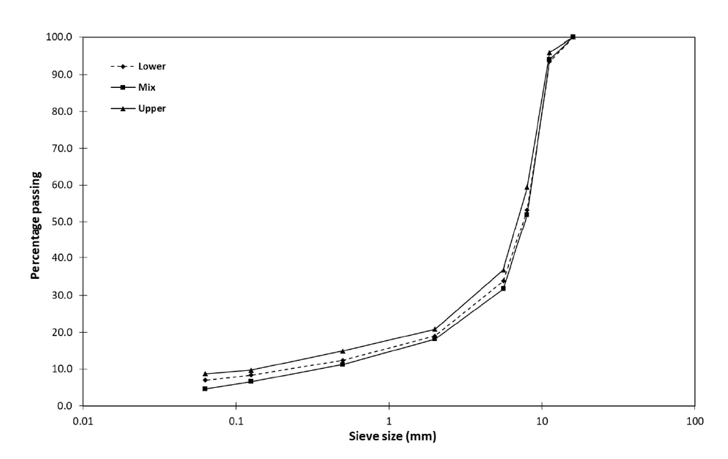
Figure 1: Mix Particle Size Distribution.
SMA 11b mix containing 30% RA was designed following EN 13108-5: 2006. Figure 1 presents the mix grading, which shows that the mix designs fall within the standard limits for target composition. The standard limits for target composition enabled us to optimise the particle size distribution for the mix designs, which in turn allowed the mixes to be designed as shown in Table 3. The grading limits are tight which resulted in higher percentages passing for aggregates below 10mm. The microalgae biomass, microalgae lipids and bio-oils are added to the asphalt mixtures in amounts of 0.15 % of total mix weight or 2.3% by weight of total binder (neat bitumen, RA bitumen and rejuvenator) weight. Using this mix design, asphalt test slabs of 50mm thick and 500x500mm were made in the laboratory.
|
Mix Constituent |
Mix proportion (%) |
|
Bestone 8/11 |
49.9 |
|
Bestone 4/8 |
1 |
|
Sand (Bestone 0/2) |
9.05 |
|
Filler - Wigro 0/0 Winterswijk |
3.5 |
|
Filler - Backhouse dust 0/0 Productie |
1 |
|
Dripping Inhibitor |
0.3 |
|
RA (ZOAB PR saved 5/8 ARB) |
30 |
|
RA bitumen rejuvenating oil |
0.15 |
|
Bitumen (70/100pen) |
5.1 |
Table 3: Mix Composition.
Methods
Bitumen Test Methods
Gel Permeation Chromatography (GPC)
The GPC test, in accordance with EN ISO 13885-1:2020, and following the Tabaković et al. [31] procedure, was used to determine the molecular weight and size distributions of the bitumen + bio-oil/mass samples. The components, molecular size separation was achieved using three columns, (APC XT 45, 1.7µm, APC XT 200, 2.5µm and APC XT 450, 2.5µm). Tetrahydrofuran (THF) served as both the eluent and solvent for preparing solutions at approximate concentration 1.2 g/l, which were filtered through 13 mm, 0.45µm Milex FH syringe microfilter to remove insoluble material. The test column temperature was maintained at 35oC with an isocratic flow rate of 0.5ml/min. Detection was carried out using a Photodiode Array Detector (PAD) (190- 450nm) and a Refractive Index Detector (RI), with the PDA at 254nm used for determining molecular weight.
Fourier Transform Infrared Spectroscopy (FTIR)
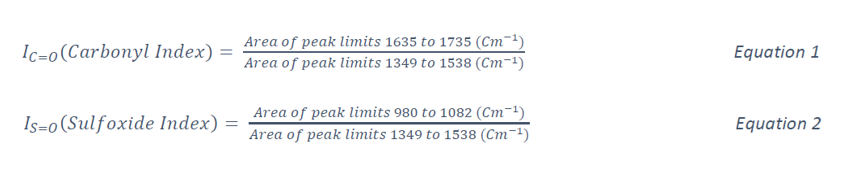
FTIR was used to assess the dominant chemical functional groups in the neat, aged and rejuvenated bitumen samples, following the protocol of Hofko et. al. [46]. All analyses were performed using a Perkin Elmer Universal ATR accessory over a wavenumber range of 4000 - 600 cm-1, with a resolution of 4 cm-1 and 24 scans. The carbonyl (C=O) and sulfoxide (S=O) indices were calculated to evaluate the rejuvenating effect of the bio-oils, microalgae biomass and commercial rejuvenator on aged bitumen. The functional groups indices are calculated following the Huang et al [47], via equation 1 and 2
SARA analyses
A SARA analyses was conducted to assess the colloidal stability of aged bitumen and rejuvenator blends. Because the molecular structures of heavy oils and bitumen are highly complex, accurate quantification of individual compounds is virtually impossible. Therefore, to characterise the chemical composition of bitumen, hydrocarbon group-type analysis is commonly applied [48]. Liquid Chromatography (LC), the core technique underlying SARA, separates bitumen into saturates, aromatics, resins, and asphaltenes based on the solubility behaviour. The resulting SARA fractions provide insight into blending compatibility, stability, fouling and coking tendency and overall bitumen stability [49, 50].
Asphalt mix test methods
Bulk density - and coring
The bulk density was carried out in accordance with EN 12697-6. Eight specimens were cored out of the test slab and left to dry for 24h. After drying specimen’s dimensions and weight (m1) were recorded and dry density calculated. Specimens were immersed a water-bath at room temperature for 30 min. Once specimens were sufficiently saturated the mass of the saturated specimen (m2) while saturated were recorded. Table 4 summarises calculated specimen bulk density results.
|
Mix |
Bulk density |
Void content |
|
(Mg/m³) |
(%) |
|
|
SMA 11B + 30% RAP - commercially available bio-rejuvenator (reference) |
2.31 |
7.7 |
|
SMA 11B + 30% RAP - Microalgae lipids as rejuvenator |
2.35 |
6.2 |
|
SMA 11B + 30% RAP - Microalgae biomass as rejuvenator |
2.33 |
6.9 |
|
SMA 11B + 30% RAP - Soybean oil |
2.28 |
8.9 |
|
SMA 11B + 30% RAP - Palm oil |
2.31 |
7.7 |
Table 4: bulk density and void content values of SMA 11B mix containing 30% RAP and various rejuvenators.
The test programme was designed to comprehensively evaluate mechanical performance of asphalt mixtures. Table 5 summarises the mechanical tests, testing conditions and relevant European standards used in study.
|
Test |
Conditions |
Standard |
|
Indirect Tensile Stiffness Modulus (ITSM) |
temp. 20oC |
EN 12697-26 |
|
Water Sensitivity |
- |
EN 12697-12 |
|
Indirect Tensile Strength |
temp. 15oC |
EN 12697-23 |
|
Wheel Tracking (Rutting Test): |
700N loading @ frequency 26.5cycles/min, for Nf 10,000 cycles, @ temp. 45 °C |
EN 12697-22 |
|
Thermal Stress Restrained Specimen Test (TSRST) |
Start temp. 20°C, end temp -40°C, duration 6 hours @ temp. gradient 8.5°C/hour. |
EN 12697-46 |
Table 5: Mechanical tests for asphalt mixtures.
Results
Binder blend
Molecular weight
Table 6 summarises GPC test results, presenting the number-average (Mn) and weight-average (Mw) molecular weights for all bio-oils, microalgae biomass, commercial rejuvenator, neat bitumen, aged bitumen and rejuvenated aged blends. The initial observation shows that bio-oils, microalgae biomass and commercial rejuvenator have significantly lower Mw, comparing to neat, aged and rejuvenated bitumen blends. The results further show that ageing and addition of rejuvenating oils increases the molecular weight (Mw) of the bitumen blends. It was expected that molecular weight will increase with ageing, because of evaporation, polymerization and oxidation processes within the bitumen. However, it was not expected that rejuvenating oils both from microalgae and from standard commercial rejuvenating oil, will increase the blend molecular weight (Mw) especially as their Mw is lower than aged bitumen Mw. The polydispersity index (PDI), a measure of molecular weight broadness, is calculated using following equation:
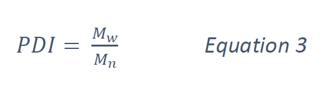
The PDI for all five blends, including the neat bitumen, shows broad molecular dispersity (>2,0). All blends fall within a narrow range (2.69 - 2.76), suggesting consistent high molecular heterogeneity across the samples. However, the results show that the incorporating bio-oils or microalgae biomass, does not return the Mw and PDI values to those of the neat bitumen. In fact, they promote further increase in molecular weight and polydispersity, which could even be interpreted as increased ageing. It is likely that the blending process, executed at 160°C for 30 minutes, introduced additional bitumen ageing, contributing to the formation of higher molecular weight components in the blends. This apparent ageing effect due to the relatively long period at increased temperature during blending seems to be stronger compared to the addition of the lighter fractions from the bio-oils. However, mixing in asphalt plants is performed using powerful mixing equipment, and hence substantially shorter mixing times are applied in practice (10 to 30 seconds). Therefore, it is expected that this apparent ageing effect might be less in full scale application.
|
Rejuvenator |
Mn |
Mw |
PDI |
|
Microalgae lipids |
781 |
1005 |
1.3 |
|
Microalgae biomass |
470 |
618 |
1.3 |
|
Soybean oil |
605 |
913 |
1.5 |
|
Palm oil |
963 |
1288 |
1.3 |
|
Commercial bio-rejuvenator |
586 |
723 |
1.2 |
|
Blend |
Mn |
Mw |
PDI |
|
70/100pen Neat |
841 |
1800 |
2.1 |
|
70/100pen (aged) |
890 |
2186 |
2.5 |
|
70/100pen (aged) + Microalgae lipids |
917 |
2533 |
2.8 |
|
70/100pen (aged) + Microalgae biomass |
918 |
2479 |
2.7 |
|
70/100pen (aged) + Soybean oil |
912 |
2486 |
2.7 |
|
70/100pen (aged) + Palm oil |
- |
- |
- |
|
70/100pen (aged) + commercial bio-rejuvenator |
912 |
2457 |
2.7 |
Table 6: Mass distribution (daltons), of the rejuvenators and 70/100pen bitumen blends with varying rejuvenators.
Functional Groups
The BRUKER software was used to correct base line for FTIR spectra comparison. The corrected base line spectra plots of neat, aged and rejuvenated bitumen blends at the wave number ranging from 600 cm-1 to 4000 cm-1 are shown in Figure 2. Aged bitumen and bio-rejuvenated blends display nearly the same functional groups, which is logical as the blends consist mainly of aged bitumen with only 3 % bio-oil. All samples show small peaks at 1031cm-1 (S = O stretching) and distinct peaks at 1700cm-1 (C= O stretching), the last one resulting from the break of the C = C bonds and generation of carbonyl during bitumen oxidation as a result of ageing.
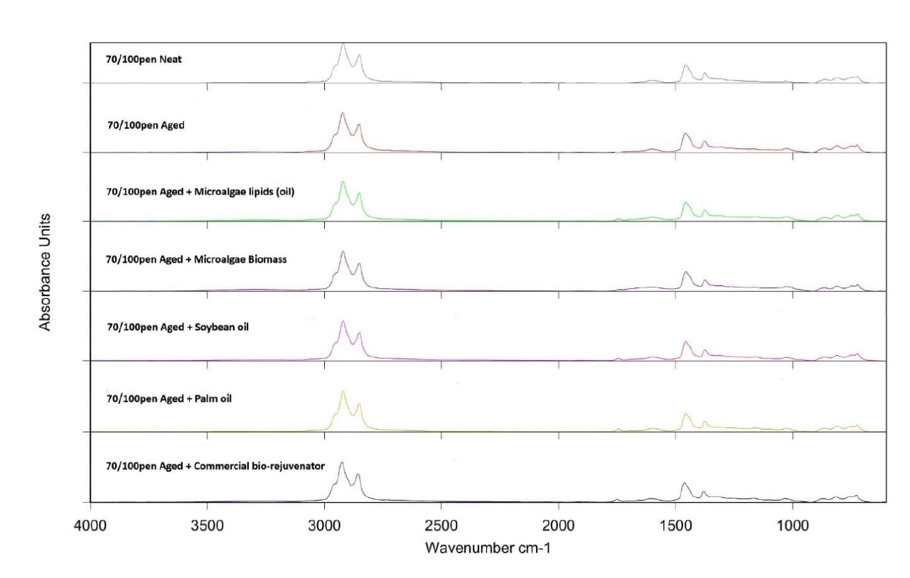
Figure 2: FTIR spectra of bitumen blends samples.
As it is not possible to quantify the differences in the specific aging peaks that relate to the carbonyl (C=O) and sulfoxide (S=O) peaks from the spectra presented in Figure 2, a quantified comparison is made using the carbonyl and sulfoxide indices, which are calculated according to Equation 1&2 from section 3.1. Figure 3 presents the carbonyl and sulfoxide indices for all blends. The graph clearly shows an upward trend in both indices with increasing bitumen ageing. The neat bitumen results show the lowest carbonyl and sulfoxide indices values. However, the results show an inconsistent trend across the rejuvenated blends. The blend containing Soybean oil shows a slight increase of carbonyl index but significant decrease in sulfoxide index compared to the aged bitumen without additions. Palm oil shows a decrease in both carbonyl and sulfoxide indices. Both microalgae oil and microalgae biomass blends shows significant increase in both indices. Whereas, the commercial bio-rejuvenator, similarly as Soyabean oil blend, shows only slight increase in carbonyl index and a pronounced decrease in sulfoxide index. These indices, therefore, show no positive impact of both microalgae lipid (oil) on bitumen oxidation. However, in none of the blends the ageing level is restored to the neat values. This was to be expected, as the addition of a small percentage of bio-oil will not remove oxygen from the binder, it will mainly reduce the oxygen content by diluting it. It is less likely that oxidation reactions will be reversed.
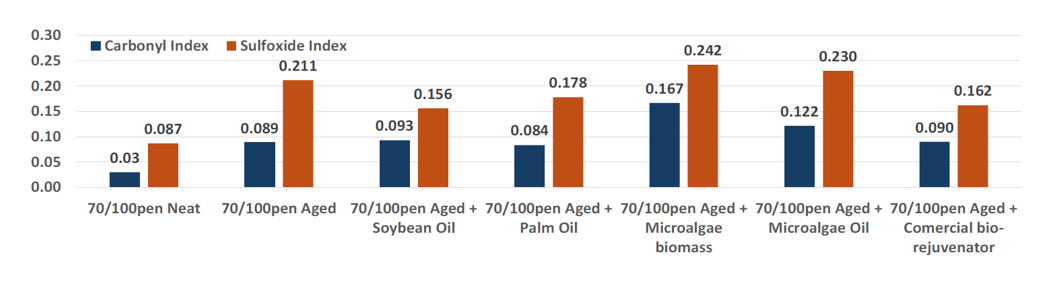
Figure 3: Carbonyl and Sulfoxide Indices for bitumen blends.
Figure 4 illustrates the analysis of the SARA test results of the 70/100pen blends (neat and aged) containing the various bio-oil as aged bitumen rejuvenator. The results show that ageing increases the Resins and decreases Aromatics and Asphaltenes, while the Saturate fraction stays roughly the same. Addition of bio-oils slightly decreases the Saturates, and to a larger extend Aromatics, while the amount of Asphaltenes increases. The amount of Resins increase for all bio-oils, expect for palm oil.. The addition of bio-oils did not restore the initial structure of the bitumen, but actually changed it further from the neat bitumen profile. The commercially available rejuvenator results in the exact same percentages of saturates 7.6% as the neat bitumen, however the other fractions are also not restored to their original values.
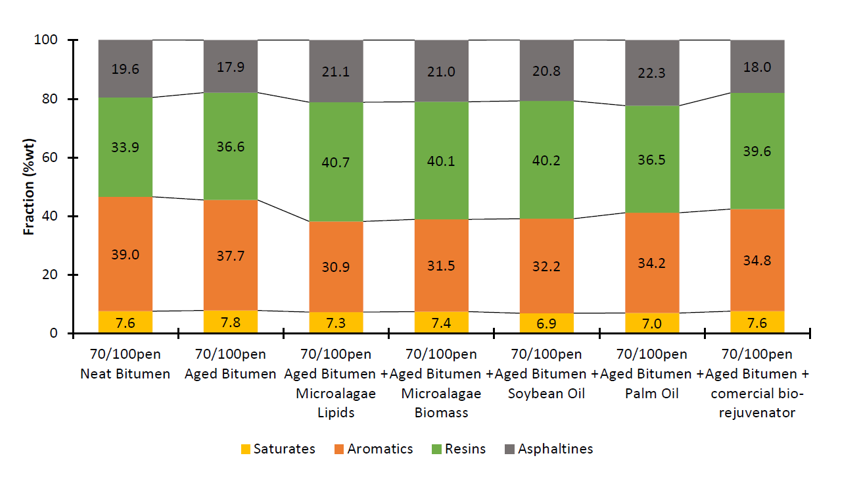
Figure 4: SARA fractions of the 70/100pen bitumen with microalgae lipids and biomass as a rejuvenator.
Asphalt mix
Indirect Tensile Stiffness Modulus test
Table 7 summarises the indirect tensile stiffness modulus (ITSM) test results, at 15oC, of SMA 11B + 30%RAP with a commercial rejuvenator as reference, and various bio-based rejuvenators including microalgae lipids, and microalgae biomass. The results show that all the tests are passing EN 12687 - part 26 standard requirement. Results also show that the mix containing microalgae biomass as bitumen rejuvenator has lowest stiffness modulus at 1.6GPa. This was expected, as the biomass introduces more material that has a limited stiffness. The mix containing microalgae lipids demonstrates a stiffness that is close to the commercially available aged bitumen rejuvenator. Out of all bio-oils the Soybean oil showed a stiffness recovery closed to the commercially available bio-rejuvenator.
|
Mix |
Indirect Tensile Stiffness Modulus - ITSM (MPa) |
|
SMA 11B + 30% RAP - commercially available bio-rejuvenator (reference) |
2032 |
|
SMA 11B + 30% RAP - Microalgae lipids (oil) |
1922 |
|
SMA 11B + 30% RAP - Microalgae biomass |
1661 |
|
SMA 11B + 30% RAP - Soybean oil |
1982 |
|
SMA 11B + 30% RAP - Palm oil |
1809 |
Table 7: Indirect Tensile Stiffens Modulus test results of SMA 11B mix containing 30% RAP and various rejuvenators.
Indirect Tensile Strength
Table 8 shows the indirect tensile strength test results of SMA 11B + 30%RAP with a commercial rejuvenator as reference, and various rejuvenators including microalgae lipids, and microalgae biomass. The results show very compatible IT strength of alternative rejuvenating agents including microalgae biomass. The mixtures containing microalgae biomass showed highest strength of 1.24MPa and mix containing soybean oil lowest strength of 1.01MPa.
|
Mix |
(MPa) |
|
SMA 11B + 30% RAP - commercially available bio-rejuvenator (reference) |
1.13 |
|
SMA 11B + 30% RAP - Microalgae lipids |
1.13 |
|
SMA 11B + 30% RAP - Microalgae biomass |
1.24 |
|
SMA 11B + 30% RAP - Soybean oil |
1.01 |
|
SMA 11B + 30% RAP - Palm oil |
1.14 |
Table 8: Indirect Tensile Strength test results of SMA 11B mix containing 30% RAP and various rejuvenators.
Indirect Tensile Strength Ratio Test (ITSR)
The ITSR tests assesses the resistance of asphalt against moisture damage, by comparing the strength of a specimen subjected to water conditioning to a dry specimen (the value reported in the previous section). EN 12697-12:2018 requires that this ratio is at least 80%. The results are presented in Figure 5.
The figure shows that each mix meets the requirement of 80%. This indicates that all mixtures exhibit a sufficient resistance to water damage. The results further show that all mixtures containing test bio-oils and microalgae biomass outperformed the control mix, incorporating the commercial bio-rejuvenator. The strongest performance was given by mix containing microalgae lipids with ITSR value of 112.2%. The mix containing microalgae biomass as a rejuvenator also performed well with ITSR value of 90.9%, which can be interpreted as an indication that the presence of the biomass does not have a very negative influence on the water sensitivity.
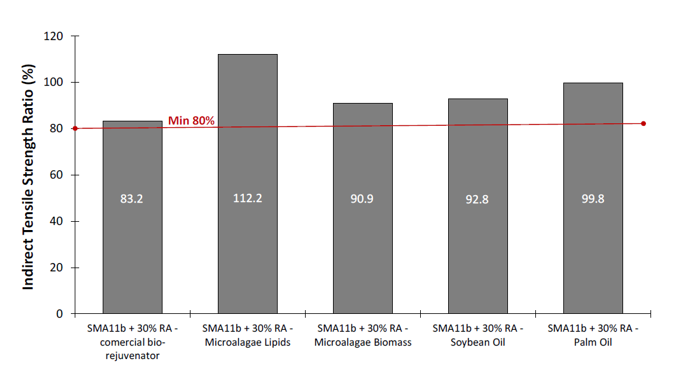
Figure 5: Asphalt mixes durability: Indirect Tensile Strength Ratio test results of SMA 11B mix containing 30% RAP and various rejuvenators.
Wheel Tracking
Table 9 shows the rut depth results from the wheel tracking test, at 10,000 wheel passing cycles. Results show that all mixtures meet the asphalt mix performance requirement. However, the mix containing microalgae biomass as rejuvenator demonstrated a high resistance to rutting, with a proportional rut dept of 7.3%. Which is 3.8% lower than mix containing commercial aged bitumen rejuvenator. The mix containing microalgae lipids as a rejuvenator also showed good resistance to rutting, with proportional rut dept of 8.2%. The best performing bio-oil was palm oil with rut dept of 3.7mm and proportional rut depth of 6.8%.
|
Mix |
Rut Depth @ 10,000 cycles (mm) |
Proportional Rut Depth @ 10,000 cycles (%) |
|
SMA 11B + 30% RAP - commercially available bio-rejuvenator (reference) |
6.3 |
11.1 |
|
SMA 11B + 30% RAP - Microalgae lipids |
4.4 |
8.2 |
|
SMA 11B + 30% RAP - Microalgae biomass |
4 |
7.3 |
|
SMA 11B + 30% RAP - Soybean oil |
4.4 |
7.9 |
|
SMA 11B + 30% RAP - Palm oil |
3.7 |
6.8 |
Table 9: Rut depth measurement of SMA 11B mix containing 30% RAP and various rejuvenators.
Thermal Stress Restrained Specimen Test (TSRST)
The TSRST test assesses how much stress builds up in an asphalt specimen as a result of temperature reduction. This is important as restrained temperature loading can lead to damages in pavements. Figure 6 illustrates the TSRST test results. In the graph, the stress build up is shown with temperature reduction, the line ends when the specimen breaks, the temperature at which this happens is the critical temperature. The results show that for all materials the critical temperature is in the region between -19.6oC/1.13MPa for the mix containing Soybean oil and -25.63oC/1.71MPa for mix containing the Palm oil. Performance of both mixtures containing microalgae lipids (oil) and biomass were quite similar with failure temperature at -22oC and failure stress 1.42MPa. Results further indicate that all mixtures are able to withstand the standard temperature reduction up until -15oC showing a stress level ranging between 0.4 - 0.6 MPa.
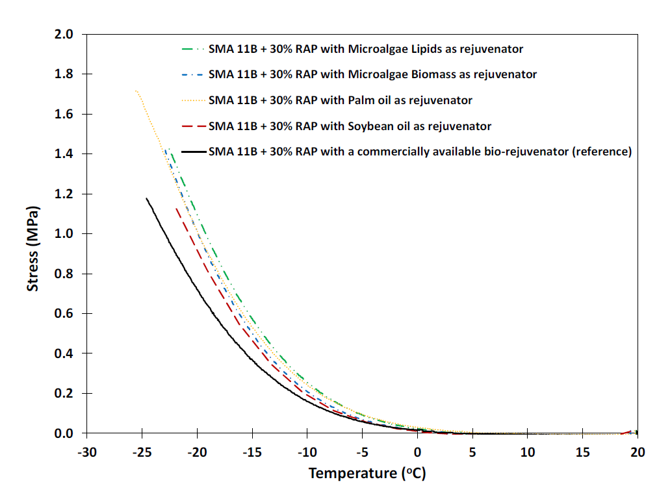
Figure 6: Temperature effect on of SMA 11B mix containing 30% RAP and various rejuvenators.
Conclusions
The goal of the study was to test initial properties and performance of aged bitumen and recycled asphalt that contains different types of bio-rejuvenating oils to assess if micro algae oil could be a good alternative for commercially available rejuvenators.
Results from the bitumen blends show that all studied rejuvenators, including the commercial one, are unable to reset the binder to its original state. Gel Permeation Chromatography (GPC) tests showed that all rejuvenated blends have a higher average molecular weight compared to both the fresh and the aged binder. FTIR characterisation, showed that both the carbonyl and sulfoxide indices remained high after rejuvenation. SARA test results show that the rejuvenators have impact on the chemical groups, however none of them are bringing the aged binder back to its original composition. The behaviour of the rejuvenated binders, assessed using the penetration value and the ring and ball temperature, showed that the addition the rejuvenator helped to soften the binder. However, all rejuvenators still resulted in a harder binder compared to the original fresh binder at the used dosage of 3%. The executed tests provide insight in how the rejuvenators influence the chemical characteristics and the behaviour of the binder. However, based on the results it is not possible to conclude on the expected performance of the binder when applied in an asphalt mix at industrial scale. Additional tests or insight are needed to assess the performance of a rejuvenator on binder level. In addition, it is also important to assess the impact of temperature and residence time during the blending process on the resulting binder characteristics.
When rejuvenated asphalt mixtures are evaluated, it becomes clear that the identified changes in the binder do have a positive influence on performance of the asphalt mixtures. The impact of the bio-oils and biomass rejuvenators on the asphalt performance varies between the performance indicator studied. The rejuvenators are able to decrease the mix stiffness. The indirect tensile strength is increased for the mix where microalgae biomass is added. Water resistance and wheel tracking test results showed good durability performance of all mixtures containing bio-rejuvenators. The TSRST results showed good performance of all mixtures in the same range as commercial rejuvenators.
In summary, the results show that microalgae-based rejuvenators (lipids and biomass) proved to be an effective rejuvenator. The regularly available bio-oils such as soybean oil and palm oil also perform well as a rejuvenator, however as they are part of the human food chain, it would be unethical to consider using these bio-oils in asphalt production. It is therefore worthwhile to explore growing algae in brown water, as it has been demonstrated that the algae oil and biomass are effective as rejuvenator. In addition the cultivation in brown water also has potential for water purification as algae consume nitrogen during growth. Cultivation in brown water reduces the price, both financially and environmental, which would encourage acceptance of biomaterials in asphalt.
The results also indicate that microalgae biomass can function directly as a bitumen rejuvenator without requiring prior lipid (oil) extraction. If this is the case, this means that one production step can be left out, further reducing cost and environmental impact.
Acknowledgements
This research was funded by the H2020 Marie Skłodowska Curie Individual Fellowship (IF) research funding programme, research project: Advanced Solutions for Asphalt Pavements (ASAP), project number: 886828. Authors acknowledge the valuable contribution of Dr. Ilona Van Zandvoort for her assistance with microalgae lipids processing, i.e. microalgae lipids extraction. The authors also thank Latexfal B.V. and Breedon Group Plc. for providing the commercial rejuvenator and fresh bitumen used in this study.
References
- Tabaković A, et al. The compartmented alginate fibres optimisation for bitumen rejuvenator encapsulation. Journal of Traffic and Transportation Engineering (English Edition) (2017).
- Thom N. Principles of Pavement Engineering. Emerald Publishing Limited (2024).
- Bitumen S. The Shell Bitumen Handbook. Shell Bitumen U.K. (1991).
- Leegwater G, et al. Terms and Definitions on Crack-Healing and Restoration of Mechanical Properties in Bituminous Materials. Cham: Springer International Publishing (2022).
- Leegwater G, et al. Intrinsic Self-Healing of Asphalt Pavements. In: Crack-Healing of Asphalt Pavement Materials: State-of-the-Art Report of the RILEM Technical Committee 278-CHA. Cham: Springer Nature Switzerland (2025): 5-31.
- Tabaković A, Schlangen E. Self-Healing Technology for Asphalt Pavements. In: Self-healing Materials. Springer International Publishing Switzerland, Cham (2016): 285-306.
- Tabaković A, et al. The reinforcement and healing of asphalt mastic mixtures by rejuvenator encapsulation in alginate compartmented fibres. Smart Materials and Structures 25 (2016): 084003.
- Hartman AM, Gilchrist MD. Evaluation Four-Point Bending Fatigue of Asphalt Mix Using Image Analysis. Journal of Materials in Civil Engineering 16 (2004).
- Tabaković A. The Influence of Reclaimed Asphalt Pavement (RAP) on Binder Course Mix Performance. In: School of Civil, Structural and Environmental Engineering. University College Dublin (2007): 283.
- Tabaković A. Recycled asphalt (RA) for pavements. In: Handbook of Recycled Concrete and Demolition Waste. Woodhead Publishing (2013): 394-423.
- Gerardu JJAA, C F. Recycling of road pavement materials in the Netherlands. Rijkswaterstaat Publication Platform (1985): 148.
- Tabaković A, M C, Fallon E. Specification development for cold in-situ recycling of asphalt. Journal of Construction and Building Materials 102 (2016).
- Tabaković A, et al. The Influence of Recycled Asphalt Pavement on the Fatigue Performance of Asphalt Concrete Base Courses. ASCE Journal of Materials in Civil Engineering 22 (2010): 8.
- Brownridge J. The role of an asphalt rejuvenator in pavement preservation: use and need for asphalt rejuvenation. In: 1st International Conference on Pavement Preservation. Newport Beach, USA (2010).
- Tabaković A, et al. Reinforcement and healing of asphalt mixtures by rejuvenator encapsulation in alginate compartmented fibres. IOP Smart Materials and Structures, Special Edition on Self Healing Materials 25 (2016).
- Beer FC, Davies J, Veeralinga Shivaprasad P. Alternative Asphalts. In: The Shell Bitumen Handbook. ICE Publishing, One Great George Street, Westminster, London, UK (2015).
- Arteaga-Pérez LE, et al. Environmental life cycle assessment of encapsulated rejuvenators from mining truck waste tires via pyrolysis for asphalt self-healing. Journal of Cleaner Production 490 (2025): 144787.
- Chávez-Delgado M, et al. Self-healing asphalt with optimised tyre-based pyro-rejuvenator. Fuel 400 (2025): 135747.
- Nichols JC, et al. Effects of using reclaimed asphalt and/or lower temperature asphalt on availability of road network. In: 6th International Conference Bituminous Mixtures and Pavements. Thessaloniki, Greece (2015).
- Tabaković A. Effect of Using of Reclaimed Asphalt and/or Lower Temperature Asphalt on the Availability of the Road Network. In: Materials and Infrastructures 2 (2013).
- Tabaković A, et al. Bio-Oils as Asphalt Bitumen Rejuvenators. Engineering Proceedings 36 (2023): 27.
- De Bock L, et al. Categorisation and analysis of rejuvenators for asphalt recycling. A. De Swaef, Woluwedal 42-1200 Brussels (2020): 28.
- Tabaković A. Is this the end of the road for bio-inspired road construction materials? RILEM Technical Letters 7 (2022): 9.
- Garcia A, Jelfs J, Austin CJ. Internal asphalt mixture rejuvenation using capsules. Construction and Building Materials 101 (2015): 309-316.
- Penki R, Kumar-Rout S. Next-generation bitumen: a review on challenges and recent developments in bio-bitumen preparation and usage. Biomass Conversion and Biorefinery (2021).
- Su JF, et al. Investigation the possibility of a new approach of using microcapsules containing waste cooking oil; in-situ rejuvenation. Construction and Building Materials 74 (2015): 83-92.
- Król JB, et al. Effect of bitumen fluxing using a bio-origin additive. Construction and Building Materials 114 (2016): 194-203.
- Prosperi E, Bocci E. A Review on Bitumen Aging and Rejuvenation Chemistry: Processes, Materials and Analyses. Sustainability 13 (2021).
- Kopittke PM, et al. Soil and the intensification of agriculture for global food security. Environment International 132 (2019): 105078.
- Miller SA, et al. Opportunities and challenges for engineering construction materials as carbon sinks. RILEM Technical Letters 6 (2021): 14.
- Tabaković A, et al. Bio-polymer modified bitumen. Construction and Building Materials 406 (2023): 133321.
- Lictevout FGSPJV RFLFSMEHP R, et al. The EIFFAGE Experience: Industrial Development of a Bio-Based Range and Feedback. In: 1st International Workshop on the Use of Biomaterials in Pavements. Granada, Spain (2022).
- Van Rompu J, et al. Mechanical and Environmental Performances of Warm Mix Asphalt with Reclaimed Asphalt and Plant-Based Binder. Journal of Testing and Evaluation 51 (2023): 2107-2119.
- Nahar S, et al. Evaluation of Lignin-Bitumen Blend as a Sustainable Alternative for Asphalt Binder. In: Transport Transitions: Advancing Sustainable and Inclusive Mobility. Cham: Springer Nature Switzerland (2025).
- Chailleux E, et al. Biobased Pavement: Lab Assessment of a Recycling Technique Without Petroleum Bitumen Addition in Irish Context. In: Transport Transitions: Advancing Sustainable and Inclusive Mobility. Cham: Springer Nature Switzerland (2026).
- Bajwa DS, et al. A concise review of current lignin production, applications, products and their environmental impact. Industrial Crops and Products 139 (2019): 111526.
- Chisti Y. Biodiesel from microalgae. Biotechnology Advances 25 (2007): 294-306.
- Abdelkarim OH, Wijffels RH, Barbosa MJ. Microalgal lipid production: A comparative analysis of Nannochloropsis and Microchloropsis strains. Journal of Applied Phycology 37 (2025): 15-34.
- Tabaković A. Bio-Binder—Innovative Asphalt Technology. Applied Sciences 10 (2020): 8655.
- Chailleux E, et al. Alternative Binder from microalgae: Algoroute project. In: Workshop Alternative Binders for Sustainable Asphalt Pavements. France (2012).
- Chailleux E, et al. Advances in the development of alternative binders from biomass for the production of biosourced road binders. In: Advances in Asphalt Materials. Woodhead Publishing, Oxford (2015): 347-362.
- Audo M, et al. Subcritical Hydrothermal Liquefaction of Microalgae Residues as a Green Route to Alternative Road Binders. ACS Sustainable Chemical Engineering 3 (2015): 8.
- French Institute of Science and Technology devoted to Transport Planning and Networks (IFSTTAR). BioRePavation (2020).
- Luzzi S, D JW. Techno-(economic) assessment of production of microalgae based rejuvenators. TNO, Petten (2025).
- Benvenuti G, et al. Microalgal triacylglycerides production in outdoor batch-operated tubular PBRs. Biotechnology for Biofuels 8 (2015): 100.
- Hofko B, et al. Repeatability and sensitivity of FTIR ATR spectral analysis methods for bituminous binders. Materials and Structures 50 (2017): 187.
- Huang W, et al. Chemical and rheological characteristics of rejuvenated bitumen with typical rejuvenators. Construction and Building Materials 273 (2021).
- Wilson E. Progress in Petroleum Technology. American Chemical Society (1951).
- van Beek FT, et al. Comprehensive two-dimensional liquid chromatography of heavy oil. Journal of Chromatography A 1564 (2018): 110-119.
- Rudyk S. Relationships between SARA fractions of conventional oil, heavy oil, natural bitumen and residues. Fuel 216 (2018): 330-340.