Divya R1, Rajajeyakumar M2, Ashok V3
1Department of Physiology, Karpagam Faculty of medical sciences and research, Coimbatore, India
2Department of Physiology, Trichy SRM Medical College Hospital & Research Centre, Trichy, India
3Department of Biochemistry, Karpagam Faculty of medical sciences and research, Coimbatore, India
*Corresponding Author: Dr. Rajajeyakumar M, Department of Physiology, SRM Medical College Hospital & Research Centre, Trichy, MGR Medical University, Chennai, Tamil Nadu, India
Received: 24 April 2019; Accepted: 02 May 2019; Published: 06 May 2019
Graphene Implants, Brain
1. Neural Sensing and Microelectrodes
For years the Neural sensing and stimulation was the mainstay of neuroscience research, brain - computer interactions and therapeutic clinical neuromodulation applications. The traditional systems used for neural stimulation have to depend on on sharp metal microelectrodes with meagre electrochemical properties that leads to widespread tissue injury and suggestively worsen the long-standing steadiness of implants [1]. There is substantial growth in the frame of information regarding the human brain. Several queries are still unreciprocated. For decades, scientists have been using electrodes to record the brain's electrical activity mapping in various regions of brain to comprehend its functions. The disadvantage of such electrode arrays is that they are able to perceive the activity over a certain threshold frequency.
2. Graphene Implants
The Graphene Flagship has designed a newer technology called the graphene implants that overcomes all the technical limitations, answering the means of data found frequency lesser than 0.1 Hz, which forms the basic design for future brain-computer interfaces.
3. What’s New About Graphene Implants?
Instead of transmitting the signals to a receiver. The graphene implants- the advanced transistor-based architecture amplifies the signals from the brain. This technology moves away from the usage of electrodes. Than the usage of a standard electrode array, the graphene implants helps to support many more recording sites as it is thin and stretchy, so that it can be used cortex regions without the fear of rejection or interference with normal functioning of the brain. This helps in an unparalleled plotting of the brain activity in lesser frequencies which transmits vital data regarding the proceedings in the brain for instance; the onset and progression of stroke and seizures. The neurologists thus have access to the minute clues that our brains only whisper. This revolutionary technology may alter the way of recording and viewing the electrical activity of our brain.
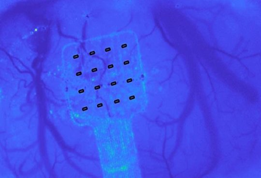
Figure 1: Graphene-based sensors could will enhance our understanding of the brain. Credit: ICFO/Ernesto Vidal.
- Applications of Graphene Implants
- Unparalleled understandings into etiology and location of seizures.
- Empowering the diagnosis and treatment of epilepsy.
- Precise mapping and interaction with the brain and its function..
- Multiplexing strategy- capability of the transistor configuration to create arrays with a more number of recording sites.
- New approaches to to reinstate speech and communication circuits.
- The brain-computer interfaces allows to discovery and restoration of high-level cognitive functions.
- To focus on the kind of speech impairment caused by brain or spinal cord injuries [2].
References
- Lu Y, Lyu H, Richardson AG, et al. Flexible Neural Electrode Array Based-on Porous Graphene for Cortical Microstimulation and Sensing. Sci Rep 6 (2016): 33526.
- CINN (Catalan Institute of Nanoscience and Nanotechnology). Graphene-based implant overcomes technical limitation to record brain activity at extremely low frequencies (2019).