Mutsumi Takahashi1,*, Yogetsu Bando2, Kazumasa Sakai3,4, Takuya Fukui5
1Department of Physiology, The Nippon Dental University School of Life Dentistry at Niigata, Japan
2Bando Dental Clinic, Ishikawa, Japan
3Kanazawa Gakuin University, Ishikawa, Japan
4Badminton Association of Japan, Tokyo, Japan
5Department of Sport Science, Kanazawa Gakuin University of Sport Science, Ishikawa, Japan
*Corresponding Author: Mutsumi Takahashi, Department of Physiology, The Nippon Dental University School of Life Dentistry at Niigata 951-8580, Japan.
Received: 20 August 2026; Accepted: 26 August 2026; Published: 28 August 2026
The purpose of this study is to clarify the influence of occlusal conditions on dynamic balance in athletes with stable static balance. The participants were 44 male university badminton players (mean age: 19.4±1.2 years). Static balance with eyes open was measured using a center of gravity sway meter. The measurement conditions consisted of a jaw position without tooth contact (mandibular rest position: RP) and a jaw position with occlusal contact (CO). Participants were divided into two groups based on their static balance: the improved group (n = 25), whose sway area (SA) was at least 10% smaller and sway path length per unit area (SPUA) was at least 10% larger in CO than in RP, and the non-improved group (n = 19), comprising all other participants. Dynamic balance was evaluated using the Cross-test via the center of gravity sway meter under three conditions: RP, CO, and free response (FR; no occlusal instructions). The R/E value—calculated by dividing the rectangular area of the displacement trajectory by SA—was used as the dynamic balance index. Differences in the R/E value regarding participant groups and occlusal conditions were compared using a split-plot design, followed by Student’s t-test or Welch’s t-test test for between-group comparisons, and Scheffe’s multiple comparison test for between-condition comparisons. A significant difference between the participant groups was observed exclusively under the FR condition, where the improved group exhibited a higher R/E value than the non-improved group. Significant differences across occlusal conditions were found only within the improved group, with the FR condition demonstrating significantly higher values than the RP and CO conditions. In dynamic balance evaluations of male university badminton players, the group whose static balance was enhanced by occlusion (the improved group) demonstrated superior dynamic stability when allowed to adaptively modulate their occlusion (FR) rather than under conditions that forced a specific occlusal position.
Dynamic balance; Jaw position; Occlusion; Badminton; Cross test; R/E value; Static balance; Sports dentistry; Center of pressure
Dynamic balance articles; Jaw position articles; Occlusion articles; Badminton articles; Cross test articles; R/E value articles; Static balance articles; Sports dentistry articles; Center of pressure articles
Introduction
The function of postural balance is regulated by sustained postural muscle activity and postural reflexes [1]. It is categorized into static balance, aimed at maintaining a stable posture, and dynamic balance, which adapts to changes in the base of support and the center of gravity. Various evaluation methods exist for each category, primarily utilized in physical therapy, rehabilitation, and sports science [2,3]. Reported measures of static balance include the one-leg standing test, Romberg test, Mann’s test (tandem standing), and the balance components of the Short Physical Performance Battery (SPPB). Furthermore, specialized equipment in fields such as otolaryngology and neurosurgery is employed for assessments such as gravity sway meters [4-6]. On the other hand, dynamic balance is evaluated using various tools depending on the target population: the Timed Up and Go (TUG) test and Functional Reach Test (FRT) are used for medical, rehabilitation, and elderly assessments (daily living activities level), while the Y-Balance Test and Star Excursion Balance Test are employed for athletes and sports settings (high-load level). Furthermore, the Berg Balance Scale (BBS), which provides a comprehensive assessment through multiple movement tests, remains one of the most reliable evaluation methods in clinical rehabilitation [7-10].
Multiple factors influence static balance ability, categorized as follows: 1) sensory systems (vision, vestibular, and somatosensory systems); 2) motor systems (ankle stiffness and strength, postural muscle strength, and postural/skeletal alignment); 3) central nervous system factors (central nervous system disorders and aging); and 4) environmental factors (base of support, medications, fatigue, and psychological state) [11-13]. Conversely, multiple factors also influence dynamic balance ability: 1) neuromuscular factors, including muscle strength and contraction speed (lower limb support capability, muscle power, and core stability); 2) brain and central nervous system factors, involving anticipation and adaptation (anticipatory and reactive postural control); 3) skeletal factors, comprising joint flexibility and range of motion (hip and ankle range of motion, and pelvic coordination); and 4) external factors, relating to environmental conditions (status of the base of support, dual-task conditions, and movement speed) [14-17]. Previously, we investigated the association between balance ability and jaw position/occlusion, both of which potentially influence somatosensory inputs and core stability [18,19]. Our prior research revealed that balance performance is modulated by occlusal contact conditions, bilateral occlusal balance, and occlusal optimization using intraoral appliances. Especially during dynamic balancing, we hypothesize that the contribution of postural muscles intensifies as the center of gravity shifts, with occlusion functioning as a concomitant regulatory factor.
The purpose of this study was to clarify the effects of occlusal conditions on the dynamic balance in the static balance stable group. The null hypothesis was that occlusal conditions have no effect on the dynamic balance of the static balance stable group.
Materials and Methods
Ethical approval of studies and informed consent
This study was conducted with the approval of the Ethics Committee of The Nippon Dental University School of Life Dentistry at Niigata (Approval No.: ECNG-R-325). Prior to participation, the purpose and significance of the study were fully explained to all participants, and their written informed consent was obtained.
Participants
Forty-four male university badminton players (mean age: 19.4±1.2 years) presenting with no morphological or functional disorders of the stomatognathic system participated in this study. Participants were excluded if they had a history of orthopedic conditions within the past year, including fractures or dislocations of the lower extremities or trunk, restricted joint range of motion, or acute/chronic lower limb (hip, knee, or ankle joint) or lower back pain that restricted physical activity. Additionally, individuals currently undergoing dental treatment or those with missing teeth (excluding third molars) were excluded from the study.
Measurement of static balance
Static balance was measured using a center-of-gravity sway meter (GRAVICORDER GS-7; Anima Corp., Tokyo) [18,19]. Measurements were conducted in accordance with the manufacturer's recommended guidelines. Participants were instructed to stand upright with their feet together (closed-foot stance) so that the center of their soles aligned with the reference point on the measurement platform. They were instructed to fixate their gaze on a target located 2 m ahead at eye level. Subsequently, participants were instructed to relax and maintain a jaw position without dental contact (mandibular rest position [RP]), and recording was performed for 30 seconds with eyes open (Figure 1). In addition, participants were instructed to occlude their teeth in a jaw position with occlusal contact (centric occlusion [CO]), and recording was similarly performed for 30 seconds. The measurements for the RP and CO conditions were randomized. The evaluation parameters were the sway area (SA: area enclosed by the center of pressure [COP] trajectory) to represent the magnitude of postural sway, and the sway path length per unit area (SPUA: COP path length per unit area) to reflect the micro-control of posture.
For each parameter, the rate of change in measured values from RP (baseline) to CO was calculated. Based on the rate of change in static balance under different jaw and occlusal conditions, the participants were divided into two groups: 1) the Improved Group (n=25), defined as individuals whose sway area (SA) decreased by 10% or more and whose sway path length per unit area (SPUA) increased by 10% or more in CO compared to RP; and 2) the Non-improved Group (n=19), comprising all other participants.
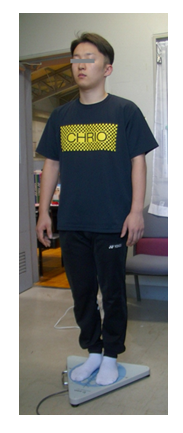
Figure 1: Measurement of static postural stability using a center of gravity sway meter.
Measurement of dynamic balance
Dynamic balance was evaluated using the Cross test with a center-of-gravity sway meter (GRAVICORDER GS-7) [18]. Participants were instructed to stand upright on the measurement platform in an open-foot stance, with their feet spaced 5 cm apart inside the reference point, and with their upper limbs relaxed at their sides. They were directed to maintain the same gaze as during the static balance measurement. Using the quiet standing position as the baseline, participants were instructed to shift their upper body for 3 seconds in each direction in the following sequence: forward, baseline, backward, baseline, leftward, baseline, rightward, and back to baseline (Figure 2). During the movements, participants were instructed to keep their heels on the platform. In addition to the two conditions used in the static balance measurement, a condition without any instructions regarding clenching or occlusion (free response [FR]) was included. The order in which the three occlusal conditions were measured was random. The value obtained by dividing the rectangular area—calculated from the product of the COP displacement distances in the anteroposterior and mediolateral directions on the center of pressure trajectory—by SA was calculated as the R/E value, which served as the index for dynamic balance.
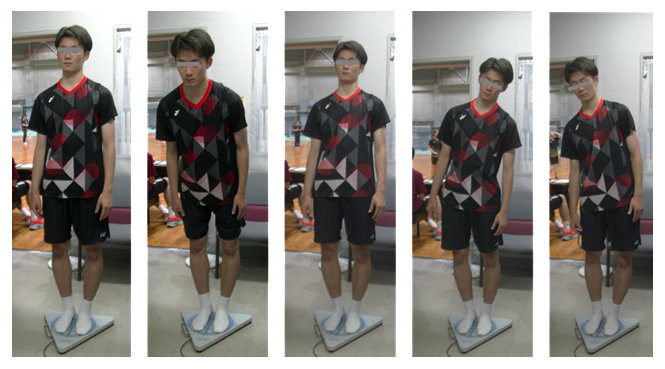
Figure 2: Measurement of dynamic postural stability using a center of gravity sway meter.
Statistical Analysis
All statistical analyses were conducted using IBM SPSS Statistics for Windows, Version 24.0 (IBM Corp., Armonk, NY, USA). Data normality was evaluated using the Shapiro-Wilk test.
For the rectangular area, normality was not confirmed for the RP and CO conditions in the Improved Group, as well as the RP condition in the Non-improved Group. Therefore, differences in the rectangular area among the jaw and occlusal conditions within each group were analyzed using the Friedman test.
For the R/E value, normality was confirmed under all jaw and occlusal conditions in both groups. Therefore, a split-plot design was used to compare differences between the participant groups and the jaw/occlusal conditions. Sphericity was assumed as confirmed by Mauchly’s sphericity test.
Since the main effects of participant groups, jaw/occlusal conditions, and their interaction were all significant, post-hoc comparisons were performed. In the comparison between participant groups, the Student’s t-test was used for the RP and CO conditions because homoscedasticity was assumed by Levene’s test, whereas Welch’s t-test was applied for the FR condition where homoscedasticity was not assumed. For comparisons among the jaw/occlusal conditions, Scheffé’s multiple comparison test was used.
Results
Representative recordings of static postural sway are shown in Figure 3. Figure 4 illustrates the rates of change in SA and SPUA during occlusion, comparing the Improved and Non-improved groups. While SA decreased during occlusion in the improved group, it exhibited a tendency to increase in the non-improved group. SPUA increased during occlusion in the improved group, whereas the rate of change in the non-improved group was negligible.
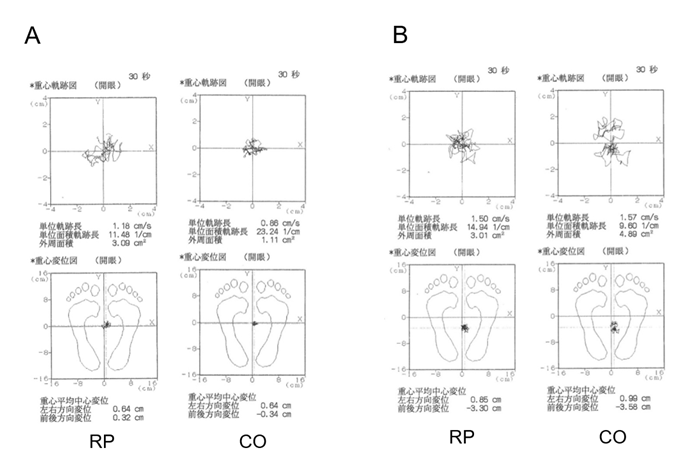
Figure 3: An example of results for static postural sway. RP: Mandibular rest position; CO: Centric occlusion. A: Improved group; B: Non-improved group.
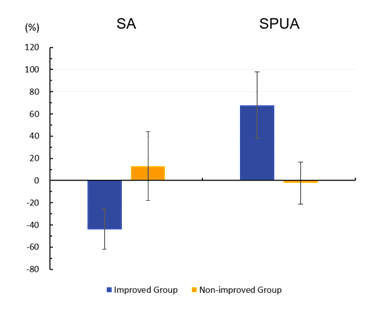
Figure 4: Rate of change of the sway area (SA) and the sway path length per unit area (SPUA) due to occlusion.
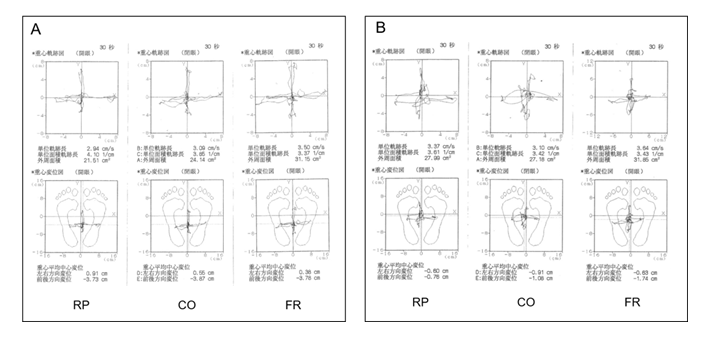
Figure 5: An example of results for dynamic postural sway. RP: Mandibular rest position; CO: Centric occlusion; FR: Free. A: Improved group; B: Non-improved group.
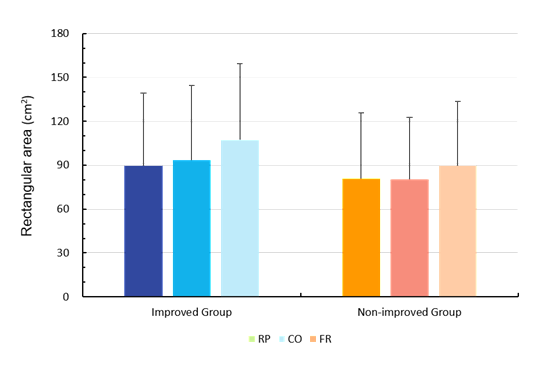
Figure 6: Comparison of rectangular area based on occlusal conditions. RP: Mandibular rest position; CO: Centric occlusion; FR: Free.
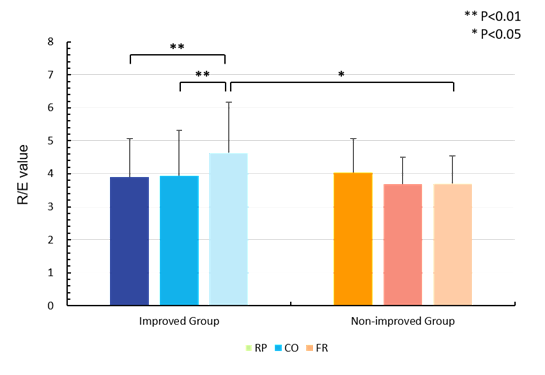
Figure 7: Comparison of R/E values based on occlusal conditions. RP: Mandibular rest position; CO: Centric occlusion; FR: Free.
Representative results of the dynamic postural sway measurements are presented in Figure 5. Figure 6 illustrates the comparison of the rectangular area across the occlusal conditions within each group. Although the rectangular area in both groups tended to increase in the order of RP, CO, and FR, the differences did not reach statistical significance. Figure 7 shows the comparison of the R/E value across the occlusal conditions. In the improved group, the FR condition exhibited a significantly higher R/E value compared to the RP and CO conditions (P<0.01). Conversely, no significant intra-group variations were detected in the non-improved group. Inter-group differences were restricted to the FR condition, wherein the improved group demonstrated a significantly higher value than the non-improved group (P<0.05).
Discussion
The results of this study demonstrated that static and dynamic balance control is influenced by occlusal conditions. Furthermore, the contribution of occlusion to dynamic balance tended to differ between the group whose static balance stabilized with occlusion and the group that did not. Therefore, the null hypothesis was rejected.
In our previous studies, we demonstrated that the relationship between occlusion and static balance is influenced by the bilateral stability of occlusal contact (occlusal balance) and varies depending on the type of sports and athletic discipline [20,21]. Regarding the relationship between static and dynamic balance, conflicting findings exist in the literature: some studies report that individuals with superior dynamic balance tend to exhibit good static balance, whereas others find no significant association between the two, likely due to differences in participant backgrounds and evaluation methodologies. In contrast, using the same evaluation method with a center-of-gravity sway meter as in the present study, our prior research revealed a correlation between static balance and dynamic balance assessed by the Cross-test [18]. Therefore, the present study employed the identical testing methodology to investigate the influence of various occlusal conditions.
In the present study, participants who exhibited a 10% or greater improvement in static balance under CO compared to RP were defined as the improved group, while the remaining participants were classified as the non-improved group. The sway area (SA) serves as an indicator of the magnitude of postural sway; under the CO condition, the average change in SA was -44.0% in the improved group and 13.0% in the non-improved group, indicating a stronger tendency for postural sway to increase with occlusion in the non-improved group. Furthermore, the sway path length per unit area (SPUA), which reflects the micro-control of posture, showed substantial inter-individual variability; the average change was 68.0% in the improved group, whereas it was -2.2% in the non-improved group. These results demonstrate that among the participants in this study, the improved group represented a population whose static balance was enhanced by occlusion, whereas the non-improved group experienced a deterioration in static balance with occlusion.
Dynamic balance was evaluated using the Cross-test. In the center-of-pressure (COP) trajectory map of the Cross-test, individuals with higher dynamic stability tend to trace a distinct, well-defined cross pattern. To objectively evaluate this geometric characteristic, the usefulness of the R/E value—calculated by dividing the rectangular area by the envelope area—has been previously established [18]. In comparing R/E values, a prerequisite is that there must be no significant difference in the rectangular area itself. Therefore, in the present study, we conducted statistical analyses across all levels to confirm the absence of significant differences in the rectangular area before comparing the R/E values among occlusal conditions and between subject groups. As shown in Figure 5, among the participants in this study, the trajectory diagram under the FR condition in the Improved Group—who exhibited good dynamic balance (i.e., higher R/E values)—demonstrated a clear and large cross pattern. In contrast, no obvious differences were observed among the occlusal conditions in the trajectory diagrams of the non-improved group. The results of this study revealed that the R/E value in the improved group was highest under the FR condition, showing significant differences compared with the RP and CO conditions. Conversely, no significant differences across occlusal conditions were observed in the non-improved group. in a previous study focusing on trampoline gymnasts [20], occlusal correction using mouthguards resulted in higher R/E values under the FR condition compared with the CO condition, demonstrating a trend consistent with the findings of the present study. While maintaining posture in CO is accompanied by robust muscle activity that locks the mandible into a specific position, physical movement (dynamic balance) involves not only predictable perturbations but also minute postural adjustments. Although occlusion provides highly sophisticated somatosensory/proprioceptive inputs, it simultaneously imposes a physical constraint by rigidifying or "fixing" the jaw [22]. While CO represents a conscious fixation that provides robust sensory feedback to the central nervous system, this input may act as excessive information (noise) or a constraint during dynamic tasks, potentially disrupting the systemic kinetic chain. Conversely, under the FR condition, adaptive dynamic modulation occurs—where occlusion takes place only when necessary and relaxes when it is not—thereby optimizing coordination with the whole-body postural control system. In other words, it is suggested that the improved group possesses a highly developed muscular chain linking the maxillofacial and cervical regions, to the extent that occlusion actively contributes to static balance. Furthermore, while muscle activity is insufficient in RP and excessive in CO, the FR condition maintains muscle tonicity scaled to the specific task demands [23,24]. This modulation may have optimized overall spinal stiffness. These mechanisms likely explain why the non-improved group showed no significant differences among occlusal conditions (due to the poor contribution of occlusion to their postural stability) and why the improved group exhibited significantly higher R/E values than the non-improved group under the FR condition. The participants in this study were university badminton players. Badminton is a sport that demands rapid switching between rigidity at the moment of shuttle impact and compliant, flexible body control during other phases [25-27]. While CO induces muscle contraction and fixation, making it highly suitable for a force-generation mode, it may excessively fixate muscle tension during a reaction mode in preparation for the next movement, thereby acting as noise that reduces the body's degrees of freedom [28,29]. In the present study, the finding that the improved group performed best under the FR condition suggests that simple structural fixation (CO) does not inherently contribute to dynamic balance. Rather, this outcome likely reflects the players’ athletic ability to dynamically modulate muscle tension according to situational demands—a skill applied to the unconscious control system of occlusion, resulting in the optimization of whole-body stiffness.
Several limitations should be acknowledged in the present study. First, because masseter muscle activity was not objectively evaluated under each condition, the detailed mechanism of how the presence or absence of occlusion affects central nervous system feedback remains speculative. Second, the participants in this study were exclusively university badminton players—a cohort characterized by highly developed motor control capabilities. Therefore, further investigation is warranted to determine whether these findings can be generalized to the general population or to athletes in other sports. Future research should incorporate electromyographic measurements to quantify muscle activity and evaluate occlusion under dynamic conditions that closely mimic actual athletic movements.
Conclusions
The findings of this study demonstrate that individuals whose static balance is enhanced by occlusion exhibit superior dynamic stability when allowed to adaptively modulate their occlusion (FR) rather than when their jaw position is rigidly fixed (CO). This suggests that the athletic ability to dynamically control muscle tension closely coordinates with the subconscious postural control system mediated by occlusion to optimize dynamic balance.
Acknowledgments
This work was supported by JSPS KAKENHI Grant Number JP23K10617.
Conflicts of interest statement
The authors have no conflicts of interest relevant to this article.
References
- Fujimoto C, Yamamoto Y. The sensorimotor control of human upright balance. Front Neurol 9 (2018): 1108.
- Horak FB. Postural orientation and equilibrium: what do we need to know about neural control of balance to prevent falls? Age Ageing 35 (2006): 7-11.
- Gribble PA, Hertel J, Plisky P. Using the Star Excursion Balance Test to assess dynamic postural-control deficits and injury risk in healthy physically active individuals. J Athl Train 47 (2012): 339-357.
- Spring H, O'Brien K, Mielenz T, Friedman JH. The Romberg test and its clinical application. J Geriatr Phys Ther 31 (2008): 61-66.
- Vereeck L, Wuyts F, Truijen S, Van de Heyning P. Clinical assessment of balance: normative data, and intra- and inter-subject reliability of the Romberg test and the single-leg stance test. Otol Neurotol 29 (2008): 1068-1075.
- Lacour M, Bernard-Demanze L, Dumitrescu M. Posturography and vestibular function. Neurophysiol Clin 38 (2008): 379-384.
- Newton RA. Validity of the multi-directional reach test: a practical measure of limits of stability in older adults. J Gerontol A Biol Sci Med Sci 56 (2001): M248-M252.
- Steffen TM, Hacker TA, Mollinger L. Age- and gender-related test performance in community-dwelling elderly people: Six-Minute Walk Test, Berg Balance Scale, Timed Up & Go Test, and gait speeds. Phys Ther 82 (2002): 128-137.
- Robinson LE, Gribble PA. Support for a reduction in the number of trials needed for the Star Excursion Balance Test. Arch Phys Med Rehabil 89 (2008): 364-370.
- Plisky PJ, Gorman PP, Butler RJ, Kiesel KB, Underwood FB, Elkins B. The reliability of an instrumented device for measuring components of the Y Balance Test. N Am J Sports Phys Ther 4 (2009): 92-99.
- Nashner LM. Practical biomechanics and physiology of balance. Handbook of balance function testing 2 (2003): 261-290.
- Horak FB. Postural orientation and equilibrium: what do we need to know about neural control of balance to prevent falls? Age Ageing 35 (2006): ii7-ii11.
- Shumway-Cook A, Woollacott MH. Motor control: translating research into clinical practice. 3rd ed (2007).
- Riemann BL, Guskiewicz KM. Contribution of the peripheral somatosensory system to balance and joint stability. Proprioception and neuromuscular control in joint stability (2000): 331-341.
- Gandevia SC. Spinal and supraspinal factors in human muscle fatigue. Physiol Rev 81 (2001): 1725-1789.
- Woollacott MH, Shumway-Cook A. Attention and the control of posture and gait: a review of an emerging area of research. Gait Posture 16 (2002): 1-14.
- Kibler WB, Press J, Sciascia A. The role of core stability in athletic function. Sports Med 36 (2006): 189-198.
- Takahashi M, Bando Y, Fukui T. Verification of relationship between static and dynamic balance using cross test trajectory diagram as indicator. Adv Phys Educ 14 (2024): 119-130.
- Takahashi M, Bando Y, Fukui T, Sugita M. Light clenching differentially affects balance ability according to occlusal contact stability. Appl Sci 14 (2024): 10314.
- Bando Y, Takahashi M, Fukui T, Maruyama A, Sugita M. Relationship between occlusal state and posture control function of trampoline gymnasts. J Sports Dent 23 (2019): 14-20.
- Takahashi M, Bando Y, Fukui T, Maruyama A, Sugita M. Equalization of the occlusal state by wearing a mouthguard contributes to improving postural control function. Appl Sci 13 (2023): 4342.
- Michelotti A, Manzini M, Tedesco A, Farella M, Martina R. Mandibular jaw muscle activity during submaximal clenching in different jaw positions. J Oral Rehabil 32 (2005): 792-797.
- Clark GT, Tsukamoto S, Olson RE. Evidence for occlusal, mechanical, and cognitive factors in the development of temporomandibular disorders. J Oral Rehabil 34 (2007): 933-946.
- Kiliaridis S, Kjellberg H, Wenneberg B, Engström C. The relationship between maximal bite force, bite force endurance, and facial morphology during adolescence. Eur J Orthod 29 (2007): 323-328.
- Kuntze G, Mansfield N, Sellers W. A biomechanical analysis of common badminton strokes. Sports Biomech 9 (2010): 190-206.
- Phomsoupha M, Laffaye G. The science of badminton: game characteristics, anthropometry, physiology, physics and biomechanics. Sports Med Open 1 (2015): 4.
- Zhang H, Wang Y, Chen T. Biomechanical characteristics of the smash in badminton: a review. J Sports Sci Med 18 (2019): 398-406.
- Kravitz DJ, et al. The effect of jaw position on physical performance in athletes. J Strength Cond Res 19 (2005): 15-20.
- Latash ML. Synergies in human movement. Neurophysiological basis of movement 2 (2008): 251-286.