Marium Aktar Taki1, Md Shariful Islam2, Esmat Ara3, Shammi Ara Diba4, Shaima Tasnim5, Md Sahriyer Efti5, Ummey Maimuna6, Yasin Arafat7*
1Department of NICU & Pediatrics, Ashiyan Medical College & Hospital, Dhaka, Bangladesh
2Department of pharmacy, University of Development Alternative, Dhaka, Bangladesh
3Department Cardiology, National Heart Foundation Hospital and Research Institute, Dhaka, Bangladesh
4Department of Medicine, Diabetes Centre Tangail Sodor, Tangail, Bangladesh
5Southwest Medical University, Luzhou, China
6Department of Medicine, Cox’s bazar Sadar Hospital, Cox’s bazar, Bangladesh
7Department of Applied Laboratory Sciences, Bangladesh University of Health Sciences, Dhaka, Bangladesh
Corresponding Author: Yasin Arafat, Department of Applied Laboratory Sciences, Bangladesh University of Health Sciences, Dhaka, Bangladesh
Received: 17 August 2026; Accepted: 19 August 2026; Published: 15 September 2026
Background: Chronic kidney disease (CKD) is a major global public health concern, contributing substantially to morbidity, mortality, and healthcare costs. Early detection and preventive behaviors are essential to delay disease progression; however, public awareness and preventive practices remain inadequate in many low- and middle-income countries, including Bangladesh. Objective: To assess the knowledge, attitudes, and preventive practices regarding chronic kidney disease among adults in Bangladesh and to identify factors associated with good preventive practices. Methods: A community-based cross-sectional study was conducted among 320 adults in Dhaka, Bangladesh, between November 2025 and April 2026. Data were collected using a structured, pre-tested questionnaire assessing socio-demographic characteristics and CKD-related knowledge, attitudes, and practices. Descriptive statistics, Chi-square test, Spearman's correlation, and multivariable logistic regression were performed using SPSS, with p <0.05 considered statistically significant. Results: Among the 320 participants, the mean age was 37.8 ± 12.6 years, and 58.1% (n=186) were male. Overall, 63.8% demonstrated good knowledge, 78.4% had a positive attitude, and 54.1% reported good preventive practices regarding CKD. Hypertension (87.2%) and diabetes (84.7%) were the most commonly recognized CKD risk factors, whereas only 58.1% correctly identified that CKD may remain asymptomatic during its early stages. Significant positive correlations were observed between knowledge and attitude (r=0.482, p<0.001), knowledge and practice (r=0.413, p<0.001), and attitude and practice (r=0.523, p<0.001). Participants with good knowledge were significantly more likely to report good preventive practices (adjusted odds ratio [AOR]=2.84, 95% CI: 1.76–4.58, p<0.001). Higher educational attainment (AOR=2.11, 95% CI: 1.29–3.46, p=0.003), positive attitudes toward CKD prevention (AOR=2.37, 95% CI: 1.43–3.92, p=0.001), and a history of hypertension (AOR=1.68, 95% CI: 1.03–2.74, p=0.038) were also independently associated with good preventive practices. Conclusion: Bangladeshi adults demonstrated satisfactory knowledge and positive attitudes toward CKD; however, preventive practices remained inadequate. Strengthening community-based awareness, routine screening, and health education may improve preventive behaviors and help reduce the burden of CKD.
Chronic kidney disease; Knowledge, attitude and practice; Public health; Bangladesh; CKD awareness
Chronic kidney disease articles; Knowledge articles, attitude and practice articles; Public health articles; Bangladesh articles; CKD awareness articles
Introduction
Chronic kidney disease (CKD) is a progressive and largely irreversible disorder characterized by persistent abnormalities in kidney structure or function, resulting in a gradual decline in renal function over time. It is recognized as one of the fastest-growing non-communicable diseases worldwide and has become a major public health challenge due to its increasing prevalence, high morbidity and mortality, and substantial economic burden [1]. According to global estimates, approximately 10–13% of the adult population is affected by CKD, accounting for hundreds of millions of individuals worldwide. The disease is associated with an increased risk of cardiovascular complications, end-stage kidney disease (ESKD), reduced quality of life, and premature death. As healthcare systems continue to face the growing burden of chronic diseases, CKD has emerged as a priority condition requiring effective prevention, early detection, and long-term management [2]. The global burden of CKD has increased considerably over the past two decades, primarily driven by the rising prevalence of diabetes mellitus, hypertension, obesity, metabolic syndrome, and population aging. These risk factors have become increasingly common, particularly in low- and middle-income countries (LMICs), where rapid urbanization, unhealthy dietary habits, sedentary lifestyles, and limited access to preventive healthcare services further contribute to disease progression. In many developing countries, inadequate health infrastructure, delayed diagnosis, and limited access to specialized nephrology services exacerbate the burden of CKD, leading to poor clinical outcomes and increased healthcare expenditures [3]. One of the greatest challenges in CKD prevention is that the disease often remains asymptomatic during its early stages. Many individuals are unaware of their condition until significant and irreversible kidney damage has occurred, resulting in delayed diagnosis and treatment. Consequently, patients frequently present with advanced disease requiring dialysis or kidney transplantation, both of which are associated with considerable financial, physical, and psychological burdens [4]. Evidence indicates that early identification of high-risk individuals through routine screening, coupled with timely lifestyle modification and appropriate medical management, can effectively delay disease progression, reduce complications, and improve long-term outcomes. Therefore, promoting awareness and encouraging preventive health behaviors are fundamental components of comprehensive CKD control strategies [5]. Knowledge, attitudes, and practices (KAP) are widely recognized as important determinants of health-related behaviors and play a critical role in the prevention and control of chronic diseases. Adequate knowledge regarding CKD risk factors, early symptoms, disease progression, and preventive measures enables individuals to recognize their personal risk and adopt healthier lifestyles. Positive attitudes toward disease prevention can motivate individuals to participate in routine health screening, adhere to medical advice, maintain healthy dietary practices, engage in regular physical activity, and effectively manage chronic conditions such as diabetes and hypertension [6]. Conversely, poor knowledge, misconceptions, and negative attitudes may contribute to delayed healthcare-seeking behavior, inadequate disease prevention, poor treatment adherence, and increased risk of CKD progression. Consequently, KAP assessments provide valuable information for identifying knowledge gaps, understanding behavioral determinants, and developing evidence-based educational and public health interventions tailored to community needs [7].
Bangladesh is currently undergoing a rapid epidemiological transition, characterized by an increasing burden of non-communicable diseases. The prevalence of diabetes mellitus, hypertension, obesity, and other metabolic disorders has risen substantially over recent decades, placing a large proportion of the population at risk of developing CKD [8]. Despite these trends, CKD remains underdiagnosed and often receives limited public attention compared with other chronic diseases. Public awareness regarding kidney health, CKD risk factors, early warning signs, and preventive strategies remains insufficient, particularly among individuals residing in resource-limited settings. Furthermore, routine kidney function screening is not widely practiced, and access to preventive healthcare services remains inconsistent across different regions of the country [9]. Although several studies have investigated CKD prevalence, clinical characteristics, and treatment outcomes, relatively few have explored public knowledge, attitudes, and preventive practices regarding CKD in Bangladesh. Existing studies have predominantly focused on hospital-based populations, patients with established kidney disease, or selected high-risk groups, limiting the generalizability of their findings to the broader community. Comprehensive community-based evidence evaluating CKD awareness and preventive behaviors among the general adult population remains scarce. Understanding these behavioral and educational aspects is essential for designing effective national awareness campaigns, community-based screening initiatives, and targeted health promotion programs aimed at reducing the burden of CKD [10].
Therefore, this community-based cross-sectional study was conducted to assess the knowledge, attitudes, and preventive practices regarding chronic kidney disease among adults in Bangladesh and to identify factors associated with good preventive practices.
Methods
A community-based cross-sectional study was conducted among 320 adults residing in urban and peri-urban areas of Dhaka, Bangladesh, between November 2025 and April 2026. Adults aged ≥18 years who had been living in Dhaka for at least six months and provided written informed consent were eligible to participate. Individuals who were healthcare professionals or students in medical-related disciplines, had previously been diagnosed with chronic kidney disease, were receiving dialysis or kidney transplantation, had severe physical or cognitive impairment, or submitted incomplete questionnaires were excluded. Participants were recruited using a convenience sampling technique from residential communities and outpatient areas of selected government healthcare facilities. Data were collected through face-to-face interviews using a structured, pretested questionnaire developed from previously published literature on CKD knowledge, attitudes, and practices. The questionnaire was prepared in English, translated into Bangla, and back-translated to ensure linguistic accuracy. A pilot study involving approximately 5% of the estimated sample was conducted to evaluate clarity and reliability, and necessary modifications were made before the main survey. The questionnaire included four components: socio-demographic characteristics, knowledge of CKD, attitudes toward CKD prevention, and preventive practices. Knowledge was assessed using multiple-choice and true/false questions, with each correct response assigned one point and incorrect or “don't know” responses assigned zero points. Attitudes were measured using a five-point Likert scale ranging from “strongly disagree” to “strongly agree,” while preventive practices were assessed using questions related to healthy lifestyle behaviors and CKD prevention. Participants scoring ≥70% of the maximum obtainable score were categorized as having good knowledge, a positive attitude, and good preventive practices.
Data collection was carried out by trained research assistants using standardized interviewing procedures. Each interview lasted approximately 15–20 minutes, and completed questionnaires were reviewed daily to ensure completeness and consistency. Data quality was maintained through interviewer training, questionnaire pretesting, routine supervision, verification of completed questionnaires, and data cleaning before analysis. Data were entered into Microsoft Excel and analyzed using IBM SPSS Statistics version 26.0 (IBM Corp., Armonk, NY, USA). Descriptive statistics were used to summarize participant characteristics and KAP responses. Continuous variables were expressed as mean ± standard deviation (SD), whereas categorical variables were presented as frequencies and percentages. Associations between categorical variables were evaluated using the Chi-square test, and Spearman's rank correlation was used to assess the relationships among knowledge, attitude, and practice scores. Multivariable logistic regression analysis was performed to identify factors independently associated with good preventive practices, and adjusted odds ratios (AORs) with 95% confidence intervals (CIs) were reported. A two-tailed p-value <0.05 was considered statistically significant. Written informed consent was obtained from all participants prior to data collection. Participation was voluntary, confidentiality was strictly maintained, and the study was conducted in accordance with the principles of the Declaration of Helsinki.
Results
Table 1 presents the socio-demographic and clinical characteristics of the 320 study participants. The mean age of the participants was 37.8 ± 12.6 years, with the largest proportion belonging to the 30–39 years age group (31.9%), followed by 18–29 years (26.9%), 40–49 years (23.1%), and ≥50 years (18.1%). More than half of the participants were male (58.1%), while females accounted for 41.9%. Most respondents were married (71.3%), and nearly half had attained a graduate degree or higher (47.5%), followed by higher secondary (24.4%), secondary (19.4%), and primary or below (8.8%). Regarding occupation, 40.0% were employed in service-related professions, 21.3% were homemakers, 20.0% were involved in business, 10.0% were students, and 8.7% belonged to other occupational groups. Clinically, 30.0% reported a history of hypertension, 23.1% had diabetes mellitus, 11.9% had a family history of CKD, and 25.3% were current smokers.
Table 1: Socio-demographic and Clinical Characteristics of the Participants.
|
Variable |
Number (n) |
Percentage (%) |
|
Age group (years) |
||
|
18–29 |
86 |
26.9 |
|
30–39 |
102 |
31.9 |
|
40–49 |
74 |
23.1 |
|
≥50 |
58 |
18.1 |
|
Mean age (years) |
37.8 ± 12.6 |
— |
|
Gender |
||
|
Male |
186 |
58.1 |
|
Female |
134 |
41.9 |
|
Marital status |
||
|
Married |
228 |
71.3 |
|
Unmarried |
92 |
28.7 |
|
Educational level |
||
|
Primary or below |
28 |
8.8 |
|
Secondary |
62 |
19.4 |
|
Higher Secondary |
78 |
24.4 |
|
Graduate or above |
152 |
47.5 |
|
Occupation |
||
|
Service |
128 |
40.0 |
|
Business |
64 |
20.0 |
|
Student |
32 |
10.0 |
|
Homemaker |
68 |
21.3 |
|
Others |
28 |
8.7 |
|
History of hypertension |
96 |
30.0 |
|
History of diabetes mellitus |
74 |
23.1 |
|
Family history of CKD |
38 |
11.9 |
|
Current smoker |
81 |
25.3 |
Table 2 summarizes participants' knowledge regarding chronic kidney disease. Overall, 63.8% of participants demonstrated good knowledge of CKD. The majority correctly identified hypertension (87.2%) and diabetes mellitus (84.7%) as major risk factors for CKD. Additionally, 85.9% recognized the primary function of the kidneys, while 79.4% knew that kidney function should be routinely assessed in high-risk individuals. Approximately three-quarters of respondents were aware that regular exercise (77.5%), excessive use of painkillers (74.7%), smoking (72.8%), and obesity (68.1%) were associated with CKD risk. However, only 58.1% correctly recognized that CKD may remain asymptomatic during its early stages, representing the lowest level of awareness among the assessed knowledge items.
Table 2: Knowledge Regarding Chronic Kidney Disease.
|
Knowledge Item |
Number (n) |
Percentage (%) |
|
Kidneys filter waste products from blood |
275 |
85.9 |
|
Hypertension is a CKD risk factor |
279 |
87.2 |
|
Diabetes mellitus is a CKD risk factor |
271 |
84.7 |
|
Smoking increases CKD risk |
233 |
72.8 |
|
Obesity increases CKD risk |
218 |
68.1 |
|
Excessive painkiller use may damage the kidneys |
239 |
74.7 |
|
Regular exercise helps prevent CKD |
248 |
77.5 |
|
CKD may remain asymptomatic during its early stages |
186 |
58.1 |
|
Kidney function should be checked in high-risk individuals |
254 |
79.4 |
|
CKD can progress to kidney failure |
244 |
76.3 |
|
Overall good knowledge |
204 |
63.8 |
Table 3 describes participants' attitudes toward CKD prevention. Overall, 78.4% of respondents demonstrated a positive attitude toward CKD prevention. Most participants considered CKD a serious public health problem (88.1%) and agreed that diabetes should be adequately controlled to prevent kidney disease (86.3%). Similarly, 85.6% believed that early screening for CKD was important, while 84.4% supported regular blood pressure monitoring. Furthermore, 80.9% agreed that maintaining a healthy diet could reduce the risk of CKD. A substantial proportion (78.4%) also reported that they would seek medical attention if they suspected kidney disease.
Table 3: Attitudes Toward CKD Prevention.
|
Statement |
Number (n) |
Percentage (%) |
|
CKD is a serious health problem |
282 |
88.1 |
|
Early screening for CKD is important |
274 |
85.6 |
|
A healthy diet can reduce the risk of CKD |
259 |
80.9 |
|
Blood pressure should be checked regularly |
270 |
84.4 |
|
Diabetes should be well controlled to prevent CKD |
276 |
86.3 |
|
I would seek medical care if kidney disease is suspected |
251 |
78.4 |
|
Overall positive attitude |
251 |
78.4 |
Table 4 presents participants' preventive practices related to CKD. Overall, 54.1% of respondents reported good preventive practices. The most frequently reported healthy behavior was avoiding smoking (74.7%), followed by drinking adequate water daily (66.9%) and avoiding unnecessary use of painkillers (61.9%). More than half of the participants reported limiting salt intake (56.9%) and engaging in regular physical exercise (52.5%). In contrast, fewer participants routinely monitored their blood pressure (50.9%) or blood glucose levels when indicated (48.1%), and only 39.4% had ever undergone a kidney function test, indicating relatively low utilization of preventive screening services.
Table 4: Preventive Practices Regarding CKD.
|
Practice |
Number (n) |
Percentage (%) |
|
Drink adequate water daily |
214 |
66.9 |
|
Exercise ≥3 days per week |
168 |
52.5 |
|
Limit salt intake |
182 |
56.9 |
|
Avoid smoking |
239 |
74.7 |
|
Avoid unnecessary use of painkillers |
198 |
61.9 |
|
Regular blood pressure monitoring |
163 |
50.9 |
|
Regular blood glucose monitoring (if indicated) |
154 |
48.1 |
|
Ever had a kidney function test |
126 |
39.4 |
|
Overall good preventive practice |
173 |
54.1 |
Table 5 illustrates the association between selected participant characteristics and good preventive practices regarding CKD. Educational attainment, knowledge level, attitude, and history of hypertension were significantly associated with good preventive practices. Participants with a graduate-level education or above were significantly more likely to report good preventive practices than those with lower educational attainment (66.1% vs. 47.1%; χ² = 9.67, p = 0.003). Likewise, participants with good knowledge demonstrated significantly better preventive practices compared with those with poor knowledge (65.2% vs. 34.5%; χ² = 16.84, p < 0.001). A positive attitude toward CKD prevention was also significantly associated with good preventive practices (61.0% vs. 29.0%; χ² = 11.58, p = 0.001). Additionally, respondents with a history of hypertension were more likely to report good preventive practices than those without hypertension (63.5% vs. 50.0%; χ² = 4.31, p = 0.038). No statistically significant association was observed between gender and preventive practice (χ² = 1.24, p = 0.265).
Table 5: Association Between Participant Characteristics and Good Preventive Practice.
|
Variable |
Good Practice n (%) |
Poor Practice n (%) |
χ² |
p-value |
|
Male |
96 (51.6) |
90 (48.4) |
1.24 |
0.265 |
|
Female |
77 (57.5) |
57 (42.5) |
||
|
Graduate or above |
74 (66.1) |
38 (33.9) |
9.67 |
0.003 |
|
Lower education |
99 (47.1) |
111 (52.9) |
||
|
Good knowledge |
133 (65.2) |
71 (34.8) |
16.84 |
<0.001 |
|
Poor knowledge |
40 (34.5) |
76 (65.5) |
||
|
Positive attitude |
153 (61.0) |
98 (39.0) |
11.58 |
0.001 |
|
Negative attitude |
20 (29.0) |
49 (71.0) |
||
|
Hypertension |
61 (63.5) |
35 (36.5) |
4.31 |
0.038 |
|
No hypertension |
112 (50.0) |
112 (50.0) |
Table 6 presents the findings of the multivariable logistic regression analysis. After adjustment for potential confounding variables, participants with good knowledge were nearly three times more likely to report good preventive practices than those with poor knowledge (AOR = 2.84, 95% CI: 1.76–4.58; p < 0.001). Similarly, respondents with graduate-level education or above had significantly higher odds of practicing CKD preventive behaviors (AOR = 2.11, 95% CI: 1.29–3.46; p = 0.003). Participants with a positive attitude toward CKD prevention were more than twice as likely to engage in appropriate preventive practices (AOR = 2.37, 95% CI: 1.43–3.92; p = 0.001). Furthermore, a history of hypertension remained an independent predictor of good preventive practice (AOR = 1.68, 95% CI: 1.03–2.74; p = 0.038).
Table 6: Multivariable Logistic Regression Analysis for Good Preventive Practice.
|
Variable |
Crude OR (95% CI) |
Adjusted OR (95% CI) |
p-value |
|
Good knowledge |
3.12 (2.01–4.83) |
2.84 (1.76–4.58) |
<0.001 |
|
Graduate or above |
2.35 (1.48–3.74) |
2.11 (1.29–3.46) |
0.003 |
|
Positive attitude |
2.66 (1.61–4.39) |
2.37 (1.43–3.92) |
0.001 |
|
Hypertension |
1.82 (1.14–2.92) |
1.68 (1.03–2.74) |
0.038 |
Table 7 shows the correlations among knowledge, attitude, and preventive practice scores. Spearman's correlation analysis demonstrated significant positive relationships between all three domains. Knowledge was moderately correlated with attitude (r = 0.482, p < 0.001) and preventive practice (r = 0.413, p < 0.001). The strongest positive correlation was observed between attitude and preventive practice (r = 0.523, p < 0.001). These findings indicate that participants with greater knowledge tended to have more positive attitudes, and both higher knowledge and more favorable attitudes were associated with better preventive practices regarding chronic kidney disease.
Table 7: Correlation Between Knowledge, Attitude, and Practice Scores.
|
Variables |
Knowledge |
Attitude |
Practice |
|
Knowledge |
1.000 |
0.482** |
0.413** |
|
Attitude |
0.482** |
1.000 |
0.523** |
|
Practice |
0.413** |
0.523** |
1.000 |
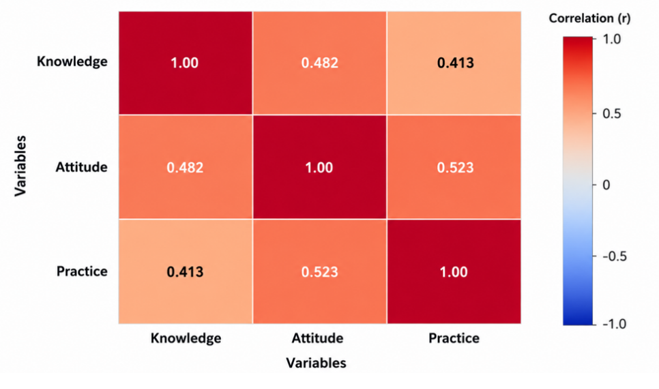
Figure 1: Correlation Heatmap of CKD Knowledge, Attitude, and Practice.
Discussion
The findings revealed that approximately two-thirds of the participants demonstrated good knowledge (63.8%), more than three-quarters had a positive attitude toward CKD prevention (78.4%), while only slightly more than half reported good preventive practices (54.1%). In addition, higher educational attainment, good knowledge, positive attitudes, and a history of hypertension were independently associated with better preventive practices. Significant positive correlations were also observed among knowledge, attitude, and practice scores, suggesting that increased awareness may contribute to more favorable attitudes and healthier preventive behaviors. In the present study, 63.8% of participants demonstrated good knowledge regarding CKD. Although this level of awareness is encouraging, important knowledge gaps remain. Most respondents correctly recognized hypertension and diabetes mellitus as major CKD risk factors, whereas awareness that CKD may remain asymptomatic during its early stages was considerably lower (58.1%). These findings are consistent with previous community-based studies, which have reported relatively good recognition of common CKD risk factors but poor awareness of the disease's silent progression. Similar observations have been reported among Bangladeshi adults and in other low- and middle-income countries, where hypertension and diabetes are widely recognized because of extensive public health campaigns, whereas early-stage CKD remains poorly understood by the general population [11]. The study also demonstrated that 78.4% of participants had a positive attitude toward CKD prevention. Most respondents acknowledged that CKD is a serious public health problem and recognized the importance of early screening, blood pressure control, diabetes management, and healthy dietary practices. This finding is encouraging because positive attitudes often reflect a willingness to adopt preventive measures when adequate health information and services are available. Similar findings have been reported in previous CKD awareness studies, where educational interventions substantially improved attitudes toward kidney disease prevention and healthy lifestyle behaviors [12]. Despite relatively satisfactory knowledge and positive attitudes, only 54.1% of participants reported good preventive practices. Healthy behaviors such as avoiding smoking, maintaining adequate hydration, and avoiding unnecessary painkiller use were relatively common; however, routine blood pressure monitoring, blood glucose monitoring, and kidney function testing remained suboptimal. This discrepancy between knowledge and actual practice has been consistently reported in previous KAP studies and may be explained by financial constraints, limited access to preventive healthcare services, inadequate routine screening programs, and the absence of symptoms during the early stages of CKD. These findings highlight that knowledge alone is insufficient to achieve sustained behavioral change without supportive health systems and accessible preventive services [13].
Educational attainment was significantly associated with preventive practice in the present study. Participants with graduate-level education were more than twice as likely to report good preventive practices compared with those with lower educational attainment. Higher educational status is likely to improve health literacy, facilitate access to reliable health information, and enhance understanding of disease prevention strategies. Similar associations between education and CKD awareness have been reported in previous studies conducted in both developed and developing countries, suggesting that educational achievement remains an important determinant of preventive health behavior [14]. Knowledge was identified as one of the strongest independent predictors of good preventive practice. Participants with good knowledge were nearly three times more likely to engage in appropriate preventive behaviors than those with poor knowledge. Furthermore, positive attitudes independently predicted good practice, indicating that both cognitive understanding and favorable perceptions contribute to healthy behavioral changes. The significant positive correlations observed among knowledge, attitude, and practice further support the theoretical KAP framework, which proposes that improved knowledge promotes positive attitudes that subsequently influence preventive behaviors. These findings emphasize the importance of integrating educational interventions with behavioral change strategies to improve kidney health at the community level [14]. Interestingly, participants with a history of hypertension demonstrated significantly better preventive practices than those without hypertension. This finding may reflect increased contact with healthcare providers, greater exposure to counseling regarding chronic disease management, and more frequent medical follow-up among hypertensive individuals. Because hypertension is one of the leading risk factors for CKD, individuals receiving regular clinical care may become more aware of kidney disease prevention and consequently adopt healthier lifestyles [15].
The present findings have important public health implications for Bangladesh. CKD continues to represent a growing public health challenge, driven largely by the increasing prevalence of hypertension and diabetes. Although awareness of major CKD risk factors appears reasonably good, important deficiencies remain regarding early disease recognition and routine preventive screening. Community-based awareness campaigns, integration of CKD education into primary healthcare services, routine screening of high-risk populations, and promotion of healthy lifestyle behaviors may substantially improve preventive practices and facilitate earlier detection of kidney disease. These approaches are particularly relevant in low-resource settings, where CKD is frequently diagnosed only after irreversible kidney damage has occurred [16]. This study has several strengths. It included a community-based adult population and simultaneously evaluated knowledge, attitudes, preventive practices, and their associated factors using multivariable analysis. However, several limitations should be considered. First, the cross-sectional design precludes establishing causal relationships. Second, preventive practices were self-reported and therefore may be subject to recall and social desirability bias. Third, participants were recruited from communities within Dhaka using convenience sampling, which may limit the generalizability of the findings to rural populations and other regions of Bangladesh. Future nationwide studies employing probability sampling and longitudinal designs are warranted to better understand CKD awareness and preventive behaviors across diverse populations.
Conclusion
This community-based cross-sectional study demonstrated that Bangladeshi adults had moderately good knowledge and generally positive attitudes toward chronic kidney disease (CKD); however, preventive practices remained suboptimal. While most participants were aware of major CKD risk factors such as hypertension and diabetes mellitus, awareness of the asymptomatic nature of early-stage CKD and the importance of routine kidney health screening remained limited. Good knowledge, positive attitudes, higher educational attainment, and a history of hypertension were identified as significant predictors of good preventive practices. Furthermore, the positive correlations observed among knowledge, attitude, and practice scores highlight the importance of improving public awareness to promote healthier preventive behaviors. These findings emphasize the need for comprehensive community-based health education programs, routine screening of high-risk populations, and strengthened primary healthcare initiatives to improve CKD awareness, facilitate early detection, and reduce the growing burden of chronic kidney disease in Bangladesh.
Limitations of the Study
This study has several limitations that should be considered when interpreting the findings. First, the cross-sectional study design limits the ability to establish causal relationships between knowledge, attitudes, and preventive practices. Second, the use of convenience sampling and recruitment from selected communities in Dhaka may limit the generalizability of the findings to rural populations and other regions of Bangladesh. Third, the study relied on self-reported information, which may be affected by recall bias and social desirability bias. Fourth, preventive practices were not verified through clinical records or laboratory investigations. Finally, although the study identified important factors associated with preventive practices, other potential determinants, such as healthcare accessibility, health literacy, socioeconomic status, and cultural beliefs, were not comprehensively explored. Future multicenter longitudinal studies involving nationally representative samples are recommended to provide more robust evidence and to evaluate the effectiveness of community-based interventions aimed at improving CKD awareness and preventive behaviors.
Author Contributions
Conceptualization: Marium Aktar Taki, Md Shariful Islam, Esmat Ara
Methodology: Marium Aktar Taki, Shammi Ara Diba, Shaima Tasnim
Data Collection: Shammi Ara Diba, Shaima Tasnim, Md Sahriyer Efti, Ummey Maimuna, Yasin Arafat
Data Curation: Md Shariful Islam, Md Sahriyer Efti, Ummey Maimuna
Formal Analysis: Md Shariful Islam, Marium Aktar Taki, Md Sahriyer Efti, Ummey Maimuna
Writing – Original Draft: Marium Aktar Taki, Md Shariful Islam, Esmat Ara, Shammi Ara Diba, Shaima Tasnim
Writing – Review & Editing: Esmat Ara, Shammi Ara Diba, Shaima Tasnim, Md Sahriyer Efti, Ummey Maimuna, Yasin Arafat
Final Approval: All authors read and approved the final manuscript.
Conflict of Interest
No
References
- Stevens PE, Levin A, Kidney Disease: Improving Global Outcomes Chronic Kidney Disease Guideline Development Work Group Members*. Evaluation and management of chronic kidney disease: synopsis of the kidney disease: improving global outcomes 2012 clinical practice guideline. Annals of internal medicine 158 (2013): 825-830.
- Levin A, Ahmed SB, Carrero JJ, et al. Executive summary of the KDIGO 2024 Clinical Practice Guideline for the Evaluation and Management of Chronic Kidney Disease: known knowns and known unknowns. Kidney international 105 (2024): 684-701.
- Sarker M H R, Moriyama M, Rashid H U, et al. Chronic kidney disease awareness campaign and mobile health education to improve knowledge, quality of life, and motivation for a healthy lifestyle among patients with chronic kidney disease in Bangladesh: randomized controlled trial. Journal of Medical Internet Research 24 (2022): e37314.
- Sarker MH, Moriyama M, Rashid HU, et al. Health education through a campaign and mHealth to enhance knowledge and quality of life among patients with chronic kidney disease in Bangladesh: protocol for a randomized controlled trial. JMIR research protocols 10 (2021): e30191.
- Bikbov B, Purcell CA, Levey AS, et al. Global, regional, and national burden of chronic kidney disease, 1990–2017: a systematic analysis for the Global Burden of Disease Study 2017. The lancet 395 (2020): 709-733.
- Li Z, He R, Wang Y, et al. Global trends of chronic kidney disease from 1990 to 2021: a systematic analysis for the global burden of disease study 2021. BMC nephrology 26 (2025): 385.
- Ameh OI, Ekrikpo UE, Kengne AP. Preventing CKD in low-and middle-income countries: a call for urgent action. Kidney international reports 5 (2020): 255-262.
- Visent SK, Sindato EM, Yahaya JJ. Determinants of knowledge, attitude, and practice towards risk factors and prevention of chronic kidney disease among adults in Dodoma, Tanzania: A cross-sectional study. International Journal of Africa Nursing Sciences (2026): 101113.
- Luyckx VA, Tonelli M, Stanifer JW. The global burden of kidney disease and the sustainable development goals. Bulletin of the World Health Organization 96 (2018): 414.
- Ramzan Z, Zakir R, Burki A, et al. Assessment of Knowledge, Attitude, and Practice of Chronic Kidney Disease and its risk factors among the general population. Gomal Journal of Medical Sciences 24 (2026): 136-141.
- Rosedi AB, Yusoff SS, Hairon SM, et al. Knowledge, Attitude, And Practice in Diabetic Kidney Disease Prevention and Its Associated Factor Among Type 2 Diabetes Mellitus Patients in Northeast Peninsular Malaysia. National Journal of Community Medicine 16 (2025): 668-676.
- Bekalu M. Knowledge, Attitude, and Associated Factors About Chronic Kidney Disease Prevention Among Adult Diabetes Mellitus Patients Attending Chronic Follow-Up Clinic in Bahir Dar City Public Hospitals (Doctoral dissertation).
- Ene-Iordache B, Perico N, Bikbov B, et al. Chronic kidney disease and cardiovascular risk in six regions of the world (ISN-KDDC): a cross-sectional study. The Lancet Global Health 4 (2016): e307-319.
- Alobaidi S. Knowledge of chronic kidney disease among the population of Saudi Arabia evaluated using a validated questionnaire: a cross-sectional study. Patient preference and adherence (2021): 1281-1228.
- Liza n, sadhukhan s, bhowmik s, et al. Knowledge, attitude, and preventive measures of common people about chronic kidney diseases in dhaka city of bangladesh. International journal of health sciences 9 (2025): 52-64.
- Sarker MH, Moriyama M, Rashid HU, et al. Community-based screening to determine the prevalence, health and nutritional status of patients with CKD in rural and peri-urban Bangladesh. Therapeutic advances in chronic disease 12 (2021): 20406223211035281.