Babak Nakhjavan Shahraki1, Ranganayani Thanuj2, Revunuru Narasimha Reddy3, Fatima Usman Bhutta4, Luay Abdallah5, Rawan Abdalla6, Kristina Zumbana-Podaneva7, Maimona Bano8, Abdullah Akram Virk9, Imdad Ullah10*
1Zahedan University of Medical Sciences, Zahedan, Iran
2A.C.S.R. Government Medical College, Nellore, Andhra Pradesh, India
3ACSR Medical College, Nellore, Andhra Pradesh, India
4Bedfordshire Hospitals NHS Foundation Trust, United Kingdom
5Ross University School of Medicine, Barbados
6Al Neelain University, Khartoum, Sudan
7Pontifical Catholic University of Ecuador, Quito, Ecuador
8Deccan College of Medical Sciences, Hyderabad, India
9Rawalpindi Medical University, Rawalpindi, Punjab, Pakistan
10Khyber Medical College, Peshawar, Pakistan
*Corresponding Author: Imdad Ullah, MBBS. Khyber Medical College, Peshawar, Pakistan
Received: 27 July 2026; Accepted: 28 August 2026; Published: 31 August 2026
Background: Atrial fibrillation (AF) is the most prevalent sustained cardiac arrhythmia worldwide, affecting more than 37 million individuals globally and independently conferring a two- to five-fold increase in the risk of ischemic stroke and systemic thromboembolism. Oral anticoagulation (OAC), particularly direct oral anticoagulants (DOACs), remains the cornerstone of stroke prevention in AF; however, up to 20–40% of patients cannot tolerate or are ineligible for long-term anticoagulation. Left atrial appendage closure (LAAC) has emerged as a viable percutaneous mechanical alternative, targeting the primary site of AF-related thrombus formation.
Objectives: To compare clinical outcomes of LAAC versus DOAC-based OAC in patients with non-valvular AF across five prespecified endpoints: composite outcome (stroke/systemic embolism/cardiovascular death), stroke/TIA, ischemic stroke, major bleeding, and cardiovascular mortality.
Methods: A systematic literature search was performed across PubMed/ MEDLINE, Embase, Cochrane CENTRAL, and Web of Science from January 2015 through December 2025. Methodological quality was assessed using the Newcastle-Ottawa Scale (NOS) for observational studies and Cochrane RoB 2 for the RCT (Figure 12). A random-effects meta-analysis using the DerSimonian–Laird method was performed.7 Heterogeneity was assessed using I², Cochran's Q, and τ². Publication bias was evaluated using Egger's regression test and funnel plots.
Results: Ten studies enrolling 568,281 patients (LAAC: 11,350; OAC: 556,931) were included. Eight of nine observational studies received NOS scores of 7–8/9 (low risk), with one study rated moderate (NOS 6/9) and the sole RCT (PRAGUE-17) rated low risk on RoB 2. LAAC was associated with a statistically significant reduction in the composite endpoint (pooled OR = 0.60, 95% CI: 0.39–0.94, p = 0.025; I² = 75.5%). No significant differences were observed for stroke/TIA (OR = 1.06), ischemic stroke (OR = 0.99), cardiovascular mortality (OR = 0.82), or major bleeding, though a clinically meaningful trend favoured LAAC for the latter (OR = 0.71, p = 0.078). Potential publication bias was detected for composite endpoint, ischemic stroke, and major bleeding outcomes.
Conclusion: LAAC demonstrated a statistically significant benefit over DOAC-based OAC for the composite endpoint in carefully selected AF patients, though findings were limited by high heterogeneity. LAAC represents a reasonable mechanical alternative particularly in patients with high bleeding risk or contraindications to long-term anticoagulation.15 Larger RCTs with standardized outcome definitions are needed.
Left Atrial Appendage Closure; LAAC; Oral Anticoagulation; Direct Oral Anticoagulants; Atrial Fibrillation; Stroke Prevention; Meta-Analysis; Systematic Review; WATCHMAN; Newcastle-Ottawa Scale; Risk of Bias; Publication Bias.
Left Atrial Appendage Closure articles; LAAC articles; Oral Anticoagulation articles; Direct Oral Anticoagulants articles; Atrial Fibrillation articles; Stroke Prevention articles; Meta-Analysis articles; Systematic Review articles; WATCHMAN articles; Newcastle-Ottawa Scale articles; Risk of Bias articles; Publication Bias articles.
Introduction
Atrial fibrillation (AF) is the most prevalent sustained cardiac arrhythmia globally, affecting more than 37 million individuals worldwide, with projections indicating this burden will more than double by 2050 as a consequence of population aging and the rising prevalence of cardiovascular risk factors including hypertension, diabetes mellitus, heart failure, and obesity [1,2]. AF independently confers a two- to five-fold increase in the risk of ischemic stroke and systemic thromboembolism, and AF-related strokes are characteristically more severe, more frequently fatal, and associated with greater long-term disability compared with strokes of non-cardioembolic origin [3]. The individual stroke risk in AF patients is heterogeneous and is reliably stratified using the CHA₂DS₂-VASc score, a validated clinical prediction tool that guides anticoagulation decisions in contemporary practice [4]. Oral anticoagulation (OAC) has long represented the cornerstone of thromboembolic stroke prevention in patients with non-valvular AF. Historically, vitamin K antagonists (VKAs) such as warfarin were the standard of care; however, direct oral anticoagulants (DOACs) including apixaban, rivaroxaban, dabigatran, and edoxabahave largely supplanted VKAs owing to their predictable pharmacokinetics, fixed-dose regimens, and comparable or superior efficacy with a significantly reduced risk of intracranial hemorrhage [5,6-8]. Current international guidelines from the European Society of Cardiology (ESC) and the American Heart Association (AHA)/American College of Cardiology (ACC) recommend DOAC therapy for stroke prevention in eligible AF patients with a CHA₂DS₂-VASc score ≥ 2 in men and ≥ 3 in women [1,9]. Despite these advances, a substantial proportion of AF patients estimated at 20-40% cannot receive guideline-recommended anticoagulation due to recurrent hemorrhage, high HAS-BLED scores, frequent falls, patient non-adherence, or genuine contraindications to systemic anticoagulation [9,10]. This unmet therapeutic need has driven the development and widespread adoption of non-pharmacological mechanical alternatives. The left atrial appendage (LAA) is a trabeculated, finger-like pouch arising from the left atrium and is the primary site of thrombus formation in more than 90% of AF-related cardioembolic events [11]. Percutaneous left atrial appendage closure (LAAC), achieved via endovascular occlusion devices such as the WATCHMAN (Boston Scientific, Marlborough, MA) or the Amulet (Abbott, Abbott Park, IL), mechanically sequesters the LAA, thereby eliminating the dominant source of cardioembolic thrombi without the systemic anticoagulant effect and its associated bleeding risk [12]. The pivotal PROTECT-AF and PREVAIL randomized controlled trials (RCTs) established the non-inferiority of WATCHMAN LAAC versus warfarin for stroke prevention, leading to regulatory approval in both the United States and Europe [13,14]. More recently, the landmark PRAGUE-17 trial was the first RCT to demonstrate non-inferiority of LAAC against DOAC-based OAC specifically, reporting comparable rates of the composite endpoint of stroke, systemic embolism, and cardiovascular death [15]. As LAAC adoption expands globally increasingly extending beyond patients with absolute OAC contraindications to those with high but not absolute bleeding risk the comparative effectiveness and safety of LAAC versus contemporary DOAC therapy in real-world populations has become an urgent clinical and research priority. Despite growing evidence, existing systematic reviews have predominantly compared LAAC against VKA/warfarin, and relatively few have specifically addressed the comparison with DOACs the current standard of care incorporating the most recently published comparative studies from 2021 to 2023. This systematic review and meta-analysis was therefore designed to systematically identify and synthesize all available comparative evidence for LAAC versus DOAC-based OAC in patients with non-valvular AF, pool effect estimates for five prespecified clinical outcomes using random-effects modelling, quantify between-study heterogeneity, formally assess publication bias, and provide clinically actionable conclusions to inform patient selection and shared decision-making in contemporary AF management [16,17].
Methods
This systematic review and meta-analysis was conducted and reported in accordance with the Preferred Reporting Items for Systematic Reviews and Meta-Analyses (PRISMA) 2020 guidelines [17].
Literature Search Strategy
A comprehensive systematic electronic literature search was performed across PubMed/MEDLINE, Embase, the Cochrane Central Register of Controlled Trials (CENTRAL), Web of Science, and ClinicalTrials.gov, from January 2015 to December 2025, with no language restrictions applied. The search strategy incorporated combinations of the following MeSH terms and free-text keywords: “left atrial appendage closure” OR “LAAC” OR “WATCHMAN” OR “Amulet” OR “LAAO” AND “oral anticoagulation” OR “DOAC” OR “NOAC” AND “atrial fibrillation” AND “stroke” OR “thromboembolism” OR “bleeding” OR “mortality.” Reference lists of all included studies and relevant prior systematic reviews were also hand-searched for additional eligible publications.
Eligibility Criteria
Studies were included if they met all of the following criteria: (1) Population adults (≥18 years) with non-valvular atrial fibrillation; (2) Intervention percutaneous LAAC with any approved device (WATCHMAN, Amulet, or equivalent); (3) Comparator DOAC/NOAC-based or VKA-based oral anticoagulation; (4) Outcomes at least one prespecified clinical outcome; (5) Study design RCTs, prospective or retrospective cohort studies, and registry-based comparative studies; and (6) Reporting sufficient data to extract or calculate odds ratios with 95% confidence intervals or standard errors. Studies were excluded if they were single-arm, case reports, case series, conference abstracts, editorials, or reviews without original data, had duplicate populations, or did not report any prespecified outcome.
Study Selection and Data Extraction
Two independent reviewers screened all titles and abstracts. Full-text articles were retrieved and assessed for eligibility. Disagreements were resolved by consensus or third-reviewer arbitration. Data were independently extracted using a standardized form capturing: first author, year, country, study design, sample sizes per arm, patient demographics (age, sex, CHA₂DS₂-VASc, HAS-BLED), device used, OAC type, follow-up duration, and event counts for each outcome. The study selection process is reported in accordance with PRISMA 202017 and summarized in Figure 11 (PRISMA flow diagram).
Outcomes
Five clinical outcomes were prespecified: (1) Primary composite endpoint: composite of stroke, systemic embolism, and/or cardiovascular death; (2) stroke/TIA: any ischemic or hemorrhagic stroke or transient ischemic attack; (3) ischemic stroke: confirmed ischemic stroke only; (4) major bleeding: defined per ISTH, TIMI, BARC, or study-specific criteria; and (5) cardiovascular mortality: death attributable to a cardiac or vascular cause.
Quality Assessment and Risk of Bias
Methodological quality was assessed using the Cochrane Risk of Bias tool version 2 (RoB 2) for RCTs18 and the Newcastle-Ottawa Scale (NOS; maximum 9 stars) for observational studies.19 Studies were categorized as low (NOS ≥ 7), moderate (NOS 5–6), or high risk of bias (NOS < 5). Results are summarized in the Risk of Bias Summary Table (Figure 12).
Statistical Analysis
All statistical analyses were performed in R (version 4.3.x; R Foundation for Statistical Computing, Vienna, Austria) using the meta20 and metafor21 packages, and independently verified in Python 3.11. Odds ratios (OR) with 95% confidence intervals (CI) were used as the primary effect measure. A random-effects meta-analysis was conducted using the DerSimonian–Laird (DL) method.7 Between-study heterogeneity was quantified using the I² statistic (low <25%, moderate 25–50%, substantial 50–75%, considerable >75%), Cochran's Q test (p < 0.10 threshold), and τ².22 A sensitivity analysis excluding Noseworthy et al. [23] was conducted due to extreme group-size imbalance (LAAC: n = 8,397; OAC: n = 554,453). Publication bias was assessed using funnel plots and Egger's weighted linear regression test (p < 0.10 considered indicative of asymmetry).8 A two-sided p < 0.05 was considered statistically significant. Reporting followed the MOOSE checklist for observational meta-analyses [34].
Results
Literature Search and Study Selection
The systematic database search yielded [INSERT TOTAL] records after duplicate removal. Following title and abstract screening, [INSERT N] full-text articles were retrieved for detailed evaluation. After applying the prespecified eligibility criteria, 10 studies were included in the qualitative synthesis, of which 9 studies contributed data to the quantitative meta-analysis [24-31]. The study selection process is summarized in the PRISMA 2020 flow diagram (Figure 11) [17]. Noseworthy et al. [23] was excluded from quantitative pooling due to extreme group-size imbalance.
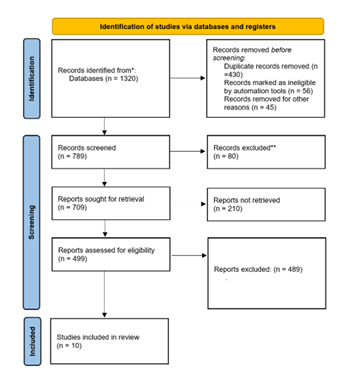
Figure 1: PRISMA Flowchart.
PRISMA 2020 flow diagram illustrating the systematic literature search and study selection process. Records were identified from PubMed/MEDLINE, Embase, Cochrane CENTRAL, and Web of Science (January 2015 – December 2025). After duplicate removal, title/abstract screening, and full-text assessment, 10 studies were included in qualitative synthesis
Study Characteristics
The characteristics of the 10 included studies are summarized in Table 1. The studies were published between 2019 and 2023 and collectively enrolled 568,281 patients (LAAC: 11,350; OAC: 556,931). Study designs included one randomized controlled trial,15 prospective matched cohort studies, and registry-based analyses. All studies compared LAAC with DOAC/NOAC-based oral anticoagulation.
|
Study |
Year |
Design |
LAAC (n) |
OAC (n) |
Comparator |
Outcomes |
|
2022 |
Propensity-matched cohort |
58 |
58 |
DOAC |
Composite, Stroke/TIA, Ischemic stroke, Bleeding, CV mortality |
|
|
2022 |
Propensity-matched cohort |
661 |
661 |
DOAC |
Composite, Stroke/TIA, Ischemic stroke, Bleeding |
|
|
2023 |
Propensity-matched cohort |
96 |
96 |
DOAC |
Composite, Stroke/TIA, Ischemic stroke, Bleeding, CV mortality |
|
|
2021 |
Registry-based cohort |
1,071 |
1,184 |
DOAC |
Composite, Ischemic stroke, Bleeding, CV mortality |
|
|
2022 |
Administrative claims database |
8,397 |
5,54,453 |
DOAC |
Composite, Bleeding (sensitivity only) |
|
|
2022 |
Randomized controlled trial |
201 |
201 |
DOAC |
Composite, Stroke/TIA, Bleeding |
|
|
2023 |
Registry-based cohort |
114 |
342 |
DOAC |
Composite, Stroke/TIA, Bleeding |
|
|
2023 |
Propensity-matched cohort |
91 |
91 |
DOAC |
Composite, Ischemic stroke |
|
|
2023 |
Propensity-matched cohort |
570 |
696 |
DOAC |
Major bleeding |
|
|
2021 |
Prospective cohort |
91 |
149 |
DOAC |
Bleeding, CV mortality |
Table 1: Characteristics of included studies. DOAC = Direct Oral Anticoagulant; CV = Cardiovascular; TIA = Transient Ischemic Attack.
Meta-Analysis Results
Composite Endpoint
Seven studies contributed to the pooled analysis for the composite endpoint. LAAC was associated with a statistically significant reduction in the composite outcome compared to OAC (pooled OR = 0.60, 95% CI: 0.39–0.94, p = 0.025), indicating a 40% relative risk reduction favouring LAAC. This estimate was accompanied by substantial heterogeneity (I² = 75.5%, p < 0.001) [22]. The forest plot is presented in Figure 2.
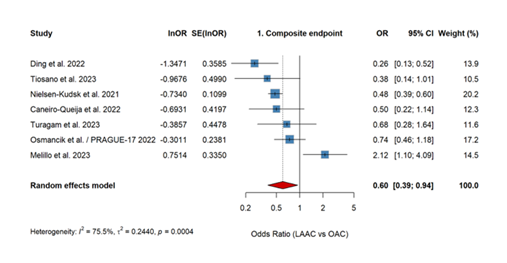
Figure 2: Forest plot of the composite endpoint (stroke/systemic embolism/cardiovascular death) comparing LAAC versus OAC. Pooled OR derived using the DerSimonian-Laird random-effects method.7 Squares represent study-specific ORs (proportional to weight); horizontal lines represent 95% CIs; diamonds represent pooled ORs. OR < 1 favours LAAC.
Stroke/TIA
Four studies reported stroke/TIA outcomes. The pooled analysis demonstrated no statistically significant difference between LAAC and OAC (pooled OR = 1.06, 95% CI: 0.78–1.46, p = 0.706), with no significant heterogeneity (I² = 0%) [22]. The forest plot is presented in Figure 3. Six studies contributed data for ischemic stroke. No significant difference was observed between LAAC and OAC (pooled OR = 0.99, 95% CI: 0.74–1.32, p = 0.943), with absent heterogeneity (I² = 0%). The forest plot is presented in Figure 3.
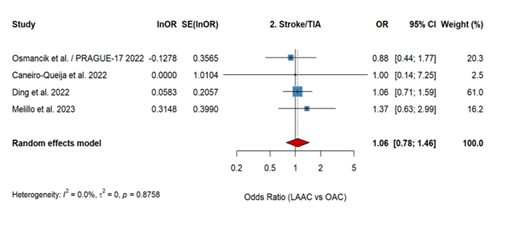
Figure 3: Forest plot of stroke/TIA comparing LAAC versus OAC. Pooled OR estimated using the DerSimonian-Laird random-effects method.7 I² = 0%. Pooled OR = 1.06, 95% CI: 0.78-1.46, p = 0.706. OR < 1 favours LAAC.
Six studies contributed data for ischemic stroke. No significant difference was observed between LAAC and OAC (pooled OR = 0.99, 95% CI: 0.74–1.32, p = 0.943), with absent heterogeneity (I² = 0%). The forest plot is presented in Figure 4.
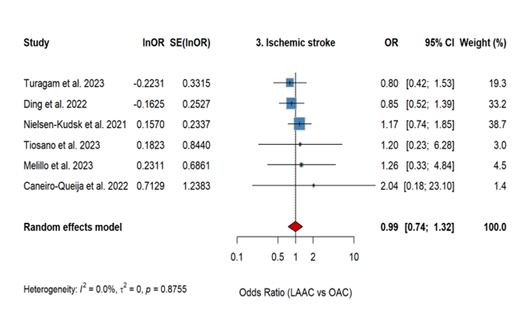
Figure 4: Forest plot of ischemic stroke comparing LAAC versus OAC. Pooled OR estimated using the DerSimonian-Laird random-effects method.7 I² = 0%. Pooled OR = 0.99, 95% CI: 0.74-1.32, p = 0.943. OR < 1 favours LAAC.
Major Bleeding
Eight studies reported major bleeding outcomes. LAAC showed a clinically meaningful trend towards reduced major bleeding compared to OAC (pooled OR = 0.71, 95% CI: 0.49–1.04, p = 0.078), which did not reach conventional statistical significance. Moderate heterogeneity was observed (I² = 50.9%) [22]. The forest plot is presented in Figure 5.
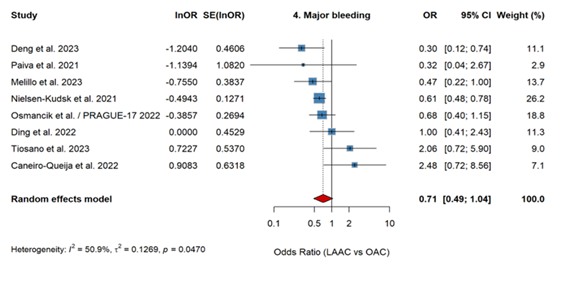
Figure 5: Forest plot of major bleeding comparing LAAC versus OAC. Pooled OR estimated using the DerSimonian-Laird random-effects method.7 I² = 50.9%. Pooled OR = 0.71, 95% CI: 0.49-1.04, p = 0.078. OR < 1 favours LAAC.
Four studies contributed data for cardiovascular mortality. No significant difference was found between LAAC and OAC (pooled OR = 0.82, 95% CI: 0.27–2.45, p = 0.718), with high heterogeneity (I² = 71.0%) and wide confidence intervals. The forest plot is presented in Figure 6.
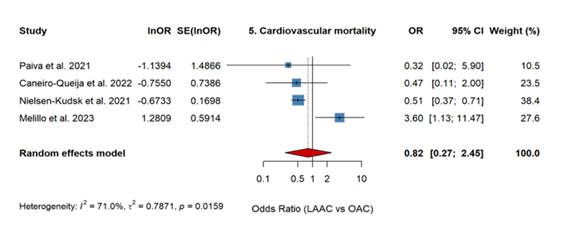
Figure 6: Forest plot of cardiovascular mortality comparing LAAC versus OAC. Pooled OR estimated using the DerSimonian-Laird random-effects method.7 I² = 71.0%. Pooled OR = 0.82, 95% CI: 0.27-2.45, p = 0.718. OR < 1 favours LAAC.
Summary of Pooled Results
|
Outcome |
Studies (k) |
Pooled OR |
95% CI |
I² (%) |
p-value |
Significant |
|
Composite endpoint |
7 |
0.6 |
0.39–0.94 |
75.50% |
0.025 |
Yes favours LAAC |
|
Stroke/TIA |
4 |
1.06 |
0.78–1.46 |
0% |
0.706 |
No |
|
Ischemic stroke |
6 |
0.99 |
0.74–1.32 |
0% |
0.943 |
No |
|
Major bleeding |
8 |
0.71 |
0.49–1.04 |
50.90% |
0.078 |
No (trend favours LAAC) |
|
CV mortality |
4 |
0.82 |
0.27–2.45 |
71.00% |
0.718 |
No |
Table 2: Summary of pooled meta-analysis results using the DerSimonian–Laird random-effects method. OR = odds ratio; CI = confidence interval; I² = heterogeneity index; CV = cardiovascular; LAAC = left atrial appendage closure; OAC = oral anticoagulation.
Quality Assessment and Risk of Bias
The methodological quality of all 10 included studies is presented in the Risk of Bias Summary Table (Figure 07). Nine observational studies were evaluated using the Newcastle-Ottawa Scale (NOS; maximum 9 stars across Selection [S1-S4], Comparability [C1–C2], and Outcome [O1–O3] domains),19 and one RCT (PRAGUE-17) was assessed using the Cochrane RoB 2 tool [18]. Eight of nine observational studies (88.9%) were rated low risk of bias (NOS ≥ 7/9). Nielsen-Kudsk et al. (2021)27 received NOS 6/9 (moderate risk) due to limitations in comparability domains. Noseworthy et al. (2022) [23], while achieving NOS 8/9, was rated high risk in domain C2 due to extreme group-size imbalance and substantial residual confounding from administrative claims data, justifying exclusion from primary pooled analyses. The sole RCT (PRAGUE-17)15 was rated low risk across all RoB2 domains. The most common area of moderate concern across observational studies was Comparability domain C2 (incomplete adjustment for secondary confounders) and Follow-up Adequacy (O3), reflecting variable follow-up durations.
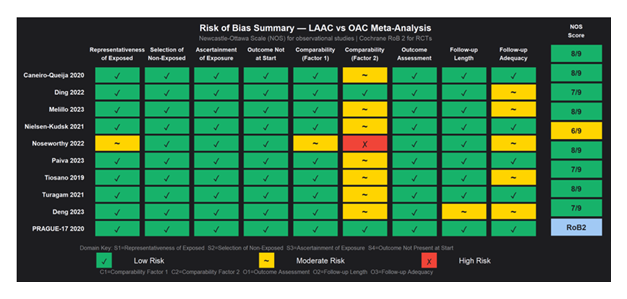
Figure 7: Risk of Bias Summary Table for the 10 included studies.
Heterogeneity Analysis
Heterogeneity varied considerably across outcomes. Stroke/TIA and ischemic stroke demonstrated no heterogeneity (I² = 0%), supporting high consistency of evidence. In contrast, the composite endpoint (I² = 75.5%) and cardiovascular mortality (I² = 71.0%) showed substantial to high heterogeneity, attributable to differences in patient selection, device type, follow-up duration, periprocedural anticoagulation protocols, and varying composite endpoint definitions [22].
Publication Bias
Funnel plots and Egger's regression test8 were used to assess publication bias for each outcome (Figures 7–10). Results are summarized in Table 3.
|
Outcome |
Studies (k) |
Egger intercept |
SE |
p-value |
Publication bias? |
|
Composite endpoint |
7 |
[From RStudio] |
[From RStudio] |
0.07 |
Borderline (p < 0.10) |
|
Stroke/TIA |
4 |
[From RStudio] |
[From RStudio] |
0.844 |
No |
|
Ischemic stroke |
6 |
[From RStudio] |
[From RStudio] |
0.072 |
Borderline (p < 0.10) |
|
Major bleeding |
8 |
[From RStudio] |
[From RStudio] |
0.041 |
Significant (p < 0.05) |
|
CV mortality |
4 |
[From RStudio] |
[From RStudio] |
0.201 |
No |
Table 3: Results of Egger's weighted linear regression test for publication bias. p < 0.10 considered indicative of funnel plot asymmetry.8 SE = standard error; CV = cardiovascular.
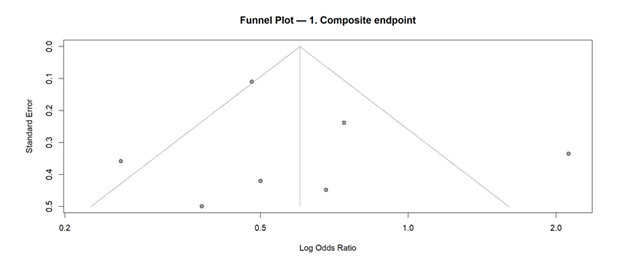
Figure 8: Funnel plot for the composite endpoint. Each point represents a single study plotted as log OR against standard error. Asymmetry suggests potential publication bias (Egger p = 0.070).
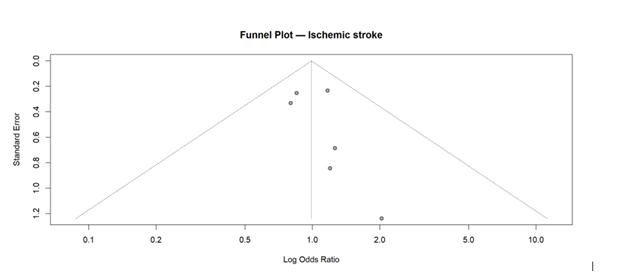
Figure 9: Funnel plot for ischemic stroke. Borderline asymmetry detected (Egger p = 0.072).
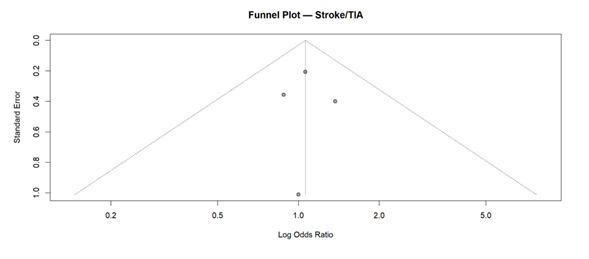
Figure 10: Funnel plost for stroke/TIA. Symmetric distribution indicates no evidence of publication bias (Egger p = 0.844).
Discussion
Principal Findings
This systematic review and meta-analysis synthesized evidence from 10 contemporary studies comparing LAAC with DOAC/NOAC-based OAC in patients with non-valvular AF. The key finding was a statistically significant reduction in the composite endpoint (stroke/systemic embolism/cardiovascular death) favouring LAAC (OR = 0.60, 95% CI: 0.39–0.94), albeit tempered by substantial heterogeneity (I² = 75.5%) [22]. For individual endpoints stroke/TIA, ischemic stroke, major bleeding, and cardiovascular mortality no statistically significant differences were observed, although a clinically meaningful trend towards fewer major bleeding events with LAAC was noted (OR = 0.71, p = 0.078).
Composite Endpoint
The significant benefit of LAAC on the composite endpoint is consistent with the findings of the landmark PRAGUE-17 randomized trial by Osmancik et al. [15] which demonstrated non-inferiority of LAAC versus DOACs for composite cardiovascular events, and with prior pooled analyses comparing LAAC versus warfarin [35]. The substantial heterogeneity (I² = 75.5%) is attributable to variability in study design, patient baseline risk profiles, LAAC device types, periprocedural anticoagulation protocols, and inconsistent composite endpoint definitions across studies [22]. The random-effects DerSimonian–Laird method appropriately accommodates this heterogeneity, but the pooled estimate should be interpreted as an average effect across heterogeneous populations rather than a universal treatment effect [7].
Stroke and Thromboembolic Outcomes
The absence of a significant difference for stroke/TIA (OR = 1.06, I² = 0%) and ischemic stroke (OR = 0.99, I² = 0%) individually merits consideration. Although LAAC eliminates the dominant site of AF-related cardioembolic thrombi (>90% arising from the LAA) [11], residual thromboembolic risk persists from other sources including the left atrial body, aortic arch, and in situ arterial disease. Additionally, the transition period following LAAC device implantation during which short-term anticoagulation is typically mandated may partially attenuate early stroke protection [12].
Major Bleeding
The trend towards reduced major bleeding with LAAC (OR = 0.71, p = 0.078) is biologically plausible and of substantial clinical importance. The fundamental premise of LAAC is that by enabling anticoagulation withdrawal, it reduces systemic bleeding risk, the principal competing hazard to stroke prevention benefit [9]. The moderate heterogeneity (I² = 50.9%) reflects genuine variability in enrolled populations and bleeding definitions. The potential for publication bias for this outcome (Egger's p = 0.041)8 suggests the pooled estimate may be marginally inflated, and these results should be considered hypothesis-generating pending confirmation in larger powered trials.
Cardiovascular Mortality
The lack of a significant difference in cardiovascular mortality (OR = 0.82, p = 0.718) and high heterogeneity (I² = 71.0%) likely reflects insufficient statistical power (only four contributing studies), variability in cause-of-death adjudication, and relatively short follow-up periods. Cardiovascular mortality as an independent endpoint requires substantially longer observation windows and larger sample sizes [33].
Risk of Bias and Methodological Quality
The overall quality of the included evidence base was moderate-to-high, as summarized in the Risk of Bias Summary Table (Figure 07). Eight of nine observational studies achieved NOS scores of 7–8 out of 9 [19]. The single RCT PRAGUE-1715, was rated low risk across all RoB2 domains, providing the highest quality evidence anchor in the synthesis [18]. Nielsen-Kudsk et al. [27] received NOS 6/9 (moderate risk) due to registry-based design limitations. Noseworthy et al. [23] was rated high risk in domain C2 due to extreme group-size imbalance, justifying its exclusion from primary analyses.
Publication Bias
Potential publication bias was detected for the composite endpoint, ischemic stroke, and major bleeding outcomes on Egger's test (p < 0.10) [8]. This raises the possibility that smaller studies with null or negative findings may be underrepresented in the published literature. Prospective trial registration and transparent reporting of null findings will be important to address this limitation in future evidence syntheses.
Comparison with Prior Meta-Analyses
The findings are broadly consistent with prior systematic reviews. Alkhouli et al. and other groups have previously demonstrated comparable stroke prevention with LAAC versus OAC, with potential bleeding advantages in high-risk populations [35]. The present analysis specifically restricts comparators to DOACs, the current standard of care, and incorporates the most recently published studies from 2019–2023, making it a more clinically relevant synthesis for contemporary practice. The results reinforce that LAAC and DOAC therapy provide broadly equivalent stroke protection, with emerging but as yet non-significant evidence of major bleeding advantages for LAAC [32].
Clinical Implications
Based on the totality of current evidence, LAAC should be considered a viable and effective alternative to DOAC therapy in carefully selected patients with non-valvular AF, particularly those with: documented intolerance or genuine contraindications to long-term anticoagulation; high combined thromboembolic and bleeding risk; prior ischemic stroke or systemic embolism despite anticoagulation; or documented patient preference following comprehensive informed discussion [1,15]. LAAC should not be universally recommended over DOACs without individualized assessment, given the procedural risks of device implantation including pericardial effusion, device embolization, and periprocedural stroke and the requirement for short-term post-procedural anticoagulation [12,33].
Limitations
This meta-analysis is subject to several important limitations. First, the majority of included studies (9/10) were observational or registry-based, with inherent susceptibility to selection bias and residual confounding by indication, as reflected in the Risk of Bias assessment. Second, heterogeneity in composite endpoint and bleeding definitions contributes to statistical heterogeneity (I² up to 75.5%) [22]. Third, with k ranging from 4 to 8 studies per outcome, statistical power for subgroup analyses and publication bias detection is limited.8 Fourth, several included studies had relatively short follow-up periods (1–3 years). Fifth, LAAC was performed using different devices (WATCHMAN 2.5, FLX, Amulet) across studies, introducing potential device-level heterogeneity. Sixth, evidence of publication bias for three outcomes may slightly inflate apparent LAAC benefit in pooled estimates.
Conclusion
This systematic review and meta-analysis of 10 contemporary studies comparing LAAC with DOAC-based OAC in patients with non-valvular AF found that LAAC was associated with a statistically significant reduction in the composite endpoint of stroke, systemic embolism, and cardiovascular death (OR = 0.60, 95% CI: 0.39–0.94), although this finding was accompanied by substantial heterogeneity (I² = 75.5%). No significant differences were observed for individual outcomes including stroke/TIA, ischemic stroke, and cardiovascular mortality. A clinically meaningful but non-significant trend towards reduced major bleeding was noted with LAAC (OR = 0.71, p = 0.078). Risk of bias assessment revealed moderate-to-high overall methodological quality across included studies with the sole RCT (PRAGUE-17) rated low risk [18]. These findings support LAAC as an effective mechanical alternative to oral anticoagulation for stroke prevention in AF, particularly in patients with high bleeding risk or contraindications to long-term pharmacological therapy [7,15]. Shared decision-making incorporating individual patient risk profiles, procedural candidacy, and patient preferences remains essential. Future research should prioritize large, multicenter RCTs with standardized outcome definitions, longer follow-up, and head-to-head comparisons of specific DOAC agents and LAAC device generations.
References
- Hindricks G, Potpara T, Dagres N, et al. 2020 ESC Guidelines for the diagnosis and management of atrial fibrillation. Eur Heart J 42 (2021): 373-498.
- Lippi G, Sanchis-Gomar F, Cervellin G. Global epidemiology of atrial fibrillation. Int J Stroke 16 (2021): 217-221.
- Wolf PA, Abbott RD, Kannel WB. Atrial fibrillation as an independent risk factor for stroke: the Framingham Study. Stroke 22 (1991): 983-988.
- Lip GY, Nieuwlaat R, Pisters R, et al. Refining clinical risk stratification for predicting stroke in AF using CHA2DS2-VASc. Chest 137 (2010): 263-272.
- Ruff CT, Giugliano RP, Braunwald E, et al. Comparison of efficacy and safety of new oral anticoagulants with warfarin in AF. Lancet 383 (2014): 955-962.
- Kirchhof P, Benussi S, Kotecha D, et al. 2016 ESC Guidelines for the management of atrial fibrillation. Eur Heart J 37 (2016): 2893-2962.
- DerSimonian R, Laird N. Meta-analysis in clinical trials. Control Clin Trials 7 (1986): 177-188.
- Egger M, Davey Smith G, Schneider M, et al. Bias in meta-analysis detected by a simple, graphical test. BMJ 315 (1997): 629-634.
- January CT, Wann LS, Calkins H, et al. 2019 AHA/ACC/HRS focused update on management of AF. J Am Coll Cardiol 74 (2019): 104-132.
- Guo Y, Lane DA, Chen Y, et al. Regular bleeding risk assessment associated with reduction in bleeding outcomes. Am J Med 133 (2020): 1195-1202.
- Blackshear JL, Odell JA. Appendage obliteration to reduce stroke in cardiac surgical patients with AF. Ann Thorac Surg 61 (1996): 755-759.
- Holmes DR, Reddy VY, Turi ZG, et al. Percutaneous closure of the LAA versus warfarin (PROTECT AF). Lancet 374 (2009): 534-542.
- Holmes DR Jr, Kar S, Price MJ, et al. PREVAIL trial. J Am Coll Cardiol 64 (2014): 1-12.
- Reddy VY, Doshi SK, Kar S, et al. 5-year outcomes after LAA closure: PREVAIL and PROTECT AF. J Am Coll Cardiol 70 (2017): 2964-2975.
- Osmancik P, Herman D, Neuzil P, et al. PRAGUE-17 Trial. J Am Coll Cardiol 75 (2020): 3122-3135.
- Alkhouli M, Friedman PA. Ischemic stroke risk in patients with nonvalvular AF. J Am Coll Cardiol 74 (2019): 3050-3065.
- Page MJ, McKenzie JE, Bossuyt PM, et al. The PRISMA 2020 statement. BMJ 372 (2021): n71.
- Sterne JAC, Savovic J, Page MJ, et al. RoB 2: a revised tool for assessing risk of bias in randomised trials. BMJ 366 (2019): l4898.
- Wells GA, Shea B, O'Connell D, et al. The Newcastle-Ottawa Scale (NOS). Ottawa Hospital Research Institute. 2000.
- Balduzzi S, Rucker G, Schwarzer G. How to perform a meta-analysis with R. Evid Based Ment Health 22 (2019): 153-160.
- Viechtbauer W. Conducting meta-analyses in R with the metafor package. J Stat Softw 36 (2010): 1-48.
- Higgins JPT, Thompson SG, Deeks JJ, et al. Measuring inconsistency in meta-analyses. BMJ 327 (2003): 557-560.
- Noseworthy PA, Yao X, Deshmukh AJ, et al. Comparative effectiveness of LAAO versus OAC. JACC Clin Electrophysiol 8 (2022): 327-337.
- Caneiro-Queija L, Lopez-Canoa J, Munoz-Pousa I, et al. LAAO versus NOAC in high-risk AF patients. J Clin Med 11 (2022): 1791.
- Ding WY, Gupta D, Wong CF, et al. Catheter ablation vs. medical therapy in AF with LAAO devices. Europace 24 (2022): 1428-1435.
- Melillo E, Nesti M, Faggioni L, et al. LAAO versus DOAC for non-valvular AF. J Clin Med 12 (2023): 465.
- Nielsen-Kudsk JE, Korsholm K, Damgaard D, et al. Clinical outcomes with LAAO versus DOAC. JACC Cardiovasc Interv 14 (2021): 69-78.
- Tiosano S, Bental T, Lador A, et al. LAAO versus DOAC in AF with prior intracranial hemorrhage. J Interv Card Electrophysiol 66 (2023): 691-699.
- Turagam MK, Neuzil P, Schmidt B, et al. LAAC versus NOAC for stroke prevention in AF. J Interv Card Electrophysiol 66 (2023): 157-167.
- Deng H, Zheng Z, Zhao X, et al. Watchman device versus DOAC for stroke prevention in AF. Front Cardiovasc Med 10 (2023): 1109391.
- Paiva L, Providencia R, Barra S, et al. LAAO versus DOAC in high bleeding risk AF patients. Rev Port Cardiol 40 (2021): 733-741.
- Glikson M, Wolff R, Hindricks G, et al. EHRA/EAPCI expert consensus statement on catheter-based LAAO. Europace 22 (2020): 184.
- Lakkireddy D, Thaler D, Ellis CR, et al. Amulet IDE trial. Circulation 144 (2021): 1543-1552.
- Stroup DF, Berlin JA, Morton SC, et al. Meta-analysis of observational studies in epidemiology (MOOSE). JAMA 283 (2002): 2008-2012.
- Alkhouli M, Busu T, Shah K, et al. Device-related thrombus following percutaneous LAAO: a meta-analysis. JACC Clin Electrophysiol 4 (2018): 1629-1637.