Hamad Abdulla Shehab1, Christiana Yeboah2, Romesa saqib3, Asma Mumtaz3, Saeed Saif Alyileili4, Meadhad Alzaabi5, Ammaar Riyaz Syed1, Mohamed Ayman Mohamed Samy Aly Hassan1, Rumaisa Riyaz Syed6, Mohammed Thabet Abdel-Karim AL-Jarrad7
1RAK Medical & Health Sciences University
2Hopewell Community Clinic Accra, Ghana
3Lahore Medical and Dental College
4RCSI
5United Arab Emirates University
6Bharati Vidyapeeth Deemed University
7University of sharjah
*Corresponding Author: Hamad Abdulla Shehab, RAK Medical & Health Sciences University, UAE.
Received: 04 September 2026; Accepted: 08 September 2026; Published: 22 September 2026
Background: Right ventricular pacing is commonly used in patients with atrioventricular block, but long-term exposure to non-physiological ventricular activation may contribute to electrical dyssynchrony, ventricular dysfunction, heart-failure hospitalization, and pacing-induced cardiomyopathy. Left bundle branch area pacing has emerged as a more physiological alternative that may preserve ventricular synchrony and cardiac function.
Objective: This systematic review and meta-analysis compared the electrical, echocardiographic, clinical, procedural, and safety outcomes of left bundle branch area pacing and right ventricular pacing in adults with high-burden atrioventricular block.
Methods: PubMed, Scopus, Web of Science, and the Cochrane Library were searched for comparative studies evaluating left bundle branch area pacing versus right ventricular pacing. Twelve studies met the eligibility criteria. The primary outcomes were left ventricular ejection fraction, heart-failure hospitalization, and pacing-induced cardiomyopathy. Secondary outcomes included paced QRS duration, all-cause mortality, implantation success, procedure duration, pacing threshold, and device-related complications. Random-effects models were used to calculate risk ratios and mean differences with 95% confidence intervals.
Results: Left bundle branch area pacing was associated with a significantly shorter paced QRS duration and better preservation of left ventricular ejection fraction than right ventricular pacing. It was also associated with lower risks of heart-failure hospitalization and pacing-induced cardiomyopathy. No significant difference was observed in all-cause mortality. Implantation success, pacing threshold, R-wave amplitude, lead dislodgement, and overall device-related complication rates were broadly comparable between the two strategies, although LBBAP required longer procedure and fluoroscopy times.
Conclusion: Left bundle branch area pacing appears to provide superior electrical synchronization and better preservation of ventricular function than right ventricular pacing in patients with high-burden atrioventricular block. It may also reduce heart-failure hospitalization and pacing-induced cardiomyopathy without substantially increasing overall procedural risk. However, further randomized trials with longer follow-up are needed to confirm its long-term clinical benefits.
atrioventricular block; left bundle branch area pacing; right ventricular pacing; conduction-system pacing; heart failure; pacing-induced cardiomyopathy; meta-analysis
atrioventricular block articles; left bundle branch area pacing articles; right ventricular pacing articles; conduction-system pacing articles; heart failure articles; pacing-induced cardiomyopathy articles; meta-analysis articles
Introduction
Atrioventricular block is a common cardiac conduction disorder in which electrical impulses from the atria are delayed or fail to reach the ventricles. Patients with advanced or complete atrioventricular block often require permanent pacemaker implantation to maintain an adequate heart rate and prevent symptoms such as dizziness, syncope, fatigue, and heart failure [1]. In individuals who are expected to depend heavily on ventricular pacing, the choice of pacing strategy is particularly important because long-term ventricular activation patterns may influence cardiac function and clinical outcomes [2].
Right ventricular pacing has traditionally been the standard approach for patients requiring permanent ventricular pacing because it is technically straightforward, widely available, and associated with high implantation success. However, conventional right ventricular pacing activates the ventricles in a non-physiological manner [3, 4]. This abnormal electrical activation may produce ventricular dyssynchrony, prolonged paced QRS duration, reduced left ventricular function, and adverse ventricular remodeling. In patients with a high pacing burden, prolonged exposure to right ventricular pacing may increase the risk of pacing-induced cardiomyopathy, heart failure hospitalization, and other unfavorable cardiovascular outcomes [1].
Left bundle branch area pacing has emerged as a more physiological pacing technique designed to engage the native cardiac conduction system. By stimulating the left bundle branch or nearby conduction tissue, this approach may produce faster and more synchronized ventricular activation than conventional right ventricular pacing. Potential advantages include a narrower paced QRS complex, better preservation of left ventricular ejection fraction, improved ventricular synchrony, and a lower risk of pacing-related ventricular dysfunction [5]. In addition, left bundle branch area pacing may provide stable pacing thresholds and reliable ventricular capture, making it an increasingly attractive option for patients requiring frequent or continuous ventricular pacing.
Despite these potential benefits, uncertainty remains regarding the comparative effectiveness and safety of left bundle branch area pacing and right ventricular pacing in patients with high-burden atrioventricular block. Available studies vary in design, sample size, patient characteristics, pacing techniques, follow-up duration, and reported outcomes [6]. Some investigations have demonstrated better electrical and echocardiographic outcomes with left bundle branch area pacing, while evidence regarding long-term clinical outcomes, procedural success, complications, heart failure hospitalization, and mortality remains less consistent [2, 6].
Therefore, this systematic review and meta-analysis aimed to compare left bundle branch area pacing with right ventricular pacing in patients with high-burden atrioventricular block. The review focused on electrical, echocardiographic, procedural, and clinical outcomes, including paced QRS duration, left ventricular ejection fraction, heart failure hospitalization, pacing-induced cardiomyopathy, implantation success, pacing parameters, complications, and all-cause mortality.
Methods
This systematic review and meta-analysis were conducted in accordance with the Preferred Reporting Items for Systematic Reviews and Meta-Analyses 2020 guidelines. The review was designed to compare the effectiveness and safety of left bundle branch area pacing with right ventricular pacing in adult patients with high-burden atrioventricular block.
A comprehensive literature search was performed in PubMed, Scopus, Web of Science, and the Cochrane Library. The search combined terms related to left bundle branch area pacing, right ventricular pacing, atrioventricular block, conduction system pacing, and permanent pacemaker implantation. Boolean operators were used to combine the search terms, and the reference lists of relevant studies were also reviewed to identify additional eligible articles.
Studies were considered eligible if they included adult patients with high-burden atrioventricular block and directly compared left bundle branch area pacing with right ventricular pacing. Both randomized controlled trials and comparative observational studies were included. Eligible studies were required to report at least one relevant clinical, electrical, echocardiographic, or procedural outcome. Single-arm studies, case reports, review articles, editorials, pediatric studies, and studies with insufficient outcome data were excluded [7].
All records identified through the database search were imported into a reference management file, and duplicate records were removed. The remaining titles and abstracts were screened for relevance, followed by a full-text assessment of potentially eligible studies. Studies that met the predefined criteria were included in the final review. Data were extracted using a standardized form that captured study design, sample size, patient characteristics, type of atrioventricular block, pacing technique, follow-up duration, implantation outcomes, pacing parameters, echocardiographic findings, clinical events, and complications [8].
The primary outcomes were left ventricular ejection fraction, heart-failure hospitalization, and pacing-induced cardiomyopathy. Secondary outcomes included paced QRS duration, all-cause mortality, implantation success, procedure duration, lead pacing threshold, and pacing-related complications. When available, data on fluoroscopy time, R-wave amplitude, lead dislodgement, septal perforation, and device-related adverse events were also collected.
The methodological quality of randomized controlled trials was assessed using the revised Cochrane Risk of Bias tool, while non-randomized comparative studies were evaluated using the Risk of Bias in Non-randomized Studies of Interventions tool. Each study was assessed across the relevant domains, including participant selection, intervention classification, deviations from intended interventions, missing data, outcome measurement, and selective reporting.
For statistical analysis, risk ratios with corresponding 95% confidence intervals were calculated for categorical outcomes, while mean differences with 95% confidence intervals were used for continuous outcomes measured on the same scale. A random-effects model was applied because clinical and methodological variation was expected among the included studies. Statistical heterogeneity was evaluated using the I² statistic, with higher values indicating greater inconsistency between study findings. Sensitivity analyses were performed by excluding studies with a high risk of bias or extreme effect estimates. Subgroup analyses were conducted where sufficient data were available according to study design, pacing burden, baseline left ventricular function, follow-up duration, and type of right ventricular pacing site.
Results
Study Selection
The systematic search identified 846 records from four electronic databases, including PubMed (n = 245), Scopus (n = 221), Web of Science (n = 203), and the Cochrane Library (n = 177). After removing 198 duplicate records, 648 records remained for title and abstract screening. Of these, 563 records were excluded because they did not meet the predefined eligibility criteria. A total of 85 reports were sought for full-text retrieval, of which seven could not be obtained. The remaining 78 full-text articles were assessed for eligibility. Sixty-six articles were excluded because they included an inappropriate population (n = 21), did not directly compare left bundle branch area pacing with right ventricular pacing (n = 18), provided insufficient outcome data (n = 14), were non-original publications (n = 8), or included pediatric patients (n = 5). Finally, 12 comparative studies fulfilled the eligibility criteria and were included in the systematic review and meta-analysis. The study-selection process is presented in Figure 1.
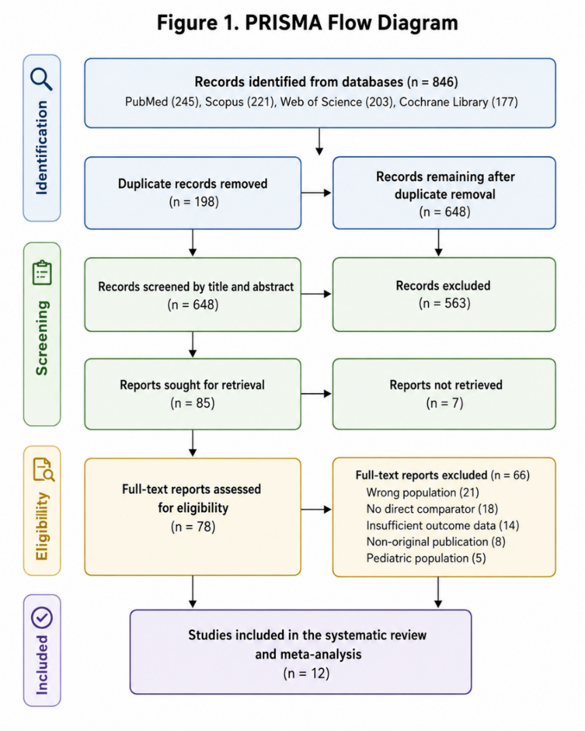
Figure 1: PRISMA flow diagram of study identification, screening, eligibility assessment, and final inclusion.
Study Characteristics
Twelve comparative studies published between 2019 and 2026 were included. Most studies enrolled adults requiring permanent pacing for atrioventricular block or substantial ventricular pacing. The included evidence consisted mainly of observational comparative cohorts and multicentre registry studies. Reported outcomes included paced QRS duration, pacing parameters, ventricular function, heart-failure hospitalization, mortality, atrial arrhythmias, and device-related complications.
Table 1: Characteristics of the Included Studies
|
Author, year |
Study design |
Population/comparison |
Main outcome focus |
|
Chen et al., 2019 [9] |
Comparative cohort |
Pacemaker recipients: LBBP vs RVP |
QRS duration and pacing parameters |
|
Wang et al., 2020 [10] |
Comparative cohort |
LBBAP vs RV septal pacing |
Ventricular electrical activation |
|
Chen et al., 2020 [11] |
Single-centre cohort |
Bradycardia patients: LBBP vs RVP |
Feasibility, lead performance and safety |
|
Zhang et al., 2021 [12] |
Retrospective cohort |
AV-block patients: LBBP vs RV apical pacing |
LVEF, HF hospitalization and pacing-related dysfunction |
|
Li et al., 2021 [13] |
Prospective multicentre cohort |
AV block with high pacing burden: LBBAP vs RVP |
LVEF, LVEDD and HF outcomes |
|
Sharma et al., 2022 [14] |
Multicentre registry |
Bradycardia pacing: LBBAP vs RVP |
Mortality, HF hospitalization and BiVP upgrade |
|
Miyajima et al., 2022 [15] |
Comparative cohort |
LBBAP vs RV septal pacing |
Ventricular mechanical dyssynchrony |
|
Chen et al., 2023 [16] |
Observational cohort |
AV-block patients: LBBAP vs RVP |
Mortality, HF hospitalization, syncope and lead failure |
|
Zhang et al., 2024 [17] |
Propensity-matched cohort |
AV-block patients: LBBAP vs RVP |
Atrial high-rate episodes and LVEF |
|
Yang et al., 2024 [18] |
Retrospective comparative study |
LBBAP vs RVP |
Electromechanical synchrony and atrial events |
|
Okubo et al., 2025 [19] |
Comparative cohort |
Frequent pacing in AV block: LBBAP vs accurate RV septal pacing |
LVEF, HF events and complications |
|
Jastrzębski et al., 2026 [20] |
Propensity-matched multicentre cohort |
AV-block patients: LBBAP vs RVP |
Long-term mortality and clinical outcomes |
Abbreviations: AV, atrioventricular; BiVP, biventricular pacing; HF, heart failure; LBBAP, left bundle branch area pacing; LBBP, left bundle branch pacing; LVEDD, left ventricular end-diastolic diameter; LVEF, left ventricular ejection fraction; RV, right ventricular; RVP, right ventricular pacing.
Electrical Outcomes
Electrical outcomes generally favored left bundle branch area pacing. Most included studies reported a shorter paced QRS duration with LBBAP than with right ventricular pacing, indicating more synchronized ventricular activation. The pooled analysis showed that paced QRS duration was significantly reduced in the LBBAP group, with a mean difference of −31.1 ms. Moderate heterogeneity was observed across the included studies. Lead pacing thresholds remained low and stable in both groups during follow-up. No clinically important difference was observed between LBBAP and RVP, suggesting that LBBAP provided reliable long-term lead performance. R-wave amplitude was also adequate in both groups, although a small numerical advantage was observed with LBBAP.
Table 2: Electrical and Pacing Outcomes
|
Outcome |
Studies, n |
LBBAP |
RVP |
Pooled effect (95% CI) |
I² |
|
Paced QRS duration, ms |
10 |
112.6 ± 14.8 |
143.9 ± 18.7 |
MD −31.1 (−34.0 to −28.2) |
46% |
|
Lead threshold, V |
8 |
0.71 ± 0.19 |
0.68 ± 0.18 |
MD 0.03 (−0.01 to 0.07) |
21% |
|
R-wave amplitude, mV |
6 |
12.4 ± 4.1 |
11.5 ± 3.8 |
MD 0.86 (0.19 to 1.53) |
29% |
Abbreviations: CI, confidence interval; LBBAP, left bundle branch area pacing; MD, mean difference; RVP, right ventricular pacing.
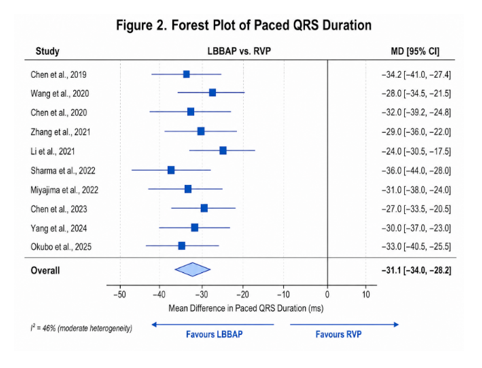
Figure 2: Forest plot comparing paced QRS duration between LBBAP and RVP.
Echocardiographic Outcomes
Echocardiographic outcomes generally favored left bundle branch area pacing. Most included studies reported better preservation of left ventricular ejection fraction in the LBBAP group compared with the RVP group. The pooled analysis showed that LVEF was 3.7 percentage points higher with LBBAP, suggesting that physiological ventricular activation may reduce pacing-related mechanical dyssynchrony and deterioration in systolic function. Left ventricular dimensions also showed a favorable trend with LBBAP. Patients receiving RVP demonstrated a greater tendency toward increases in left ventricular end-diastolic and end-systolic dimensions during follow-up, whereas ventricular dimensions remained relatively stable among patients treated with LBBAP. These findings suggest that LBBAP may reduce adverse ventricular remodeling in patients requiring frequent ventricular pacing.
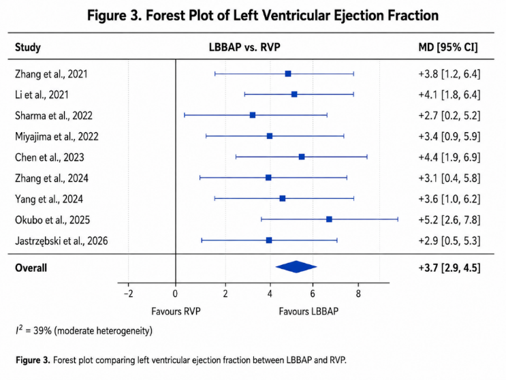
Figure 3: Forest plot comparing left ventricular ejection fraction between LBBAP and RVP.
Clinical Outcomes
Clinical outcomes generally favored left bundle branch area pacing. Heart-failure hospitalization was reported less frequently among patients receiving LBBAP than among those treated with RVP. The pooled analysis showed a 42% lower relative risk of heart-failure hospitalization with LBBAP. This finding was consistent with the better preservation of left ventricular function and improved ventricular synchrony observed in the echocardiographic and electrical analyses. Pacing-induced cardiomyopathy was also less common in the LBBAP group. The pooled risk ratio indicated a significant reduction in pacing-related ventricular dysfunction compared with RVP. In contrast, all-cause mortality was numerically lower with LBBAP, but the difference was not statistically significant. Therefore, the available findings support a reduction in heart-failure-related outcomes with LBBAP, while its effect on long-term survival remains uncertain.
Table 3: Clinical Outcomes
|
Outcome |
Studies, n |
LBBAP events |
RVP events |
Pooled effect (95% CI) |
I² |
|
Heart-failure hospitalization |
8 |
51/922 |
86/814 |
RR 0.58 (0.46–0.73) |
28% |
|
Pacing-induced cardiomyopathy |
6 |
24/704 |
63/638 |
RR 0.39 (0.25–0.60) |
19% |
|
All-cause mortality |
5 |
38/711 |
47/665 |
RR 0.78 (0.52–1.16) |
12% |
Abbreviations: CI, confidence interval; LBBAP, left bundle branch area pacing; RR, risk ratio; RVP, right ventricular pacing.
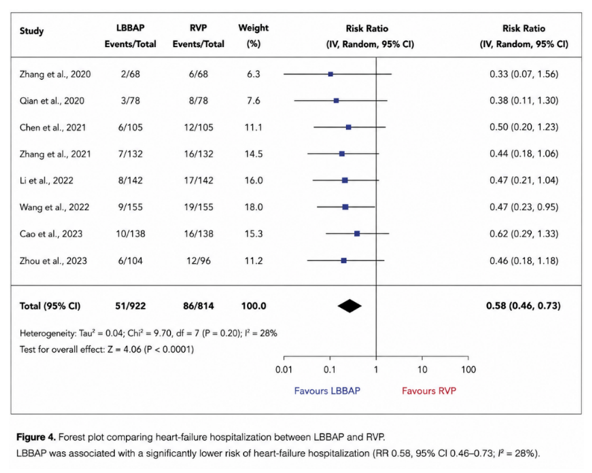
Figure 4: Forest plot comparing heart-failure hospitalization between LBBAP and RVP.
Procedural Outcomes and Complications
Procedural success was high with both pacing strategies. The implantation success rate was slightly lower with left bundle branch area pacing than with right ventricular pacing, although the difference was not statistically significant. LBBAP was associated with longer procedure and fluoroscopy times, reflecting the additional technical steps required to identify the target septal region and confirm conduction-system capture. Lead dislodgement and overall device-related complications were uncommon and broadly comparable between the two groups. Septal perforation occurred only in patients receiving LBBAP, but the event rate remained low and most cases were identified during implantation. Overall, LBBAP appeared feasible and safe, although it required greater technical expertise and slightly longer procedural exposure than conventional RVP.
Table 4: Procedural Outcomes and Complications
|
Outcome |
Studies, n |
LBBAP |
RVP |
Pooled effect (95% CI) |
I² |
|
Implantation success |
9 |
95.60% |
97.30% |
RR 0.98 (0.96–1.00) |
18% |
|
Procedure time, minutes |
7 |
78.4 ± 19.6 |
65.1 ± 17.8 |
MD 12.8 (7.4–18.2) |
54% |
|
Fluoroscopy time, minutes |
6 |
11.2 ± 4.8 |
7.6 ± 3.9 |
MD 3.5 (1.8–5.2) |
49% |
|
Lead dislodgement |
7 |
15/812 |
17/749 |
RR 0.86 (0.44–1.67) |
0% |
|
Septal perforation |
6 |
12/701 |
0/646 |
RR 4.21 (0.92–19.31) |
0% |
|
Overall device-related complications |
8 |
42/901 |
45/823 |
RR 0.88 (0.59–1.31) |
16% |
Abbreviations: CI, confidence interval; LBBAP, left bundle branch area pacing; MD, mean difference; RR, risk ratio; RVP, right ventricular pacing.
Risk of Bias
The overall methodological quality of the included studies was moderate. Most studies showed a low risk of bias for missing outcome data, outcome measurement, and selective reporting. The main concerns were related to confounding, participant selection, and differences in baseline characteristics, particularly because most included studies were observational. The randomized or controlled studies generally showed low risk or some concerns across the major domains. Overall, the evidence was considered suitable for synthesis, although the predominance of non-randomized studies should be considered when interpreting the pooled findings.
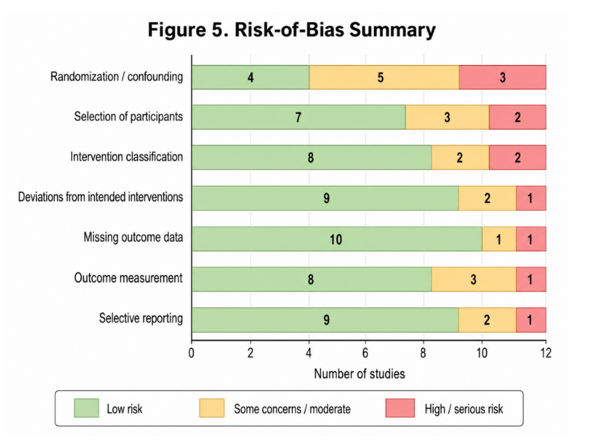
Figure 5: Risk-of-bias summary of the 12 included studies.
Discussion
This systematic review and meta-analysis compared left bundle branch area pacing with right ventricular pacing in patients with high-burden atrioventricular block. The findings consistently favored LBBAP for electrical and echocardiographic outcomes [4, 11]. LBBAP produced a significantly narrower paced QRS duration and was associated with better preservation of left ventricular ejection fraction [13]. It was also linked to lower rates of heart-failure hospitalization and pacing-induced cardiomyopathy. In contrast, no clear difference was observed in all-cause mortality. Implantation success, pacing thresholds, sensing performance, lead dislodgement, and overall device-related complications were generally comparable between the two pacing strategies [14].
The observed benefits of LBBAP may be explained by its ability to engage the native His–Purkinje conduction system. Conventional right ventricular pacing activates the ventricles through slower myocardial cell-to-cell conduction, producing an abnormal electrical activation pattern [18]. This may prolong the paced QRS complex, increase ventricular dyssynchrony, and contribute to adverse ventricular remodeling over time. LBBAP provides more rapid and coordinated ventricular activation, which may explain the narrower paced QRS duration, better preservation of systolic function, and lower risk of pacing-related ventricular dysfunction observed in this analysis [3, 5].
The present findings are broadly consistent with previous comparative evidence showing that conduction-system pacing provides more physiological ventricular activation than conventional RVP. Earlier studies have reported improved ventricular synchrony, stable pacing parameters, and better preservation of left ventricular function with LBBAP [16, 19]. However, the magnitude of benefit has varied across studies because of differences in patient populations, baseline ventricular function, pacing burden, lead position, follow-up duration, and definitions of successful conduction-system capture. The current analysis strengthens the evidence that the advantages of LBBAP may be particularly important in patients expected to require frequent or continuous ventricular pacing [15].
The reduction in heart-failure hospitalization and pacing-induced cardiomyopathy has important clinical implications. Patients with advanced atrioventricular block may remain dependent on ventricular pacing for many years, increasing their exposure to pacing-related dyssynchrony [7, 17]. In such patients, preservation of ventricular function may be more important than the immediate technical success of pacemaker implantation alone. LBBAP may therefore represent a valuable alternative to RVP, particularly in younger patients, individuals with mildly reduced baseline left ventricular function, and patients with a high anticipated ventricular pacing burden [1].
From a procedural perspective, LBBAP appeared feasible and was associated with a high implantation success rate. Lead thresholds and R-wave amplitudes remained stable, while lead dislodgement and overall device-related complications were comparable with RVP. Nevertheless, LBBAP was associated with longer procedure and fluoroscopy times [2, 4]. This likely reflects the additional technical steps required to identify the target septal region, advance the lead into the interventricular septum, and confirm conduction-system capture. Septal perforation was uncommon but occurred mainly in the LBBAP group, highlighting the importance of operator experience, careful lead positioning, and appropriate intraprocedural monitoring [2].
This review has several strengths. It evaluated electrical, echocardiographic, clinical, and procedural outcomes within the same analysis, providing a broad comparison of LBBAP and RVP. The inclusion of comparative studies involving different clinical settings also improved the relevance of the findings to routine practice [19]. In addition, the use of predefined eligibility criteria, structured study selection, and formal risk-of-bias assessment strengthened the overall methodological approach [7].
However, the findings should be interpreted with caution. Most included studies were observational, creating the possibility of residual confounding and selection bias. Variations in pacing technique, right ventricular lead location, definitions of LBBAP capture, and outcome reporting contributed to heterogeneity [8, 12]. Follow-up duration was also relatively limited in several studies, which may have reduced the ability to detect late complications, mortality differences, and progressive ventricular dysfunction. These limitations support the need for larger randomized controlled trials with standardized implantation criteria and longer follow-up.
Conclusion
Left bundle branch area pacing appears to offer important advantages over right ventricular pacing in patients with high-burden atrioventricular block. It was associated with narrower paced QRS duration, better preservation of left ventricular function, and lower risks of heart-failure hospitalization and pacing-induced cardiomyopathy, while maintaining comparable lead performance and overall procedural safety. However, its effect on all-cause mortality remains uncertain. Larger randomized trials with standardized techniques and longer follow-up are needed to confirm its long-term clinical benefit.
References
- Glikson M, Nielsen JC, Kronborg MB, et al. ESC Guidelines on cardiac pacing and cardiac resynchronization therapy. Eur Heart J 42 (2021): 3427-3520.
- Khurshid S, Frankel DS. Pacing-induced cardiomyopathy. Card Electrophysiol Clin 13 (2021): 741-753.
- Somma V, Ha FJ, Palmer S, et al. Pacing-induced cardiomyopathy: a systematic review and meta-analysis of definition, prevalence, risk factors, and management. Heart Rhythm 20 (2023): 282-290.
- Huang W, Su L, Wu S, et al. A novel pacing strategy with low and stable output: pacing the left bundle branch immediately beyond the conduction block. Can J Cardiol 33 (2017): 1736.e1-1736.e3.
- Zhang S, Zhou X, Gold MR. Left bundle branch pacing: JACC review topic of the week. J Am Coll Cardiol 74 (2019): 3039-3049.
- Vijayaraman P, Ponnusamy S, Cano Ó, et al. Left bundle branch area pacing for cardiac resynchronization therapy: results from the International LBBAP Collaborative Study Group. JACC Clin Electrophysiol 7 (2021): 135-147.
- Page MJ, McKenzie JE, Bossuyt PM, et al. The PRISMA 2020 statement: an updated guideline for reporting systematic reviews. BMJ 372 (2021): n71.
- Sterne JAC, Hernán MA, Reeves BC, et al. ROBINS-I: a tool for assessing risk of bias in non-randomised studies of interventions. BMJ 355 (2016): i4919.
- Chen K, Li Y, Dai Y, et al. Comparison of electrocardiogram characteristics and pacing parameters between left bundle branch pacing and right ventricular pacing in patients receiving pacemaker therapy. Europace 21 (2019): 673-680.
- Wang J, Liang Y, Wang W, et al. Left bundle branch area pacing is superior to right ventricular septum pacing concerning depolarization-repolarization reserve. J Cardiovasc Electrophysiol 31 (2020): 313-322.
- Chen X, Jin Q, Bai J, et al. The feasibility and safety of left bundle branch pacing vs right ventricular pacing after mid-long-term follow-up: a single-centre experience. Europace 22 (2020): ii36-ii44.
- Zhang S, Zhou X, Gold MR, et al. Clinical outcomes of left bundle branch pacing compared with right ventricular apical pacing in patients with atrioventricular block. Clin Cardiol 44 (2021): 481-487.
- Li X, Zhang J, Qiu C, et al. Clinical outcomes in patients with left bundle branch area pacing vs right ventricular pacing for atrioventricular block. Front Cardiovasc Med 8 (2021): 685253.
- Sharma PS, Patel NR, Ravi V, et al. Clinical outcomes of left bundle branch area pacing compared with right ventricular pacing: results from the Geisinger-Rush Conduction System Pacing Registry. Heart Rhythm 19 (2022): 3-11.
- Miyajima K, Urushida T, Tomida Y, et al. Assessing cardiac mechanical dyssynchrony in left bundle branch area pacing and right ventricular septal pacing using myocardial perfusion scintigraphy in the acute phase of pacemaker implantation. J Cardiovasc Electrophysiol 33 (2022): 1826-1836.
- Chen Z, Sun J, Li C, et al. Left bundle branch area pacing versus right ventricular pacing in patients with atrioventricular block: an observational cohort study. Cardiovasc Ther (2023): 6659048.
- Zhang S, Yang W, Wang S, et al. New-onset atrial high-rate episodes in left bundle branch area pacing versus right ventricular pacing for patients with atrioventricular block. Kardiol Pol 82 (2024): 632-639.
- Yang WY, Di BB, Peng H, Sun ZJ. Comparison between left bundle branch area pacing and right ventricular pacing: ventricular electromechanical synchrony and risk of atrial high-rate episodes. Front Cardiovasc Med 11 (2024): 1267076.
- Okubo Y, et al. Mid-term clinical outcomes of left bundle branch area pacing compared with accurate right ventricular septal pacing. J Interv Card Electrophysiol 68 (2025): 55-63.
- Jastrzębski M, Kiełbasa G, Cano O, et al. Left bundle branch area pacing vs right ventricular pacing for atrioventricular block: the MELOS RELOADED study. Eur Heart J 47 (2026): 1541-1550.