Luke Laari1*, Desmond Kuupiel2, Christian Makafui Boso3
1School of Nursing and Midwifery, College of Health Sciences, University of Ghana, Accra, Ghana
2Centre for Evidence-Based Health Care, Division of Epidemiology and Biostatics, Department of Global Health, Faculty of Medicine and Health Science, Stellenbosch University, Cape Town, South Africa
3School of Nursing and Midwifery, University of Cape Coast, Ghana
*Corresponding Author: Luke Laari, Department of Community Health Nursing, School of Nursing and Midwifery, College of Health Sciences, University of Ghana, Accra, Ghana
Received: 18 December 2021; Accepted: 27 December 2021; Published: 04 May 2022
Background: Early detection and intervention of children living with Autism Spectrum Disorders have shown a great improvement of the child's behaviour, predominantly in language and motor skills developpment. We are proposing to conduct a systematic scoping review that will map all evidence available on children living with Autism Spectrum Disorders in Africa.
Methods and analysis: This study will be guided by Arksey and O’Malley’s framework of scoping reviews. A comprehensive literature search will be done in the following electronic databases. Cumulative Index to Nursing and Allied Health Literature (CINAHL), Science Direct, EBSCOhost, MEDLINE, Health Sources, and Google Scholar. Primary studies, published in peer-reviewed journals and grey literature such as unpublished studies, studies in press and Theses that address our research question will be included. To reduce research bias two independent reviewers will perform title, abstract, and full article screening in parallel. Data extraction from the selected studies will be conducted by two independent reviewers. NVivo version 12 software will be used to assist with the extraction of relevant answers to the study questions from selected studies using content thematic analysis. The results for this planned study will be presented following the Preferred Reporting Items for Systematic Reviews and Meta-Analysis Extension for Scoping Review (PRISMA-ScR). Mixed Methods Assessment Tool version 2018 will be used for quality appraisal of included studies.
Discussion: We anticipate that the proposed mapped evidence on Children living with Autism Spectrum Disorders in Africa will reveal indicators for early detection that would facilitate strategies for intervention. We are also anticipating that this systematic scoping review will reveal gaps that can be addressed to ensure context-sensitive interventions and identify caregiver burd
Autism, ASD, PDD-NOS, Asperger’s Syndrome, Africa
Abbreviations:
ASD: Autism Spectrum Disorders; CDC: Centers for Disease Control and Prevention; CINAHL: Cumulative Index to Nursing and Allied Health Literature; MMAT: Mixed Methods quality Appraisal Tool; PDD-NOS: Pervasive Developmental Disorder – Not Otherwise Specified; WHO: World Health Organization
1. Background
Autism is a neurodevelopmental spectrum disorder that was first described by Leo Kanner in 1943 [1, 2]. Three decades after his description, a study on childhood Autism in Africa by V Lotter [3] reported that the syndrome contains no descriptions of cases occurring amongst the indigenous populations of developing countries. Specialist clinics in countries with elaborate children's services, in the past recorded between seven and eight cases annually [4], but recent evidence indicates the prevalence of childhood autism is rising. A recent study shows over 50 studies from 21 countries reveal that prevalence rates of autism or Autism Spectrum Disorders (ASD) among children are on rising [5]. Over the past decade, estimates of increases between 50% to over 2000% in cases of Autistic Disorder diagnoses have been charted, studied and discussed worldwide [6]. Worldwide, population-based studies conducted before 1985 identified the prevalence of autism and related condi-tions among children under 18 years old to be appro-ximately 0.5 per 1,000 children [7]. However, a recent Centers for Disease Control and Prevention’s (CDC) report showed that children meeting the “Autistic Disorder” criteria has increased to about 12 per 1,000 children, worldwide. [8]. The CDC 2020 report further shows that for eight-year-old children, the likelihood of been diagnosed with Autism was one per every 54 children [9] compared to one per 59 children in 2018. However, the reasons contributing to this recent increases in ASD in children are not known [9].
In Africa, literature on the prevalence of ASD is limited [10] partly due to diagnostic challenges [11]. Nonetheless, a study suggested that most individuals with ASDs live in low-and-middle-income countries compared to high-income countries [10, 12, 13]. To this end, research evidence on ASDs is needed to inform policy as well as reveal literature gaps for future research to improve care rendered to children living with ASDs in Africa. Although a previous scoping review focusing on autism research exist in the literature it did not involve the entire Africa. Secondly, this previous scoping review searched up to October 2015. Possibly, new knowl-edge does exist within the five to six years. Therefore, this current scoping will aim to map and describe research evidence spanning the last five years on children living with Autism Spectrum Disorders in Africa. This review will focus on caregiver burden or experience for parents/guardians of children living with ASD, detection of children living with ASD in Africa, and interventions for children living with ASD in Africa. We anticipate that the results of this study will reveal research gaps for future systematic review or primary studies to inform healthcare policies direction and facilitate the creation of early inter-ventions for children living with ASD in Africa.
2. Methods
2.1 Overview
A scoping review is useful when it maps ranges of literature that exist in a particular topic or pheno-menon of interest. This facilitates in focusing the research questions by charting existing research find-ings to identify research gaps [14]. The methodology used in scoping reviews is a useful approach as it aids in determining the need and value of future primary studies and systematic reviews [14]. The current scoping review will be guided by H Arksey and L O'Malley [14] framework for scoping reviews supp-orted by D Levac, H Colquhoun and KK O'Brien [15] and HL Colquhoun, D Levac, KK O'Brien, S Straus, AC Tricco, L Perrier, M Kastner and D Moher [16]. This framework considers the following: identifying the research question, identifying relevant studies, study selection, charting the data, and collating, summarising, and reporting results. This protocol is present based on the Preferred Reporting Items for Systematic Reviews and Meta-Analysis Protocol (PRISMA-P) [17].
2.2 Identifying the research question
Population, Concept and Context (PCC) as suggested by JB Institute [18] was used to elicit the eligibility of the scoping review question as shown in Table 1. The main review question will be, What research evidence exists on children living with Autism Spectrum Disorders in Africa in the last five years. The sub-review questions will be as follow:
- What research evidence exists on caregiver burden or experience for parents/guardians of children living with ASD in Africa within the last five years?
- What research evidence exists on detection of children living with ASD in Africa within the last five years?
- What research evidence exists on interven-tions for children living with ASD in Africa within the last five years?
2.3 Identifying relevant studies
We will conduct a detailed keyword search to identify all relevant studies irrespective of their publication to answer the review question. The following databases will be searched: Cumulative Index to Nursing and Allied Health Literature (CINAHL), Science Direct, EBSCOhost, MEDLINE, Health Sources, SCOPUS, Web of Science, and Google Scholar from 16 October 2021. Keywords’ combination including “autism”, ASD, Asperger’s Syndrome, PDD-NOS, “detection”, “intervention”, “burden”, “caregiver”, “caregiver burden”, and “Africa” will be used. Medical Subject Heading (MeSH) terms and Boolean terms, AND/OR will be used during the keywords search to optimize the search. The WHO and CDCs websites will be considered for relevant information. The references list of all included studies will also be meticulously searched for relevant articles. Details of the search records including date of the search, database, keywords used, number of studies and number of eligible studies will be meticulously documented for each search as shown for the pilot search in CINAHL (Table 2). The principal investigator (LL) will conduct the database searches. Endnotes X9 software will be used for data management of all citations.
2.4 Eligibility criteria
To ensure relevant studies are selected for this review, the eligibility criteria will be guided by the specified inclusion and exclusion criteria.
2.4.1 Inclusion criteria
Studies that meet the following criteria will be included:
- Studies presenting evidence on ASD in Africa,
- Studies reporting evidence on detection of children living with ASD,
- Studies reporting evidence on intervention of children living with ASD,
- Studies reporting evidence on caregiver burden of children living with ASD,
- Qualitative, quantitative, and mixed methods study designs
2.4.2 Exclusion criteria
The following will be excluded:
- Studies involving no African countries,
- Studies reporting side effects of treatments,
- Non-original articles
2.5 Study selection
All duplicates will be removed from the Endnote library created for this review and shared among the reviewer team for screening. Tools for the study selection will be developed a prior and piloted. Two investigators will independently sort the studies into included and excluded categories at the abstract and the full-text screening stages based on the inclusion criteria of the proposed study. We will seek the assistance of the Librarian from the University of Ghana or write to the authors for articles that we are unable to retrieve. Categorisation choices will be com-pared and where there is disagreement, the researchers will reach a consensus by discussing titles and content of the studies. A third investigator will be used to resolve disagreements at full article screening stage. Articles with no abstracts available, categorisation will be based on the titles alone. The results will follow the guidelines of PRISMA as a reporting format [19] as shown on Figure 1.
2.6 Charting the data
Extraction of information relevant to the aim of this study will be performed. A data extraction form will be developed electronically using google forms piloted with ten per cent of the studies that will be included using two investigators to ensure consistency and accuracy in data extraction. Based on the feedback of the investigators, the data extraction form will be updated as and when required. Table 3 shows the data extraction form that will be used for this proposed review.
2.7 Collating, summarising, and reporting the results
Content thematic analysis approach will be used to extract data relevant to answer the proposed scoping review question as proposed by V Braun, V Clarke and N Hayfield [20]. All data regarding autism, detection, intervention and caregiver burden published in Africa will be extracted from the inclusion articles. NVivo version 12 software will be used to facilitate the content thematic analysis. A narrative summary will be used to report emerging themes to answer the review questions. The implication of the study results for future research, education and healthcare policies will be examined and reported. The Preferred Repor-ting Items for Systematic reviews and Meta-Analysis: Extension for Scoping Review (PRISMA-ScR) [19], will be used to present the results of this proposed scoping review.
2.8 Quality appraisal
The Mixed Methods quality Appraisal Tool (MMAT) Version 2018 [21], will be used to assess the metho-dological quality of all included studies. The MMAT will be used to appraise the appropriateness of the aim of the study, adequacy of methodology, study design, participants recruitment, data collection, data analysis, and findings presented. To ensure that the study design of the included studies is appropriate for the research objectives, the quality score ranging will be graded. Less than or equal to 50% will be considered low quality, 51 to 75%, average quality and 76 to 100% will be considered as high quality. This quality assess-ment will help the reviewers to report on the risk of bias of the studies included and the quality of the evidence that will be reported.
|
Population |
· Children living with Autism Spectrum Disorders · Caregivers of children living with ASD |
|
Concepts |
· Autism Spectrum Disorders |
|
Context |
· Caregiver burden in Africa: Challenges felt by the guardian with respect to their physical and their emotional well being · Detection of ASD in Africa: Diagnosis or the process of identifying the presence of ASD · ASD intervention for children in Africa: Action taken to improve the condition of a child living with ASD. |
Table 1: PCC framework for defining the eligibility of the scoping review question.
|
Date |
Database |
Keywords |
Search results |
|
28-03-2021 |
CINAHL |
Autism OR (autism or ASD or autism spectrum disorder) OR (detection or diagnosis or identification or early detection) OR (intervention or treatment or therapy) OR (caregiver burden or caregiver stress or caregiver fatigue or caregiver burnout or caregiver strain) AND Africa |
4,584 |
Table 2: Pilot search in CINAHL electronic database.
|
· Author and year of publication |
|
· Study title |
|
· Study aim/objective |
|
· Study setting (country) |
|
· Distribution of children living with autism in Africa |
|
· Signs for early detection |
|
· Key interventions |
|
· Caregiver burden |
|
· Most significant findings |
Table 3: Data extraction form.
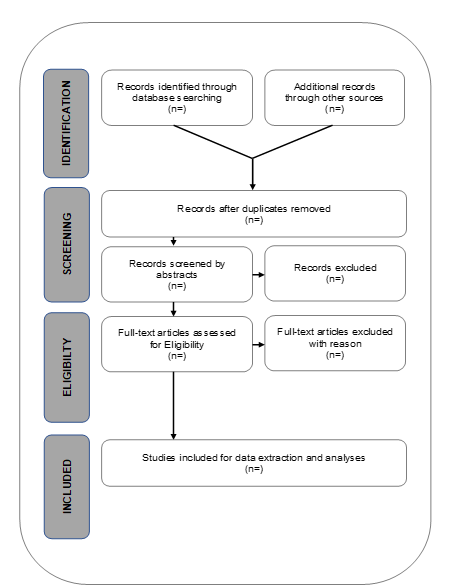
Figure 1: PRISMA flow chart demonstrating literature search and selection of studies.
3. Discussion
This systematic scoping review will map existing literature on distribution, detection, intervention and caregiver burden of children living with Autism Spectrum Disorders in Africa. Autism current, arguably has no cure [22, 23], and early detection, and proper intervention is key in improving the self-care independence of these children living with ASD [1, 22]. Reported cases of ASD are exponentially skyrocketing globally [9], yet Africa with its poor healthcare infrastructure [24, 25] is left without evidence of detection, interventions, caregiver burden and coping strategies. We anticipate that the mapped evidence will help provide the situation, early detection indicators to facilitate early interventions in the African context. This mapped literature is also anticipated to provide evidence on caregiver burden and provide culturally appropriate coping strategies for parents of children living with ASD. The anticipated evidence will help in planning for the healthcare systems and educational institutions to meet the growing numbers of children living with ASD on the African continent.
4. Conclusion
The findings of this proposed systematic scoping review will provide useful evidence that will facilitate and guide the direction for future research including primary studies and meta-analysis. It will influence policy direction and provide caregivers with possible coping strategies.
Declarations
Acknowledgements
Not applicable
Funding
This study is not funded
Availability of data and material
All the data generated or analysed in the course of this study will be included in the published systematic scoping review article. This will also be made available upon request.
Authors’ contributions
LL conceptualised the study and prepared the draft and DK and CMB did a critical review. These three authors contributed to the development of the background and planned output of the research as well as the design of the study. Dk contributed to the development of the methods relating to the review and synthesis of data including the sifting and data extraction process. LL prepared the manuscript, and DK and CMB reviewed it. All the authors contributed to the reviewed draft version of the manuscript and approved the final version.
Ethics approval and consent to participate
Not applicable
Consent for publication
Not applicable
Competing interests
The authors declare that they have no competing interests.
References
- Corsello CM. Early intervention in autism. Infants & Young Children 18 (2005): 74-85.
- Harris J. Leo Kanner and autism: a 75-year perspective. International review of psychi-atry 30 (2018): 3-17.
- Lotter V. Childhood autism in Africa. Journal of Child Psychology and Psychiatry 19 (1978): 231-244.
- Lotter V. Epidemiology of autistic conditions in young children. Social psychiatry 1 (1966): 124-135.
- Özerk K. The Issue of Prevalence of Autism/ ASD. International Electronic Journal of Elementary Education 9 (2016): 263-306.
- Udhya J, Varadharaja M, Parthiban J. Autism disorder (AD): an updated review for paedi-atric dentists. Journal of clinical and diagno-stic research: JCDR 8 (2014): 275.
- Bhasin TK, Brocksen S, Avchen RN, et al. Prevalence of four developmental disabilities among children aged 8 years; Metropolitan Atlanta Developmental Disabilities Surveil-lance Program, 1996 and 2000. 2006.
- Kopetz PB, Endowed EDL. Autism world-wide: Prevalence, perceptions, acceptance, action. Journal of social Sciences 8 (2012): 196.
- Maenner MJ, Shaw KA, Baio J. Prevalence of autism spectrum disorder among children aged 8 years—autism and developmental disabilities monitoring network, 11 sites, United States, 2016. MMWR Surveillance Summaries 69 (2020): 1.
- De Vries PJ. Thinking globally to meet local needs: autism spectrum disorders in Africa and other low-resource environments. Curr-ent Opinion in Neurology 29 (2016): 130-136.
- Abubakar A, Ssewanyana D, de Vries PJ, et al. Autism spectrum disorders in sub-Saharan Africa. The Lancet Psychiatry 3 (2016): 800-802.
- Erasmus S, Kritzinger A, Van der Linde J. Onset of Intervention for Learners in Autism-Specific Government-Funded Schools in South Africa. International Journal of Disa-bility, Development & Education 68 (2021): 46-61.
- Kanner L. Early infantile autism. The Journal of Pediatrics (1944).
- Arksey H, O'Malley L. Scoping studies: towards a methodological framework. Int J Soc Res Method 8 (2005): 19-32.
- Levac D, Colquhoun H, O'Brien KK. Scoping studies: advancing the method-ology. Implementation Science 5 (2010): 69.
- Colquhoun HL, Levac D, O'Brien KK, et al. Scoping reviews: time for clarity in definition, methods, and reporting. Journal of clinical epidemiology 67 (2014): 1291-1294.
- Moher D, Shamseer L, Clarke M, et al. Pre-ferred reporting items for systematic review and meta-analysis protocols (PRISMA-P) 2015 statement. Systematic reviews 4 (2015): 1-9.
- Institute JB. Joanna Briggs Institute reviewers’ manual: 2015 edition/supplement. Adelaide: The Joanna Briggs Institute (2015).
- McInnes MD, Moher D, Thombs BD, et al. Preferred reporting items for a systematic review and meta-analysis of diagnostic test accuracy studies: the PRISMA-DTA statement. Jama 319 (2018): 388-396.
- Braun V, Clarke V, Hayfield N. Terry GJHoRMiHSS. Thematic analysis (2019): 843-860.
- Hong QN, Pluye P, Fàbregues S, et al. Mixed methods appraisal tool (MMAT), version 2018. Registration of copyright 1148552 (2018): 10.
- Speaks A. What is autism (2011).
- Bahmani M, Sarrafchi A, Shirzad H, et al. Autism: Pathophysiology and promising herbal remedies. Current pharmaceutical design 22 (2016): 277-285.
- Oleribe OO, Momoh J, Uzochukwu BS, et al. Identifying key challenges facing healthcare systems in Africa and potential solutions. International journal of general medicine 12 (2019): 395.
- Kingham TP, Alatise OI, Vanderpuye V, et al. Treatment of cancer in sub-Saharan Africa. The Lancet