Nicolas Prokes¹, Timo Mayerhöfer¹, Annika Santer¹, Maria Rosina Troppmair², Armin Krösbacher³, Fabian Perschinka¹, Sebastian Schauflinger¹, Andrea Köhler¹, Bernhard Benda¹, Thomas Ploner¹, Michael Joannidis¹, Frank Hartig¹
1Core Facility for Intensive Care and Emergency Medicine,Medical University of Innsbruck, Austria
2Department of Internal Medicine Gastroenterology, Hepatology and Endocrinology, Medical University of Innsbruck, Austria
3Department of Anaesthesiology and Intensive Care, Medical University of Innsbruck, Austria
*Corresponding Author: Frank Hartig, MD Core Facility for Intensive Care and Emergency Medicine,Medical University of Innsbruck, Austria.
Received: 02 June 2026; Accepted: 17 June 2026; Published: XX- June 2026
Background: Out-of-hospital cardiac arrest (OHCA) remains a leading cause of death, with survival rates below 10%. Mechanical chest compression devices (MCD) have been developed to provide consistent, high-quality compressions, but their routine use is not recommended. This study aimed to evaluate the real-world use of MCDs during cardiopulmonary resuscitation (CPR) in non-traumatic OHCA patients admitted to the resuscitation room.
Methods: We conducted a single-centre, retrospective study using data from the Innsbruck Resuscitation Room Registry. Adult patients with non-traumatic OHCA admitted between January 2018 and December 2022 were included. Patients receiving CPR with add-on MCD use were compared with those treated with manual compressions only. Kaplan–Meier and multivariable regression were performed to assess survival and to identify independent predictors of outcome.
Results: Among 683 OHCA patients admitted to the ED, 188 (27.5%) received MCD and 495 (72.5%) manual CPR. Patients treated with MCDs more frequently had unwitnessed arrests, delayed CPR initiation, and nonshockable rhythms. Patients receiving MCD had lower return of spontaneous circulation (ROSC) rates (51.4% vs. 96.1%, p < 0.001). Thirty-day survival was markedly lower in the MCD group (10.1% vs. 46.9%, p < 0.001). Total CPR time was substantially longer in the MCD group (median 48 vs. 15 minutes, p < 0.001). In multivariable analysis, shockable rhythm and ROSC were the strongest predictors of survival.
Conclusion: In this real-world cohort, mechanical CPR devices were primarily used in patients with multiple negative predictive factors and refractory resuscitation situations and were associated with longer CPR duration and lower survival rates. While MCDs may be beneficial in specific circumstances, indiscriminate deployment appears to extend futile efforts and shift the time of death from scene to hospital. Evidence-based selection criteria are needed to guide prehospital MCD use.
Out-of-hospital cardiac arrest; Cardiopulmonary resuscitation; Mechanical Chest Compression Devices; Resuscitation Room; Prehospital Care
Out-of-hospital cardiac arrest articles; Cardiopulmonary resuscitation articles; Mechanical Chest Compression Devices articles; Resuscitation Room articles; Prehospital Care articles
Introduction
Postoperative pain after thoracic and cardiac surgery, including coronary artery bypass grafting (CABG) and minimally invasive mitral valve repair or replacement (MICS-MVR), is often severe. Inadequate pain control causes significant patient discomfort, may delay functional recovery, and is associated with an increased risk of postoperative pulmonary complications and prolonged hospital stay [1-3]. Postoperative pain is multifactorial and results from surgical trauma related to sternotomy or thoracotomy, the presence of intercostal chest drains, and other perioperative factors. Over the past decade, cardiac surgical techniques have increasingly shifted toward less invasive approaches. In parallel, less invasive regional anesthetic techniques have gained importance and have been incorporated into Enhanced Recovery After Cardiac Surgery (ERACS) protocols [4,5]. Although neuraxial regional anesthesia techniques such as thoracic epidural analgesia and thoracic paravertebral block are well established and provide effective analgesia, their use in cardiac surgery is limited due to the need for systemic anticoagulation. Consequently, alternative regional techniques with a more favorable safety profile are increasingly being explored. In recent years, several ultrasound-guided chest wall blocks including the erector spinae plane block (ESPB), serratus anterior plane block (SAPB), and pectoral nerve blocks (PECS)—have been described and investigated for analgesia in thoracic procedures, including cardiac surgery [6,7]. The ultrasound-guided ESPB was first described by Forero et al. [8] in 2016 and targets the interfascial plane deep to the erector spinae muscle [8]. Owing to its technical simplicity, easily identifiable sonographic landmarks, and its presumed safety in anticoagulated patients, ESPB has become one of the most applied regional analgesic techniques in cardiac surgery, although high-quality evidence supporting its safety in this setting remains limited [9-11]. Intercostal nerve block or continuous intercostal wound infiltration (IC-WI) has also been shown to provide effective postoperative analgesia after thoracic surgery and can be readily performed by the surgeon, but has numerous disadvantages, such as a limited duration of analgesia, variable efficacy, the risk of systemic toxicity from local anesthetics, technical challenges and complications, as well as infections and impaired wound healing [12-16]. The hypothesis of this study was that a preoperative ESPB in patients undergoing MICS-MVR provides postoperative pain relief that - as measured by pain scores and cumulative opioid consumption in the first 72 hours after surgery - is virtually comparable to that of continuous IC-WI. Furthermore, we hypothesized that preoperative ESPB is associated with lower intraoperative opioid consumption, fewer postoperative complications, and a higher rate of immediate extubation in the operating room. The primary endpoint was cumulative postoperative morphine consumption over a 72-hour period. Secondary endpoints included postoperative pain intensity, opioid-related adverse effects (e.g., postoperative nausea and vomiting), surgical characteristics (including duration of chest tube drainage and need for revision surgery), and early extubation. OHCA is still one of the leading causes of death in Europe and a continuous global health issue [1,2]. Incidence rates range from 50 – 150 per 100.000 population with a substantial regional variation [3,4]. Despite considerable efforts to understand the underlying causes of cardiac arrest and improvements in advanced life support (ALS), survival rates following OHCA remain below 10% [1-7]. One basic element of CPR is the delivery of high-quality chest compressions with minimal interruptions [8,9]. To improve return of spontaneous circulation (ROSC) rates and subsequent survival, mechanical chest compression devices (MCD) have been developed to provide continuous, high-quality chest compressions without the limitations of human performance - particularly during prolonged resuscitation efforts or in challenging operational settings [9,10]. The two most common device types are the piston-driven system (e.g., LUCAS™, Physio-Control/Jolife AB) and the load-distributing band system (e.g. AutoPulse™, Zoll Medical Corporation) [11,12]. Whilst multiple large, randomised studies have shown safety and feasibility of MCD in both OHCA and intra-hospital cardiac arrest (IHCA) scenarios, none have shown a survival benefit compared to manual chest compressions [13-16]. These findings have been corroborated by various systematic reviews as well as a recent umbrella review summarizing 11 systematic reviews comprising 46 original studies from 2014 to 2022 [17-20]. The authors found no significant difference in ROSC rates and a significantly lower pooled odds ratio (OR) for survival to discharge associated with the use of MCD. They concluded that there is no definitive evidence to support their routine use [21]. In accordance with these findings, current ERC and AHA guidelines advise against routine use of MCD and state that add-on use can be considered when manual compressions are not practical or unsafe to deliver [22,23]. Nevertheless, clinical experience indicates that MCDs are frequently used in patients with multiple negative predictive factors and refractory resuscitation. These attempts are often terminated early in the resuscitation room, effectively shifting the time of death from the scene to hospital admission without improving chances of survival. To investigate this issue, we conducted a real-world analysis based on data from our Resuscitation Room Registry, aiming to evaluate the outcome of patients admitted to the ED, treated with MCD following non-traumatic OHCA.
Methods
This real-world retrospective observational study was conducted at the medical emergency department of the University Hospital of Innsbruck, Austria. The study protocol and data extraction from the Innsbruck Resuscitation Room (IRR) Registry were approved by the Ethics Committee of the Medical University of Innsbruck (approval no.: 1303/2023) and by the Coordination Centre for Clinical Studies (approval no.: 20240515-3459). The study was performed in accordance with the Declaration of Helsinki.
Study Setting
More than 18.000 patients are treated at the medical emergency department (ED) of the University Hospital of Innsbruck each year. The department operates two resuscitation rooms (RR) dedicated to non-traumatic critically ill (CINT) patients. Approximately 400 patients receive care in the RR annually. The University Hospital of Innsbruck serves as the sole tertiary hospital for North Tyrol and provides advanced tertiary care for a catchment area of approximately 650,000 inhabitants and six affiliated regional hospitals. The emergency medical service (EMS) operates as a two-tiered system, with emergency medical technicians as the primary responders and emergency physicians dispatched for potentially severe cases. Two mechanical CPR devices are used within the EMS system: the LUCAS™ 2 (Physio-Control/Jolife AB) and the AutoPulseTM (Zoll Medical Corporation). In urban areas, the mechanical CPR device is brought to the scene by an emergency field coordinator, whereas in rural areas it is carried on the emergency physician’s vehicle.
The IRR – Register, data collection and definitions
The Innsbruck Resuscitation Room (IRR) Registry is a database that systematically records all non-traumatic emergency admissions to the resuscitation room at the University Hospital of Innsbruck. Its primary objective is to enhance the understanding and clinical management of CINT patients. For each patient, comprehensive data—including prehospital and initial in-hospital status, resuscitative interventions, and clinical outcomes—are collected from the time of admission until hospital discharge or death. For this study, we included patients with documented OHCA and subsequent initiation of cardiopulmonary resuscitation (CPR) that led to admission to the RR between January 2018 and December 2022. Patients under 18 years of age and those with in-hospital cardiac (IHCA) arrest were excluded. Preclinical data were extracted from the electronic EMS documentation system, including, arrest time, initial rhythm, whether the arrest was witnessed, presence of bystander CPR, duration of out-of-hospital CPR, number of shocks delivered, adrenaline administrations and the use of an MCD at any time. In-hospital data and follow-up information were obtained from the IRR Registry. Additional variables relevant to this study were collected from the hospital’s internal documentation system, including ED charts, discharge summaries, and post-mortem examination reports. Data was collected and managed using the REDCap electronic data capture tool. Delay subgroups (Table 1) were defined according to current eCPR recommendations, which consider a witnessed cardiac arrest or the initiation of bystander CPR within five minutes as criteria for proceeding with further interventions [24–26]. A shockable rhythm was defined as ventricular fibrillation (VF) or pulseless ventricular tachycardia (VT) at first rhythm analysis by either an AED or EMS team. Shock number subgroups were defined as: 1 shock, 2–5 and >5 shocks. The subgroup of one shock was chosen to separate single defibrillation from repeated defibrillation attempts. The threshold of five shocks aligns with the point at which a second amiodarone dose is typically considered, according to ERC guidelines [23]. Adrenaline administration subgroups were stratified based on CPR duration, in accordance with guidelines recommending administration every 3–5 minutes [23]. Unstable patients (Table 1) were defined by an mean arterial pressure <65 mmHg or vasopressor requirement. Partial respiratory insufficiency was defined as the need for supplemental oxygen, and global insufficiency as the need for ventilatory support.
Comparison Cohort
To validate our data and assess completeness, we used the EMS - CPR registry maintained by the department of Anaesthesiology and Intensive Care in cooperation with the regional EMS system. This registry served as an independent reference to cross-check EMS documentation and ensure consistency across data sources.
Statistical Analysis
We conducted statistical analyses using SPSS Statistics (IBM, v30.0) and RStudio (Posit PBC, v.2025.05.0+496). Data visualization was performed with RStudio and GraphPad Prism (GraphPad Software, Inc., v. 10.2.3). The graphical abstract was designed with BioRender. Descriptive statistics are presented as absolute numbers and percentages. Continuous variables were tested for normality using the Kolmogorov–Smirnov-Test. Normally distributed data are reported as mean ± standard deviation (SD), non-normally distributed data as median with the interquartile range (IQR). Group comparisons were carried out using the non-parametric χ² test and the student’s t-test for continuous variables. A p-value ≤ .05 was considered statistically significant. For survival analysis, we used the Kaplan–Meier estimator with 30-day survival as the primary endpoint and differences between groups were assessed using the log-rank test. To further explore predictors of unfavourable outcomes, we applied a Cox regression model with time to death within 30 days as the time-dependent variable, as well as a binary logistic regression model with 30-day mortality as the outcome. Clinically relevant covariates known to influence cardiac arrest outcomes were included in both models [27,28]. We calculated both unadjusted and adjusted hazard ratios (HRs) and ORs, respectively.
Results
Between January 2018 and December 2022, 1575, CINT - patients were admitted to the RR. 849 (53.9%) patients had a documented cardiac arrest among whom 166 (19.6%) were excluded with an IHCA (Figure 1). Therefore, 683 (80.4%) patients with an OHCA were finally analysed. Among these, 188 (27.5%) received add-on mechanical CPR and 495 (72.5%) received manual chest compressions only. The LUCAS™ 2 was the main used device in 184 patients (97.9%) whereas a load distributing device was only used in 4 patients (2.1%). The proportion of cases and mortality rate using MCD or manual CPR was constant throughout the observation period (Supplement table 1).
Supplemental Table 1: Event Count and Mortality Rate split by years 2018 – 2022 and divided in manual CPR and add-on mCPR. CPR = cardiopulmonary resuscitation, mCPR = mechanical CPR.
|
Year |
Manual CPR - n |
30d Mortality - % |
add-on mCPR - n |
30d Mortality - % |
Total - n |
|
2018 |
102 |
52.00% |
37 |
91.90% |
139 |
|
2019 |
105 |
53.30% |
43 |
90.70% |
148 |
|
2020 |
87 |
56.30% |
32 |
90.60% |
119 |
|
2021 |
90 |
47.80% |
33 |
97.00% |
123 |
|
2022 |
111 |
55.00% |
43 |
81.4 %. |
154 |
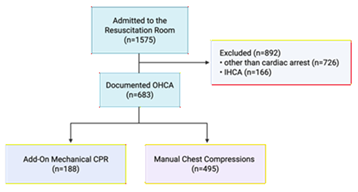
Figure 1: Consort diagram of patient selection for the study cohort. From all patients admitted to the Resuscitation Room from January ‘18 until December ‘22, excluded patients and final study population are shown. Abbreviations: IHCA - intra-hospital cardiac arrest, OHCA - out-of-hospital cardiac arrest, CPR- cardiopulmonary resuscitation.
Baseline Characteristics
Baseline characteristics can be obtained from (table 1). There was no significant difference in median age between groups (manual CPR group: 68 years [IQR 57–78] vs. MCD group: 68 years [IQR 54–77]; p = 0.282) or sex distribution (male 72.2% vs. 77.7%; p = 0.142). Patients in the MCD group had less often an observed cardiac arrest (73.4% vs. 82.6%; p = 0.012), more often a delay before the initiation of CPR (42.2% vs. 31.3%; p = 0.022) and presented less frequently with an initial shockable rhythm (41.2% vs. 53.1%; p = 0.007). Total out-of-hospital CPR time was markedly longer in the MCD group (48 minutes [IQR 28–60] vs. 15 minutes [IQR 8–25]; p < 0.001), with higher numbers of defibrillation attempts (2 [IQR 0–5] vs. 1 [IQR 0–3]; p < 0.001) and more adrenaline administrations (6 [IQR 4–9] vs. 1 [IQR 0–3]; p < 0.001). More than half of the patients received more than 5 repetitive adrenaline dosages in the MCD group.
Table 1: Patients baseline characteristics, out of hospital initial situation and CPR related values divided in manual CPR, mechanical CPR and total cohort. P values are shown for comparison of manual vs. mechanical cohort. Abbreviations: IQR – interquartile range, OHCA – out-of-hospital cardiac arrest, CPR – cardiopulmonary resuscitation, ROSC – return of spontaneous circulation.
|
|
Manual CPR |
Mechanical CPR |
Total |
p - value |
|
Total Events – n (%) |
495 (73.5) |
188 (27.5) |
683 (100) |
<.001* |
|
Age years – median (IQR) |
68 (57-78) |
68 (54-77) |
68 (57-77) |
0.289 |
|
Female – n (%) |
138 (27.8) |
42 (22.3) |
180 (26.3) |
0.142 |
|
Male – n (%) |
357 (72.2) |
146 (77.7) |
503 (73.7) |
0.142 |
|
Observed OHCA – n (%) |
409 (82.6) |
138 (73.4) |
547 (80.4) |
.012* |
|
No Delay – n (%) |
283 (68.7) |
85 (57.8) |
368 (69.1) |
.022* |
|
Delayed CPR – n (%) |
129 (31.3) |
62 (42.2) |
191 (34.2) |
.022* |
|
1 - 5min – n (%) |
81 (19.6) |
34 (23.1) |
115 (20.6) |
0.438 |
|
6-10min – n (%) |
32 (7.8) |
19 (12.9) |
51 (9.1) |
0.089 |
|
>10min – n (%) |
16 (3.9) |
9 (6.1) |
25 (4.5) |
0.37 |
|
Bystander CPR – n (%) |
290 (60.9) |
105 (59.0) |
395 (60.4) |
0.652 |
|
time (min) – median (IQR) |
7 (5-10) |
5 (5-10) |
7 (5-10) |
0.566 |
|
Total OH CPR time (min) – median (IQR) |
15 (8-25) |
48 (28-60) |
20 (2-73) |
<.001* |
|
Out of hospital ROSC – n (%) |
472 (96.1) |
93 (51.4) |
565 (84.1) |
<.001* |
|
Initial shockable rhythm – n (%) |
225 (53.1) |
75 (41.2) |
300 (49.5) |
.007* |
|
Number of shocks – median (IQR) |
1 (0-3) |
2 (0-5) |
1 (0-3) |
<.001* |
|
Number – n (%) 1 |
89 (18.0) |
17 (9.0) |
106 (15.5) |
.004* |
|
02-May |
148 (29.9) |
49 (21.8) |
197 (28.8) |
0.323 |
|
> 5 |
33 (6.7) |
41 (21.8) |
74 (10.8) |
<.001* |
|
Non-shockable rhythm – n (%) |
199 (46.9) |
107 (58.2) |
306 (50.5) |
.008* |
|
Adrenaline administrations – median (IQR) |
1 (0-3) |
6 (4-9) |
2 (0-5) |
<.001* |
|
Number– n (%) 1 - 5 |
266 (56.2) |
82 (45.1) |
348 (53.1) |
.011* |
|
06-Oct |
29 (6.1) |
72 (39.6) |
101 (15.4) |
<.001* |
|
> 10 |
10 (2.1) |
25 (13.7) |
35 (5.3) |
<.001* |
|
OH, initial mental status |
||||
|
alert/awake |
26 (5.3%) |
6 (3.2%) |
32 (4.7%) |
0.654 |
|
verbal |
5 (1.0%) |
3 (1.6%) |
8 (1.2%) |
0.654 |
|
pain |
2 (0.4%) |
0 (0%) |
2 (0.3%) |
0.654 |
|
unconscious |
457 (92.3%) |
177 (94.1%) |
634 (92.8%) |
0.654 |
|
OH, initial haemodynamic status |
||||
|
Stable |
29 (5.9%) |
4 (2.1%) |
33 (4.8%) |
0.182 |
|
unstable |
22 (4.4%) |
9 (4.8%) |
31 (4.5%) |
0.182 |
|
no circulation |
438 (88.5%) |
173 (92.0%) |
611 (89.5%) |
0.182 |
|
OH, initial respiratory status |
||||
|
sufficient |
15 (3%) |
3 (1.6%) |
18 (2.6%) |
0.677 |
|
partially insufficient |
16 (3.2%) |
6 (3.2%) |
22 (3.2%) |
0.677 |
|
globally insufficient |
7 (1.4%) |
1 (0.5%) |
8 (1.2%) |
0.677 |
|
respiratory arrest |
447 (90.3%) |
174 (92.6%) |
621 (90.9%) |
0.677 |
Survival Analysis
The median 30-Day survival time after admission to the RR was 14 days in the manual CPR group and 0 days in the mechanical CPR group. The survival rate at 30 days was 46.9% vs. 10.1% respectively. The log-rank test showed a significant difference in survival between groups (p < 0.001) (Figure 2).
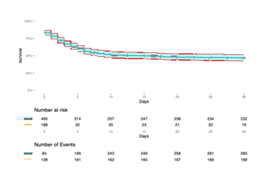
Figure 2: Kaplan Meier survival analysis for 30-day survival after OHCA and following manual CPR vs. add-on mechanical CPR. Blue line = manual CPR, orange line = add-on mechanical CPR, 95% CI for each group are shown. Log-rank = p <0.0001. Abbreviations: CPR – cardiopulmonary resuscitation, OHCA – out-of-hospital cardiac arrest.
Multivariate Risk Faktors for 30 Day mortality
In the Cox proportional hazards model (Figure 3a, supplement table 2a), use of MCDs was associated with an increased hazard of death, which was attenuated but remained significant after adjustment (unadjusted HR 1.82; 95% CI, 1.49–2.23; p < 0.001; adjusted HR 1.52; 95% CI, 1.15–2.00; p = 0.003). ROSC at any time was independently associated with improved survival (adjusted HR 0.48; 95% CI, 0.35–0.67; p < 0.001). A shockable initial rhythm also showed a significant association with lower hazard of death (adjusted HR 0.75; 95% CI, 0.59–0.95; p = 0.019). Other factors, including witnessed cardiac arrest, delayed CPR, age, and bystander CPR, were not independently associated in the adjusted model. In the logistic regression analysis for 30-day mortality (Figure 3b, supplement table 2b) the use of MCDs was significantly associated with decreased survival (adjusted OR 3.87; 95% CI, 1.95–7.63; p < 0.001). ROSC was strongly associated with increased survival (adjusted OR 0.09; 95% CI, 0.03–0.33; p < 0.001), as was an initial shockable rhythm (adjusted OR 0.13; 95% CI, 0.08–0.22; p < 0.001). Delayed initiation of CPR (adjusted OR 2.22; 95% CI, 1.23–4.03; p = 0.009) and higher age (adjusted OR 1.04 per year; 95% CI, 1.02–1.06; p < 0.001) were also independently associated with decreased survival. Witnessed cardiac arrest and bystander CPR were not independently associated with 30-day mortality in the multivariable model.
Supplemental Table 2: Multivariate analysis of 30-day survival time dependent (a) and binary (b). Unadjusted and Adjusted HRs, ORs and p-values are shown. Abbreviations: HR – hazard ratio, OR – odds ratio, 95% CI – 95% confidence interval, mCPR – mechanical CPR, OHCA – out-of hospital cardiac arrest, ROSC – return of spontaneous circulation, CPR – cardiopulmonary resuscitation.
|
2a) Cox proportional hazard model |
||||
|
Unadjusted HR (95% CI) |
p - value |
Adjusted HR (95% CI) |
p - value |
|
|
mCPR |
1.82 (1.49 – 2.23) |
<.001* |
1.52 (1.15 – 2.00) |
.003* |
|
OH ROSC |
0.42 (0.33 – 0.54) |
<.001* |
0.48 (0.35 – 0.67) |
<.001* |
|
Primary Rhythm |
0.82 (0.67 – 1.02) |
0.07 |
0.75 (0.59 – 0.95) |
.019* |
|
Witnessed OHCA |
0.86 (0.69 – 1.07) |
0.178 |
0.87 (0.60 – 1.27) |
0.474 |
|
Delayed CPR |
0.99 (0.80 – 1.23) |
0.962 |
0.94 (0.72 – 1.22) |
0.615 |
|
Age |
1.00 (0.99 – 1.01) |
0.989 |
1.01 (0.99 – 1.02) |
0.169 |
|
Bystander CPR |
0.98 (0.80 – 1.17) |
0.813 |
1.09 (0.87 – 1.37) |
0.459 |
|
2b) Binary logistic regression model |
||||
|
Unadjusted OR (95% CI) |
p - value |
Adjusted OR (95% CI) |
p - value |
|
|
mCPR |
7.85 (4.73 – 13.02) |
<.001* |
3.87 (1.95 – 7.63) |
<.001* |
|
OH ROSC |
0.04 (0.01 – 0.12) |
<.001* |
0.09 (0.03 – 0.33) |
<.001* |
|
Primary Rhythm |
0.12 (0.08 – 0.18) |
<.001* |
0.13 (0.08 – 0.22) |
<.001* |
|
Witnessed OHCA |
0.43 (0.28 – 0.67) |
<.001* |
1.11 (0.43 – 2.84) |
0.837 |
|
Delayed CPR |
2.46 (1.67 – 3.63) |
<.001* |
2.22 (1.23 – 4.03) |
.009* |
|
Age |
1.03 (1.02– 1.04) |
<.001* |
1.04 (1.02 – 1.06) |
<.001* |
|
Bystander CPR |
0.47 (0.36 – 0.66) |
<.001* |
0.85 (0.51 – 1.43) |
0.545 |
Supplemental Table 3: logistic regression model of patients receiving add-on mechanical CPR with survival to ICU admission as the endpoint. Unadjusted and adjusted ORs as well as p – values are shown. Abbreviations: OR – odds ratio, 95% CI – 95% confidence intervall, OHCA – out-of-hospital cardiac arrest, ROSC – return of spontaneous circulation, CPR – cardiopulmonary resuscitation.
|
Unadjusted OR (95% CI) |
p - value |
Adjusted OR (95% CI) |
p - value |
|
|
OH ROSC |
11.26 (4.47 – 28.36) |
<.001* |
23.50 (6.52 – 84.76) |
<.001* |
|
Primary Rhythm |
3.73 (1.87 – 7.46) |
<.001* |
4.27 (1.56 – 11.72) |
.005* |
|
Witnessed OHCA |
3.137 (1.25 – 8.02) |
.015* |
10.78 (1.02 – 113.96) |
.048* |
|
Delayed CPR |
0.81 (0.40 – 1.67) |
0.57 |
2.11 (0.73 – 6.10) |
0.166 |
|
Age |
0.99 (0.97 – 1.01) |
0.446 |
0.95 (0.92 – 0.99) |
.009* |
|
Bystander CPR |
1.51 (0.76 – 2.98) |
0.236 |
2.13 (0.75 – 6.11) |
0.158 |
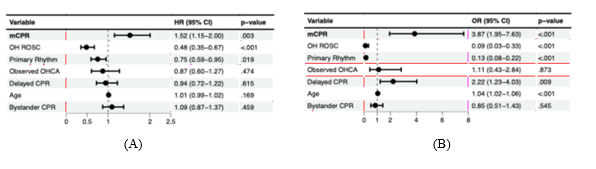
Figure 3: Forest Plot of multivariable Cox regression model (A) and logistic regression model (B) of clinically relevant variables for 30-day mortality in OHCA patients. Abbreviations: HR – hazard ratio; OR – odds ratio; 95% CI – 95% confidence interval, mCPR – mechanical cardiopulmonary resuscitation, OHCA – out-of-hospital cardiac arrest, ROSC – return of spontaneous circulation.
Survival to ICU admission
In a subgroup analysis, focusing only on patients receiving add-on mechanical CPR, prehospital ROSC was independently associated with higher odds to survival to ICU admission (adjusted OR 23.50; 95% CI, 6.52–84.76; p < 0.001). An initial shockable rhythm (adjusted OR 4.27; 95% CI, 1.56–11.72; p = 0.005) and witnessed arrest (adjusted OR 10.78; 95% CI, 1.02–113.96; p = 0.048) were also significant predictors. Increasing age was associated with lower odds of ICU admission (adjusted OR 0.95 per year; 95% CI, 0.92–0.99; p = 0.009). Delayed CPR and bystander CPR were not significantly associated in the adjusted model (supplemental figure 3).
Termination of resuscitation on scene
Analysis of the OHCA cohort derived from the local EMS CPR registry showed that termination of resuscitation on scene was documented in 56.51% of patients treated with manual CPR and in 10.71% of patients in whom a mechanical CPR device was deployed (p < 0.001). Data completeness of the registry was high, with a coverage ratio of 97.8%.
Discussion
Mechanical chest compression devices (MCD) can support resuscitation efforts in specific circumstances and have been shown to be safe and feasible. Particularly in settings with limited personnel, challenging extraction environments or during transport in refractory cardiac arrest, MCDs provide consistent, high quality chest compressions [29]. However, their routine deployment has limitations. Consistent with previously published data, our real-world analysis indicates that unselected use of MCDs does not improve rates of return of spontaneous circulation (ROSC) or survival [21]. In our cohort, patients in the mechanical CPR group were less likely to have witnessed cardiac arrest, more often experienced a delay before CPR initiation, and less frequently presented with a shockable rhythm. These findings suggest a strong selection bias, in which MCDs were preferentially used in cases associated with multiple negative prognostic factors. This supports the hypothesis that the availability of MCDs may encourage prolonged resuscitation attempts and transport to the emergency department (ED), even when no realistic exit strategy exists, frequently resulting in early termination of resuscitation in the ED. Analysis of the EMS CPR registry further indicated that once an MCD is deployed, termination of resuscitation on scene seems to be rarely considered. Consequently, total out-of-hospital CPR duration was markedly prolonged, with a median of 48 minutes in the mechanical group compared with 15 minutes in the manual CPR group. More than half of the mechanical CPR patients received more than five repeated doses of adrenaline. Despite these extended efforts, survival did not improve, and 73% of mechanical resuscitation attempts were terminated early in the resuscitation room vs. 17% in the manual group. Decision to terminate resuscitation is traditionally made by an emergency physician. Within our cohort, the two-tiered local EMS system—involving an emergency physician on scene would theoretically allow evidence-based decisions to be made prehospitally. Despite this structural capability, high transport rates, even in situations suggestive of futile ongoing resuscitation, were observed. Thus, indicating that the decision to discontinue CPR is frequently deferred to the emergency department. Whether this represents a local practice pattern influenced by human factors in emergency situations or reflects a broader phenomenon remains unclear. Several objective parameters can aid prehospital decision-making [30]. The universal prehospital termination of resuscitations (TOR) rule considers no transportation of patients with an unwitnessed cardiac arrest, no attempted shocks and no ROSC on scene in the absence of a reversible cause [31]. Similar predictive models have been validated and have demonstrated positive predictive values exceeding 99% [31,32]. Nonetheless, such models should be regarded as supportive rather than definitive, as each emergency scenario remains unique [33]. Our regression analyses corroborate these observations. Across all models, a shockable initial rhythm and ROSC on scene were the strongest independent predictors of 30-day survival and ICU admission. In addition, age, witnessed arrest, and delay to CPR remained significant factors in binary models. Importantly, the effect of MCD use on survival was markedly attenuated after adjustment for covariates, further indicating that patient selection rather than the device itself explains the poor outcomes observed. These findings suggest that predication models like the TOR rule are also applicable in our setting, although validation was not the aim of this study. Routine transport of patients with ongoing CPR poses additional risks. Emergency driving introduces hazards to patients, providers, and the public. Medical interventions in a moving ambulance are less precise, and unrestrained EMS personnel face substantial injury risk in the event of sudden vehicle acceleration or collisions [34,35]. Furthermore, prolonged resuscitation efforts and consecutive transportation consume significant EMS resources potentially diverting personnel from other patients with a higher likelihood of survival. Such extended prehospital efforts and activation of resuscitation teams for likely futile cases also generate considerable economic costs [36,37]. A potential exit strategy for refractory OHCA is the use of extracorporeal CPR (eCPR) in carefully selected patients with no sustained native circulation. However, giving to its complexity, expense and potential risks, inclusion vary and remain to be prospectively validated [25,26]. Like eCPR, structured criteria for the use of MCDs and further transportation to the ED should be evaluated. Without the prospect of advanced therapeutic interventions in the hospital, switching from manual to mechanical CPR in order to facilitate a transport to the ED may simply prolong futile efforts and merely delay the time of death. As the sole tertiary hospital in the region, our real-word cohort comprises a substantial number of OHCA cases. Baseline characteristics and prehospital parameters such as age, bystander CPR, witnessed arrest, and initial rhythm are comparable to those reported in larger registries [1], but only limited evidence focusing specifically on ED-based OHCA exists [38]. However, the use of multiple documentation systems and cross-validation with a large urban EMS registry strengthens the external validity and applicability of the findings to comparable healthcare settings.
Limitations
This study also has limitations. It represents a single-center observational analysis and may therefore be influenced by local EMS structures, training, and protocols. Unmeasured confounders may also have affected MCD use and outcomes
Conclusion
Our findings do not support the routine use of MCDs and further transportation to the RR in refractory OHCA without further treatment strategies. In this cohort MCD use was associated with higher mortality when applied in unselected patients. While MCDs may provide benefit in specific circumstances, their indiscriminate use may extend resuscitation efforts without improving survival, effectively shifting the time of death from the scene to the hospital. Future research should aim to define evidence-based criteria for MCD deployment before transportation after OHCA, analogous to those proposed for extracorporeal CPR.
Authorship Contribution Statement
NP, TM, MJ and FH conceived the study and designed the analysis. NP, AKr, AS, SS, BB and TP collected the data. NP, TM, AK, FP and MRT performed the statistical analysis. NP and TM drafted the first version of the manuscript. All authors critically revised the manuscript and approved the final version.
Competing interests
All named Authors state no conflict of interests.
Funding
For this academical study no funding was used.
List of Abbreviations
OHCA: out-of-hospital cardiac arrest
MCD: Mechanical Chest Compression Device
CPR: cardiopulmonary resuscitation
ROSC: return of spontaneous circulation
OR: Odds Ratio
CINT: critically il non-traumatic
IRR: Innsbruck Resuscitation Room
ED: emergency department
EMS: emergency medical service
HR: Hazard Ratio
eCPR: extracorporeal CPR
References
- Gräsner JT, Wnent J, Herlitz J, et al. Survival after out-of-hospital cardiac arrest in Europe - Results of the EuReCa TWO study. Resuscitation 148 (2020): 218-226.
- Kiguchi T, Okubo M, Nishiyama C, et al. Out-of-hospital cardiac arrest across the World: First report from the International Liaison Committee on Resuscitation (ILCOR). Resuscitation 152 (2020): 39-49.
- Gräsner JT, Herlitz J, Tjelmeland IBM, et al. European Resuscitation Council Guidelines 2021: Epidemiology of cardiac arrest in Europe. Resuscitation 161 (2021): 61-79.
- Gräsner JT, Wnent J, Lefering R, et al. European registry of cardiac arrest study THREE (EuReCa- THREE) – EMS response time influence on outcome in Europe. Resuscitation 2025: 110704.
- Hasselqvist-Ax I, Riva G, Herlitz J, et al. Early Cardiopulmonary Resuscitation in Out-of-Hospital Cardiac Arrest. New England Journal of Medicine 372 (2015): 2307-2315.
- Holmén J, Herlitz J, Ricksten SE, et al. Shortening ambulance response time increases survival in out-of-hospital cardiac arrest. J Am Heart Assoc 2020: 9.
- Blom MT, Beesems SG, Homma PCM, et al. Improved survival after out-of-hospital cardiac arrest and use of automated external defibrillators. Circulation 130 (2014): 1868-1875.
- Steen S, Liao Q, Pierre L, et al. The critical importance of minimal delay between chest compressions and subsequent defibrillation: A haemodynamic explanation. Resuscitation 58 (2003): 249-258.
- Rubertsson S, Lindgren E, Smekal D, et al. Mechanical chest compressions and simultaneous defibrillation vs conventional cardiopulmonary resuscitation in out-of-hospital cardiac arrest: The LINC randomized trial. JAMA 311 (2014): 53-61.
- Wik L, Olsen JA, Persse D, et al. Manual vs. integrated automatic load-distributing band CPR with equal survival after out of hospital cardiac arrest. The randomized CIRC trial. Resuscitation 85 (2014): 741-748.
- Zoll Medical Cooperation. Automated External Defibrillators (AEDs). Zoll Medical Corporation website. n.d (2025).
- Stryker Cooperation. LUCAS CPR n.d (2025).
- Eng Hock Ong M, Joseph Ornato MP, Edwards DP, et al. Use of an Automated, Load-Distributing Band Chest Compression Device for Out-of-Hospital Cardiac Arrest Resuscitation. JAMA 295 (2006): 2629-2637.
- Hallstrom A, Rea TD, Michael Sayre MR, et al. Manual Chest Compression vs Use of an Automated Chest Compression Device During Resuscitation Following Out-of-Hospital Cardiac Arrest A Randomized Trial. JAMA 295 (2006): 2620-2628.
- Perkins GD, Lall R, Quinn T, Deakin CD, et al. Mechanical versus manual chest compression for out-of-hospital cardiac arrest (PARAMEDIC): a pragmatic, cluster randomised controlled trial. The Lancet 385 (2015): 947-955.
- Smekal D, Johansson J, Huzevka T, et al. A pilot study of mechanical chest compressions with the LUCASTM device in cardiopulmonary resuscitation. Resuscitation 82 (2011): 702-706.
- Sheraton M, Columbus J, Surani S, et al. Effectiveness of mechanical chest compression devices over manual cardiopulmonary resuscitation: A systematic review with meta-Analysis and trial sequential analysis. Western Journal of Emergency Medicine 22 (2021): 810-819.
- Gates S, Quinn T, Deakin CD, et al. Mechanical chest compression for out of hospital cardiac arrest: Systematic review and meta-analysis. Resuscitation 94 (2015): 91-97.
- Bonnes JL, Brouwer MA, Navarese EP, et al. Manual Cardiopulmonary Resuscitation Versus CPR Including a Mechanical Chest Compression Device in Out-of-Hospital Cardiac Arrest: A Comprehensive Meta-analysis From Randomized and Observational Studies. Ann Emerg Med 67 (2016): 349-360.
- Zhu N, Chen Q, Jiang Z, et al. A meta-analysis of the resuscitative effects of mechanical and manual chest compression in out-of-hospital cardiac arrest patients. Crit Care 23 (2019): 100.
- El-Menyar A, Naduvilekandy M, Rizoli S, et al. Mechanical versus manual cardiopulmonary resuscitation (CPR): an umbrella review of contemporary systematic reviews and more. Crit Care 28 (2024): 259.
- Panchal AR, Bartos JA, Cabañas JG, et al. Part 3: Adult Basic and Advanced Life Support: 2020 American Heart Association Guidelines for Cardiopulmonary Resuscitation and Emergency Cardiovascular Care. Circulation 142 (2020): S366-S468.
- Soar J, Böttiger BW, Carli P, et al. European Resuscitation Council Guidelines 2025 Adult Advanced Life Support. Resuscitation 215 (2025).
- Richardson ASC, Tonna JE, Nanjayya V, et al. Extracorporeal Cardiopulmonary Resuscitation in Adults. Interim Guideline Consensus Statement from the Extracorporeal Life Support Organization. ASAIO Journal 67 (2021): 221-228.
- Wengenmayer T, Tigges E, Staudacher DL. Extracorporeal cardiopulmonary resuscitation in 2023. Intensive Care Medicine Experimental 11 (2023).
- Dennis M, Lal S, Forrest P, et al. In-depth extracorporeal cardiopulmonary resuscitation in adult out-of-hospital cardiac arrest. J Am Heart Assoc 9 (2020).
- Sasson C, Rogers MAM, Dahl J, et al. Predictors of survival from out-of-hospital cardiac arrest a systematic review and meta-analysis. Circ Cardiovasc Qual Outcomes 3 (2010): 63-81.
- Schwaiger D, Krösbacher A, Eckhardt C, et al. Out-of-hospital cardiac arrest: A 10-year analysis of survival and neurological outcomes. Heart & Lung 73 (2025):1-8.
- Poole K, Couper K, Smyth MA, et al. Mechanical CPR: Who? When? How? Crit Care 22 (2018): 140.
- Sherbino J, Keim SM, Davis DP. Clinical Decision Rules for Termination of Resuscitation in Out-of-Hospital Cardiac Arrest. Journal of Emergency Medicine 38 (2010): 80-86.
- Yates EJ, Schmidbauer S, Smyth AM, et al. Out-of-hospital cardiac arrest termination of resuscitation with ongoing CPR: An observational study. Resuscitation 130 (2018): 21-27.
- Morrison LJ, Visentin LM, Kiss A, et al. Validation of a Rule for Termination of Resuscitation in Out-of-Hospital Cardiac Arrest A BS TR AC T 355 (2006): 478-487.
- Cummins RO, Eisenberg MS. Prehospital Cardiopulmonary Resuscitation Is It Effective? JAMA 253 (1985): 2408-2412.
- Clawson J, Martin RL, Cady GA, et al. The Wake Effect - Emergency Vehicle-Related Collisions. Prehosp Disaster Med 12 (1997): 274-277.
- Kurz MC, Dante SA, Puckett BJ. Estimating the impact of off-balancing forces upon cardiopulmonary resuscitation during ambulance transport. Resuscitation 83 (2012): 1085-1089.
- Cheung M, Morrison L, Verbeek PR. Prehospital vs. emergency department pronouncement of death: A cost analysis. Canadian Journal of Emergency Medicine 3 (2001):19-25.
- Gray A,William, Capone J. et al. Unsuccessful Emergency Medical Resuscitation - are continued efforts in the emergency department justified? NEJM 325 (1991): 1393-1398.
- Dziegielewski J, Schulte FC, Jung C, et al. Resuscitation room management of patients with non-traumatic critical illness in the emergency department (OBSERvE-DUS-study). BMC Emerg Med 23 (2023): 43.