Jean de Dieu Longo*,1,2, Ulrich Jean de Dieu Nziaouet Gnikpingo3, Sylvain Honoré Woromogo2, Gervais Folefack Tengomo3, Caleb Kette4, Arsène Konzelo Gassa-Ngazo3, Alexandre Legrand Mema3, Patrick Katoto3, Jean-Nestor Godombola3, Rafael Van den Bergh3, Ngoy Nsenga3
1National Reference Centre for Sexually Transmitted & Antiretroviral Therapy, Bangui and Public Health Department, Faculty of Health Sciences – University of Bangui –Central African Republic
2Doctoral School oh Human and Veterinary Sciences, University of Bangui, Central African Republic;
3WHO Country Office, Bangui, Central African Republic.
4National Programme for Mental Health and Fight against Drug Addiction, Bangui, Central African Republic
*Corresponding Author: Jean de Dieu Longo, Public Health Department –Faculty of Health Sciences – University of Bangui – Central African Republic
Received: 13 January 2026; Accepted: 21 January 2026; Published: 26 August 2026
Background: The Central African Republic (CAR) has faced recurring political and military crises over the past two decades. This survey aims to provide empirical data on the extent of psychological distress and mental trauma related to conflict, to inform national health programmes for effective care.
Methods: The study used a mixed methodological approach, combining quantitative data with semi-structured qualitative interviews. Data on mental disorders were collected using the Self-Reporting Questionnaire-20 (SRQ-20), which is designed to screen for common mental disorders. A descriptive analysis was first performed to describe the sociodemographic and clinical characteristics of study population. Multivariate logistic regression was used to determine factors associated with mental disorders with p<0.05 as the threshold for statistical significance.
Results: The survey involved 721 individuals in households recruited through a two-stage random cluster sampling method. The prevalence of mental disorders was estimated at 59% [54.2–62.7]. Post-traumatic stress disorder and depression were the main mental health problems identified. Only 8.7% of participants with probable mental disorders sought mental health services. Risk factors associated with identified mental disorders were: experiencing physical violence (ORa=1.69 [1.08 - 2.64]), being male (ORa=1.64 [1.14 - 2.37]), psychoactive substance use (ORa=1.94 [1.27 - 2.99]), age > 45 years (ORa=2.7 [1.61 - 4.56]), lack of income-generating activity (ORa=2.68 [1.11 - 6.65]) and rural farmers (ORa=2.19 [1.08 - 4.57]).
Conclusion: The prevalence of mental disorders in conflict zones in CAR remains very high. Efforts are needed for the country to address these issues to improve mental health among populations affected by conflict, while focusing on those most at risk.
Conflicts, Mental health, Care, Well-being, CAR
Conflicts articles, Mental health articles, Care articles, Well-being articles, CAR articles
Introduction
For more than two decades, the Central African Republic (CAR) has experienced recurring military and political crises, marked by massive population displacement and violence of all kinds (1). These disruptions, which are more pronounced in rural areas, have affected economic structures, the health system and the well-being of the population. In this context of widespread vulnerability, the mental health of populations affected by these conflicts appears to be a critical issue, although it is largely underestimated by national health programmes (2-5). The cumulative experiences and effects of violence, insecurity and precariousness resulting from populations' exposure to conflict increase the risk of post-traumatic stress disorder, depression and anxiety (2-5).
In CAR, the areas affected by various conflicts cover the entire national territory, but to varying degrees depending on the region. However, certain localities are particularly affected by persistent violence, with very harmful effects on social cohesion and the well-being of the population. The towns of Bouar, Bria and Baoro, which were selected for this study, are notable examples (6). In these three towns, clashes have been very deadly and have profoundly altered the dynamics of coexistence between Christian and Muslim communities, thereby affecting the fabric of society and leading to discrimination and exclusion of minorities (6).
This is despite the potential scale of psychological distress and mental disorders caused by these conflicts among the population. The CAR has very little empirical data to measure the real impact on the well-being of the population. This lack of information hinders the development of appropriate strategies and responses. Furthermore, mental health services are severely inadequate, both in terms of qualified personnel and the demand for care from the population.
The aim of this study was to provide baseline data on mental health issues among populations exposed to conflict in the Haute-Kotto and Bouar-Baoro health districts in CAR. The results obtained will guide the development of appropriate responses to this issue. They will also enable the Ministry of Health and its partners to design integrated programmes offering effective treatment for traumatized communities and will contribute to the sustainability of social cohesion and peacebuilding efforts.
Materials and Methods
Design
This was a cross-sectional analytical study conducted from 15 to 27 November 2024. We adopted a mixed design combining quantitative and qualitative components. The study was conducted in 24 villages and neighbourhoods in the Bouar-Baoro and Haute-Koto health districts of the CAR.
Study population
Quantitative component: The study included
- men and women aged 18 years and older living in the study sites for at least two years.
- health facility managers in the localities covered by the survey.
Were excluded:
- People affected by the conflict in CAR who do not reside in the two districts covered by the study.
- Under 18 years of age.
- People who did not consent to participate in the study.
- People who had moved to the study locations less than two years prior.
Qualitative component: a series of semi-structured interviews were conducted with a group of healthcare workers, community leaders, staff members of non-governmental organizations (NGOs), people who had recovered from mental illness, and their families and friends.
Sampling
Quantitative component
Sample size : the sample size (n) was calculated using the SCHWARTZ formula.

With
- Uα = 1.96 corresponds to standard deviation, 5%
- f is the prevalence of mental disorders among unexposed people (50%)
- 1-f is the complement of f, 50%
- d is the precision, 5%.
n = 380
In addition, the number of non-respondents and incorrect records is estimated at 10%. Thus, the minimum number of subjects required for this study was 422.
- Selection of households and targets: Households and targets were selected using a two-step random cluster sampling method
- First step: enumeration areas (EAs) were selected at random based on probability proportional to village size.
- Second step: in each selected enumeration area, households were selected at random using the WHO Expanded Programme on Immunization method (7).
The selection of households began with their numbering and the determination of a sampling interval. The number of the first household corresponded to the number drawn at random between 1 and the sampling interval. The numbers of the other households were selected according to this sampling interval. All targets were interviewed in the selected households.
Qualitative component
A purposive sampling method was used. Participants were recruited until saturation was reached. In each health district visited, at least ten in-depth interviews were conducted. Saturation was reached when new interviews no longer provided new information. Participants in each group showed maximum variation in terms of age, gender, educational level, displacement status, past experiences related to the conflict, and history of access to mental health services.
Data collection
Quantitative data
Data were collected using two electronic questionnaires administered face-to-face using tablets and the Kobo Collect application. For the household survey, the questionnaire consisted of five sections:
- Data on socio-demographic characteristics (age, gender, occupation, place of residence, residence status); - data on violence experienced during conflicts.
- Data on violence experienced during conflicts; - data on mental disorders were collected using the Self-Reporting Questionnaire-20 (SRQ-20), which is recommended for screening common mental disorders (5).
- Data on psychoactive substance use (tobacco and alcohol) were collected using the CAGE questionnaire (8).
The health worker survey questionnaire consisted of four sections:
- general information: type of provider, type of facility and location (urban or rural);
- available resources.
- needs and gaps.
- factors affecting access to care
Qualitative data
Qualitative data supplemented quantitative data to identify community perceptions and practices regarding recourse to mental health and psychosocial support services.
This data was collected through semi-structured interviews. Two interview guides were used for this purpose.
One guide was administered to healthcare staff. The topics covered were as follows:
- perceptions of services.
- needs and shortcomings.
- improvement strategies.
The second guide was intended for community leaders, staff members of non-governmental organizations (NGOs), people who had recovered from mental disorders, and their families and friends. The topics covered were as follows:
- community perceptions and practices relating to use of mental health and psychosocial support services.
- the strengths and weaknesses of existing health systems.
- solutions sought.
The interviews were conducted in the local language and recorded on an Android tablet equipped with a voice recording application. They were conducted in as private a setting as possible. The qualitative methods followed the general structure and guidelines defined (9). After the interview, the investigators sent French-language transcripts to the qualitative data manager.
Ethical considerations
The study was formally approved by the Scientific Ethics Committee of the Faculty of Health Sciences in Bangui (‘Scientific Committee Responsible for Validating Study Protocols and Results’/‘CSCVPER’) (agreement UB/FACSS/CSCVPER).
Results
Quantitative component
Description of study population
A total of 727 individuals were initially recruited at the end of the survey. Of these, six participants (0.8%) were excluded from the analysis for refusing to give their consent (Figure 1).
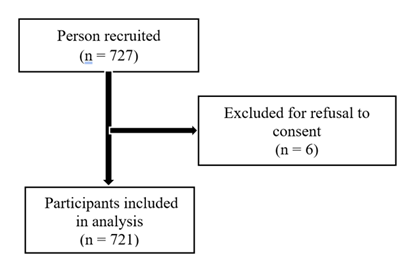
Figure 1: Flow diagram of recruitment.
Sociodemographic characteristics: The population in our study was predominantly female (54%). Furthermore, 32 were returnees and 17% of respondents were internally displaced persons. Nearly half of respondents (46%) had attained primary school level. In contrast, 30% had never attended school. The age groups were broadly represented and balanced, with proportions ranging from 21% for 36-45-year-olds, 25% for 18-25 year olds, 27% for those aged 46 and over, and 28% for 26-35 year olds. In terms of place of residence, 56% of participants lived in urban areas. Finally, from a professional standpoint, the subjects' main activity was agriculture (62%) (Table 1).
Table 1: Sociodemographic characteristics of respondents
|
Characteristics |
Unweighted number |
Weighted number |
% |
|
Gender |
|||
|
Female |
389 |
223293 |
54 |
|
Male |
332 |
190303 |
46 |
|
Matrimonial status |
|||
|
Cohabiting /married |
206 |
115480 |
28 |
|
Single /widowed |
515 |
298116 |
72 |
|
Residence status |
|||
|
Displaced |
114 |
68926 |
17 |
|
Resident |
358 |
210908 |
51 |
|
Returned |
249 |
133762 |
32 |
|
Level of education |
|||
|
None |
215 |
123432 |
29.8 |
|
Primary |
351 |
191503 |
46.3 |
|
Secondary |
149 |
95944 |
23.2 |
|
Academic |
6 |
2717 |
0.7 |
|
Age group (years) |
|||
|
[18 - 25] |
171 |
101538 |
25 |
|
[26 - 35] |
203 |
113812 |
28 |
|
[36 - 45] |
163 |
87774 |
21 |
|
[46 +] |
184 |
110472 |
27 |
|
Place of residence |
|||
|
Rural |
360 |
181533 |
44,0 |
|
Urban |
361 |
232063 |
56,0 |
|
Occupation |
|||
|
Farmer |
426 |
256389 |
62 |
|
Mining artisan |
27 |
14729 |
3.6 |
|
Small traders/other |
118 |
65133 |
15.7 |
|
Pupil/Student |
48 |
28829 |
7 |
|
Teacher |
11 |
6186 |
1.5 |
|
Unemployed |
91 |
42330 |
10.2 |
Mental disorders prevalence: Among the 721 participants included in the study, 439 had a likely mental disorder, representing an estimated prevalence of 59%, with 95% CI ranging from 54.2% to 62.7%. These data are detailed in Table 2.
Table 2: Prevalence of mental disorders, substance use, and violence experienced among participants.
|
Characteristics |
Unweighted number |
Weighted number |
% |
|
Mental disorder |
|||
|
Likely case |
282 |
171 583 |
41 |
|
Unlikely case |
439 |
242 013 |
59 |
|
Alcohol consumption |
|||
|
Never consumed |
469 |
278874 |
67.4 |
|
Excessive consumption |
171 |
92726 |
22.4 |
|
Moderate consumption |
81 |
41996 |
10.2 |
|
Sexual violence |
|||
|
No |
671 |
379 531 |
92 |
|
Yes |
50 |
34 065 |
8.2 |
|
Physical violence |
|||
|
No |
181 |
89 706 |
22 |
|
Yes |
540 |
323 890 |
78 |
|
Psychological violence |
|||
|
No |
65 |
31 635 |
7.6 |
|
Yes |
656 |
381 961 |
92 |
Consumption of psychoactive substances and concept of violence experienced: A total of 186 participants (23%) reported smoking regularly. With regard to alcohol consumption, a relative majority of 469 subjects (67%) reported never having consumed alcohol. Moderate consumption was reported by 81 participants (11%). Excessive consumption was mentioned by 171 participants (22%). Details are presented in Table 2. Psychological violence was the most frequently reported form of abuse, with 656 participants (91%) reporting exposure to it. Physical abuse was reported by 540 participants (75%). Conversely, sexual abuse was the least frequently reported form, with a prevalence of 8.2% (50 out of 721). All data relating to the forms of abuse suffered are shown in Table 2.
Use of mental healthcare services: Of the 439 people with a probable mental disorder, 38 (8.7%) sought mental health care. Those who sought informal care were more highly represented, with 44.7% (17/38) of people with a mental disorder seeking mental health care. Family is the most common source of informal support. Of the 26 individuals who sought informal support, 21 (80.8%) turned to their family. The other most common sources of support after family are friends and religious networks, with respective proportions of 57.7% and 50% (Table 3).
Table 3: Frequency of informal recourse 26 people surveyed with a mental disorder who sought informal care
|
Informal support type |
Weighted number |
Unweighted number |
% |
|
Family |
|||
|
Yes |
7210 |
21 |
80.8 |
|
No |
4207 |
5 |
19.2 |
|
Friends |
|||
|
Yes |
3982 |
15 |
57.7 |
|
No |
7435 |
11 |
42,3 |
|
Direct colleagues |
|||
|
Yes |
2187 |
5 |
19,2 |
|
No |
9231 |
21 |
80.8 |
|
Colleagues from another institution |
|||
|
Yes |
153 |
1 |
3.9 |
|
No |
11265 |
25 |
96.2 |
|
Religious network |
|||
|
Yes |
7003 |
13 |
50 |
|
No |
4415 |
13 |
50 |
|
Other |
|||
|
Yes |
2412 |
2 |
7.7 |
|
No |
9006 |
24 |
92.3 |
Informal recourse for persons with likely mental disorders to psychosocial support workers: Nurses are the main professionals consulted in cases of mental health issues. Of the 21 people who reported seeking informal help, 10 (47.6%) consulted a nurse. Nurses were followed by psychologists, who were consulted by 5 people (23.8%). None of the participants mentioned consulting a psychiatrist in our context. These data are detailed in Table 4.
Table 4: Frequency of formal recourse by 21 individuals surveyed who have a mental disorder and have formally sought care
|
Formal support type |
Weighted number |
Unweighted number |
% |
|
Psychiatrists |
|||
|
Yes |
0 |
0 |
0 |
|
No |
14771 |
21 |
100 |
|
Psychologists |
|||
|
Yes |
3955 |
5 |
23.8 |
|
No |
10816 |
16 |
76.2 |
|
Peers trained in psychological care |
|||
|
Yes |
1940 |
4 |
19 |
|
No |
12831 |
17 |
81 |
|
General practitioners |
|||
|
Yes |
2348 |
4 |
19 |
|
No |
12423 |
17 |
81 |
|
Nurses |
|||
|
Yes |
7665 |
10 |
47.6 |
|
No |
7106 |
11 |
52.4 |
|
Other |
|||
|
Yes |
1061 |
2 |
9.5 |
|
No |
13709 |
19 |
90.5 |
Association between sociodemographic characteristics and presence of mental disorder: The bivariate analysis showed statistically significant associations between the presence of a probable mental disorder and certain sociodemographic characteristics of the participants (Table 5). About marital status, individuals living alone had a higher proportion of mental disorders (60%) compared to those in cohabiting relationships (14%) and married individuals (9.6%) (p = 0.056). Permanent residents were significantly more affected than displaced persons or returnees, with a proportion of 57% (p = 0.0009). Educational attainment was also associated with the presence of a mental disorder. Participants who had only completed primary education were more affected (45%), while those with a university education had the lowest proportion (less than 1%) (p = 0.009). Age appears to play a role, with a higher proportion of disorders observed in subjects aged 46 and over (32%, p = 0.0112), followed by adults aged 36 to 45 (52%, p = 0.0204). Among young people (aged 18-35), the 26-35 age group was more affected (27%) than the 18-25 age group (20%) (p = 0.0112). A significant difference was also observed based on place of residence: participants living in rural areas had a higher proportion of mental disorders (53%) compared to those living in urban areas (p < 0.0001). Finally, most individuals with probable mental disorders were employed in agriculture (68%), suggesting a link between occupation and mental health (p = 0.0017). Furthermore, no association was observed between the gender of participants and the presence of mental disorders.
Table 5: Association between sociodemographic characteristics and presence of mental disorder
|
Characteristics |
Likely case |
Unlikely case |
|||||
|
Unweighted number (n= 439) |
Weighted number (n = 242 013) |
% |
Unweighted number (n = 282) |
Weighted number (n = 171 583) |
% |
p value |
|
|
Sex |
|||||||
|
Female |
231 |
122 886 |
51 |
158 |
100 407 |
58.5 |
0.082 |
|
Male |
208 |
119 123 |
44 |
124 |
71 176 |
41.5 |
|
|
Matrimonial status |
|||||||
|
Singles/widowed |
313 |
73583 |
30.5 |
202 |
129688 |
75.6 |
0.005 |
|
Cohabiting/married |
126 |
168430 |
69.5 |
80 |
41895 |
24.4 |
|
|
Residence status |
|||||||
|
Displaced |
55 |
30 664 |
12.7 |
59 |
38 263 |
22.3 |
0.0009 |
|
Resident |
233 |
138 510 |
57.2 |
125 |
72 398 |
42.2 |
|
|
Returned |
151 |
72 839 |
30.1 |
98 |
60 922 |
35.5 |
|
|
Level of education |
|||||||
|
None |
138 |
84 171 |
35 |
77 |
39 261 |
22.9 |
0.009 |
|
Primary |
205 |
109 099 |
45 |
146 |
82 405 |
48 |
|
|
Secondary |
93 |
47 499 |
20 |
56 |
48 444 |
27.7 |
|
|
Academic |
3 |
1 244 |
0.5 |
3 |
1 473 |
1.4 |
|
|
Age group (years |
|||||||
|
[18 - 25] |
83 |
49 478 |
20.4 |
88 |
52 060 |
30.3 |
0.011 |
|
[26 - 35] |
122 |
65 899 |
27.2 |
81 |
47 913 |
27.9 |
|
|
[36 - 45] |
97 |
50 091 |
20.7 |
66 |
37 683 |
22 |
|
|
[46 +] |
137 |
76 545 |
31.7 |
47 |
33 927 |
19.8 |
|
|
Place of residence |
|||||||
|
Rural |
232 |
127 495 |
53 |
128 |
54 038 |
31.5 |
<0.001 |
|
Urban |
207 |
114 517 |
47 |
154 |
117 545 |
68.5 |
|
|
Profession |
|||||||
|
Farmer |
274 |
164 739 |
68 |
152 |
91 650 |
53 |
0.001 |
|
Mining artisan |
17 |
8 709 |
3.6 |
10 |
6 020 |
3.5 |
|
|
Retailers /other |
65 |
31 409 |
13 |
53 |
33725 |
19.7 |
|
|
Pupil/student |
16 |
9 360 |
3.9 |
32 |
19 469 |
11 |
|
|
Teacher |
6 |
2 788 |
1.2 |
5 |
3 397 |
2 |
|
|
Unemployed |
61 |
25 008 |
10.4 |
30 |
17322 |
10.8 |
|
Association between psychoactive substance use, violence experienced, and the presence of a mental disorder: Data analysis revealed a significant association between tobacco use and mental disorders. Likely cases of mental disorder were indeed more frequent among tobacco users (78%, p = 0.0003) than among non-users. However, no statistically significant association was observed between alcohol consumption and the presence of a mental disorder. About associations between types of violence experienced and the presence of mental disorders, no significant associations were found (Table 6). However, a tendency towards higher prevalence of mental disorders was observed among those who had experienced physical violence (74%) and psychological violence (93%) compared to those who had not. Conversely, individuals who reported having experienced sexual violence appeared to be less affected by mental disorders than those who had not experienced such violence, with a proportion of 6.5%.
Table 6: Association between psychoactive substance use, violence experienced, and presence of a mental disorder
|
Characteristic |
Likely case |
Unlikely case |
|||||
|
Psychoactive substance use |
Unweighted number |
Weighted number |
% |
Unweighted number |
Weighted number |
% |
p value |
|
Tobacco consumption |
|||||||
|
No |
136 |
68 215 |
28.2 |
50 |
26 388 |
15.4 |
0.0003 |
|
Yes |
303 |
173 798 |
71.8 |
232 |
145 195 |
84.6 |
|
|
Alcohol consumption |
|||||||
|
Never consumed |
279 |
162 428 |
67.1 |
190 |
116 446 |
67.9 |
|
|
Excessive consommation |
111 |
55 810 |
23.1 |
60 |
36 916 |
21.5 |
0.891 |
|
Moderate consommation |
49 |
23 775 |
9.8 |
32 |
18 221 |
10.6 |
|
|
Violence experienced |
Unweighted number |
Weighted number |
% |
Unweighted number |
Weighted number |
% |
p value |
|
Sexual violence |
|||||||
|
No |
404 |
6 694 |
91 |
267 |
4 989 |
93 |
0.336 |
|
Yes |
35 |
658 |
8.9 |
15 |
349 |
6.5 |
|
|
Physical violence |
|||||||
|
No |
101 |
1 402 |
19 |
80 |
1 366 |
26 |
0.066 |
|
Yes |
338 |
5 950 |
81 |
202 |
3 972 |
74 |
|
|
Psychological violence |
|||||||
|
No |
43 |
622 |
8.5 |
22 |
388 |
7.3 |
0.613 |
|
Yes |
396 |
6 730 |
92 |
260 |
4 950 |
93 |
|
Analysis of factors associated with mental disorders: Multivariate analysis adjusted for independent variables (sexual abuse, physical abuse, psychological abuse, age, gender, residency status, occupation, tobacco and alcohol use) reveals several factors significantly associated with the onset of a probable mental disorder.
People who have experienced physical violence are at significantly higher risk of mental disorder compared to those who have not, with an OR = 1.69 [95% CI; 1.08-2.64]. In terms of gender, men are at higher risk of developing a mental disorder than women (OR = 1.64 [95% CI: 1.83-2.37]). Residency status was also associated with mental disorders: permanent residents (OR = 2.7; [95% CI: 1.57-4.24]) and returnees (OR = 1.83; [95% CI: 1.14-2.96]) had an increased risk compared to displaced persons. Tobacco use appears to be positively associated with mental disorders. Smokers have a higher risk than non-smokers (OR = 1.94 [95% CI; 1.27-2.99]). Age is also a determining factor: people aged 46 and over had a significantly higher risk of mental disorder than those aged 18 to 25 (adjusted OR = 2.27; [95% CI; 1.61-4.56]). Finally, analysis based on socio-professional category indicates an increased risk of mental disorder among unemployed people (OR = 2.68; 1.11-6.65), farmers (OR = 2.19; 95% CI: 1.08-4.57]) and teachers (OR = 3.25 [95% CI: 1.25-8.83]) compared to pupils/students. These data are detailed in Table 7.
Table 7: Analysis of main factors associated with mental disorders
|
Characteristics |
ORa1 |
CI95%1 |
p-value |
|
Sexual violence |
|||
|
No |
1 |
||
|
Yes |
1.58 |
[0.82 - 3.17] |
0.2 |
|
Physical violence |
|||
|
No |
1 |
||
|
Yes |
1.69 |
[1.08 - 2.64] |
0.021 |
|
Psychological violence |
|||
|
No |
1 |
||
|
Yes |
0.84 |
[0.46 - 1.49] |
0.6 |
|
Sex |
|||
|
Female |
1 |
||
|
Male |
1.64 |
[1.14 - 2.37] |
0.009 |
|
Residence status |
|||
|
Displaced |
1 |
||
|
Resident |
2.57 |
[1.57 - 4.24] |
<0.001 |
|
Retourned |
1.83 |
[1.14 - 2.96] |
0.013 |
|
Tobacco consumption |
|||
|
No |
1 |
||
|
Yes |
1.94 |
[1.27 - 2.99] |
0.002 |
|
Age group (years) |
|||
|
[18 - 25] |
1 |
||
|
[26 - 35] |
1.43 |
[0.90 - 2.29] |
0.13 |
|
[36 - 45] |
1.28 |
[0.78 - 2.09] |
0.3 |
|
[46 +] |
2.7 |
[1.61 - 4.56] |
<0.001 |
|
Alcohol consumption |
|||
|
Never consumed |
1 |
||
|
Moderate consumption |
0.93 |
[0.55 - 1.58] |
0.8 |
|
Excessive consumption |
1.04 |
[0.68 - 1.59] |
0.9 |
|
Profession |
|||
|
Pupils/Students |
1 |
||
|
Unemployed |
2.68 |
[1.11 - 6.65] |
0.03 |
|
Farms |
2.19 |
[1.08 - 4.57] |
0.033 |
|
Mining artisans |
1.52 |
[0.51 - 4.68] |
0.5 |
|
Retailers |
1.29 |
[0.57 - 2.99] |
0.05 |
|
Teachers |
3.25 |
[1.25 - 8.83] |
0.018 |
1= ORa =Adjusted Odds Ratio, CI = confidence interval
Mental health needs at health facilities: A total of 24 health workers responsible for health facilities were interviewed as part of this study. Among them, nurses were the most represented (37.5%). In terms of experience in the field of mental health, 15 workers (66.7%) reported having less than two years of experience, while 5 workers (20.8%) had no experience at all. In terms of material resources, 22 out of 24 health facilities (91.7%) did not have any specific equipment for psychosocial support. In terms of therapeutic practices, the majority of health facilities (66.6%) offered individual therapy. However, only three health facilities (12.5%) offered group therapy, and two health facilities (8.3%) practiced crisis therapy. Depression, epilepsy, post-traumatic stress disorder, psychosis, and excessive use of psychoactive substances were the mental health problems most frequently reported by health workers. In addition, several shortcomings were identified, including the unavailability of mental health services, insufficient medication and equipment, and a lack of staff training and motivation. Finally, participants mentioned community awareness of mental health, the availability of qualified staff, and home visits as the main factors that could facilitate the detection and management of mental disorders.
II- Qualitative component
Community perceptions of the consequences of armed conflict and the need for mental health services
Data collected from communities affected by conflict in the Bouar and Bria health districts in the Central African Republic revealed a consensus on the impact of armed conflict on the mental health of affected populations. Respondents unanimously identified four major forms of violence perpetrated by armed groups that are likely to affect mental health: (i) Destruction or loss of property; (ii) murder and assassination; (iii) witnessing the murder of a relative or third party; and (iv) sexual violence, including forced marriage.
Analysis of our data has shown that these traumatic experiences are associated with various psychological and behavioural manifestations that constitute mental health conditions. These consequences include:
- Persistent hypervigilance and nervousness, exacerbated by the sight of weapons or military uniforms, or by sudden noises.
- suicidal thoughts linked to deep despair.
- voluntary social isolation, involving strategies to avoid social situations and places that evoke traumatic memories.
- a loss of sense of social usefulness and general disinterest in life.
- sleep disturbances, including recurring nightmares and insomnia.
These symptoms are consistent with a diagnosis of severe depression or post-traumatic stress disorder (PTSD). This reality is illustrated by a 69-year-old participant living in the Bria health district, who state: "These prolonged conflicts have led to food shortages and mental health issues. [...] Many people have lost their minds.”
In response to this psychological distress, two main approaches to seeking support were identified: (i) seeking medical support within formal health facilities such as health posts, health centres or hospitals; (ii) seeking spiritual support in churches and mosques. However, health facilities in the Bria and Bouar health districts are lacking adequate equipment and qualified staff. Most patients were referred to traditional health facilities for mental healthcare. However, in the Bria district, the International Medical Corps' (IMC) mental health intervention was ad hoc, and its staff were not systematically trained in psychiatry or clinical psychology.
These findings highlight the limited and often inadequate provision of psychological care. There is an urgent need to establish and reinforce mental health services in areas affected by armed conflict in the Central African Republic (CAR).
Capacities and limitations of existing healthcare systems in terms of mental health and psychosocial support
Analysis of the data collected in the field shows that several structural and functional shortcomings negatively impact the management of mental health disorders in the two targeted districts. These shortcomings can be categorized into three main issues.
Limited access to specialist healthcare facilities: Although formal health facilities, including health posts, health centres and regional hospitals, are the main referral structures for cases of mental disorder, their capacity to provide adequate care remains limited. Health workers interviewed highlighted a lack of training in mental health. A health centre manager in Bria testified: “Our health centre lacks suitable facilities and qualified staff trained in mental health. Patients are systematically referred to the regional hospital in Bria. Currently, we are unable to provide care for this type of patient” (Patrick, 37, Bria).
Furthermore, access to specialized care depends heavily on a family's financial situation. This results in vulnerable populations having unequal access to care. Even in the absence of any real healthcare provision, the cost of transport and care is also a major obstacle
Insufficient drugs and specific equipment: All healthcare facilities in the study area experience regular shortages of psychotropic drugs and lack the necessary equipment for providing psychosocial support. This results in inadequate care, which often amounts to hypothetical referrals to under-equipped referral facilities. As one health worker testified: 'As one health worker testified: “Our facilities are cramped and poorly equipped, and there is a severe shortage of qualified staff to treat mental health conditions. In the absence of a dedicated service, patients with behavioural disorders are admitted to the same wards as other patients, which can sometimes lead to frustration and aggression.” (Sceva, 27).
Shortage of mental health professionals: One of the main challenges currently facing the country is the shortage of qualified human resources. There are no specialist services or psychiatric or psychological units at any level of care. The lack of dedicated infrastructure also makes it difficult to recruit and retain qualified personnel in this field.
In response to this situation, a few ad hoc initiatives have been launched by international non-governmental organizations. For instance, the International Medical Corps (IMC) has organized basic mental health training sessions for healthcare workers in Bria. This initiative was reported by a healthcare worker: “IMC has identified and trained four health assistants, including two state-registered nurses, a supervisor, a medicine dispenser and an awareness-raiser. They provide mental healthcare to a population of 25,000 people, three-quarters of whom have experienced psychological trauma.” (Sceva, 27). These observations highlight the inadequacy of the mental health system in meeting needs in a post-conflict context and emphasize the urgent need to strengthen institutional and community capacities in this area.
Discussion
The aim of the study was to estimate the prevalence of mental disorders in conflict-affected areas in CAR and to identify associated factors. Another objective was to identify mental health needs to inform national policies and interventions in this area.
Prevalence of mental disorders: The prevalence of mental disorders in our study was 59% (54.2-62.7). This rate is higher than that in CAR in 2021, estimated at 14.8% (10). However, some authors have reported a lower prevalence. Houssen et al. found a prevalence of 45% (95% CI: 42.6-47.0) in 2017 among adults in the Kashmir Valley, India, a region plagued by ongoing political instability, marked by continuous conflict and heavy militarization (11). Although these authors also conducted a cross-sectional study in households, this difference may be since the population in their study was younger than ours. Various other studies show that young subjects are less likely to develop mental disorders than adults (12), which would underestimate the prevalence of mental disorders in the study by Houssen et al. (11). A low prevalence, compared to that of our study, is also reported by Fan et al. among adults in Burma in 2024, following the three crises that the country has experienced, including mass conflict, an uncontrolled COVID-19 epidemic and economic collapse: it is estimated at 34.9% (95% CI: [32.0-37.7]) (13). This low prevalence could be partly explained by the fact that the authors used different instruments to measure mental disorders than we did. These were the PCL-C, the Patient Health Questionnaire-2 (PHQ-2) and the Generalized Anxiety Disorder-2 (GAD-2). In addition, the authors selected subjects at random from a telephone directory. People who did not have a telephone number and who might be in poor mental health due to their low standard of living were excluded from the sample. This situation could lead to selection bias and thus underestimate the prevalence estimate.
However, in Ethiopia, Makango et al. found a prevalence of post-traumatic stress disorder of 67.5% (95% CI: [63-72]) in 2023 following the conflicts and wars that the country experienced in 2021 (14). This prevalence is higher than that found in our study, as the authors surveyed only displaced populations. Displacement status would expose them to a higher risk of this disorder, and displaced persons would also be more exposed to the trauma associated with the conflict that forced them to leave their homes. This observation is also noted in a study conducted by Manafe et al. in Mozambique, which recorded a prevalence of 73.3% of post-traumatic stress disorder in 2024 among internally displaced populations who survived the armed conflicts in Cabo Delgado, northern Mozambique, in 2023 (15). Other authors have also estimated a higher prevalence than ours in Nigeria, with 73.9% of people suffering from post-traumatic stress disorder in 2024 in communities affected by the conflict in the Odukpani local government area of Cross River State, Nigeria (16). The high prevalence observed in their study may be linked to the fact that these authors used a different tool to measure mental disorders, the Harvard Trauma Questionnaire (HTQ-5 DSM-5), which is more sensitive than the one used in our study. A higher prevalence was also reported in 2023 by Salad et al. following the conflict that has been raging in Somalia for 30 years. It was estimated at 78.1% (2). This prevalence, which is higher than that found in our study, may be since the authors used a different tool to measure mental disorder, one that is more sensitive than ours: the Mini International Neuropsychiatric Interview (MINI). Even if our tools had comparable sensitivity, the fact that the authors adapted the questionnaire to the Somali context could lead to measurement bias and therefore to an overestimation of prevalence in Somalia (2).
Factors associated with mental disorders: This study identified factors associated with mental disorders. The risk of mental disorders is higher among individuals who have experienced physical violence than among those who have not: ORa = 1.69 [1.08-2.64]. These findings corroborate those of other authors. In 2023, Makango et al. highlighted a high risk of post-traumatic stress disorder among people who experienced trauma during displacement because of the conflicts and wars that Ethiopia experienced in 2021: ORa = 6.00 [95% CI: 2.75 - 13.10] (14).
Our study also revealed that men had an increased risk of mental disorder compared to women: ORa = 1.64 [1.14-2.37]. This result could be explained by the fact that most heads of households are men, and they are therefore more likely to develop a disorder related to the stress of family responsibilities. This result corroborates that of Salad et al. in Somalia in 2023, who also found that men were at greater risk of mental disorders than women after the conflict that has ravaged the country for 30 years: ORa = 1.74 [1.25-2.42] (2). However, studies showing high risk among women have been published in recent years. In 2024, Manafe et al. highlighted a high risk of post-traumatic stress disorder among internally displaced women who survived the armed conflicts in Cabo Delgado, northern Mozambique, in 2023: ORa = 2.30 [1.50-3.51] (15). This high risk among women is thought to be linked to the fact that, in Mozambique, the proportion of women in positions of responsibility has increased, with women currently accounting for 39.2% of Parliament, which is the 5th highest rate in Africa and the 12th highest in the world (17). This situation would increase women's responsibilities, in addition to those of their children, which could expose them to greater stress and therefore mental disorder. This finding is consistent with that of Ambesaw et al., who in 2022 also found a high risk of post-traumatic stress disorder among women living in the city of Dessie, Ethiopia, which experienced prolonged armed conflict due to inter-community conflict in 2021: ORa = 1.63 [1.10-2.44] (18).
Our study also showed that the risk of mental disorder is high among returnees and residents, with ORa values of 1.83 [1.14-2.96] and 2.57 [1.57-4.24], respectively. This may be due, on the one hand, to the fact that the family burden on residents increases with the arrival of displaced persons and, on the other hand, to the fact that returnees, having lost their property, are more concerned about their social reintegration. The destruction of property was also highlighted because of the conflict during the interviews. These situations would expose returnees and residents to a greater risk of mental disorder.
Our study also showed that people aged 46 and over were at an increased risk of mental disorder compared to those aged 18 to 25 (ORa = 2.7 [1.61; 4.56]). This finding is consistent with the results of many other studies(11,12,19). Following a cross-sectional survey conducted seven years after the end of the conflict in northern Uganda, Mugisha et al. showed that subjects aged 45 and over had an increased risk of mental disorder compared to those aged 18 to 24: ORa = 3.3 [1.76; 3.09] (19). In 2017, Houssen et al. highlighted a high risk of post-traumatic stress disorder (PTSD) among people aged 55 and over compared to those aged 18 to 34 in the Kashmir Valley in India. This region is plagued by ongoing political instability, marked by continuous conflict and heavy militarization (12). This could be because adults are often heads of households and are frequently concerned about the well-being of their loved ones, making them vulnerable to mental health issues.
Our study also revealed a high prevalence of mental health disorders among unemployed individuals, with an OR of 2.68 (1.11-6.65). Armed conflict could exacerbate the difficulties faced by the unemployed, particularly given that they already struggle to provide for their families. This would make them more vulnerable to mental health issues. A similar finding was reported by Makango et al. in Ethiopia in 2023, following the conflicts and wars experienced by the country in 2021, with an ORa of 2.09 (1.24-3.54) (14). Salad et al. also made the same observation in Somalia in 2023, following 30 years of conflict in the country. These authors highlighted a high risk among unemployed people, with an ORa of 1.90 [1.11-3.06] (2). Furthermore, some risk factors identified in our study were not found in the published studies available to us. The high risk of mental disorder among smokers (ORa = 1.94 [1.27; 2.99]) highlighted in our study could be explained by the fact that psychoactive substance use is a risk factor for mental disorder. The high risk among farmers (ORa = 2.19 [1.08-4.57]) is thought to be due to two factors: firstly, insecurity preventing them from accessing their fields, and secondly, the risk of their fields being destroyed by armed groups. It is this situation that explains their vulnerability to mental disorders.
Mental health needs: Our study revealed a shortage of human resources, with around a third of medical staff lacking training in mental health. This finding was confirmed by interviews conducted as part of the study, which revealed that NGOs provided medication as support, but their staff were not always qualified or specialized. The NGO International Medical Corps (IMC) came to the same conclusion in its rapid assessment report on the mental health situation in CAR in 2014. This report revealed a shortage of mental health professionals, as well as a lack of capacity and knowledge in this field in the country (20). This would explain why mental health services are inadequate, as they are only provided in 66.6% of health facilities, despite mental health being part of the minimum package of activities offered by the country's health facilities. Health facilities without the capacity to treat patients with mental health conditions must send them to treatment facilities often far from their place of residence, requiring additional financial and logistical resources. This situation disadvantages the most disadvantaged patients in terms of access to care. This is evident from the interviews conducted as part of our study, which highlighted financial constraints as a limiting factor in access to care. Apart from insufficient human resources, the fact that NGOs provide medicines to FOSA for health care is evidence of a shortage of medicines in health facilities. This is highlighted by Castro in his rapid assessment report on the mental health situation in CAR in 2014, in which he states that the availability of medicines and medical supplies for the treatment of mental health problems is extremely limited (20).
Post-traumatic stress disorder and depression are the main mental health problems identified in our study, after cross-referencing qualitative and quantitative data. This result corroborates that of several authors (21,22). Indeed, international literature repeatedly highlights the extent of these disorders in crisis contexts. A systematic review and meta-analysis by Charlson et al. in 2019, using data from 129 studies conducted in 39 countries, showed that 22% of people who had experienced war or other conflict were likely to develop disorders such as depression, anxiety, post-traumatic stress disorder, bipolar disorder or schizophrenia within the following decade (23).
Limitations of Study
This study has several limitations. Due to its cross-sectional design, it does not allow for inferences about causal relationships between the associated factors and mental disorders (24). The use of the SRQ-20 tool, although validated by several authors in the African context (25,26), is based on self-reporting, exposing it to social desirability bias and to possible under- or overestimation of symptoms. The retrospective collection of traumatic events may also have introduced a memory bias (27). Finally, the exclusion of displaced persons outside households and the small size of the qualitative sample (corpus) may limit the representativeness and transferability of the results. Despite these limitations, this study has the merit of providing empirical data on the extent of psychological distress and mental trauma related to the conflict in CAR, with a particular focus on personal experiences of conflict events. These findings will guide the development of appropriate responses to this issue. They will also enable the Department of Health and its partners to design integrated programmes offering effective treatment for traumatized communities and will contribute to the sustainability of social cohesion and peacebuilding efforts.
Conclusion
In CAR, conflicts have significantly increased the prevalence of mental disorders, particularly depression and post-traumatic stress disorder, affecting certain vulnerable groups. The lack of qualified human resources and equipment is hindering an adequate response. It appears crucial and urgent to consider capacity building to reduce the impact on mental health in the country.
References
- Central African Republic: Situation Report, 5 Dec 2024 | OCHA (2024).
- Salad AM, Malik SMMR, Ndithia JM, et al. Prevalence of mental disorders and psychological trauma among conflict- affected population in Somalia: a cross-sectional study. Front Public Health 11 (2023).
- Sharma M, Backman A, Vesga-Lopez O, et al. Trauma, risk, and resilience: A qualitative study of mental health in post-conflict Liberia. Transcult Psychiatry 61 (2024): 652-67.
- Wipfli H, Guy K, Kim A, et al. Adolescent mental health in post-conflict communities: results from a cross-sectional survey in Northern Uganda. Confl Health 17 (2023): 52.
- Scholte WF, Verduin F, van Lammeren A, et al. Psychometric properties and longitudinal validation of the self-reporting questionnaire (SRQ-20) in a Rwandan community setting: a validation study. BMC Med Res Methodol 11 (2011): 116.
- Rapport Périodique de Monitoring: Plan de Réponse Humanitaire de janvier à juin 2018 - République centrafricaine | OCHA (2018).
- Chao LW, Szrek H, Peltzer K, et al. A Comparison of EPI Sampling, Probability Sampling, and Compact Segment Sampling Methods for Micro and Small Enterprises. J Dev Econ 98 (2012): 94-107.
- Ewing JA. Detecting alcoholism. The CAGE questionnaire. JAMA. 1984 Oct 12;252(14):1905-7.
- Evaluations des besoins et ressources en santé mentale et soutien psychosocial. Vade-mecum pour les situations humanitaires (2025).
- Mental health [Internet]. [cited 2025 Sept 19].
- Housen T, Lenglet A, Ariti C, et al. Prevalence of anxiety, depression and post-traumatic stress disorder in the Kashmir Valley. BMJ Glob Health 2 (2017): e000419.
- Tutlam NT, Chang JJ, Byansi W, et al. War-Affected South Sudanese in Settings of Preflight, Flight, and Resettlement: a Systematic Review and Meta-analysis of Trauma-Associated Mental Disorders. Glob Soc Welf Res Policy Pract 11 (2024): 193-210.
- Fan X, Ning K, Ma TS, et al. Post-traumatic stress, depression, and anxiety during the 2021 Myanmar conflict: a nationwide population-based survey. Lancet Reg Health Southeast Asia 26 (2024): 100396.
- Makango B, Alemu ZA, Solomon T, et al. Prevalence and factors associated with post-traumatic stress disorder among internally displaced people in camps at Debre Berhan, Amhara Region, Ethiopia: a cross-sectional study. BMC Psychiatry 23 (2023).
- Manafe N, Ismael-Mulungo H, Ponda F, et al. Prevalence and associated factors of common mental disorders among internally displaced people by armed conflict in Cabo Delgado, Mozambique: a cross-sectional community-based study. Front Public Health 12 (2024): 1371598.
- Awa TM, Ugbe UMJ, Onwusaka OC, et al. Correlates of post-traumatic stress disorder among adult residents of conflict-affected communities in Cross River State, Nigeria: a cross-sectional study. BMJ Open 14 (2024): e078851.
- Weltgesundheits organisation, editor. Réduire la mortalité maternelle: déclaration commune OMS/FNUAP/UNICEF/Banque Mondiale. Genève: Organisation Mondiale de la Santé (1999): 45.
- Anbesaw T, Zenebe Y, Asmamaw A, et al. Post-traumatic stress disorder and associated factors among people who experienced traumatic events in Dessie town, Ethiopia, 2022: A community based study. Front Psychiatry 13 (2022): 1026878.
- Mugisha J, Muyinda H, Malamba S, et al. Major depressive disorder seven years after the conflict in northern Uganda: Burden, risk factors and impact on outcomes (The Wayo-Nero Study). BMC Psychiatry 15 (2015).
- Rapid Mental Health Situational Analysis March, 2014 - Central African Republic | ReliefWeb [Internet]. (2014).
- SS, SJ, Rg A, AN, SD, FS, et al. Challenges in mental health and psychosocial care in conflict-affected low- and middle-income countries. Asian J Psychiatry. (2022): 67.
- Ryan GK, Bauer A, Endale T, et al. Lay-delivered talk therapies for adults affected by humanitarian crises in low- and middle-income countries. Confl Health 15 (2021): 30.
- Charlson F, van Ommeren M, Flaxman A, et al. New WHO prevalence estimates of mental disorders in conflict settings: a systematic review and meta-analysis. Lancet Lond Engl 394 (2019): 240-8.
- Levin KA. Study design III: Cross-sectional studies. Evid Based Dent 7 (2006): 24-5.
- Beusenberg M, Orley JH, Health WHOD of M. A User’s guide to the self reporting questionnaire (SRQ. 1994 Dec 31
- Harpham T, Reichenheim M, Oser R, Thomas E, Hamid N, Jaswal S, et al. Measuring mental health in a cost-effective manner. Health Policy Plan 18 (2003): 344-9.
- (PDF) Recall Bias can be a Threat to Retrospective and Prospective Research Designs. ResearchGate (2025).