Marianne J Middelveen1, Melissa C Fesler2, Raphael B Stricker2
1Atkins Veterinary Services, Calgary, AB, Canada.
2Union Square Medical Associates, San Francisco, CA, USA.
*Corresponding author: Raphael B Stricker, Union Square Medical Associates, San Francisco, CA, USA.
Received: 20 August 2026; Accepted: 26 August 2026; Published: 28 August 2026
Psychodermatology is a medical field that investigates the complex interplay between psychological factors and skin health. It encompasses skin conditions associated with mental health issues described in the psychiatric literature. Morgellons disease is a dermopathy defined by cutaneous fibers that are embedded in or firmly attached to the skin. The dermopathy is often included within the context of psychodermatology because many clinicians erroneously categorize it as a form of delusional infestation. This perspective attributes Morgellons fibers to self-implanted or environmental contaminants, leading clinicians to conclude that patients have false beliefs that fibers and foreign materials emerge from and infest their skin. The frequent reports of crawling or stinging sensations (formication) among individuals with Morgellons, which are sometimes associated with delusional infestation, reinforce this viewpoint among many practitioners. In this review, we explore the relationship between Morgellons disease and psychodermatology and examine the question of whether Morgellons disease is a delusional disorder, delving into the nature of patients’ beliefs about their symptoms and doctors’ beliefs about the illness. We review the criteria required to diagnose delusional disorders and the current treatment that Morgellons patients receive in the clinical setting. Unbiased, evidence-based care is the best practice when caring for a patient with Morgellons disease.
fortune journals articles
Background
Individuals with Morgellons disease exhibit authentic physical evidence of cutaneous fibers that are embedded in or firmly attached to their skin (Figures 1 and 2) [1]. Despite this physical evidence, patient beliefs about their skin condition can vary widely. Many patients accurately perceive their situation, free from distortions in judgment, bias, or prior conditioning, and do not hold false beliefs. For those who do possess misconceptions, these false beliefs are not necessarily delusional in nature. The false beliefs that some Morgellons patients have are mistaken beliefs—for instance, interpreting the filaments projecting from their skin as emerging worms, parasites, or other living organisms. These false beliefs are reasonable, given the strangeness of Morgellons filamentous lesions. Misconceptions are often reinforced when filaments move due to electrostatic or mechanical forces, leading to the erroneous conclusion that they are alive. When unusual filaments are accompanied by sensations such as crawling or stinging, it is understandable that these experiences might be misattributed to living organisms. Others may believe the fibers are fungal elements, which is logical given the visual similarity to hyphae [2].
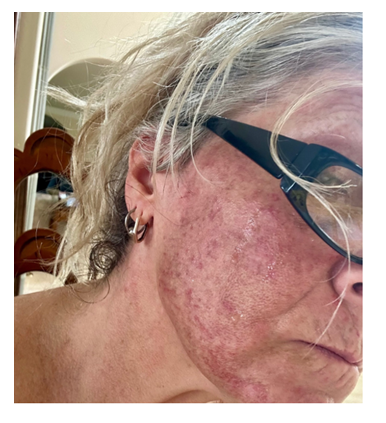
Figure 1: Facial lesions in a Morgellons patient prior to treatment.
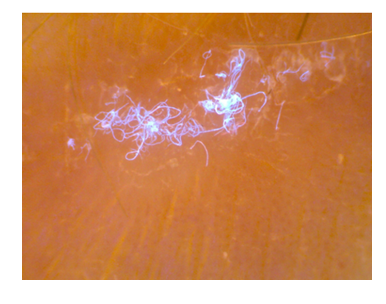
Figure 2: Fluorescent Morgellons fibers in skin. Magnification 100x.
Such mistaken beliefs usually arise from limited scientific understanding and lack of experience in accurately assessing the nature of cutaneous fibers and /or microorganisms. Some Morgellons patients develop overvalued ideas, such as believing that ordinary lint or fluff found lying superficially on their skin or around their house originates from their own body, or that a fruit fly that has landed on a lesion has emerged from their skin. Overvalued ideas are strongly held beliefs that are often irrational and persistent. They differ from delusions because they may possess an element of truth and are understandable in the context of a person's life or background [3]. In Morgellons patients, this type of conviction can lead to behaviors like compulsive cleaning, using insecticides, or collecting lint, with these ideas becoming so deeply ingrained that they begin to affect daily life. In a subset of Morgellons cases, patients may hold truly delusional beliefs—for example, that their bodies are infested with engineered nanotechnology, that they are victims of government experimentation gone awry, or dental amalgam has somehow migrated into their skin after a visit to the dentist. Importantly, the spectrum of beliefs among Morgellons patients is broad, ranging from accurate observations to mistaken beliefs, overvalued ideas, delusions and, in rare instances, bizarre and outlandish delusions.
Is Morgellons a Delusional Disorder?
Diagnosing delusional disorders is a nuanced process that demands careful clinical judgment and a deep understanding of psychiatric conditions [4]. While dermatologists may be the first to encounter patients presenting with skin-related complaints that could have a psychological component, the accurate identification and classification of delusional disorders should ideally be undertaken by professionals with specialized mental health training, such as psychiatrists. Psychiatrists possess the expertise to evaluate psychological phenomena and are equipped to consider the broader context of a patient’s mental health, comorbidities, and potential underlying causes. Patients deserve to receive a comprehensive and unbiased evaluation, thus reducing the risk of misdiagnosis and promoting appropriate, evidence-based care.
The Diagnostic and Statistical Manual of Mental Disorders (Fifth Edition, Text Revision (DSM-5-TR) published by the American Psychiatric Association in 2022, [5] is a fundamental handbook for mental health professionals, providing standardized criteria and codes for diagnosing mental health conditions. According to the DSM-5-TR, to be classified as Delusional Disorder a patient’s symptoms must meet the following criteria:
- A delusion or delusions must have been present at least 1 month or longer.
- The symptoms do not meet the criterion A for schizophrenia. Criterion A requires the presence of two or more of the following symptoms for at least one month (or less if treated): delusions, hallucinations, disorganized speech, grossly disorganized/catatonic behavior, or negative symptoms. At least one must be delusions, hallucinations, or disorganized speech.
- If hallucinations are present, they are not prominent and relate to the delusion - for example the sensation of being infested with insects is associated with delusions of being infested.
- Except for the effects caused by the delusion itself or its consequences, the individual's overall functioning remains largely unimpaired, and their behavior does not appear overtly bizarre or unusual.
- Any manic or major depressive episodes have been brief in relation to the duration of the delusional periods.
- The delusional disturbance must not be attributable to the physiological effects of a substance or another medical condition, nor should it be better explained by another mental disorder, such as body dysmorphic disorder or obsessive-compulsive disorder [5].
There is no official diagnosis of Delusional Infestation listed in DSM-5-TR [5]. The closest diagnosis is Delusional Disorder, Somatic Type. This is a subtype of delusional disorder in which the central theme revolves around bodily functions or sensations. Somatic delusions manifest in various forms, such as false beliefs that one emits a foul odor, is infested with insects on or under the skin, harbors internal parasites, or that certain parts of the body are dysfunctional [5].
Is a Delusion Present?
Accurately diagnosing delusional disorders begins with a clear understanding of what constitutes a delusional belief and a careful assessment of whether such a belief is truly present [4]. This initial step, while seemingly straightforward, is often far more complex in practice. Not every false or untrue belief qualifies as a delusion, even though all delusional beliefs are, by definition, false. The process of identifying a delusional belief requires clinical judgment and an objective, evidence-based approach.
“Delusions are fixed beliefs that are not amenable to change in light of conflicting evidence” [5]. Delusions are characterized by their fixed nature—they are held with unwavering conviction and persist despite clear, incontrovertible, contrary evidence. Importantly, delusional beliefs are not explained by a person's culture or intelligence [6]. Delusions are based on an inaccurate interpretation of external reality. They are beliefs that almost everyone else knows to be false [7]. Delusions are considered to be bizarre if they are plainly implausible, not understandable to same-culture peers, and not derived from ordinary life experiences [5]. Delusions are symptoms of medical, neurological, or mental disorders, and are most commonly seen in psychotic disorders, bipolar disorder, major depression with psychosis, delirium, and dementia [6]. Isolated delusions seldom occur; in most cases, individuals diagnosed with genuine delusional disorders exhibit multiple delusional beliefs rather than only experiencing delusional infestation [2,7].
To be classified as a delusion, a belief must be distinguished from:
- True observations: beliefs that are based on accurate, verifiable reality.
- Mistaken beliefs: beliefs that are false, but are based upon faulty reasoning, lack of information, or cognitive biases.
- Overvalued ideas: beliefs that are solitary, and abnormal, but are neither delusional nor obsessional in nature. They preoccupy sufferers to the extent of dominating their lives. Unlike delusions, which are inherently false, overvalued ideas may have a basis in reality, but are unreasonable, rigid, and sustained, and that are held with excessive emotional conviction. [8,9] Overvalued ideas are difficult to differentiate from delusions, but differentiating these conditions can depend upon the degree of conviction with which the belief is held - despite challenging the belief’s veracity with clear contradictory evidence [5].
When diagnosing delusional disorders, the clinician must objectively assess whether a patient’s beliefs are true and grounded in reality or represent false perceptions [4]. This demands an impartial, evidence-based approach that is free from preconceived notions or subjective bias.
When patients report the emergence of microscopic fibers or foreign materials from their skin, clinicians must approach these accounts with open-minded scrutiny rather than reflexive dismissal. The validity of such claims should be thoroughly investigated: affected areas ought to be examined under sufficient magnification to directly determine the presence of fibers. If fibers are found to be embedded in or firmly attached to the skin, this should be recognized as a genuine clinical observation, not a delusional belief. In order to complywith an appropriate standard of care, clinicians should always practice an objective assessment and acknowledge authentic findings. For many patients self-diagnosed with Morgellons disease, false beliefs—let alone delusional convictions—are not present. In cases that meet the key diagnostic criterion for Morgellons disease, namely the presence of microscopic filaments embedded in or projecting from skin lesions, the observation of these fibers constitutes a true clinical finding rather than a delusional belief [2,10]. These individuals do not believe they are infested by fibers; instead, they objectively note the presence of fibers on their skin without attributing them to infestation. This distinction is crucial, as it shows that patient observations are based on objective evidence rather than delusional conviction. Furthermore, some patients who have cutaneous fibers in their lesions may be unaware of their presence, yet when such fibers are identified by clinicians during dermatological examination or seen by pathologists in skin biopsies, these patients are frequently labeled as delusional solely because fibers are present. In the study conducted by Savely and Stricker (2010), only 77% of the 122 patients with confirmed subcutaneous fibers were aware of their presence. The authors suggested that this lack of awareness was likely due to patients not having access to magnification devices necessary to visualize fibers that may be microscopic in nature [11]. If a patient with documented cutaneous fibers holds a delusional belief about the skin condition, psychotropic or psychoactive medications may help address accompanying mental health symptoms. However, clinical care should prioritize investigating and treating the skin disorder and its underlying causes, rather than focusing solely on what a patient believes or observes.
Many clinicians encounter patients exhibiting symptoms consistent with Morgellons disease who present physical evidence—such as skin samples, arthropods, or photographs—often contained in matchboxes, Ziplock bags, or digital formats. Clinicians have labeled these patient-supplied specimens as the “matchbox sign,” “specimen sign,” and, more recently, the “digital pic sign.” Such actions are frequently interpreted as psychiatric symptoms, suggesting that patients with suspected delusional infestation are attempting to substantiate their perceived “infestation” [12-15]. Unfortunately, clinicians hesitate when examining specimens provided by patients, often rationalizing that doing so might reinforce what they view as the patient’s delusional beliefs [16]. A currently implemented, yet arguably manipulative, approach to expediently dismissing patient-supplied specimens is to evaluate them in office under a microscope and predictably not identify a parasite or insect [17].
Unfortunately, this method results in the homogenization of a diverse patient population. If Morgellons patients are among these patients, and if cutaneous Morgellons fibers are present, their significance is overlooked or dismissed, as they are not parasites but inanimate fibers composed of keratin and collagen. Thus examination of “extraneous fibers” risks invalidating genuine clinical findings and fails to recognize the complexity and heterogeneity of Morgellons patients. By prioritizing expediency and perceived patient satisfaction, clinicians may inadvertently undermine objective assessment and the opportunity for meaningful diagnosis and care.
It is important to note that “the matchbox sign” or the practice of supplying specimens to clinicians is not listed as a diagnostic criterion in the DSM-5-TR. Despite this, some clinicians use it as justification for diagnosing delusional disorder, somatic type. In reality, bringing specimens to a medical appointment is not pathognomonic of mental illness. Many patients act out of a genuine desire to assist their doctors in reaching an accurate diagnosis. This behavior can be exhibited by individuals seeking answers for unexplained symptoms, hoping to facilitate a faster and more precise evaluation. The specimens provided by patients may contain actual ectoparasites—such as ticks, lice, or mites—or skin samples with deeply embedded fibers. If examined objectively, these samples can offer valuable insights and contribute meaningfully to the diagnostic process. Similarly, folie à deux (“madness of two”) is described as a phenomenon in which delusional beliefs are “transmitted” from a primary, dominant, psychotic individual (“the inducer”) to one or more secondary individuals," ("acceptors," "recipients," or "induced") who are usually closely related, more passive and suggestible [18]. When more people are involved it is termed folie à trois (three), folie à quatre (four), etc. or when an entire family shares the belief, it is termed folie en famille [19]. This syndrome is not listed as a diagnostic criterion for delusional disorder in the DSM-5-TR, and for good reason. Beliefs are not spread like infectious diseases. Clinicians may struggle to distinguish between reality and psychosis, especially if they rely too heavily on the fact that a belief is shared. The mere sharing of a belief does not, in itself, make it delusional; crucially, a shared belief may be a shared true observation. If the belief is rooted in an actual, observable event or observation, it does not qualify as folie à deux.
Additionally, culturally normative beliefs or behaviors within a close group can be misinterpreted by clinicians as signs of delusional pathology. As a result, so-called shared psychotic disorders are sometimes incorrectly diagnosed when the shared belief is, in fact, based on reality or a cultural norm. The central challenge in diagnosing delusional disorders is to distinguish between a true observation and a false belief, regardless of how many people share that belief. If the shared belief is found to be false, it does not automatically qualify as a delusion. The clinician must then carefully determine whether it represents a mistaken belief, an overvalued idea, or a true delusion. Part of the reluctance some clinicians show toward examining patient-supplied specimens may stem not only from concerns about reinforcing perceived delusional beliefs, but perhaps also from the apprehension that, upon observing embedded cutaneous fibers themselves, the belief in Morgellons disease might be transmitted to them—they might by their own diagnostic criterion have a folie à deux.
It is an unwavering obligation of every clinician to honestly recognize and report clinical observations, regardless of personal bias or discomfort. Professional integrity demands that clinicians place objective evidence above subjective preference, ensuring that all findings—no matter how unexpected or unwelcome—are acknowledged with complete transparency and fidelity to the truth. These reflections prompt a critical question: when conflicting interpretations arise, and the clinician refuses to acknowledge what is seen, is it the clinician or the patient who holds the false belief?
Diagnosing Delusional Disorder - Meeting the Criteria
When evaluating the DSM-5-TR criteria for delusional disorder, several essential requirements must be objectively assessed. First, the delusional belief must persist for at least one month, [5] distinguishing the condition from transient or short-term psychotic reactions and confirming the delusion’s fixed and enduring nature. Second, schizophrenia must be ruled out as a diagnosis [5]. Although both schizophrenia and delusional disorder fall within the psychotic spectrum, they differ markedly in terms of symptom profile, severity, impact on daily functioning, and typical age of onset [20]. It is important to recognize that Morgellons disease is associated with Lyme disease and other tickborne infections; as a result, a small subset of Morgellons patients may appear to meet the diagnostic criteria for schizophrenia, since Lyme disease can produce severe neuropsychiatric symptoms, including psychosis, and in rare cases may mimic schizophrenia [21]. If hallucinations are present, they must be directly related to the delusional belief [5]. For example, formication—a tactile hallucination involving sensations of insects or bugs crawling on or under the skin—is frequently reported by individuals with Morgellons disease. However, the presence of formication alone does not necessarily indicate a delusional disorder. To meet the criteria for delusional disorder, the patient must firmly believe that these sensations are caused by an actual infestation; that is, the individual must be convinced that living organisms are causing the sensations by crawling on, biting, or stinging their skin. Merely experiencing these sensations, without holding a fixed belief in infestation, is not sufficient to consider it a symptom of delusional disorder.
To meet the diagnostic criteria for delusional disorder, the DSM-5-TR also specifies that, apart from the direct effects of the delusion or its consequences, the individual's overall functioning should remain largely unimpaired. Outside of the delusional belief itself, the person’s daily life, social interactions, and ability to perform routine tasks are not significantly disrupted. Additionally, their behavior should not appear overtly bizarre or unusual to others, except in ways directly related to the delusion, and any manic or major depressive episodes must be brief compared to the duration of the delusional periods. When considering Morgellons disease, patient behavior can vary widely. Some individuals may function normally in all aspects of life, while others may exhibit behaviors that seem highly unusual or even bizarre, such as treating wounds with insecticides, compulsive cleaning, or even burning hair or lesions.
The impact of Morgellons disease on patients’ daily functioning and relationships can vary dramatically. Some individuals with Morgellons can maintain employment, engage in social activities, and sustain healthy relationships, demonstrating that their overall functioning remains unimpaired despite their cutaneous symptoms. Others may experience significant disruptions in their ability to work or connect with others, sometimes due to the severity of their symptoms, the psychological distress associated with the condition, or the social stigma they encounter. [CEHF; Casey, personal communication] Some individuals may experience profound fatigue, neurological disturbances, or severe musculoskeletal pain that can be debilitating and significantly impair their daily functioning [11,22]. To meet the criteria for delusional disorder, manic or major depressive episodes must be brief in relation to the duration of delusional periods, otherwise the diagnoses would be considered better classified as mood disorders such as bipolar disorder or psychotic disorders.
Aside from the fact that many Morgellons patients are not delusional at all, these patients in some cases may have symptoms consistent with bipolar disorder, displaying manic or depressive moods that are long in duration. Plus, there is significant overlap between psychiatric disorders themselves that complicate diagnoses [23]. Furthermore, the DSM-5-TR requires that the
delusional disturbance must not be attributable to the physiological effects of a substance, nor should it be better explained by another mental disorder, such as body dysmorphic disorder or obsessive-compulsive disorder. Multiple coexisting or underlying psychiatric comorbidities including depression, anxiety, obsessive-compulsive disorder (OCD), mood disturbances, substance misuse, cognitive impairment, and even suicidal ideation are commonly reported among Morgellons sufferers [2,24]. Many patients experiencing distressing symptoms often turn to self-medication with prescription and over-the-counter drugs as well as other substances to find relief. [Casey, personal communication] In these situations, distinguishing whether symptoms arise from an underlying psychiatric condition, the result of an ingested substance, or because of the presence of an underlying medical condition such as an infection or Parkinson’s disease, can be exceedingly difficult.
It is important to note that the DSM-5-TR stipulates symptoms must not be attributable to another medical condition; by definition, this includes infections, vitamin deficiencies, and chronic illnesses such as Parkinson’s disease, multiple sclerosis, or diabetes [5]. The constellation of symptoms seen in Lyme disease, Morgellons disease, and various mental illnesses often intersect, creating diagnostic challenges [2]. In cases of Morgellons disease, many patients present with symptoms that could be mistaken for delusional disorders; however, if an underlying medical or infectious cause is identified then, according to the DSM-5-TR, the diagnosis of delusional disorder is inappropriate. If sensitive testing for Lyme disease, relapsing fever borreliosis, and other co-infecting tickborne diseases is performed, one or more of these infections will reliably be detected in Morgellons disease subjects [2,11,22,25-27]. Lyme disease complicated by related tickborne infections, relapsing fever borreliosis, and possibly other spirochetal infections are thought to be the underlying causes of Morgellons disease [10,22,25,26]. Lyme disease is associated with a number of mental disorders, including autism, schizophrenia, bipolar disorder, depressive disorders, and anxiety disorders, as well as suicidality and aggressive or violent behaviors. Lyme patients may experience mental illness due to the bacterium Borrelia burgdorferi directly infecting the central nervous system (neuroborreliosis), causing brain inflammation, immune system dysfunction, and, in some cases, triggering autoimmune responses that alter brain chemistry [21,23]. Morgellons disease patients must receive a proper evaluation for underlying conditions regardless of existing false beliefs or symptoms consistent with a delusional disorder to avoid misdiagnosis and mismanagement. Ruling out tickborne disease is necessary when evaluating a patient with Morgellons disease.
Recent MRI-based research has revealed that individuals diagnosed with delusions of infestation exhibit notable brain differences compared to healthy controls. For example, Eccles et al (2015) demonstrated that delusional infestation is associated with significant alterations in brain activity, particularly within the amygdala, insula, middle temporal lobe, and frontal cortices [28]. Complementing these findings, Hirjak et al. (2017) reported specific cortical differences in patients with delusional infestation compared to healthy individuals [29]. Additionally, Huber et al (2018) identified distinct neural patterns distinguishing somatic from non-somatic delusions.
Specifically, patients with delusional infestation showed reduced gray matter volume in the thalamic, striatal (putamen), insular, and medial prefrontal regions, pointing to possible dysfunction within somatosensory networks [30]. These observed brain changes may hypothetically be linked to spirochetal infection, either through direct invasion of neural tissue or via inflammatory responses in genetically predisposed individuals. Neuroborreliosis is known to cause white matter lesions and detectable areas of inflammation on brain scans [21].
Treatment
Accurate diagnosis and thorough identification of underlying causes are essential for achieving favorable outcomes in patient care [4]. Individuals labeled with delusional infestation are often prescribed antipsychotic medications, which can carry significant risks of adverse side effects, including symptoms of neuroleptic malignant syndrome (high fever, muscle rigidity, fast heart rate, and confusion), tardive dyskinesia (involuntary movements), QT prolongation/irregular heartbeats, severe fainting, blood clots, and an increased death risk in elderly patients with dementia. Although numerous published articles assert that antipsychotic drugs are effective in treating Morgellons disease, a careful review of the literature reveals that such claims are not well-supported [2]. Two systematic reviews examining the use of antipsychotics for delusional infestation found no conclusive evidence of treatment efficacy [31,32]. Furthermore, many case studies that have reported successful outcomes with antipsychotic therapy for Morgellons disease involved patients receiving additional interventions—such as wound care, antiseptics, antipruritic agents and antibiotics—making it impossible to determine which treatment was responsible for improvement. Many Morgellons patients have achieved complete remission with antibiotic therapy alone, without the use of antipsychotics [2,33; Stricker and Fesler, personal communication].
Off-label effects of antipsychotic medications—such as their antiparasitic and anti-pruritic properties—may partially explain the reported benefits in treating delusional infestation and Morgellons disease. However, the evidence supporting positive outcomes with antipsychotic therapy in these conditions remains limited, and is even less understood for Morgellons disease [2,34]. The only randomized, double-blind, placebo-controlled study investigating the antipsychotic drug pimozide for delusional infestation found that, among a small group of eleven patients, pimozide was more effective than placebo in controlling itching. However, it did not demonstrate efficacy in alleviating delusional beliefs of vermin infestation or in preventing skin excoriation [35,36]. Additional case series and studies reinforce the variability of patient responses: in one series, 33 patients with delusional parasitosis were prescribed pimozide, and of the 18 who took the drug, 11 reported improvement or remission of symptoms, while 7 experienced no change [36,37]. Another study involving fourteen patients found that seven remained in remission for 19-48 months after pimozide treatment, but four showed no response [38].
Some individuals may genuinely experience delusional symptoms and benefit from antipsychotic drugs, while others do not, highlighting the heterogeneity among patients diagnosed with delusional infestation [2]. Importantly, if there is an underlying cause for symptoms—such as infection or another medical condition—symptom relief from antipsychotic drugs may occur, but true resolution is unlikely unless the underlying condition is also addressed. Consequently, the effectiveness of antipsychotic drugs cannot be expected to yield positive results in all cases, underscoring the need for individualized, evidence-based care, and the obligation for clinicians to critically evaluate both the diagnosis and the therapeutic approach for each patient. In some cases, healthcare providers may employ deceptive communication strategies to persuade patients to accept these treatments [2,17,39-42].
Should Morgellons disease be classified as a delusional disorder? Careful objective analysis suggests—clearly not. However, Morgellons is highly relevant to the field of psychodermatology, as it exemplifies the intricate relationship between skin health and mental well-being [43]. The physical pain and discomfort caused by the cutaneous symptoms of Morgellons disease has a profound impact on mental health, often exacerbating or even precipitating psychological comorbidities such as anxiety, depression, or obsessive-compulsive behaviors [44]. Furthermore, the tickborne diseases found in Morgellons patients are known to affect the central nervous system, influence mental health outcomes and significantly impair health-related quality of life [21,45]. Thus, Morgellons disease should be recognized not as a purely psychiatric condition, but as a complex disorder at the intersection of dermatology, infectious disease, and mental health.
Medical Gaslighting
The persistent misunderstanding of the true nature of Morgellons disease within the medical community has resulted in widespread medical gaslighting of patients seeking help [Casey, personal communication]. Medical gaslighting is defined as the invalidation of a patient's legitimate clinical concerns without proper evaluation, often stemming from physician ignorance, implicit bias, or medical paternalism [46]. This phenomenon constitutes a form of abuse in which patients are made to doubt the legitimacy of their own experiences and feelings, sometimes even questioning their sanity. Medical gaslighting can occur unintentionally, particularly when clinicians interpret patients’ symptoms as subjective rather than as evidence of objective, biological causes [47]. Power imbalances between doctors and patients further exacerbate this issue, fostering a tendency among clinicians to view patients as unreliable narrators of their own symptoms and diagnoses. As a result, symptoms are frequently attributed to mental illness, anxiety, stress, or aging, leaving patients feeling dismissed and invalidated [47].
For individuals with Morgellons disease, this problem is compounded by the association with Lyme disease and tick-borne coinfections, which are highly controversial and often categorized as “contested illnesses” in medicine. Research into medical gaslighting among Lyme disease patients has revealed a broad spectrum of dismissive techniques: health concerns were routinely minimized, pain was downplayed, and symptoms were frequently attributed to psychosomatic causes, poor nutrition, mental health, lack of exercise, aging, or obesity. Objective findings, such as blood test results and erythema migrans rashes, were often disregarded, and many patients were told that chronic Lyme disease does not exist. In addition, some practitioners refused to order appropriate imaging or laboratory tests [47]. For Morgellons disease patients, this results in a “double whammy” of gaslighting—stemming from two interrelated, contested illnesses.
The practice of manipulating patients with Morgellons disease—or those suspected of delusional infestation—is a phenomenon acknowledged within the medical community itself. Some clinicians employ subtle, deceptive, strategies to dismiss patient concerns without the patient’s awareness. A notable example is found in the commentary from a recent dermatology conference whereby it was recommended to use more neutral language with Morgellons patients and avoid referring to their condition as delusional [17]. However, this strategy is problematic because it disregards the heterogeneity of patients grouped under this label. By using a single term for all patients, regardless of their actual condition, beliefs, or underlying medical issues (such as infection), clinicians risk oversimplifying complex cases. This approach fails to consider whether patients meet the diagnostic criteria for Morgellons disease—specifically, the presence of embedded or projecting cutaneous fibers—and instead lumps together individuals with diverse presentations and needs. Such practices compromise the quality of care by prioritizing clinician comfort over individualized, evidence-based assessment.
Summary
- Psychodermatology overview: Psychodermatology investigates the interplay between psychological factors and skin health, including conditions that are influenced by mental health and those that trigger psychological symptoms.
- Morgellons Disease and Delusional Infestation: Morgellons disease is often considered within psychodermatology because many clinicians interpret it as a form of delusional infestation. However, this view is simplistic and does not reflect the true nature of the condition.
- Spectrum of beliefs: Individuals with Morgellons disease exhibit a wide range of beliefs about their condition. Many are not delusional at all. Not all false beliefs are delusions. Morgellons patients may present with true observations, mistaken beliefs, overvalued ideas, or, rarely, delusions, some of which are bizarre. Accurate evaluation requires objective, evidence-based assessment.
- Patient-supplied specimens: Patients with Morgellons disease often bring physical evidence, labeled as the “matchbox sign”, “specimen sign”, or “digital pic sign”, interpreted as psychiatric symptoms. However, this behavior is not a diagnostic criterion in the DSM-5-TR and is not pathognomonic of mental illness. These specimens may contain actual evidence that can be valuable for objective clinical evaluation and should not be dismissed.
- Folie à Deux and Shared Beliefs: Folie à deux (“madness of two”) describes the transmission of delusional beliefs from a primary individual to others and can extend to folie à trois (three), folie à quatre (four), or folie en famille (family). This syndrome is not listed as a diagnostic criterion for delusional disorder in the DSM-5-TR. The mere sharing of a belief does not make it delusional; shared beliefs may be based on true observations or cultural norms. Diagnosing delusional disorders requires distinguishing between true observations, mistaken beliefs, overvalued ideas, and genuine delusions, regardless of how many people share the belief.
- Meeting DSM-5-TR criteria for Delusional Disorder: Accurate diagnosis of delusional disorder requires that all DSM-5-TR criteria are objectively assessed. This includes confirming that the delusional belief is fixed and has persisted for at least one month, ruling out schizophrenia and other psychiatric or medical conditions, and ensuring that the individual’s overall functioning remains largely unimpaired outside of the delusional belief. Hallucinations, if present, must be directly related to the delusion. Importantly, if an underlying medical cause—such as infection or another physical illness—is identified, a diagnosis of delusional disorder should be excluded according to DSM-5-TR guidelines.
- Underlying medical causes: Morgellons disease is associated with Lyme disease and other infections. If an underlying medical cause is identified, a diagnosis of delusional disorder should be ruled out according to DSM-5-TR guidelines.
- Treatment and medication: Antipsychotic medications are sometimes prescribed for Morgellons disease and delusional infestation, but evidence for their effectiveness is limited. True resolution of symptoms requires addressing any underlying medical conditions. Studies show mixed results for drugs like pimozide, highlighting the heterogeneity among patients.
- Risks and ethics: Prescribing antipsychotic drugs carries significant risks of side effects, and some clinicians may use questionable communication strategies to persuade patients. Systematic reviews do not conclusively support the efficacy of antipsychotics for Morgellons disease.
- Medical gaslighting: Misunderstanding and controversy surrounding Morgellons disease and its association with Lyme disease have led to widespread medical gaslighting. This occurs when clinicians invalidate patients’ legitimate concerns-sometimes unintentionally—due to ignorance, bias, or paternalism. Patients may be dismissed, have their symptoms attributed to psychological causes, and experience a “double whammy” of gaslighting related to both contested illnesses. Medical gaslighting undermines trust, delays diagnosis, and can cause significant psychological harm.
- Importance of objective care: Unbiased, evidence-based care is essential. Clinicians must avoid subjective bias and ensure that diagnoses and treatments are grounded in objective findings, recognizing the complexity of Morgellons disease at the intersection of dermatology, infectious disease, and mental health.
- Professional bias: Clinicians can hold deeply entrenched false beliefs, which underscores the importance of professional integrity, humility, and openness to new evidence in clinical practice.
Conclusion
The often-striking dermatological symptoms seen in Morgellons patients, coupled with the overlap between Morgellons disease, Lyme disease and mental health, means that Morgellons patients do not fit neatly into the DSM-5-TR criteria for delusional disorder. The complexity of their presentations highlights a broader truth: diseases rarely conform perfectly to diagnostic categories. These categories are human constructs designed for clinical convenience—they help guide diagnosis and treatment, but they do not represent natural divisions or the complexity in the way illnesses manifest. Patients with Morgellons disease require a comprehensive evaluation to establish the correct diagnosis and formulate appropriate management. Clinicians must check their bias in order to recognize a complex illness, avoid medical gaslighting and provide optimal patient care for these suffering individuals. Future studies are required to determine the best evidence-based approach to evaluate and manage this challenging patient group.
Acknowledgements
The authors thank Drs. Stewart Adams, Robert Allan, Gordon Atkins, Cheryl Bandoski, Robert Bransfield, Jennie Burke, Joseph Burrascano, George Chaconas, Douglas Demetrick, Dorte Dopfer, Katherine Filush, Agustin Franco, Christine Green, Christopher Hardy, Steven Harris, Doug Kahn, Erica Lehman, Ken Liegner, Peter Mayne, Steve McClain, Jody McMurray, Elizabeth Rasmussen, Gheorghe Rotaru, Eva Sapi, Ginger Savely, John Scott, Jyotsna Shah, Matthew Shawkey, Janet Sperling, Yean Wang and Edward Winger for helpful discussion. We also thank Michael Cook, Lorraine Johnson, Phyllis Mervine, Carl Tuttle and Karen Vanderhoof-Forschner for their input over the years. We are grateful to Cindy Casey and the Charles E. Holman Morgellons Disease Foundation for funding support. This article is dedicated to the memory of Pat Smith and Alan MacDonald.
Author Contributions
Marianne J Middelveen, Raphael B. Stricker and Melissa C. Fesler meet criteria for authorship as recommended by the International Committee of Medical Journal Editors (ICMJE). All authors made substantial contributions to the conception, design and revisions of the current article and were involved in the analysis and interpretation of data. All authors have approved the final version.
Funding Source
Author Publication Fees were kindly provided by the Charles E. Holman Morgellons Disease Foundation, Austin TX. There was no other funding source for the article.
Conflicts of Interest
The authors have no conflicts of interest to declare.
References
- Middelveen MJ, Fesler MC, Stricker RB. The cellular origin of Morgellons disease fibers: A twenty year odyssey. Arch Clin Biomed Res 10 (2026): 224-236.
- Middelveen MJ, Fesler MC, Stricker RB. History of Morgellons disease: from delusion to definition. Clin Cosmet Investig Dermatol 9 (2018a): 71-90.
- Mullen R, Linscott RJ. A comparison of delusions and overvalued ideas. J Nerv Ment Dis 198 (2010): 35-38.
- Pai N, Vella SL. Delusional disorder: A comprehensive narrative review. Int J Clin Med Case Reports 24 (2023): 1-5.
- American Psychiatric Association. Delusional disorder. In Diagnostic and statistical manual of mental disorders (5th ed., text rev.) (2022).
- Kiran C, Chaudhury S. Understanding delusions. Ind Psychiatry J 18 (2019): 3-18.
- Joseph SM, Siddiqui W. Delusional disorder. In: StatPearls [Internet]. Treasure Island (FL): StatPearls Publishing (2023).
- McKenna PJ. Disorders with overvalued ideas. Br J Psychiatry 145 (1984): 579-585.
- Rahman T, Hartz SM, Xiong W, et al. Extreme overvalued beliefs. J Am Acad Psychiatry Law 48 (2020): 319-326.
- Middelveen MJ, Martinez RM, Fesler MC, et al. Classification and staging of Morgellons disease: Lessons from syphilis. Clin Cosmet Investig Dermatol 13 (2020): 145-164.
- Savely VR, Stricker RB. Morgellons disease: Analysis of a population with clinically confirmed microscopic subcutaneous fibers of unknown etiology. Clin Cosmet Investig Dermatol 3 (2010): 67-78.
- The matchbox sign. Lancet 322 (1983): 261.
- Freudenmann RW, Lepping P. Delusional infestation. Clin Microbiol Rev 22 (2009): 690-732.
- Romiti F, Magliano A, Del Lesto I, et al. Delusional parasitosis: an entomological perspective after a 20-years-experience in two public medical and veterinary entomology laboratories. Acta Trop 234 (2022): 106614.
- Kiser A, Korkomaz T, Ong B, et al. Geriatric psychodermatology: Current concepts and therapeutic strategies. Dermatol Ther (Heidelberg) 16 (2026): 855-873.
- Halvorson CR. An approach to the evaluation of delusional infestation. Cutis 90 (2012): E1-E4.
- Vitcov GG, Feldman SR, Koo JYM. Ethics of incomplete disclosure in delusional infestation. J Dermatol Treatment 37 (2026): 2652677.
- Arnone D, Patel A, Tan GM. The nosological significance of Folie à Deux: a review of the literature. Ann Gen Psychiatry 5 (2006): 11.
- Enoch D, Puri BK, Ball H. Uncommon psychiatric syndromes. Routledge, Publisher: Taylor and Francis (2020).
- González-Rodríguez A, Seeman MV. Differences between delusional disorder and schizophrenia: A mini narrative review. World J Psychiatry 12 (2022): 683-692.
- Fallon BA, Nields JA. Lyme disease: a neuropsychiatric illness. Am J Psychiatry 151 (1994): 1571-1583.
- Fesler MC, Middelveen MJ, Stricker RB. Clinical evaluation of Morgellons disease in a cohort of North American patients. Dermatol Reports 10 (2018): 7660.
- Bransfield RC, Mao C, Greenberg R. Microbes and Mental Illness: Past, Present, and Future. Healthcare (Basel) 12 (2023): 83.
- Hylwa SA, Foster AA, Bury JE, et al. Delusional infestation is typically comorbid with other psychiatric diagnoses: review of 54 patients receiving psychiatric evaluation at Mayo Clinic. Psychosomatics 53 (2012): 258-265.
- Middelveen MJ, Bandoski C, Burke J, et al. Exploring the association between Morgellons disease and Lyme disease: identification of Borrelia burgdorferi in Morgellons disease patients. BMC Dermatol 15 (2015): 1.
- Middelveen MJ, Stricker RB. Morgellons disease: a filamentous borrelial dermatitis. Int J Gen Med 9 (2016): 349-354.
- Middelveen MJ, Cruz ID, Fesler MC, et al. Detection of tick-borne infection in Morgellons disease patients by serological and molecular techniques. Clin Cosmet Investig Dermatol 11 (2018): 561-569.
- Eccles JA, Garfinkel SN, Harrison NA, et al. Sensations of skin infestation linked to abnormal frontolimbic brain reactivity and differences in self-representation. Neuropsychologia 77 (2015): 90-96.
- Hirjak D, Huber M, Kirchler E, et al. Cortical features of distinct developmental trajectories in patients with delusional infestation. Prog Neuropsychopharmacol Biol Psychiatry 76 (2017): 72-79.
- Huber M, Wolf RC, Lepping P, et al. Regional gray matter volume and structural network strength in somatic vs. non-somatic delusional disorders. Prog Neuropsychopharmacol Biol Psychiatry 82 (2018): 115-122.
- Lepping P, Russell I, Freudenmann RW. Antipsychotic treatment of primary delusional parasitosis: systematic review. Br J Psychiatry 191 (2017): 198-205.
- Sultana A, McMonagle T. Pimozide for schizophrenia or related psychoses. Cochrane Database Syst Rev 3 (2000): CD001949.
- Robles DT, Olson JM, Combs H, et al. Morgellons disease and delusions of parasitosis. Am J Clin Dermatol 12 (2011): 1-6.
- Webster JP, Lamberton PH, Donnelly CA, et al. Parasites as causative agents of human affective disorders? The impact of anti-psychotic, mood-stabilizer and anti-parasite medication on Toxoplasma gondii’s ability to alter host behaviour. Proc Biol Sci 2731589 (2006): 1023-1030.
- Hamann K, Avnstorp C. Delusions of infestation treated by pimozide: a double-blind crossover clinical study. Acta Derm Venereol 62 (1982): 55-58.
- Generali JA, Cada DJ. Pimozide: parasitosis (delusional). Hosp Pharm 49 (2014): 134-155.
- Zomer SF, De Wit RF, Van Bronswijk JE, et al. Delusions of parasitosis. A psychiatric disorder to be treated by dermatologists? An analysis of 33 patients. Br J Dermatol 138 (1988): 1030-1032
- Söderfeldt Y, Gross D. Information, consent and treatment of patients with Morgellons disease: an ethical perspective. Am J Clin Dermatol 15 (2014): 71-76.
- Accordino RE, Engler D, Ginsburg IH, et al. Morgellons disease? Dermatol Ther 21 (2018): 8-12.
- Robles DT, Romm S, Combs H, et al. Delusional disorders in dermatology: a brief review. Dermatol Online J 14 (2008): 2.
- Tey HL, Wallengren J, Yosipovitch G. Psychosomatic factors in pruritus. Clin Dermatol 31 (2013): 31-40.
- Murase JE, Wu JJ, Koo J. Morgellons disease: a rapport-enhancing term for delusions of parasitosis. J Am Acad Dermatol 55 (2006): 913-924.
- Brownstone ND, Koo J. Special consideration for patients with Morgellons disease, even among psychodermatology patients? JAMA Dermatol 156 (2020): 1142.
- Gipple MO, Dhami RK, Latour E, et al. Patients with Morgellons disease have a lower quality of life than patients with psoriasis, atopic dermatitis and prurigo nodularis. Br J Dermatol 192 (2024): 163-165.
- Johnson L, Wilcox S, Mankoff J, et al. Severity of chronic Lyme disease compared to other chronic conditions: a quality of life survey. Peer J 2 (2014): e322.
- Ng IK, Tham SZ, Singh GD, et al. Medical gaslighting: A new colloquialism. Am J Med 137 (2024): 920-922.
- Fagen JL, Shelton JA, Luché-Thayer J. Medical gaslighting and Lyme disease: The patient experience. Healthcare (Basel) 12 (2023): 78.