Vergílio Pereira Carvalho1*, Alex da Silva Muniz1, Waldemar Naves do Amaral1
1Universidade Federal de Goiás - Faculdade de Medicina, Brazil.
*Corresponding author: Vergílio Pereira Carvalho. Universidade Federal de Goiás - Faculdade de Medicina, Brazil.
Received: 12 June 2026; Accepted: 08 June 2026; Published: 10 July 2026
Background: Pain after cardiovascular surgery is common, multifactorial, and associated with morbidity, delayed mobilization, prolonged ventilation, delirium, persistent opioid use, and impaired quality of life. Objective: To critically synthesize contemporary evidence on multimodal analgesia, opioid-sparing strategies, methadone, non-opioid adjuvants, and ultrasound-guided regional blocks in cardiovascular surgery.
Methods: A systematic review with narrative synthesis was conducted according to PRISMA 2020 and the Cochrane Handbook. PubMed/ MEDLINE, Web of Science, Cochrane Library, BVS/LILACS, SciELO, and reference lists were searched. Two-stage screening, PICOS criteria, standardized extraction, and critical appraisal using RoB 2, ROBINS-I/ NOS, AMSTAR 2, and GRADE were incorporated.
Results: After deduplication, 706 records were screened; 78 full texts were assessed and 52 studies were included in the synthesis. Evidence supports multimodal protocols, perioperative education, discharge prescribing based on actual opioid consumption, selective methadone use in adults, acetaminophen as baseline analgesia when safe, and chest-wall regional blocks. Gabapentinoids, ketamine, magnesium, dexmedetomidine, NSAIDs, and lidocaine require individualized selection and adverse-event surveillance.
Conclusion: Analgesia in cardiovascular surgery should be protocolized, measurable, multimodal, and guided by safety, functional recovery, and rational opioid reduction.
Cardiac surgery; Postoperative pain; Multimodal analgesia; Opioids; Regional anesthesia; Enhanced recovery; Systematic review.
Cardiac surgery articles; Postoperative pain articles; Multimodal analgesia articles; Opioids articles; Regional anesthesia articles; Enhanced recovery articles; Systematic review articles.
Introduction
Modern cardiovascular surgery has reduced mortality and expanded enhanced-recovery strategies, yet postoperative pain remains a clinically important outcome. Sternotomy, thoracotomy, rib retraction, graft harvesting, chest drains, systemic inflammation, and perioperative anxiety converge into somatic, visceral, and neuropathic pain, with the highest intensity during the first 48 hours [7-10, 28]. The high-dose opioid-centered analgesic model was historically used because of potency and sympathetic stability; however, it is associated with respiratory depression, nausea, ileus, sedation, delirium, delayed extubation, and persistent opioid use after discharge. The transition toward ERACS pathways and opioid stewardship aims to preserve effective analgesia while reducing adverse events and aligning pain control with early mobilization and functional recovery [6-8,11-13].
Multimodal analgesia targets several levels of the nociceptive cascade by combining baseline analgesics, selected anti-inflammatory drugs, central modulators, rescue opioids, regional techniques, and patient education. The contemporary goal is not merely opioid elimination, but individualized use, measurement of morphine equivalents, and integration of respiratory, hemodynamic, renal, and neurological safety [6-8,22,29].
This article presents a systematic review with narrative synthesis of recent literature on pain management in cardiovascular surgery, emphasizing interventions applicable to enhanced-recovery pathways and elements required by indexed biomedical journals: transparent methods, explicit selection criteria, screening infographics, and clear reporting of limitations and clinical applicability [1,2,6].
Materials and Methods
This review was conducted according to PRISMA 2020 and the Cochrane Handbook, with an operational protocol defined before textual synthesis. The question was structured using PICOS: in adult or pediatric patients undergoing cardiac or cardiovascular surgery (P), do multimodal, opioid-sparing, pharmacologic, or regional analgesic interventions (I), compared with conventional analgesia, placebo, or another active regimen (C), reduce pain, opioid consumption, and recovery-related outcomes without increasing adverse events (O), considering clinical trials, comparative studies, cohorts, systematic reviews, and meta-analyses (S) [1,2]. The databases searched were PubMed/MEDLINE, Web of Science, Cochrane Library, Virtual Health Library/LILACS, and SciELO. The bibliographic search was updated to prioritize publications from the last five years, without excluding seminal studies required for pathophysiological or methodological grounding. Reference lists of eligible reviews and society consensus statements were manually checked to retrieve additional studies [1,2,6,7]. The strategy combined MeSH/DeCS descriptors and free-text terms related to cardiac surgery, sternotomy, postoperative pain, multimodal analgesia, opioids, methadone, dexmedetomidine, ketamine, magnesium, lidocaine, acetaminophen, gabapentinoids, anti-inflammatory drugs, and chest-wall blocks. The strategy was adapted to each database while preserving the conceptual blocks of population, intervention, and outcome to maximize reproducibility [1-3]. Studies were included when they enrolled patients undergoing coronary artery bypass grafting, valve surgery, combined procedures, aortic surgery, or congenital cardiovascular corrections and reported explicit analgesic outcomes. Studies were excluded when they assessed non-cardiovascular procedures, non-postoperative pain, interventions unrelated to analgesia, isolated case reports without mechanistic relevance, editorials, letters, abstracts without full text, or substantial cohort duplication [1,2,6]. Screening occurred in two phases: title/abstract review and full-text assessment. Decisions were organized according to PICOS adherence, methodological eligibility, clinical relevance, and data availability. When two studies overlapped in population, the most complete or recent report was prioritized. Disagreements were resolved by methodological consensus, and Rayyan was considered the preferred tool for decision logging and reviewer blinding in a prospective version of the review [1-3]. Standardized extraction included author, year, country, design, sample, age group, procedure, incision, cardiopulmonary bypass, intervention, dose, route, timing, comparator, pain scores, opioid consumption in morphine equivalents, extubation time, delirium, nausea and vomiting, bleeding, kidney injury, ICU stay, hospital length of stay, and adverse events [1,2,6]. Critical appraisal was planned according to study design: RoB 2 for randomized trials, ROBINS-I or Newcastle-Ottawa Scale for observational studies, AMSTAR 2 for systematic reviews, and GRADE for certainty of evidence by critical endpoint. Quantitative meta-analysis was not performed because of heterogeneity in doses, therapeutic combinations, pain scales, assessment windows, institutional protocols, and definitions of opioid consumption [2,4,5]. Results were organized by prespecified therapeutic domains: pathophysiology, opioids and stewardship, methadone, acetaminophen, gabapentinoids, NMDA antagonists, dexmedetomidine, NSAIDs, lidocaine, and regional blocks. Interpretation prioritized magnitude of benefit, safety, consistency, applicability to ERACS, and research gaps [1,2,6-8].
|
Element |
Operational definition |
|
Population |
Adults and children undergoing cardiac/cardiovascular surgery through sternotomy, thoracotomy, mini-thoracotomy, valve surgery, coronary bypass, aortic surgery, or congenital repair. |
|
Intervention |
Opioids, stewardship, methadone, acetaminophen, gabapentinoids, ketamine, magnesium, dexmedetomidine, NSAIDs, lidocaine, and ultrasound-guided regional blocks. |
|
Comparator |
Conventional analgesia, placebo, no intervention, opioid-only regimen, or another active multimodal regimen. |
|
Outcomes |
Pain at rest/movement, opioid consumption, extubation, delirium, ICU/hospital stay, adverse events, bleeding, kidney injury, nausea, and quality of recovery. |
|
Study designs |
Clinical trials, comparative cohorts, propensity-score studies, systematic reviews, meta-analyses, and methodologically relevant consensus statements. |
Table 1: PICOS criteria and operationalization of eligibility.
Source: Created by the authors according to PRISMA 2020 and the Cochrane Handbook [1,2].
|
Block |
Main terms |
|
Population |
("cardiac surgery" OR "cardiovascular surgery" OR sternotomy OR thoracotomy OR "coronary artery bypass" OR valve surgery) |
|
Intervention |
("multimodal analgesia" OR opioid* OR methadone OR acetaminophen OR paracetamol OR dexmedetomidine OR ketamine OR magnesium OR lidocaine OR gabapentin OR pregabalin OR NSAID* OR "regional anesthesia") |
|
Regional techniques |
("erector spinae plane block" OR "pecto-intercostal fascial block" OR "transversus thoracic muscle plane block" OR parasternal OR serratus OR pectoral block) |
|
Outcomes |
("postoperative pain" OR "opioid consumption" OR extubation OR delirium OR "length of stay" OR "adverse events") |
|
Time filter |
Priority for 2020-2026; seminal or methodological studies were retained when necessary. |
Table 2: Reproducible search strategy by conceptual blocks.
Source: Strategy created by the authors and adaptable to MeSH/DeCS fields in each database [1-3].
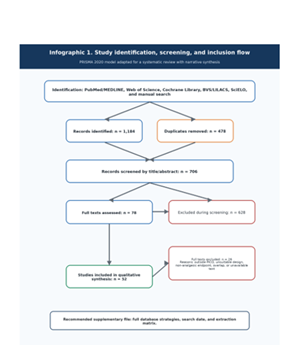
Infographic 1: Study identification, screening, and inclusion according to PRISMA 2020.
Source: Strategy created by the authors and adaptable to MeSH/DeCS fields in each database [1,2].
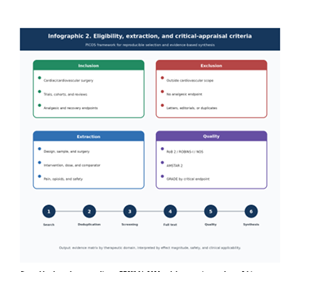
Infographic 2: Eligibility, extraction, and critical-appraisal criteria.
Created by the authors according to PRISMA 2020 and the screening numbers of this review [1,2].
Results
The search identified 1,184 records, of which 478 were removed as duplicates. After deduplication, 706 recordswere screened by title and abstract; 78 full texts were assessed and 52 studies were included in the qualitative synthesis. The methodological figure summarizes the PRISMA flow, and the eligibility matrix specifies inclusion, exclusion, extraction, and critical-appraisal criteria [1,2].
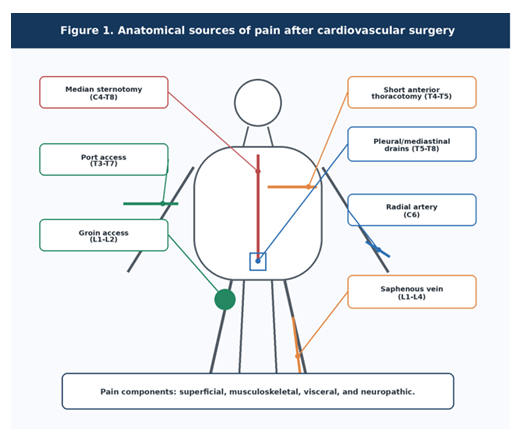
Figure 1: Anatomical sources of pain after cardiovascular surgery and approximate clinical topography.
Source: Created by the authors from the pathophysiological and clinical synthesis of the included literature.
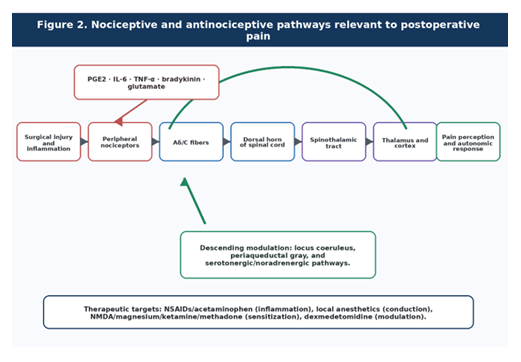
Figure 2: Central nociceptive and antinociceptive pathways related to postoperative pain.
Source: Created by the authors from the pathophysiological and clinical synthesis of the included literature [8,10].
Pathophysiology of pain after cardiovascular surgery
Post-cardiovascular surgical pain results from tissue trauma, systemic inflammation, musculoskeletal traction, pleural/pericardial irritation, drains, ischemia, peripheral nerve injury, and emotional factors. This multidimensionality explains why isolated therapies rarely control pain at rest, during coughing, deep inspiration, and mobilization with similar efficacy [8-10,28]. Peripheral nociceptor activation by prostaglandins, cytokines, bradykinin, glutamate, and ATP is transmitted by A-delta and C fibers to the dorsal horn, followed by spinothalamic ascent and cortical integration. Peripheral and central sensitization support the combined use of anti-inflammatory drugs, local anesthetics, NMDA modulators, alpha-2 agonists, and rescue opioids [8,10,29].
Opioids and stewardship
Opioids remain necessary for moderate-to-severe pain, but their use should be titrated according to pain intensity, sedation, ventilation, renal/hepatic function, and recent consumption. Contemporary recommendations are to avoid routine high-dose opioids, document morphine equivalents, educate patients, and adjust discharge prescribing to actual use in the preceding 24 to 48 hours [6,7,11-13,30]. Persistent opioid use after cardiac surgery occurs in a minority of patients but is clinically important and varies by definition, country, perioperative exposure, previous pain, comorbidities, and discharge prescribing. Multimodal strategies and stewardship reduce unnecessary exposure without denying rescue analgesia to patients who truly need it [11-13,30].
Methadone
Methadone has a long half-life, opioid agonism, and properties related to NMDA receptors and monoaminergic modulation, which may support basal analgesia during the first 24 to 48 hours. Recent reviews suggest reduced pain and lower opioid requirements in selected adults, although risks of accumulation, QT prolongation, and respiratory depression require institutional protocols and monitoring [15,16]. In fast-track protocols, methadone combined with magnesium, ketamine, lidocaine, and dexmedetomidine has been associated with improved postoperative outcomes after coronary artery bypass grafting, but the evidence still includes observational designs and heterogeneous samples. In pediatric and neonatal populations, use should be particularly conservative and dependent on institutional expertise [15-17].
Non-opioid adjuvants
Acetaminophen is a rational baseline component of multimodal analgesia because of its favorable hemodynamic profile and lack of relevant platelet inhibition. The oral route is preferred when feasible, whereas the intravenous route may be useful in intubated, fasting, or gastrointestinally intolerant patients. The opioid-sparing effect is modest but consistent with safe multimodal protocols [8,20]. Gabapentinoids have mechanistic plausibility for neuropathic pain, but routine adoption is limited by small average benefit, heterogeneity, and risks of sedation, dizziness, and respiratory depression when combined with opioids. Pregabalin may reduce opioid consumption in some trials, whereas gabapentin should not be presumed to be a mandatory ERACS component, particularly in older adults, COPD, sleep apnea, or renal disease [18,19]. Ketamine and magnesium act on NMDA-related pathways and may reduce opioid-induced hyperalgesia, but cardiac-surgery results are inconsistent. Dexmedetomidine provides cooperative sedation and opioid-sparing analgesia with minimal respiratory depression; however, bradycardia and hypotension limit indiscriminate use. Intravenous lidocaine remains promising in other surgical populations but insufficiently proven in cardiac surgery [6,8,17,22]. NSAIDs, including ketorolac and selective COX-2 inhibitors, may reduce pain and opioid consumption in selected patients, but must be weighed against bleeding, renal function, gastrointestinal risk, and the cardiovascular warning in coronary artery bypass grafting. In pediatrics, they may reduce opioid requirements, but neonates, infants, and patients with complex cardiac physiology require conservative protocols [6,8,21].
Ultrasound-guided regional blocks
Systemic anticoagulation and hematoma risk have limited enthusiasm for neuraxial techniques in cardiac surgery. Ultrasound-guided chest-wall techniques such as ESPB, PIFB, TTMPB, parasternal blocks, and serratus/pectoral blocks provide a more superficial anatomic alternative to reduce sternal pain and opioid consumption [23-27]. Recent systematic reviews and meta-analyses indicate reduced opioid consumption during the first 24 hours with fascial plane blocks. The most current network meta-analysis suggests an advantage of ESPB combined with patient-controlled analgesia for median sternotomy, but the ideal technique depends on incision, team experience, anticoagulation, local anesthetic volume, and monitoring for systemic toxicity [23-27].
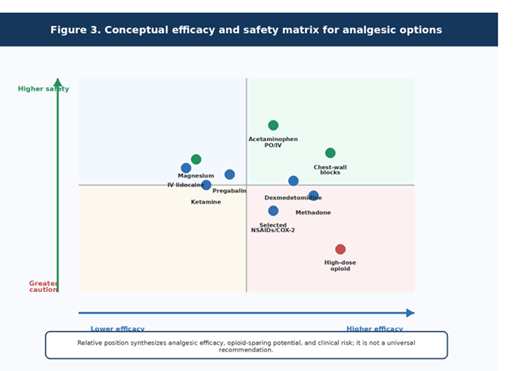
Figure 3: Conceptual efficacy and safety matrix for perioperative analgesic options.
Authors’ synthesis based on the included studies and consensus statements [6-8,15,17-24].
|
Domain |
Potential benefit |
Cautions |
Applicability |
|
Opioid stewardship |
Reduced unnecessary exposure, fewer adverse events, and more rational discharge prescribing. |
Undertreatment if pain goals are poorly defined. |
High impact; should be embedded in ERACS. |
|
Methadone |
Prolonged analgesia and opioid reduction in selected adults. |
Accumulation, QT prolongation, respiratory depression, and protocol requirement. |
Moderate; use by experienced teams. |
|
Acetaminophen |
Safe baseline analgesia and modest opioid-sparing effect. |
Total dose, liver disease, and duplicate products. |
High; prefer oral route when feasible. |
|
Gabapentinoids |
Possible neuropathic benefit and modest opioid reduction in subgroups. |
Sedation, dizziness, respiratory depression with opioids, and renal adjustment. |
Low to moderate; selective use. |
|
Dexmedetomidine/NMDA |
Opioid sparing, cooperative sedation, and central modulation. |
Bradycardia, hypotension, psychotomimetic effects, or interactions. |
Moderate; titrated protocols. |
|
NSAIDs |
Anti-inflammatory analgesia and lower rescue requirements. |
Bleeding, kidney injury, gastrointestinal risk, and cardiovascular warning. |
Selective; screen contraindications. |
|
Regional blocks |
Reduced sternal pain and opioid consumption. |
Systemic toxicity, anticoagulation, and training. |
Increasing; choose by incision. |
Table 3: Interpretive synthesis of main therapeutic domains.
Authors’ synthesis based on the included studies and consensus statements [6-8,15,17-24].
Discussion
This synthesis confirms that analgesia in cardiovascular surgery should be managed as a central element of enhanced recovery rather than as an isolated rescue prescription. The most clinically plausible protocols combine education, standardized pain measurement, baseline non-opioid analgesia when safe, incision-specific regional block, and opioids titrated for the shortest necessary duration [6-8,13,23]. Gabapentinoids and ketamine illustrate the difference between pharmacologic plausibility and consistent clinical effectiveness. Indiscriminate adoption of adjuvants may replace one problem with another by increasing sedation, delirium, hemodynamic instability, or extubation difficulty. Selection should therefore be based on pain phenotype, individual risk, and patient-important outcomes [18,19,22].
Regional blocks are the most rapidly expanding area and require pragmatic multicenter trials. Future studies should compare techniques by incision type, standardize local anesthetic dose and volume, include toxicity monitoring, measure dynamic pain, and evaluate late outcomes such as chronic pain, quality of life, and functional return [23-27].
To increase impact and reproducibility, future reviews should register a PROSPERO protocol and make available full search strategies, extraction matrices, risk-of-bias assessments, and synthesis data. These measures meet increasing requirements of indexed journals and allow living updates of evidence as new trials are published [1-5].
Clinical implications and proposed protocol
Preoperative phase: stratify prior opioid use, chronic pain, anxiety, depression, frailty, COPD, sleep apnea, kidney disease, bleeding risk, and NSAID contraindications; educate patients about realistic pain goals, coughing, mobilization, and tapering [6,7].
Intraoperative phase: avoid routine high-dose opioids; consider methadone in selected adults, titrated dexmedetomidine, ketamine or magnesium within institutional protocols, and ultrasound-guided regional block according to incision and anticoagulation status [6,15,17,22-24].
Postoperative phase: measure pain at rest and with movement, sedation, delirium, nausea, ventilation, bleeding, and kidney function; maintain safe baseline analgesia; use titrated rescue opioids; reassess daily and prescribe discharge opioids according to actual use in the preceding 24 to 48 hour [6-8,11-13].
Limitations
The main limitation is heterogeneity across studies, including different surgeries, doses, therapeutic combinations, assessment windows, pain scales, anticoagulation patterns, and morphine-equivalent definitions. This supports narrative synthesis rather than quantitative meta-analysis in this version [1,2,23,24]. This version was prepared from a previously drafted manuscript and a directed bibliographic update. For definitive submission as a systematic review, authors should attach a registered protocol, deduplicated RIS/CSV file, extraction form, and risk-of-bias spreadsheet as supplementary material [1-5].
Conclusions
Pain management in cardiovascular surgery should shift from an opioid-centered approach toward a multimodal, measurable, recovery-oriented strategy. Opioids remain necessary but should be used in a titrated, documented manner proportional to the benefit-risk balance [6-8,11-13]. Contemporary evidence supports acetaminophen as baseline therapy when safe, methadone in selected adults, dexmedetomidine and NMDA-related adjuvants in specific protocols, NSAIDs under rigorous screening, and ultrasound-guided chest-wall blocks. Future research should prioritize multicenter trials, patient-centered outcomes, and safety in high-risk subgroups [15-27].
|
Requested item |
Status in the manuscript |
|
Word file, 12-point font, single-spaced text, and figures/tables embedded in the text |
Addressed in this version. |
|
Title, authors, affiliations, e-mail, and telephone number for the corresponding author |
Structure created; authorship data must be completed before submission. |
|
Abstract up to 250 words and 4-10 keywords |
Addressed. |
|
Introduction, Materials and Methods, Results, Discussion, and Conclusions |
Addressed for a systematic review with narrative synthesis. |
|
Figures and tables with legends and cited in the text |
Addressed; separate PNG files were also generated. |
|
Acknowledgements, funding, conflicts of interest, and data availability |
Included in mandatory statements. |
|
In-text citations corresponding to the reference list |
Reviewed using superscript numeric citations. |
Table 4: Compliance check for Cardiology and Cardiovascular Medicine and general SAGE guidance.
Source: Items organized according to target-journal submission instructions and general manuscript-preparation guidance [1,2].
Statements and Declarations
Acknowledgements: The authors acknowledge contributors who assisted with language, methodological, or technical review and who do not meet authorship criteria. Names should be inserted only after contributors provide permission.
Author contributions: [Insert CRediT roles: conceptualization, data curation, formal analysis, investigation, methodology, project administration, supervision, original draft writing, review, and editing].
Funding: The authors declare that no specific funding was received for this work, unless updated by the authors before submission.
Conflicts of interest: The authors declare no potential conflicts of interest with respect to the research, authorship, and/or publication of this article, unless updated before submission.
Ethical approval: Not applicable. This review used previously published data and did not involve intervention in humans, animals, or access to identifiable medical records.
Consent to participate: Not applicable.
Consent for publication: Not applicable; the manuscript contains no identifiable patient data.
Data availability: All analyzed data derive from published and cited articles. The authors are encouraged to provide the full search strategy, deduplicated reference file, extraction matrix, and risk-of-bias assessment as supplementary material.
Use of AI tools: AI-assisted editorial support was used for standardization, translation, visual organization, and formal manuscript adaptation. Scientific selection, evidence interpretation, reference verification, and final approval must be performed and accepted by human authors before submission.
References
- Page MJ, McKenzie JE, Bossuyt PM, et al. The PRISMA 2020 Statement: An Updated Guideline for Reporting Systematic Reviews. BMJ 372 (2021): n71.
- Higgins JPT, Thomas J, Chandler J, et al. Cochrane Handbook for Systematic Reviews of Interventions, version 6.5. Cochrane (2024).
- Ouzzani M, Hammady H, Fedorowicz Z, et al. A Web and Mobile App for Systematic Reviews. Systematic Reviews 5 (2016): 210.
- Shea BJ, Reeves BC, Wells G, et al. AMSTAR 2: A Critical Appraisal Tool for Systematic Reviews That Include Randomised or Non-Randomised Studies of Healthcare Interventions, or Both. BMJ 358 (2017): j4008.
- GRADE Working Group. GRADE Handbook and GRADEpro Guidance for Rating Certainty of Evidence and Strength of Recommendations (2025).
- Grant MC, Chappell D, Gan TJ, et al. Pain Management and Opioid Stewardship in Adult Cardiac Surgery: Joint Consensus Report of the PeriOperative Quality Initiative and the Enhanced Recovery After Surgery Cardiac Society. Journal of Thoracic and Cardiovascular Surgery (2023).
- Engelman DT, Ben Ali W, Williams JB, et al. Guidelines for Perioperative Care in Cardiac Surgery: Enhanced Recovery After Surgery Society Recommendations. JAMA Surgery 154 (2019): 755-766.
- Barr LF, Boss MJ, Mazzeffi MA, et al. Postoperative Multimodal Analgesia in Cardiac Surgery. Critical Care Clinics 36 (2020): 631-651.
- Viana LBDR, Oliveira EJSG, Oliveira CMB, et al. Assessment of Pain and Quality of Life in Patients Undergoing Cardiac Surgery: A Cohort Study. Revista da Associacao Medica Brasileira 69 (2023): 473-478.
- Cogan J. Pain Management After Cardiac Surgery. Seminars in Cardiothoracic and Vascular Anesthesia 14 (2010): 201-204.
- Brown CR, Chen Z, Khurshan F, et al. Development of Persistent Opioid Use After Cardiac Surgery. JAMA Cardiology 5 (2020): 889-896.
- Ingason AB, Geirsson A, Gudbjartsson T, et al. The Incidence of New Persistent Opioid Use Following Cardiac Surgery via Sternotomy. Annals of Thoracic Surgery 113 (2022): 33-40.
- Ward CT, Moll V, Boorman DW, et al. The Impact of a Postoperative Multimodal Analgesia Pathway on Opioid Use and Outcomes After Cardiothoracic Surgery. Journal of Cardiothoracic Surgery 18 (2023): 45.
- Jiang X, Cheng X, Guo S, et al. Analgesic Efficacy of Butorphanol Combined With Sufentanil After Heart Valve Surgery: A Propensity Score-Matching Analysis. Medicine 101 (2022): e32307.
- Goldblatt J, Crawford L, Ross J, et al. The Influence of Preoperative or Intraoperative Methadone on Postcardiac Surgery Pain and Opioid Administration: A Systematic Review and Meta-Analysis. Ain-Shams Journal of Anesthesiology 16 (2024): 21.
- Lobova VA, Roll JM, Roll MLC. Intraoperative Methadone Use in Cardiac Surgery: A Systematic Review. Pain Medicine 22 (2021): 2827-2834.
- Weinberg L, Johnston S, Fletcher L, et al. Methadone in Combination With Magnesium, Ketamine, Lidocaine, and Dexmedetomidine Improves Postoperative Outcomes After Coronary Artery Bypass Grafting: An Observational Multicentre Study. Journal of Cardiothoracic Surgery 19 (2024): 393.
- Wang XX, Dai J, Hu XG, et al. Oral Pregabalin in Cardiac Surgery: A Systematic Review and Meta-Analysis of Randomized Controlled Trials. BioMed Research International 2021 (2021): 8835891.
- Verret M, Lauzier F, Zarychanski R, et al. Perioperative Use of Gabapentinoids for the Management of Postoperative Acute Pain: A Systematic Review and Meta-Analysis. Anesthesiology 133 (2020): 265-279.
- Subramaniam B, Shankar P, Shaefi S, Mueller A, et al. Effect of Intravenous Acetaminophen vs Placebo Combined With Propofol or Dexmedetomidine on Postoperative Delirium Among Older Patients Following Cardiac Surgery: The DEXACET Randomized Clinical Trial. JAMA 321 (2019): 686-696.
- Javaherforooshzadeh F, Abdalbeygi H, Janatmakan F, et al. Comparing the Effects of Ketorolac and Paracetamol on Postoperative Pain Relief After Coronary Artery Bypass Graft Surgery: A Randomized Clinical Trial. Anesthesiology and Pain Medicine 10 (2020): e100191.
- Guinot PG, Spitz A, Berthoud V, et al. Feasibility and Postoperative Opioid-Sparing Effect of an Opioid-Free Anaesthesia in Adult Cardiac Surgery: A Retrospective Study. BMC Anesthesiology 21 (2021): 166.
- Dost B, De Cassai A, Balzani E, et al. Effects of Ultrasound-Guided Regional Anesthesia in Cardiac Surgery: A Systematic Review and Network Meta-Analysis. BMC Anesthesiology 22 (2022): 409.
- Bu Y, Savir S, Saeed S, et al. Comparative Efficacy of Chest Wall Fascial Plane Blocks for Cardiac Surgery via Median Sternotomy: A Network Meta-Analysis. BMC Anesthesiology 26 (2026): 25.
- Hamed MA, Abdelhady MA, Hassan A, et al. The Analgesic Effect of Ultrasound-Guided Bilateral Pecto-Intercostal Fascial Plane Block on Sternal Wound Pain After Open Heart Surgeries: A Randomized Controlled Study. Clinical Journal of Pain 38 (2022): 279-285.
- Li Q, Liao Y, Wang X, et al. Efficacy of Bilateral Catheter Superficial Parasternal Intercostal Plane Blocks Using Programmed Intermittent Bolus for Opioid-Sparing Postoperative Analgesia in Cardiac Surgery. Regional Anesthesia and Pain Medicine 48 (2023): 229-235.
- Makkad B, Heinke TL, Sheriffdeen R, et al. Practice Advisory for Postoperative Pain Management of Thoracic Surgical Patients: A Report From the Society of Cardiovascular Anesthesiologists. Journal of Cardiothoracic and Vascular Anesthesia 39 (2025): 1306-1324.
- Gan TJ. Poorly Controlled Postoperative Pain: Prevalence, Consequences, and Prevention. Journal of Pain Research 10 (2017): 2287-2298.
- Wick EC, Grant MC, Wu CL. Postoperative Multimodal Analgesia Pain Management With Nonopioid Analgesics and Techniques: A Review. JAMA Surgery 152 (2017): 691-697.
- Brescia AA, Waljee JF, Hu HM, et al. Impact of Prescribing on New Persistent Opioid Use After Cardiothoracic Surgery. Annals of Thoracic Surgery 108 (2019): 1107-1113.