Tejaswi Boyapati*
Department of Chemical Engineering, Vignan’s Foundation for Science, Technology and Research Institute, Andhra Pradesh, India
*Corresponding Author: Tejaswi Boyapati, Department of Chemical Engineering, Vignan's Foundation for Science, Technology and Research Institute, Andhra Pradesh, India
Received: 08 June 2019; Accepted: 18 June 2019; Published: 24 June 2019
DOI: 10.26502/jfsnr.2642-11000016
ShareIntroduction: Nowadays, colonoscopy has become a very common procedure used to evaluate different colonic pathologies. Complications following this procedure are usually rare, with perforation being the most dreaded and severe one. An infrequent, yet potentially life-threatening complication of colonic perforation is abdominal compartment syndrome (ACS), due to continuous elevation of intra-abdominal pressure as a result of iatrogenic perforation.
Case Presentation: Herein, we report a case of a 73-year-old female patient, who presented to our Emergency Medicine department with abdominal pain and distension, hypotension and respiratory distress following diagnostic colonoscopy. An upright Chest x-ray revealed free air under the diaphragm, and the patient admitted with a diagnosis of abdominal compartment syndrome due to colonic perforation following diagnostic colonoscopy. On exploration of the abdomen, a 2 cm tear of the antero-medial wall of the cecum was demonstrated and an abbreviated laparotomy with right hemicolectomy and temporary closure of the abdomen was performed. Several hours following surgery, the patient developed multi-organ failure and died.
Conclusion: Abdominal compartment syndrome due to perforation after colonoscopy is an extremely rare condition, and a high index of suspicion is warranted for prompt early diagnosis and treatment.
Quinoa flour/malt, Sensory Evaluation, RTS beverage
1. Introduction
Quinoa (Chenopodium quinoa Wild.) plant belongs to the Chenopodiaceae family, which also includes spinach and beet. There are approximately 250 species of this family all over the world and it is an endemic plant peculiar to South America. The main carbohydrate component of quinoa is starch, and it constitutes 52% to 69% of it. Its total diet fibre is close to that in grain products (7% to 9.7%) while its soluble fibre content is known to be in the 1.3% to 6.1% band. Due to the quality and quantity of its lipid fraction, quinoa is accepted as an alternative oil seed. It has an oil rate of 2.0% to 9.5%, and is rich in terms of essential fatty acids such as linoleic and alpha-linolenic acids. It contains antioxidants like alpha and gamma tocopherol in high concentrations [1-3].
2. Method of Product Manufacture
2.1 Ingredients to be used
- Double toned milk
- Quinoa flour/malt
- Cocoa powder
2.2 Formulation
|
Ingredients |
T0 |
T1 |
T2 |
T3 |
T4 |
T5 |
|
Double toned milk |
100 ml |
100 ml |
100 ml |
100 ml |
100 ml |
100 ml |
|
Quinoa flour/Malt |
0.5 grams |
1 gram |
1.5 grams |
2 grams |
2.5 grams |
3 grams |
|
Cocoa powder |
1 gram |
1 gram |
1 gram |
1 gram |
1 gram |
1 gram |
|
Sweetener |
2 grams |
2 grams |
2 grams |
2 grams |
2 grams |
2 grams |
Table 1: Ingredients.
2.3 Processing of Quinoa flour or malt
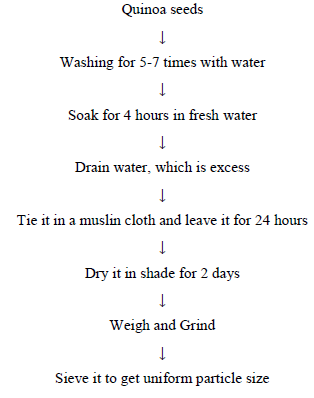
Figure 1: Processing of Quinoa flour or malt.
2.4 Flow chart for the preparation of the product
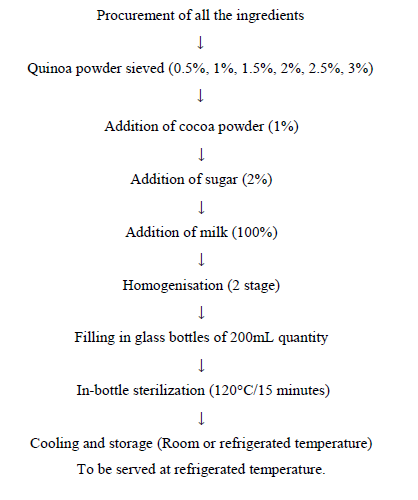
Figure 2: Preparation of Quinoa based RTS dairy beverage.
3. Results and Discussion
Quinoa based RTS dairy beverage from different mixtures of Quinoa powder, Cocoa powder and double toned milk is subjected to sensory evaluation and scores are recorded for different parameters are presented in Table 2 [4-6].
|
Treatments |
Color and Appearance |
Flavour |
Consistency |
Mouth feel |
Overall Acceptability |
|
T0 |
8.33 |
7.8 |
8.35 |
8.01 |
8.12 |
|
T1 |
8.34 |
8.9 |
8.66 |
8.27 |
8.54 |
|
T2 |
8.23 |
8.23 |
8.28 |
8.16 |
8.22 |
|
T3 |
8.18 |
8.20 |
7.21 |
8.04 |
7.91 |
|
T4 |
8.16 |
8.10 |
8.01 |
7.90 |
8.04 |
|
T5 |
8.13 |
7.89 |
7.99 |
7.60 |
7.90 |
Table 2: Sensory evaluation of five Quinoa based RTS dairy beverage.
3.1 Color and appearance
The mean color and appearance score for different treatments of Quinoa based RTS dairy beverage are ranged from 8.1 to 8.34. The treatment T1 (8) is found to be significantly best of the rest of the treatments. It was observed that increase in the level of quinoa flour in the beverage decreases the score of color and appearance slightly (0-5).
3.2 Flavor
It is observed that the mean score for the flavor of Quinoa based RTS dairy beverage for treatments T0, T1, T2, T3, T4 and T5 are 7.8, 8.9, 8.23, 8.20, 8.1 and 7.89 respectively. The treatment T1 is superior of T0 to T5 treatments. It is observed from above findings that 1 gram of Quinoa, 1 gram of cocoa, 2 grams of sugar and 100 ml of milk will give rich taste to the product.
3.3 Consistency
The mean score for the consistency attributes of Quinoa based RTS dairy beverage ranges from 7.21 to 8.66. The treatment T1 (8.66) is significantly best over the rest of the treatments.
3.4 Mouth feel
The highest mouth feel score is observed for treatment T1 (8.27) followed by T2 (8.16), T3 (8.04), T0 (8.01), T4 (7.9) and T5 (7.6). 1-gram Quinoa malt or powder is most acceptable (T1).
3.5 Overall acceptability
The mean score for treatment T0, T1, T2, T3, T4 and T5 are 8.12, 8.54, 8.22, 7.91, 8.04 and 7.90 respectively. The treatment T1 (8.54) is most accepted by the judges. So, use of 1-gram Quinoa malt or powder is most acceptable than the other treatment combinations (0-5) [7-8].
4. Conclusion
Addition of Quinoa malt or powder into milk makes it more nutritious and also helps in improving and increase in the acceptability of milk by many people. The optimum amount of Quinoa malt or powder that can be used in the process of preparation of Quinoa based RTS dairy beverage is up to 1-gram.
References
- Marshall RT. Standard Methods for the determination of Dairy Products. (16th) Publ. American Public Health Association (1992).
- Alvarez-Jubete L, Arendt EK, Gallagher E. Polyphenol composition and in vitro antioxidant activity of amaranth, quinoa buckwheat and wheat as affected by sprouting and baking. Food Chem 119 (2010): 770-778.
- ILCA Manual No.4, Rural Dairy Technology. Experiences from Ethiopia.
- Abugoch James LE. Quinoa (Chenopodium quinoaWilld.): composition, chemistry, nutritional and functional properties. Adv Food Nutr Res 58 (2009): 1-31.
- Comai S. The content of proteic and nonproteic (free and protein-bound) tryptophan in quinoa and cereal flours. Food Chem 100 (2007): 1350-1355.
- Farinazzi-Machado FMV, Barbalho SM, Oshiiwa M, et al. Use of cereal bars with quinoa (Chenopodium quinoa W.) to reduce risk factors related to cardiovascular diseases. Cienc. Technol. Aliment. Campinas 32 (2012): 239-244.
- Sanchez KA. Observations Regarding Consumption of Peruvian Native Grains (Quinoa, Amaranth and Kaniwa), Weight Status, and Perceptions of Potential Risk Factors, Warning Signs and Symptoms of Type 2 Diabetes Among Peruvian Adults: A Case Study. Nutrition and Food Sciences Department (2012).
- Annette McDermott. Quinoa vs. Rice: The Health Benefits of Each Grain. Healthline (2016).