Ajaya Kumar Ayyappan Unnithan
Muthoot Hospital, Kozhencherry, Kerala, India
*Corresponding author: Ajaya Kumar Ayyappan Unnithan, Muthoot Hospital, Kozhencherry, Kerala, India
Received: 14 December 2021; Accepted: 28 December 2021; Published: 04 January 2022
Background and objectives: There is no pharmacological treatment with proven efficacy against coronavirus disease-19 (COVID-19). Certain micronutrients have roles in the maintenance of an effective immune system. From the point of view of public health, it will be good to adopt a nutritional strategy to enhance the immunity of the general population against viral diseases.
Method and study design: A review was done to know the evidence for the antiviral and immune- modulatory properties of micronutrients. A search was done in PubMed, Scopus, and Google Scholar for the nutrients with proven effect against viral infection. Experimental studies, clinical studies, reviews, and meta-analyses were studied descriptively.
Results: There are experimental studies about the effects of micronutrients against viral infection. Vitamins such as A, B6, B12, C, D, E, and folate, and trace elements such as zinc, selenium, iron, magnesium, and copper boost the immune response. The antioxidants like vitamin C and vitamin E can help in controlling the ‘cytokine storm’, produced by excessive inflammation. Vitamin D can increase anti- inflammatory cytokines. Selenium and zinc can protect the lungs in acute respiratory distress syndrome. There are many meta-analyses on the randomized controlled trials (RCT) about the effect of micronutrients on viral infection. The analyses of the trials supplementing vitamin C, vitamin D, vitamin E, and selenium have shown significance.
Conclusions: There is level 2A evidence for the beneficial effects of vitamins and micronutrients in modulating the immunity against viral infections. So a program for nutritional supplementation of these can help in fighting the pandemic. Micronutrients with anti-inflammatory and antioxidant properties can reduce the severity of ‘cytokine storm’.
SARS Virus; Vitamins; Micronutrients; Cytokines; Immunomodulation
Abbreviations
COVID-19-Coronavirus disease-19; RCT-Randomized controlled trials; SARS-CoV-2-Severe acute respiratory syndrome virus-2; ACE2- Angiotensin-converting enzyme 2; IFN-Interferons; IgM-Immunoglobulin M; IgG-Immunoglogulin G; mRNA-messenger RNA; NK-Natural killer cells; IL-Interleukins; ARDS-Acute respiratory distress syndrome; EFSA-European Food Safety Authority; COVID-19-Coronavirus disease-19 WHO-World health organization; UL-Upper Intake Levels
1. Introduction
The pandemic caused by severe acute respiratory syndrome virus-2 (SARS-CoV-2) is not fully controlled in the world. There is no pharmacological treatment with proven efficacy and safety [1]. About 265 million persons are infected worldwide and 5.24 million died. Although vaccination has started, now many countries are facing new variants such as omicron. So from the point of view of public health, it will be good to adopt a nutritional strategy to enhance the immunity of the general population against viral diseases. Undernutrition impairs immune system [2]. Certain micronutrients have roles in the maintenance of an effective immune system. Nutrition is also very important in controlling the crisis of sepsis. Vitamins such as A, B6, B12, C, D, E, and folate, and trace elements such as zinc, selenium, iron, magnesium, and copper boost the immune response against viral infection [3].
2. Objective, Materials, and Methods
A review was done to show the evidence for the antiviral and immunomodulatory properties of micronutrients. A search was done in PubMed, Scopus, and Google Scholar for the nutrients with proven effect against viral infection. Experimental studies, clinical studies, reviews, and meta-analyses were studied descriptively.
Entry, Replication, and Immune Response The spike or S protein of coronavirus binds to angiotensin-converting enzyme 2 (ACE2) receptor of host cell [4]. The viral RNA [ribonucleic acid] enters into the host The proteins are translated. The assembly and budding occur in the endoplasmic reticulum and Golgi compartment. Virions are then released from the infected cell through exocytosis. The antiviral drugs target the steps of this process. The macrophages present coronavirus antigens to T cells [5]. T cell activation produces cytokines. The cytokines amplify immune response. Interferons (IFN) limit virus spread, and promote macrophage phagocytosis of antigens. The CD8 cytotoxic T cells kill the infected cells. The B cells produce antibodies against the virus. The T cells assist the B cells to differentiate into plasma cells, which then produce immunoglobulin M (IgM) and immunoglobulin G (IgG) antibodies specific to the viral antigens [6, 7]. AnIg G antibody can block the virus from entering into host cells. The messenger RNA (mRNA) vaccine, adenovirus vaccine, and the whole-virus inactivated vaccine induce response against the S protein [8].
The immune responses induced by SARS-CoV-2 infection have two phases [9]. During the non-severe stage, strategies to boost adaptive immune response is required to eliminate the virus. The damaged cells induce inflammation in the lungs, mediated by pro- inflammatory macrophages and granulocytes. In the severe stage of ‘cytokine storm’, inflammation should be suppressed.
4. Experimental Evidence
Atherton et al exposed chick embryo tracheal organ cultures to ascorbic acid [10]. Increased resistance to infection by coronavirus was observed. An animal study by Jee et al. has shown that a diet high in vitamin A boosted the production of immunoglobulin G (IgG) in calves injected with bovine coronavirus [11]. Research has shown that vitamin D stimulates genetic expression of antimicrobial peptides such as defensins and cathelicidins in human monocytes, and neutrophils [12]. They have antiviral activity. Animal studies have shown that vitamin E increases lymphocyte proliferation, immunoglobulin levels, natural killer (NK) cell activity, and interleukin (IL)-2 productions [13]. A study in healthy individuals showed that repletion of vitamin B6 resulted in decreased lymphocyte and interleukin-2 [14]. Folic acid deficiency results in atrophy of thymus and spleen, and decreased circulating T lymphocytes in animals [15].Vitamin B12 administration increases CD8 and NK cells [16].
Zinc inhibited the replication of SARS-CoV in cell culture study [17]. Supplementation with selenium has been shown to cause increase in the activity of cytotoxic lymphocytes and NK cells [18]. A study in aged mice has shown that dietary selenium increased the ability of splenic lymphocytes to undergo blastogenesis [19]. Iron deficiency impairs cell-mediated and innate immunity [20]. The T cell proliferation on stimulation is only 40-50% in iron-deficient women, compared to iron-sufficient women. A murine cell line study demonstrated that magnesium induced macrophages to produce the cytokines interleukin (IL)-4 and IL-10 [21]. Cell culture studies have shown that a decline in copper status decreases IL-2 production by activated human T-cells [22].
5. Control of Inflammation
The antioxidants like vitamin C and vitamin E can help in controlling the pro-oxidative state known as a ‘cytokine storm’, produced by excessive inflammation [15]. Intravenous vitamin C is being investigated as a treatment for cytokine storm syndrome [23]. Selenium has been shown to moderate the inflammatory responses, and restore the antioxidant capacity of the lungs in patients with acute respiratory distress syndrome (ARDS) [24]. Zinc has protective effects on the lungs in patients receiving mechanical ventilation for ARDS [25]. Vitamin D can reduce the expression of pro-inflammatory cytokines and increase anti- inflammatory cytokines [26].
The results of the review are tabulated (table-1).
|
Micronutrient |
Observed effect |
|
Vitamin C |
Increased resistance to infection by coronavirus. Has antioxidant effect. |
|
Vitamin A |
Boosts the production of immunoglobuilin G. |
|
Vitamin D |
Stimulates the expression of antimicrobial peptides such as defensins and cathelicidin. Increases the anti-inflammatory cytokines. |
|
Vitamin E |
Increases lymphocyte proliferation, natural killer cell activity, immunoglobulin level, and interleukin-2 production. Has antioxidant effect. |
|
Vitamin B6 |
Needed for lymphocyte and interleukin-2. |
|
Folic acid |
Needed for thymus, spleen, and circulating T lymphocytes. |
|
Vitamin B12 |
Increases CD8 and natural killer cells. |
|
Zinc |
Inhibits the replication of SARS-CoVirus. Has protective effect on the lungs. |
|
Selenium |
Increases the activity of cytotoxic lymphocytes and natural killer cells. Restores the antioxidant capacity of the lungs. |
|
Iron |
Necessary for T cell proliferation. |
|
Magnesium |
Induces the production of interleukin-4 and interleukin-10. |
|
Copper |
Needed for the production of interleukin-2. |
Table 1: Effect of micronutrients on the immune system.
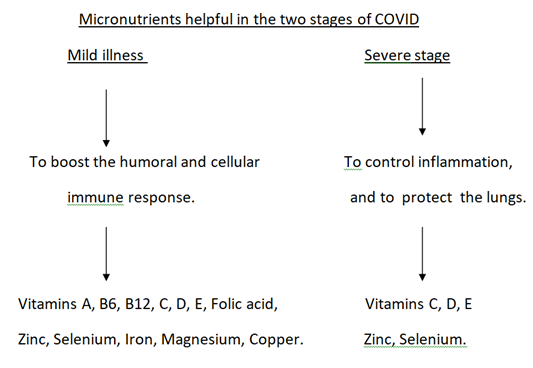
Chart 1:The chart shows the micronutrients helpful in the two stages of coronavirus disease (COVID).
6. Current Guidelines
The European Food Safety Authority (EFSA) has endorsed 10 micronutrients as essential for healthy maintenance of the immune system: vitamin A, vitamin B6, vitamin B12, vitamin C, vitamin D, folate, zinc, iron, copper, and selenium [27]. There are several trials ongoing involving vitamins A, C, D, and E, and micronutrients magnesium, and zinc against coronavirus disease-19 (COVID-19), registered by the world health organization (WHO) [28]. There are many meta-analyses on the randomized controlled trials (RCT) about the effect of micronutrients on viral infection [29].The analyses of the trials supplementing vitamin C, vitamin D, vitamin E, and selenium have shown significance. Han et al did a pilot study of high dose vitamin D administration in ventilated intensive care unit patients [30]. It was found that high-dose vitamin D3 was associated with decreased the length of hospital stay. Beigmohammadi et al. concluded from a single- blinded clinical trial with 60 patients that supplementation of vitamins A, B, C, D, and E reduced the severity of disease in patients with COVID [31].
7. Safety of Supplementation
There are concerns about the adverse effects of vitamin and mineral supplementation [32]. It has been found in systematic review that the use of multivitamins and minerals within the range of the dietary reference intake will not result in excess intake [33].The American and European boards have defined the Tolerable Upper Intake Levels (UL) of vitamins and minerals to avoid the adverse health effects [34].
There are micronutrient supplementation programs in developing countries for at-risk groups [35]. Examples are vitamin A supplementation for children and iron and folic acid for pregnant women [36].
8. Conclusion
There is level 2A evidence for the beneficial effects of vitamins and micronutrients in improving the immunity against viral infections and in modulating the immune responses. So a program for nutritional supplementation of these can help in fighting the pandemic. Since the vaccination has started, an adjuvant program for nutritional supplementation can help in increasing the immunity of the people. Micronutrients with anti-inflammatory and antioxidant properties can reduce the severity of ‘cytokine storm’.
Declarations
Ethics Approval and Consent to Participate
Not applicable
Consent for Publication
Not applicable
Availability of Data and Material
PubMed
Competing Interests
Nil
Funding
No external funding
Authors' Contributions
Did the literature search and wrote the manuscript
Acknowledgements
Nil
References
- Cascella M, Rajnik M, Cuomo A, et Features, Evaluation, and Treatment of Coronavirus (COVID-19) [Updated 2020 Aug 10]. In: Stat Pearls [Internet]. Treasure Island (FL): Stat Pearls Publishing (2020).
- Childs CE, Calder PC, Miles EA. Diet and Immune Nutrients 11 (2019): 1933.
- Alkhatib A. Antiviral Functional Foods and Exercise Lifestyle Prevention of Nutrients 12 (2020): E2633.
- Prajapat M, Sarma P, Shekhar N, et al. Drug targets for corona virus: A systematic Indian J Pharmacol 52 (2020): 56-65.
- Li G, Fan Y, Lai Y, et Coronavirus infections and immune responses. J Med Virol 92 (2020): 424-432.
- Chowdhury MA, Hossain N, Kashem MA, et Immune response in COVID-19: A review. J Infect Public Health 13 (2020): 1619-1629.
- Rawat K, Kumari P, Saha COVID-19 vaccine: A recent update in pipeline vaccines, their design and development strategies. Eur J Pharmacol 892 (2021): 173751.
- Drugs and Lactation Database (LactMed) [Internet]. Bethesda (MD): National Library of Medicine (US); 2006-COVID-19 vaccines (2021).
- Shi Y, Wang Y, Shao C, et al. COVID-19 infection: the perspectives on immune responses. Cell Death Differ 27 (2020):1451-1454.
- Atherton JG, Kratzing CC, Fisher The effect of ascorbic acid on infection chick- embryo ciliated tracheal organ cultures by coronavirus. Arch Viral 56 (1978): 195-199.
- Jee J, Hoet AE, Azevedo MP, et al. Effects of dietary vitamin A content on antibody responses of feedlot calves inoculated intramuscularly with an inactivated bovine coronavirus Am J Vet Res 74 (2013): 1353-1362.
- Cannell JJ, Vieth R, Umhau JC, et Epidemic influenza and vitamin D. Epidemiol Infect 134 (2006): 1129-1140.
- Lee GY, Han SN. The Role of Vitamin E in Nutrients 10 (2018): 1614.
- Meydani SN, Ribaya-Mercado JD, Russell RM, et al . Vitamin B-6 deficiency impairs interleukin 2 production and lymphocyte proliferation in elderly Am J Clin Nutr 53 (1991): 1275-1280.
- Calder Nutrition, immunity and COVID-BMJ Nutrition, Prevention and Health 3 (2020).
- Tamura J, Kubota K, Murakami H, et Immunomodulation by vitamin B12: augmentation of CD8+ T lymphocytes and natural killer (NK) cell activity in vitamin B12-deficient patients by methyl-B12 treatment. Clin ExpImmunol 116 (1999): 28-32.
- TeVelthuis AJW, van den Worm SHE, Sims AC, et Zn2+ Inhibits Coronavirus and Arterivirus RNA Polymerase Activity in Vitro and Zinc Ionophores Block the Replication of These Viruses in Cell Culture. PLoS Pathog 6 (2010): e1001176.
- Kiremidjian-Schumacher L, Roy M, Wishe HI, et al. Supplementation with selenium and human immune cell functions. II. Effect on cytotoxic lymphocytes and natural killer Biol Trace Elem Res 41 (1994): 115-127. Erratum in: Biol Trace Elem Res 46 (1994): 183.
- Roy M, Kiremidjian-Schumacher L, Wishe HI, et Supplementation with selenium restores age-related decline in immune cell function. ProcSocExpBiol Med 209 (1995): 369-375.
- Ahluwalia N, Sun J, Krause D, et al . Immune function is impaired in iron- deficient, homebound, older women. Am J Clin Nutr 79 (2004): 516-521.
- Li B, Cao H, Zhao Y, et al. In vitro and in vivo responses of macrophages to magnesium-doped Sci Rep 7 (2017): 42707.
- Hopkins RG, Failla ML. Copper deficiency reduces interleukin-2 (IL-2) production and IL-2 mRNA in human T-lymphocytes. J Nutr 127 (1997): 257-262.
- Boretti A, Banik BK. Intravenous vitamin C for reduction of cytokines storm in acute respiratory distress PharmaNutrition 12 (2020): 100190.
- Mahmoodpoor A, Hamishehkar H, Shadvar K, et al. The Effect of Intravenous Selenium on Oxidative Stress in Critically Ill Patients with Acute Respiratory Distress Syndrome. Immunol Invest 48 (2019): 147-159.
- Boudreault F, Pinilla-Vera M, Englert JA, et Zinc deficiency primes the lung for ventilator-induced injury. JCI Insight 2 (2017): e86507.
- Razdan K, Singh K, Singh Vitamin D Levels and COVID-19 Susceptibility: Is there any Correlation? Med Drug Discov 7 (2020): 100051.
- Galmés S, Serra F, Palou A. Current State of Evidence: Influence of Nutritional and Nutri genetic Factors on Immunity in the COVID-19 Pandemic Framework. Nutrients 12 (2020): 2738.
- Junaid K, Ejaz H, Abdalla AE, et Effective Immune Functions of Micronutrients against SARS-CoV-2. Nutrients 12 (2020): 2992.
- BourBour F, MirzaeiDahka S, Gholamalizadeh M, et Nutrients in prevention, treatment, and management of viral infections; special focus on Coronavirus. Arch Physiol Biochem (2020): 1-10.
- Han JE, Jones JL, Tangpricha V, et al. High Dose Vitamin D Administration in Ventilated Intensive Care Unit Patients: A Pilot Double Blind Randomized Controlled Trial. J Clin Transl Endocrinol (2016): 59-65.
- Beigmohammadi MT, Bitarafan S, Hoseindokht A, et The effect of supplementation with vitamins A, B, C, D, and E on disease severity and inflammatory responses in patients with COVID-19: a randomized clinical trial. Trials 22 (2021): 802.
- Soni MG, Thurmond TS, Miller ER 3rd, et Safety of vitamins and minerals: controversies and perspective. Toxicol Sci 118 (2010): 348-355.
- Biesalski HK, Tinz J. Multivitamin/mineral supplements: Rationale and safety - A systematic review. Nutrition 33 (2017): 76-
- Walter Towards ensuring the safety of vitamins and minerals. Toxicol Lett 120 (2001): 83-87.
- Sheikholeslam R, Abdollahi Z, Haghighi FN. Managing nutritional programmers in developing countries. East Mediterr Health J 10 (2004): 737-746.
- Gavaravarapu SM, Hemalatha National Institute of Nutrition: 100 years of empowering the nation through nutrition. Indian J Med Res 148 (2018): 477-487.