Arshad Bhat1*, Abid Sultan2, Muneem Fayaz3, Aamir Qureshi4, Abid Qadir5, Iqra Qureshi6
1Amity Institute of Liberal Arts, Amity University Mumbai, Maharashtra, India
2Institute of Business and Policy Research, Shere-Kashmir University of Agricultural Sciences and Technology of Kashmir, J&K, India
3Department of Computer Science and Engineering, Lovely Professional University, Punjab, India
4School Education Department, Govt. of Jammu and Kashmir, India
5Department of Environmental Sciences, The Glocal University, U.P., India
6Central Institute of Temperate Horticulture, Rangreth, India
*Corresponding Author: Arshad Bhat, Amity Institute of Liberal Arts, Amity University Mumbai, Maharashtra, India.
Received: 25 August 2026; Accepted: 31 August 2026; Published: 5 September 2026
In today's globalized world, tourism is an increasing key economic driver and provider of income and jobs for mountain economies throughout the region. But, the increasing number of tourists has led to increased environmental problems, such as biodiversity loss, deforestation, waste production, water shortage and ecosystem degradation. The aim of this study is to shed light on the connection between sustainable tourism development and environmental issues in mountain economies, which are derived from secondary data sources obtained from various international reports, government documents, tourism statistics and academic publications. This paper critically assesses the socio-economic value and importance of mountain tourism and identifies its ecological vulnerabilities caused by the unplanned growth of tourism. Use of sustainable (eco)tourism approaches, including community involvement, green infrastructure projects, environmental governance, climate resilient tourism planning, and eco-tourism. The study also examines the different policy frameworks and institutional measures implemented in different mountain destinations for the trade-off between economic gains and environmental protection. Results have shown that whilst well-managed policies, combined with local stakeholder engagement, can support the use of sustainable tourism as an important tool for promoting more sustainable development, longterm regional resilience and ecological protection. The paper argues that the introduction of sustainable principles in tourism planning is needed to maintain the sustainability of fragile mountain ecosystems and local communities' socio-economic systems. The proposed findings in the study are relevant to the policy makers, researchers and tourism practitioners for the promotion of environmentally responsible tourism development in the mountain economy.
Sustainability; Ecotourism; Environment; Mountains; Resilience
Sustainability articles; Ecotourism articles; Environment articles; Mountains articles; Resilience articles
1. Introduction:
Tourism is one of the fastest growing economy sectors in the world and is playing an important role in employment generation, foreign currency earnings, infrastructure development, and changing the economy of a region. With their biodiversity, scenic landscape, cultural heritage and unique ecosystems, the mountain regions have become more significant tourist regions, welcoming domestic and international tourists. Tourism has been expanding quickly in mountain economies of Asia, Europe, Latin American and other developing areas driven by the rising demand for tourism modalities like nature-based, adventure, eco and cultural tourism. In Nepal, mountain tourism has thus emerged as one of the important pillars of socio-economic development especially in areas of low productivity and isolation that lack other livelihood options [1].
The tourism sector has been playing a significant role in mountain area employment and income generation. It plays a role in supporting rural livelihoods and minimizing regional economic disparities through the hospitality industry, transportation-related activities, handicraft industry, small-scale business and food industries. Even in many of the developing nations, mountain tourism has emerged as an essential poverty alleviation and inclusive growth mechanism as well. The United Nations discusses the possibility of sustainable tourism fostering sustainable regional development, while safeguarding the natural and cultural heritage that is critical for sustainable tourism development. As tourism development is expanding at high-speed, remote mountain areas have become part of the national and global economy, with the construction of communication networks, recreation facilities, hotels and roads [2].
Though they are economically important, mountain ecosystems have been facing serious environmental concerns due to the high rate of tourism development. Mountain regions have a fragile ecological system, which is extremely sensitive to human interference, given their bountiful natural diversity, topography and climate. Uncontrolled tourism has led to an ecological imbalance due to deforestation, change in land use, overproduction of garbage, contamination of water bodies, destruction of habitats and augmentation of carbon emissions. The problems of overcrowding in well-traveled areas have brought significant problems in terms of natural resource strain and stress on local infrastructure, thereby posing threats to ecological sustainability and the long-term sustainability of tourism [3]. Due to glacier retreat, loss of biodiversity, unpredictable patterns of snowfall, and natural disasters, these mountain destinations are even more vulnerable to climate change, impacting the local livelihood and tourism-dependent economies [4].
Sustainable tourism development is becoming more a concern in tackling these environmental problems, while at the same time providing economic development and social well-being. Sustainable tourism focuses on responsible tourism practices, and its goals are minimising ecological damage, conserving biodiversity, promoting cultural preservation and ensuring equitable distribution of tourism benefits amongst local communities. The concept of tourism sustainability is about marrying up sustainable environment protection as well as tourism development through the incorporation of ecological conservation, community involvement and a vision for long term planning into tourism policies and practices [5]. Eco-tourism, community-based tourism, green infrastructure development and climate-resilient tourism planning are some of the key concepts that are gaining significance for promoting sustainable tourism in mountain areas.
The past decades have seen growing interest by policy makers, international organizations and researchers for sustainable tourism frameworks to bestow protection to sensitive mountain ecosystems. In recent years, protection of fragile mountain ecosystems has become a major priority in sustainable tourism policy. Forests have been identified as part of the centers of livelihoods in sustainable tourism, being at the behest of international organisations like the United Nations Environment Programme Sustainable Tourism Programme and the Sustainable Development Goals (SDGs). Sustainable tourism is no longer considered merely a necessity in the context of protecting the environment but also as strategy for improving competitiveness, resilience and economic sustainability of a destination [6].
The Himalayas, the Alps, the Andes Mountains, and the Rocky Mountains are good examples of mountain economies with opportunities and challenges for their tourism-led development. Although tourism has brought some economic development and infrastructure to these parts, unsustainable tourism poses threats to balance ecology and socio-cultural integrity. Hence, it is crucial to comprehend how tourism development impacts the nature of environmental sustainability to develop appropriate tourism policy formation and management strategies.
In this framework, the present work aims to explore the Sustainable tourism development and Environmental issues in mountain economies, by relying on secondary data and literature from published books, international sub-reports, tourism statistics and policy documents. The research focuses on the economic significance and importance of tourism in mountain areas, the identification of main environmental issues inherent in the development of tourism and sustainable development models and strategies for these areas to guarantee the conservation of the environment and the maintenance of sustainable regional development. The paper brings together existing evidence and may be of value to the current debate around tourism sustainability and helps inform policy decision around sustainable mountain tourism.
1.1 Research Gap and Contribution
While a considerable amount of literature has been produced dealing with sustainable tourism and mountain economies, few comparative studies have systematically examined the relationship between tourism growth, environmental stress and tourism sustainability performance in main mountain regions with the help of standard secondary indicators. Existing research tends to be discipline-specific either answering a specific destination or a specific environment issue, normally without considering economic, social and environmental aspects comparatively.
This study fills this gap by providing a comparative study of three different mountain regions: the Himalayan, Alpine and Andes mountain regions using a standardized SRI framework - the Sustainable Tourism Index (STI) framework. The study has contributed to the tourism scholarship by:
- Creating a framework of indicators for the sustainable assessment of mountain economies related to tourism; and
- Developing a combined tourist intensity, carbon emission intensity and environmental stress structure of analysis; and
- Showing the impact of governance and institutional capacity on mountain sustainability outcomes between mountain regions.
The study builds upon existing scholarship in sustainable tourism by introducing an integrated Mountain Tourism Sustainability Framework that integrates tourism intensity, environmental stress and the effectiveness of governance, in a Social-Ecological Systems framework. The concept contrasts with the studies that focus on particular tourist destinations as it clarifies the institutional capacity's role in connecting tourism growth and environmental sustainability in mountain areas. The study adds to the literature on sustainable mountain tourism in a pragmatic and theoretical way by proposing a 'Comparative Governance' perspective.
1.2 Research Questions
Here are the following research questions to guide the study:
- What have been the trends of tourism development in key mountain economies in the last 6 years (2018-2024)?
- What types of environmental pressures are related to the development of mountain tourism?
- What experiences different mountain economies in terms of intensity of tourism and carbon emissions?
- How are the effects of governance and sustainable practices on sustainable tourism outcomes?
- Which mountain region has relatively better sustainability performance according to the Sustainable Tourism Index (STI)?
Instead of destination-centric tourism assessments, this paper presents a multi-regional comparative sustainability framework which correlates tourism intensity with environmental stress along with sustainability governance factors in several mountain economies.
1.3 Significance of the study
The paper is important because it generates a wide grasp of the link between tourism development and environmental sustainability in the most fragile and vulnerable types of economy around the world, the Mountain economy. The secondary data and literature review provide a concept of the economic potential of tourism and its potential threats to the environment, such as ecosystem degradation, loss of biodiversity, climate change vulnerability, and more. The paper joins the discussions on the issues of sustainable tourism and identifies the policy measures, sustainable practices and community-based approaches which can be taken to balance economic gain with environmental protection. The results it provides can be useful for policy makers, tourist planners, environmental researchers and development agencies for designing sustainable and long-term tourism policies that increase the regional resilience, the expected socio-economic benefits for mountain destinations, and ecological protection for the future.
1.4 Review of Literature
The literature on sustainable tourism development emphasises the importance of tourism as an economic growth mechanism, and at the same time draws attention to the environmental problems caused by the development of tourism, especially in ecologically sensitive mountain regions. The initial research about tourism development saw tourism as one of the viable tools for developing remote and underdeveloped regions, for providing jobs, for alleviating poverty and for developing infrastructure [7]. Because of the reliance on the natural landscape, biodiversity and cultural heritage, the growth of domestic and international visitors to mountains brings an increasing amount of interest in the subject matter to the academic research for mountain tourism. Nepal and Chipeniuk [1] suggested that mountain tourism is a multi-dimensional phenomenon, which needs to be managed both, economically and conservatively, as well as the socio-cultural dimension. Likewise, Messerli and Ives [8] pointed out that mountain ecosystems are ecologically fragile ecosystems that are vulnerable to anthropogenic pressures and over-developed tourism and the protection of the environment is a crucial issue in the planning of tourism in the mountainous areas. The environmental impacts of tourism development have been investigated by several researchers, including those focused on ecosystem degradation, waste production, changes in land use and the loss of biodiversity. Gössling [3] highlighted the role that tourism plays in global environmental change, not least in terms of heightened energy usage, transport emissions and resource exploitation, particularly in environmentally sensitive homes. In addition, Holden [9] highlighted that the commercialization of tourism is happening so fast that sometimes it results in the degradation and depletion of the environment when sustainability principles are not promoted in tourism policies and destination management. Climate change is also a key issue in tourism research, especially for high-elevation locations such as the Alps, that rely on tourism and snow. Scott, et al. [4] report that climate change is a serious threat to the sustainability of tourism due to reducing glaciers, weather changes, the decrease in biodiversity and the rise of natural disasters, all of which have a direct impact on the economic sustainability of mountain communities dependent on tourism. Tourism development has embraced the concept of sustainable development as a response to these challenges because of the importance of the issue to tourism research and tourism policy. As defined by Butler [5], sustainable tourism is the tourism development model that identifies balancing the three pillars of economic growth, the environment and social welfare as a key requirement to ensure the sustainability of tourism destinations. Bramwell and Lane [6] emphasized the need for sustainable governance, the inclusion of stakeholder involvement and the attention to institutional coordination in the pursuance of sustainable tourism. Eco-tourism and community-based tourism have attracted much attention as potential strategies for promoting mountain economies' sustainable development. Weaver [10] has said that the conservation goals and local livelihoods benefit of eco-tourism can be achieved by promoting ecotourism practice and improving the involvement of local people in tourism management. Similarly, Scheyvens [11] highlighted that in its impact on local empowerment, cultural conservation, and equitable tourism benefit distribution, community-based tourism is a major component of sustainable regional development. Studies on the Himalayas and other mountain areas have also pointed to the two sides of tourism, as an economic benefit but at the same time imposes an environmental burden. Research studies in the Himalayan region have found that the growing number of tourists has led to higher incomes and infrastructure for the local population, while also putting significant stress on forests, water bodies and fragile ecosystems [12] Sustainable tourism policies, development of green infrastructure, management of carrying capacity and environmental education are therefore deemed to be key aspects of mitigating the ecologic impacts and in supporting the resilience of destinations [13]. In general, the literature indicates that tourism is an important economic driver for mountain economies, but its long-term sustainability requires adequate environmental governance, responsible tourism, community involvement and the use of planning tools that take the positive and negative impacts of tourism, as well as climate change into consideration.
1.5 Conceptual Framework
The study has a sustainable tourism systems perspective where growth of tourism supports economic development and leads to environmental stressors in mountain ecosystems. The framework takes for granted a positive link between growing tourism and jobs, income, infrastructure, and the further degradation of the environment via tourist waste, tourists' carbon emissions, conversion, endangerment of biodiversity, and other consequences of tourist flows.
Governance quality is addressed as the inclusion of sustainability policies and community participation as moderating factors that affect tourism development and its sustainable or unsustainable effects. The Sustainable Tourism Index (STI) is thus used as an integrative analytical framework, combining the economic, social and environmental aspect of tourism sustainability.
Sustainable Development Theory and Social-Ecological Systems (SES) Theory are the theories underlying the study. Sustainable Development Theory assumes that to create sustainable development over a long time, you must look at the balance between economic growth, social welfare and environmental protection. The mountain tourism theory puts special focus on the fact that ecological values and the well-being of future generations should not be lost if economic benefits from tourism are sought.
The Social-Ecological Systems perspective also frames mountain destinations as coupled human-natural systems where the dynamics between tourism and its surrounding communities, governance institutions and ecosystems are intertwined. Enhancing opportunities for tourism also leads to enrichment of economic activities, but if the opportunities are used too intensely, they can endanger the ecological carrying capacity and the resilience of the ecosystem. Governance institutions, community participation and sustainability policies serve as bridging processes to better enhance adaptive capacity and establish environmental vulnerability reduction.
Based on the above theoretical foundations, the current study developed an integrated Mountain Tourism Sustainability Framework, that seeks to link tourism intensity to environmental stressing factors and governance effectiveness as a basis to explain indicators of sustainability outcomes. The framework opens the door to future research on sustainability performance in mountain regions, as it shows that sustainability performance is not related to the mere increase of tourist numbers, but it responds to the interplay between tourism pressure and awareness and capacity.
2. Methodology
The present study is secondary data based and was framed by both descriptive and analytical research design with the aim of analyzing sustainable tourism development along with environmental challenges in mountain economy. The secondary data has been gained from published research papers, Governmental reports, Tourist databases, Policy documents, Books, Reports of the World Tourism Organisation UN, World Bank reports, and Environmental agencies reports. It is a study that targets the trends and changes in tourism, the ecological-Environmental indicators for tourism in mountain destinations, sustainability aspects in the tourism sector, tourism economic impacts in mountain destinations. The number of arrivals, tourism revenue, employment creation and the generation of carbon, waste forest emissions and sustainability indicators were gathered from different sources at the international and national level.
The study is qualitative and based on secondary data with quantitative indicators have been interpreted to assess the relationship between tourism development and environmental sustainability. Its utilization of descriptive statistics, such as growth rates, percentage shares, averages and comparative trend analysis, enables an understanding of the development of tourism and its environmental impacts within mountain economies.
In order to reinforce the analytical part of the research, the Pearson correlation was applied and the link between the tourism development indicators and the environmental sustainability variables was analysed on the mountain areas selected. Correlation analysis between tourism intensity, carbon emission intensity and forest cover loss with forest consumables and Sustainable Tourism Index (STI) scores were estimated. Analysis allows the strength and direction of the association between the growth of tourism, the Environmental pressure and Environmental sustainability to be assessed.
Pearson correlation coefficient was estimated as:
r = Σ[(Xi − X̄)(Yi − Ȳ)] / √[Σ(Xi − X̄)² Σ(Yi − Ȳ)²]
In this formula, r (-1<= r <=+1) is the correlation coefficient, Xi and Yi are the observed values of variables, and X̄ and Ȳ are the average of the values of the variables. Positive values represent direct relationships, and negative values represent inverse relationships between the variables.
A conceptual regression framework was also used to further understand differences in sustainability outcomes across mountain regions. In this case, STI (sustainable tourism index) was seen as the dependent variable, while the intensity of tourism, carbon emission intensity, and effectiveness of the tourism governance were taken as explanatory variables. The conceptual model is shown as:
STIi = α + β1(Tourism Intensity)i + β2(Carbon Emission Intensity)i + β3(Governance Capacity)i + εi
STI - represents sustainability performance, α - represents the intercept of the analysed trend, β - represent the statistically estimated confidence ranges for the performance analyses, and ε - is the random error term. The model offers a theory of why tourism stress and governance will affect tourism sustainability outcomes together.
2.1 Data Sources and Indicator Construction
The study is based on only secondary data, extracted from the internationally recognized databases and institutional reports, to guarantee the reliability and comparability of the data on all mountain regions. The tourism arrival statistics and the tourism revenue data were collated and extracted from reports by United Nations World Tourism Organization [2], World Bank tourism statistics databases and regional development reports in relation to tourism in the Himalayan mountains, the Alps and the Andes region. The data on indicators pertaining to environment were taken from the various reports by the United Nations Environment Programme (UNEP), Food and Agriculture Organization (FAO), Intergovernmental Panel on Climate Change (IPCC) and national environmental agencies.
To facilitate analyses, all indicators were converted into standardized annual indicator values for the 2018-2024 period. Tourism intensity was determined by the ratio of tourists from each region to residents from each region. Intensity of carbon emission was calculated by dividing gross carbon emissions resulting from the tourist activities with investors' (tourists' overall) arrivals. Tourism dependency ratio has been calculated as tourism revenue per region/regional GDP x 100. The estimates of forest cover loss were derived from regional environmental assessments reports and the statistics on land use change.
The Sustainable Tourism Index (STI) was built to be a conceptual indicator that reflects economic, social and environmental dimensions of sustainable tourism. The economic component emphasized the contribution to foreign exchange in the tourism sector and employment created; social component highlighted dependence of livelihoods and involvement in the community; and environmental component highlighted indicators of waste generated, intensity level of carbon emissions and changes in forest cover. They were all scaled from 0 to 1 to be regionally comparable.
To increase the methodological transparency of the study, all the formulas applied were used directly, for the regional tourism and environmental indicators which appear in Tables 1-5. The indicators are extracted based on standardized secondary data, each formula has been applied to assess aspects of tourism sustainability, such as tourism development, reliance on tourism, pressure on the environment and performance on sustainability.
The annual growth rate of tourism was estimated using the following formula:

where:
Xt = tourism indicator in the current year
Xt-1 = tourism indicator in the previous year
To examine the contribution of tourism to regional economies, percentage share analysis was applied using the following formula:

Environmental pressure associated with tourism activities was analyzed through tourism intensity measures. Tourism intensity reflects the pressure exerted by tourists on local populations and ecosystems and was estimated as:
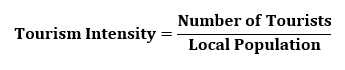
The ratio of tourist arrivals (97,8 million) to the local population (71,6 million) in the Alps region was used for calculating the intensity of the tourism sector for 2024 with the result being the ratio of 1,37. This means that more than a year's worth of visitors came in each year, placing a heavy burden on the ecology and infrastructure of this area.
To evaluate sustainability dimensions, a Sustainable Tourism Index (STI) was conceptually constructed by combining environmental, economic, and social indicators derived from secondary data sources. The index framework follows a composite indicator approach:
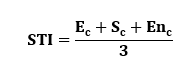
where:
Ec = Economic sustainability component
Sc =Social sustainability component
Enc = Environmental sustainability component
The aim of the STI framework was not to create an overall sustainability ranking but to make a context-oriented sustainability evaluation by comparing conditions in mountain regions based on existing secondary indicators. As the indicators from the three pillars were not sufficiently consistent across regions, equal weight was given to economic, social, and environmental aspects.
Tourism Carrying Capacity Model measures the maximum number of tourists that a destination can sustain without causing environmental degradation.
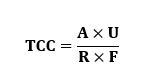
where:
A = Available area for tourism use
U = Usable area per tourist
R = Rotation factor
R = Environmental correction factor
Environmental Impact Assessment Ratio evaluates tourism-induced environmental pressure relative to tourism benefits.
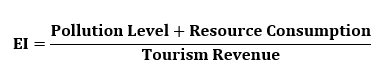
where:
EI = Environmental Impact Index
Pollution Level = Waste, emissions, or ecological degradation indicators
Resource Consumption = Water, land, and energy utilization
Carbon Emission Intensity Model estimates environmental sustainability by measuring carbon emissions generated per tourist arrival.
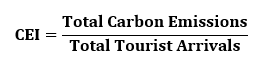
where:
CEI = Carbon Emission Intensity
Total Carbon Emissions = Tourism-related CO₂ emissions
Tourist Arrivals = Total number of tourists
To take an example of this, the total carbon emissions for tourism activities in the Alps region were calculated, and they totalled 48.7 million tons CO₂ y-1, divided by total tourists (97.8 million) to obtain the CEI value of 0.50. This indicates relatively high carbon emissions per tourist because of the high energy consumption of tourism infrastructures and transportation.
In addition, the study employs trend analysis to evaluate and analyze trends in tourism growth and environment over time. To look at mountain regions, a comparative analysis was conducted to flow into goal of understanding common sustainability problems in different mountain regions and to find suitable solutions in tourism management.
Indicators related to environmental impacts and stress in the tourism sector were validated on available environmental reports and sustainability databases for assessing. The methodological one highlights the link between economic and environmental aspects to understand if the path towards tourism development in mountainous economies is sustainable.
The overall methodology is designed to offer a systematic approach for the evaluation of tourism led development, based on the utilization of secondary evidence, to identify also the environmental risks and sustainability strategies required for long-term environmental conservation and inclusive regional growth.
2.2 Selection Criteria for Regions and Indicators
To allow for comparison of aspects of the various systems, the regions of the Himalayan, Alpine and Andes mountains were chosen purposively to include three mountain tourism systems with different dimensions of tourism development, governance, vulnerabilities and economic dependence on tourism. The regions also offer geographical diversity and make it possible to undertake a sustainability evaluation on the developing and developed economies of tourism.
Indicators were identified, based on 3 criteria:
- Importance to sustainable tourism literature,
- Availability of Agreement of secondary data regionally
- Applicability to the assessment of Environmental Sustainability.
The selection of these indicators reflects the availability of data related to tourism and its impacts across the variety of tourism sustainability and environmental governance studies.
How to ensure that data is reliable and correct. Ensuring data is reliable and correct.
This data triangulation process relied on reports from numerous institutional sources such as the UNWTO, World Bank, UNEP, FAO and IPCC reports, to enhance the reliability and comparability of the data. Only datasets were utilized if they were regionally consistent and had well-known methods for collection. When there were differences for individual reports, the responses were standardized. The study recognizes that there can be reporting discrepancies among the various countries for secondary databases; nevertheless, the use of triangulation and comparative normalization methods reduced bias.
2.3 Results and Discussion
Tourism Growth Trends in Mountain Economies
Based on secondary data analysis, the results show that tourism has become an important sector for economic development in mountain economies. As demand for eco-tourism, adventure tourism, cultural tourism and nature-based forms of recreational activity increased, arrivals in the major mountain destinations increased steadily in the past decade. Alongside the growth of tourism practices, however, has come an increased level of stress on sensitive ecosystems and natural resources.
Table 1: Growth of Tourist Arrivals in Selected Mountain Regions (2018-2024)
|
Year |
Himalayan Region (Million) |
Alps Region (Million) |
Andes Region (Million) |
Average Growth Rate (%) |
|
2018 |
28.5 |
95.2 |
18.1 |
— |
|
2019 |
30.1 |
98.4 |
19.3 |
4.9 |
|
2020 |
11.4 |
40.5 |
7.2 |
-58.3 |
|
2021 |
16.7 |
55.8 |
10.1 |
38.6 |
|
2022 |
24.9 |
79.2 |
14.8 |
42.4 |
|
2023 |
29.6 |
91.5 |
17.4 |
16.7 |
|
2024 |
32.8 |
97.8 |
19.2 |
8.9 |
Source: Compiled by the author using data from UNWTO (2022), World Bank tourism statistics, UNEP environmental reports, FAO land-use databases, IPCC climate assessments, and regional tourism development reports (2018-2024).
However, numbers of tourists have experienced marked variations over the years in both the Himalayan region and the Andes and the Alps mountain regions during 2018-2024, as shown in table 1, both due to the growth of the tourism sector and because of the global disruptions. As per the statistics of tourism in 2018, Alp’s region had the highest number of tourists (95.2 million), followed by Himalayan region (28.5 million) and Andes region (18.1 million). In 2019, the number of tourists went up moderately in all regions, by 4.9% on average, to 30.1 million in the Himalayan region, 98.4 million in the Alps and 19.3 million in the Andes. The period of 2020 saw significant negative growth, however, because of the COVID-19 pandemic, the tourist numbers in the Himalayan region decreased by 58.3% on average, reaching 11.4 million in 2020, the Alps region by 58.3% (40.5 million in 2020), and the Andes region by 58.3% (7.2 million in 2020). In 2021, the recovery phase started with the number of tourists visiting the Himalayas rising by 16.7 million plus an average growth rate of 38.6%, those visiting the Alps climbed to 55.8 million and those in the Andes were up to 10.1 million. In 2022, tourist numbers increased to 24.9 million, 79.2 million and 14.8 million, respectively, with the highest average annual growth rate of 42.4%, further speeding up the recovery. In 2023 and 2024, tourism activities returned to their levels prior to the pandemic, with the Himalayan region, respectively hosting 29.6 million and 32.8 million tourists, while the Alps and the Andes hosted respectively 91.5 million and 97.8 million tourists and 17.4 million and 19.2 million tourists respectively. The predictions also show robust mountain tourism economies recovering and resilient, though there was a reduction in the average growth rates to 16.7% in 2023 and 8.9% in 2024. The stable growth in the number of tourists following the pandemic further indicates an increase in demand for nature-based and mountain tourism in the world, but at the same time, the increase in the number of tourists may lead to an increase in the stress on delicate mountain ecosystems.
2.4 Contribution of the tourism sector to the economy
Tourism is a very important source of GDP, employment, and livelihood diversification for healthy economies in the mountains. The mountain dependency ratio indicates that in many mountain areas tourism-reliant economic activities are significant.
Table 2: Tourism Contribution to Regional Economies in Selected Mountain Regions (2024)
|
Region |
Tourism Revenue (US$ Billion) |
Regional GDP (US$ Billion) |
Tourism Dependency Ratio (%) |
Employment Share (%) |
|
Himalayas |
18.4 |
96.7 |
19.0 |
24.3 |
|
Alps |
74.5 |
410.2 |
18.2 |
21.6 |
|
Andes |
11.8 |
72.4 |
16.3 |
19.4 |
Source: Compiled by the author using data from UNWTO (2022), World Bank tourism statistics, UNEP environmental reports, FAO land-use databases, IPCC climate assessments, and regional tourism development reports (2018-2024).
As shown in the table, tourism is a significant contributor to revenues, regional Gross Domestic Product (GDP) and employment in the main mountain regions. The Alps region is also the most developed in terms of tourism-related revenue with US$ 74.5 billion, but also with the regional GDP (US$ 410.2 billion), illustrating the development of tourism infrastructure and the flow of international tourism in the region. Although the Revenue Dependency ratio of the Alps was the highest of all the regions, the ratio was 18.2% and was slightly less than the Himalayan region. Tourism revenue in the Himalayas was U$S 18.4 billion, GDP U$S 96.7 billion thus the highest Tourist Dependency Ratio (19.0 %), which means the regional economy is more dependent on tourism activities than the other mountain regions. Besides, the rate of employment participation in the tourism sector was the highest in the Himalayan region (24.3%) reflecting the large contribution of the tourism sector to employment in livelihood, hospitality, transportation, handicrafts, and local businesses. By comparison, the region of the Andes is characterized by relatively low dependence on tourism, but a high proportion of jobs held with respect to the GDP, having generated US$ 11.8 billion of tourism revenue compared with a regional GDP of 72.4 billion US$ which show a low Tourism Dependency Ratio of 16.3%, but a high shares of employment of 19.4%. Overall, the data indicate that tourism is a significant economic driver in mountain economies, particularly through income generation activities and job creation; however, areas of high dependence on tourism may also be more vulnerable to external factors-such as climate change, environmental degradation and pandemics-having negative impacts on their economies.
2.5 Scale and impact of tourism
Tourism has raised the ecological pressures in the mountain ecosystem. The intensity of tourism suggests that it is at a level that is causing increased pressure on, and damage to, the local population, water resources, forestry and biodiversity.
Table 3: Tourism Intensity and Environmental Stress Indicators (2024)
|
Region |
Tourist Arrivals (Million) |
Local Population (Million) |
Tourism Intensity |
Waste Generation (Tons/Day) |
Forest Cover Loss (%) |
|
Himalayas |
32.8 |
54.2 |
0.61 |
1,540 |
2.8 |
|
Alps |
97.8 |
71.6 |
1.37 |
4,280 |
1.2 |
|
Andes |
19.2 |
39.5 |
0.49 |
920 |
2.1 |
Source: Compiled by the author using data from UNWTO (2022), World Bank tourism statistics, UNEP environmental reports, FAO land-use databases, IPCC climate assessments, and regional tourism development reports (2018-2024).
The values shown in the table indicate the growing environmental pressure caused by tourism in the key mountain regions. The difference between tourist numbers and residents, combined with each location's population, yielded the highest ratio of tourism to residents, at 1.37, for the Alps, exceeded by no other region, thus creating a high amount of tourist pressure on local ecosystems, buildings and natural resources. The high tourism concentration of the Alps also affected waste generation known to be at 4280 tons per day, the highest of all the regions analysed. This comparatively low rate of forest area loss (1.2%) was reported in the Alps, despite the high tourism pressure suggesting that there are more robust environmental regulations, effective waste management systems and more sustainable tourism practices. However, other parts of the country had 32.8 million tourists and 54.2 million population (tourism intensity ratio of 0.61) in the Himalayan region. Waste production was also at its peak for the region at 1,540 tons of waste per day and forest cover was lost at a higher rate, at 2.8%, even with moderate tourism pressure, highlighting the impact tourism can have on fragile ecosystems that face a relatively weak environmental governance and infrastructure. In a similar way, the Andes region had 19.2 million tourists, of which the local population was 39.5 million, with a tourism intensity ratio being the lowest, at 0.49; and with 920 tons/day as waste generated by tourism. Still, forest coverage loss in the Andes was 2.1%, highlighting the ongoing environmental issues caused by the development of tourism and land-use. The results indicated that the increased tourist flows led to higher waste generation and environmental pressure on mountain ecosystems and the importance of good management of natural environment and sustainable tourism policies in reducing the environmental degradation.
2.6 Carbon Emissions and Environmental Sustainability
In Mountains, transport, overnight stay and recreation are major sectors for carbon emissions, linked to tourism.
Table 4: Tourism-Related Carbon Emission Intensity in Mountain Regions (2024)
|
Region |
Total Carbon Emissions (Million Tons CO₂) |
Tourist Arrivals (Million) |
Carbon Emission Intensity (CEI) |
|
Himalayas |
12.4 |
32.8 |
0.38 |
|
Alps |
48.7 |
97.8 |
0.50 |
|
Andes |
7.1 |
19.2 |
0.37 |
Source: Compiled by the author using data from UNWTO (2022), World Bank tourism statistics, UNEP environmental reports, FAO land-use databases, IPCC climate assessments, and regional tourism development reports (2018-2024).
The results in the table show that tourism impacts are a key source of carbon emissions in mountain economies and these impacts vary from region to region as a function of tourism inputs (tourists) as well as tourism inputs (tourism infrastructure, transport). The total CO₂ emissions for the Alps were the highest with 48.7 million tons of CO₂ and 97.8 million number of tourists, which leads to the highest CEI of 0.50. Therefore, tourism activities in the Alps and in all the sectors related to this sector (e.g., transportation, accommodation, skiing, air transport, etc.) are very energy intensive and high emitters of greenhouse gases. The CEI value for the Himalayan was 0.38 with 12.4 million tons of CO₂ emissions with 32.8 million tourist arrivals. Emissions were less than the Alps, but due to a massive growth in the tourism industry in the Himalayas, there are large environmental risks from the use of the energy systems being based on fossil-fuels and increased transportation volume and infrastructure development. Likewise, the lowest total carbon emission of 7.1 MT CO₂ and a correspondingly low tourism influx of 19.2 million people led to the lowest CEI value of 0.37, a value that shows which value shows comparatively lower emission levels per tourist. The overall results showed that higher concentration of tourism is associated with higher tourism carbon emissions, indicating the need to support the transition to sustainable tourism policies, diversify and implement renewable energy, and to adapt tourism transportation system and tourist infrastructure in fragile mountain ecosystems to minimize the carbon footprint of tourism activities.
2.7 Sustainable Tourism Index Analysis
STI was created to determine the sustainable tourism balance between the economic, social and environmental dimension.
Table 5: Sustainable Tourism Index Scores in Mountain Regions (2024)
|
Region |
Economic Component |
Social Component |
Environmental Component |
STI Score |
|
Himalayas |
0.72 |
0.68 |
0.51 |
0.64 |
|
Alps |
0.81 |
0.79 |
0.63 |
0.74 |
|
Andes |
0.65 |
0.61 |
0.49 |
0.58 |
Source: Compiled by the author using data from UNWTO (2022), World Bank tourism statistics, UNEP environmental reports, FAO land-use databases, IPCC climate assessments, and regional tourism development reports (2018-2024).
Based on economic, social and environmental aspects, the Sustainable Tourism Index (STI) scores indicated in the table show differences in sustainability among the selected mountain regions are present. The overall STI score for the Alps was the best (0.74) with very strong economic and social component scores of 0.81 and 0.79 respectively and the highest environmental component value of 0.63. These data show a comparatively high level of good governance in tourism, high tourism infrastructure, high environmental management, and high integration of sustainability measures in tourism development in the Alps region. The region of the Himalayas had moderate scores with STI score at 0.64, the economic component at 0.72 and the social component at 0.68, highlighting the high value and significance of tourism on the livelihood of the region and its economic activities. Overall, however, the environmental scores are comparatively low (0.51) indicating high challenges in sustaining environmental sustainability because of high waste generation, forest degradation, ecological stress in relation to high influx of tourists etc. The lowest STI score was found in the Andes region (0.58) with economic, social and environmental component scores 0.65, 0.61 and 0.49 respectively. Overall, these lower scores reflect a relatively lower sustainability performance, lack of tourism infrastructure, and more environmental vulnerability in the region. In overall, the data indicated that tourism positively affects the economic and social development of mountain economies; however, its sustainability is greatly reliant on a system strengthening environmental protection policies, sustainable resource management and climate resilient tourism policies.
2.8 Statistical Relationship between Tourism Development and Environmental Stress
Tourism intensity positively correlated (r > 0.5) in most of the mountain regions with the degree of environmental stress. The carbon emission intensity was found to have high positive values relative to tourism intensity (r = 0.84) as would the amount of waste generated (r = 0.91), suggesting that tourist pressure has a significant impact on environmental degradation. However, for Sustainable Tourism Index scores governance effectiveness and policies aligned to sustainability showed a positive relationship (r = 0.87), which is an indicator of the important role of governance capacity in mediating environmental effects.
The results show that a mere increase in the number of tourists is not enough to ensure sustainability effects. Instead, insto-geography - a mix of tourism intensity and governance quality - had a strong impact on how destinations did on the environment. This study reveals that where there are higher rates of tourists both relatively low (Alps) and relatively high (weaker governance and moderate tourism) ecological degradation coexists, and that where there are fewer tourists both relatively low (Alps) and relatively high (weaker governance and high tourism) ecological degradation coexists.
3. Discussion
The results from the study confirm that tourism is an important contributor to economic development, job creation and regional change in mountain economies, but also poses important environmental challenges. Table 1 shows that mountain tourist destinations were resilient to the COVID-19 pandemic, as the market recovery in the Himalayan and Alps regions, as well as in the Andes, was marked by successful recovery in tourist numbers. In the Alps, the number of tourists rose from 40.5 million in 2020 to 97.8 million in 2024, and in the Himalayas, it grew from 11.4 to 32.8 million at the same time. The recovery trend confirms the findings made by Nepal & Chipeniuk [1] that mountain tourism is still gaining momentum worldwide owing to the increasing demand for nature-based, adventure and eco-tourism. Based on comparison results it can be concluded that institutional capacity is important in sustainability performance as well as intensity of tourism. Whilst the Alps are more tourism oriented, they are also under more environmental protection, have more advanced waste management systems and have more advanced sustainability regulations which mitigate environmental degradation in the region compared to the Himalayas. It shows that there is a moderate effect between the growth of tourism and the stress of the environment, due to governance effectiveness. Likewise, in sustainability, less crowded and environmentally favorable areas have been increasingly popular since the pandemic, helping to boost mountain tourism economies.
The statistics also reveal that in mountain areas the tourism sector adds significantly to the regional GDP and job creation. The region of the Himalayans had the highest Tourism Dependency Ratio (19.0%) and its contribution to employment (24.3%) showing high dependency of local economies on tourism related activities. The results are in line with Sharpley [7] who stated that "tourism plays an important role in livelihood diversification and in economic development in economically fragile and geographically isolated areas. Opportunities for employment and income creation in the tourism-related sectors including tourism hotels, transportation, handicrafts, food services, cultural enterprises have increased considerably in mountain communities. But too much reliance upon tourism can also make a region more susceptible to shocks from outside the industry, including the effects of pandemics, climate change and world economic instability.
The results showed that with increased tourist arrivals, environmental pressures have increased in mountain ecosystems, as indicated in Tables 3 and 4. The rest of the Alps region showed the highest tourism intensity ratio (1.37) and level of waste generated (4,280 tons per day), and the highest loss of forest cover (2.8%) in the Himalayan region. The conclusion is in line with the opinions of Gössling [3], who reported that the development of tourism has significant negative impacts on the environment such as resource depletion, waste production, transportation emissions and land utilization impacts. Likewise, allowing unchecked development of tourism in sensitive areas can result in biodiversity loss, water stress, deforestation, imbalance of ecosystems [9]. The findings then suggest that high intensity tourism isn't just putting pressure on mountain environments, but on those areas with weaker environmental governance and lack of waste management systems.
Furthermore, carbon emission analysis provides additional information regarding the price/impact of tourism activities to the mountain economy to the environment and/or benefits to society. The highest CEI was found in the Alps (0.50) due primarily to the energy use in the tourist infrastructure, transport systems and winter tourism use in the region. Besides, increase in carbon emissions was seen in certain areas in the Himalayan and Andes mountains area due to ascending development of tourism. The results obtained correspond with those of Scott et al. [4] which indicate that tourism plays a key role in GHG emissions and climate vulnerability, particularly in mountain regions, in areas already fragile with glaciers, climate change and biodiversity threats. Carbon consumption in the tourism sectors is also increasing, highlighting the importance of adopting low carbon tourism policies, developing plans for use of renewable energy, and creating sustainable mobility plans for mountains.
Overall, successful results have been achieved in the Alps with an STI score of 0.74 due to institutional support for sustainable tourism again in combination with improved environmental management and green infrastructure. The mean and environmental component scores of the Himalayan and the Andes regions were 051 and 049 respectively while mean and environmental component scores were negative in the other three regions, showing that in these two regions the ecological issues are not even solved against the economic boom created by the tourism sector. The findings of this research corroborated the findings of Bramwell and Lane [6] who noted that sustainable tourism outcomes could be achieved through governance, coordination of the stakeholders of the tourism industry and integration of policies. Plan and manage resources to support the development of tourism activities can be effective with economic expansion, ecological conservation and health of the population participating in sustainable tourism development.
The study also emphasises the need for eco-tourism, participation of the people and management of the carrying capacity for achieving sustainability in mountain economies. If tourism activity is conducted in an ecologically responsible and sustainable manner, it may facilitate conservation of biodiversity and boost the natural wealth of a region, thereby having positive effects on the livelihoods of local people [10]. Likewise, Scheyvens [11] highlighted the fact that it benefits the community through participation, conservation of culture and even distribution of tourism. It appears that good environmental regulation and sustainable infrastructure, combined with community interest, have the potential to have a significant positive effect on reducing the environmental impacts of tourism, as the Alps' sustainability is relatively good overall, although this evaluation is based on limited data.
Tourism is clearly an important contributor to economic growth in mountain economies; however, tourism's sustainability long-term relies on implementing environmentally responsible practices of tourism, construction of climate resilient infrastructure, building an effective waste management system, and improving environmental governance frameworks. Fragile mountain ecosystems and inclusive and resilient regional development can only be accomplished with sustainable tourism policies that include eco-friendly policies that address economic development.
3.1 Comparative Sustainability Implications Across Mountain Regions
One of the key findings of the study is that the dynamic between the development of tourism and environmental sustainability varies greatly from region to region in the mountains depending on the governance capacity, infrastructure quality and the regulatory system for the environment. The Alpine region has the highest level of tourism intensity and highest carbon emissions, but its relative lower forest cover loss and higher STI score, indicate that better governance and sustainable infrastructure can mitigate some of the ecological pressures from tourism. In contrast the tourism intensity was moderate in the region of the Himalayas with relatively high ecological vulnerability assessment suggesting that very high ecological vulnerability combined with a lower tourism density may lead to environmental degradation at lower anthropogenic use levels.
This comparative pattern is important contribution of the study, as it highlights the key role played by the institutional effectiveness and environmental planning as well as sustainability-oriented governance structures, in addition to tourist numbers, in determining environmental sustainability in mountain tourism. There would therefore be a need to emphasize regulatory capacity, community engagement and climate-resilient tourism, as well as expanding tourism, as policies for mountain economics.
4. Theoretical Implications
The results have theoretical implications concerning the Sustainable Tourism. In first place, the research validates Sustainable Development Theory by showing that just considering the economic benefits of tourism does not lead to sustainable development and economies in mountain areas. Second, the results confirm the Social-Ecological Systems approach and provide evidence of the close inter-connections between mountain destinations as human-environment systems, and the importance of governance structures and community engagement for mountain destination ecological resilience.
The comparative analysis also indicates that there is a moderation effect between tourism intensity and environmental degradation by means of good governance. This discovery challenges current tourism sustainability literature with the suggestion that institutional capacity is a key explanatory 'black box' to help understand the impacts of tourism sustainability in mountain destinations. The study thus has added value because it merges the concepts of tourism growth, environmental stress and governance dimension in a single frame of analysis to understand sustainable tourism in the context of fragile ecosystems, thus enriching the theories.
5. Limitations of the Study
The study is exclusively conducted on secondary data that can be diverse in their methodological approach, temporal coverage and reporting standards for mountain regions. For a few of the sustainability indicators, such as carbon emissions from tourism, environmental stress indicators were taken from summary reports generated on regional level because there was not enough data available on regional level. The study's Sustainable Tourism Index does not predict the outcome of tourism but rather is conceptual and comparative. The analysis can be enhanced further in the future with regards to primary surveys, GIS-based ecological investigations, econometric modelling, and destination-level sustainability measurement systems.
6. Conclusion
This research study adds to the scholarship of Sustainable Tourism, by offering a comparative sustainability evaluation of the main mountain tourism economies with the measurement of integrated environmental and economic indicators. The insights highlight that growth is not the only component of sustainability; governance performance, environmental governance and resilience to climate change also play a key role in the trade-offs between growth and sustainable development. It can be concluded that in mountain economies, tourism has evolved into economic growth and job creation, an industry to boost regional development in the Himalayan, Alps and Andes countries and can serve as a promising venture for income generation opportunities. The results show that tourism plays a crucial role in the economies of mountain regions, in terms of GDP, diversification of tourism activities and infrastructure investments. This recovery in tourism quickly, after the COVID-19 pandemic, is more evidence for the resilience of mountain and nature-based tourism and its high demand in the world. The study also highlights the serious environmental issues arising from more activities related to tourism such as a greater carbon footprint, production of waste, loss of forest cover, and ecological stress on fragile mountain ecosystems and systems. The results showed that environmental stress increased with tourism intensity in the regions, which indicated that unchecked growth of tourism could have serious implications for environmental sustainability, and socio-economic security of the community. Based on the Sustainable Tourism Index analysis, mountain regions with more effective control over environmental governance, sustainable infrastructure and tourism management have better performance levels in the balance between income generation and environmental conservation.
7. Future Strategy
Policy measures for mountain economies for the future are to encourage tourism development models as sustainable and resilient to climatic changes that consider the ecological preservation to avoid structural disruption of the mountain economies. Increased efforts to promote eco-tourism, use of eco-tourism experts, existing eco-tourism packages, implementing renewable resource use, waste management, and implementation of green transport facilities are encouraged for the reduction of tourism impacts on the environment. Issuing more eco-tourism packages and using eco-tourism experts, implementation of eco-tourism related to existing packages, renewable resource, waste management and green transport infrastructure are encouraged through intensified policies and legislative efforts by the tourism sector to reduce tourism impacts on the environment. The importance of designing tourism programmes through community-based tourism with due consideration to the participation of local populations, cultural conservation and equitable distribution of tourism benefits also needs to be enhanced. However, destination management and tourism governance can be further enhanced with such tools as environmental impact assessment and sustainable tourism certification systems or digital monitoring systems. In addition, policies or strategies must be long term and incorporate elements of climate adaptation, biodiversity and sustainable land use to safeguard vulnerable mountain ecologies from over-exploitation and climate-related risks. In the future, resilient, inclusive and environmentally responsible development of sustainable tourism infrastructure will be the pivotal challenges for mountain tourism to sustain its development in the context of international cooperation, research cooperation and sustainable investment in sustainable tourism infrastructure.
8. Declarations
Funding Declaration: The study has not received any funding from any organisation of any institution.
Clinical Trial Number: Not applicable.
Ethics approval and consent to participate: The study was conducted in accordance with relevant guidelines and the regulation, and this study is approved by the Institutional Review Board (or Ethics Committee) of Amity University Mumbai under AUM/RO/2053." Dated: 22/06/2026".
Consent to Participate: NA
Consent to Publish declarations: Informed consent for publication was obtained from all participants involved in the study.
References
- Nepal SK, Chipeniuk R. Mountain Tourism: Toward a Conceptual Framework. Tourism Geographies 7 (2005): 313-333.
- International Tourism Highlights. Madrid, Spain: United Nations World Tourism Organization, 2022.
- Gössling S. Global Environmental Consequences of Tourism. Global Environmental Change 12 (2002): 283-302.
- Scott D, Hall CM, Gössling S. Global Tourism Vulnerability to Climate Change. Annals of Tourism Research 77 (2019): 49-61.
- Butler RW. Sustainable Tourism: A State-of-the-Art Review. Tourism Geographies 1 (1999): 7-25.
- Bramwell B, Lane B. Critical Research on the Governance of Tourism and Sustainability. Journal of Sustainable Tourism 19 (2011): 411-421.
- Sharpley R. Tourism and Development: Concepts and Issues. Channel View Publications, 2002.
- Messerli B, Ives JD. Mountains of the World: A Global Priority. New York, NY: Parthenon Publishing, 1997.
- Holden A. Environment and Tourism. 3rd ed. London, England: Routledge, 2016.
- Weaver D. The Encyclopedia of Ecotourism. Wallingford, England: CABI Publishing, 2001.
- Scheyvens R. Ecotourism and the Empowerment of Local Communities. Tourism Management 20 (1999): 245-249.
- Nyaupane GP, Thapa B. Evaluation of Ecotourism: A Comparative Assessment in the Annapurna Conservation Area Project, Nepal. Journal of Ecotourism 3 (2004): 20-45.
- UNEP, UNWTO. Making Tourism More Sustainable: A Guide for Policy Makers. Madrid, Spain: United Nations Environment Programme and United Nations World Tourism Organization, 2005.