Rachelle Derosena*, Kathryn Adams
Missouri State University, Springfield, MO, USA
Corresponding Author: Dr. Rachelle Derosena. DNP, WHNP-BC, RNC- OB, C-EFM, Missouri State University, Springfield, MO, USA.
Received: 03 June 2026; Accepted: 08 June 2026; Published: 23 July 2026
DOI: 10.26502/fjwhd.2644-288400151
ShareObjective: To evaluate the impact of a patient-centered educational tool designed to improve women’s ability to identify credible health information on social media. Design: Quality improvement project using a pre- and post-intervention survey design. Setting/Local Problem: Women increasingly use social media to seek health information, yet misinformation remains prevalent and may influence health decisions. There is a need for practical tools to support health literacy in clinical settings. Participants: Women aged 18-65 receiving gynecologic or obstetric care at a clinical site (N = 15 pre-intervention; N = 3 post-intervention). Intervention/Measurements: Participants completed a pre-intervention survey assessing social media use and perceptions of health information. An educational resource tool was introduced, including guidance on evaluating credibility (e.g., CRAAP framework) and recommended evidence-based sources. A post-intervention survey assessed tool utilization and perceived credibility of information. Results: Most participants (93%) reported using social media multiple times daily. Nearly half (47%) used it to seek health information. Misinformation was the most frequently reported concern (31%). Post-intervention engagement was limited (N = 3), with partial use of the educational tool and neutral perceptions of credibility. No measurable change in health behaviors was identified. Conclusion: Findings highlight the widespread use of social media for women’s health information and concern about misinformation. Limited engagement with the educational intervention suggests that more accessible, scalable strategies are needed. Further research with larger samples is required to evaluate effectiveness.
Misinformation; Women’s health; Social media; Patient education
Misinformation articles; Women’s health articles; Social media articles; Patient education articles
Précis Statement
Social media misinformation influences women’s health information-seeking, highlighting the need for effective clinical education tools.
Clinical Implications
- Women frequently use social media for health information but report concerns about misinformation.
- Nurses play a critical role in teaching patients how to evaluate online health information.
- Simple tools such as credibility checklists may improve health literacy but require better implementation strategies.
- Clinical integration of digital health education should be prioritized in women’s health settings.
Introduction
The use of social media has proliferated in recent years with current estimates suggesting that more than half of the global population engages with a digital platform on a daily basis (Luc & Antonoff, 2021). Social media has a wide range of uses and in recent years, social media has become a pertinent resource for sharing health information (Afful-Dadzie et al., 2021). For women, in particular, social media has become a resource for seeking health information on topics that may not be as extensively discussed in formal healthcare settings (Bringley et al., 2023). Examples include information related to reproductive health, pregnancy, mental health, and alternative therapies, to name a few (Bringley et al., 2023 Skouteris & Savaglio, 2021). Social media platforms offer women access to vital information and have been shown to foster health promotion, especially among women of reproductive age (Henderson & Gow, 2023). From this perspective, it would seem that social media has been a benefit to women’s health, in general. Despite notably positive outcomes for using social media to communicate women’s health information, there are concerns about the use of social media platforms for the dissemination of health information. More specifically, concerns arise over misinformation regarding health information (Mulchay et al., 2024). Misinformation shared via social media can travel fast, often becoming viral within days (Na, 2026). Misinformation may further impact the healthcare decision making of patients, leading to adverse outcomes (Suarez-Lledo & Alvarez-Galvez, 2021). For a woman who is pregnant, misinformation regarding prenatal care or some aspect of labor and delivery may lead to obfuscated decision making and poorer outcomes for both mother and child. Current research demonstrates that many women use social media to identify health information, including exploring symptoms, evaluating treatments, and seeking validation from others with similar experiences (Gomula et al., 2024). Unfortunately, many women and patients in general may lack the skills needed to critically evaluate the information that they find online (Keshavarz, 2021). Health literacy clearly plays a role in addressing this gap within women’s healthcare. Tools that support patients in identifying credible information can help to reduce the gap between digital content and evidence-based practice (Ong et al., 2026). As an example, the CRAAP test (Currency, Relevance, Authority, Accuracy, and Purpose) provides a structured approach to evaluating online information (Silburn, 2025). To the detriment of patients, however, this tool is not routinely integrated into clinical education targeted towards the patient (Ong et al., 2026). Nurses and, in particular, advanced practice nurses are uniquely positioned to address patient misinformation through patient education and counseling (Loyal et al., 2021). Integrating a brief, accessible educational intervention into clinical workflows may improve the ability of the patient to navigate online health information, enhancing their ability to identify credible information and to make evidence-based decisions about their healthcare (McCaskill et al., 2024). To this end, this quality improvement project was implemented to evaluate the use of a Women’s Health Educational Resource Tool designed to support patients in identifying credible health information on social media and to assess patterns of social media use, perceptions of reliability, and engagement with educational resources.
Methods Design
This quality improvement project utilized a pre-/post-intervention survey design. Pre-intervention assessments of patient demographics and engagement with social media for women’s health information were employed followed by clinical instruction using a Women’s Health Educational Resource Tool. This was further followed by a post-intervention evaluation of patient experiences with social media use. The project specifically focused on assessing patterns of social media use, perceptions of information credibility, and the potential influence of educational resources on patient decision making. This design was selected to allow for practical evaluation of a clinic-based intervention applied in a real-world context. Emphasis was placed on the feasibility of implementation and patient engagement rather than strict hypothesis testing.
Setting
The setting for this quality improvement project was a privately owned obstetric and gynecologic clinic located in the Bronx, New York. The clinic currently provides prenatal and gynecologic services to a diverse patient population, including individuals from underserved communities with varying levels of health literacy. A significant proportion of patients seen at this facility identify as Spanish-speaking or report being from immigrant backgrounds.
Participants
Participants for this quality improvement project included individuals aged 18 to 65 years who were receiving care at the clinic during the implementation period. Patients were eligible if they reported using social media to seek health-related information. This was determined by a screening question included in the pre-intervention survey. Patients who reported that they did not use social media for health information were excluded from the project. The final sample reflected a range of educational backgrounds and demographic characteristics.
Intervention
The intervention for this quality improvement project involved a Women’s Health Educational Resource Tool, developed for this project. Specifically, the tool included a QR code provided to patients when checking in for their visit. Patients could scan the QR code to learn about the following topics: misinformation in social media and its potential impact on health outcomes; instruction on the use of the CRAAP framework to evaluate online health information; access to curated, evidence-based websites and resources related to women’s health; and content available in both English and Spanish to support accessibility. Front desk staff at the practice site were responsible for instructing and presenting the QR code to patients who attended their women’s health visit.
Data Collection
Data collection for this quality improvement project was managed electronically through the use of QR code-linked surveys administered during the clinic visit. Participants were asked to scan a QR code to consent electronically to complete the pre-intervention survey. Pre-intervention survey questions focused on demographics as well as social media use, types of health information sought, perceived reliability of information, and the influence of social media on health behaviors. Participants who met the inclusion criteria were then guided to the educational resource and upon completion of reviewing the content were directed to a post-intervention survey. Participation in the project was voluntary and no incentives for participation were provided. Data collection procedures were designed to minimize disruption to clinic workflow while also ensuring that patients could efficiently participate in the project during a routine visit.
Data Analysis
Data analysis for this project was undertaken utilizing descriptive statistics including counts (frequencies) and percentages. Descriptive statistics were used to provide a characterization of trends in social media use, perceptions of misinformation, and engagement with the educational intervention. Due to differences in response rates between the pre- and post-intervention phases of the project, inferential analysis of the data could not be performed.
Ethical Considerations
This project was reviewed and approved by the Missouri State University Institutional Review Board (IRB-FY2025-341) prior to implementation. Before project participation, each patient had to provide electronic informed consent. All data was collected anonymously and stored securely using a password-protected computer. In general, the project posed minimal risk to participants.
Results
During the implementation period, a total of 20 patients were approached about participation in the project. Of these, 15 met the inclusion criteria and completed the pre-implementation survey. Of these 15 participants, six proceeded to engage with the educational tool and three completed the post-intervention survey. Variability in recruitment, patient participation, and follow-up limited the ability to provide a comparative analysis of the pre- and post-intervention data. This justifies the sole use of descriptive statistics.
Participant Characteristics and Social Media Use
Participant demographics and baseline data are summarized in Table 1. The majority of participants were between the ages of 35 and 55 years, with the largest proportion (47%) in the 45–55 age group. Educational attainment varied, with most participants holding a bachelor’s or graduate degree.
Table 1: Participant Demographics and Baseline Social Media Data (N = 15).
|
Variable |
Result [n (%)] |
|
Age |
|
|
25-34 |
2 (13%) |
|
35-44 |
5 (33%) |
|
45-55 |
7 (47%) |
|
55-65 |
1 (7%) |
|
Highest Level of Education |
|
|
Some College |
2 (13%) |
|
Associate Degree |
2 (13%) |
|
Bachelor’s Degree |
5 (35%) |
|
Graduate Degree |
6 (40%) |
|
Frequency of Social Media Use |
|
|
Once a day |
1 (7%) |
|
Several times a day |
14 (93%) |
|
Social Media Platforms Used |
|
|
|
3 (6%) |
|
Snapchat |
8 (15%) |
|
TikTok |
11 (20%) |
|
|
13 (24%) |
|
|
15 (28%) |
|
Other |
4 (7%) |
With respect to the frequency of social media use, 93% of the sample reported using social media several times per day. The data also indicate that Instagram was the most commonly used social media platform (28%) followed by Facebook (24%). Figure 1 illustrates the distribution of social media platforms used by participants.
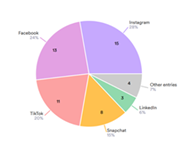
Figure 1
Pie Chart Illustrating the Types of Social Media Use by Participants.
Use of Social Media for Health Information
Pre-intervention survey results are summarized in Table 2. The data indicate that nearly half of all participants (47%) reported using social media to search for health-related information. Interestingly, however, slightly more than half of all participants (53%) reported that they did not use these platforms for this purpose.
Table 2: Pre-Intervention Survey Results.
|
Question |
Result |
|
Have you ever used social media to look up health information? |
|
|
Yes |
7 (47%) |
|
No |
8 (53%) |
|
How frequently do you seek health information on social media? |
|
|
Frequently |
2 (25%) |
|
Occasionally |
5 (63%) |
|
Rarely |
1 (13%) |
|
What types of women’s health information do you look for on social media? (Select all that apply) |
|
|
Sexual health issue |
1 (5%) |
|
Drug and medication information |
3 (16%) |
|
Assess symptoms and treatment |
3 (16%) |
|
Mental health |
5 (25%) |
|
Alternative medicine |
6 (32%) |
|
Other entries |
1 (5%) |
|
How reliable do you find the health information on social media? |
|
|
Very reliable |
2 (25%) |
|
Somewhat reliable |
3 (28%) |
|
Neutral |
2 (25%) |
|
Somewhat unreliable |
1 (13%) |
|
Do you cross-check the health information you find on social media with other sources? |
|
|
Always |
2 (25%) |
|
Often |
4 (50%) |
|
Sometimes |
1 (13%) |
|
Rarely |
1 (13%) |
|
What concerns do you have about obtaining health information from social media? (Select all that apply) |
|
|
Difficulty understanding |
2 (15%) |
|
Lack of credible sources |
3 (23%) |
|
Privacy concerns |
3 (23%) |
|
Misinformation |
4 (31%) |
|
None |
1 (8%) |
|
Does the health information you find on social media influence your health-related decisions or actions? |
|
|
Yes |
4 (50%) |
|
No |
4 (50%) |
|
*If “Yes” Why? |
|
|
I have found information about vitamins, natural remedies. I also like looking at the comments and hearing from other people - what they are experiencing and what works/doesn't work for them. It helps normalize things. |
-- |
|
It helps guide my decision making process. |
-- |
|
Could influence the type of supplements or face serums I buy. |
-- |
|
After reviewing various supplements and studies reflecting importance and benefits I will try for at least 30 days. |
-- |
|
Do you feel comfortable talking to your healthcare provider about health information you find on social media? |
|
|
Yes |
8 (100%) |
|
**If “No” why not |
|
|
I feel comfortable asking questions, getting clarity, etc. |
-- |
|
What improvements would you like to see in how health information is shared on social media? |
|
|
Listing their sources. |
-- |
|
Credible sources. Reliable evidence based information. |
-- |
Among those who did seek health information online, most reported doing so occasionally (63%) with some reporting that they sought health information from social media frequently (25%). Participants reported searching for a range of women’s health topics, including mental health concerns, alternative medicine, medication information, and symptom evaluation. Alternative medicine and mental health topics were the most frequently reported areas of interest. A visual summary of the types of health information sought by women online is provided in Figure 2.
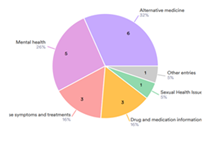
Figure 2: Pie Chart Illustrating the Types of Women’s Health Information Sought on Social Media.
Perceptions of Misinformation and Credibility
In general, participants expressed mixed perceptions about the reliability of health information on social media (see Table 2). Responses ranged from very reliable to somewhat unreliable. Many participants indicated that they had neutral or uncertain views on credibility. Although perceptions of credibility were variable, most of the sample reported engaging in some level of verification behavior. Specifically, 75% of the sample reported that they “often” or “always” cross-checked the information that they found on social media. Misinformation emerged as a significant concern related to social media health information, as reported by 31% of participants. Additional concerns for the credibility of online information included the lack of credible sources, privacy issues, and difficulty understanding the information.
Influence on Health Decisions and Patient-Provider Communication
With regard to the influence of social media information on health-related decision making, responses were split. Half of the sample (50%) indicated that the information obtained from social media played some role in healthcare decision making while the other half reported that social media had no influence on decision making. Qualitative responses provided on the survey suggested that social media content contributed to specific decisions. Examples included decisions related to supplements, alternative therapies, and product selection. Social media was also used for experience sharing to acquire validation and reassurance from the larger online community. Notably, all participants reported feeling comfortable discussing health information obtained from social media with their healthcare providers. Participants highlighted that these interactions provided an opportunity for clinical engagement and patient education.
Engagement with Educational Intervention
The post-intervention survey findings are summarized in Table 3. Due to the small number of participants in the post-intervention survey (N = 3), the results were interpreted through descriptive statistics only.
Table 3: Post-Intervention Survey Results.
|
Question |
Result |
|
How often do you seek health information specifically related to women's health online? |
|
|
women’s health online? |
|
|
Frequently |
1 (33%) |
|
Occasionally |
2 (67%) |
|
Which social media platforms do you typically use to find information on women’s health? (Select all that apply) |
|
|
Internet |
1 (20%) |
|
TikTok |
1 (20%) |
|
|
2 (40%) |
|
Other |
1 (20%) |
|
Why do you prefer social media over other sources for women's health information? (Select all that apply) |
|
|
Epoch times |
1 (10%) |
|
Community support/interact |
1 (10%) |
|
Up-to-date information |
1 (10%) |
|
Convenience |
2 (20%) |
|
Easy accessibility |
2 (20%) |
|
Wide range of perspectives |
3 (30%) |
|
Before receiving the Women’s Health Educational Resource Tool, has a healthcare professional ever recommended specific websites to obtain health information? |
|
|
Yes |
1 (33%) |
|
No |
2 (67%) |
|
How familiar were you with using The CRAAP tool for women's health information prior to receiving the Women’s Health Educational Resource Tool? |
|
|
Not familiar |
3 (100%) |
|
How often did you use the recommended websites in the Women’s Health Educational Resource Tool to find health information on social media? |
|
|
Sometimes |
2 (67%) |
|
Never |
1 (33%) |
|
How credible did you find the women's health information on the recommended websites? |
|
|
Somewhat credible |
1 (33%) |
|
Neutral |
2 (67%) |
|
Has the information obtained from the women's health educational tool positively influenced your health decisions or changed any previous health actions? |
|
|
Unsure |
3 (100%) |
|
What challenges did you encounter when using the recommended women's health websites and social media platforms to find information? (Select all that apply) |
|
|
Information overload |
1 (33%) |
|
None |
2 (67%) |
|
How would you rate the accessibility of the information on these websites for users with varying levels of education to understand? |
|
|
Easy to understand |
2 (67%) |
|
Somewhat understandable |
1 (33%) |
|
What improvements would you suggest for enhancing the usefulness of the Educational Resources Women’s Health Tool? |
|
|
Tutorial |
-- |
Among the participants, most reported occasional use of social media for women’s health information. Instagram and Facebook remained the most commonly used platforms. Reasons for using social media included convenience, accessibility, and exposure to diverse perspectives. Figure 3 includes a visual overview of the most commonly used reasons for using social media.
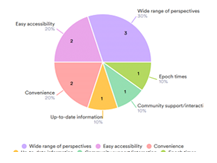
Figure 3: Pie Chart Illustrating Reasons Why Social Media is Preferred.
Data from Table 3 further indicate that participants had no prior familiarity with the CRAAP framework before the intervention. Engagement with the Women’s Health Educational Resource Tool was variable. Most participants reported only occasional use of recommended resources. Perceptions of credibility ranged from neutral to somewhat credible. Participants were uncertain whether the intervention influenced their health decisions.
Barriers to Use of Educational Resources
Barriers to the use of educational resources were also evaluated (see Table 3). While participants reported minimal barriers to using the tool, one participant reported that information overload was a challenge. Most participants indicated that the materials in the educational tool were easy or somewhat easy to understand. This suggests that the tool was generally accessible to most participants. Additionally, participants provided suggestions for improvement, including the addition of a tutorial to enhance usability and engagement.
Discussion
Findings from this quality improvement project reinforce the growing role of social media as a source of health information for women, while also highlighting persistent concerns related to misinformation and variability in patient engagement with educational interventions. Consistent with prior research, participants reported frequent use of social media platforms, with most engaging multiple times per day (Luc & Antonoff, 2021) (1). This aligns with existing literature demonstrating widespread use of digital platforms for health-related purposes among women (Afful-Dadzie et al., 2021) (2). The high frequency of use observed in this project underscores the importance of addressing social media as a meaningful component of patient education and health communication. Participants in this project reported seeking a range of women’s health information on social media, including mental health, alternative medicine, and symptom evaluation. These findings are consistent with previous studies indicating that women frequently use social media to explore health concerns, evaluate treatment options, and seek peer validation (Bringley et al., 2023; Gomula et al., 2024; Skouteris & Savaglio, 2021) (3). The diversity of topics identified in this project further supports the need for clinicians to recognize social media as a supplemental, though not always reliable, source of health information within patient care. Concerns related to misinformation were prominent among participants, with misinformation identified as the most common concern when obtaining health information online. This finding reflects broader concerns in the literature regarding the rapid dissemination and potential impact of inaccurate health information on patient decision-making (Mulchay et al., 2024; Na, 2026; Suarez-Lledo & Alvarez-Galvez, 2021) (4). Although many participants reported cross-checking information, variability in perceived reliability suggests that patients may not consistently apply effective evaluation strategies when navigating online content. The findings also highlight the influence of social media on health-related decision-making. Half of the participants reported that information obtained from social media influenced their health behaviors, including decisions related to supplements, alternative therapies, and product use. This is consistent with literature indicating that exposure to online health information can shape patient perceptions and behaviors, even when the information is not evidence-based (Suarez-Lledo & Alvarez-Galvez, 2021) (5). At the same time, participants reported feeling comfortable discussing social media–derived information with healthcare providers, suggesting an opportunity for clinicians to engage patients in meaningful dialogue about online health content. Engagement with the Women’s Health Educational Resource Tool was variable, with limited follow-up participation and inconsistent use of recommended resources. Although participants generally reported that the materials were accessible and understandable, uncertainty regarding the impact of the tool on health behaviors suggests that passive educational approaches may be insufficient to produce measurable change. These findings are consistent with evidence suggesting that health literacy interventions are most effective when they are interactive, reinforced over time, and integrated into ongoing clinical communication (Ong et al., 2026; McCaskill et al., 2024) (6). Notably, participants reported no prior familiarity with the CRAAP framework before the intervention, despite its established use as a structured method for evaluating online information (Silburn, 2025) (7). This highlights a gap in patient education and supports the need for integrating practical evaluation tools into routine clinical practice. While the educational resource introduced this framework, the limited engagement observed suggests that additional strategies may be needed to support sustained use and application. Several limitations should be considered when interpreting these findings. The intended sample size was not achieved, and participation in the post-intervention survey was limited, restricting the ability to assess changes over time. In addition, differences in participation between pre- and post-intervention groups limited direct comparison of outcomes. Despite these limitations, the findings provide insight into patient behaviors, perceptions, and barriers related to social media use and health information, and they highlight important considerations for clinical practice.
Implications for Practice
The findings from this project have several important implications for nursing practice. In particular, the project illuminates the high rate of social media use among patients. This should be seen as a reason for nurses to assess a patient’s use of social media platforms as part of patient health history and education. Understanding where patients acquire health information could be helpful for determining if misinformation is present. This could also be used to help nurses tailor education for patients to ensure that they are using online health information appropriately. Results from this study do suggest that most patients are comfortable discussing social media-derived information with healthcare providers. This should facilitate conversations between nurses and patients to review online health information. Implications for nurses also extend to the issue of misinformation among health information. Specifically, misinformation was highlighted as a primary concern for patients, suggesting that structured approaches to teaching patients how to evaluate online health information could be beneficial for all patients. Incorporating simple, practical tools such as the CRAAP framework into patient education may support the development of critical appraisal skills for patients. However, findings from this project suggest that providing tools alone may not be sufficient. Nurses may also need to consider incorporating guided instruction, examples, and follow-up reinforcement to improve patient confidence and application of these critical appraisal skills in real-world contexts. Additional implications from this project can be seen with regard to patient variability in engagement in the educational intervention. This suggests that accessibility to health literacy tools alone do not ensure their utilization and application. Maintaining patient engagement in learning and education may require tools that are interactive and concise, rather than broad and general in scope. These tools would need to be integrated into clinical workflows to ensure that patient education does not disrupt the ability of providers to deliver care. As an example, brief provider-led discussions, visual aids, or step-by-step demonstrations could enhance patient understanding and engagement with the educational tool. Integrating education into routine care should also improve the effectiveness of educational content. The diversity of the patient population also has implications for this project. In particular, patient diversity underscores the importance of utilizing culturally and linguistically appropriate educational materials when delivering patient education. Providing resources in multiple languages and ensuring that content is understandable across varying levels of health literacy are essential components of effective patient education. Nurses should also consider the cultural context in which patients interpret and use health information when discussing social media content. These issues will impact how patients utilize health, and how information should be integrated into an educational program to help improve the ability of patients to identify health misinformation provided online. Finally, this project has implications for further and future research. Specifically, the project emphasizes the need for ongoing evaluation and adaptation of educational interventions to improve patient care. Future efforts to explore this topic should focus on strategies to improve patient engagement, increase follow-up participation, and assess long-term outcomes related to health literacy and decision-making. A significant decline in post-intervention responses from patients was observed in this project, suggesting that action is needed to investigate the root causes of this problem. Identifying root causes would be helpful for improving the current project to ensure that more patients use and interact with the educational tool. Additionally, expanding the scope of interventions to include interdisciplinary collaboration and digital health strategies may further enhance the ability of nurses to understand and to address misinformation in women’s health.
Conclusion
This quality improvement project sought to evaluate the impact of a patient-centered educational tool designed to improve the ability of patients to identify credible women’s health information via social media. Participants demonstrated frequent (daily) engagement with social media platforms and reported using these platforms to explore a wide range of health topics. An educational intervention was developed and introduced to help patients identify credible health information on social media: the Women’s Health Educational Resource Tool. Unfortunately, the results of this project indicated that the tool was inconsistent and unclear with its impact on health behavior. These findings suggest that while patients recognize the risks associated with misinformation, additional support is needed to translate awareness into meaningful changes in information-seeking and decision-making behaviors. Nurses and advanced practice nurses should play a critical role in bridging this gap, building effective educational interventions that help strengthen the ability of patients to locate and utilize credible health information from social media. Continued efforts are needed to develop and implement effective, accessible strategies that support health literacy and promote informed decision-making in women’s health.
Acknowledgement
"I would like to express my deepest gratitude to Dr. Kathryn A. Adams, DNP, RNC-OB, C-EFM, Clinical Associate Professor at Missouri State University, and Dr. Melissa R. Penkalski, DNP, APRN, CPNP-PC, AE-C, Graduate Program Chair at Missouri State University, for their invaluable guidance, encouragement, and expertise throughout my research process. Their mentorship has been instrumental in shaping the quality and direction of this work.I would also like to sincerely thank my parents for their unwavering love, patience, and support, which have been a constant source of motivation and strength throughout my academic journey."
References
- Afful-Dadzie E, Afful-Dadzie A, Egala SB. Social media in health communication: A literature review of information quality. Health Information Management Journal 52 (2021): 3-17.
- Bringley J, Sunaram P, Avis E, et al. Effect of age on U.S. gynecologic patients’ use of social media for women’s health information. Patient Education and Counseling 114 (2023): 1-12.
- Gomula J, Warner M, Blandford A. Women’s use of online health and social media resources to make sense of their polycystic ovary syndrome (PCOS) diagnosis: A qualitative study. BMC Women’s Health 24 (2024): 1-13.
- Henderson M, Gow ML. A scoping review of health promotion interventions delivered via social media to women of reproductive age. Public Health Nutrition 26 (2023): 3713-3189.
- Keshavarz H. Evaluating credibility of social media information: Current challenges, research directions and practical criteria. Information Discovery and Delivery 49 (2021): 269-275.
- Loyal D, Ricci L, Villegente J, et al. Healthcare providers perception of therapeutic patient education efficacy according to patient and healthcare provider characteristics. Chronic Illness 19 (2021): 233-249.
- Luc JGY, Antonoff MB. The global role and impact of social media. The Annals of Thoracic Surgery 112 (2021): 1384-1386.
- McCaskil A, Gasch-Gallen A, Montero-Marco J. The effect of nurse health literacy interventions on patient health literacy scores in specialty consultations: A quasi-experimental study. BMC Nursing 23 (2024): 1-9.
- Mulcahy R, Barnes R, de Villers Scheepers R, et al. Going viral: Sharing misinformation by social media influencers. Australasian Marketing Journal 33 (2024): 296-309.
- Na K. Social media virality metrics as interpretive cues: Affective pathways to sharing conflicting health information. Computers in Human Behavior Reports 21 (2026): 1-7.
- Ong JSH, Loh KXJ, Han JY, et al. Integrating the CRAAP framework to support critical thinking and information literacy. Journal of Chemical Education 103 (2025): 825-832.
- Silburn A. Navigating online health information: Empowerment vs. misinformation. Frontiers in Digital Health 7 (2025): 1-3.
- Skouteris H, Savaglio M. The use of social media for preconception information and pregnancy planning among young women. Journal of Clinical Medicine 10 (2021): 1-11.
- Suarez-Lledo V, Alvarez-Galves J. Prevalence of health misinformation on social media: Systematic review. Journal of Medical Internet Research 23 (2021): 1-17.