Ali Al-kulabi*, Mohamed Mansour, Asad Ali, Raj Thakrar
Department of Orthopaedics, East and North Hertfordshire NHS Foundation Trust, Stevenage, GBR, SG1 4AB, UK
*Corresponding Author: Ali Al-kulabi, Department of Orthopaedics, East and North Hertfordshire NHS Foundation Trust, Stevenage, GBR, SG1 4AB, UK
Received: 16 June 2026; Accepted: 29 June 2026; Published: 14 July 2026
The patella is a large sesamoid bone attached to the quadriceps tendon superiorly and the tibial tuberosity, via the patellar tendon, inferiorly. Acting as a fulcrum, the patella distances the lower limb extensor mechanism from the femoral condyles, increasing the lever arm to maximise extensor efficiency [1]. In addition, the patella also contributes to joint stability, protects the anterior knee against trauma, and reduces stress on the knee joint by force distribution [2]. It is also a source of arthritis, with arthropathy of the retropatellar cartilage directly responsible for osteoarthritis [3].
Direct trauma or rapid eccentric quadricep contraction can result in a fracture of the patella [4]. These injuries account for around 1% of orthopaedic injuries, are more common in males between 20 to 50 years old and can be classified according to the AO classification [5,6]; (See figure 1). Fractures of the patella can compromise the extensor mechanism and significantly impair knee function. In the long term, these injuries can increase the incidence of osteoarthritis, and chronic knee pain, with an increased risk of requiring total knee arthroplasty [7].
Surgical management is indicated in fractures that disrupt the extensor mechanism function, fractures that have an intraarticular step of >2mm, or fractures with a displacement of more than 2 to 4 mm [8]. For decades, tension band wiring (TBW) was considered the gold standard of treatment for patella fractures (Figure 2). This technique involves positioning two parallel Kirschner wires (K-wires) perpendicular to the fracture, with a stabilising figure-of-eight steel wire surrounding the structure. This construct converts tensile forces into compression at the fracture site. Tension sutures, another commonly used fixation method, employ a similar mechanism. Tough braided sutures, placed in a figure-of-8 and cerclage pattern, convert tensile forces into compression at the fracture site. These can be used with or without cannulated screws (Figure 3). Cannulated screws provide direct, interfragmentary compression perpendicular to the fracture. Tension sutures, cannulated screw fixation, and combinations of the two are termed “hybrid” fixations. This study publishes data from a 700-bed district general hospital in the United Kingdom comparing clinical outcomes between these techniques.
Cannulated screw fixation, Fixation failure, Metalwork prominence, Orthopaedic trauma, Patella fracture, Reoperation, Tension band wiring
Cannulated screw fixation articles; Fixation failure articles; Metalwork prominence articles, Orthopaedic trauma articles; Patella fracture articles; Reoperation articles; Tension band wiring articles
Introduction
The patella is a large sesamoid bone attached to the quadriceps tendon superiorly and the tibial tuberosity, via the patellar tendon, inferiorly. Acting as a fulcrum, the patella distances the lower limb extensor mechanism from the femoral condyles, increasing the lever arm to maximise extensor efficiency [1]. In addition, the patella also contributes to joint stability, protects the anterior knee against trauma, and reduces stress on the knee joint by force distribution [2]. It is also a source of arthritis, with arthropathy of the retropatellar cartilage directly responsible for osteoarthritis [3].
Direct trauma or rapid eccentric quadricep contraction can result in a fracture of the patella [4]. These injuries account for around 1% of orthopaedic injuries, are more common in males between 20 to 50 years old and can be classified according to the AO classification [5,6] (Figure 1). Fractures of the patella can compromise the extensor mechanism and significantly impair knee function. In the long term, these injuries can increase the incidence of osteoarthritis, and chronic knee pain, with an increased risk of requiring total knee arthroplasty [7].
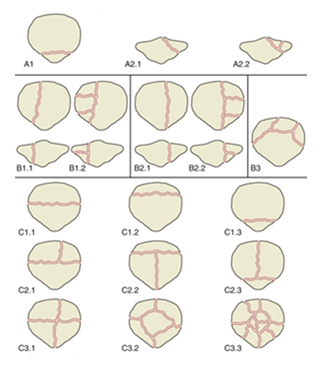
Figure 1: Classifications of patellar fractures according to the AO Foundation.
Surgical management is indicated in fractures that disrupt the extensor mechanism function, fractures that have an intraarticular step of >2mm, or fractures with a displacement of more than 2 to 4 mm [8]. For decades, tension band wiring (TBW) was considered the gold standard of treatment for patella fractures (Figure 2). This technique involves positioning two parallel Kirschner wires (K-wires) perpendicular to the fracture, with a stabilising figure-of-eight steel wire surrounding the structure. This construct converts tensile forces into compression at the fracture site. Tension sutures, another commonly used fixation method, employ a similar mechanism. Tough braided sutures, placed in a figure-of-8 and cerclage pattern, convert tensile forces into compression at the fracture site. These can be used with or without cannulated screws (Figure 3). Cannulated screws provide direct, interfragmentary compression perpendicular to the fracture. Tension sutures, cannulated screw fixation, and combinations of the two are termed “hybrid” fixations.
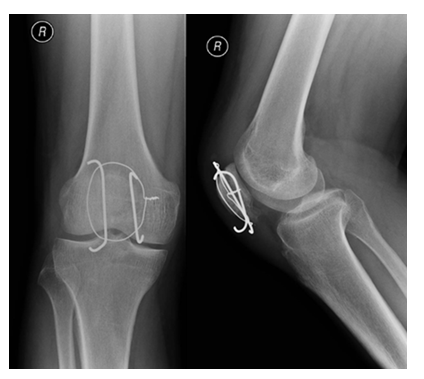
Figure 2: Anteroposterior and lateral plain film radiographs of a TBW fixation.
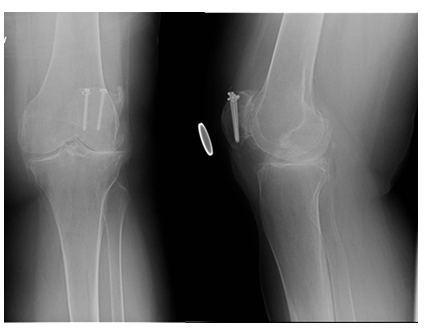
Figure 3: Anteroposterior and lateral plain film radiographs of a hybrid fixation using cannulated screws.
This study publishes data from a 700-bed district general hospital in the United Kingdom comparing clinical outcomes between these techniques.
Methods
This retrospective cohort study evaluates the different methods of patella fracture fixation outlined above.
This study included all patellar fractures managed operatively at the hospital. Patellar sleeve avulsions (paediatric), pathological fractures, periprosthetic fractures (total knee replacement), following elective surgery (e.g. medial patellofemoral ligament (mPFL) reconstruction) and revision fracture surgery were excluded.
Ho. l digital records for all patients with patellar injuries presenting to our district general hospital in an 8-year period (July 2017 - August 2025) were retrospectively reviewed. Of these, 153 patella fractures were identified, 74 of which were operatively managed.
Clinic letters, radiographs, electronic patient records, and theatre notes were examined to collect information on each case. Potential confounding patient factors including age at time of fracture, sex, smoking history, and comorbidities were collected where available. Each fracture was classified according to the AO classification of patella fracture outlined above. The time duration elapsed from index surgery to final radiological follow-up and final clinical follow-up were also respectively collected.
Outcome Measures
The primary outcome was defined as patients that needed to return to theatre for any reason related to their fixation following surgery. This was recorded in addition to the cause for return to theatre and the time duration elapsed between index operation and return to theatre.
Secondary outcomes included infection, extensor mechanism dysfunction, symptomatic non-union, and symptomatic malunion. This was cross-referenced with radiographs and clinic letters. Malunion was defined as an articular step of greater than 2mm. Malunion and non-union were termed “symptomatic” if they directly resulted in patient complaints on follow-up. Fracture pattern classification and radiographic complications were recorded by two separate reviewers (training orthopaedic surgeons) and further examined by a third expert reviewer (consultant orthopaedic surgeon) in all cases.
Statistical analysis
Multivariable logistic regression models were constructed with the presence of either primary or secondary outcomes (present vs absent) treated as respective dependent variables and fixation methods as independent variables. Both models included and accounted for clinically relevant covariates: age, sex, and delay (days) from injury to index operation. Results are reported as odds ratios (ORs) with 95% confidence intervals (CIs). A two-sided p-value < 0.05 was considered statistically significant.
All statistical analysis was performed using RStudio (Posit Software, PBC, Boston, MA, USA) with R version 4.4.0 (R Foundation for Statistical Computing, Vienna, Austria).
Results
The 74 operatively managed patella fractures had either undergone TBW or hybrid fixation: 26 were managed with TBW and 48 were managed with one of the “hybrid” fixation methods.
Of the 48 hybrid cases, 24 were “screw + suture” fixations and 20 were “suture only” fixations, accounting for the majority as seen in figure 4.
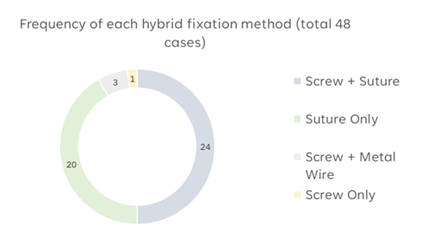
Figure 4: Frequency of each fixation method as found in the data.
The distributions of fracture classifications were similar among the different hybrid groups. Mean time from injury to surgery was 3.2 days for TBW and 4.6 days for hybrid fixation. Fracture types 34C1.1 and 34C3.1 were most common, comprising 37% and 39% of cases, respectively.
Figure 5 and 6 show the distribution of fracture patterns among the TBW and hybrid fixations respectively as classified by the AO classification (Figure 1). AO C1.1 and C3.1 fractures were the most common fracture patterns seen, with approximately equal distributions in both the TBW and hybrid groups. Here also, there was no correlation between fracture pattern and fixation method used.
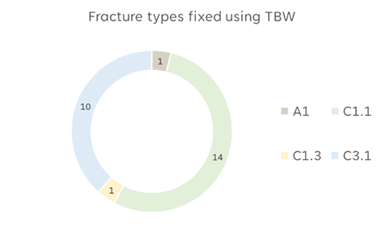
Figure 5: Distribution of fracture patterns observed among the TBW fixations.
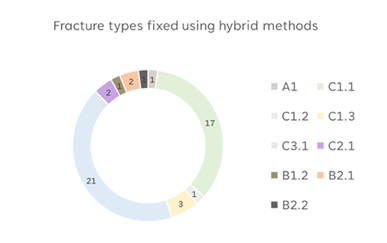
Figure 6: Distribution of fracture patterns observed among the hybrid fixations.
Primary Outcome
As shown in table 1, TBW fixation was associated with a higher return to theatre rate (41.5%) than Hybrid Fixation (12.5%). In the multivariable logistic regression model accounting for confounders, there was a statistically significant correlation between fixation method and return to theatre: OR = 0.0744; 95% CI = 0.0178-0.251; p = 0.0000909.
The most frequent cause found for TBW return to theatre by far was prominent metalwork causing patient dissatisfaction (with or without pain). This accounted for 12 of the 16 cases.
The most frequent cause of return to theatre in hybrid fixations was atraumatic fixation failure resulting in dysfunction. The different methods of hybrid fixation showed rates of return to theatre proportional to their respective frequencies in the data, with no single method showing particularly high or low rates.
|
Primary Outcome |
Causes |
|
|
Tension Band Wiring (TBW) |
16/26 (41.5%) |
Prominent metalwork +/- pain [11] |
|
Anterior knee pain alone [2] |
||
|
Fixation failure [1] |
||
|
Traumatic fixation failure [1] |
||
|
Hybrid Fixation |
6/48 (12.5%) |
Atraumatic fixation failure [3] |
|
Traumatic fixation failure [1] |
||
|
Metalwork prominent [1] |
||
|
Stiffness [1] |
Table 1: Summary of rates of primary outcomes in both cohorts and breakdown of causes for return to theatre.
Secondary Outcomes
TBW fixation was associated with a marginally higher rate of secondary outcomes (30.8%) when compared to hybrid fixation. There was however no statistically significant correlation between fixation method and secondary outcome according to our model: OR = 0.504; 95% CI 0.165-1.53; p = 0.223.
The Secondary outcomes for TBW were present in similar frequencies as shown in table 2. In hybrid fixation, the main secondary outcomes were malunion and anterior knee pain.
Secondary outcomes were distributed approximately evenly across the various hybrid fixation methods when adjusted for their relative frequencies in the dataset. No individual hybrid method demonstrated superiority in any of the measured secondary outcomes, consistent with the findings for the primary outcome.
A logistic regression model was constructed to investigate the rates of fixation failure (regardless of whether this resulted in return to theatre) when comparing TBW and hybrid fixation. There was no statistically significant correlation between the two methods; hybrid fixation had an OR of 1.81 (95% CI 0.372 - 13.2); p = 0.494.
|
Secondary Outcomes |
Causes |
|
|
Tension Band Wiring (TBW) |
8/26 (30.8%) |
Symptomatic non-union [2] |
|
Symptomatic malunion [1] |
||
|
Extensor mechanism dysfunction [1] |
||
|
Infection [1] |
||
|
Fixation failure [1] |
||
|
Anterior knee pain [1] |
||
|
Hybrid Fixation* |
10/48 (20.8%) |
Malunion [4] |
|
Anterior knee pain [3] |
||
|
Extensor mechanism dysfunction [1] |
||
|
Infection [1] |
||
|
Fixation Failure [1] |
Table 2: Summary of rates of secondary outcomes in both cohorts and breakdown of causes for each outcome.
Discussion
Return to theatre, this study’s primary outcome, was statistically greater within the TBW group, with 41.5% of cases experiencing a need for reoperation. Our data attributes this to be largely due to the prominence of metalwork (56%), which may additionally induce pain. This is comprehensible as the wires within the TBW construct extend beyond the fracture site (Figure 2), likely resulting in greater prominence and soft tissue irritation than cannulated screws, which are embedded within bone [9]. This study’s findings are consistent with literature comparing techniques. A systematic review by Tijare et al. [10] demonstrated between 22.9 and 76.7% implant removal rates across studies, with evidence of the complications strongly associated with TBW. Further to these findings, Tijare et al. also report superior short term functional outcomes (Lysholm Score) and a greater degree of flexion with cannulated screw fixation.
Return to theatre can have implications on patients’ psychological well-being as well as increased cost to health care with theatre usage and inpatient hospital stays. These patients need extended physiotherapy, braces and antimicrobial therapy. Revision surgery can require graft harvest, synthetic graft use and more invasive surgery. Though not quantified in this study, one may expect a cost saving from reducing the number of patients that fall within the primary outcome following surgery for patella fractures.
Secondary outcomes were detected more frequently in the TBW group, however these associations did not attain statistical significance. This could be due to the limited sample size of the study’s data. A meta-analysis by Al-Naseem et al., which pooled 1,272 patients, further corroborates this study’s primary outcome results and provides insights into the secondary outcomes. Statistical significance of higher complication rates with TBW was proven, such as implant migration/loosening (p < 0.00001), implant prominence/skin irritation (p = 0.003), and implant removal (p < 0.00001). The incidence of infection was significantly higher in patients treated with TBW compared with CS (OR = 2.31; 95% CI = 1.06-5.05; p = 0.04). Interestingly, union and reoperation rates due to construct failure were comparable between the groups [11]. This was also observed in our data set with similar malunion rates.
Although traditionally, TBW and hybrid fixations were performed on 2-part fractures, our data included their use to fix different classification types. An early version of the logistic regression model controlled for classification type, and showed no correlation or statistically significant difference associated with any of the classification types; p values for associations with primary and secondary outcome in all classifications were >0.99.
It also must be noted that the subgroups of hybrid fixation also had variations within the technique. There was no standardised technique. More so each case was left to the surgeons’ discretion as to the method of fixation as this study was retrospective. There was also variation between grade of surgeon from consultant to trainee. This data was not collected or compared in this study.
Different numbers and configurations of suture wire were used. Surgeons using figure-of-8 or wire alone may have done so around/anterior to the patella or through parallel drill holes. Those using cannulated screws did so to reduce the 2-part fracture with compression then followed this up with tension suture again with variations of either around/anterior to the patella or through the cannulated screws. One could criticise the method of mixing bone fixation techniques. Some surgeons used the cannulated screw to reduce more comminated 3- or 4- part fractures into 2 parts then used a tension suture method retaining the TBW principle. Comparing the individual variations in technique was outside the scope of this study. Future prospective studies must standardise hybrid methods for comparison.
Several other limitations must be considered when interpreting these results. The study relied on clinic letters, radiographs, operation notes, and other documentation; these did not consistently record other potential confounders including patient past medical history, comorbidities, and smoking status. This inconsistency sadly prevented their inclusion as potential confounders to be controlled for.
Clinical and radiographic follow-up did not occur at a uniform time for all patients, and the number and total duration of follow-up appointments varied between patients and depended on factors such as patient outcome and surgeon preference. This may have introduced a source of bias as different patients followed up at different intervals and total durations may have missed secondary outcomes. Information on patient smoking history and comorbidities was documented inconsistently and did not provide sufficient data to be included in the logistic regression models, therefore could not be accurately controlled for. Clinic letters were also not standardised; not all letters documented the same level of detail in clinical examination, functional scores, or patient concern. When this information was not documented at all, it was assumed that the patient did not raise concern, and that there was no detected dysfunction.
Conclusion
TBW for patella fractures was associated with significantly higher rates of return to theatre when compared with hybrid fixation methods, predominantly due to symptomatic or prominent metalwork. Hybrid fixation techniques demonstrated lower reoperation rates across a range of fracture patterns without an associated increase in fixation failure. Although secondary outcomes did not differ significantly between groups, the findings suggest that hybrid fixation may offer improved implant tolerability and reduced need for further surgery. Further prospective studies with standardised surgical technique, functional outcomes, randomisation, and a longer pre-defined clinical and radiological follow-up period of 5-10 years are required to determine the optimal fixation strategy for patella fractures.
Acknowledgements
The authors received no external funding for this study. The authors have no conflicts of interest to declare. The authors would like to thank the medical records teams at East and North Hertfordshire NHS foundation Trust for facilitating access to the data used in this study.
References
- Cleather DJ, Southgate DFL, Bull AMJ. On the role of the patella, ACL and joint contact forces in the extension of the knee. PLoS One 9 (2014): e115670.
- Cox CF, Sinkler MA, Black AC, et al. Anatomy, Bony Pelvis and Lower Limb, Knee Patella. StatPearls (2023).
- Kaur R, Dahuja A, Kaur C, et al. Correlation between Chondromalacia Patella and Patellofemoral Factors in Middle-Age Population: A Clinical, Functional, and Radiological Analysis. Indian J Radiol Imaging 31 (2021): 252–259.
- Nummi J. Fracture of the patella. A clinical study of 707 patellar fractures. Ann Chir Gynaecol Fenn Suppl 179 (1971).
- Larsen P, Court-Brown CM, Vedel JO, et al. Incidence and epidemiology of patellar fractures. Orthopedics 39 (2016).
- Meinberg EG, Agel J, Roberts CS, et al. Fracture and Dislocation Classification Compendium-2018. J Orthop Trauma 32 (2018).
- Pereira DE, Randall ZD, Mologne MS, et al. Increased risk of knee osteoarthritis progressing to total knee arthroplasty following patella fractures: an age stratified population analysis. Eur J Orthop Surg Traumatol 36 (2026).
- Steinmetz S, Brügger A, Chauveau J, et al. Practical guidelines for the treatment of patellar fractures in adults. Swiss Med Wkly 150 (2020): w20165.
- Liu C, Ren H, Wan C, et al. Comparison of the Therapeutic Effects of Tension Band with Cannulated Screw and Tension Band with Kirschner Wire on Patella Fracture. Comput Math Methods Med (2020): 4065978.
- Tijare C, Joseph R, Boksh K, et al. Cannulated screws with and without tension band wiring versus tension banding wiring alone for fixation of patella fractures: a systematic review and meta-analysis. Arch Orthop Trauma Surg 145 (2025).
- Al-Naseem AO, Ali Y, Alanzi M, et al. Tension Band Fixation for Patellar Fractures Using K-Wires Versus Cannulated Screws: A Systematic Review and Meta-Analysis. JBJS Open Access 11 (2026): e25.00162.